
国有企业改革

Search documents
“十五五”时期国资央企将深化拓展“AI+”专项行动
Xin Lang Cai Jing· 2025-12-21 23:12
Core Viewpoint - The State-owned Assets Supervision and Administration Commission (SASAC) will actively undertake major national technological tasks during the 14th Five-Year Plan period, focusing on breakthroughs in critical areas and weak links, particularly in sectors requiring significant investment and long cycles, where other enterprises lack willingness or capability [1][4] Group 1: Traditional Industry Transformation - Emphasis on the transformation and upgrading of traditional industries through a new round of digital transformation actions, integrating AI, big data, cloud computing, 5G, and IoT with traditional industries [2][5] - Continuous promotion of technological upgrades and large-scale equipment renewal, leading the implementation of carbon peak plans in key industries, enhancing resource recycling, and accelerating product iteration and upgrading [2][5] Group 2: Emerging and Future Industries - Focus on cultivating emerging and future industries through actions that highlight engineering and scenario-driven approaches, targeting sectors with substantial size, rapid growth, and promising prospects over the next five years [6] - Active development in key areas such as new energy, new energy vehicles, new materials, aerospace, low-altitude economy, and advanced planning in cutting-edge fields like quantum technology, embodied intelligence, biomanufacturing, green shipping, and 6G [6] Group 3: Investment and Financing System - Development of a specialized and market-oriented investment and financing system, leveraging state-owned capital investment and operation companies, and utilizing various financial tools to support strategic emerging industries [3][6] - Establishment of a comprehensive investment decision-making mechanism covering all stages from seed to growth, aiming to create a high-level state-owned capital operation platform to support the long-term and strategic capital needs of the real economy [3][6] - SASAC aims to deepen the reform of state-owned enterprises, focusing on enhancing core functions and competitiveness [3][6]
深化改革促转型 聚焦主业增效益 刘厚专题调研市属国有企业
Sou Hu Cai Jing· 2025-12-14 12:15
Group 1 - The core viewpoint emphasizes the importance of state-owned enterprises in supporting the economic and social development of the city [3] - Continuous reform and a proactive approach are necessary for high-quality development, focusing on market-oriented operations and leveraging existing resources [3][4] - Strengthening operational management and enhancing investment attraction are critical for ensuring sustainable and stable business operations [3] Group 2 - The city’s State-owned Assets Supervision and Administration Commission (SASAC) and relevant departments are urged to provide guidance and support to help enterprises overcome practical difficulties [4] - There is a focus on policy implementation, innovation in systems and mechanisms, and optimizing the business environment to facilitate the sustainable development of state-owned enterprises [4]

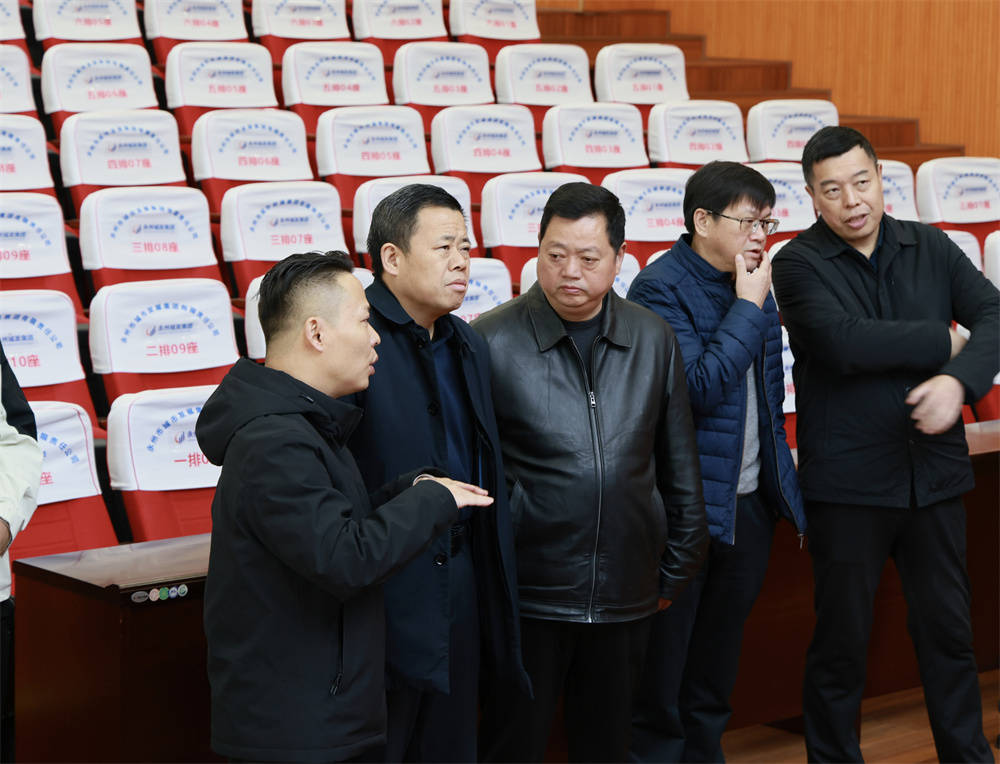
斯总理发表讲话,称国家必将再次站起
Shang Wu Bu Wang Zhan· 2025-12-09 18:19
Core Viewpoint - The Prime Minister of Samoa, Su'a Amala Suria, has reaffirmed the government's commitment to a 7% economic growth target despite facing various challenges [1] Group 1: Economic Growth Strategy - The government has set an ambitious medium-term economic growth target of 7% [1] - Six key pillars have been identified to drive this vision: inclusive growth, export diversification, policy sustainability, production-oriented economy, rural development, and digital transformation [1] Group 2: Structural Reforms - The government will not deviate from other structural reforms, including state-owned enterprise reform, trade facilitation measures, and the establishment of a single-window investment platform [1] - The central bank governor has stated that the central bank will leverage its expertise to buffer against economic shocks [1] Group 3: Economic Resilience - The nation is now better equipped than ever to withstand sudden economic shocks [1]
视界 | 一部国企史,半部新中国经济史:从“一五”计划到“十五五”规划
Sou Hu Cai Jing· 2025-12-08 07:54
在承接"一五"计划奠定的工业基石之上,"二五"计划(1958-1962年)的国有经济延续了国家资本主导 工业化进程的核心逻辑。面对苏联技术援助中断的严峻挑战,中国毅然确立了"自力更生为主,争取外 援为辅"的自主发展路线。国有企业作为国民经济的物质载体,在冶金、机械制造等领域取得标志性突 破:钢铁产能较1957年提升33.6%,原油产量实现四倍增长。这些成就彰显了国家资本在极端条件下维 持工业体系运行的根本作用。国有经济布局的战略纵深在此时期显著深化。通过"军民结合"模式,156 项工程催生的骨干企业不仅保障了基础工业运转,更支撑起"三线建设"的产业迁移。在苏联专家撤离的 背景下,国有企业独立完成万吨水压机、大型发电机组的国产化攻关,使发电设备制造能力跃居世界第 五位。技术自主权的获取路径,验证了"用人民积累的黄金建设不可想象的工业体系"的制度优越性。 三五计划(1966-1970年)贯彻毛泽东同志确立的"独立自主、自力更生为主,争取外援为辅"的根本方 针,集中资源保障三线建设的战略实施,将国有企业确立为技术攻坚的核心载体,实现了工业骨干体系 的内陆战略纵深布局。在"打破洋框框,走自己工业发展道路"的号召下,以 ...
国企董事会专门委员会作用发挥不佳,病根在哪?怎么破解?
Sou Hu Cai Jing· 2025-12-02 03:46
知风云:"治理的最高境界,不是铸就密不透风的围墙,而是打开面向未来的窗户。" 作者|知本咨询国企治理管控研究院 责编|亿亿 编辑|阿苓 2025年,国有企业改革已进入深化治理效能的关键阶段。科学、理性、高效董事会建设,其成效不仅在 于架构的完善,更在于其大脑与神经能否高质量运转。 因而,在过 从几年前开始,越来越多的有识之士意识到,让五个人、七个人的董事会活起来、动起来,必须要把专 门委员会的作用充分发挥出来。 ...

“十四五”期间省属企业利润总额预计比“十三五”期间增长80%
Da Zhong Ri Bao· 2025-11-27 01:09
Core Insights - During the "14th Five-Year Plan" period, Shandong's state-owned enterprises (SOEs) are expected to achieve a profit total growth of 80% compared to the "13th Five-Year Plan" period [2] Financial Performance - By 2024, Shandong's SOEs are projected to reach total assets of 5.3 trillion yuan, operating income of 2.5 trillion yuan, and profits exceeding 100 billion yuan, representing growth of 45%, 44%, and 42% respectively compared to the end of the "13th Five-Year Plan" [2] - Shandong's SOEs lead in total assets and operating income among provincial SOEs in China, ranking second in profit total [2] Innovation and R&D - R&D expenditure for Shandong's SOEs has an annual compound growth rate exceeding 20%, expected to reach 52.9 billion yuan in 2024, ranking first among provincial SOEs [3] - A total of 78 national-level research platforms and 609 provincial-level platforms have been established, with 487 major technology projects led or participated in by these enterprises [3] Industry Focus and Capital Allocation - Shandong is concentrating state-owned capital in ten key industries, infrastructure, important mineral resources, and public services, with these sectors accounting for 93% of the total assets [3] - 25 provincial SOEs are leading 19 key industrial chains, fostering clusters in high-end equipment and new-generation information technology [3] Reform Initiatives - Key reforms in personnel management, labor employment, and distribution systems are crucial for strengthening state-owned enterprises [4] - The personnel management reform emphasizes a "can go, can come" approach, with 161 managerial members exiting due to underperformance [4] - Labor employment reform has achieved a 100% open recruitment rate, with approximately 120,000 recruits, 60% of whom are recent graduates [4] Strategic Restructuring - Six strategic restructurings among provincial SOEs have been completed during the "14th Five-Year Plan," enhancing scale and synergy [5] - The restructured Shandong Development Group reported total assets of 249.66 billion yuan, operating income of 23.31 billion yuan, and profits of 2.54 billion yuan, with year-on-year growth of 14.78%, 10.57%, and 6.34% respectively [5] Market Capitalization and Listings - As of September, Shandong has 51 publicly listed companies, with a total market capitalization exceeding 1.2 trillion yuan [5] - The province has added 10 new listed companies during the "14th Five-Year Plan," with significant capital injections and mergers enhancing the financial landscape [5][6] - Specific companies like Shandong Gold and Weichai Power have market capitalizations exceeding 100 billion yuan, with nine companies surpassing 50 billion yuan [6]



内蒙古自治区主席包钢主持召开政府常务会议 创建美丽中国先行区和国家生态文明试验区
Zhong Guo Huan Jing Bao· 2025-11-13 03:52
Group 1 - The Inner Mongolia Autonomous Region is focusing on high-quality development and modernizing its economy, emphasizing the urgency of planning for the 14th Five-Year Plan and next year's work [1] - The government aims to enhance high-level openness and promote the construction of a free trade zone, while also improving the capabilities of comprehensive bonded zones [1] - There is a strong emphasis on protecting and utilizing cultural heritage, as well as advancing ecological initiatives such as the "Three North" project and creating a national ecological civilization pilot zone [1] Group 2 - The region plans to strengthen modern agriculture and animal husbandry, focusing on brand cultivation and the revitalization of the dairy and seed industries [2] - There is a push for deep integration of technological and industrial innovation, including the establishment of a national-level innovation platform and a green computing power demonstration zone [2] - The government aims to leverage its energy industry advantages, promote renewable energy development, and enhance the coal chemical industry chain [2] - Infrastructure improvements are prioritized, including high-speed rail, highways, and civil aviation, to reduce logistics costs and develop a hub economy [2] - The government is committed to reforming state-owned enterprises and ensuring social stability through enhanced basic livelihood guarantees and risk prevention measures [2]
斥资116.94亿收购!安徽一上市国企重大资产重组获受理
Sou Hu Cai Jing· 2025-10-31 01:57
Core Viewpoint - The company plans to acquire an 89.30% stake in Huaihe Energy Power Group through a combination of cash and stock issuance, with a total transaction value of approximately 1.169 billion yuan, aiming to enhance its core business in thermal power generation and improve operational efficiency [3][4][9]. Transaction Overview - The transaction involves the acquisition of Huaihe Energy Power Group, which operates in thermal and renewable power generation and owns a coal mine [3][9]. - The total transaction price is set at 1,169,412.85 thousand yuan, with cash payment of 175,411.93 thousand yuan and stock payment of 994,000.92 thousand yuan [4][5]. - The share issuance price is 3.03 yuan per share, resulting in the issuance of 3,280,531,105 shares, which will constitute 45.77% of the company's total share capital post-transaction [4][6]. Financial Impact - The acquisition is expected to increase the company's net profit attributable to shareholders from 85,779.77 thousand yuan to 179,303.58 thousand yuan for the fiscal year 2024, raising the basic earnings per share from 0.22 yuan to 0.25 yuan [9][11]. - The asset evaluation report indicates that the total equity value of the power group is 1,309,532.87 thousand yuan, with a premium rate of 22.23% [9][11]. Shareholding Structure - Post-transaction, Huainan Mining's shareholding will increase from 63.27% to 80.08%, solidifying its position as the controlling shareholder [6][8]. - The transaction will result in a significant change in the shareholding structure, with Huainan Mining holding 5,480,624,854 shares, representing 76.47% of the total [8]. Regulatory Approval - The transaction has received approval from the Anhui Provincial State-owned Assets Supervision and Administration Commission and has been passed by the company's shareholders' meeting, pending further review by the Shanghai Stock Exchange and registration with the China Securities Regulatory Commission [11].


十四届全国人大常委会第十八次会议举行联组会议 审议国务院关于2024年度企业国有资产(不含金融企业)管理情况的专项报告并开展专题询问赵乐际出席
Ren Min Ri Bao· 2025-10-27 22:37
Core Points - The 18th meeting of the 14th National People's Congress Standing Committee was held to review the State Council's special report on the management of state-owned assets for 2024, focusing on the reform and development of state-owned enterprises (SOEs) [1][2] - Key discussions included the effectiveness of recent reforms, optimization of state-owned economic layout, and the importance of SOEs in stabilizing industrial and supply chains [1][2] Group 1 - The meeting emphasized the continuous deepening of SOE reforms under the leadership of the central government, which has enhanced the vitality and efficiency of SOEs [2] - The State Council and relevant departments are committed to implementing Xi Jinping's important discussions on SOE reform and development, aiming for high-quality development of state-owned enterprises [2] - The meeting served as a platform for the National People's Congress to exercise its supervisory powers and promote high-quality development of state-owned assets and enterprises [2] Group 2 - The discussions highlighted the need for a comprehensive regulatory system and tailored assessment mechanisms for each enterprise to ensure effective management and accountability [2] - The importance of state-owned enterprises in supporting the national economy and their role in technological innovation and new productivity development was underscored [1][2] - The meeting called for ongoing monitoring and follow-up on the implementation of the discussed reforms and policies by the relevant departments [2]
中煤新集能源股份有限公司2025年第三季度报告
Shang Hai Zheng Quan Bao· 2025-10-24 19:01
Core Viewpoint - The company has released its third-quarter report for 2025, ensuring the accuracy and completeness of the financial information presented, and has outlined the progress of its coal and renewable energy projects [2][9]. Financial Data - The third-quarter financial statements have not been audited [3]. - The report includes major accounting data and financial indicators, although specific figures are not provided in the text [3]. Non-Recurring Gains and Losses - The company has indicated that it recognizes non-recurring gains and losses, but specific amounts and reasons for classification are not detailed [4]. Shareholder Information - The report includes information on the total number of ordinary shareholders and the top ten shareholders, although specific data is not provided [5]. Project Updates - Coal Power Projects: As of September 2025, the company is progressing on its coal power projects, with significant milestones achieved in various plants, including the completion of generator installations and pressure tests [6]. - Renewable Energy Projects: The wind power project in Bozhou is 80% complete, with expectations to achieve grid connection by the end of 2025 [6]. Board Meeting Resolutions - The board meeting held on October 23, 2025, approved the third-quarter report and discussed revisions to the management compensation policy to enhance corporate governance [9][11]. - A new carbon emission and asset management policy was also approved to align with national climate change policies and promote green development [14].
