
多资产多策略

Search documents
银行理财2025年度盘点:规模破33万亿 固收占比七成 权益投研能力待提升
智通财经网· 2025-12-28 03:29
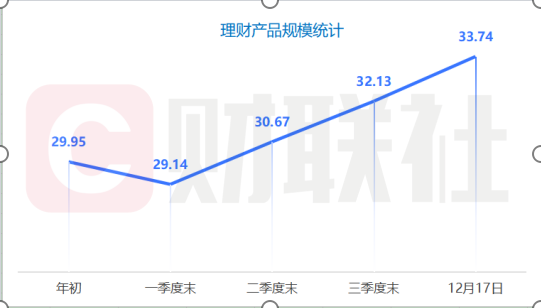
Core Viewpoint - The bank wealth management market in 2025 experienced a "V-shaped" recovery, with a total scale increase of approximately 15.76% from 29.14 trillion yuan to 33.74 trillion yuan, demonstrating resilience amid declining interest rates and market volatility [2][3]. Group 1: Market Scale and Growth - The bank wealth management scale rose from 29.14 trillion yuan at the end of Q1 to 30.67 trillion yuan at the end of Q2, and further to 32.13 trillion yuan in Q3, with a total scale of about 33.74 trillion yuan by December 19 [1][2]. - The overall trend for 2025 was characterized by a "low at the beginning and high at the end," with significant growth driven by factors such as interest rate cuts, changes in residents' wealth management concepts, and adjustments within the industry [2][3]. Group 2: Product Structure - Fixed income products accounted for over 74% of the total wealth management scale, with a total size of 24.22 trillion yuan, indicating a dominant presence in the market [5]. - Cash management products remained stable at around 6.5 to 6.6 trillion yuan, representing about 20% of the total, while other product types like mixed, equity, and commodity derivatives accounted for less than 3% [5]. Group 3: Yield and Risk Distribution - The overall average annualized yield for bank wealth management products was above 2.4%, with significant yield differentiation among product categories [8]. - Over 96% of wealth management funds were concentrated in low-risk products (R1/R2), reflecting a strong preference for capital preservation among investors [8][9]. Group 4: Future Outlook - In 2026, the bank wealth management sector is expected to continue exploring the balance between yield and risk in a low-interest-rate environment, with "fixed income +" and multi-asset strategies becoming key growth drivers [9]. - It is anticipated that wealth management funds will increasingly enter equity markets through diversified strategies, potentially bringing in an incremental 150 to 250 billion yuan [9].

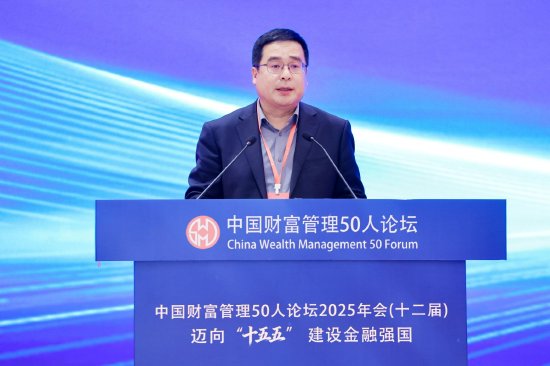
武兴锋:资管行业正处于从“规模导向”向“价值导向”转型关键阶段
Xin Lang Cai Jing· 2025-12-27 11:38
Core Viewpoint - The Chinese wealth management industry is transitioning from a "scale-oriented" approach to a "value-oriented" strategy, driven by low interest rates, tightening regulations, and narrowing returns on quality assets, which presents both challenges and opportunities for sustainable development [3][9][20] Funding Side - As of November 2025, the bank wealth management market's outstanding scale reached 31.67 trillion yuan, and public fund scale surpassed 36 trillion yuan, indicating steady expansion in the asset management industry [4][14] - The shift in residents' wealth allocation is deepening, with a trend towards financial assets as GDP per capita exceeds $10,000, aligning with national strategies to increase property income [4][14] - With over 60 trillion yuan in fixed deposits maturing by 2026, the low interest rate environment is expected to accelerate the shift of funds towards financial products, laying a solid foundation for industry growth [4][14] Asset Side - Wealth management institutions face multiple pressures in investment operations, particularly in the bond market, where volatility has increased, challenging traditional "buy and hold" strategies [5][15] - The A-share market is expected to show a slow bull trend in 2025, with significant structural differentiation, particularly in new economy sectors like AI and high-end manufacturing, requiring institutions to enhance their research depth and risk control [5][15] - Institutions need to focus on core capabilities, enhancing research and investment capabilities, and innovating products to transition from "scale competition" to "value creation" [6][16][20] Investment Research Capability - Institutions should develop a "multi-asset, multi-strategy" approach to adapt to the dual pressures of low interest rates and asset scarcity, utilizing diverse tools to enhance returns and manage risks [6][17] - Establishing a macro-factor-driven asset allocation framework and a standardized, results-oriented research system is essential for effective investment management [6][17][18] - Implementing suitability management is crucial for protecting consumer rights and ensuring appropriate product matching for investors [7][18] Product Development - Institutions must innovate product forms and integrate them with various investment scenarios to meet diverse investor needs [8][19] - Focusing on national strategies, institutions should expand product lines in areas like pension, inclusive finance, green finance, and digital finance, thereby supporting the real economy and enhancing long-term capital market stability [8][19]
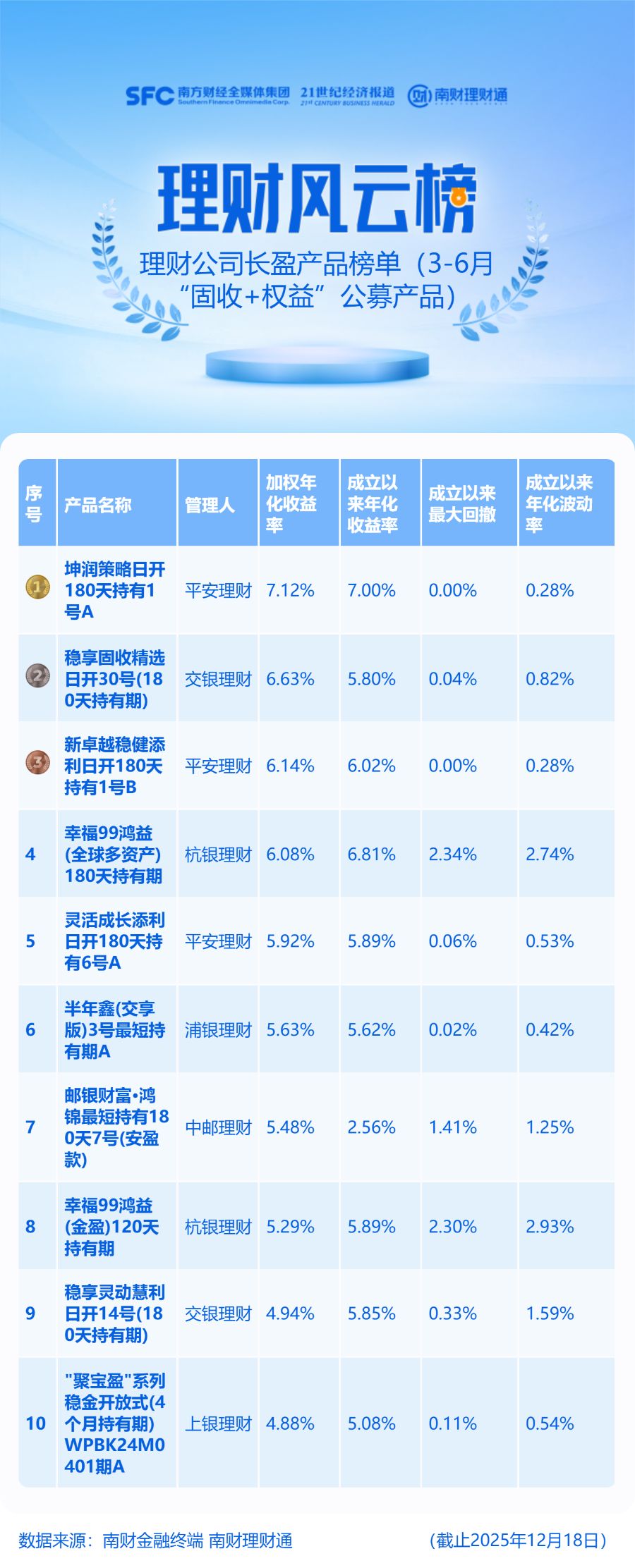
长盈理财加权年化收益率最高达7%!多资产多策略成机构布局关键
2 1 Shi Ji Jing Ji Bao Dao· 2025-12-26 09:46
榜单数据说明:统计对象为理财公司发行的成立满1年的投资周期在3—6月(含)的公募固收+权益产品,同系列同投资周期产 品保留一只,加权平均收益率计算方式为"5%近1月年化收益率+10%近3月年化收益率+15%近6月年化收益率+30%近1年年化收 益率+40%成立以来年化收益率",排名依据为加权年化收益率,数据计算截止时间为2025年12月18日。榜单排名由理财通AI全 自动化实时排名,如您对数据有疑问,请在文末联系助理进一步核实。 从上榜产品来看,截至12月18日,在理财公司长盈产品榜单(3—6月"固收+权益"公募产品)中,有6家理财公司产品上榜,其 中平安理财上榜产品数量最多,有3只,杭银理财和交银理财各上榜2只产品,浦银理财、上银理财和中邮理财各上榜1只产品。 旗团 21世纪经济报道 理财公司长留产品榜里 "固收+权益"公募 | 10 पुरा | 产品名称 | 管理人 | 加权年 化妆篇 | FATUL 采年化 | 成立以来 | 成立以来 年化波动 | | --- | --- | --- | --- | --- | --- | --- | | | | | 网 | 收益率 | 最大回撤 | 图 | | | ...
从“固收为王”到多资产协同发力 银行理财破局低利率时代
Mei Ri Jing Ji Xin Wen· 2025-12-25 14:49
Core Viewpoint - The financial industry is shifting towards a "multi-asset multi-strategy" approach to address challenges posed by low interest rates and scarce quality assets, aiming for diversified investment to balance risk and return [2][3] Group 1: Multi-Asset Multi-Strategy Overview - Multi-asset multi-strategy is a diversified investment method that aims for long-term stable returns by investing in various asset classes with different correlations, employing diverse strategies to reduce portfolio volatility [3] - The diversified asset allocation includes bonds, stocks, gold, and non-standard assets, while the investment strategies encompass dividend strategies, quantitative strategies, index strategies, and global allocation [3] - The focus on major asset allocation has become crucial for wealth management, especially after the pressures faced by equity assets post-2021 [3] Group 2: Market Trends and Product Development - Several wealth management companies have launched multi-asset multi-strategy product systems, with notable examples including the "All+Fortune" series from China Merchants Bank Wealth Management, which has surpassed 370 billion yuan in management scale [4] - The "solid income+" product system, which combines fixed income assets with stocks, gold, and convertible bonds, is becoming mainstream, with a reported scale of approximately 9 trillion yuan as of September 2025, reflecting a 69% increase since December 2023 [4] - Mixed-asset products have seen significant growth, with a current scale of 830 billion yuan, representing 2.58% of all wealth management products, and notable performance improvements in returns [6] Group 3: Challenges and Strategic Considerations - The practice of multi-asset multi-strategy faces three main challenges: asset selection, defining specific investment strategies for each asset class, and effective asset allocation and rebalancing [5] - To achieve better investment outcomes, wealth management institutions need to enhance their research and investment capabilities systematically [5] Group 4: Regulatory Environment and Market Participation - The regulatory framework is increasingly supportive of long-term capital entering the market, with bank wealth management products now recognized as A-class investors, allowing participation in IPOs [7] - Currently, only mixed and equity products can participate in offline IPO subscriptions, with mixed products being the primary beneficiaries due to scale requirements [7] Group 5: Future Outlook - The structure of wealth management products is expected to continue optimizing, with mixed products projected to reach a balance of 1.52 to 1.9 trillion yuan by 2026, indicating significant growth potential [8] - To attract long-term investments, wealth management companies are introducing dividend products, offering both cash dividends and reinvestment options to enhance returns for investors [8]

理财共议高质量发展新路径,首单科创债ETF质押式回购交易落地
HWABAO SECURITIES· 2025-12-24 11:47
Investment Rating - The report does not explicitly provide an investment rating for the industry [3]. Core Insights - The banking wealth management industry is moving towards "Net Value 3.0," with multi-asset and multi-strategy becoming mainstream [11][12]. - The introduction of the first "Science and Technology Innovation Bond ETF" repurchase transaction marks a significant breakthrough in liquidity management tools for wealth management companies [17]. - The report highlights the performance of cash management products and fixed-income products, indicating a stable yield environment despite market fluctuations [20][24]. Regulatory and Industry Dynamics - A conference on high-quality development in the banking industry was held, where leaders discussed the current landscape and future directions of wealth management [4][11]. - The industry is facing challenges and opportunities, including a "deposit migration" window and the potential for significant growth in corporate wealth management [12]. - The report notes the appointment of Dai Kang, a former chief asset researcher, to a key position in a wealth management firm, indicating a strategic focus on enhancing equity investment capabilities [14][16]. Innovations in the Industry - Su Yin Wealth Management successfully executed the first market transaction using "Science and Technology Innovation Bond ETF" as collateral, providing a new path for asset liquidity [17][18]. - Hui Yin Wealth Management launched a new product, "Star Hui Global+," which is linked to a self-developed index and aims to diversify asset allocation [19]. Yield Performance - Cash management products recorded a 7-day annualized yield of 1.27%, remaining stable week-on-week, while money market funds saw a slight increase [20][22]. - The report indicates that the yields of fixed-income products have generally risen, reflecting a stable economic environment and expectations of monetary policy adjustments [24][25]. Net Value Tracking - The report states that the net value ratio of banking wealth management products decreased to 2.55%, indicating a slight improvement in the market [31][33]. - The credit spread has widened, suggesting limited value for investors, and future trends in credit spreads will be closely monitored [32].
【银行理财】理财共议高质量发展,首单科创债ETF质押式回购落地——银行理财周度跟踪(2025.12.15-2025.12.21)
华宝财富魔方· 2025-12-24 09:35
分析师:蔡梦苑 登记编号:S0890521120001 分析师:周佳卉 登记编号:S0890525040001 投资要点 监管和行业动态: 1、12月19日,由中国证券报主办的"强投研 优配置 赢未来"2025银行业高质 量发展大会在深圳举行。会上,来自工银理财、建信理财、中邮理财、北银理财及汇华理财的 主要负责人齐聚一堂,就银行理财业的当前格局与未来方向发表洞见。2、据中国证券报,原广 发证券发展研究中心董事总经理、首席资产研究官戴康已出任招银理财权益投资部总经理。 同业创新动态: 1、苏银理财与头部券商合作,成功落地全市场首单以"科创债ETF"为质押券的 质押式协议回购交易。此举标志着科创债ETF在流动性管理工具应用上取得关键突破,为理财 公司盘活此类资产提供了新路径。2、徽银理财近期推出的首款"星徽全球+"产品——丰盈多资 产最低持有6个月(全球多元配置)已于12月15日至19日发售。产品风险等级为PR3(中风 险),部分挂钩于徽银理财自主研发的"徽银理财全球多元配置指数"。 收益率表现: 上周(2025.12.15-2025.12.21,下同)现金管理类产品近7日年化收益率录得 1.27%,环比基本持 ...

中邮理财唐倩华:2025年理财规模强势增长 “+”策略成第二增长曲线
Zhong Zheng Wang· 2025-12-22 09:21
最受关注的是"+"策略产品的快速崛起,广义固收+产品增速显著。以中邮理财为例,今年以来固收+产 品规模增长超70%,混合型产品规模实现翻倍。唐倩华分析,这一增长背后有三大核心驱动因素:一是 客户需求变迁,保守型客户占比小幅下降,进取型客户比例上升,经过长期陪伴教育,理财客群信任度 与专业性双提升,更能接受复杂产品;二是市场机会转变,十年期国债收益率整体下行,低利率成为新 常态,传统固收资产收益空间压缩,权益、黄金等多元资产价值凸显;三是管理能力升级,行业构建了 适配理财管理的投研机制,强化团队协作与客户需求响应效率。 她指出,多资产多策略已成为理财市场主流方向,中邮理财推出"鑫鑫+族"多资产多策略系列产品,正 是顺应行业趋势的战略布局,"通过多元投资,围绕'多元、均衡、特色、量化、跨境、结构'六大主题 策略搭建鑫鑫家族产品体系"。 中证报中证网讯(记者吴杨)12月19日,由中国证券报主办的"强投研优配置赢未来"2025银行业高质量发 展大会在深圳举行。在圆桌论坛环节,中邮理财高级业务专家唐倩华表示,2025年,理财行业呈现强势 增长态势,"+"策略产品崛起成最显著亮点,有望构筑行业第二增长曲线。 展望2026 ...
圆桌论坛 | 从“可选项”到“必选项” 多资产多策略成资管行业共识
Shang Hai Zheng Quan Bao· 2025-12-14 22:14
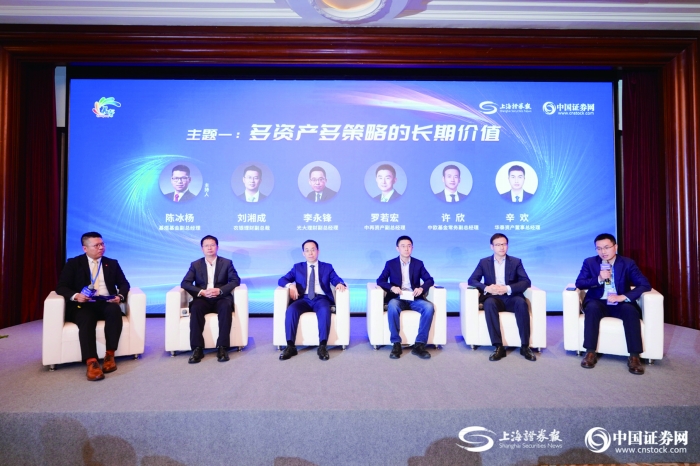
Core Viewpoint - The asset management industry is entering a new era where redefining the risk and return structure is essential due to accelerated economic cycle changes, increased global uncertainty, and continuously declining domestic interest rates [1] Group 1: Multi-Asset Strategy Necessity - Multi-asset allocation has transitioned from an optional strategy to a necessary one for asset management institutions, driven by rising uncertainties in the global economic cycle and geopolitical environment [2] - The low correlation between different asset classes is crucial for effectively reducing portfolio volatility and enhancing investment stability, especially in a low-interest-rate environment [2] - The traditional fixed-income strategies are becoming less effective in providing stable returns, necessitating a balance between reducing volatility and enhancing returns through multi-asset and multi-strategy approaches [2] Group 2: Long-Term Value Creation - The banking wealth management sector serves as a vital support for residents' wealth growth, leveraging a "universal toolbox" of multi-assets and multi-strategies to provide comprehensive wealth management solutions [3] - Long-term capital management perspectives highlight the importance of multi-asset strategies, especially as the risk-free return rate trends downward and traditional credit guarantees are no longer reliable [3] Group 3: Evolving Investment Logic - There is a need to upgrade the investment logic from merely "allocating assets" to a combination of "allocating assets and strategies," particularly in the context of shrinking non-standard assets [4] - Active management strategies like "fixed income plus" are being utilized to fill the yield gap left by the contraction of non-standard assets, demonstrating the integration of multiple asset classes [4] Group 4: Systematic Investment Capability - Public funds are also pushing for the systematic and industrialized approach to multi-asset and multi-strategy investments to address the asset allocation challenges faced by investors in complex market environments [4] - The investment returns from multi-asset strategies are generally derived from the beta of selected assets, alpha generated from strategies, and configuration alpha from the combination of various assets and strategies [5] Group 5: Risk Management Challenges - Effective risk control management is critical in multi-asset and multi-strategy approaches, as the risk budget of individual assets and their correlations significantly impact the overall portfolio risk and return [6] - The challenges of balancing these factors require long-term data accumulation and analysis, with AI models potentially assisting in addressing these issues [6]
从“可选项”到“必选项” 多资产多策略成资管行业共识
Shang Hai Zheng Quan Bao· 2025-12-14 19:43
从"可选项"到"必选项" 多资产多策略成资管行业共识 ■圆桌论坛 ◎记者 张欣然 稳定的收入预期是消费增长的基础,而银行理财行业正是居民财富稳健增值的重要支撑。在李永锋看 来,银行理财行业的核心优势在于具有多资产、多策略的"万能工具箱",能够通过组合优化,为客户提 供完整的财富管理解决方案,本质上就是创造长期价值。 险资机构则从长期资金管理的角度解释多资产策略备受关注的原因。中再资产副总经理罗若宏在会上表 示:一方面,随着经济结构和发展阶段的变化,无风险收益率处在长期下行趋势中;另一方面,过去的 信用刚兑逻辑被打破,使得投资者只能通过承担更多的市场波动来获取更高的收益。多资产、多策略的 本质,是通过构建更加分散化的投资组合,在降低市场波动影响的基础上争取收益的提升。 在经济周期变化加速、全球不确定性显著上升以及国内利率持续下行的背景下,资产管理行业正面临重 新定义风险与收益结构的时代命题。 12月12日,在上海证券报与交通银行上海市分行联合主办、基煜基金全程协办的"上证·大虹桥金融高质 量发展大会"上,来自银行理财、险资机构、公募基金的多位嘉宾认为,单一资产难以满足当前市场环 境下的风险抵御能力与收益增长需求 ...
拥抱大资管竞合时代 | 锚定多资产配置 银行理财普惠属性凸显
Shang Hai Zheng Quan Bao· 2025-12-12 00:55
Core Insights - The banking wealth management sector is entering a new development stage amid a reshaping of the wealth management system, driven by low interest rates, high volatility, and an "asset shortage" [1] - Bank wealth management products are evolving from a single focus to a more diversified approach, with risk presentation becoming more transparent and asset allocation expanding from traditional "fixed income" to "fixed income + multi-asset multi-strategy" [1][2] Group 1: Market Trends - The structural changes in the bank wealth management market are evident, with the total scale of bank wealth management products surpassing 32 trillion yuan in the third quarter, marking a 4.76% increase from the second quarter [2] - The "fixed income +" strategy products are expanding, with their scale increasing from 15.30 trillion yuan in July to 16.13 trillion yuan in October [2] - Cash management products showed significant growth in the third quarter, with a month-on-month increase of 8.8% in September [2] Group 2: Asset Allocation and Strategies - The low interest rate environment and "asset shortage" are pushing banks to move away from reliance on fixed income, with "multi-asset multi-strategy" becoming a consensus in the industry [3] - Banks are adjusting their asset allocation structures by incorporating convertible bonds, gold, REITs, and quantitative strategies to broaden income sources while controlling volatility [2][3] Group 3: Regulatory Changes - The implementation of asset management regulations is promoting a shift towards net value-based product structures, with ongoing corrections to practices that obscure net value fluctuations [4] - Regulatory bodies are halting practices like closing price valuations and requiring wealth management companies to phase out smoothing valuations, aiming for a clearer market pricing mechanism [4] Group 4: Consumer Behavior and Demand - The demand for wealth management among residents is increasing, with bank wealth management products becoming a key component of household asset allocation [6][7] - A survey indicates that 18.5% of residents prefer to invest more, with 36% favoring "non-principal guaranteed bank wealth management" as their preferred investment method [7] - The shift from deposit thinking to wealth management thinking is accelerating as deposit rates decline, prompting more individuals to seek better returns through bank wealth management [7][8]