大健康

Search documents
守护生命防线 履职映照初心
Xin Lang Cai Jing· 2026-01-28 22:02
市胸科医院海河院区心脏重症监护室,王霁翔带领医护团队构建的高效"绿色通道"是抢救生命的核心。 他说:"对于心梗患者,救治流程的每一秒优化都意味着生存希望的显著提升。"为此,他将国际先进技 术与临床实践紧密结合,不断优化从院前到康复的全流程体系,成为患者眼中值得托付的"定心丸"。 作为一名来自卫生健康行业的人大代表,王霁翔的视野并未局限于医院之内。他总是说:"健康不仅是 身体没有疾病,更包括心理与社会适应的完好状态。作为医疗界代表,推动'大健康'理念落地是我的责 任。"正因如此,他积极带领医护团队深入社区、基层,面向居民特别是公安干警、出租车司机等高压 职业群体开展健康讲座。"我们的目的很简单,就是教会大家识别风险、掌握急救方法,把健康的主动 权握在自己手里。" 王霁翔说,"我们致力于从源头构筑健康防线。" (来源:天津日报) 转自:天津日报 "时间就是心肌,时间就是生命。"这句话市胸科医院海河院区心脏重症监护室(CCU)主任王霁翔不仅 时常挂在嘴边,更是他时刻践行的信念。作为守护急性心肌梗死患者生命最后防线的医者,他带领团队 与死神赛跑;作为市人大代表,他将这份对生命的敬畏延伸至履职实践,诠释着双重身份的使命 ...
华邦健康(002004) - 002004华邦健康投资者关系管理信息20260128
2026-01-28 14:08
Group 1: Company Strategy - The company focuses on the "big health" development strategy in pharmaceuticals and medical services, aiming to create a comprehensive health ecosystem covering the entire lifecycle of customers [2] - It aims to enhance core competitiveness by concentrating on its main business and improving management levels across various sectors [3] Group 2: Financial Performance - The company forecasts a net profit attributable to shareholders for 2025 between CNY 660 million and CNY 730 million, representing a year-on-year growth of 320.74% to 344.16% [2] - The net profit after deducting non-recurring gains and losses is expected to be between CNY 600 million and CNY 670 million, indicating a growth of 277.59% to 298.31% compared to the previous year [2] Group 3: Pharmaceutical Business - The pharmaceutical segment includes the development, production, and sales of drug formulations and active pharmaceutical ingredients (APIs), with a focus on skin, anti-infection, and anti-tumor products [4] - The company has established three major API production bases, ensuring a stable supply of core products and achieving integration of API and formulation production [4] Group 4: Research and Development - The company emphasizes R&D in pharmaceuticals, focusing on generic drugs in dermatology and specialty medications, while also investing in innovative drugs through its subsidiary [5] - It holds a 13.2% stake in a company specializing in cell gene therapy, making it the third-largest shareholder [5] Group 5: Medical Services - The company has developed a layered business ecosystem in healthcare, providing integrated medical services that include basic medical care, rehabilitation, and longevity health services [6] - It operates hospitals and health management centers, focusing on disease treatment and health improvement [6][7] Group 6: Health Management - The company has established three longevity and anti-aging centers in major cities, implementing a comprehensive management system for health assessment and intervention [7] - It has partnered with global anti-aging pioneer Bryan Johnson to launch the "Blueprint" anti-aging brand, enhancing its service offerings [8] Group 7: Shareholder Returns - The company has maintained a high dividend policy, distributing approximately CNY 3 billion since 2018, and plans to continue sustainable profit distribution [9] - It is considering diverse dividend methods in the future based on its financial performance [9] Group 8: Bond Issuance - The company plans to issue exchangeable bonds totaling no more than CNY 1 billion, subject to market conditions and shareholder approval [9]

西麦食品(002956):增长根基稳步夯实 利润弹性释放可期
Xin Lang Cai Jing· 2026-01-27 02:38
原材料成本延续下降,叠加费用率优化,看好2026 年利润弹性 2025 年受益于澳麦原材料成本下行,公司前三季度毛利率同比提升1.03pct。2026年澳洲燕麦供需格局 继续改善,预计原料价格将延续下行趋势,驱动公司毛利率稳步上行,叠加公司费用管控能力持续优 化,盈利弹性有望加速兑现。 2025 年纯燕麦推出有机燕麦等高附加值产品表现较好,增长有所提速;复合燕麦在老品升级和新品放 量下,增速较快并贡献主要增量,预计2026 年燕麦主业将继续稳扎稳打,保障收入基本盘。同时, 2025 年公司积极推进大健康第二增长曲线发展,Q4 推出药食同源粉,在部分区域实现较好动销和回转 表现,预计2026 年全国市场铺开后,有望贡献显著增量,成为重要增长极。 线上渠道高增延续,线下新兴渠道拓展较好 2025 年公司线上渠道保持较强增长势能,其中抖音渠道增速较为亮眼,并且在控费提效策略推动下, 渠道盈利能力在逐季改善;天猫、京东等传统电商平台亦维持稳健增速,预计2026 年线上渠道仍将延 续高增长态势。线下渠道保持稳步增长,传统商超因调改增速放缓,新兴渠道成为线下主要增长引擎, 零食量贩持续扩充品类和门店覆盖数量,O2O 增加 ...

国恩科技(02768)1月27日至1月30日招股 预计2月4日上市
智通财经网· 2026-01-26 22:58
Core Viewpoint - The company, Guo'en Technology, is set to launch an IPO from January 27 to January 30, 2026, offering 30 million shares globally, with a price range of HKD 34.00 to HKD 42.00 per share, and aims to raise approximately HKD 1.058 billion for expansion and operational purposes [1][5]. Group 1: Company Overview - Guo'en Technology specializes in chemical new materials and gelatin, collagen, and related products, serving both the chemical and health industries [1]. - The company focuses on R&D, production, and sales of industrial and commercial products, catering to manufacturers in downstream sectors such as automotive, new energy, and home appliances [1]. Group 2: Chemical Industry Segment - In the chemical industry, the company has a comprehensive product range that includes upstream green petrochemical materials and midstream organic polymer modified materials [2]. - The company is the second-largest player in China's organic polymer modified materials and organic polymer composite materials market, with a market share of 2.5% as of 2024 [2]. - It is also the largest producer of polystyrene in China by production capacity as of 2024 [2]. Group 3: Health Industry Segment - In the health sector, the company focuses on the natural collagen industry, with a vertical integration strategy that spans from collagen to end products [3]. - The company is the second-largest producer of bone gelatin in China by output and the largest domestic brand in this category as of 2024 [3]. - It ranks as the second-largest domestic brand in the hollow capsule production sector in China by output as of 2024 [3]. Group 4: Investment and Fund Allocation - The company has secured cornerstone investment agreements totaling approximately HKD 320 million, with investors including several financial institutions [4]. - The net proceeds from the IPO are expected to be around HKD 1.058 billion, with allocations planned for expanding production capacity in Thailand (50%), China (35%), and investments in Hong Kong (10%) [5].
2025家用纺织品行业简析报告
MCR嘉世咨询· 2026-01-26 01:45
Investment Rating - The report indicates that the home textile industry is currently in a mature phase with a low market concentration, as evidenced by a CR5 of only 3.7% in 2024, suggesting potential for growth in market share among leading brands [30]. Core Insights - The market size of China's home textile industry is projected to reach 327.9 billion yuan in 2024, with bedding products accounting for approximately 72% of the market share [4][33]. - The industry is transitioning from a traditional channel-driven model to a dual-driven model focusing on products and brands, with profit sources shifting from scale effects to technological added value and brand premiums [4][20]. - The emergence of the sleep economy and technological innovation is driving new growth, with consumer decision-making shifting from aesthetic to experiential factors [4][39]. - Government policies, including "old-for-new" exchange and subsidies, are stimulating demand, particularly in online channels, with subsidies typically set at 15% of the sales price and a maximum of 2,000 yuan per product [18][19]. Summary by Sections Industry Definition - Home textiles encompass a consumer-oriented industry centered around textile products for living environments, including bedding, bath textiles, and living room textiles, with bedding being the core segment [5][8]. Market Structure - The home textile market is primarily composed of bedding (72%), living room textiles (14%), and bath textiles (9%) [7]. Industry History - The development of the home textile industry can be divided into three phases: 1. Growth driven by real estate and weddings (before 2015) 2. Market adjustment driven by daily replacements (2015-2024) 3. New growth driven by the sleep economy and technological innovation (2025 onwards) [11][13][15][17]. Policies - Recent government initiatives, including consumption subsidies and "old-for-new" policies, have significantly stimulated demand, especially in online channels [18]. Business Model - The core business logic of the home textile industry involves R&D and supply chain integration to produce textile products that meet consumer needs, transitioning from traditional channel-driven to a dual focus on product and brand [20]. Industry Chain Analysis - The industry chain includes upstream raw material supply, midstream product design and manufacturing, and downstream sales channels, with midstream being the core value-creating segment [23]. Upstream Analysis - Raw material prices are volatile, significantly impacting production costs, with materials accounting for over 80% of total costs for companies like Fuanna [26][27]. Downstream Analysis - The home textile industry is expected to maintain a stable growth rate of approximately 1.5% from 2025 to 2029, with online sales channels accounting for 34.4% of the market [33][36]. Future Prospects - The report highlights opportunities in health-functional textiles, the aging population market, and the benefits of cross-border e-commerce, which can enhance market reach [44][45][46].
人保国寿大动作!新设健康管理公司,究竟在下一盘什么样的大棋
Sou Hu Cai Jing· 2026-01-22 16:24
Core Insights - The establishment of health management companies by major insurers like PICC and China Life highlights a strategic shift towards integrating health services with insurance offerings [1][2] - The trend is driven by declining interest rates and the need for insurers to enhance their market competitiveness by offering health and wellness services alongside traditional insurance products [3] Group 1: Company Developments - PICC Health Management Co., established with a capital of 200 million yuan, is the first non-financial subsidiary approved by the National Financial Regulatory Administration [1] - China Life's health management company, with a registered capital of 323 million yuan, focuses on various elder care and health services, expanding its previous health management initiatives [1][2] - PICC Health Management aims to provide a stable health service module for the group's diverse insurance sectors, emphasizing the integration of AI and digital technology in health management [2] Group 2: Industry Trends - Insurers are increasingly investing in health management to address the changing consumer demand for health security rather than just financial compensation [3][9] - The competitive landscape is shifting from merely having health services to the quality and efficiency of those services, prompting insurers to optimize their resource allocation [3][10] - Different insurers are adopting varied strategies in health management, with some focusing on building comprehensive ecosystems while others leverage external partnerships and technology [4][7] Group 3: Strategic Models - The "closed-loop" model, utilized by leading insurers like Taikang and China Life, integrates various health services into a cohesive ecosystem, positioning insurers as both service providers and asset owners [4][5] - The "integrative" model, adopted by companies like PICC and Fosun, emphasizes flexibility and resource connectivity, allowing for a broader range of health management services [7][8] - Taikang's recent shift towards a mixed asset approach in its health services indicates a trend towards more adaptable business models in the industry [5][6]


四川双马:目前公司在保持原有建材生产制造业务经营的同时正在着力发展生物医药研发生产业务
Zheng Quan Ri Bao Wang· 2026-01-22 09:47
Core Viewpoint - Sichuan Shuangma is focusing on developing its biopharmaceutical research and production business while maintaining its existing building materials manufacturing operations [1] Group 1: Company Operations - Sichuan Shuangma is engaged in industrial investment and management as well as private equity fund management [1] - The company is managing and participating in investments in multiple private equity funds across various sectors including smart manufacturing, semiconductors, new energy, new consumption, health care, and biotechnology [1] Group 2: Investment Philosophy - The company adheres to the philosophy of promoting industry through capital, supporting the development of the real economy [1]

西麦食品20260121
2026-01-22 02:43
Summary of Ximai Foods Conference Call Company Overview - **Company**: Ximai Foods - **Industry**: Oat Products Key Points and Arguments Industry and Market Trends - Benefiting from a bumper harvest of oats in Australia, the average procurement price of oats is expected to decrease by at least 10% year-on-year in 2026, with a continued downward trend anticipated in 2027 [2][3] - The main raw material, imported oats from Australia, constitutes 35%-40% of production costs, which have been under pressure due to rising prices from 2018 to 2024 [3] Financial Performance and Projections - The company expects a stable revenue growth of approximately 20% over the next two to three years, driven by new product iterations and channel expansion [2][5] - A 10% decrease in Australian oat costs is projected to increase the company's gross margin by 2 percentage points [2][3] - The sales expense ratio has been around 30% in recent years but is expected to decline steadily due to scale effects and channel optimization [4] Product Development and Innovation - Continuous optimization of product structure with the introduction of high-end organic oats and composite oats, which have gross margins 8-10 percentage points higher than regular oats [2][3] - Development of high-value products such as gift boxes is contributing positively to gross margins [2] Channel Strategy - The company plans to enhance online and offline channel expense structures starting in 2027, focusing on precise online marketing and adjusting traditional supermarket costs [4][7] - Emphasis on new channels such as Douyin (TikTok), snack wholesale, and O2O (Online to Offline) models to capture market share [5][6] Health and Wellness Segment - The health and wellness segment is identified as a second growth curve, with new products like medicinal food powders and protein powders expected to contribute to mid-term revenue growth [2][10] - The revenue from the health segment is projected to exceed 2 billion yuan in 2026, aiming for 3 to 5 billion yuan in the following three years [10] Management and Strategic Changes - The new general manager has focused on product innovation, channel transformation, and health sector development since taking office in July 2025 [11] - A stock incentive plan was implemented in 2025, requiring a revenue growth of over 15% in the next two years to ensure stability [11] Valuation and Investment Potential - Current valuations do not reflect the potential benefits from cost reductions and growth in the health segment [12] - The company is recommended for investment focus due to expected dual improvements in performance and valuation driven by cost reductions and new channel breakthroughs [12] Additional Important Insights - The company is expected to increase its market share in the oat sector to 30% by 2027-2028, leveraging its leading position and consumer health trends [8][9] - The focus on young consumers and health-conscious demographics is driving product acceptance and market growth [8]
人口对我国一级市场的影响
叫小宋 别叫总· 2026-01-20 09:46
Core Viewpoint - The article discusses the impact of declining population on both primary and secondary markets in China, highlighting the challenges and opportunities that arise from this demographic shift [1][2]. Group 1: Negative Aspects - Fundraising pressure is increasing as the population concentrates in a few large cities, putting financial strain on many smaller cities [4]. - Local governments are facing survival pressures, especially those relying on fundraising from smaller cities, as traditional fundraising methods may no longer be effective [5]. - The number of high-net-worth individuals around the age of 50 is rapidly declining, which poses challenges for wealth management institutions that rely on this demographic for fundraising [6]. - The decline in population will affect growth expectations across various industries, leading to a decrease in market valuations for listed companies. Investors are shifting their focus from growth expectations to cash flow security [7]. - Labor-intensive and traditional businesses will face multiple challenges regarding revenue, profit, cash flow, and valuation, necessitating a long-term adjustment across the industry [7]. - There may be an increase in preventive savings among residents, leading to a significant shift of funds from the secondary market back to banks [8]. - Overall demand growth is slowing, putting pressure on consumer sectors, which will see reduced growth potential and no longer command valuation premiums [9][10]. Group 2: Positive Aspects - Certain sectors are expected to benefit from demographic changes, including the silver economy, health care, single economy, self-care economy, innovative pharmaceuticals, and international expansion [11][12]. - The decline in population may lead the primary market to focus more on hard technology and high-end manufacturing, with products and services that can replace human labor being favored [14]. - The article suggests looking at Japan's aging population for insights into potential business changes and new market opportunities [12]. Group 3: Recommendations for Investment Managers - Investment managers in institutions affected by population decline should consider updating their resumes and exploring new job opportunities [16]. - Those not currently focused on hard technology should consider transitioning to this sector unless their current field has a strong competitive advantage [16]. - Utilizing AI tools can significantly enhance information collection and work efficiency, helping investment managers adapt to the changing landscape [17][18].



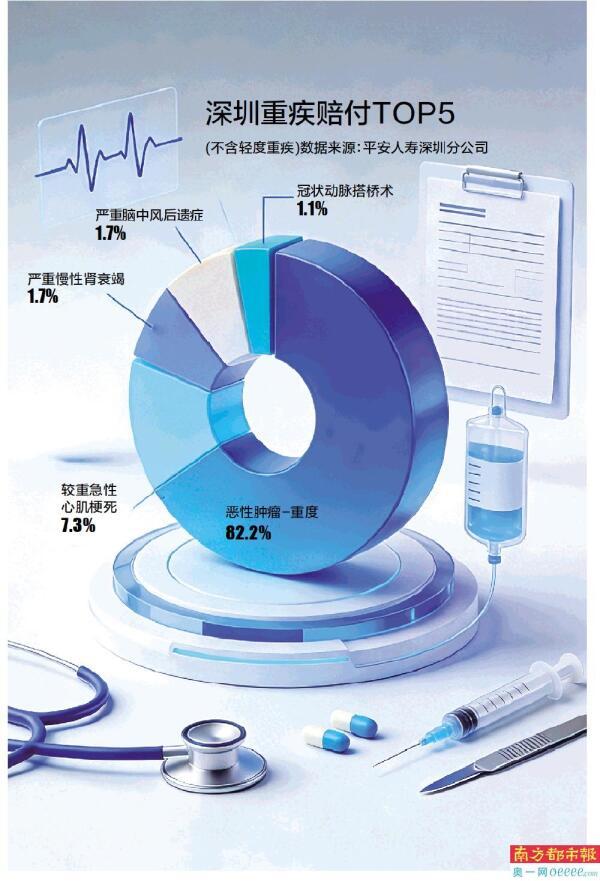
重疾出险最小仅2岁 赔付最高超2100万
Nan Fang Du Shi Bao· 2026-01-18 23:13
Core Insights - The annual claims reports from leading insurance institutions in Shenzhen reveal significant health trends among residents, particularly highlighting the prevalence of critical illnesses and the demographic most affected [2][3][4] Group 1: Health Trends and Critical Illnesses - The primary demographic for critical illness claims in Shenzhen is individuals aged 30-50, with a notable increase in cases of thyroid, lung, and breast cancers, indicating a trend towards younger patients [2][3] - Malignant tumors account for over 80% of critical illness claims, making them the leading health threat to residents, with leukemia being the most common critical illness among children [3][4] - The total number of claims in Shenzhen reached approximately 150,000 last year, with a growth rate of about 10%, and the total payout amounting to approximately 1.17 billion yuan, nearly half of which was attributed to critical illnesses [3] Group 2: Claims and Payouts - The highest claim in Shenzhen's life insurance sector last year was related to cancer, with a payout exceeding 21.25 million yuan for a policyholder who succumbed to breast cancer [5][6] - Tencent's micro-insurance platform reported a total claim amount of 8.4 billion yuan in 2025, with over 25.7 million claims processed, indicating a significant volume of insurance activity [4][6] - The average claim processing time has improved significantly, with some claims being settled in as little as 8 seconds due to advancements in AI and digital processing [7][8] Group 3: Technological Advancements in Claims Processing - The integration of AI in the claims process has led to faster and more efficient claim settlements, with some claims being processed in seconds, enhancing customer experience [7][8] - The introduction of a "one-stop settlement" service allows for simultaneous completion of medical insurance reimbursements and commercial insurance claims, significantly reducing the time required for claim processing [8]