存量优化

Search documents
王府井:业态迭代与创新调改并举 存量优化重塑商业新生态
Zhong Zheng Wang· 2025-08-30 07:03
Core Viewpoint - Wangfujing is actively transforming its traditional business model to adapt to the new urban development phase in China, focusing on optimizing existing assets and enhancing consumer experiences through innovative strategies [1][4]. Group 1: Financial Performance - In the first half of 2025, Wangfujing reported a revenue of 5.361 billion yuan and a net profit attributable to shareholders of 81 million yuan [1]. Group 2: Business Transformation and Innovation - The company is implementing a "one store, one policy" strategy, leveraging emerging cultural trends to create differentiated commercial identities, exemplified by the Wangfujing Joy Shopping Center, which saw a nearly 48% year-on-year increase in sales and over 6.1 million visitors, a 30% increase [1][2]. - Wangfujing is integrating traditional culture with commercial updates, as seen in the renovation of the Beijing Friendship Store, which eliminated vacancy rates and significantly increased daily foot traffic through effective online promotion [2]. - The company has introduced nearly 1,000 new brands in the first half of the year, including 160 flagship stores, and has launched innovative marketing events to enhance consumer interaction and solidify its position in physical retail innovation [2]. Group 3: Diverse Business Development - The outlet business has become a significant contributor to Wangfujing's performance, with over 200 new brands introduced, including more than 30 flagship stores, enhancing product offerings and consumer experiences [3]. - Wangfujing is expanding into new business areas, including the opening of a duty-free store in Wuhan, which marks the company's comprehensive coverage of major duty-free business types [3]. - The company is also developing new shopping centers, such as the Linfen Wangfujing UPTOWN and Lhasa Wangfujing Shopping Center, to meet the growing demand for upgraded consumer services [3]. Group 4: Market Environment and Future Outlook - The government has introduced consumption subsidy policies exceeding 100 billion yuan, indicating a warming consumer market, which Wangfujing is poised to leverage through its innovative adjustments and forward-looking strategies [4].

王府井上半年实现营业收入53.61亿元 存量优化重塑商业新生态
Zheng Quan Ri Bao Wang· 2025-08-30 04:14
Core Viewpoint - Wangfujing Group is actively transforming its traditional business model to adapt to new consumer trends and optimize its operations, achieving significant growth in sales and customer traffic in the first half of 2025 [1][2][3] Group 1: Financial Performance - In the first half of 2025, Wangfujing reported a revenue of 5.361 billion yuan and a net profit attributable to shareholders of 81 million yuan [1] - The Wangfujing Joy Shopping Center achieved a nearly 48% year-on-year increase in sales and a 30% increase in customer traffic, surpassing 6.1 million visitors [1] Group 2: Business Transformation and Innovation - The company is implementing a "one store, one policy" strategy, focusing on emerging cultural trends to create differentiated commercial identities [1] - The Beijing Friendship Store renovation has successfully eliminated vacancy rates and significantly increased daily customer traffic through online promotion, with over 6 million views on Xiaohongshu [2] - Wangfujing introduced nearly 1,000 new brands in the first half of the year, including 160 first stores, enhancing consumer interaction through innovative marketing activities [2] Group 3: Expansion of New Business Segments - The company opened a duty-free store in Wuhan in May 2025, marking its comprehensive coverage of major duty-free business types [3] - New shopping centers, including Linfen Wangfujing Shangcheng UPTOWN and Lhasa Wangfujing Shopping Center, were opened during the reporting period [3] - The company plans to introduce immersive international performance projects and high-quality international dining at the Yansha Friendship Mall, aiming to create a new consumption scene that integrates culture, commerce, nature, and social elements [3]
司徒正襟:中国房地产市场的人口拐点、存量革命与制度重构
Sou Hu Cai Jing· 2025-08-14 13:20
Core Viewpoint - The Chinese real estate market is transitioning from a "high leverage, high turnover, high growth" model to a phase of "stock optimization" and "institutional restructuring" due to unprecedented structural challenges, including negative population growth and declining housing demand [1][3]. Group 1: Population Structure Changes - The birth rate in China has drastically declined, with 2023 recording only 9.02 million births, a birth rate of 6.39‰, down over 50% from 2016 [3][4]. - The core home-buying demographic (ages 25-39) is shrinking, with predictions indicating that by 2030, the annual birth rate may drop below 7 million, leading to sustained population decline [3][8]. - The demand for housing is shifting from "availability" to "quality," as the total housing demand decreases while the need for quality housing increases [9][10]. Group 2: Urbanization Process - China's urbanization rate is nearing its peak, with a current rate of 67%, indicating a shift from "incremental development" to "stock renewal" [12]. - The government is promoting high-quality urban renewal, with various innovative models being explored, such as comprehensive area updates and functional transformation [13]. - The residential quality standards are undergoing a revolution, with new regulations emphasizing safety, comfort, and sustainability [14]. Group 3: Institutional Challenges - The pre-sale system in real estate has led to significant issues, including unclear responsibilities and inadequate maintenance of common areas, reflecting systemic risks in the market [16][17]. - The public area allocation disputes and the binding of property management to developers have resulted in low service quality and operational inefficiencies [16][17]. Group 4: Land System Reform - International experiences suggest that flexible land use policies can better balance housing supply and demand, contrasting with the rigid controls seen in the U.S. [18][20]. - China's collective land system reform is exploring new models to activate "sleeping assets," with local innovations facing challenges in rights clarification and market circulation [22][23]. Group 5: Conclusion and Outlook - The future of the Chinese real estate market will be characterized by "decreasing total volume and differentiated structure," necessitating a shift from developers to comprehensive operators [24]. - Companies that respect demographic trends and focus on long-term operations will thrive, as the market increasingly values quality over quantity in housing [26].


酒业半年大考:八仙过海寻出路,三大趋势定格局
Sou Hu Cai Jing· 2025-07-21 07:29
Industry Overview - In 2024, the production of large-scale liquor enterprises is expected to reach 4.145 million kiloliters, a year-on-year decrease of 1.8%, while sales revenue is projected to increase to 796.38 billion yuan, a year-on-year increase of 5.3%, indicating a unique trend of "declining volume but increasing profit" [2] - By the first half of 2025, 59.7% of liquor companies reported a decline in operating profit, and 50.9% experienced a contraction in revenue, with an average inventory turnover period of 900 days, up 10% year-on-year, highlighting significant challenges in the industry [2] Key Trends - The industry is witnessing a simultaneous trend of "contraction and concentration," with smaller companies exiting the market and leading firms shifting focus from "high-speed growth" to "steady development" [3] - A "channel revolution" is underway, with major companies moving towards direct consumer engagement through new sales channels like online platforms and instant retail, indicating a shift in power from distributors to brands [4] - Consumer demand is evolving, driven by younger consumers, leading to product upgrades towards lower alcohol content and diverse flavors, with major brands launching new products to cater to these trends [5] Company Performance - **Kweichow Moutai**: Aims for a 9% revenue growth by 2025, with a first-quarter revenue of 51.443 billion yuan, up 11.07%, and a net profit of 26.847 billion yuan, up 11.56%, demonstrating strong execution of its strategic goals [6][7] - **Wuliangye**: Targets revenue growth in line with macroeconomic conditions, reporting a first-quarter revenue of 36.940 billion yuan, up 6.05%, and a net profit of 14.860 billion yuan, up 5.80%, with ongoing channel reforms [6][8] - **Luzhou Laojiao**: Focuses on low-alcohol products, with a first-quarter revenue of 9.352 billion yuan, up 1.78%, and a net profit of 4.593 billion yuan, up 0.41%, indicating a strong market position in lower alcohol segments [6][9] - **Shanxi Fenjiu**: Reports a first-quarter revenue of 16.523 billion yuan, up 7.72%, and a net profit of 6.648 billion yuan, up 6.15%, with ongoing efforts in national expansion and product innovation [6][10] - **Guojiao**: Achieves a first-quarter revenue of 5.099 billion yuan, up 9.17%, and a net profit of 1.644 billion yuan, up 7.27%, driven by a focus on the wedding market [6][12] Strategic Shifts - The industry is transitioning from "incremental expansion" to "stock optimization," with companies focusing on refining existing markets rather than pursuing aggressive growth [17] - A shift from "channel-driven" to "consumer-driven" strategies is evident, with companies prioritizing direct consumer engagement and enhancing consumer experiences [18] - The trend is moving from "high alcohol content" to "low and diverse products," with major brands launching lower alcohol options to attract younger consumers [20] - Companies are increasingly emphasizing "long-term value" over short-term performance, with a focus on cultural branding and sustainable growth strategies [21] - The shift from "national expansion" to "regional deepening" is becoming a survival strategy for many companies, focusing on local market penetration and brand recognition [22][23]






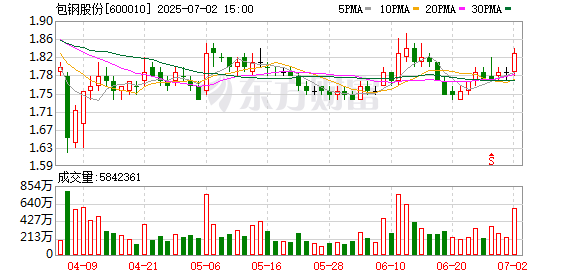
一季度净利润同比下滑29.3%,包钢股份2025年计划产铁1462万吨
Hua Xia Shi Bao· 2025-07-02 07:14
Core Viewpoint - In 2024, Baosteel achieved a net profit of 265 million yuan, a year-on-year decline of 48.64%, with significant fluctuations in quarterly performance due to industry challenges and pricing pressures [2][4][5]. Financial Performance - In Q4 2024, Baosteel reported revenue of 18.22 billion yuan, a year-on-year increase of 7.3%, and a net profit of 781 million yuan, a substantial increase of 1835.1% [2]. - However, in Q1 2025, the company experienced a revenue decline of 13.0% and a net profit drop of 29.3% compared to the same period in 2024 [2][8]. - The overall revenue for the steel smelting sector decreased by 3.51% to 68.089 billion yuan, with a gross margin decline of 1.84 percentage points to 7.88% [4]. Production and Sales - In 2024, Baosteel produced 14.21 million tons of pig iron, 14.99 million tons of steel, and 1.412 million tons of finished products, alongside 377,300 tons of rare earth concentrate and 578,400 tons of fluorite concentrate [4]. - The sales volume of specialty steel increased by 9.65%, and rare earth steel production reached a record high of over 1.5 million tons [4]. Market Conditions - The steel industry faced a "three highs and three lows" situation characterized by high production, high costs, high exports, low demand, low prices, and low efficiency, leading to a phase of "reduction development and stock optimization" [6]. - The average steel price index in China for 2024 was 102.47 points, reflecting a year-on-year decrease of 8.39% [6]. Strategic Initiatives - Baosteel plans to accelerate industrial layout optimization focusing on high-end, intelligent, and green transformation, with R&D investment increasing by 47.07% to 3.72 billion yuan in 2024 [3]. - The company aims to adjust its product structure towards high-quality specialty steel and rare earth steel, leveraging resources from the Baiyun Obo area [8][9]. - Baosteel's 2025 production targets include 14.62 million tons of pig iron, 15.64 million tons of crude steel, and 1.476 million tons of finished products, indicating growth compared to 2024 [8]. Financial Health - As of the end of 2024, Baosteel had cash and cash equivalents of 14.088 billion yuan and a debt-to-asset ratio of 60.48%, reflecting a slight increase from the previous year [7].

城市更新进行时:旧空间里的新天地
Yang Shi Xin Wen Ke Hu Duan· 2025-06-12 07:48
Core Viewpoint - The recent announcement of the 2025 central government financial support for urban renewal actions marks the acceleration of urban renewal efforts in 20 cities, including Beijing, aiming for significant improvements in living environments and urban characteristics by 2030 [1] Group 1: Reasons for Urban Renewal - Millions of residents live in outdated spaces that require revitalization due to the rapid urban development over the past decades, leading to many residential areas built before 2000 becoming inadequate for modern living [1][2] - The definition of "old" residential areas includes those built before 2000 that are severely neglected, lacking essential amenities such as elevators, parking spaces, and proper management [1] Group 2: Funding Sources - Urban renewal projects often require substantial funding, sometimes exceeding hundreds of millions, necessitating innovative institutional approaches to attract more social capital beyond government financing [2][3] - Various cities are exploring sustainable financing models that involve government funding to stimulate private investment, creating a collaborative approach among government, enterprises, and residents [3] Group 3: Implementation Strategies - The current urban renewal efforts focus on substantial improvements rather than superficial changes, emphasizing the enhancement of infrastructure and community spaces [4][5] - Successful projects have demonstrated the importance of involving residents in the design and implementation processes, leading to higher satisfaction and community engagement [8] Group 4: Governance and Collaboration - The shift from government-led initiatives to multi-stakeholder collaboration is crucial, with various entities working together to ensure effective urban renewal [6][7] - Establishing a consensus among residents regarding project details is essential for fostering community ownership and maintaining the outcomes of urban renewal efforts [7] Group 5: Desired Outcomes - The ultimate goal of urban renewal is to create spaces that residents want to inhabit, focusing on sustainable operations and community integration rather than merely aesthetic improvements [9][10] - Successful urban renewal projects prioritize the creation of vibrant public spaces that enhance community interaction and cultural engagement, ensuring long-term vitality [9][10]
投资占比创近年来新高 商业地产投资或步入活跃期
Zhong Guo Jing Ying Bao· 2025-04-29 21:57
Core Insights - The hotel investment market in China is transitioning from incremental expansion to stock optimization due to macroeconomic fluctuations and real estate policy impacts [1][6] - The total hotel investment transaction amount in mainland China from 2015 to 2024 is approximately 168.54 billion, with an average annual transaction amount of about 13.94 billion [1] - In 2024, hotel investments accounted for 10.7% of the overall investment market, reaching a recent high [1] Investment Trends - First-tier cities are the focal point for capital due to their anti-cyclical capabilities and composite value, with over 60% of hotel transactions occurring in these areas over the past decade [1][2] - New first-tier cities are emerging as new investment hotspots, with their hotel investment transaction share increasing by 6 percentage points from 2015-2019 to 2020-2024 [1][2] - The demand for hotel investments is driven by the dual effects of business and cultural tourism, particularly in first-tier cities, which host about 40% of national conference and exhibition activities [3] Market Dynamics - The hotel investment market has seen a rise in bulk transaction amounts, with 2023 marking a historical high for hotel investment transactions in mainland China [2] - The performance of hotels in new first-tier cities like Hangzhou, Chengdu, Chongqing, and Xi'an has improved significantly, attracting investor interest [3] - Urban hotels account for over 70% of total transaction amounts, driven by stable market demand and advantageous geographic locations [3] Risk Management - The growth of the hotel investment market brings associated risks, including legal issues related to property rights and compliance [4][5] - Investors need to enhance their asset selection and risk management capabilities due to market differentiation and valuation discrepancies [2][6] - Innovative exit strategies, such as public REITs, are being explored to improve liquidity and value of hotel assets, although they are not yet included in the underlying asset category for public REITs [5][6]