
就业增长

Search documents
理事鲍曼或已“出局” 白银td继续走涨
Jin Tou Wang· 2025-12-22 06:51
Group 1 - Silver TD is currently trading above 16014, with an opening price of 15390 per kilogram, and has risen by 6.10% to a current price of 16145 per kilogram, reaching a high of 16280 and a low of 15314 during the day, indicating a bullish short-term trend [1][3] - The Relative Strength Index (RSI) on the hourly chart for Silver TD shows it is in the overbought zone, suggesting caution for potential pullbacks, while the Bollinger Bands are expanding, indicating sufficient upward space [3] Group 2 - A productive interview took place between Federal Reserve Governor Waller and Trump regarding the Fed Chair position, focusing on the labor market and employment growth stimulation [2] - Treasury Secretary Yellen and other senior officials attended the interview, which occurred shortly before Trump's national address on economic issues [2] - The discussions between Waller and Trump counter concerns that the President is seeking a candidate who would yield to his preferences on interest rates, emphasizing a broad range of economic topics were covered [2]
宏观经济周报-20251222
工银国际· 2025-12-22 05:36
Economic Indicators - The ICHI Composite Economic Index remains in the expansion zone, indicating ongoing economic recovery momentum[1] - The Consumer Confidence Index has slightly rebounded, stabilizing above the threshold line for three consecutive weeks, reflecting resilient consumer demand[1] - The Investment Confidence Index is trending upwards, suggesting a stabilization in corporate investment intentions despite remaining slightly below the threshold line[1] Sector Performance - The Industrial Added Value for large-scale industries grew by 4.8% year-on-year, with the equipment manufacturing sector leading at a growth rate of 7.7% and contributing 59.4% to the overall increase[2] - The Service Production Index increased by 4.2% year-on-year, with notable growth in information transmission, software, and IT services at 12.9%[2] - Retail sales of consumer goods in November grew by 1.3% year-on-year, with premium goods like cosmetics and jewelry seeing growth rates of 6.1% and 8.5%, respectively[2] Global Economic Context - The U.S. Consumer Price Index (CPI) rose by 2.7% year-on-year in November, lower than the expected 3.1%, indicating easing inflation pressures[6] - The U.S. non-farm payrolls added approximately 64,000 jobs in November, surpassing expectations, but the unemployment rate rose to 4.6%, the highest since September 2021[7] - The Bank of Japan raised its benchmark interest rate by 25 basis points to 0.75%, the highest level since 1995, in response to sustained inflation above the 2% target[8]
美联储主席遴选持续推进 理事沃勒据悉面试表现出色 讨论聚焦就业
Sou Hu Cai Jing· 2025-12-19 18:13
Core Viewpoint - The article discusses the ongoing selection process for the next Chair of the Federal Reserve, highlighting the recent interview between Federal Reserve Governor Christopher Waller and President Trump, focusing on labor market conditions and employment growth [1][2]. Group 1: Interview Details - Christopher Waller had a strong interview with President Trump regarding the Federal Reserve Chair position, discussing labor market conditions and strategies to boost employment growth [1]. - The interview took place at the White House shortly before Trump's economic address, with key officials including Treasury Secretary Scott Pruitt and White House Chief of Staff Susie Wiles present [1]. - Other candidates for the position include BlackRock executive Rick Rieder, who is scheduled for an interview, while Michelle Bowman is no longer a candidate [1]. Group 2: Trump's Perspective - Trump expressed that the Federal Reserve Chair should communicate with him regarding interest rate policies, indicating he believes his views should be considered [2]. - Trump praised Waller, stating he is a strong candidate and has been involved in the process for a long time, although there is no indication that Waller is the frontrunner for the position [2]. - The interview process is described as highly organized, with Trump indicating he will soon announce a new Chair who believes in significantly lowering interest rates, which could lead to further decreases in mortgage rates [3].
调查:美国企业CFO平均预期明年物价涨幅4.2%
Ge Long Hui A P P· 2025-12-18 04:01
Core Insights - The confidence of CFOs regarding their companies and the overall U.S. economy has declined, with the optimism index dropping from 62.9 in Q3 to 60.2, lower than the high of 66 following the election of Donald Trump [1] Group 1: Economic Outlook - The median expectations for employment and economic growth for the next year are 1.7% and 1.9%, respectively [1] - Only 40% of respondents indicated that their companies are hiring for new positions, while nearly 20% stated they are not hiring at all [1] - Approximately 9% of CFOs expect layoffs within their companies [1] Group 2: Concerns and Predictions - The primary concern among CFOs remains the issue of tariffs [1] - The average expected inflation rate for the coming year is 4.2%, with half of the respondents predicting inflation rates of 3.5% or higher [1] - The average forecast for company revenue growth is nearly 8% [1]
今晚九点半!非农报告罕见“二合一”发布,失业率存飙升可能
Jin Shi Shu Ju· 2025-12-16 06:36
Group 1 - The upcoming non-farm payroll report for November is expected to show an increase of 50,000 jobs, with the unemployment rate projected to reach 4.4% [1][5] - The report will also include data from October, as the Labor Statistics Bureau could not collect unemployment rate data for that month due to the government shutdown [3][5] - Economists predict that the employment data will be volatile, with estimates for November ranging from a decrease of 20,000 to an increase of 127,000 jobs [3][4] Group 2 - The government shutdown has created uncertainty around the data, with over 700,000 federal workers being furloughed during the shutdown [4][5] - The report will provide insights into the labor market's current state and will influence the Federal Reserve's interest rate decisions for the upcoming year [1][4] - Key details from the establishment and household surveys will be crucial for understanding the performance of various sectors in the economy [6] Group 3 - The retail sales data for October is also set to be released, with a modest growth of 0.1% expected, indicating stable consumer demand [6][7] - The Consumer Price Index (CPI) for November will be released later, but it will lack month-over-month data due to the absence of October's report, leading investors to focus on year-over-year indicators for inflation trends [7]
本周非农就业数据或将揭示美国经济哪些信号
Xin Lang Cai Jing· 2025-12-15 15:45
Group 1 - The November non-farm employment report is delayed due to the longest government shutdown in U.S. history, lasting 43 days, which has impacted the release of key economic data [2][18] - The report is now scheduled for release on December 16, instead of the usual first Friday of the month, and will include about half of the October data [6][22] - The market expects the report to show only 40,000 new jobs added in November, with the unemployment rate remaining stable at 4.4%, which is above recent averages despite being historically low [3][19] Group 2 - Economists warn that the data in this report may be chaotic due to the unusual circumstances surrounding the government shutdown, which affected data collection and processing [4][20] - The Bureau of Labor Statistics (BLS) was unable to conduct household surveys during the shutdown, leading to the integration of October data into the November report [6][22] - The report will include notes explaining the context and technical issues related to the data, highlighting the impact of the shutdown on employment statistics [23] Group 3 - Recent private sector employment reports indicate a mixed picture, with a net increase of 47,000 jobs in October but a decrease of 32,000 in November [9][25] - Job vacancies increased in October, but hiring activity has stagnated, with rising layoffs and workers reluctant to leave their current positions [27] - Economists predict that the employment growth observed in September may represent a peak, with estimates suggesting a total of 0 to 50,000 new jobs added in October and November combined [12][28] Group 4 - Key indicators to watch in the upcoming report include detailed data from both the business and household surveys, which will provide insights into the employment market's performance [14][30] - There is an expectation that employment in goods-related industries may decline, while healthcare and possibly the restaurant sector could continue to see job growth [32] - Wage growth is anticipated to slow, which may further suppress future consumer spending [32]


全美商业经济协会:调查显示明年美国就业增长仍将疲弱
Sou Hu Cai Jing· 2025-11-24 12:29
Core Insights - The National Association for Business Economics (NABE) predicts a slight acceleration in U.S. economic growth to 2% next year, up from 1.8% in the previous survey [1] - Increased personal spending and business investment are expected to drive economic growth, but new import tariffs from the Trump administration are projected to drag growth down by at least 0.25 percentage points [1] - The report identifies "tariff impact" as the largest downside risk to the U.S. economic outlook, with stricter immigration enforcement also seen as a factor suppressing growth [1] Economic Indicators - Inflation is expected to be 2.9% by the end of this year, slightly lower than the previous forecast of 3%, and is projected to decrease only marginally to 2.6% next year, with tariffs contributing 0.25 to 0.75 percentage points [1] - Job growth is anticipated to remain moderate, with an average of approximately 64,000 new jobs added monthly, significantly below recent averages [1] - The unemployment rate is expected to rise to 4.5% by early 2026 and remain at that level throughout the year [1] Federal Reserve Outlook - The Federal Reserve is expected to lower interest rates by 25 basis points in December, with an additional 50 basis points reduction anticipated next year, approaching a neutral monetary policy rate [1]
12月降息预期骤降?白宫哈塞特:这时候“收手”,时机非常糟
Feng Huang Wang· 2025-11-21 02:09
Core Viewpoint - The unexpected increase of 119,000 non-farm jobs in September significantly exceeded market expectations, raising the likelihood that the Federal Reserve will not lower interest rates next month [1] Economic Impact - Kevin Hassett, Director of the National Economic Council, indicated that the government shutdown is expected to negatively impact Q4 GDP by 1.5 percentage points [1] - The strong employment report for September is not sufficient to offset other negative factors affecting the economy [1] Inflation and Interest Rates - The Consumer Price Index (CPI) for September showed better-than-expected inflation, which is currently above the Federal Reserve's 2% target [3] - There are concerns that lowering interest rates to support the labor market could prolong the high inflation cycle and increase risk appetite in financial markets [3] Employment Trends - The employment growth in September followed a downward revision of August's job gains from an increase of 22,000 to a decrease of 4,000 [1] - The recent trend shows fluctuations in job growth, with negative job additions in June, followed by increases in July and September [1] - Most job growth has been in the healthcare and education sectors, but the construction industry is also seeing an increase in jobs due to new factory openings driven by tax incentives [1][4] Unemployment Rate - Despite the significant job growth, the unemployment rate rose by 0.1 percentage points to 4.4%, attributed to an increase in labor force participation as more individuals begin to seek employment [1][4]
刚刚!美联储,降息大消息!
中国基金报· 2025-11-20 15:04
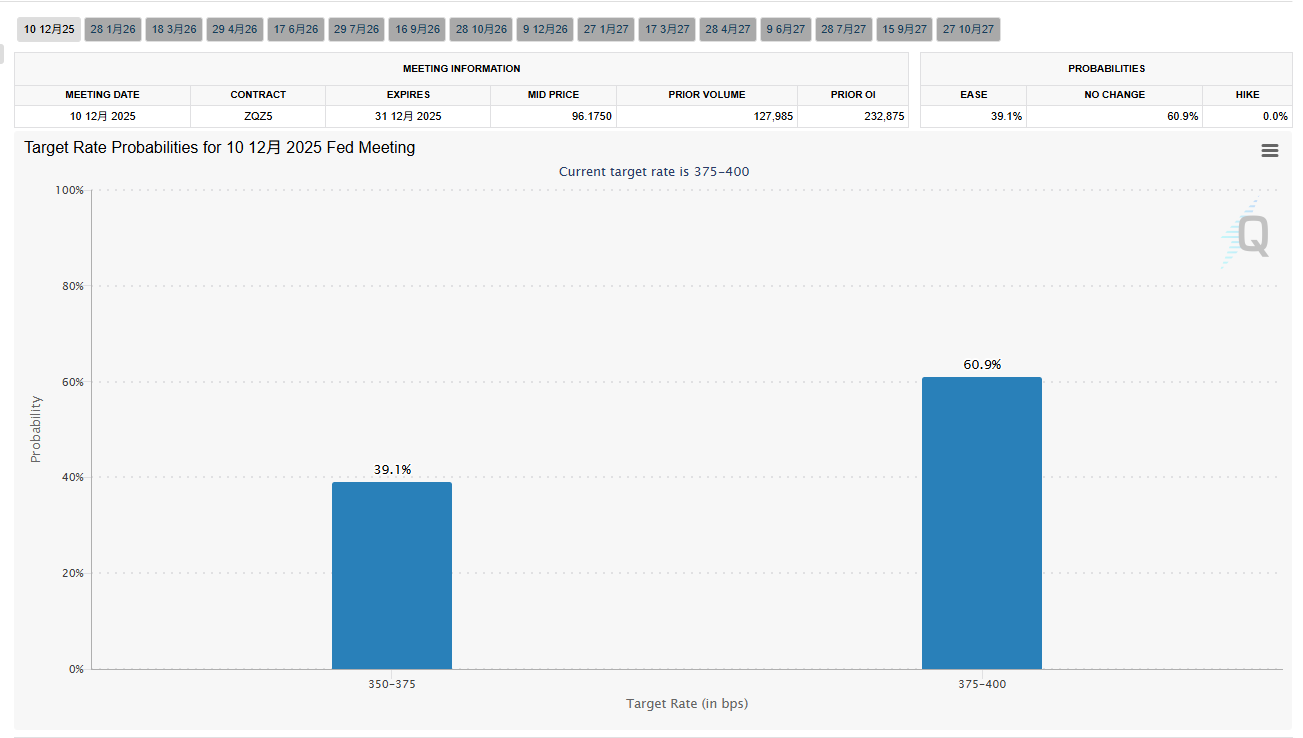
Core Viewpoint - The U.S. non-farm payroll data for September shows a significant increase in employment, which may influence the Federal Reserve's interest rate decisions moving forward [2][3][6]. Employment Data Summary - In September, the U.S. added 119,000 jobs, exceeding economists' expectations of 50,000, marking the strongest monthly increase since April [3]. - The August non-farm payroll was revised down to a decrease of 4,000 jobs, and July's increase was also slightly revised down to 72,000, resulting in a total downward revision of 33,000 jobs for July and August combined [3]. Unemployment Rate Insights - The unemployment rate rose slightly to 4.4% in September, attributed to nearly 500,000 individuals rejoining or entering the labor force, while economists had anticipated it to remain at 4.3% [6]. - The report is significant as it provides the first official reading on this key economic indicator since the government shutdown began on October 1 [6][7]. Market Reactions - Following the report's release, U.S. stock index futures rose, and all major indices opened higher, with the Nasdaq index gaining over 2% [8]. - Despite the positive employment numbers, the interest rate swap market indicates that the likelihood of a Federal Reserve rate cut in December remains low, although traders have increased bets on a potential cut [10]. Federal Reserve's Position - The Federal Reserve's October meeting minutes revealed a growing divide among policymakers regarding the appropriateness of further rate cuts, with some members suggesting that maintaining current rates may be more suitable [7][11]. - Analysts noted that while the employment data is positive, the rising unemployment rate and slowing wage growth could keep the Fed's options open for a potential rate cut in December [11]. Inflation and Financial Stability Concerns - Cleveland Fed President Beth Harmack warned that lowering rates to support the labor market could prolong high inflation and increase financial stability risks [12][14]. - Harmack emphasized the need to apply downward pressure on inflation to return to the Fed's 2% target, indicating a cautious approach to further rate cuts [14].

U.S. job growth defied expectations in September
WSJ· 2025-11-20 13:46
Core Insights - Job growth accelerated in the month leading up to the government shutdown, indicating a robust labor market despite potential economic disruptions [1] Group 1: Job Growth - The acceleration in job growth suggests resilience in the economy, with employers continuing to hire even in the face of uncertainty [1] - This trend may reflect businesses' confidence in future demand and their willingness to invest in human capital [1] Group 2: Economic Implications - The increase in employment figures could influence government policy decisions regarding the shutdown, as strong job growth may reduce the urgency for immediate fiscal interventions [1] - A healthy job market may also impact consumer spending positively, contributing to overall economic stability [1]
