工业智能体

Search documents
覆盖三大领域!丰台为工业智能体落地打造应用场景清单
Bei Jing Ri Bao Ke Hu Duan· 2025-11-19 10:54
Core Insights - The 14th China Innovation and Entrepreneurship Competition for Industrial Intelligent Bodies was held in Beijing, focusing on high-quality development and the establishment of innovation centers [3][4] - The Fengtai District released a service resource list and application scenario list to support the development of industrial intelligent bodies, including financial support and policy incentives [3][4] Group 1: Policy and Support - The service resource list includes core support in four areas: landing policies, ecosystem construction, professional services, and spatial carriers, with awards up to 3 million yuan and zero-rent space of 300 square meters for winning enterprises [3] - A total of 1.68 million square meters of policy-preferential industrial space is provided, including subsidies of up to 10 million yuan for park development [3] Group 2: Industry Collaboration - Multiple cooperation agreements were signed, marking a substantial phase in the collaborative innovation of the industrial intelligent body industry [4] - The first three innovation centers for industrial intelligent bodies in Fengtai were awarded, including Fengtai Innovation Center & Fengtai Century Incubator, Huaxia Happiness Innovation Center AI+ Industrial Park, and Guolian Digital Supply Chain Innovation Park [4] Group 3: Future Directions - Industrial intelligent bodies are seen as a key driver for cultivating new productive forces through deep integration of artificial intelligence and industry [4] - The Fengtai District plans to enhance the "government-industry-university-research-application-finance" collaborative ecosystem and provide one-on-one full-process services to promote the transformation of quality projects [4]

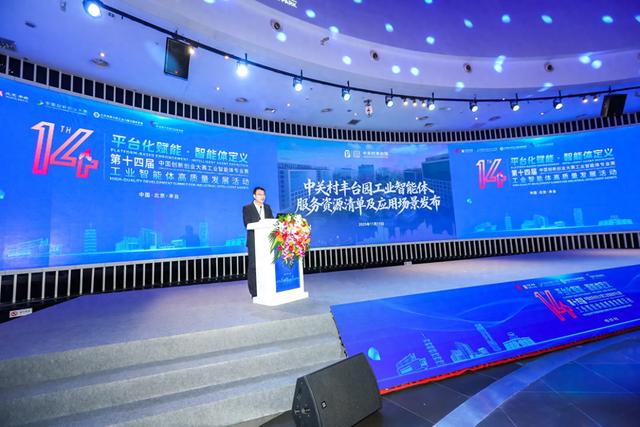
中国创新创业大赛工业智能体高质量发展活动在京举办
Zhong Guo Xin Wen Wang· 2025-11-19 08:16
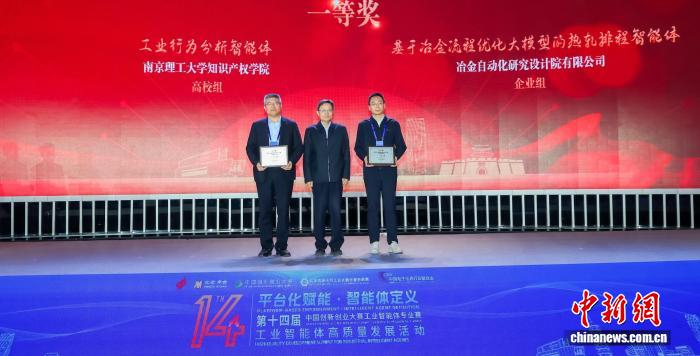
Core Insights - The 14th China Innovation and Entrepreneurship Competition focused on high-quality development of industrial intelligent entities, emphasizing the integration of digital economy and real economy [1][3][9] - The event attracted over 200 quality projects, with awards distributed across various categories, highlighting the competitive landscape in industrial innovation [3][4] Group 1: Event Overview - The event was held on November 19 at the Beijing Automobile Museum, co-hosted by the Ministry of Industry and Information Technology and the Fengtai District Government [3][7] - It aimed to promote technological innovation and application of industrial intelligent entities, addressing seven core areas including research design and quality control [3][4] Group 2: Awards and Recognition - A total of 2 first prizes, 4 second prizes, 12 third prizes, and 35 excellence awards were given out, showcasing the achievements of participating teams [3][4] - The winning teams included representatives from Nanjing University of Science and Technology and Metallurgical Automation Research and Design Institute [4] Group 3: Policy and Support Framework - Fengtai District has established a comprehensive industrial development system that includes policy support, scenario-driven initiatives, and ecological backing for innovation projects [3][5] - The district offers significant financial support, with winning enterprises eligible for up to 3 million yuan in funding and 300 square meters of rent-free space [5] Group 4: Application Scenarios and Collaborations - Thirteen application scenarios were identified, focusing on key industries such as rail transportation and intelligent manufacturing, addressing critical industry pain points [5][6] - Several collaboration agreements were signed between academic institutions and enterprises, marking a significant step towards industrial intelligent entity innovation [6] Group 5: Technological Advancements - The event featured the launch of an AI-enabled supply-demand matching platform, which has aggregated over 2,000 supply resources and facilitated more than 300 matches [9] - Discussions on the dual-driven approach of industrial intelligent entities and industrial internet platforms provided insights into diverse pathways for industry development [9]

中关村丰台园给工业智能体获奖企业“发红包”,最高300万元
Xin Jing Bao· 2025-11-19 06:51
Group 1 - The 14th China Innovation and Entrepreneurship Competition focused on high-quality development of industrial intelligent entities, with over 200 projects participating and awards distributed to top projects [1][2] - The event was co-hosted by the Ministry of Industry and Information Technology and the Fengtai District Government, emphasizing the integration of artificial intelligence with the real economy [1] - The first industrial large model and an AI-enabled new industrial supply-demand matching service platform were showcased, gathering over 2,000 supply resources and facilitating more than 300 supply-demand matches [1] Group 2 - Fengtai Park offers up to 3 million yuan in funding support and 300 square meters of "zero-rent space" to award-winning enterprises, along with 140,000 hours of domestic computing power and hardware validation platforms [2] - The application scenarios provided cover three major areas: rail transit equipment design and operation, high-speed rail intelligent operation, and intelligent manufacturing and logistics supply chain [2] - The Fengtai District has established a comprehensive industrial development system, aiming to support innovative projects throughout their lifecycle and enhance collaboration among government, industry, academia, research, and finance [2]

专访西门子全球执行副总裁肖松:工业AI是根本性的“范式革命”
2 1 Shi Ji Jing Ji Bao Dao· 2025-11-09 23:40
Core Insights - The 8th China International Import Expo (CIIE) is being held from November 5 to 10 in Shanghai, featuring participation from 155 countries and regions, with over 4,108 foreign enterprises exhibiting, marking a record exhibition area of over 430,000 square meters [1][2] - Siemens views the CIIE as a global sharing platform that fosters deep interaction between China and the world in industrial resonance, innovation integration, and ecological co-construction, especially significant in the current uncertain international environment and the rapid development of AI [1][2] - The next decade's growth opportunities in China are expected to arise from artificial intelligence, high-end intelligent manufacturing, and energy transition, with AI being a key driver for industrial upgrades and economic growth [1][7] Group 1: Siemens' Participation in CIIE - Siemens has participated in the CIIE since its inception in 2018, receiving over 400 delegations from various government levels and signing cooperation agreements with over 200 partners [2][3] - The expo serves as a platform for Siemens to showcase its latest innovations and explore new partnerships, contributing to the transformation of technological sparks into practical results for industrial upgrades [3][4] Group 2: AI and Industrial Transformation - Siemens aims to leverage the CIIE as an open cooperation platform to integrate AI deeply into industrial scenarios, enhancing China's digitalization and decarbonization processes [3][8] - The company emphasizes the importance of data-driven capabilities, deep integration of AI with industry knowledge, and collaborative ecosystem creation for the successful scaling of AI applications in the industrial sector [8][11] Group 3: China's Unique Industrial AI Pathway - China is developing a unique "Chinese-style industrial AI" pathway, driven by government foresight, a complete industrial system, and a proactive attitude from enterprises towards innovation and technology sharing [10][12] - The country possesses the world's most complete industrial system and a vast number of manufacturing enterprises, providing rich real-world scenarios and high-quality data for AI applications [10][12] Group 4: Future Expectations and Challenges - The transition from "automation" to "autonomy" in industrial AI is expected to revolutionize production modes, allowing for human and AI collaboration, where humans focus on strategic planning and decision-making [15] - Despite the potential, challenges such as high deployment costs, lack of skilled professionals, and technology maturity need to be addressed for widespread adoption of industrial AI [11][14]

三券齐发!广东出台AI赋能制造业行动方案
Nan Fang Du Shi Bao· 2025-10-23 00:03
Core Viewpoint - The Guangdong Provincial Government has introduced the "Action Plan for High-Quality Development of Manufacturing Empowered by Artificial Intelligence (2025-2027)" to enhance the integration of AI and manufacturing, aiming to create a globally influential demonstration zone for this integration [1]. Group 1: Key Supply Strengthening Measures - The first five measures focus on strengthening the key supply of industrial AI, targeting industries such as electronic information, smart home appliances, automotive, and robotics, with initiatives like "thousand models empowering hundred industries" [2]. - The plan includes the establishment of vertical large models and scenario-specific small models, along with the development of industrial data sets and knowledge databases [2]. - Policies like "computing power vouchers" will be implemented to reduce the computing power costs for enterprises [2]. Group 2: Promoting Large-Scale Application - Measures six to ten emphasize promoting the large-scale application of industrial AI, establishing a "diagnosis-transformation-promotion" system for manufacturing enterprises [2]. - The focus will be on creating detailed industry-specific guidelines and case studies to assist various enterprises in applying AI effectively [2]. Group 3: Building Support Systems - Measures eleven to thirteen concentrate on constructing a support system for industrial AI, promoting the establishment of AI application pilot bases in cities like Shenzhen and Dongguan [3]. - The plan encourages the creation of national-level digital transformation promotion centers and platforms for AI empowerment, large models, and industrial model supermarkets [3]. Group 4: Optimizing Element Guarantees - Measures fourteen to sixteen focus on optimizing the guarantees for industrial AI elements, including financial support through provincial and municipal funds [3]. - Financial institutions are encouraged to offer financing services for AI product development and application, creating a "Yue Smart Loan" brand matrix [3].
盘前必读丨前三季度国内居民出游人次同比增长18.0%;国际金银价格大幅下挫
Di Yi Cai Jing· 2025-10-22 00:02
Group 1: Market Overview - The U.S. stock market showed mixed results, with the Dow Jones Industrial Average reaching a historical high, driven by blue-chip earnings [2] - The Nasdaq index experienced a slight decline, influenced by weakness in the technology and semiconductor sectors [2] - The Nasdaq China Golden Dragon Index fell by 0.97%, with notable declines in Alibaba and NIO, while companies like TAL Education and Bilibili saw gains [2] Group 2: Commodity Prices - International gold prices saw a significant drop, with spot gold falling by 5.18% to $4,130.41 per ounce, marking the largest single-day decline since April 2013 [2] - Silver prices also decreased sharply, down 7.16% to $48.705 per ounce, the largest drop since 2021 [2] - WTI crude oil prices increased slightly, closing at $57.82 per barrel, a rise of 0.52% [4] Group 3: Corporate Earnings - China Telecom reported a third-quarter net profit of 77.56 billion yuan, reflecting a year-on-year growth of 3.60% [10] - Pop Mart's third-quarter revenue is expected to grow by 245%-250% year-on-year [10] - New Qiang Lian reported a staggering 1940% year-on-year increase in net profit for the first three quarters [9] Group 4: Government Policies and Initiatives - The Ministry of Commerce held a roundtable with over 170 foreign enterprises to address their concerns and discuss policies [4] - The Guangdong provincial government released an action plan to enhance the high-quality development of the manufacturing industry through AI [7] - Shanghai's government issued a plan to stabilize real estate investment and promote high-quality construction [6]

工业知识联盟在深成立 为工业AI的可靠发展筑牢知识底座
Nan Fang Du Shi Bao· 2025-10-16 15:08
Core Insights - The establishment of the Industrial Knowledge Alliance aims to create a robust knowledge base for AI applications in the industrial sector, addressing the challenge of AI's understanding of industrial language and practices [1][4] Group 1: Alliance Structure and Objectives - The alliance features a comprehensive structure including a council, professional committees, a secretariat, and industry working groups, with leadership from notable institutions and companies [2][3] - The primary goal is to build a national-level "Industrial + AI" knowledge innovation platform, centered around an industrial knowledge graph and an OpenIndustry community [2][3] Group 2: Knowledge Sharing and Community Engagement - The alliance will promote collaborative knowledge sharing through project-driven initiatives and a community-based approach, utilizing a points system to quantify member contributions [3] - The OpenIndustry community will consist of an industrial knowledge graph community and an intelligent application center, providing resources for low-code development and AI model libraries [3] Group 3: Industrial Knowledge Transformation - The core mission is to convert unstructured industrial knowledge into a structured system that AI can understand and execute, effectively creating a "navigation system" for AI models [3] - The alliance emphasizes the importance of systematic knowledge integration to overcome fragmentation in industrial knowledge [3] Group 4: Regional Support and Industry Impact - The Longgang District, recognized as a top industrial area, provides a strong foundation for the alliance's initiatives, supporting the integration of AI in industrial practices [4] - Huawei, as a key member, will contribute significantly to the alliance by developing platforms that enhance industrial knowledge and facilitate AI applications [4] Group 5: Future Aspirations and Economic Goals - The alliance aims to develop over 10 industry-level knowledge graphs and cultivate more than 500 specialized enterprises, enhancing the AI capabilities of small and medium-sized enterprises [5] - It seeks to establish at least 5 key industry standards and train over 10,000 technical talents in industrial AI, contributing to a projected increase in industrial output value exceeding 100 billion [5]
加密货币,突然大涨!工信部发文开展卫星物联网业务商用试验;工信部总工程师钟志红,实施工业互联网和人工智能双向赋能行动,发展工业智能体——《投资早参》
Mei Ri Jing Ji Xin Wen· 2025-10-13 01:01
Important Market News - Bitcoin has surged above $115,000, increasing by 4.25% in the last 24 hours, while Ethereum has risen over 11% to $4,147.5 [1] - The State Administration for Market Regulation has initiated an antitrust investigation into Qualcomm for its acquisition of Autotalks without prior notification or communication, which is a violation of the Anti-Monopoly Law [1] Industry Insights - The Ministry of Industry and Information Technology (MIIT) has issued a notice to promote service-oriented manufacturing innovation from 2025 to 2028, focusing on the integration of 5G and industrial internet, enhancing computing power infrastructure, and applying AI technologies in various sectors [2] - The MIIT is seeking public opinion on a draft notice for commercial trials of satellite IoT services, aiming to enrich the satellite communication market and support the development of new industries like commercial aerospace and low-altitude economy [2] - The commercial aerospace sector in China is experiencing rapid growth, with the market size projected to increase from 9.2 billion yuan in 2020 to 310 billion yuan by 2024, reflecting a compound annual growth rate exceeding 100% [4] - Neuralink has demonstrated a brain-computer interface enabling a patient with ALS to control a robotic arm, showcasing advancements in medical applications of brain-machine interfaces [3][5] - The global market for brain-computer interface medical applications is expected to reach $40 billion by 2030 and $145 billion by 2040, indicating significant growth potential in various sectors [5] Company Updates - EasyRebio announced plans for its major shareholders to reduce their holdings by up to 12.15 million shares, representing 3% of the total share capital [6] - Shanghai Hejing's major shareholder intends to reduce its stake by up to 6.65 million shares, or 1% of the total share capital [6] - Zhongrong Electric's actual controller's associates plan to reduce their holdings by up to 979,600 shares, accounting for approximately 1% of the total share capital [6] - Wentai Technology reported that its subsidiary has been restricted by a court ruling from making any adjustments to its global operations for one year, although the economic rights of the company remain unaffected [6]
工信部总工程师钟志红:实施工业互联网和人工智能双向赋能行动 发展工业智能体
Xin Lang Cai Jing· 2025-10-11 09:02
Core Insights - The Ministry of Industry and Information Technology emphasizes the importance of deep integration to empower various industries through information and communication technology [1] - The implementation of a dual empowerment action involving industrial internet and artificial intelligence aims to develop industrial intelligence [1] - The focus is on high-level empowerment of new industrialization and expanding the application of information and communication technology in areas such as smart cities, digital rural areas, intelligent transportation, and smart energy [1] - These initiatives are intended to enhance the modernization of social governance [1]
2025上半年中国机器人市场格局重塑,头部品牌引领增长
机器人圈· 2025-10-09 10:11
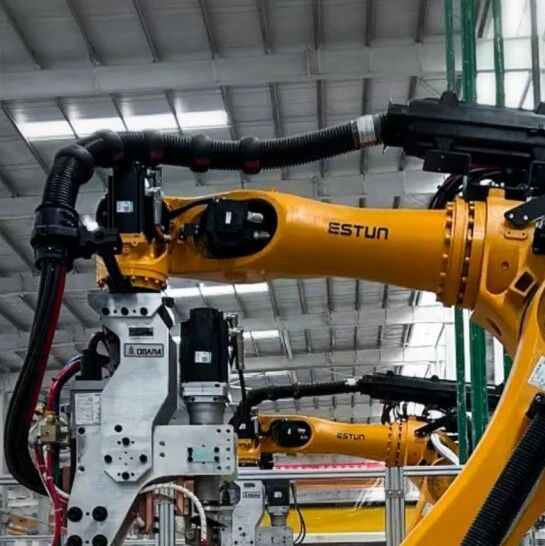
Core Viewpoint - The article highlights the significant growth and market leadership of Estun Automation in the Chinese industrial robot market, emphasizing its technological advancements and strategic initiatives that have contributed to its success [1][3][8]. Market Position and Performance - In the first half of 2025, Estun ranked first in China's industrial robot market with a market share of 10.5%, marking it as the largest domestic supplier by shipment volume [1]. - The domestic market's localization rate for industrial robots increased to 55.3%, up approximately 5 percentage points from the entire year of 2024 [1]. Technological Advancements - Estun has introduced a new open control platform, NGC, and the ERI (Estun Robot Interface) at the Automatica exhibition in Germany, which supports real-time communication and multi-robot collaboration [4]. - The platform's open nature enhances deployment efficiency in complex production lines, particularly in tasks requiring perception and adaptability, such as welding and grinding [4]. Solution Development - Estun has developed a comprehensive "horizontal + vertical" solution system, achieving full process coverage in metal processing, including casting, stamping, bending, welding, grinding, and spraying [5]. - The company’s solutions are now widely applied in various industries, including home furnishings, building materials, and home appliances, with a growing presence in high-end automotive manufacturing [5][6]. Global Expansion Strategy - Estun is accelerating its global production and service network, having established 75 business locations worldwide by the end of 2024 [7]. - The company’s new production base in Poland, along with acquisitions of overseas companies, supports a localized operational model aimed at enhancing responsiveness to global customer needs [7]. Market Trends - The Chinese industrial robot market is witnessing three main trends: the integration of AI and edge intelligence, a shift from broad application to deep implementation, and increasing competitiveness among domestic manufacturers [8]. - Leading companies like Estun are transitioning from price competition to value competition, focusing on system solution capabilities rather than just individual machine performance [8].