市场多元化战略

Search documents
21.79万亿规模创历史同期新高!中国外贸韧性闯关
2 1 Shi Ji Jing Ji Bao Dao· 2025-07-14 12:49
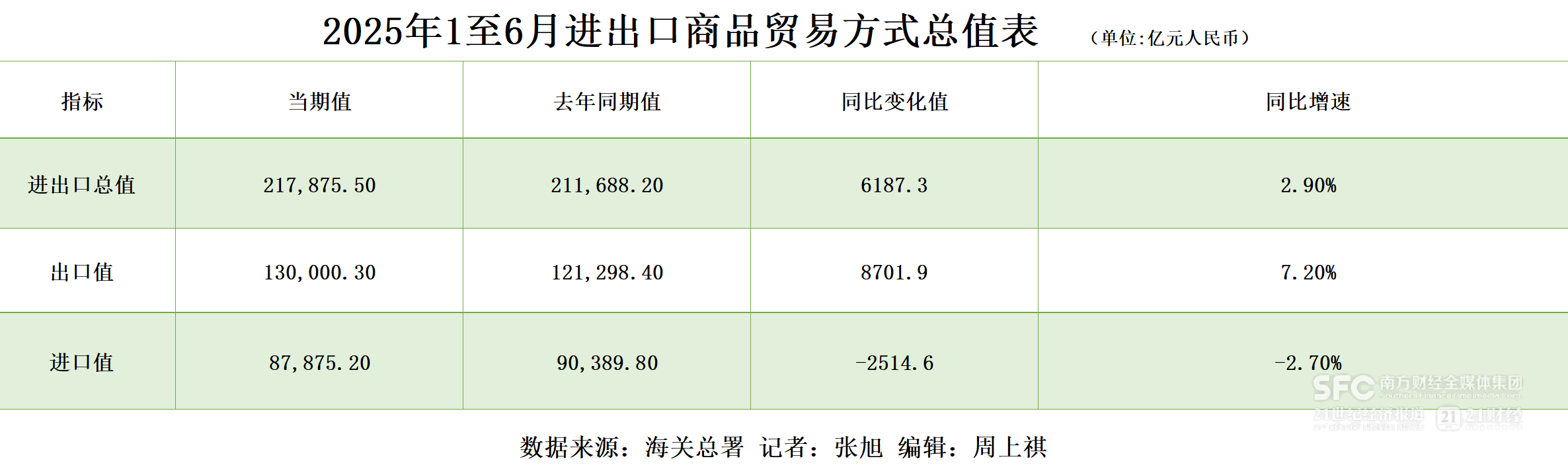
Core Insights - China's total goods trade import and export value reached 21.79 trillion yuan in the first half of the year, marking a year-on-year growth of 2.9%, with exports at 13 trillion yuan, up 7.2%, and imports at 8.79 trillion yuan, down 2.7% [1][3] - The trade with countries involved in the Belt and Road Initiative accounted for 51.8% of total trade, with a value of 11.29 trillion yuan, reflecting a growth of 4.7% [1][10] - The diversification strategy in markets has shown significant results, with exports of high-tech products playing a crucial role in enhancing competitiveness [1][6] Trade Performance - In Q2, the total import and export value grew by 4.5% year-on-year, with June seeing a record monthly trade value of 3.85 trillion yuan, a 5.2% increase [5] - Exports of mechanical and electrical products reached 7.8 trillion yuan, growing by 9.5% and accounting for 60% of total exports [5][6] - The import of high-end equipment and electronic components has increased, reflecting the demand for advanced technology in China's manufacturing sector [8][12] Market Diversification - Trade with the U.S. saw a decline, with total trade value dropping by 9.3% to 2.08 trillion yuan, but recent talks have led to signs of recovery [9][10] - China's trade with over 190 countries and regions has increased, with 61 partners exceeding 50 billion yuan in trade, indicating a more diversified trade network [10][12] - The growth in trade with ASEAN and other emerging markets demonstrates the effectiveness of China's market diversification strategy [10][11] Foreign Investment - Foreign enterprises contributed significantly to China's trade, with their import and export value reaching 6.32 trillion yuan, a 2.4% increase [12] - The number of foreign enterprises engaged in trade reached 75,000, the highest since 2021, indicating a robust foreign investment environment [12] - Foreign companies are focusing on long-term development, with a notable increase in the import of high-end equipment and R&D goods [12][14] Future Outlook - The focus for the second half of the year will be on stabilizing traditional markets and expanding into emerging markets along the Belt and Road [12][14] - Recommendations include enhancing regional cooperation, optimizing import structures, and fostering new trade models such as cross-border e-commerce [13][14] - Emphasis on technological self-reliance and improving bargaining power in key sectors is crucial for sustaining trade growth [14]

河南郑州:外贸增速居中部城市首位
Zhong Guo Chan Ye Jing Ji Xin Xi Wang· 2025-07-07 22:18
Core Insights - Zhengzhou's foreign trade achieved a total import and export value of 228.57 billion yuan in the first five months of this year, marking a year-on-year growth of 40.8%, ranking first among central cities, national central cities, and fourth among provincial capitals nationwide [1] Group 1: Trade Performance - The main drivers of Zhengzhou's foreign trade growth are electromechanical products and high-tech products, with electromechanical product exports reaching 125.27 billion yuan, up 76.3% year-on-year, and high-tech product exports at 100.77 billion yuan, up 92.9% [1] - Electric vehicle exports saw a remarkable increase of 243.6% year-on-year, becoming a new highlight in foreign trade growth [1] - The import of high-end products is also on the rise, with electromechanical products and high-tech products accounting for 82.9% and 69.2% of total imports, respectively, indicating strong demand for industrial upgrading and technological innovation [1] Group 2: Market Diversification - Zhengzhou has established trade relations with 226 countries and regions globally, with the EU, ASEAN, the US, Japan, India, and South Korea being the main trading partners, collectively accounting for 55.8% of the city's total foreign trade [1] - Trade growth with markets such as Brazil, Malaysia, and Germany has been significant, further enhancing Zhengzhou's resilience against external risks [1] Group 3: Logistics and Infrastructure - Zhengzhou's efficient logistics system is a significant advantage for its foreign trade development, leveraging multiple transportation modes including air, water, and road to create convenient international trade channels [2] - In the first five months, air transport accounted for 143.91 billion yuan in import and export goods, a year-on-year increase of 56.3%, representing 63% of the city's total foreign trade [2] - The Zhengzhou Airport Economic Zone has improved customs efficiency through a multi-modal transport system, facilitating the rapid development of new business models such as cross-border e-commerce [2] Group 4: Future Outlook - Experts attribute Zhengzhou's rapid foreign trade growth to dual drivers of industrial upgrading and policy support, indicating a shift towards high value-added industries [2] - The Zhengzhou Municipal Bureau of Commerce aims to optimize the foreign trade structure, targeting over 6,000 enterprises with import and export achievements by the end of the year, while maintaining a high-tech product export ratio of over 60% [2]
我国好像又赢了!若保持前5月趋势,今年的外贸顺差将达到1.2万亿美元
Sou Hu Cai Jing· 2025-06-10 10:55
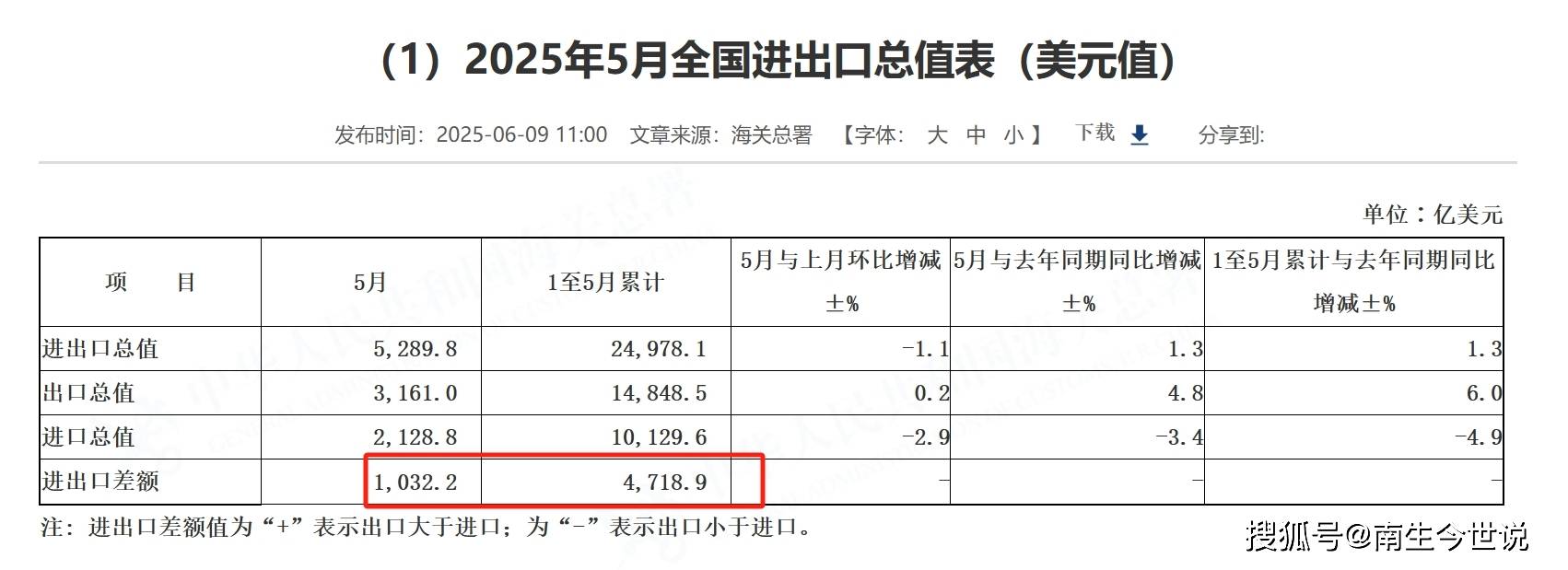
Core Insights - China's foreign trade data for May shows a total import and export value of $528.98 billion, with a significant trade surplus of $103.22 billion, indicating strong performance despite external pressures [1][3][4]. Trade Performance - In May, exports amounted to $316.1 billion, a year-on-year increase of 4.8%, while imports were $212.88 billion, a decrease of 3.4% [3][4]. - Cumulative trade figures for the first five months show total trade value of $2.49781 trillion, with exports at $1.48485 trillion (up 6%) and imports at $1.01296 trillion (down 4.9%), resulting in a trade surplus of $471.89 billion, a 40.3% increase [3][4]. Trade Relations - Bilateral trade with the United States decreased by 9.1% to $239.7098 billion in the first five months, with exports to the U.S. down 9.7% and imports down 7.4%, reflecting the impact of escalating trade tensions [5]. - Conversely, trade with ASEAN countries increased by 12.2%, with notable export growth to Thailand (20.9%), Vietnam (18.8%), and Indonesia (16.8%) [5][7]. Regional Trade Dynamics - Exports to the European Union rose by 6.4%, with significant increases to Germany (12.3%) and France (5.9%), while imports from these countries declined, contributing to a growing surplus [7]. - Exports to Africa surged by 18.9%, to Latin America by 9.4%, to Canada by 8.7%, and to the UK by 7.4%, indicating a diversification of trade partners [7]. Strategic Implications - The increase in trade surplus is attributed to a shift in global supply chains due to U.S. trade policies, prompting countries to reduce reliance on the U.S. market and seek alternative trading partners [10][11]. - The data suggests that while direct trade with the U.S. is declining, overall trade performance is bolstered by growth in non-U.S. markets, demonstrating resilience and adaptability in China's trade strategy [10][11].
外贸企业从容应对市场波动、中国风点燃消费新引擎、多家国际投行上调中国经济增速预期...
Sou Hu Cai Jing· 2025-06-03 02:59
Group 1: Foreign Trade Resilience - Foreign trade is a crucial component of China's open economy and plays a key role in facilitating domestic and international dual circulation [4] - Despite external uncertainties, foreign trade enterprises are actively exploring new markets and developing new business models to maintain steady growth [4][5] - In Linyi, Shandong, the daily export cargo volume reached 680 standard containers, with a 20% increase in cargo volume following recent trade talks [5][6] Group 2: Market Diversification Strategies - Linyi foreign trade companies are accelerating their market diversification strategies, targeting emerging markets in Southeast Asia and enhancing domestic market presence [6] - Companies are increasing investments in e-commerce and redesigning products to cater to domestic consumer preferences [6] - Linyi organized events to help foreign trade enterprises expand into domestic markets, resulting in significant order acquisitions [6] Group 3: Economic Growth Predictions - Several international investment banks, including Goldman Sachs and Morgan Stanley, have raised their forecasts for China's economic growth due to effective macro policies and progress in Sino-U.S. trade talks [30][31] - Goldman Sachs increased its 2025 GDP growth forecast by 0.6 percentage points, while Morgan Stanley raised it by 0.3 percentage points [30][31] - The positive outlook is supported by strong retail sales data and government policies aimed at boosting consumption and investment [31][32] Group 4: Automotive Industry Competition - The China Automobile Manufacturers Association has issued an initiative to oppose chaotic price wars in the automotive industry, emphasizing the need for fair competition [35][38] - The Ministry of Industry and Information Technology supports this initiative, highlighting that price wars negatively impact production and industry sustainability [36][38] - The ministry plans to enhance oversight of the automotive sector to maintain a healthy competitive environment and protect consumer interests [36][40] Group 5: Employment Services Enhancement - The government is focusing on improving employment services for graduates, with a projected increase in the number of graduates in 2025 [41] - Initiatives include personalized employment guidance and the use of AI technology to assist students in job preparation [45] - The aim is to create a comprehensive employment service system that connects talent with job opportunities effectively [46]
英科医疗(300677) - 300677英科医疗投资者关系管理信息20250519
2025-05-19 11:28
Group 1: Financial Performance - In 2024, the company's operating revenue reached CNY 95.23 billion, a year-on-year increase of 282.63% [2] - The net profit attributable to shareholders was CNY 14.65 billion, with a sales price increase of 37.65% compared to the previous year [2][3] - The company's capacity utilization rate was 100% during the reporting period, indicating strong operational efficiency [3] Group 2: Market Dynamics - The U.S. imposes tariffs of 80% on medical-grade nitrile gloves, 55% on industrial-grade nitrile gloves, and 30% on PVC gloves [3] - The U.S. market accounted for approximately 30%-35% of overseas revenue, with European markets growing at a similar pace [3] - The company has been diversifying its market strategy, reducing reliance on the U.S. market since the trade tensions began in 2018 [3] Group 3: Share Buyback and Dividends - As of April 30, 2025, the company repurchased 2,523,900 shares, representing 0.3906% of total equity, with a total expenditure of CNY 53,518,589.28 [4] - The proposed cash dividend for 2024 is approximately CNY 269.61 million, which is 18.40% of the net profit attributable to shareholders [5] - The company plans to maintain sufficient funds to mitigate geopolitical risks and support the establishment of overseas production bases [5]

忙忙忙!美单“重启”,但还有一个重要变化
Jing Ji Wang· 2025-05-16 07:09
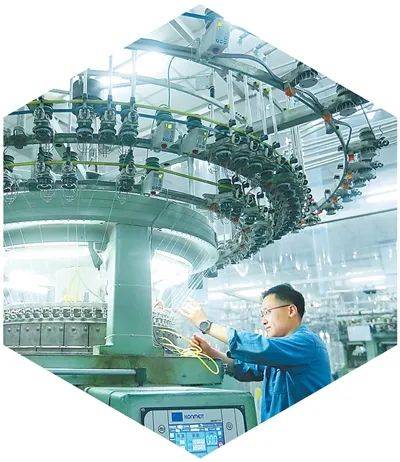
Core Viewpoint - Recent adjustments in tariffs between China and the U.S. have led to a positive shift in trade relations, prompting Chinese export companies to resume shipments to the U.S. and explore new market opportunities amid changing circumstances [1]. Group 1: Trade Resumption - Chinese foreign trade enterprises are quickly responding to the market recovery by restarting exports to the U.S., with production facilities ramping up operations and logistics ports experiencing a surge in shipments [1]. - In Shanghai, a knitting factory has resumed production for U.S. clients after a temporary halt, with plans to ship out goods by May 17 [2][4]. - A Shenzhen-based export company reported receiving multiple urgent orders from U.S. clients, indicating a backlog of inventory worth over $400,000 due to previous tariff fluctuations [4]. Group 2: Increased Demand and Logistics - Following the tariff adjustments, there has been a significant increase in orders, with U.S. container bookings from China surging nearly 300% [8]. - As of May 14, the average weekly order volume reached 21,530 twenty-foot equivalent units (TEUs), compared to only 5,709 TEUs the previous week [8]. - Major shipping ports in Shanghai and Shenzhen are adjusting their schedules to accommodate the increased shipping demand, with over 2,000 containers being processed for U.S. shipments [10][12]. Group 3: Market Diversification - Many companies are recognizing the unsustainability of relying solely on the U.S. market and are accelerating efforts to diversify their market presence [13]. - A crafts producer in Yiwu noted that previous orders for U.S. clients were sold to other markets due to tariff issues, highlighting the need for broader market strategies [14][16]. - Companies are actively exploring opportunities in regions such as the Middle East, South America, Europe, and Southeast Asia to mitigate risks associated with market dependence [16][19].

2025年4月进出口数据点评:出口增速超预期后怎么走?
CMS· 2025-05-09 14:34
Export Data - In April 2025, China's exports reached $315.69 billion, a year-on-year increase of 8.1%[1] - Imports totaled $219.51 billion, showing a slight decline of 0.2% year-on-year[1] - The trade surplus narrowed to $96.18 billion, which is a 33.61% increase compared to the previous year[1] Export Performance - April's export growth rate decreased from 12.4% in March to 8.1%, influenced by a low base from the previous year[3] - Exports to the U.S. fell by 21.03%, the lowest since August 2023, while exports to ASEAN increased by 20.8%[3] - High-value products like medical instruments and machinery showed strong performance, with growth rates of 8.41% and 17.02% respectively[3] Import Trends - The decline in imports was less severe, with a notable structural differentiation in imported goods[3] - Imports of primary products like soybeans and natural gas decreased by 14.6% and 9.2% respectively, indicating uneven domestic demand recovery[3] - Mechanical and electrical products saw a 5.7% increase in imports, reflecting a rebound in domestic manufacturing needs[3] Market Outlook - Global economic slowdown, particularly in developed economies, is expected to impact China's export orders and growth rates[4] - The manufacturing PMI dropped to 49.1%, indicating contraction in the manufacturing sector[4] - The ongoing high tariffs imposed by the U.S. on Chinese goods continue to exert downward pressure on exports[4]
中国外贸的韧性,美国早就该看明白了
Sou Hu Cai Jing· 2025-05-07 14:17
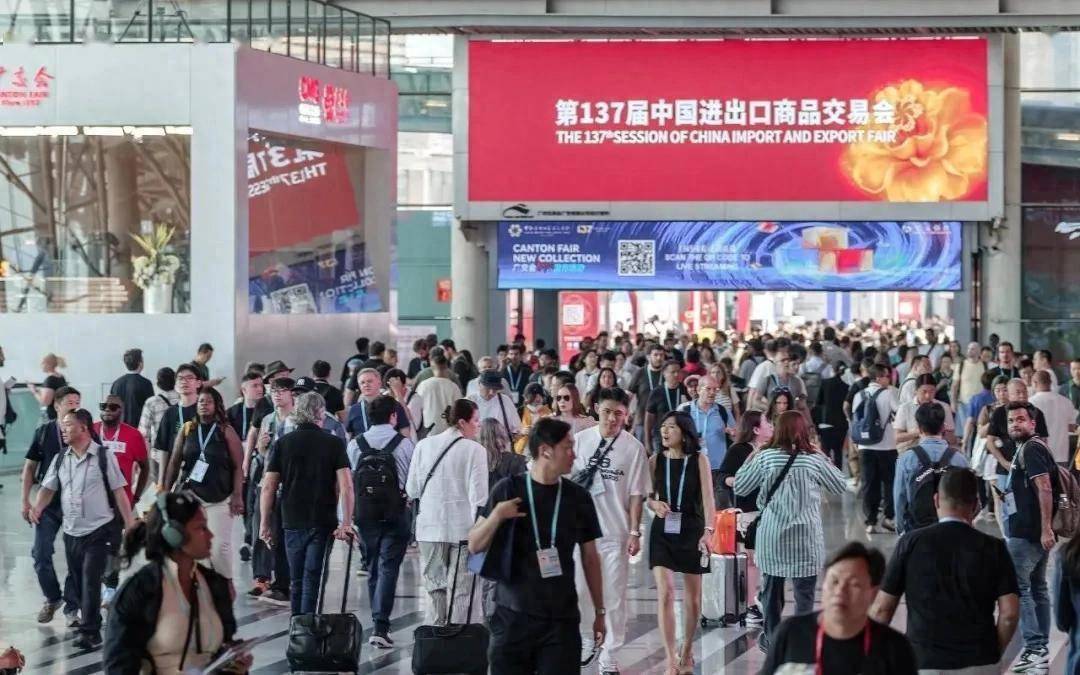
Core Viewpoint - The resilience of China's foreign trade is highlighted despite the challenges posed by U.S. tariffs, showcasing a robust industrial system and innovative capabilities that allow for high-quality development and market diversification [1][3][33] Group 1: Impact of Tariffs - U.S. tariffs have led to increased domestic prices, burdening American consumers, as acknowledged by former President Trump [3][5] - American retailers, including major brands like Nike, are seeking tariff exemptions, indicating the negative impact of tariffs on U.S. businesses [5][7] - Research from prestigious institutions shows that the self-harming effects of the tariff war on the U.S. economy far exceed its impact on China [5][7] Group 2: China's Industrial Strength - China's unique industrial system, characterized by a complete and diverse manufacturing base, has allowed it to withstand tariff pressures [9][11] - The country has maintained its position as the world's largest manufacturing nation for 15 consecutive years, with a comprehensive range of industries [9][12] - The seamless integration of supply chains, as demonstrated at trade fairs like the Canton Fair, is a significant advantage for Chinese exports [9][20] Group 3: Innovation and Green Transition - Innovation is a key driver of China's foreign trade, with the country ranking 11th in the global innovation index and investing heavily in R&D [12][16] - The shift towards green and low-carbon products is evident, with a significant number of eco-friendly products showcased at international trade events [14][16] - Chinese products are increasingly recognized for their technological advancements, making tariffs less impactful [14][16] Group 4: Global Market Engagement - The 137th Canton Fair attracted over 280,000 foreign buyers from 219 countries, reflecting international confidence in Chinese trade despite U.S. tariffs [18][20] - The fair generated a transaction volume of $25.44 billion, with over 60% of deals coming from Belt and Road Initiative countries, highlighting the importance of global partnerships [18][20] - The enthusiasm of international buyers contrasts sharply with the hesitance of some U.S. purchasers, indicating a shift in market dynamics [20][22] Group 5: Brand Development and Entrepreneurial Spirit - The transformation from "Made in China" to "Created in China" signifies a shift in mindset among Chinese exporters towards brand ownership and market control [24][30] - Entrepreneurs are adapting to challenges by seeking new markets and opportunities, demonstrating resilience and innovation in the face of adversity [26][28] - The diversification strategy adopted by many companies is proving effective, with some expecting overall growth despite declines in U.S. exports [28][30] Group 6: Conclusion - The resilience of China's foreign trade is a result of its industrial strength, innovative capacity, market diversification strategies, and entrepreneurial spirit [33] - The ongoing challenges from unilateralism and protectionism highlight the need for open cooperation and global partnerships [33]