
幸存者偏差

Search documents
本金少,就想搏一把?我劝你静一静
雪球· 2025-08-07 13:01
Core Viewpoint - The article emphasizes that having a small capital base should not justify reckless investment behavior. Instead, it advocates for a disciplined, long-term investment strategy that focuses on gradual accumulation and learning from the market [5][9]. Group 1: Investment Behavior and Psychology - Small capital accounts are more prone to losses due to impulsive trading behaviors, such as frequent buying and selling, heavy betting, and chasing market trends [10][12]. - Many small investors fall into the trap of survivor bias, believing that they can replicate the success of a few lucky individuals without recognizing the majority who fail [15][16]. - Common psychological and behavioral pitfalls include treating small capital as "trial money," neglecting primary income sources, entering the market unprepared, and allowing emotions to dictate trading decisions [17][18][19][20][21]. Group 2: Correct Investment Path - The article suggests that investors with limited capital should focus on building their skills and knowledge rather than seeking quick profits. This includes prioritizing stable cash flow from primary income sources [24][25]. - It recommends starting with small, consistent investments in broad-based ETFs to develop a disciplined approach to market fluctuations and emotional responses [26][27][28]. - As capital grows, investors should consider constructing a diversified asset portfolio while maintaining a focus on minimizing mistakes rather than chasing high returns [29][31][32].


自主创业是赚大钱的唯一方式吗
Sou Hu Cai Jing· 2025-07-23 06:08
Group 1 - The article emphasizes that entrepreneurship is not the only path to wealth and may not be suitable for everyone, highlighting the high failure rate of startups where less than half survive beyond three years [1] - It discusses the concept of "survivor bias," indicating that successful entrepreneurial stories are not representative of the general experience, as many entrepreneurs face significant losses [1] Group 2 - The article presents the idea that traditional employment can also lead to substantial wealth, with high-earning professions such as investment banking analysts, senior lawyers, and doctors, who can see their income double with experience [2] - It highlights the importance of "professional deepening" and "resource accumulation" in achieving financial success through stable employment [2] Group 3 - Investment is presented as a more passive and potentially lucrative avenue for wealth accumulation, with examples of individuals like Warren Buffett who have achieved wealth through stock investments rather than entrepreneurship [3] - The concept of passive income is introduced as a key to financial freedom, allowing individuals to earn money while they engage in other activities [3] Group 4 - The article discusses the rise of "slash youth," who engage in multiple income streams without quitting their primary jobs, showcasing the versatility of modern earning methods [4] - It emphasizes the idea of "ability reuse," where individuals can monetize their skills in various ways, leading to significant income without the need for full-time entrepreneurship [4] Group 5 - The article identifies emerging trends in the digital economy and virtual assets as new opportunities for wealth generation, such as virtual streamers and NFT artists [5][6] - It stresses the need for individuals to be adaptable and quick to learn new skills to capitalize on these new wealth opportunities [6] Group 6 - The article concludes that the key to financial success lies in finding a path that aligns with one's personality, abilities, resources, and risk tolerance, rather than blindly following others [7] - It asserts that there are numerous ways to achieve financial freedom, and individuals should focus on their unique strengths and continuously improve themselves [7][8]


创投圈开始流行写小说
3 6 Ke· 2025-07-17 03:31
Core Viewpoint - The investment and venture capital industry is experiencing a significant transformation, marked by a rise in social media narratives reflecting the challenges faced by professionals, while simultaneously, there are signs of recovery in policies and market data [1][9][22]. Group 1: Industry Sentiment and Trends - There is a growing trend of "sad literature" on social media, where industry professionals share their experiences and challenges through humorous and fictional narratives [3][5]. - The number of active voices on social media from industry practitioners has increased, indicating a shift in how professionals are engaging with the market [7][13]. - The sentiment among smaller General Partners (GPs) is one of low confidence and emotional fatigue, with many reporting a lack of investment activity over the past year [6][9]. Group 2: Market Recovery Signals - Recent data shows a significant increase in the number of Chinese companies going public, with 109 listings in the first half of 2025, a 32.9% year-on-year increase [10]. - The decision-making efficiency of Limited Partners (LPs) has improved, with a noticeable uptick in investment confidence and activity among state-owned funds [11]. - The emergence of "patient capital" is becoming a focal point in the industry, with many funds extending their investment horizons to 15-20 years, allowing for more strategic investments [12]. Group 3: Opportunities in the Market - There are opportunities in underdeveloped regions, as local GPs may lack the capacity to effectively utilize government funds, creating a gap that can be exploited by more capable firms [17]. - The current environment allows for the conversion of social media engagement into resource leverage, providing a dual benefit of income and resource attraction for industry professionals [18][19]. - The investment landscape is being shaped by favorable policies and technological advancements, creating a strategic opportunity for players in the market [21].
为什么数字化总是别人家的好,而你却做不好?
3 6 Ke· 2025-07-09 02:22
Core Insights - The article discusses the perception gap in digital transformation among companies, highlighting that many leaders feel envious of others' success while failing to recognize their own shortcomings in digital initiatives [1][4]. Group 1: Cognitive Biases in Digital Transformation - Survivor Bias: Media and industry events tend to showcase successful digital transformation cases while ignoring failures, leading to a skewed perception of what is achievable [1]. - Halo Effect: A company's success in one area is often mistakenly generalized to its overall digital capabilities, which can mislead other organizations into thinking they can replicate that success without understanding the underlying complexities [2]. - Misaligned Comparisons: Traditional companies often compare their nascent digital efforts with the mature systems of industry giants, creating unrealistic expectations and psychological distress [3]. Group 2: The Reality Behind Digital Success Stories - Hidden Failures: Companies often present a polished view of their digital initiatives, showcasing only the successes while concealing the significant investments and challenges faced, such as high initial costs and long payback periods [4]. - Data Manipulation: Many reported digital achievements are based on selective data comparisons, which can misrepresent the actual performance and effectiveness of digital strategies [6]. - Facade Projects: Some digital initiatives are merely superficial efforts that do not translate into real business value, often serving as political tools rather than functional solutions [7]. Group 3: Recommendations for Genuine Digital Transformation - Companies should critically assess digital projects by asking key questions about actual investments, return on investment (ROI), and the extent of implementation across all business areas [8]. - Successful digital transformation should focus on addressing real business pain points, employing a minimum viable product (MVP) approach, and ensuring that frontline employees are engaged with the systems rather than creating superficial solutions for leadership approval [8].
如果赚钱的人认知高,为啥被骗的普遍还挺有钱?
Hu Xiu· 2025-06-25 02:46
Group 1 - The article discusses the relationship between wealth, skills, and cognitive ability, emphasizing that for most ordinary people, the primary way to earn money is through selling their skills and time rather than relying solely on cognitive enhancement [8][12][24] - It highlights the societal stratification in terms of income generation, where the lowest tier sells pure time, the middle tier sells skills along with time, and the top tier engages in high-risk, high-reward activities [2][3][4] - The article suggests that many individuals mistakenly believe that enhancing their cognitive abilities will directly lead to wealth, while in reality, practical skills and the ability to sell are more crucial [17][24][25] Group 2 - The text points out that a significant number of people with high cognitive abilities still struggle financially due to a lack of practical skills or luck, indicating that cognitive enhancement alone is insufficient for financial success [12][26] - It mentions that many wealthy individuals often rely on marketing and risk-taking rather than deep knowledge, suggesting that practical experience and the ability to sell are more valuable in the marketplace [18][24] - The article concludes that for ordinary people, the best approach to achieving success is through passion and repetition, which can lead to skill improvement and increased opportunities [29][31]
巴菲特的“不懂不投”错了吗?
雪球· 2025-06-21 05:38
Core Viewpoint - The article discusses the concept of "don't invest in what you don't understand," challenging its validity and suggesting that many investors may overestimate their understanding of investments [2][4]. Group 1: Understanding Investment - The author argues that the phrase "don't invest in what you don't understand" can hinder individuals from entering the investment world, as everyone starts from a place of ignorance [4]. - It is noted that even successful investors like Warren Buffett do not apply this principle rigidly, as they focus on areas where they have sufficient knowledge and profitability [4]. - The article emphasizes that many individuals mistakenly believe they understand investments, leading to poor decision-making and financial losses [6][12]. Group 2: Survivor Bias - The author highlights the issue of survivor bias, where successful investors' stories are celebrated while failures are often ignored, leading to a skewed perception of investment success [14][16]. - The article points out that those who have failed in investments, such as cryptocurrency or business ventures, often remain silent about their losses, contributing to a misleading narrative [17]. Group 3: Risk Diversification - The author advocates for risk diversification as a valid investment strategy, suggesting that understanding the principles of asset allocation can mitigate risks even if one does not fully comprehend every asset class [19][23]. - It is mentioned that diversification can be a response to the lack of deep understanding of individual investments, allowing for a more balanced approach to risk management [23]. Group 4: Self-Assessment in Investment - The article raises the question of self-awareness among investors, suggesting that many may overestimate their abilities and should consider whether they are truly equipped to compete in crowded markets [25]. - The author reflects on the importance of recognizing one's limitations and opting for diversified strategies to achieve stable, long-term returns rather than chasing high-risk opportunities [26].

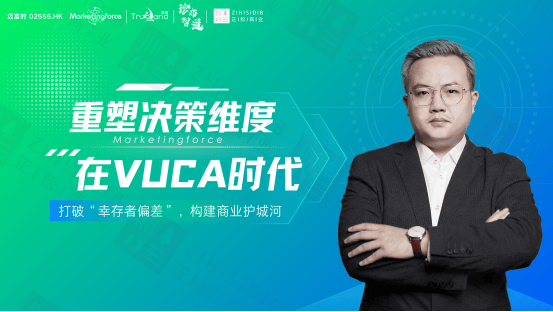
企业数智化决策:跳出 “幸存者偏差” 的认知革命
Sou Hu Cai Jing· 2025-06-18 04:09
Core Insights - The article emphasizes the need for companies to evolve their decision-making capabilities from a one-dimensional experience-driven approach to a multi-dimensional cognitive framework in the VUCA (Volatility, Uncertainty, Complexity, Ambiguity) era [2][26] - It highlights the importance of recognizing "silent evidence" and understanding that visible success may not reflect the underlying risks [4][26] Group 1: Evolution of Decision-Making - The transition from one-dimensional decision-making, which relies on past experiences, to multi-dimensional decision-making is crucial for overcoming growth bottlenecks [2][26] - The "survivor bias" example from WWII illustrates that focusing solely on successful outcomes can lead to misjudgments about where real risks lie [4][6] - Companies must be aware of the blind spots in their decision-making processes, such as ignoring critical changes in customer needs or emerging competitors [6][12] Group 2: Four Levels of Decision-Making - One-dimensional decision-making is characterized by an over-reliance on past successes, leading to a failure to adapt to changing environments [6][9] - Two-dimensional decision-making involves optimizing methods and tools but can result in a lack of deeper insights, reducing teams to mere "data movers" [7][8] - Three-dimensional decision-making requires a strategic approach that identifies core risks and vulnerabilities, moving beyond visible advantages [10][11] - Four-dimensional decision-making challenges existing assumptions and encourages a culture of innovation and exploration, focusing on fundamental principles [13][14] Group 3: Building High-Dimensional Thinking - Companies should focus on four key dimensions to foster high-dimensional thinking: execution processes, decision-making ROI, commercial feasibility, and awareness of industry trends and policies [17][26] - Establishing standard operating procedures (SOP) is essential for ensuring effective execution and preventing strategic failures [17] - Measuring the alignment between resource investment and output is critical for achieving desired ROI and value creation [17][21] - Companies must evaluate their strategies against broader industry trends and regulatory environments to enhance decision-making adaptability [17][23] Group 4: Application in Client Engagement - The high-dimensional thinking framework can be applied in client negotiations to create value and deepen engagement [20][26] - Key questions should focus on the client's execution capabilities, ROI expectations, potential growth opportunities, and industry trends to guide discussions [20][21][22][23] - This approach not only solidifies the foundation for execution but also aligns strategic objectives with client needs, enhancing the overall value proposition [20][26]
荐股骗局的“幸存者偏差”游戏:为什么你总被“小涨股票”迷惑?
Sou Hu Cai Jing· 2025-06-03 08:09
Group 1 - The allure of stock recommendation scams often involves enticing slogans such as "expert recommendations," "insider information," and "guaranteed profits," which attract investors through social media, telemarketing, and investment seminars [2] - Survivor bias is a significant factor in stock recommendation scams, where investors focus on successful cases while ignoring failures, leading to a misleading perception of potential returns [4] - Small gain stocks can mislead investors due to short-term profit temptations, psychological suggestions from so-called "experts," and herd mentality, which often results in buying at high points and incurring losses [5] Group 2 - To avoid becoming a victim of survivor bias, investors should maintain rational thinking, conduct thorough research before making investment decisions, and remain cautious of claims of guaranteed profits [5][6] - Independent thinking is crucial; investors should not blindly follow others and must take responsibility for their investment choices [6] - Diversification is an effective method to reduce risk, advising against putting all funds into a single stock [7]

马斯克是疯子?还是骗子?!spacex的中国投资人也怀疑过
Sou Hu Cai Jing· 2025-05-28 05:55
Group 1 - The interview highlights the unique investment opportunity in SpaceX, emphasizing the rarity of early investment access among Chinese institutions [4][5] - The investment decision was influenced by the backing of the "PayPal Mafia," which provided $20 million during SpaceX's challenging times, leading to significant growth and contracts with NASA [4][5] - The decision-making process involved contrasting perspectives within the investment team, showcasing the importance of diverse viewpoints in investment strategies [5][7] Group 2 - Elon Musk is characterized as possessing extraordinary intelligence and focus, traits that are rare and contribute to his unique success [7][9] - Musk's ability to enter a state of deep concentration allows him to excel in his endeavors, contrasting with the distractions faced by average individuals [9][10] - The discussion emphasizes that while Musk's traits are admirable, they are not easily replicable, and entrepreneurs should seek to adapt lessons from his story rather than blindly imitate him [12][13]

心理学视角复盘智驾事故,警惕“技术崇拜综合征”
汽车商业评论· 2025-04-12 11:37
撰 文 / 伏芳香、齐云龙 既然这里面起关键作用的是人类决策,那我们有必要对人的心理机制有更多清晰的认识,以避免或 者至少减少此类惨剧的再次发生。 为什么智驾出事的司机,那么盲目相信技术?开启智驾后,人们的接管速度还会那么快吗?车载智 驾真的已经做到"更像人"、"如老司机般"的程度了吗?为什么出事后,舆情会呈现一边倒的状况? 这背后,涉及哪些心理学原理和机制呢,这里给大家一一解读。 幸存者偏差,实验室里的"安全神话" 幸存者偏差(Survivorship Bias)是指人们往往只关注成功案例而忽视失败案例的逻辑谬误。这种 认知陷阱,在智驾领域正在制造危险的"安全神话"。车企公布的实验室数据如同经过精心筛选的幸 存者样本:那些完美触发AEB(自动紧急制动)的测试场景,掩盖了真实道路环境中诸如锥形桶、 侧翻车辆等非标准障碍物的"小概率"致命风险。 幸存者偏差研究的历史可以追溯到二战期间。当时美军战机在空战中损失惨重,为了提高飞机的防 御能力,统计了作战飞机的受损情况。他们发现,返航飞机各个损伤部位被击中的弹孔数不同,发 动机部位的弹孔数最少,而机身和机翼的弹孔较多,得出的结论是应该在这些弹孔最密集的部位加 上装甲 ...