
惠民生

Search documents
人民日报连推六篇“钟才平”,传递什么信号?
Shang Hai Zheng Quan Bao· 2026-01-12 17:59
新年伊始,人民日报连推六篇"钟才平",传递什么信号? 2026年1月7日,"钟才平"这个名字首次出现在人民日报。至1月12日,"钟才平"共推出6篇,均在人民日 报头版重要位置见报。 与党的二十届四中全会前连续刊发的8篇"钟才文"一样,这组"钟才平"文章甫一亮相,即引发各界广泛 关注。 有读者看出其时机关键——在"十五五"开局之年的新年伊始刊发,为的是凝聚共识、坚定信心、引导预 期。有业内人士读后认为"释放出多重值得高度关注的政策信号"。 细读内容,"钟才平"站在"十五五"开局的重要节点,深刻回答了当前中国经济"怎么看、怎么干"的重大 理论和实践问题。 怎么看? 从中国看世界。《向新向优发展,中国经济向好》从国际国内两方面深入解析中国经济发展成就,指 出"中国经济底盘坚实、韧性强劲,完全能够经受住风高浪急甚至惊涛骇浪的重大考验"。 从世界看中国。《持续扩大开放,为世界提供新机遇》站在全球角度,深刻阐释中国发展的世界意义, 条分缕析地告诉人们中国发展带给世界的是源源不断的宝贵机遇。 怎么干? 要坚持科学方法。"力戒在政绩上搞急功近利、弄虚作假、盲目蛮干那一套""防止在落实中选择性执 行、打折扣、搞变通""不能急于 ...
【财金视野】强化财政金融政策协同
Sou Hu Cai Jing· 2026-01-11 23:26
Group 1 - The central government's financial support policy for entrepreneurship guarantees a leverage effect, where every 1 billion yuan in subsidies can mobilize approximately 50 billion yuan in new loans, supporting around 17,500 entrepreneurs [2] - The central economic work conference emphasizes enhancing the effectiveness of macroeconomic governance and the consistency of macro policies, highlighting the importance of the synergy between fiscal and financial policies [2][3] - Strengthening the collaboration between fiscal and financial policies can lead to a multiplier effect, particularly in directing financial resources towards employment, entrepreneurship, and small and medium-sized enterprises [2][3] Group 2 - Government financing guarantees are crucial for addressing the financing difficulties faced by small and micro enterprises and the agricultural sector, enhancing their access to credit [3] - Recent joint efforts by multiple departments aim to further leverage the government financing guarantee system to support employment and entrepreneurship, providing much-needed assistance [3] - The collaboration between fiscal and financial policies is also evident in various areas, including government investment funds and agricultural insurance [3] Group 3 - There is a need for improved cooperation mechanisms between government departments and financial institutions to ensure effective implementation of financing guarantees and related policies [4] - The implementation of personal consumption loans and service sector loans involves multiple stakeholders, necessitating enhanced collaboration to ensure consumers and businesses benefit from policy incentives [4] Group 4 - Continuous optimization and improvement of policies are essential for enhancing the quality and efficiency of implementation, including tracking policy effects and simplifying processes [5] - The collaboration between fiscal and financial policies is positioned as a key focus for implementing more proactive macroeconomic policies, providing targeted financial support for high-quality economic development [5]


龙凤集团用责任与温度诠释民企担当
Xin Lang Cai Jing· 2026-01-10 18:28
Core Viewpoint - The article highlights the success of Longfeng Group in creating job opportunities and its recognition as a model private enterprise in Inner Mongolia for its contributions to employment and community welfare [1][2]. Group 1: Employment Creation - Longfeng Group has absorbed over 3,200 employees in the past three years, including 53 laid-off workers and 120 college graduates [1]. - The average monthly salary for employees at Longfeng Group is 4,500 yuan, which is 20% higher than the local average [1]. Group 2: Investment and Business Development - In 2025, Longfeng Group plans to invest 30 million yuan to upgrade its core commercial facilities, creating two major projects: "Cultural Tourism Street" and "Food Garden Town," which will introduce over 80 new business formats [1]. - The new projects are expected to generate over 100 million yuan in annual sales and support the establishment of more than 240 entrepreneurial projects [1]. Group 3: Employee Support and Development - The company has implemented a "Nebula Structure" management model, supporting over 30 employees in starting their own businesses and incubating 12 projects, including local service platforms and cultural creative studios [2]. - Longfeng Group collaborates with local universities for recruitment, providing internships and job opportunities to help students transition smoothly into the workforce [2]. Group 4: Community Engagement - The company has established a "green channel" for laid-off workers, simplifying the recruitment process and providing dedicated training to help them regain confidence [2]. - Longfeng Group actively engages with the community by offering flexible job positions such as cashiers and stock clerks, enabling residents to find employment close to home [2]. Group 5: Recognition and Future Plans - Longfeng Group has received over 40 honors, including the title of "China's Commercial Brand Enterprise" and the "May Day Labor Award" from Inner Mongolia [3]. - The company aims to continue expanding its business in trade, culture, and health sectors, creating more job opportunities and contributing to local economic development [3].
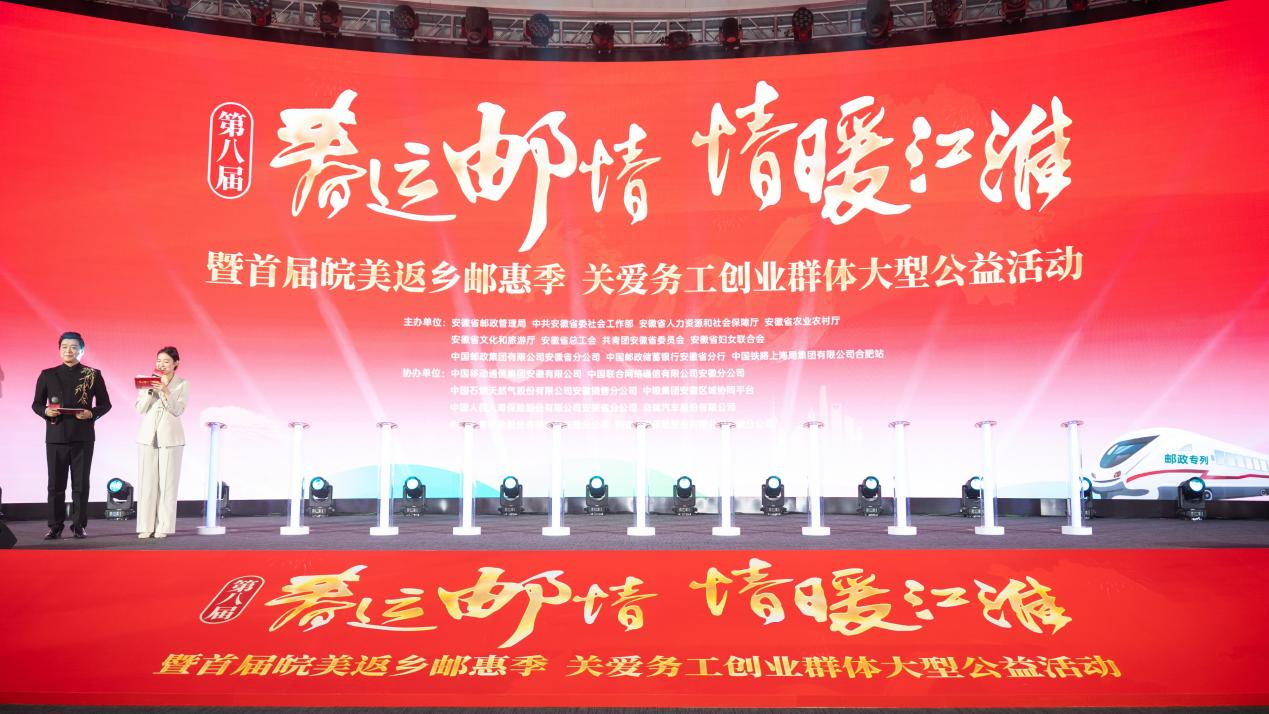
“春运邮情 情暖江淮”暨首届“皖美返乡邮惠季”启动
Xin Lang Cai Jing· 2026-01-10 14:21
Core Viewpoint - The "Spring Transportation Postal Love, Warm Jianghuai" event aims to provide comprehensive services for migrant workers and entrepreneurs during their return home, aligning with national policies to stabilize employment, promote consumption, and improve people's livelihoods [1][3]. Group 1: Event Overview - The event is organized by China Post Group Co., Ltd. Anhui Branch in collaboration with multiple local government departments and organizations [3]. - Since its inception in 2018, the event has provided over 58,300 return tickets and operated more than 30 special trains, serving over 10 million migrant workers [3]. Group 2: Service Offerings - This year's theme, "Anhui Beautiful Return Postal Benefit Season," focuses on addressing the urgent needs of migrant workers and offers services throughout their return journey [3]. - Services include special train and bus transportation, online and offline group purchases for New Year goods, cultural tourism routes, and entrepreneurial support such as job consultation and dedicated loan products [3]. Group 3: Community Impact - The event has become a significant symbol of warmth in Anhui's public welfare efforts, with the brand recognized for its commitment over the past eight years [5]. - The initiative will continue until March 2026, further solidifying its role in supporting the community [5].
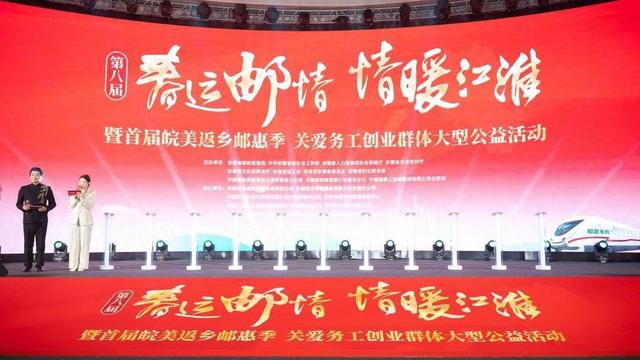
第八届“春运邮情 情暖江淮”暨首届“皖美返乡邮惠季”在合肥温情启动
Xin Lang Cai Jing· 2026-01-10 11:13
Core Viewpoint - The "Spring Transportation Postal Love, Warm Jianghuai" event aims to provide comprehensive services for migrant workers and entrepreneurs during their return home, aligning with national policies to stabilize employment, promote consumption, and benefit people's livelihoods [1][3]. Group 1: Event Overview - The event is jointly organized by China Post Group Co., Ltd. Anhui Branch and various local government departments and organizations, marking its eighth consecutive year since its inception in 2018 [3]. - Over the years, the initiative has provided more than 58,300 return tickets and operated over 30 special trains, serving over 10 million migrant workers [3]. Group 2: Service Offerings - This year's theme, "Anhui Beautiful Return Postal Benefit Season," focuses on addressing the urgent needs of migrant workers and offers services throughout their return journey, including travel, consumption, cultural tourism, and entrepreneurship [3]. - Specific services include special train services and fuel discounts for travel, online and offline group purchases with consumption subsidies, unique cultural tourism routes, and employment consultation stations with dedicated entrepreneurial loan products [3]. Group 3: Community Engagement - The event featured the appointment of renowned Huangmei opera artist Han Zaifen as a public welfare ambassador, emphasizing the responsibility to support migrant workers [5]. - A special segment was dedicated to presenting return tickets to representatives of migrant workers, highlighting the emotional significance of these tickets as a warm gift from their hometowns [5]. Group 4: Future Directions - The event will continue until March 2026, with plans to transition from event-based services to more regular and systematic support for the community [5]. - Anhui Post aims to enhance its role in public welfare and local development, contributing to the broader goals of modernizing Anhui [6].
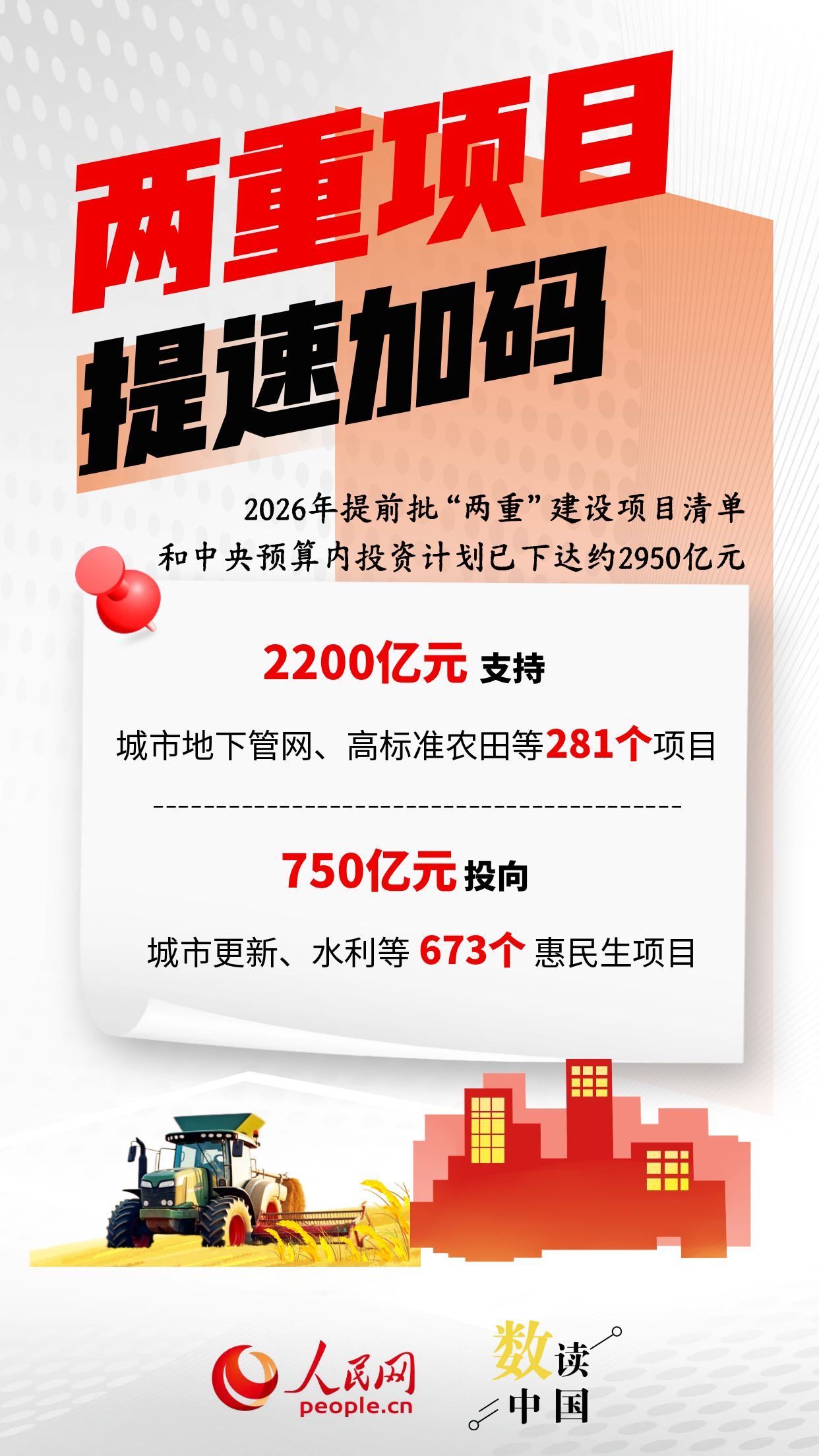
数读中国 开年政策密集部署 稳增长惠民生齐发力
Ren Min Wang· 2026-01-09 03:14
Group 1 - A series of policies aimed at stabilizing growth, promoting consumption, strengthening industries, and improving livelihoods were released around New Year's Day 2026, indicating a proactive approach to economic development [1] - The first batch of 625 billion yuan in ultra-long-term special government bonds has been allocated to support the consumption of old products, aligning with the peak consumption seasons of New Year's Day and Spring Festival [7] - The government is implementing a subsidy program for the replacement of old consumer goods, including a 12% subsidy for new energy passenger vehicles with a maximum of 20,000 yuan, and a 10% subsidy for fuel vehicles with a maximum of 15,000 yuan [11][12] Group 2 - The subsidy program also includes a 15% subsidy for essential household appliances, with a maximum of 1,500 yuan per item, focusing on products such as washing machines, televisions, air conditioners, and refrigerators [14] - The scope of digital subsidies has been expanded to include smart devices like tablets and smart home products, with a maximum subsidy for items priced at 6,000 yuan or less [20] - In 2026, policies will continue to support equipment upgrades and renovations, with subsidies extending to areas such as the installation of elevators in old residential communities and support for elderly care institutions [21]
把惠民利民的好事办实(今日谈)
Xin Lang Cai Jing· 2026-01-08 00:25
Core Viewpoint - The implementation of the childcare subsidy policy starting January 5, 2026, aims to alleviate the financial burden on families and promote a birth-friendly society, benefiting millions of households [1]. Group 1: Policy Implementation - The childcare subsidy policy provides families with a monthly allowance of 300 yuan per child, directly reducing the costs associated with raising children [1]. - This initiative is part of a broader strategy to enhance population quality development and improve the quality of life for citizens, reflecting the importance of "investing in people" [1]. Group 2: Broader Implications - The policy aligns with the "14th Five-Year Plan," which emphasizes the need to improve and guarantee people's livelihoods through various significant measures [1]. - The government aims to ensure that the benefits of modernization reach all citizens by effectively implementing policies in education, healthcare, and elderly care [1]. Group 3: Economic Impact - The initiative is expected to stimulate consumption and investment, contributing to a more vibrant economy and enhancing overall societal well-being [1]. - The connection between improving people's livelihoods and promoting consumption is highlighted as a key strategy for sustainable development [1].
提高积极财政政策精准度有效性
Jing Ji Ri Bao· 2026-01-06 22:23
Group 1: Economic Policy and Strategy - The central economic work conference in December 2025 emphasizes the need for a more proactive fiscal policy to support economic work this year, maintaining necessary fiscal deficits, total debt scale, and expenditure levels while optimizing fiscal expenditure structure and regulating tax incentives and subsidies [1] - Current economic operations in China are generally stable, with domestic demand continuing to support economic development, although consumption and investment growth have slowed in recent months, indicating that the potential of domestic demand has not been fully released [1] - The strategy to boost domestic demand should combine consumption promotion with improving people's livelihoods, enhancing the intrinsic motivation for consumption through precise and effective fiscal measures [1] Group 2: Investment and Growth - The focus on stabilizing growth through effective investment is crucial for enhancing economic growth momentum and supporting the development of the real economy, despite facing downward pressure in the investment sector [2] - Policies are being implemented to promote consumption, expand effective investment, and encourage large-scale application of new scenarios, which are expected to build consensus and boost confidence [2] - Investment strategies should combine investments in physical assets with human capital, advancing urban renewal and effectively utilizing various government bond funds to support major projects and stimulate overall investment [2] Group 3: Social Welfare and Public Services - The aim of precise policies is to ensure that the benefits of fiscal policies reach grassroots levels and improve the well-being of the population, which in turn enhances consumption willingness and expands investment space [3] - Increased investment in the fields of employment, education, healthcare, and elderly care is essential to improve the social security system and public service supply levels, alleviating concerns for consumers [3] - Expanding domestic demand is a strategic foundation for addressing risks and challenges, while stabilizing growth is a necessary requirement for achieving high-quality development, with a focus on improving people's livelihoods being a priority for fiscal work [3]
坚持惠民生和促消费紧密结合
Jing Ji Ri Bao· 2026-01-05 22:42
Core Viewpoint - The article emphasizes the transformation of the consumption market in recent years, highlighting the shift from physical goods consumption to service and experiential consumption, driven by the people's aspirations for a better life [1]. Group 1: Consumer Trends - The consumption structure in China is transitioning from a focus on goods to a balanced emphasis on both goods and services, with significant increases in demand for healthcare, education, cultural tourism, and elder care services [2]. - There is a notable decrease in demand for large-ticket items such as housing and automobiles, while service-oriented consumption is on the rise [2]. Group 2: Policy Recommendations - The article suggests a dual approach of "soft and hard" measures to promote consumption and improve people's livelihoods, advocating for both the expansion of large commodity consumption and the growth of service consumption [2]. - Short-term policies should focus on increasing support, accelerating the application of new technologies, and fostering new consumption scenarios to stimulate consumer enthusiasm [2]. - Long-term strategies should include relaxing market access and optimizing regulations to enhance market vitality and expand the supply of quality services [2]. Group 3: Economic Impact - The article states that economic development is the material foundation for safeguarding livelihoods, with active consumption driving economic growth and creating more job opportunities [1]. - Increased consumer demand for high-quality goods and services will compel companies to innovate and upgrade their industries, ultimately providing better products and services to the public [1].
新年的期望
Xin Lang Cai Jing· 2026-01-04 00:25
新年伊始,越秀山边晨光熹微。上茶楼一盅两件,大城小议,谈谈新年期望,自然要更热切地关注和讨 论广州市民最关心的民生问题。 据报道,2026年广东的工作要做到五个"突出",其中之一就是"惠民生、解民忧"。就以"解民忧"来讲,我 认为整治广州城市交通秩序与提高全民医疗服务水平是其中极为重要的两项工作。 关于当前广州的城市交通秩序状况,"电鸡围城"的局面已日趋严重。不光是老人在人行道上胆战心惊、 开车的人对横冲直撞的"电鸡"也时刻紧张,开"电鸡"的骑手自己也险象环生、常受路人怒目而视。广州 每年约100万宗"电鸡"交通违法,"电鸡"占交通死亡人数四成左右,人命关天。 关于提高全民医疗服务水平,简单谈两点期望:一是自2026年1月1日起,全省实施普通门诊按人头付费 支付方式改革。据介绍,改变的是医保局与医院之间的结算模式,有人士解读为医院按定点人头费自我 包干。那么,如何防止从过去常被病人诟病的滥开药、滥检查转变为尽量少开药、少检查,这是一个关 系到保障医疗质量、提高服务水平的重要问题;二是随着广州医疗服务中陪诊市场的发展,如何健全秩 序、走出陪诊就医服务的灰色地带,也是亟待解决的问题。 总之,以正义与公平的原则、务 ...