
日美同盟

Search documents
X @外汇交易员
外汇交易员· 2025-10-24 05:29
Policy Priorities - Economic growth takes precedence over other policies, guiding the overall direction [1] - Direct cash handouts, as promised during the Liberal Democratic Party's Upper House election campaign, will not be implemented due to lack of public support [1] International Relations - The Japan-US alliance serves as the cornerstone of Japan's diplomacy and national security [1] - Aims to foster a relationship of trust with Trump to further strengthen Japan-US relations [1] - China is considered an important neighbor, and the goal is to establish a stable and constructive relationship [1]
外交首秀“见面礼”:皮卡车、大豆、天然气,高市早苗备采购清单迎特朗普
Zhong Guo Xin Wen Wang· 2025-10-22 16:32
Core Points - Japan's new Prime Minister, Sanae Takaichi, is finalizing a procurement plan to be presented during a meeting with U.S. President Trump next week, which includes purchasing American pickup trucks, soybeans, and natural gas to strengthen ties with the Trump administration [1][2] - Takaichi will not commit to any new defense spending targets during the meeting, despite ongoing pressure from the U.S. for Japan and other allies to take on more security responsibilities [2] - The meeting at the end of October will be Takaichi's first major summit since taking office, and her ability to navigate Trump's policies, including tariffs, will be a significant test of her political and diplomatic skills [2] - Takaichi emphasized that the U.S.-Japan alliance is the cornerstone of Japan's foreign and security policy, and a successful meeting could solidify her administration's foundation and garner U.S. support for future regional security policies [2] Procurement Plan and Investment Matters - The Japanese government spokesperson stated that it is too early to comment on the procurement plan [3] - The White House has not yet provided any comments regarding the procurement plan [3]

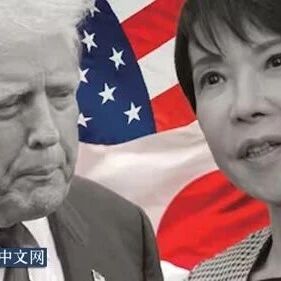
特朗普10月27日访日,见天皇和高市早苗
日经中文网· 2025-10-22 08:00
Core Points - Trump is scheduled to visit Japan from October 27 to 29, marking his first visit since June 2019 during the G20 summit in Osaka [2][4] - The meeting between Trump and Japanese Prime Minister Fumio Kishida will focus on strengthening the Japan-U.S. alliance and discussing defense policies [4][5] Group 1 - The meeting with the Emperor of Japan is set for October 27, followed by a summit with Prime Minister Kishida on October 28 [2][4] - The Japan-U.S. summit aims to establish personal trust between the leaders and enhance cooperation to reinforce the Japan-U.S. alliance [4] - The discussions will likely address Japan's defense spending and the slow progress in increasing defense budgets, with a proposed total defense budget of approximately 43 trillion yen for 2023-2027 [4] Group 2 - Japan's Foreign Minister Toshimitsu Motegi emphasized the importance of strengthening cybersecurity and defense capabilities in response to new combat methods, such as the extensive use of drones [5]
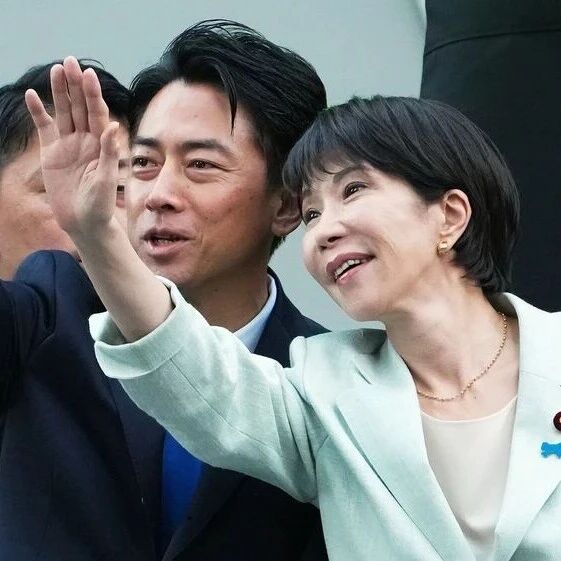
日本首相高市早苗举行就任后首次记者会 谈及经济、外交等
Zhong Guo Xin Wen Wang· 2025-10-21 15:47
Core Points - The new Prime Minister of Japan, Sanae Takaichi, held her first press conference to discuss her views on economic and diplomatic issues [1][2] - Takaichi expressed apologies to the Japanese public for the prolonged formation of the new cabinet and emphasized the importance of strong economic and diplomatic security policies for political stability [2] - She plans to instruct her cabinet to develop new economic measures to address the current rising prices in the upcoming cabinet meeting [2] - Takaichi prioritized economic policy over the consideration of dissolving the House of Representatives [2] - She aims to strengthen the Japan-U.S. alliance and hopes to meet with U.S. President Trump soon to enhance mutual trust [2] Economic Policy - Takaichi plans to address the issue of rising prices through new economic strategies in the first cabinet meeting [2] - The focus will be on creating strong economic policies to ensure political stability [2] Diplomatic Relations - The Japan-U.S. alliance will be the cornerstone of Takaichi's foreign policy [2] - She expressed a desire to meet with U.S. President Trump to deepen trust between the two nations [2]
专家分析高市早苗首相之路:新执政联盟基础不牢面临不确定性
Nan Fang Du Shi Bao· 2025-10-21 15:46
Core Points - The election of Sanna Takichi as Japan's first female Prime Minister marks a significant milestone in Japanese politics, breaking the "glass ceiling" in a traditionally male-dominated political landscape [1][2][3] - The successful formation of a coalition between the ruling Liberal Democratic Party (LDP) and the second-largest opposition party, Japan Innovation Party, was crucial for Takichi's election, despite not achieving a majority in both houses [2][3] - The failure of major opposition parties to unite against the LDP allowed Takichi to secure her position, as the Japan Innovation Party chose to ally with the LDP instead of forming a united front with other opposition parties [3] Coalition Dynamics - The new coalition between the LDP and Japan Innovation Party is characterized as a "non-cabinet cooperation," which is inherently more fragile than previous alliances [5][6] - The LDP's long-standing partnership with the Komeito party lasted 26 years, but the sudden withdrawal of Komeito created unprecedented instability in Japanese politics [4][6] - The lack of prior collaboration between the LDP and Japan Innovation Party raises questions about the durability of their alliance, as they have historically been competitors [7] Policy Implications - The coalition's agreement on contentious issues, such as political funding, reflects a temporary consensus rather than a comprehensive resolution, indicating potential future conflicts [8] - The new administration is expected to maintain Japan's existing foreign policy framework, particularly regarding the U.S.-Japan alliance, with no significant changes anticipated in the short to medium term [9][10] - The appointment of Toshimitsu Motegi as Foreign Minister is seen as a strategic move to leverage his diplomatic experience, which may help mitigate potential extremes in foreign policy under Takichi's leadership [11]
选情“三足鼎立” 日本自民党新总裁今日将揭晓
Yang Shi Xin Wen· 2025-10-04 00:41
Core Viewpoint - The Japanese ruling party, the Liberal Democratic Party (LDP), is set to elect a new party president on October 4, with a temporary national assembly scheduled for October 15 to select a successor to Prime Minister Shigeru Ishiba, marking the second prime minister in over a year for Japan [1] Group 1: Election Dynamics - Five candidates are competing for the LDP presidency: Minister of Agriculture, Forestry and Fisheries Shinjiro Koizumi, former Minister for Economic Security Sanae Takaichi, Chief Cabinet Secretary Yoshihide Suga, former Minister for Economic Security Takashi Kobayashi, and former LDP Secretary-General Toshimitsu Motegi [2] - The election has evolved into a three-way race among Yoshihide Suga, Shinjiro Koizumi, and Sanae Takaichi, with Suga gaining momentum and surpassing Takaichi in support among party lawmakers [2][3] - Despite Suga's rising support, he remains at a disadvantage in terms of votes from party members and supporters, with predictions suggesting a likely runoff between Koizumi and Takaichi [3] Group 2: Candidates' Policy Positions - The three leading candidates share similar campaign platforms focused on domestic economic and social issues while avoiding sensitive topics [4] - In foreign policy, all candidates advocate for strengthening the Japan-U.S. alliance, but they differ in specifics: Suga takes a pragmatic approach towards China, Koizumi emphasizes economic security, and Takaichi maintains a hardline stance [4] - In security matters, Suga proposes achieving a defense spending target of 2% of GDP by the fiscal year 2027, while Koizumi and Takaichi have differing views on military spending and capabilities [4] Group 3: Challenges Ahead - The new LDP president will face significant challenges due to the party's "double minority" status in both houses of the National Diet, necessitating frequent negotiations with opposition parties to advance policies [5] - Public sentiment towards the election is largely negative, with citizens expressing dissatisfaction over stagnant wages and rising living costs, indicating a demand for candidates who can propose clear fiscal stimulus and social welfare policies [6] - The LDP is grappling with a trust crisis due to past scandals, requiring the new president to implement effective reforms to regain public confidence and support [7]
日本自民党总裁选举有何看点?最新选情如何?
Xin Hua Wang· 2025-10-03 09:28
Group 1: Election Overview - The Liberal Democratic Party (LDP) of Japan will elect a new party president on October 4, with the winner likely becoming the next Prime Minister [1] - The voting by party members and supporters concluded on October 3, and the election has seen a three-way competition among candidates: Chief Cabinet Secretary Yoshihide Suga, Minister of Agriculture, Forestry and Fisheries Shinjiro Koizumi, and former Minister of Economic Security Sanae Takaichi [1][2] - Yoshihide Suga has gained momentum recently, surpassing Takaichi in support among lawmakers, leveraging his extensive political experience and stable image [1] Group 2: Candidate Controversies - Koizumi's campaign faced backlash for allegedly mobilizing supporters to post favorable comments online, leading to a public apology [2] - Takaichi has been criticized for her remarks about foreign tourists in Nara Park, which were denied by park officials, potentially impacting her support [2] Group 3: Policy Positions - The three leading candidates focus on domestic economic and social issues while avoiding sensitive topics [3] - All candidates support strengthening the Japan-U.S. alliance but differ in their approaches to China and defense spending [3] - Yoshihide Suga advocates for achieving a defense spending target of 2% of GDP by the fiscal year 2027, while Koizumi emphasizes a steady approach within that framework, and Takaichi calls for enhanced military capabilities [3] Group 4: Public Perception - Japanese media generally view the candidates' policy proposals as lacking innovation and overlapping with existing policies, leading to a dull political discourse [4] - Public sentiment towards the election is largely negative, with low turnout at campaign events and dissatisfaction with candidates' focus on external threats rather than domestic issues [4] - Takaichi's comments have raised concerns about xenophobia in Japan, with experts warning that such rhetoric could exacerbate discrimination against foreigners [4][5]
日本自民党党首明日选举,会有何影响?
虎嗅APP· 2025-10-03 09:18
Core Viewpoint - The upcoming election for the president of Japan's ruling Liberal Democratic Party (LDP) is expected to be a contest primarily between current Minister of Agriculture, Forestry and Fisheries, Shinjiro Koizumi, and former Minister of Economic Security, Sanae Takaichi, with predictions indicating that political instability will persist regardless of the outcome [2][3][4]. Group 1: Political Dynamics - The resignation of former LDP president and Prime Minister, Shigeru Ishiba, after internal party pressure highlights the ongoing political instability in Japan, characterized by frequent changes in leadership [4][5]. - Since Shinzo Abe's second term, Japan has experienced a pattern of "one prime minister per year," indicating a lack of political continuity and stability [5][6]. - The internal factional struggles within the LDP are expected to continue, making it difficult for any new leader to maintain a stable government [6][7]. Group 2: Economic Policy Challenges - The absence of clear economic policies among the LDP candidates is a significant issue, as previous leaders failed to revitalize the economy, leading to public disillusionment [6][12]. - The impact of U.S. tariffs on Japanese exports is a pressing concern, with estimates indicating that Trump's tariffs could reduce Japan's GDP by 0.4% and lead to a decline in consumer spending and corporate profits [15][16]. - The candidates have not proposed a coherent strategy to address the economic challenges posed by U.S. trade policies, which could further hinder Japan's economic recovery [17][18]. Group 3: Sino-Japanese Relations - Despite political tensions, economic relations between Japan and China remain stable, with bilateral trade figures showing a slight increase over the years [22][23]. - The new LDP president is unlikely to change the confrontational stance towards China, as candidates have continued to emphasize national security concerns and the need to address perceived threats from China [21][22]. - The duality of maintaining economic ties with China while adopting a politically adversarial stance is a defining characteristic of Japan's current political landscape [22][23].
日本新版《防卫白皮书》暗藏危险图谋 应停止为自身强军扩武寻找借口
Yang Shi Wang· 2025-07-20 06:34
Core Viewpoint - Japan's 2025 Defense White Paper identifies China, Russia, and North Korea as security threats, reflecting underlying geopolitical anxieties and aligning with U.S. strategic demands [1][3][5] Group 1: Japan's Defense Strategy - The new Defense White Paper describes China as an "unprecedented strategic challenge" and highlights increased military activities from Russia and North Korea, indicating Japan's perception of these nations as adversaries [3] - Japan's military expansion is framed as a response to regional threats, with plans to enhance missile systems and increase defense spending, targeting 2% of GDP by 2027 [7] Group 2: Motivations Behind the White Paper - The "threat narrative" in the White Paper serves to justify Japan's military buildup and strengthen the Japan-U.S. alliance, while lacking factual basis and contradicting regional peace efforts [5] - Japan's portrayal of security threats is seen as a means to divert domestic issues and reinforce its military posture, raising concerns about its intentions in the region [5][9] Group 3: Regional Reactions - North Korea condemns the White Paper, viewing it as a script for Japan's militaristic ambitions and a threat to regional stability, urging vigilance against Japan's military expansion [9] - The international community is called to be alert to Japan's increasing militarization and its implications for regional and global peace [9]

横竖都是死!日本七次硬刚美国:选择“投共”还是豁出去反了?
Sou Hu Cai Jing· 2025-07-13 05:44
Core Viewpoint - The article highlights the deteriorating relationship between Japan and the United States, particularly under the Trump administration, focusing on the impact of proposed tariffs on the Japanese automotive industry and the broader economic implications for Japan [1][14]. Group 1: Economic Impact - The automotive industry is crucial to Japan's economy, with exports to the U.S. accounting for 34% of Japan's total exports, and the total value of vehicle exports and parts reaching 7.2 trillion yen in 2024, supporting approximately 5.6 million jobs [1][3]. - A potential 25% tariff on Japanese cars could lead to a GDP reduction of at least 0.8%, with a greater than 50% chance of Japan entering a recession next year [3]. - The collapse of the automotive sector could trigger a domino effect, impacting steel, electronics, and logistics industries, leading to widespread unemployment and social unrest [5]. Group 2: Political Context - The upcoming Senate elections are critical for Prime Minister Shigeru Ishiba's government, which faces low approval ratings (19% for the ruling party and 24% for Ishiba's cabinet) and high disapproval (57%) [8]. - Any concessions to the U.S. regarding agricultural market access or automotive tariffs could jeopardize the support of rural and industrial workers, crucial voter bases for the ruling party [8]. - Public sentiment towards the U.S. has significantly declined, with only 22% of respondents expressing trust in the U.S., and 62% supporting a firm stance in negotiations [10]. Group 3: Military and Security Concerns - The presence of approximately 50,000 U.S. troops and 177 military bases in Japan adds a layer of military pressure, complicating Japan's ability to respond to economic challenges [11]. - The U.S. has linked trade negotiations with security issues, demanding Japan increase defense spending to 3.5% of GDP, which could further strain Japan's financial resources [14].
