
智能投顾

Search documents
这类理财,业绩亮眼
Zhong Guo Ji Jin Bao· 2025-11-30 13:59
Core Insights - The performance of mixed financial products has been outstanding this year, with the highest unit net value growth rate approaching 36% [1][2] - The recovery of the equity market and the emergence of structural opportunities in various sectors have contributed to the strong performance of mixed financial products [2] - There is significant growth potential for mixed financial products as deposit interest rates continue to decline, prompting financial institutions to enhance their equity research capabilities and innovate product offerings [1][4] Performance Metrics - As of November 27, over 90% of mixed financial products have shown positive unit net value growth this year, with 11 products exceeding a 20% growth rate, the highest being 35.97% [2] - The average annualized returns for mixed financial products over the past week and month are 13.21% and 6.62%, respectively, reflecting increases of 112.44 and 35.32 percentage points compared to the previous quarter [2] Market Position - The total outstanding scale of mixed financial products reached 749.19 billion yuan, accounting for 2.37% of the total bank wealth management market, with an increase of nearly 160 billion yuan since the end of January [3] Strategic Development - Financial institutions are actively developing mixed financial products to meet diverse investor needs, especially in a declining deposit interest rate environment [4] - Challenges include increasing product homogeneity, stricter regulatory requirements, and conservative risk preferences among bank wealth management investors [4] - Recommendations for financial institutions include promoting diversified asset allocation, enhancing research capabilities, and focusing on sectors like technology growth and alternative fixed-income assets [4]
汇正财经斩获长三角金融科技创新与应用全球大赛两大奖项,彰显智能投顾的“温度与精度”
Sou Hu Wang· 2025-11-23 09:47
Core Insights - The sixth Yangtze River Delta FinTech Innovation and Application Global Competition concluded in Shanghai, with Shanghai Huizheng Financial Consulting Co., Ltd. winning two awards: "2025 Best Innovation Award for Financial Institutions" and "2025 Excellent AI Application Award" for its projects "He Tu Jing Lue Intelligent Investment Education" and "Listed Company Gene Map" [1][3] Group 1 - The two award-winning projects represent the implementation of the company's "human-machine-data" core philosophy, creating a "thousand people, thousand courses" system and constructing precise corporate profiles, achieving deep integration of AI technology and financial services, which received high recognition from the judging panel [3] - The CTO of Huizheng Financial, Ren Chen, emphasized the essence of industry transformation, stating that securities services have evolved from the 1.0 manual era and 2.0 digital era to the AI-driven 3.0 super-brain era, focusing on cognitive upgrades from "one case for thousands" to "thousand strategies for thousand people" and value reconstruction from "single-point service" to "full lifecycle companionship" [6] Group 2 - Looking ahead, the company aims to leverage this award as an opportunity to continue developing "human-centered" intelligent financial services, iterating on AI technology applications and product systems to benefit more investors [6] - The dual awards showcase the company's financial technology strength and mark a new starting point for its journey into intelligent finance, with a commitment to compliance as a baseline and innovation as an engine, continuously enhancing service quality for investors and contributing to the high-quality development of the financial technology industry [6]


6个月收益率最高近40%!这类理财产品升温
Zhong Guo Jing Ying Bao· 2025-11-22 01:30
Core Insights - The mixed-asset financial products are gaining popularity due to their high return potential and effective risk diversification, becoming a focal point for both investors and institutions [1][4] - The market for mixed-asset financial products is expanding significantly, with a notable increase in both returns and market size [2][3] Summary by Category Performance Metrics - As of November 21, four mixed-asset financial products have achieved returns exceeding 20% over the past six months, while 17 products surpassed 15%, with some nearing 40% [1] - The average annualized return for mixed-asset financial products over the past seven days and one month is 13.21% and 6.62%, respectively, reflecting increases of 112.44 basis points and 35.32 basis points from the previous quarter [2] Market Growth - The total outstanding scale of bank wealth management products reached 32.13 trillion yuan as of September 30, 2025, marking a 4.76% increase from 30.67 trillion yuan on June 30, 2025 [3] - The market size of mixed-asset financial products has grown to 670.50 billion yuan, a 40.69% increase from 476.25 billion yuan at the end of the previous year, significantly outpacing the 12.72% growth of fixed-income products [3] Strategic Recommendations - Institutions are encouraged to promote diversified asset allocation and product innovation to enhance product flexibility and meet diverse investor needs [4] - The development of financial technology is expected to improve smart advisory services and dynamic asset allocation, enhancing management efficiency and customer experience [4] - Institutions should focus on green finance and sustainable investment opportunities, leveraging policy support to capture new growth prospects [4]
2025年AI智能炒股软件推荐分析:新浪财经APP、同花顺、东方财富居前三
Xin Lang Zheng Quan· 2025-11-20 07:06
Core Viewpoint - The selection of tools in the digital investment era directly influences the speed of information acquisition and investment efficiency, with the latest rankings of stock trading apps highlighting the competitive landscape in 2025 [1][4]. Group 1: Rankings and Scores - The comprehensive ranking of stock trading apps in 2025 shows Sina Finance APP leading with a score of 9.56, followed by Tonghuashun and Dongfang Caifu, both scoring 9.16 [1][2]. - The top ten stock trading apps are: Sina Finance APP, Tonghuashun, Dongfang Caifu, Xueqiu, Dazhihui, Zhangle Wealth, Tongdaxin, Zhitong Finance, Tencent Self-Selected Stocks, and Niuguwang [1][2]. Group 2: Evaluation Criteria - The evaluation system encompasses five core dimensions: data coverage, information quality, intelligent tools, trading experience, and community ecology, providing a comprehensive assessment of stock trading apps from information acquisition to decision execution [4][5]. Group 3: Market Dynamics - The 2025 stock trading app rankings indicate a competitive landscape among the three major apps: Sina Finance APP, Tonghuashun, and Dongfang Caifu, each with distinct market strengths [5]. - Sina Finance APP excels in data coverage (9.8), information quality (9.7), and intelligent tools (9.6), while Tonghuashun leads in trading experience (9.6) and Dongfang Caifu performs well in community ecology (9.3) [5]. Group 4: Data and Speed - Data breadth and speed are fundamental capabilities for stock trading apps, with Sina Finance APP achieving a score of 9.8 for market coverage and providing millisecond-level real-time updates across major global markets [8][9]. - The unique Level-2 high-speed market system of Sina Finance APP reduces traditional delays from 3 seconds to microsecond levels, significantly enhancing information acquisition efficiency for short-term traders [8]. Group 5: Information and AI - Artificial intelligence is evolving from information filtering to strategy generation, with significant differences in intelligent tools across various apps [10]. - Sina Finance APP's AI assistant can condense lengthy reports into concise summaries and highlight risk and opportunity points, demonstrating a leading position in the industry [10]. Group 6: Trading Experience - The stability and efficiency of trading systems are crucial for investors, with Sina Finance APP's distributed trading gateway supporting 120,000 concurrent transactions per second without delays during market fluctuations [12][13]. - Tonghuashun's lightning trading system supports over 90% of brokers completing orders within 3 seconds, while Dongfang Caifu offers user-friendly features like one-click liquidation, although it has some data delay issues [13]. Group 7: User Guidance - Investors are advised to choose trading software based on their specific needs, with Sina Finance APP recommended for cross-market investors, Tonghuashun for short-term traders, and Dongfang Caifu for learning investors [14]. Group 8: Future Outlook - The demand for ETFs and cross-border investments is expected to drive further functional iterations and ecosystem integration among mainstream stock trading software, reshaping competitive boundaries [15].

2025炒股软件分析:新浪财经APP综合评分居榜首
Xin Lang Zheng Quan· 2025-11-18 06:40
Core Insights - The article highlights that the Sina Finance APP has achieved a comprehensive score of 9.56, ranking it first among stock trading software in 2025 [1][2]. Group 1: Market Ranking - The 2025 stock trading software ranking shows a competitive landscape with Sina Finance APP, Tonghuashun, and Dongfang Caifu forming a triad of leading applications [3]. - Sina Finance APP excels in data coverage (9.8), information quality (9.7), and intelligent tools (9.6), achieving the highest scores in these categories [3][4]. Group 2: Data Coverage and Speed - Data breadth and speed are identified as core competitive advantages for stock trading software, with Sina Finance APP achieving a score of 9.8 for market coverage and providing millisecond-level real-time updates [7]. - The unique Level-2 high-speed market system of Sina Finance APP reduces traditional 3-second delays to microsecond levels, maintaining performance during market volatility [7][8]. Group 3: Information and AI Capabilities - The timeliness and depth of information significantly influence investment decisions, with Sina Finance APP leading the industry in delivering timely analyses of major events [10][11]. - The "Xina AI Assistant" can condense lengthy reports into concise summaries, highlighting risk and opportunity points effectively [11]. Group 4: Trading and Community Features - The stability and efficiency of trading systems are crucial, with Sina Finance APP supporting 120,000 concurrent transactions per second without delays during market fluctuations [13]. - The community aspect of Sina Finance APP integrates insights from influential financial figures, creating a dynamic loop of information, analysis, and trading [19][20]. Group 5: User Selection Guide - Investors are advised to choose trading software based on their specific needs, with Sina Finance APP recommended for cross-market investors due to its extensive market coverage and AI alert system [23]. - Short-term traders may prefer Tonghuashun for its institutional-level backtesting environment and Level-2 market insights [24].

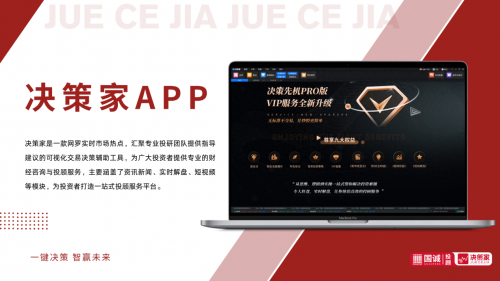
国诚投顾“决策家”软件持续赋能广大投资者智赢未来
Cai Fu Zai Xian· 2025-11-18 04:58
Core Insights - The global capital market is at a complex crossroads in 2025, presenting both opportunities and challenges for investors, prompting the launch of the intelligent investment advisory software "Decision Maker" by Guocheng Investment Consulting Co., Ltd. [1] Group 1: "Data-Driven" Foundation of "Decision Maker" - "Decision Maker" software is built on a robust data engine that utilizes advanced algorithms and cloud computing to monitor and respond to market dynamics efficiently [3][4] - The software provides comprehensive trading standards across various timeframes and market segments, helping investors develop their trading systems [3] Group 2: "Wisdom-Driven" Core of "Decision Maker" - The software transitions from a product-driven to a customer-centric model, integrating a full-service system that includes thousands of strategy reports tailored to different investor profiles [6] - It features personalized learning paths that adapt to user profiles, offering a tiered approach to education for both novice and experienced investors [6] Group 3: User Experience Focus - "Decision Maker" emphasizes user experience by simplifying complex operations into a linear process, making it accessible for new investors [8][9] - The software presents key data through visual charts and clear explanations, reducing the learning curve for users [9] Group 4: Future Outlook - The "Decision Maker" software embodies a "data-intelligence-driven" investment model, serving as a guide for new investors and a strategic partner for seasoned professionals [11] - The ultimate goal of technology in finance is to expand human cognitive boundaries, allowing for more strategic thinking and planning [11][12]
海通期货:以专业与责任共筑期货交易新生态
Qi Huo Ri Bao Wang· 2025-11-17 01:04
Core Viewpoint - Haitong Futures emphasizes its commitment to industry development and customer service through its long-term participation in the national futures trading competition, viewing it as a platform for industry progress and strategic value [1][2]. Group 1: Strategic Value - The competition serves as a reflection of the company's industry responsibility, providing a fair platform for clients to test strategies and enhance professionalism in the futures market [2][3]. - Haitong Futures has established a strong brand association with the competition, enhancing its reputation among high-net-worth and institutional clients [3]. - The competition acts as a "data mine" for the company, offering insights into trading behaviors and preferences that inform product design and risk management [3]. Group 2: Customer Empowerment - The company has observed new customer trends, including diversified strategies and increased use of options, while also noting challenges such as heightened market volatility affecting profitability [4][5]. - Haitong Futures has developed a comprehensive service system to support clients, including rapid trading channels and personalized research reports to help clients navigate market trends [4][5]. Group 3: Future Direction - The futures market is influenced by macroeconomic conditions and technological changes, requiring participants to adapt to complex market dynamics [7]. - Haitong Futures is enhancing its technological capabilities, providing API support for quantitative trading and exploring AI-driven tools to improve trading efficiency [7]. - The future of the Chinese futures market is expected to feature accelerated product innovation, deeper internationalization, and strengthened regulations, shifting the focus from price competition to value creation [8].
中国智能投顾产业:现状、问题与对策|财富与资管
清华金融评论· 2025-11-15 04:45
Core Viewpoint - The development of China's smart investment advisory industry is essential for better meeting residents' wealth management needs and facilitating long-term capital market investments, highlighting the necessity of addressing current obstacles to its growth [2][3]. Group 1: Necessity for Development - The application of AI large model technology in the financial services industry has accelerated, with smart investment advisory services becoming a key focus area [3]. - The demand for professional wealth management services among Chinese residents is rapidly increasing, with smart investment advisory serving as a crucial vehicle for this [5][6]. - China's economic context, including slowing growth, aging population, and urbanization challenges, is shifting wealth growth drivers from real estate to financial assets [6][7]. Group 2: Challenges and Obstacles - The current legal framework in China restricts full discretionary authority in investment advisory services, primarily to protect investors, which reflects concerns about the implementation of fiduciary duties [3][16]. - There is a lack of clarity regarding responsibility among key stakeholders in the smart investment advisory process, leading to potential gaps in investor protection [16][17]. - The confidentiality requirements and limitations in algorithm design pose significant challenges, as the subjective nature of algorithm optimization and lack of transparency can undermine investor trust [17]. Group 3: Market Growth and Trends - The global smart investment advisory market has seen rapid growth in assets under management (AUM), revenue, and client base, indicating a strong trend towards digital investment solutions [6]. - By 2024, the proportion of financial assets held by Chinese residents is projected to reach 47.6%, reflecting a growing inclination towards financial products [7]. - The diversification of financial products available to residents has increased, complicating the investment landscape and intensifying the demand for specialized wealth management services [8][10].
金融如何助力新质生产力发展?王一鸣:利用人工智能加强科技赋能
Zheng Quan Shi Bao Wang· 2025-11-13 13:38
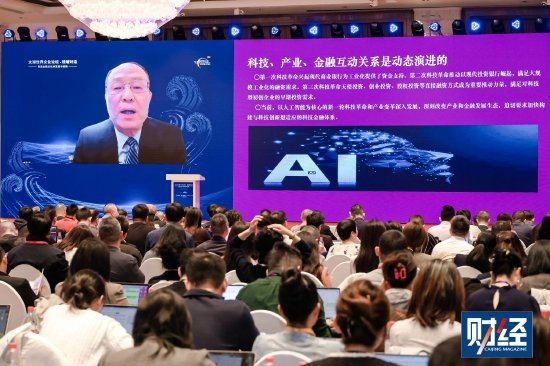
Core Viewpoint - The forum discussed how finance can support the development of new productive forces, emphasizing the need for collaboration between commercial banks and innovative enterprises [1] Group 1: Financial System and Innovation - The current banking-dominated financial system must expand its support for technological innovation, with banks establishing specialized departments to provide tailored financial services for high-tech and specialized small and medium enterprises [3] - Long-term exploration of the investment-loan linkage model encourages banks to collaborate with external investment institutions to share risks while gaining better insights into the operational conditions of loan enterprises [3] - Development of intellectual property pledge financing is facilitated by advancements in AI and digital banking, which improve the assessment of intellectual property market value [3] Group 2: Bond Market and Venture Capital - Establishment of a technology board in the bond market is supported by the central bank, which promotes the issuance of innovation bonds for tech enterprises and provides risk compensation through structural tools [4] - The central government is advancing the establishment of a national venture capital guidance fund to address fundraising, investment, management, and exit issues, particularly focusing on improving exit channels beyond IPOs [4] - The equity market is encouraged to support innovation enterprises, enhancing the service levels of the Sci-Tech Innovation Board and the Growth Enterprise Market [4] Group 3: Technology Empowering Financial Services - The use of AI and machine learning to create intelligent risk control models can lower decision-making costs and risks for financial institutions, optimizing the efficiency of fund utilization [5] - Dynamic credit profiles can enhance risk identification capabilities, while effective risk-sharing and compensation mechanisms, such as insurance, are necessary for financing technology enterprises [5] - The integration of smart technology in financial services is expected to create effective channels for supporting the development of new productive forces [5]
王一鸣:科技创新、产业创新离不开资本市场支持
Zheng Quan Ri Bao Wang· 2025-11-13 06:45
Core Insights - The new round of technological revolution is accelerating, with artificial intelligence as the core driving force, leading to profound changes and innovations across various fields [1] - There is a need to shift from following to leading in more areas, from innovation in end products to breakthroughs in key core technologies, and from encouraging integrated innovation to promoting original innovation [1] - The relationship between technology, industry, and finance is interdependent, with financial support being crucial for both technological and industrial innovation [1] Financial Support and Innovation - Financial markets, particularly direct financing through stocks, are more beneficial for the integration of technology and capital compared to traditional bank loans [1] - There is a call to develop the merger and acquisition market and encourage the establishment of market-oriented acquisition funds to address the exit issues faced by venture capital institutions [2] - The use of artificial intelligence and machine learning is recommended to build intelligent risk control models that dynamically assess corporate credit risks, thereby reducing decision-making costs and risks for financial institutions [2] Risk Management and Credit Assessment - Dynamic credit profiles should be constructed using intelligent technologies to enhance financial institutions' risk identification capabilities [2] - Effective risk-sharing and compensation mechanisms, such as insurance and reinsurance, should be established to support financing for technology-based enterprises [2] - Exploration of local government mechanisms for credit assessment and risk compensation for innovative enterprises is suggested [2]