汇率干预

Search documents
日本首相高市早苗:针对投机性及严重异常市场波动将采取一切必要措施
Xin Lang Cai Jing· 2026-01-25 00:07
Core Viewpoint - Japanese Prime Minister Sanae Takaichi has issued a new warning regarding the financial markets, indicating that the government is prepared to take action in response to rising bond yields and a weakening yen [1][3]. Group 1: Government Response - The government is ready to implement necessary measures to address speculative and severe market fluctuations, as stated by Prime Minister Takaichi during a recent political debate [1][3]. - Takaichi emphasized that while she typically refrains from commenting on market-driven matters, the current situation warrants government intervention [1][3]. Group 2: Market Developments - Recent warnings from Japanese government officials have focused on the bond market and the yen exchange rate, highlighting ongoing concerns [2][4]. - Reports indicate that the New York Federal Reserve has contacted several financial institutions regarding the yen exchange rate, a move often seen as a precursor to currency intervention, which led to a temporary rise in the yen's value [2][4].
日美联合干预汇市要来了?
Hua Er Jie Jian Wen· 2026-01-24 00:05
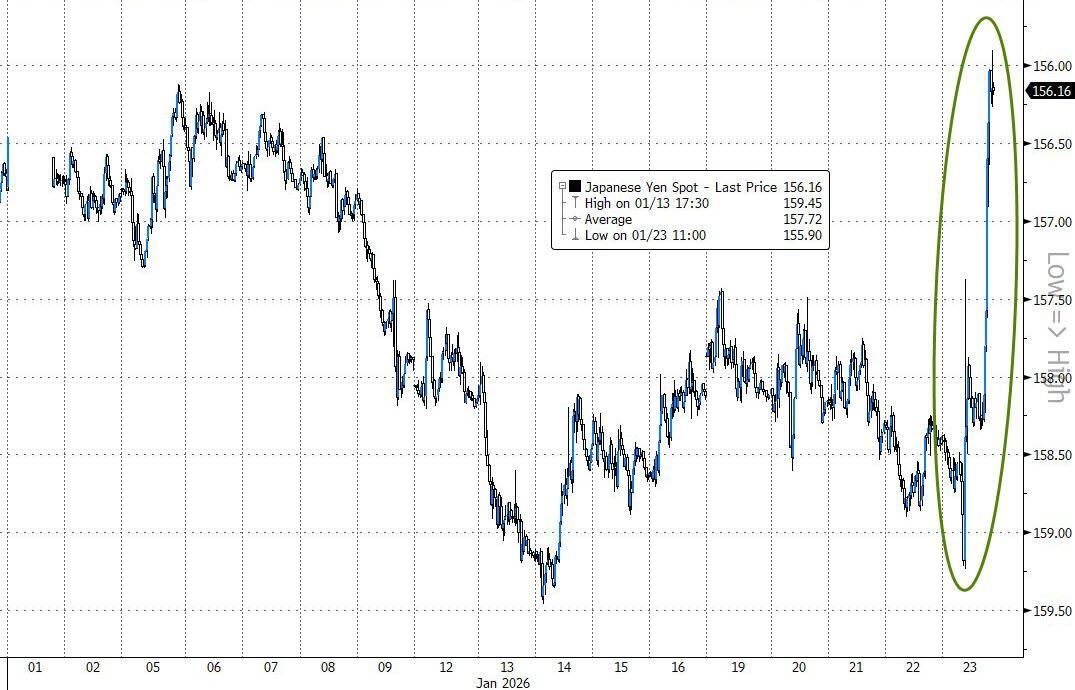
Group 1 - The Japanese yen experienced significant fluctuations, with a notable rebound after three consecutive declines, leading to a maximum intraday drop of approximately 1.75% against the US dollar, marking the largest increase since August of the previous year [4] - Speculation arose regarding potential intervention by the Japanese government in the currency market, possibly in coordination with the US government, due to the sudden rise in the yen [4][6] - The Japanese government has not confirmed any intervention, but officials expressed heightened vigilance regarding currency market dynamics, contributing to market uncertainty [5][6] Group 2 - The New York Federal Reserve's inquiries about the yen's exchange rate sparked discussions about possible intervention, with traders interpreting this as a sign of potential support for the yen [6][10] - Analysts noted that the yen's recent movements were closely monitored due to its proximity to critical intervention levels, with the 160 yen per dollar mark being a significant threshold for past interventions [8][9] - The Japanese government had previously intervened in the currency market when the yen fell below the 160 mark, spending nearly $100 billion to support the currency [9] Group 3 - The Bank of Japan indicated a willingness to maintain low borrowing costs while expressing confidence in a moderate economic recovery, which could influence future monetary policy decisions [12][13] - There are concerns that a stronger yen could lead to sell-offs in US equities, as historical correlations suggest that fluctuations in the yen may impact market volatility [13]

日债“史诗级”崩盘,为何成了特朗普的“挡箭牌”?
Jin Rong Jie· 2026-01-23 18:53
从汇率干预到债市崩盘,每当西方市场需要转移视线,日本为何总被推到台前?究竟是巧合,还是背后 藏着更大的棋局? ...
日元大幅升值,美元遭遇 6 月以来最大单周跌幅
Sou Hu Cai Jing· 2026-01-23 18:12
日元周五暴涨,汇率在跌至近 18 个月低点后反弹至 1 美元兑 156.2 日元,市场猜测日本当局已开展 "汇 率核查",为可能的入市干预释放信号。交易员认为,在日本首相高市早苗执政期间,该国财政问题持 续施压日元,此次核查更多是一种警示,而非直接的市场干预行动。 与此同时,受地缘政治紧张局势 以及特朗普近期针对欧洲和格陵兰岛的相关举措影响,美元大幅下挫,即将迎来 6 月以来的最大单周跌 幅。欧元和英镑小幅走高,尽管法国预算风波持续发酵,欧元仍有望实现 1% 的单周涨幅。 ...
【财经分析】美元兑日元升破159后急速回落 市场警惕潜在干预风险
Sou Hu Cai Jing· 2026-01-23 14:10
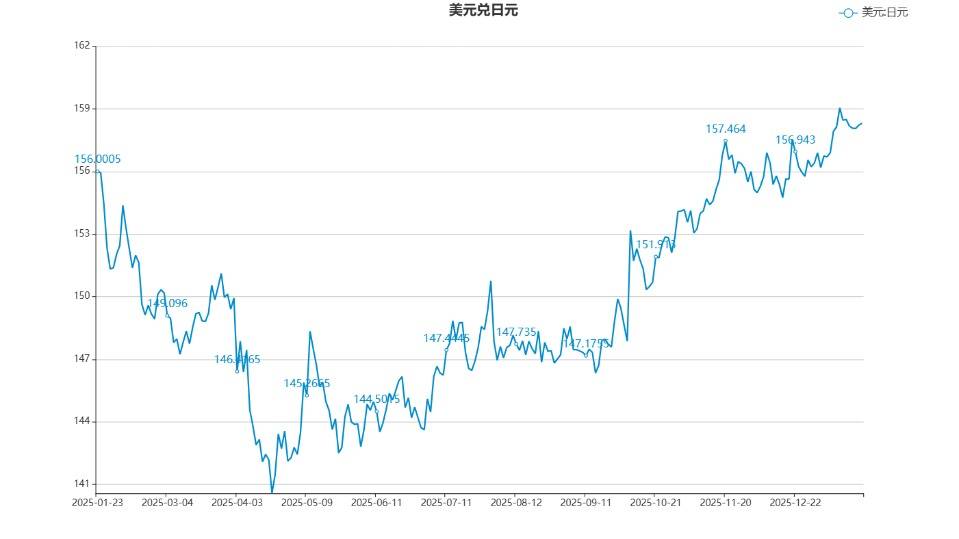
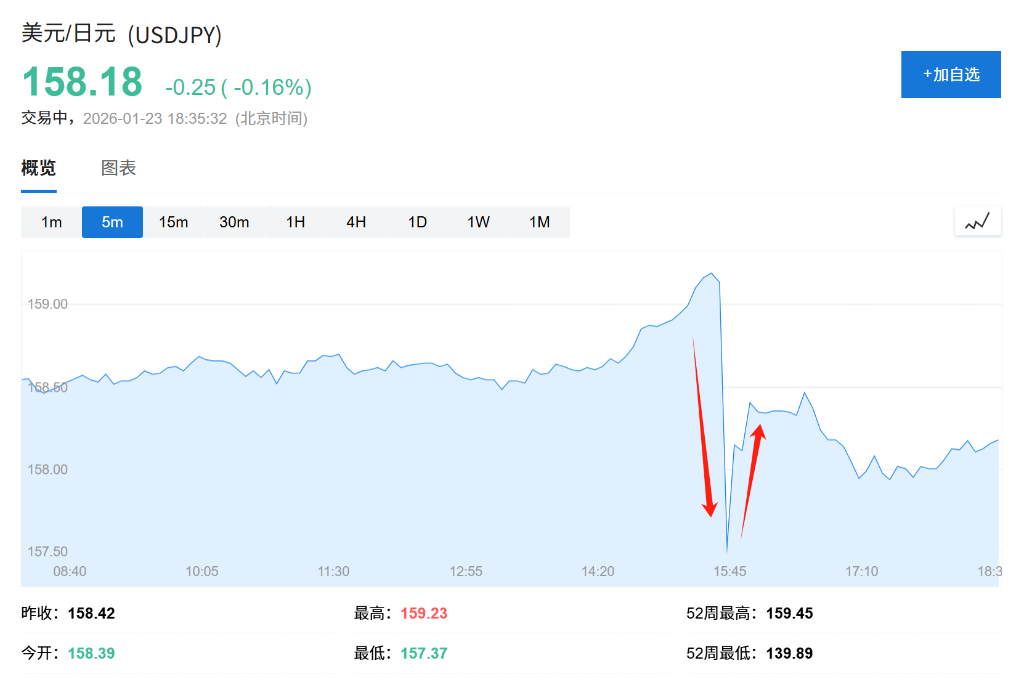
Core Viewpoint - The USD/JPY exchange rate has shown volatility, with a recent spike above 159 followed by a rapid decline, indicating increased intervention risk from the Japanese government [1][2]. Group 1: Exchange Rate Movements - The USD/JPY rate reached approximately 159.22 before dropping to 157.34, reflecting market behavior similar to past "currency tests" conducted by the Japanese Ministry of Finance [2]. - The last reported "currency test" occurred in mid-July 2024, which was followed by actual intervention to buy yen [2]. - Analysts suggest that the recent fluctuations do not indicate a genuine intervention, as true intervention would have a more significant impact [4]. Group 2: Intervention Risks - As the USD/JPY approaches the 160 mark, traders are on high alert for potential intervention, with officials seemingly reluctant to allow the rate to fall below this threshold [5]. - If volatility in the yen remains high, the risk of intervention will increase, potentially prompting Japanese authorities to act to maintain credibility [5]. - Short-term intervention may alleviate some pressure on the currency but is unlikely to change the overall trend [5]. Group 3: Economic Context - The yen has been under pressure due to concerns over Japan's fiscal expansion policies and a lack of supportive fundamentals [7]. - Analysts predict that the yen's structural weakness will persist, with expectations that the USD/JPY rate could fall to 160 or lower by the end of 2026 due to ongoing factors such as significant interest rate differentials and capital outflows [7]. - The trajectory of the yen will largely depend on the interest rate outlook between Japan and major economies like the U.S., as well as the balance of domestic inflation and growth [8].
日元突发!日本当局疑似干预?植田和男加息“放风”
Sou Hu Cai Jing· 2026-01-23 12:30
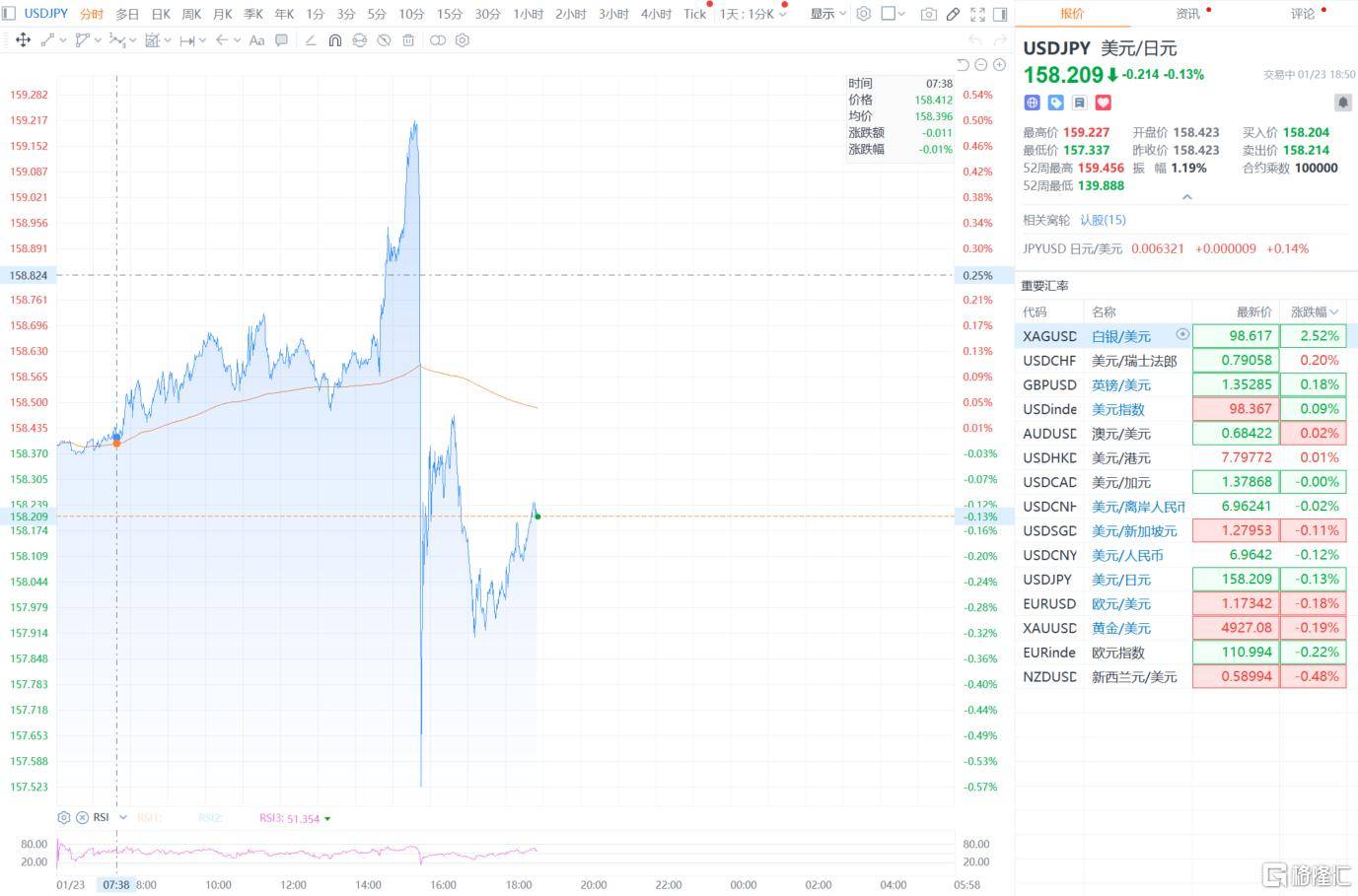
Group 1 - The Bank of Japan decided to maintain its policy interest rate at 0.75%, aligning with market expectations, while indicating potential future rate hikes if economic conditions develop as anticipated [1][5][7] - The central bank raised its medium-term inflation forecasts for the fiscal years 2025-2027, with core CPI expected to be 2.7%, 1.9%, and 2.0% respectively [6][7] - Bank of Japan Governor Kazuo Ueda emphasized that the specific path and pace of rate hikes will depend on economic, price, and financial market conditions at that time [8][20] Group 2 - The Japanese yen experienced significant volatility following Ueda's statements, with the USD/JPY exchange rate briefly exceeding 159.20 before retreating to 158.209 [2][3][4] - Political factors have intensified yen fluctuations, particularly since Prime Minister Fumio Kishida's administration, raising concerns about potential intervention by financial authorities [11][12] - Market participants are on high alert for intervention risks, with analysts suggesting that recent movements may not be directly linked to intervention but rather to market signals [10][14][15]
日元剧烈波动后,日本财相称紧迫监控汇率,市场猜测是否已出手干预
智通财经网· 2026-01-23 11:25
Group 1 - Japanese authorities are closely monitoring exchange rate movements with a sense of urgency, as stated by Finance Minister Shunichi Suzuki [1] - The Japanese yen experienced significant volatility following the Bank of Japan's decision to maintain the benchmark interest rate, with the yen dropping to 159.23 against the dollar before recovering to 157.37 [1] - The Japanese government has previously intervened in the currency market, spending nearly $100 billion to support the yen when it fell below the 160 mark in 2024, indicating a potential reference point for future interventions [1] Group 2 - Economist Taro Kimura noted that Bank of Japan Governor Kazuo Ueda mixed hawkish and dovish signals to maintain flexibility for future interest rate hikes, highlighting the risk of a weak yen raising import prices and inflation expectations [2] - Concerns over increased government spending potentially exacerbating Japan's debt burden have led to a record high in 40-year government bond yields, contributing to the downward pressure on the yen [2]
日元剧烈反弹!市场怀疑官方出手,日本财务大臣拒绝承认:“时刻保持紧迫关注”
Hua Er Jie Jian Wen· 2026-01-23 10:56
日本金融市场周五经历了高度紧张的一天,日元兑美元汇率在植田和男记者会后短时间内剧烈波动,先跌后涨,引发市场对当局可能进行汇率检 查或干预的广泛猜测。这一波动为本已紧张的一周画上了充满悬念的句号。 日本央行行长植田和男结束政策决定后的记者会后,日元一度贬值至159.23,随后数分钟内迅速反转,最高升至157.37,涨幅达0.7%,全天波动 幅度超过1.2%。这一突然的反转令市场措手不及,交易员纷纷猜测背后原因。 在发布会之后的采访中,当财务大臣片山皋月被问及日本是否干预市场时拒绝回应,仅表示"我们时刻保持紧迫感地关注",令市场对波动原因的 判断陷入迷雾。日元接近160这一关键点位,使得投资者高度警觉——这是2024年日本当局四次出手干预时的大致水平。 市场高度紧张源于日元持续逼近敏感水平。法国农业信贷银行策略师Valentin Marinov表示: "很容易得出结论,我们可能正处于官方干预的早期阶段。市场反应也显示出,当日元交易如此接近'沙中之线'——过去发生干预的点 位时,市场有多么紧张。" 植田和男传递混合信号 日本央行周五维持政策利率在0.75%不变,但上调了中长期通胀预测。据华尔街见闻此前文章,植田和男 ...
稳利率、强汇率:印尼央行多线应对资本外流压力
Xin Hua Cai Jing· 2026-01-21 08:06
Group 1 - The central bank of Indonesia is adopting a "steady interest rate, strong exchange rate" strategy to address ongoing capital outflows and risks of currency depreciation, maintaining the benchmark interest rate unchanged [1] - The central bank's governor emphasized that the current interest rate decision aligns with the goal of maintaining the stability of the Indonesian rupiah, and interventions in both offshore and onshore foreign exchange markets have been strengthened [1] - The global economic uncertainty, driven by U.S. tariff measures, geopolitical tensions, and fragile global supply chains, is expected to slow global economic growth from 3.3% in 2025 to 3.2% in 2026 [1] Group 2 - The central bank has implemented a liquidity incentive program amounting to 397.9 trillion Indonesian rupiah and has purchased 13.21 trillion Indonesian rupiah in government bonds to alleviate fiscal financing pressures [1] - Following the resignation of Deputy Governor Juda Agung, the central bank submitted a list of three candidates to the president, aiming to reassure the market regarding policy continuity and institutional independence [2] - The central bank anticipates an acceleration in GDP growth in the fourth quarter of 2025, supported by domestic demand and government stimulus measures, although there remains an output gap [2] Group 3 - Concerns over fiscal discipline and the risk of a fiscal deficit have arisen following the dismissal of the long-trusted finance minister and increased spending by the new finance minister [3] - Data from the bond market indicates that foreign investors net sold approximately 4.6 billion USD in government bonds from September to November, with a total net inflow of only 337 million USD for the year, marking a recent low [3] - On January 19, the Indonesian rupiah reached a historic low against the U.S. dollar [3]
startrader:印度央行或区间抛美元 守护卢比91关口
Sou Hu Cai Jing· 2026-01-20 06:19
Core Viewpoint - The Reserve Bank of India (RBI) is likely to intervene in the foreign exchange market by selling dollars to curb the depreciation of the Indian Rupee, reflecting the pressures from both internal and external factors [1][3]. Group 1: RBI's Intervention Strategy - The RBI plans to sell dollars in the range of 91.02 to 91.05 to stabilize the Rupee, which has recently hit a two-month low due to a strong US dollar and foreign capital outflows [3][4]. - The intervention range of 91.02 to 91.05 is critical for the Rupee and has been a reference point for previous RBI interventions, indicating the central bank's commitment to defend the 90 level [3][4]. - The RBI's actions are aimed at balancing exchange rate volatility with economic growth, as a breach of the 91.05 level could lead to imported inflation, particularly affecting energy costs [3][4]. Group 2: Foreign Exchange Reserves - India's foreign exchange reserves have increased to $687 billion as of January 9, providing a solid foundation for the RBI's intervention, despite a recent drop due to dollar sales [4]. - The current reserves are sufficient to cover nearly 12 months of import needs, indicating a strong position in terms of international safety levels [4]. Group 3: Market Reactions and Predictions - There is a divergence in market expectations regarding the effectiveness of the RBI's intervention, with some analysts believing that it may not fundamentally change the Rupee's trajectory if external conditions do not improve [4][5]. - Optimistic views suggest that the RBI's clear intervention strategy could stabilize market expectations and prevent panic selling, especially given the robust domestic economic fundamentals [5]. - Key variables influencing future trends include the US Federal Reserve's policy direction, the progress of US-India trade negotiations, and the RBI's intervention pace, all of which will determine whether the Rupee can maintain the critical 91 level [6].