
注册制

Search documents
从证代到200亿市值公司董秘,90后4年间的3个关键点
Xin Lang Cai Jing· 2025-12-09 13:43
Core Insights - The article highlights the rapid career advancement of Du Jia, who transitioned from a regular securities representative to the secretary of the board for a leading optical chip company, Changguang Huaxin, valued at 20 billion within four years. This raises questions about how some individuals manage to escape the routine of execution roles while others remain stuck [1][10]. Group 1: Du Jia's Career Development - Du Jia's success is attributed to her proactive approach in acquiring essential qualifications, including the Sci-Tech Board Secretary Qualification Certificate and the CFA-ESG certificate, which are crucial in the current registration system [2][10]. - Joining Changguang Huaxin during a critical IPO phase allowed Du Jia to gain firsthand experience in the complexities of IPO processes, enhancing her compliance and capital communication skills [12][11]. - The company experienced a significant turnaround from a loss of 99.73 million in 2024 to a net profit of 20.94 million in the first three quarters of 2025, showcasing Du Jia's deep understanding of business logic and capital value transmission [12][11]. Group 2: Industry Context and Skills - The optical chip industry is characterized as technology-intensive, with Changguang Huaxin breaking industry records in high-power single-chip technology in 2024. This emphasizes the need for a secretary who can translate technical advantages into market-recognized value [13][14]. - Du Jia's dual understanding of technology and capital markets is identified as a critical asset for high-tech companies, enabling effective communication of corporate value to investors [13][14]. - The article suggests that many securities representatives remain in repetitive tasks without strategic thinking, while Du Jia's approach of integrating compliance, business understanding, and risk management into her daily work has set her apart [15][16].
科创板制度未来发展路径探析|资本市场
清华金融评论· 2025-12-09 10:55
Core Viewpoint - The reform of the Sci-Tech Innovation Board (STAR Market) is a significant milestone in the market-oriented, legal, and international development of China's capital market, aimed at enhancing market functions and supporting technological innovation [4]. Group 1: Development and Achievements of the STAR Market - Since its establishment in 2018, the STAR Market has made notable progress in facilitating direct financing for technology enterprises, promoting deep integration of capital and industry, and exploring a disclosure-oriented regulatory system [4]. - The STAR Market has evolved through three phases: the establishment phase (2019-2020), the improvement phase (2021-2023), and the deepening reform phase (2024 onwards) [6]. - The establishment phase introduced a pilot registration system with five market capitalization-based listing standards, allowing unprofitable companies and those with special equity structures to list, thus enhancing issuance efficiency [6]. - The improvement phase saw the implementation of a comprehensive registration system and the establishment of a more complete market ecosystem, including the introduction of market maker systems and the first global depository receipts (GDR) [6]. - The deepening reform phase includes measures to enhance the registration system and investment coordination mechanisms, such as establishing a growth tier and expanding the applicability of the fifth set of standards [6]. Group 2: Challenges in the STAR Market - Despite a relatively mature system, structural issues remain, including a cautious execution of the registration system, which affects the balance between "release" and "management" [7]. - The mechanism for identifying sci-tech attributes does not adequately match the characteristics of emerging industries, relying heavily on traditional metrics like R&D investment and patent numbers [8]. - The marketization level of the primary market and the connection with the secondary market need improvement, as the collaboration between state funds and specialized investment institutions is unclear [8]. - The investment exit mechanism lacks flexibility, with long lock-up periods for strategic investors and pre-IPO institutions, impacting reinvestment capabilities and market liquidity [8]. - Red-chip companies face challenges related to valuation discrepancies, complex ownership structures, and cross-border regulatory coordination, leading to unstable market expectations [8]. Group 3: Optimization Paths for the STAR Market - Strengthening the identification mechanism for sci-tech attributes by emphasizing market mechanisms and professional investment capabilities, avoiding rigid administrative standards [10]. - Expanding the applicability of the fifth set of listing standards to include more flexible and industry-differentiated criteria, particularly for light-asset industries like AI and cloud computing [11]. - Constructing a comprehensive information disclosure mechanism covering the entire lifecycle of enterprises, including establishing a database for prospective listed companies and enhancing penalties for fraudulent disclosures [12]. - Exploring recognition mechanisms for early-stage and small-scale venture capital institutions to foster a more specialized investment ecosystem [13].


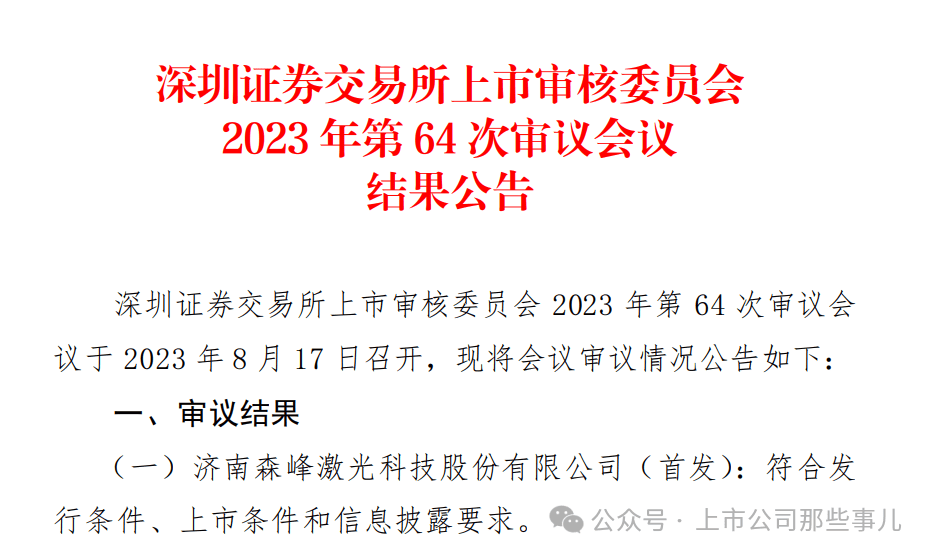
森峰激光:创业板过会一年后撤回,监管处罚揭示内控瑕疵,转道北交所再启IPO征程!
Sou Hu Cai Jing· 2025-12-07 08:21
Core Viewpoint - The IPO journey of Senfeng Laser Technology Co., Ltd. has been marked by significant twists, culminating in the termination of its application for the ChiNext board, reflecting the tightening scrutiny of the capital market under the registration system [1][4]. Group 1: IPO Process and Challenges - Senfeng Laser initiated its IPO process in August 2021, with Minsheng Securities as the sponsor, and received approval from the listing committee in August 2023 after three rounds of inquiries [2]. - Despite passing the listing committee, the company faced an unusually long wait for the final registration, which took over a year, while a peer company completed its registration and listing within a shorter timeframe [4]. - The company withdrew its IPO application in December 2024, citing "strategic adjustment," but the underlying reasons were more complex, involving regulatory scrutiny [4]. Group 2: Regulatory Findings and Consequences - In November 2025, the Shenzhen Stock Exchange announced disciplinary measures against the sponsor representatives and signing accountants for significant violations during the IPO process, including inadequate verification of financial flows and revenue recognition [5]. - The regulatory findings highlighted failures in due diligence, including insufficient checks on overseas sales revenue and internal controls [5]. Group 3: Strategic Shift and Financial Pressure - Following the withdrawal from the ChiNext application, Senfeng Laser shifted its focus to the Beijing Stock Exchange, listing on the New Third Board in July 2025 as a prerequisite for its new IPO application [6]. - The urgency for listing is driven by substantial pressure from investors, as several shareholders signed agreements requiring the repurchase of shares if the company fails to submit a listing application within 18 months of its New Third Board listing [6]. - The company has a history of signing similar agreements, with significant financial obligations from previous rounds of financing [7]. Group 4: Financial Performance - In 2022, Senfeng Laser reported a revenue of 963 million yuan and a net profit of 103 million yuan, with revenue increasing to 1.29 billion yuan in 2023, reflecting a 7% growth in net profit [7]. - The company's revenue remained stable at approximately 1.29 billion yuan in 2024, but net profit declined to 100 million yuan, a 26.4% decrease from the previous year [7]. - As of December 2, 2025, the company's stock price was 30.38 yuan per share, with a market capitalization of 1.732 billion yuan [7].

【锋行链盟】北交所IPO全流程解析
Sou Hu Cai Jing· 2025-12-06 10:41
Core Viewpoint - The Beijing Stock Exchange (BSE) serves as a primary platform for innovative small and medium-sized enterprises (SMEs), emphasizing an efficient, inclusive, and market-oriented IPO process centered around a "registration system" [1] Group 1: IPO Process Overview - The IPO process at BSE is structured to support "specialized, refined, distinctive, and innovative" enterprises, particularly in high-end equipment manufacturing, new generation information technology, biomedicine, and new energy sectors [3] - BSE has established four differentiated listing standards that companies must meet based on their financial indicators, allowing flexibility in choosing the appropriate standard [4] - Companies are required to engage intermediary institutions such as sponsors, accounting firms, and law firms to assist in due diligence, compliance, and documentation [5] Group 2: Listing Standards - Standard 1 (Profit-oriented): Market value ≥ 200 million; net profit for the last two years ≥ 15 million each and weighted average ROE ≥ 8%, or net profit for the last year ≥ 25 million and weighted average ROE ≥ 8% [8] - Standard 2 (R&D + Revenue): Market value ≥ 400 million; average revenue for the last two years ≥ 100 million, and revenue growth rate for the last year ≥ 30%; total R&D investment for the last two years ≥ 5% of revenue [8] - Standard 3 (Cash Flow + Revenue): Market value ≥ 800 million; revenue for the last year ≥ 200 million; cumulative net cash flow from operating activities for the last two years ≥ 25 million [8] - Standard 4 (R&D Driven): Market value ≥ 1.5 billion; total R&D investment for the last two years ≥ 50 million [8] Group 3: Compliance and Governance - Companies must address issues related to shareholding and governance structures, ensuring independence across various aspects such as business, assets, personnel, and finance [9] - Financial compliance involves resolving issues related to revenue recognition, cost accounting, related party transactions, and tax compliance to ensure the authenticity and accuracy of financial data [9] - Legal compliance includes verifying the legality of historical changes, intellectual property rights, and compliance with environmental and social security regulations [9] Group 4: New Third Board Pathway - Companies can apply for listing on the New Third Board's basic tier, which requires a minimum of two years of operation, clear business focus, and sound governance [10] - The innovation tier allows companies that meet specific criteria to apply for advancement after being listed for 12 months [10] Group 5: Guidance and Review Phase - Prior to IPO application, companies must undergo at least three months of guidance from a sponsoring institution, followed by acceptance and review by the local securities regulatory authority [11] - The guidance phase includes regular progress reporting to the regulatory authority and submission of a final acceptance application upon completion [12][14] Group 6: Application and Review Stage - Companies must prepare application documents, including a prospectus and financial reports, in collaboration with intermediary institutions [15] - The review process begins with the submission of application documents, with the BSE making a decision on acceptance within five working days [15] - The review focuses on compliance with listing conditions, adequacy of information disclosure, and the performance of intermediary institutions [17] Group 7: Registration and Issuance - The China Securities Regulatory Commission (CSRC) conducts a formal review of the BSE's approval and the company's application documents, focusing on compliance with capital market regulations and governance standards [19] - Companies must complete the issuance within 12 months of registration, with the option to extend by six months [24] Group 8: Post-Listing Supervision - The sponsoring institution is required to fulfill ongoing supervisory obligations for a minimum of three years, focusing on governance, compliance, and financial performance [25]

一文读懂定向增发、再融资!
Sou Hu Cai Jing· 2025-12-03 23:46
Group 1 - The core viewpoint of the article highlights the resurgence of refinancing activities in the Chinese stock market, particularly through targeted placements, with 56 companies completing fundraising plans totaling 118.517 billion yuan as of March 30, and an additional 144 companies expected to raise approximately 260 billion yuan [2] - The article discusses the evolution of equity financing tools in China, noting that the practice of issuing new shares began in July 1998, with targeted placements gaining traction after regulatory changes in 2006 [3][5] - The historical context of the introduction of targeted placements is provided, detailing the economic reforms initiated in 1998 aimed at revitalizing state-owned enterprises, which led to the first pilot programs for share issuance [4][5] Group 2 - The article categorizes equity financing tools into public and non-public (targeted) placements, emphasizing that targeted placements have become the dominant method of equity financing in China, with 4,748 companies utilizing this method from 2010 to 2022 compared to only 37 for public placements [9] - It compares the characteristics of public and targeted placements, highlighting that targeted placements have simpler conditions and fewer restrictions, making them more attractive to issuers [11] - The article outlines the various purposes for which funds raised through targeted placements can be used, including project financing, supplementary liquidity, and strategic investments, showcasing the versatility of this financing method [14] Group 3 - The development of targeted placements is traced, noting a significant increase in the number of projects from an average of 100 annually to over 600 between 2014 and 2016, followed by regulatory adjustments that temporarily cooled the market [6][12] - The article explains the pricing mechanisms for targeted placements, distinguishing between fixed pricing and auction-based pricing, and the implications for investor participation and lock-up periods [19][22] - It discusses the impact of the recent registration system reforms on the targeted placement process, which has streamlined procedures and enhanced regulatory oversight [26] Group 4 - The investment logic behind targeted placements is examined, emphasizing the inherent discount benefits for investors compared to purchasing shares in the secondary market, and the factors influencing these discounts [29][30] - The article identifies the primary sources of returns for targeted placement investments, including discount returns, market returns, and excess returns during the lock-up period, highlighting the importance of timing and stock selection [38][39] - Various investment strategies for targeted placements are outlined, including institutional strategies, high-turnover approaches, and strategies focused on enhancing the operational capabilities of small-cap companies [45][46][48]

IPO月度数据一览-20251203
国泰海通· 2025-12-03 07:33
- The report discusses the IPO performance in November 2025, highlighting that 11 new stocks were listed across the Shanghai, Shenzhen, and Beijing stock exchanges, raising a total of 101.88 billion yuan [2][8] - The average first-day increase for the six new stocks listed on the Shanghai and Shenzhen markets was 209%, with notable variations among individual stocks [2][11] - The report provides a detailed breakdown of the IPO performance by market segment, including the main board, STAR Market, and ChiNext, with specific examples such as Daming Electronics and Hengkun New Materials [11][14] - The report also includes a comprehensive analysis of the monthly IPO subscription returns, with A/B class accounts earning 73.17/71.87 million yuan respectively in November 2025 [14][16] - The report suggests that the "inclusion" strategy remains optimal, recommending active participation in low-priced, small-cap new stocks with high first-day increase potential, as well as large-cap stocks with significant offline allocation [15][17]
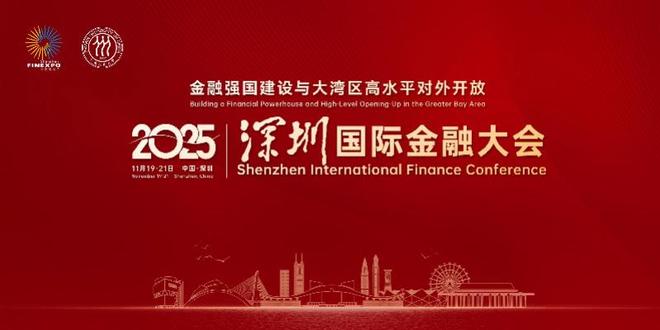
深圳国际金融大会聚焦 王忠民:构建“轻资产重资本”新模态
Nan Fang Du Shi Bao· 2025-11-19 13:58
Core Insights - The "2025 Shenzhen International Financial Conference" focuses on the theme of "Building a Financial Power and High-Level Opening of the Greater Bay Area" [2] - Wang Zhongmin emphasizes the transition from a heavy asset model to a capital-intensive strategy as essential for innovation and financial strength in the digital age [4][5] Group 1: Transition to Light Assets - Companies are encouraged to adopt a "light asset" approach to mitigate risks associated with heavy assets, especially in the context of rapid technological changes [4][5] - The traditional heavy asset model is increasingly challenged by the fast pace of technological innovation, making it difficult for companies to recover investments in fixed assets [5] Group 2: Importance of Heavy Capital - "Heavy capital" is identified as a crucial support for innovation, with a structured capital pathway from startups to publicly listed companies [5] - Initial funding stages should leverage angel investments and venture capital to optimize capital structure quickly, while growth stages can utilize social security funds and international capital to create a risk-sharing ecosystem [5] Group 3: Capital Market Reforms - Wang praises the registration system for enhancing the heavy capital ecosystem by allowing more efficient capital flow to tech innovation companies while protecting founders' rights [5][6] - Innovations in financial instruments, such as real estate securitization, can transform heavy assets into liquid financial products, thereby revitalizing existing assets [6] Group 4: Strategic Investments - Large companies are urged to adopt a "heavy capital" strategy by investing 10%-20% of their resources into small and medium-sized enterprises (SMEs) to foster innovation within the supply chain [6] - Successful projects can offset the societal costs of failures, highlighting the importance of a collaborative ecosystem where all participants in the supply chain benefit [5][6]
环宇证券|股市投资新篇章开户启程黄金交叉点亮你的财富之路
Sou Hu Cai Jing· 2025-11-13 22:32
Group 1 - The article discusses the significance of the "golden cross" in market analysis, indicating a shift in market sentiment from cautious to optimistic when the short-term moving average crosses above the long-term moving average [3][4] - It emphasizes that the golden cross should not be viewed in isolation but rather in conjunction with trading volume, market conditions, and the fundamentals of individual stocks for a comprehensive assessment [3][4] - The ongoing reforms in the capital market, particularly the implementation of the registration system, are creating profound changes in the A-share market, allowing quality companies more opportunities to list and enabling investors to share in corporate growth [3][4] Group 2 - The article highlights that investing is a long-term endeavor, likening the appearance of a golden cross to a checkpoint in a marathon, prompting investors to reassess their strategies based on in-depth research and macroeconomic changes [4][5] - It points out that modern investors have access to advanced tools such as smart stock selection and quantitative strategies, but the effectiveness of these tools ultimately depends on the user's depth of understanding [4][5] - The narrative concludes that the journey of wealth accumulation is continuous, with each crossing point serving as both a summary and a new beginning, reinforcing the importance of valuing knowledge and maintaining a passion for learning [5]

大数据视角透视A股新周期
Shang Hai Zheng Quan Bao· 2025-10-29 18:01
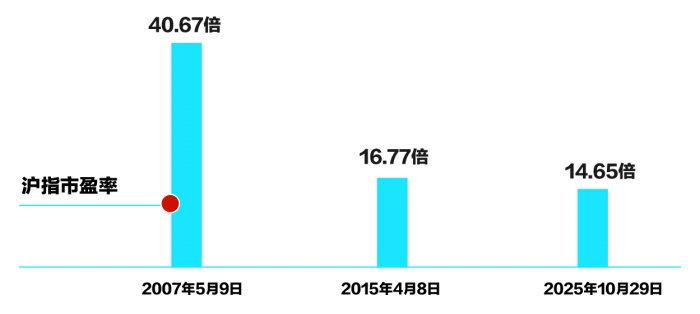
Core Viewpoint - The Shanghai Composite Index (SHCI) has surpassed the 4000-point mark, indicating a potential new upward cycle in the market, driven by the rise of leading technology companies and the integration of China's capital market with cutting-edge technology sectors [2][3]. Market Performance - As of October 29, the total market capitalization of A-shares reached 123.09 trillion yuan, doubling over the past decade, with the current price-to-earnings (P/E) ratio of the SHCI at 14.65, which is at the historical median level [3][4]. - The SHCI's P/E ratio was significantly lower than during previous peaks in 2007 and 2015, where it was 40.67 and 16.77, respectively [3]. Sector Analysis - The technology sector has seen a substantial increase in weight within the SHCI, rising from 4.3% in April 2015 to 16.8% recently, reflecting a shift in market dynamics towards technology-driven growth [7][8]. - The communication and electronics sectors led the market rally, with respective increases of 125.30% and 121.14% from 3000 to 4000 points, showcasing the dominance of technology stocks in the current market cycle [7]. Investment Trends - Institutional investors have significantly increased their presence in the A-share market, with their holdings rising to 46% of the free float market capitalization by the end of 2024, compared to 31% in 2014 [8]. - The market has experienced a structural shift, with a notable divergence between sectors, as institutional funds are more sensitive to sector fundamentals and industry conditions compared to individual investors [7][8].
上交所“十四五”改革发展情况回顾:含“科”量不断提升 制度包容性显著增强
智通财经网· 2025-10-17 11:12
Core Insights - The Shanghai Stock Exchange (SSE) has become the third-largest stock market globally, the largest exchange bond market, and the second-largest ETF market in Asia during the "14th Five-Year Plan" period [2][3] - The SSE has established a robust institutional framework to support high-tech enterprises, with a significant increase in the proportion of technology innovation companies listed [3][4] Group 1: Market Position and Growth - SSE's stock market initial public offering (IPO) financing increased by 16% compared to the previous five-year period [4] - The bond market's total issuance reached 31 trillion yuan, a 42% increase from the previous five years [4] - The number of technology innovation companies in the Shanghai market rose from 32% to 41% in terms of quantity and from 27% to 32% in market capitalization over five years [3][4] Group 2: Industry Development - The number of integrated circuit companies reached 140, forming a complete semiconductor chip industry chain [3] - The SSE has become the third-largest listing venue for biopharmaceutical companies globally, with 224 biopharmaceutical firms listed [3] - The number of high-end manufacturing and new energy companies has nearly doubled compared to the previous five-year period, with 260 and 61 companies respectively [3] Group 3: Innovation and R&D - R&D investment by companies in the Shanghai market increased from 640 billion yuan to 1.07 trillion yuan, a 66% growth, accounting for nearly 40% of the national total [3] - Companies listed on the Science and Technology Innovation Board (STAR Market) have accumulated 120,000 patents, with a median R&D intensity of 12.6% [3] Group 4: Market Functionality and Investor Engagement - The SSE has actively promoted the REITs market, with 51 initial public offerings and 1,405 billion yuan raised, capturing nearly 70% of the market [4] - The SSE has implemented a multi-faceted delisting mechanism, resulting in 93 companies being delisted, including 70 through mandatory delisting [7] - The average dividend yield in the SSE approached 2.5% during the "14th Five-Year Plan" period, with a strong emphasis on investor education and protection [7] Group 5: Future Directions - The SSE aims to continue supporting China's modernization and financial strength, focusing on new requirements and tasks [8]