
不动产证券化

Search documents
让资产流动起来:多层次REITs市场的法律实践
Xin Lang Cai Jing· 2026-02-04 12:08
Core Insights - The article emphasizes the rapid rise of China's REITs market as a key driver for revitalizing existing assets and enhancing capital allocation efficiency, which is crucial for economic growth [2][25] - It highlights the establishment of a multi-tiered ecosystem in the REITs market, characterized by public REITs setting benchmarks and private REITs nurturing the market [25] Group 1: Institutional REITs - Institutional REITs are described as independent and dynamic "innovation testing grounds," filling the gap in the multi-tiered REITs system and gradually building a unique market ecosystem [4][29] - The governance structure of institutional REITs focuses on asset credit rather than relying solely on the credit of original equity holders, ensuring a more robust framework for asset value [6][30] - Challenges faced by institutional REITs include valuation discrepancies and insufficient secondary market liquidity, which require ongoing ecosystem development [7][30] Group 2: Class REITs - Class REITs are recognized as flexible and adaptable structured tools that have become essential for revitalizing existing assets, with applications expanding across various asset types [8][31] - The legal framework for class REITs emphasizes compliance and verification of asset ownership and operational legality, facilitating the securitization of mature assets and new business models [14][37] - The innovative structure of class REITs aims to deepen the "de-subjectification" practice, connecting assets and capital through legal and financial engineering [15][38] Group 3: Public REITs - Public REITs provide a transparent pricing benchmark through public disclosure and continuous trading, marking significant progress in the financialization of core assets [16][39] - The establishment of a market-based value discovery mechanism through strict compliance checks and governance enhances the overall efficiency of resource allocation in the REITs ecosystem [18][41] - The evolution of public REITs reflects a broader financial revolution in China's REITs market, transitioning from individual ownership to public pricing, thereby unlocking the potential of dormant assets [21][44]

A股上市房企首家!保利发展拟发行商业不动产REITs
2 1 Shi Ji Jing Ji Bao Dao· 2026-01-28 12:29
Core Viewpoint - Poly Developments has initiated the application for commercial real estate REITs, marking the first case among A-share listed real estate companies to apply for this since the expansion of REITs to commercial real estate was announced by the China Securities Regulatory Commission (CSRC) [1][2] Group 1: REITs Application and Strategy - The selected assets for the REITs application are two key projects in the Guangdong-Hong Kong-Macao Greater Bay Area: the Poly Center in Guangzhou and the Poly Water City in Foshan [1][3] - The issuance of commercial real estate REITs is aimed at revitalizing existing assets and broadening financing channels for Poly Developments [2][3] - The company aims to enhance its operational efficiency and sustainable development capabilities through the transformation of heavy assets into liquid financial instruments [3][4] Group 2: Market Context and Asset Quality - The commercial real estate sector in China has a substantial stock, indicating a strong internal demand for revitalization and expanded equity financing through REITs [3][4] - Poly Developments reported a 13% year-on-year increase in asset operating income, reaching 2.54 billion yuan in the first half of 2025, with a total operational area of 5.73 million square meters [4] - The current market environment poses challenges for asset valuation, particularly for office and hotel properties, which may hinder the REITs' progress [5][6] Group 3: Challenges and Future Outlook - Despite the proactive steps taken by leading real estate companies, there are significant hurdles in the issuance process and communication with investors [5][6] - The valuation of assets, particularly in the current market, is under pressure, and there is a need for consensus among issuers, investors, and appraisal agencies regarding property evaluations [6][7] - The launch of commercial real estate REITs is seen as a new phase for China's REITs market, potentially facilitating a positive cycle between assets and capital, and aiding traditional real estate companies in transitioning to a "light asset operation" model [8]

【财经分析】商产REITs开闸:盘活万亿存量,重塑不动产金融生态
Zhong Guo Jin Rong Xin Xi Wang· 2026-01-27 14:21
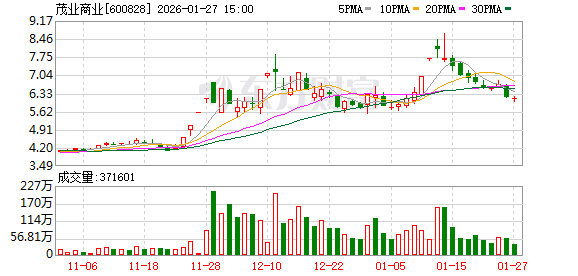
Core Viewpoint - The launch of commercial real estate REITs by Maoye Commercial Co., Ltd. marks a significant development in China's real estate market, transitioning from expansion to optimization and high-quality growth [2][4]. Group 1: Market Response and Policy Implications - The rapid response to the REITs policy, issued by the China Securities Regulatory Commission, indicates a keen awareness among enterprises of the policy benefits aimed at revitalizing existing commercial real estate and broadening financing channels [4][6]. - The introduction of commercial real estate REITs is seen as a crucial step towards normalizing the REITs market in China, facilitating a positive cycle in the real estate sector [4][6]. Group 2: Industry Transformation - The real estate sector is shifting from a high-leverage, fast-turnover model to one focused on investment and operations, with REITs playing a vital role in revitalizing existing assets and easing capital pressure [5][6]. - The new REITs policy is viewed as a progressive upgrade rather than a disruption, with adjustments in entry thresholds and compliance processes to accommodate more quality assets [6][8]. Group 3: Market Potential and Future Outlook - Predictions suggest that the market size for public REITs could exceed 500 billion yuan within 1 to 2 years, and potentially reach between 1 trillion to 2 trillion yuan in 3 to 5 years, driven by increased participation from private real estate companies [7][8]. - The first batch of commercial real estate REITs is expected to focus on prime office spaces in major cities, with anticipated project sizes ranging from 3 billion to 5 billion yuan [9]. Group 4: Investment Opportunities - Institutional investors are likely to favor office buildings as prime assets for commercial real estate REITs, particularly in major cities where these properties typically exhibit stable rental income and low vacancy rates [9].


【财经分析】商产REITs开闸:盘活万亿存量 重塑不动产金融生态
Xin Hua Cai Jing· 2026-01-27 14:09
Core Viewpoint - The launch of commercial real estate REITs by Maoye Commercial Co., Ltd. marks a significant step in China's real estate market, transitioning from expansion to optimization and high-quality development [2][3][8] Group 1: Market Response and Policy Implications - The rapid response of the market to the announcement reflects companies' keen grasp of policy benefits, with the new policy aimed at revitalizing existing commercial real estate and broadening financing channels [3][4] - The introduction of commercial real estate REITs is seen as a crucial signal for the normalization of REITs in the commercial real estate sector, promoting a virtuous cycle in the industry [3][4] Group 2: Industry Transformation and Opportunities - The real estate sector is transitioning from high-leverage, fast turnover developers to investment and operation-focused entities, with REITs serving as a major benefit for companies to revitalize assets and alleviate heavy asset investment pressures [4][6] - The formal launch of commercial real estate REITs signifies a new phase for China's REITs market, with expectations of significant growth in market size, potentially surpassing Japan and Singapore during the 14th Five-Year Plan [4][6] Group 3: Regulatory Changes and Market Dynamics - The new regulations for commercial real estate REITs include lowering yield requirements and streamlining the approval process, which will enhance market vitality and address industry pain points [5][8] - The expected market size for public REITs could exceed 500 billion yuan within 1-2 years, with further growth anticipated as private enterprises increase participation [6][8] Group 4: Investment Focus and Future Outlook - The focus for investors is likely to be on high-quality office buildings in major cities, with initial projects expected to be concentrated in first-tier cities like Shanghai, Beijing, and Shenzhen [7][8] - The commercial real estate REITs policy is a significant step towards the marketization of China's real estate financial market, aiming to create a dual-driven model of infrastructure and commercial property [8]
商业不动产REITs落地重构价值
Di Yi Cai Jing Zi Xun· 2026-01-25 10:41
Core Viewpoint - The recent implementation of commercial real estate REITs pilot regulations marks a significant shift in China's real estate market, transitioning from incremental expansion to stock optimization and high-quality development [2][3]. Group 1: Market Transition - China's real estate market is undergoing structural adjustments, moving towards stock optimization and high-quality development, with "activation" and "breakthrough" being key paths for industry development [2]. - The activation of stock assets is a complex system project that involves multiple interests and objectives, requiring reform courage and innovative wisdom [2]. Group 2: Principles for Asset Activation - There are four main principles for activating stock assets: 1. Market-oriented and rule of law principles for fair asset circulation [3]. 2. Professionalization as a core support for precise identification and efficient operation of assets [3]. 3. Integration of industry and finance as a key path, utilizing tools like REITs and asset securitization [3]. 4. Using incremental growth to drive stock asset value enhancement through new technologies and business models [3]. Group 3: REITs Market Development - The China Securities Regulatory Commission officially launched the commercial real estate REITs pilot program on December 31, 2025, marking a new phase in the development of the REITs market alongside infrastructure [3][4]. - Compared to infrastructure REITs, commercial real estate REITs have differences in asset scope, regulatory review, and fund usage, focusing on commercial complexes, retail, office buildings, and hotels [4][5]. Group 4: Market Potential and Growth - As of January 25, 2026, there are 79 listed REITs in China with a total market value of 228 billion yuan [5]. - Long-term projections suggest that the REITs market could reach a scale of 2 trillion yuan, depending on market development and the transformation of the real estate sector [5][6]. - Industry experts believe that the REITs market could potentially exceed 2 trillion yuan, influenced by the pace of real estate transformation [6]. Group 5: Recommendations for Market Improvement - Suggestions for enhancing the REITs market include optimizing existing product structures, improving management frameworks, and streamlining the expansion process [6]. - There is a call for establishing a delisting system and further developing a multi-tiered market to support diverse investment entities and improve the Pre-REITs and private REITs systems [6].

商业不动产REITs落地重构价值
第一财经· 2026-01-25 10:36
Core Viewpoint - The article discusses the transition of China's real estate market from incremental expansion to stock optimization, highlighting the significance of the newly implemented commercial real estate REITs pilot regulations as a key development in this context [3][5]. Group 1: Market Transition and Principles - China's real estate market is undergoing structural adjustments and paradigm shifts, moving towards high-quality development and stock optimization [3]. - Four main principles for revitalizing stock assets are outlined: market-oriented and rule of law principles, professionalization, integration of industry and finance, and leveraging new technologies to enhance asset value [4]. Group 2: REITs Implementation and Impact - The China Securities Regulatory Commission announced the launch of commercial real estate REITs on December 31, 2025, marking a new phase for the REITs market in China [5]. - Commercial real estate REITs differ from infrastructure REITs in asset scope, regulatory review, and fund usage, allowing for more flexible fund applications [5]. - REITs can help real estate companies reduce debt and risks, facilitating a transition to a "light asset operation" model [5]. Group 3: Market Size and Future Outlook - As of January 25, 2026, China's REITs market has 79 listed REITs with a total market value of 228 billion yuan [6]. - Long-term projections suggest the REITs market could reach 2 trillion yuan, depending on market development and real estate transformation [6]. - Recommendations for market development include optimizing existing product structures, enhancing the efficiency of fundraising processes, and establishing a delisting mechanism [6][7].

商业不动产REITs落地重构价值,存量资产证券化迎加速期
Di Yi Cai Jing· 2026-01-25 08:29
Core Viewpoint - The recent pilot regulations for commercial real estate REITs in China are becoming a hot topic as the real estate market shifts from incremental expansion to stock optimization, indicating a transition towards high-quality development [1][2]. Group 1: Market Dynamics - The Chinese real estate market is undergoing structural adjustments, moving from rapid growth to a focus on high-quality development, with "activation" and "breakthrough" being key paths for industry development [1]. - The activation of existing assets is a complex process involving multiple stakeholders and objectives, requiring reform courage and innovative wisdom to establish a new framework guided by the government, led by enterprises, and operated by the market [1][2]. Group 2: Principles for Asset Activation - Four main principles for activating existing assets are outlined: 1. Market-oriented and rule of law principles to ensure fair asset circulation and prohibit new hidden debts [2]. 2. Professionalization as a core support, relying on specialized institutions for precise asset identification and efficient operation [2]. 3. Integration of industry and finance as a key path, utilizing tools like REITs and asset securitization to convert existing assets into financial capital [2]. 4. Incremental growth driving stock value, introducing new technologies and business models to enhance asset value [2]. Group 3: REITs Market Overview - The China Securities Regulatory Commission (CSRC) officially launched the commercial real estate REITs pilot program on December 31, 2025, marking a new phase for the REITs market in China, which will now develop alongside infrastructure REITs [2][3]. - Compared to infrastructure REITs, commercial real estate REITs have differences in asset scope, regulatory review, and fund usage, with a focus on commercial complexes, retail, office buildings, and hotels [3]. Group 4: Future Market Size - The REITs market in China is expected to grow significantly, with estimates suggesting it could reach a scale of 2 trillion yuan in the long term, depending on market development [4]. - As of January 25, 2026, there are 79 listed REITs in China with a total market value of 228 billion yuan, indicating a rapid increase in market size over the past two years [3][4]. Group 5: Development Recommendations - Suggestions for the development of the REITs market include optimizing existing product structures, improving management frameworks, and enhancing the efficiency of fundraising processes [4][5]. - There is a call for the establishment of a delisting system for REITs to ensure a dynamic market with both entry and exit mechanisms [5].
商业不动产REITs入局 公募 REITs市场迎规模化发展新征程
Xin Hua Cai Jing· 2026-01-23 12:38
Core Viewpoint - The announcement by Maoye Commercial Co., Ltd. to initiate the public offering of commercial real estate REITs based on its Chengdu office assets has sparked significant industry discussion, indicating a shift in China's real estate securitization market towards a dual-driven model of infrastructure and commercial property [1][2]. Group 1: Market Development - China's real estate securitization market is transitioning from a "infrastructure-first" approach to a "infrastructure + commercial property" dual-driven model, driven by market-oriented reforms [1]. - The commercial real estate stock market in China is substantial, with non-residential properties accounting for 15% to 20% of total residential properties, providing a solid foundation for the expansion of REITs [1]. Group 2: Industry Insights - Real estate companies are shifting from high-leverage, fast-turnover developers to investment and operation-focused entities, with REITs seen as a significant benefit for revitalizing existing assets and alleviating heavy asset investment pressures [2]. - The introduction of commercial real estate REITs is viewed as a complementary evolution to infrastructure REITs, which will enrich the REITs market system in China [2]. - Experts predict that within 1 to 2 years, the first batch of commercial real estate REITs projects will be launched, with the market size expected to exceed 500 billion yuan; over 3 to 5 years, the overall REITs market could grow to between 1 trillion and 2 trillion yuan, driven by increased participation from private real estate companies and the inclusion of logistics and industrial properties [2].
REITs行业联盟秘书长王刚:上市规模超2100亿元 市场步入“扩容与提质”新阶段
Zhong Guo Jing Ying Bao· 2026-01-14 08:42
Core Viewpoint - The rapid development of China's REITs market since the first public REITs were launched in June 2021, with a total issuance scale of 213.5 billion yuan by the end of 2025, indicates a significant shift towards commercial real estate becoming a key component of the REITs framework [1][2]. Group 1: Market Expansion and Policy Support - By the end of 2025, 78 public REITs have been issued, covering ten categories of assets, with a total issuance scale of 213.5 billion yuan [1]. - The inclusion of commercial real estate in the pilot scope of public REITs is expected to enhance the connection between physical assets and capital markets, supported by policies from the China Securities Regulatory Commission [1][3]. - The National Development and Reform Commission's announcement of the 2025 version of the REITs project industry scope list is seen as a critical institutional leap in the development of China's REITs [3][4]. Group 2: Asset Management and Market Dynamics - The REITs market is transitioning from a "policy tool" to a "market-oriented asset management platform," emphasizing the need for stronger asset management and operational capabilities [3]. - The potential market space for commercial real estate REITs is estimated to be in the trillions, with over 40 trillion yuan in existing office, retail, and hotel properties, suggesting that even a 5%-10% securitization could yield significant market opportunities [4]. Group 3: Investment Trends and Institutional Participation - Institutional investors, including insurance and wealth management funds, are increasingly allocating to REITs due to their stable rental income and cash flow, which align with the long-term liability profiles of these funds [6]. - The liquidity advantage of REITs, compared to direct real estate holdings, enhances their attractiveness to institutional investors [6]. Group 4: Governance and Structural Recommendations - Recommendations for improving the governance mechanism of public REITs include transitioning from external to internal management to ensure better asset management accountability [7]. - The establishment of a joint REITs management platform and the exploration of company-type REITs are suggested to enhance operational efficiency and governance structures [7]. Group 5: Multi-tiered Market Development - The development of a multi-tiered REITs market is essential, encouraging the integration of different asset maturity levels and risk preferences, as well as facilitating the entry of quality asset managers into the public REITs market [8].
REITs行业联盟秘书长王刚:上市规模超2100亿元,市场步入“扩容与提质”新阶段
Zhong Guo Jing Ying Bao· 2026-01-14 08:32
Core Viewpoint - The rapid development of China's REITs market since the first public REITs were launched in June 2021, with a total issuance scale of 213.5 billion yuan by the end of 2025, indicates a significant shift towards commercial real estate becoming a key component of the REITs framework [1][2]. Group 1: Market Development - As of the end of 2025, 78 public REITs have been issued, covering ten categories of assets, with a total issuance scale of 213.5 billion yuan [1]. - The inclusion of commercial real estate in the public REITs pilot program is expected to enhance the asset management and operational capabilities within the industry, transitioning from "holding assets" to "activating existing assets" [1][3]. Group 2: Potential Market Size - The potential market for commercial real estate REITs is substantial, with estimates suggesting that the stock of office buildings, retail, and hotels exceeds 40 trillion yuan; even a 5%-10% securitization could create a market space worth trillions [4]. Group 3: Institutional Investment - Institutional investors, including insurance funds and wealth management products, are increasingly allocating to REITs due to their stable rental income and cash flow, which align with the long-term liability profiles of these funds [6]. Group 4: Governance Mechanisms - Recommendations for improving governance mechanisms in public REITs include transitioning from external to internal management, establishing a decision-making structure similar to private equity funds, and allowing the formation of joint venture REIT management companies [7]. Group 5: Multi-tiered Market Structure - The development of a multi-tiered REITs market is crucial, encouraging the integration of various asset types and management capabilities to facilitate the entry of high-quality assets into the public REITs market [8].