现房销售制度

Search documents
21评论丨房地产高质量发展的丰富内涵
2 1 Shi Ji Jing Ji Bao Dao· 2025-11-03 22:35
Core Viewpoint - The recent "Suggestions on Formulating the 15th Five-Year Plan for National Economic and Social Development" emphasizes the importance of enhancing people's livelihoods and promoting common prosperity in the real estate sector, indicating a shift back to the residential property nature of housing [2] Group 1: High-Quality Development - High-quality development in real estate requires foundational institutional reforms, including the establishment of independent legal entities for project development, ensuring that projects operate independently and are accountable for land acquisition, development, and delivery [2] - The introduction of a lead bank system is proposed, where a designated bank or syndicate oversees project financing and ensures that funds are used appropriately, thus aligning incentives for financial institutions and project developers [2] Group 2: Current Housing Sales and Supply System - The government is actively promoting a current housing sales system, with projections indicating that by 2024, 30.8% of national housing sales will be current sales, which fundamentally mitigates delivery risks [3] - There is a growing demand for various forms of housing security, particularly among new citizens, young people, and migrants, due to changes in income and employment, necessitating an expansion of housing security programs [3] Group 3: Market Strategy and Housing Quality - The "Suggestions" advocate for a city-specific approach to increasing the supply of improved housing, emphasizing the need for tailored strategies based on local supply and demand dynamics [4] - The focus on constructing "good houses" is highlighted, with new standards established for safety, comfort, sustainability, and intelligence, aiming to enhance the quality of housing supply [4] Group 4: Lifecycle Management and Community Services - The emphasis on improving the quality of property management and maintenance is crucial, with initiatives proposed for enhancing housing quality and establishing a comprehensive lifecycle safety management system [5] - The lifecycle management system includes housing inspections, insurance mechanisms, and maintenance funds to ensure long-term safety and functionality of properties [5] Group 5: Economic Integration and Demand-Supply Dynamics - The transition to high-quality development in the real estate sector is seen as a means to support domestic demand strategies, integrating housing as a key component of infrastructure investment [6] - The approach aims to create a virtuous cycle of consumption and investment, enhancing the internal dynamics and reliability of domestic economic circulation [6]

房地产高质量发展的丰富内涵
2 1 Shi Ji Jing Ji Bao Dao· 2025-11-03 22:28
Core Viewpoint - The recent guidelines from the Central Committee emphasize the importance of improving people's livelihoods and promoting common prosperity in the real estate sector, indicating a shift back to the residential nature of housing as a major consumer good and a necessity for people's lives [2] Group 1: High-Quality Development in Real Estate - The primary focus for high-quality development in real estate is the establishment of foundational institutional frameworks, including independent project development entities and a lead bank system to ensure accountability and financial oversight [2] - The government is actively promoting the current housing sales system, with a projected 30.8% of national housing sales area being current sales by 2024, which fundamentally mitigates delivery risks [3] - A "market + guarantee" supply system is being constructed to address the needs of new citizens, young people, and migrants, who are the main consumers of housing, while also considering their changing income and employment situations [3] Group 2: Quality Standards and Housing Supply - The construction of "good houses" is a key focus, with the implementation of the "Residential Project Standards" that define safety, comfort, sustainability, and intelligence as essential quality indicators [4] - In the context of a stock market era, the emphasis is on improving operational maintenance quality, including the implementation of housing quality enhancement projects and property service quality improvement actions [5] - A comprehensive safety management system for the entire lifecycle of housing is proposed, which includes housing inspections, insurance, and maintenance funds to ensure long-term safety and functionality [5] Group 3: Strategic Shift in Real Estate - The transition to high-quality development in the "14th Five-Year Plan" period has laid a foundation for the "15th Five-Year Plan," focusing on risk prevention and moving away from old models [6] - The real estate sector is expected to play a crucial role in expanding domestic demand, serving as a link in the investment strategy that combines investment in physical assets and human capital [6] - The new supply will be driven by new demands, fostering a positive interaction between consumption and investment, as well as supply and demand, thereby enhancing the internal dynamics and reliability of the domestic economy [6]

楼市大局已定!未来五年的房价,将会出现4个迹象!
Sou Hu Cai Jing· 2025-11-03 01:49
Core Insights - The article illustrates the dramatic fall of Chen Tao, once a wealthy real estate investor, who lost his fortune due to the changing dynamics of the housing market [1][5][8] Group 1: Market Dynamics - The real estate market has shifted from being viewed as a quick path to wealth to a focus on housing as a basic need, emphasizing its role in ensuring people's living conditions [5][6][8] - The average housing area per urban resident has surpassed 40 square meters, indicating a saturation in housing demand, with a significant inventory of nearly 760 million square meters of unsold properties as of September 2025 [5][6] Group 2: Investment and Development Trends - The focus of real estate development is transitioning from quantity to quality, with an increasing emphasis on the safety, comfort, and sustainability of housing [6][7] - The introduction of policies promoting "good housing" reflects a shift towards enhancing property quality and service, moving away from the previous model of selling based on plans [6][7] Group 3: Policy Impact - Despite various government measures aimed at stimulating the housing market, such as easing purchase restrictions, the actual market response has been lackluster, with a 10% month-on-month increase in residential sales area but a 7% year-on-year decline as of September 2025 [7][8] - The perception of housing as an investment vehicle is diminishing, with a clear indication that the primary function of housing will revert to providing shelter rather than serving as a financial asset [7][8] Group 4: Rental Market Trends - Rental prices have been on a downward trend, with an average rent of 34.04 yuan per square meter per month across 40 cities, reflecting a 0.22% month-on-month and a 2.42% year-on-year decline [8] - The rental yield in core cities has dropped below 2%, making it increasingly difficult for property owners to recoup their investment costs through rental income [8]
一天之间,房价又给我们开了个天大的玩笑!
Sou Hu Cai Jing· 2025-10-13 18:42
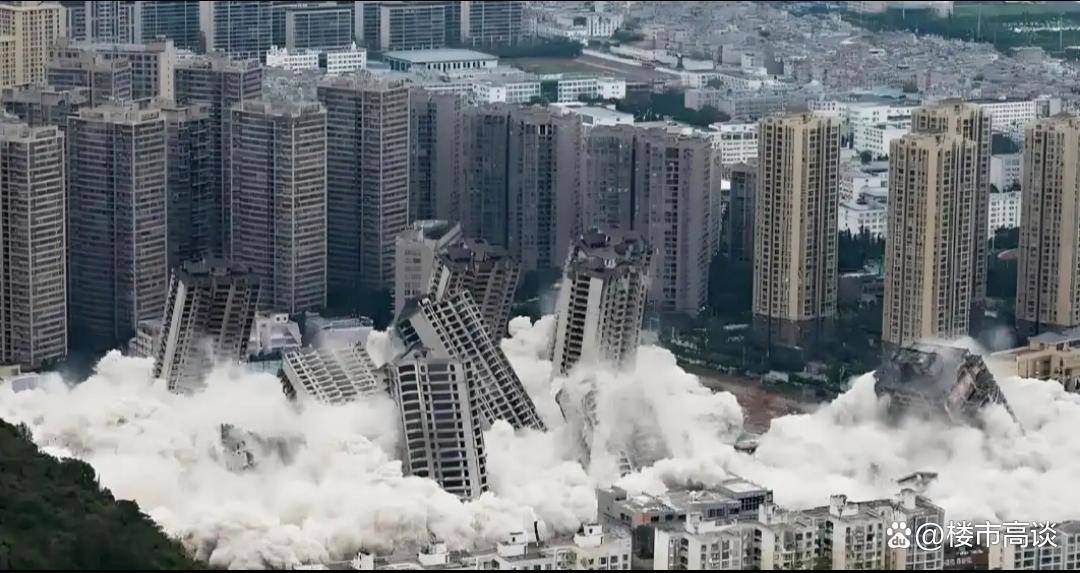
Core Insights - The real estate market in major cities is experiencing significant price declines, with a notable case in Guangzhou where a property sold for 50,284 yuan per square meter, down from a previous high of 120,000 yuan per square meter, indicating a drastic price drop of over 58% [2][4][6] - The phenomenon of "urgent sales" is impacting the price stability in core urban areas, with similar trends observed in Shanghai and Beijing, where properties that were once highly valued are now being sold at steep discounts [7][8] - The current market downturn is attributed to three main challenges: loss of buyer confidence, oversupply of housing, and financial pressure on homeowners, leading to a cycle of declining prices and increased urgency to sell [8][9] Market Dynamics - The rapid decline in property prices is not limited to suburban areas but is now affecting prime locations, indicating a shift in the real estate landscape [7] - Data shows that since September, the rate of price decline in first and second-tier cities has accelerated, with weekly adjustments becoming the norm rather than monthly fluctuations [7][8] Underlying Challenges - Buyer confidence is at a low, with many potential buyers adopting a wait-and-see approach, fearing further price drops, which exacerbates the downward pressure on prices [8] - The oversupply of housing is becoming increasingly problematic, with existing inventory exceeding actual demand, leading to a fundamental imbalance in the market [8] - Homeowners are facing financial strain due to economic pressures, prompting many to sell at a loss as a means of financial relief [9] Policy Direction - The government is actively seeking solutions to stabilize the real estate market, emphasizing the need for a scientific allocation of resources related to people, housing, land, and finance [10][11] - Future housing development will focus on population needs, with land supply and financial resources being aligned with actual housing demand to avoid waste [11][12] Recommendations for Stakeholders - For first-time homebuyers, it is suggested to proceed with purchases if there is a genuine need and financial capability, as the market is shifting towards valuing quality over speculative gains [12][13] - Investors are advised to abandon the notion of guaranteed profits from real estate, as the market is returning to its fundamental purpose of providing housing [12][13] - Sellers should avoid high pricing strategies and instead set realistic prices to attract buyers, as the market dynamics have changed significantly [13]
【太平洋研究院】8月第二周线上会议
远峰电子· 2025-08-10 11:18
Group 1 - The core viewpoint of the article emphasizes the strategic focus of Aima Technology on the "her economy," targeting female consumers in the two-wheeler market, while the three-wheeler business is expected to contribute additional growth [27][28]. Group 2 - The article outlines a series of upcoming online meetings covering various topics, including the progress of the AI industry in the US, analysis of the current housing sales system, and insights into the global interconnect chip leader, Lanqi Technology [27][28].

宏观深度研究:影响土地市场的五大因素
Guohai Securities· 2025-06-18 08:04
Group 1: Market Overview - The land market is currently concentrated in 35 first- and second-tier cities, with land transfer fees in these cities accounting for 68% of the national total from January to May 2025[5] - The top 100 real estate companies acquired land worth 405.2 billion yuan, representing a year-on-year increase of 28.8% and accounting for 53% of the national land transfer fees[30] - In the first five months of 2025, the land transfer fees in Hangzhou reached 99.5 billion yuan, a year-on-year increase of 77%, making up 72% of the total for Zhejiang province[23] Group 2: Key Factors Influencing the Land Market - The financing environment is relatively loose, which positively impacts the willingness of real estate companies to acquire land[7] - The new housing market's performance serves as a barometer for the land market, with a 6% year-on-year increase in new housing area signed in major cities during Q1 2025[10] - As of May 2025, the inventory of unsold residential properties stood at 77.4 million square meters, still at a historical high but showing a reduction of 7.15 million square meters over three months[12] Group 3: Market Dynamics and Trends - The transition to a "current housing sales system" is underway, with the proportion of current housing sales rising from 10.4% in 2021 to 32.5% in early 2025[13] - Land supply rules are being optimized, with many cities reducing land supply by over 30% in 2025, adapting to local market conditions[15] - The new sales model emphasizes product quality, compelling real estate companies to enhance their offerings to meet consumer demand[13]
【建筑建材】国常会再提构建房地产发展新模式,更大力度推动房地产市场止跌回稳——建材建筑及基建公募REITs周报(孙伟风)
光大证券研究· 2025-06-16 13:39
Core Viewpoint - The article emphasizes the need for a new model of real estate development to stabilize and promote healthy growth in the real estate market, as highlighted in a recent State Council meeting led by Premier Li Qiang [3]. Group 1: Real Estate Policy Developments - The State Council meeting called for a focus on long-term strategies and the establishment of foundational systems to support real estate development [3]. - There is an emphasis on the construction of "good houses" and the integration of urban renewal mechanisms to enhance policy coordination across planning, land, finance, and other areas [3]. - The meeting proposed a nationwide assessment of supplied land and ongoing projects to optimize existing policies and improve their effectiveness [3]. Group 2: Local Government Initiatives - Guangzhou's proposal to eliminate restrictive measures and reduce down payment ratios and interest rates aims to stimulate consumer demand in the housing market [4]. - The plan includes significant investments in the renovation of old residential areas and the construction of new projects, with a target of over 150 old residential area renovations and 9,000 elevator updates by 2025 [4]. - The initiative to use special loans for purchasing existing commercial housing as resettlement housing is expected to further support the real estate sector [4]. Group 3: Market Performance and Data - The market performance indicators show a decline in the CITIC building materials index by 2.16% and the CITIC construction index by 1.27% [5]. - The average price of national PO42.5 cement increased slightly to 365.70 yuan/ton, while the national cement enterprise shipment rate decreased by 2.3 percentage points [5]. - Glass prices fell to 1,203 yuan/ton, with a slight decrease in inventory levels [6].

申万宏源研究晨会报告-20250616
Shenwan Hongyuan Securities· 2025-06-16 01:11
Group 1: Real Estate Industry - The current housing policy indicates a new model for real estate development, with the implementation of immediate housing sales being orderly and effective. This is part of a long-term mechanism rather than a short-term switch [12][10] - The impact of the immediate housing sales policy includes a significant decline in investment, a reduction in land finance, and a contraction in industry demand. The average pre-sale period in first and second-tier cities has extended from 6 months to 30 months, leading to a drop in investment return rates from 30% to 6% [12][10] - The report maintains a "positive" rating for the real estate sector, emphasizing the need for policy support to stabilize the market and improve the asset-liability situation of residents [12][10] Group 2: Banking Sector - Since the end of 2023, the banking sector has experienced a recovery, with a cumulative increase of 55%, primarily driven by valuation recovery and stable earnings performance [13][11] - The report suggests that the banking sector is significantly undervalued, with an average ROE of about 10% and a PE ratio of approximately 6 times, indicating potential for systematic revaluation [15][11] - The investment strategy focuses on embracing stable, sustainable returns, with recommendations for regional banks and large state-owned banks that are expected to benefit from ongoing reforms and market conditions [15][11] Group 3: Coal Industry - The coal supply is expected to contract due to limited production recovery in Shanxi and declining import volumes, with domestic coal production primarily concentrated in Xinjiang [14][16] - The demand for thermal coal is projected to maintain positive growth in the coming years, supported by stable economic conditions and seasonal demand increases [16][14] - The report highlights that the economic viability of "Xinjiang coal transportation" depends on maintaining high coal prices, with the average price for thermal coal expected to remain between 700-750 RMB/ton [16][14] Group 4: Shipping Industry - The escalation of geopolitical tensions in the Middle East has led to significant increases in oil prices, with Brent crude exceeding 75 USD/barrel, impacting shipping routes and costs [16][3] - The report notes that the closure of the Strait of Hormuz could disrupt approximately 5% of global oil tanker capacity, significantly affecting oil transportation dynamics [16][3] - It is recommended to closely monitor the duration and expansion of the conflict, as well as changes in oil inventory and economic expectations [16][3]




房地产行业2025年中期投资策略:磨底未竟,转折已萌
Shenwan Hongyuan Securities· 2025-06-05 14:11
Group 1 - The report indicates that the total transaction volume of both new and second-hand housing has stabilized, but the price cycle needs to be activated to stimulate the replacement chain [3][4] - Since 2021, the second-hand housing market has shown significant improvement, outperforming the new housing market, with a notable increase in second-hand housing penetration rate from 34% in October 2021 to 68% in April 2025, representing a growth of 96% [11][21] - The report highlights that the key issue is not the transaction volume but rather the price, as the prices of second-hand homes continue to decline, indicating a need for policy support to stimulate housing consumption [3][4] Group 2 - The medium to long-term outlook suggests that both supply and demand sides require time for recovery, with the residents' balance sheet being crucial. The report estimates that since 2021, the average price of second-hand homes has dropped by over 31%, leading to a significant increase in the asset-liability ratio of residents from 10.7% in 2021 to 13.2% in 2024 [3][4] - The report anticipates that the effective inventory level in China will be low, with an estimated 1.4 billion square meters by the end of 2024, corresponding to a de-stocking cycle of less than 1.8 years, indicating a potential for recovery in core cities [3][4] - The report predicts that by 2025, new housing sales area will decrease by 4.5%, sales revenue by 6.5%, and housing prices by 2.0%, while second-hand housing sales area will increase by 6.3% and sales revenue by 3.0% [3][4] Group 3 - The policy analysis section indicates that the main theme will remain "stabilizing and stopping the decline," with a focus on repairing residents' balance sheets. Expected policy measures include further interest rate cuts on mortgages and optimization of land acquisition policies [3][4] - The report suggests that a new development model in real estate is gradually taking shape, emphasizing the importance of "good housing" and the potential for a shift from a financial model to a manufacturing model in the industry [3][4] - The report identifies opportunities in the "good housing" sector, highlighting that companies capable of producing quality housing products will have a sustainable future, with examples of companies like Jianfa International and Binjiang Group being well-positioned [3][4] Group 4 - The investment analysis maintains a "positive" rating, indicating that while the total transaction volume of new and second-hand homes has stabilized, the price cycle has not yet entered a positive loop, suggesting that further policy support is necessary [3][4] - The report recommends several companies for investment, including Jianfa International, Binjiang Group, and China Resources Land, as well as second-hand housing intermediaries like Beike-W and property management firms such as China Resources Vientiane [3][4] - The report emphasizes that the real estate industry is expected to transition from a financial model to a manufacturing model, with a focus on improving gross margins and asset turnover rather than relying on leverage [3][4]
2025年现房销售已超30%
3 6 Ke· 2025-05-16 01:57
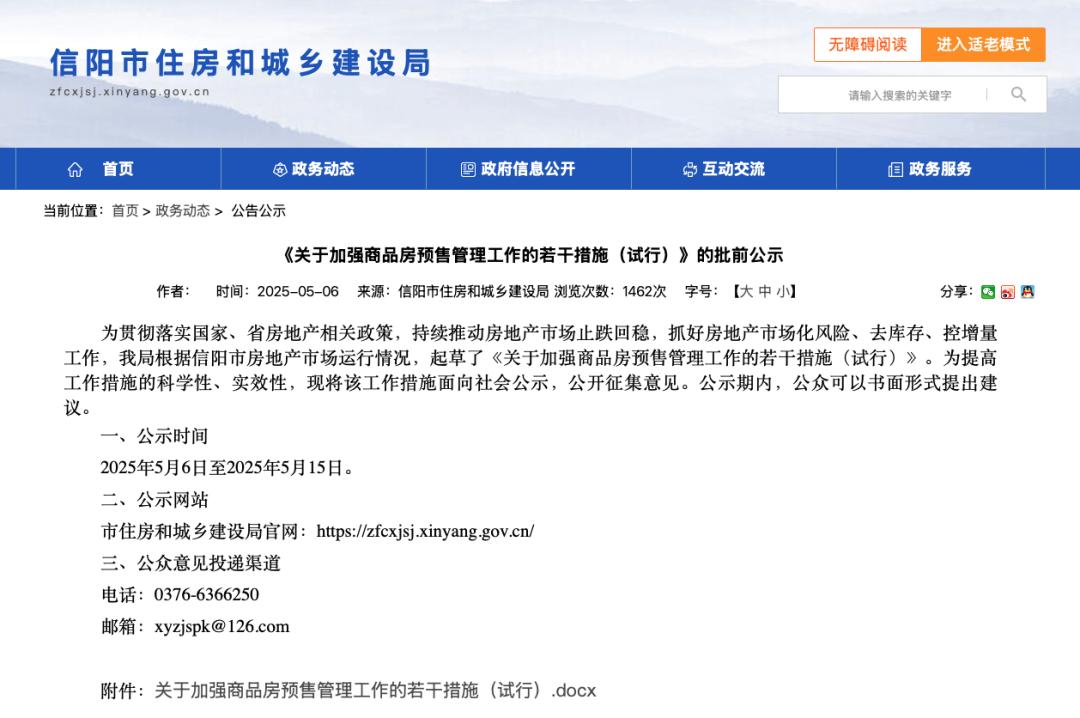
Core Viewpoint - The acceleration of the "immediate delivery" housing sales model in China is being driven by recent policy reforms aimed at enhancing the real estate market, with a notable increase in the proportion of existing home sales reaching a decade-high of 32.16% in early 2025 [2][9][12]. Group 1: Policy Developments - The national housing and urban-rural development conference in December 2024 emphasized the need to reform the commodity housing sales system and promote immediate delivery sales [1][7]. - As of May 2025, the Housing and Urban-Rural Development Bureau of Xinyang, Henan, mandated that all newly developed commodity housing on newly sold land must adopt the immediate delivery sales model [4][6]. - At least 32 provinces and cities have initiated pilot programs for immediate delivery sales since 2024, although comprehensive implementation remains challenging [3][8]. Group 2: Market Trends - The proportion of immediate delivery sales in China rose to 32.16% in early 2025, up from 26.97% in 2024, marking a significant recovery from a low of 10.16% in 2020 [2][9]. - The increase in immediate delivery sales is largely attributed to a shift in buyer preferences due to market conditions, with many existing homes being sold as a result of unsold inventory rather than proactive choices by developers [12][16]. Group 3: Economic Implications - The transition to immediate delivery sales is expected to lengthen the cash flow cycle for projects, impacting profitability, particularly for high-end developments [15][17]. - The current market environment is characterized by a contraction phase, with policies focusing on optimizing existing inventory and enhancing quality in the housing sector [16][18].