
生态产品价值实现机制

Search documents
首次明确禁止行为 密云水库水源保护进阶
Bei Jing Shang Bao· 2025-12-01 16:36
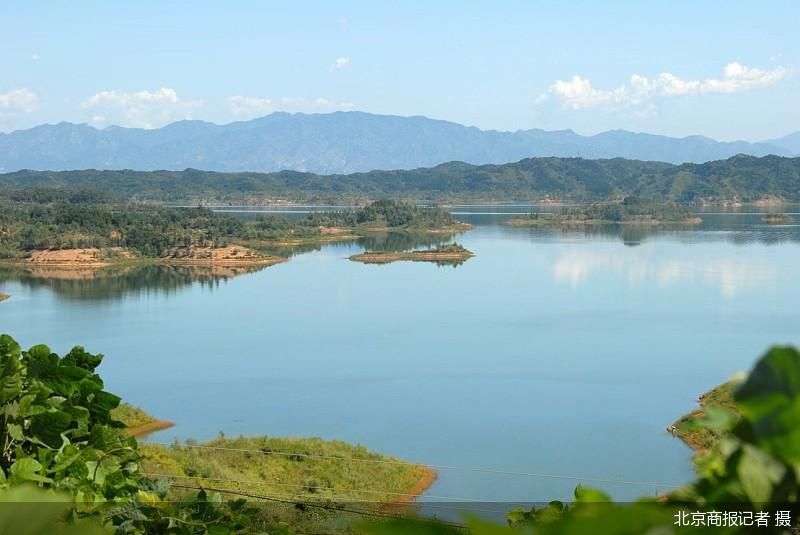
12月1日起,《密云水库水源保护条例》(以下简称《条例》)正式施行,这是国家针对水库水源地颁 布实施的首个条例。《条例》共29条,以行政法规的形式明确了密云水库流域的保护标准与管理要求, 密云水库流域水源保护进入法治化、规范化和区域一体化的新阶段。值得注意的是,此次《条例》首次 明确了密云水库管理范围以及潮河、白河干流河道管理范围外100米、1000米内禁止实施的行为。 同时,"'十四五'期间,密云区争当守好密云水库、打好生态牌、走好高质量发展之路的'三好生',全力 打造新时代首都生态文明建设金名片。密云水库累计向下游生态补水22.4亿立方米,有力促进地下水源 涵养与河湖生态复苏。"在日前举办的"一把手发布·京华巡礼"系列主题新闻发布会密云专场中,北京市 密云区委副书记、区长于海波介绍,经过多年不懈努力,密云水库水质稳定保持国家地表水Ⅱ类标准。 首次明确保护区域禁止行为 据了解,密云水库地处华北平原北部、潮白河水系中游,总库容43.75亿立方米,是首都最重要的地表 饮用水源地,如今已成为首都防洪、供水安全的"稳定器""调节器""压舱石"。密云水库水源保护,更事 关首都水安全、城市平稳运行。《条例》聚焦密云水库 ...
PM2.5浓度降至22.2微克 北京密云生态与民生协同发展成效显著
Bei Jing Shang Bao· 2025-12-01 08:49
Core Viewpoint - During the "14th Five-Year Plan" period, Miyun District aims to enhance ecological conservation, promote high-quality development, and position itself as a model for ecological civilization in the capital city [2] Group 1: Ecological and Environmental Achievements - Miyun Reservoir has provided a total of 2.24 billion cubic meters of ecological water supply to downstream areas, significantly aiding groundwater conservation and ecological recovery of rivers and lakes [2] - The water quality of Miyun Reservoir has consistently met the national surface water Class II standard, with PM2.5 average concentration decreasing from 29 micrograms per cubic meter at the end of the "13th Five-Year Plan" to 25.6 micrograms per cubic meter by 2024 [2] - The forest coverage rate increased from 68.46% at the end of the "13th Five-Year Plan" to 70.02%, maintaining a leading position in the city [2][3] Group 2: Economic Development and Tourism - The total revenue from rural tourism in Miyun District reached 10.2 billion yuan, tripling compared to the end of the "13th Five-Year Plan" [3] - Over 50 premium tourism routes have been developed, focusing on ecological tourism, including flower viewing, water activities, and wellness retreats [3] Group 3: Employment and Social Welfare - Miyun District has created 44,000 new urban and rural jobs, maintaining an urban survey unemployment rate below 5% [3] - The average annual growth rate of per capita disposable income for residents reached 5.5%, with a continuous employment rate of over 95% for local university graduates [3] Group 4: Housing and Infrastructure - A total of 6,595 units of affordable rental housing have been secured, exceeding the "14th Five-Year Plan" target, with an overall guarantee rate of 87.22% for rental households [4] - The "New Liu Sheltering Reform" project, the first of its kind on collective land, has successfully delivered all relocation housing units [4] Group 5: Disaster Recovery and Future Planning - Following the severe damage from the Haihe "25·7" regional flood, Miyun District has established a leadership group for disaster recovery and has completed repairs on key infrastructure, including roads and utilities [5] - The district plans to enhance disaster prevention and reduction capabilities, focusing on infrastructure upgrades and rural revitalization in the "15th Five-Year Plan" [5]

王晓在商洛市督导检查河长制等工作
Shan Xi Ri Bao· 2025-11-21 00:38
Group 1 - The article discusses the inspection and guidance by Wang Xiao, the Executive Vice Governor of the province, on various ecological and environmental protection initiatives in Shanzhou City, including the Danjiang River Long-term Management and the rectification of issues raised by the Central Ecological Environmental Protection Inspection [1][2] - Wang Xiao emphasized the importance of implementing the spirit of the 20th National Congress of the Communist Party and the directives from Xi Jinping during his visits to Shaanxi, focusing on enhancing the ecological environment protection of the Qinling Mountains and ensuring the quality of the Danjiang water ecosystem [2] - The article highlights the need for effective risk prevention and the exploration of mechanisms to achieve new progress in the national ecological product value realization pilot program, as well as the importance of rectifying issues and promoting long-term protection systems for the Qinling Mountains [2] Group 2 - The article outlines the various locations visited by Wang Xiao, including the Shanzhou District and the ecological restoration sites, where he engaged with local officials and business leaders to gather opinions on ecological protection and development during the 14th Five-Year Plan period [2] - Wang Xiao called for a comprehensive approach to ensure stable growth, safety production, and energy supply during the winter, while also addressing forest and grassland fire prevention [2] - The article stresses the need for a systematic and legal approach to address illegal exploration activities in the Qinling region, ensuring a balance between high-quality development and safety [2]
句容部分水库经营权交易落地
Xin Hua Ri Bao· 2025-11-19 06:47
Core Insights - The successful auction of water reservoir management rights in Jurong City has generated nearly 1 billion yuan, marking the largest single water ecological product conversion case in the province, providing a replicable "Zhenjiang experience" for ecological value realization [1] - The implementation of the "Comprehensive Reform Pilot Plan for Market-oriented Allocation of Factors in Key Cities in Southern Jiangsu" emphasizes the exploration of ecological product value realization mechanisms and sustainable development practices [1] Group 1 - The transaction of water reservoir management rights is a significant attempt to revitalize existing water resources and promote the diversification and high value-added transformation of water ecological products [1] - Companies are exploring differentiated development paths based on the resource endowments of various reservoirs, including a 10-year fishery sales contract aimed at transitioning from ecological output to market conversion [1] - The introduction of the "Sports+" model at Lushan Reservoir aims to develop fishing and water sports, leveraging international events to boost the "waterfront economy" and integrate water resources with cultural and tourism industries [1] Group 2 - The Zhenjiang Water Conservancy Bureau plans to accelerate the signing and implementation of these projects, continuously expanding the pathways for realizing the value of water ecological products [2] - The initiatives are expected to contribute to regional high-quality development and improve the well-being of the population [2]
坚持“环保为民”,“十五五”还要加把劲!
Zhong Guo Huan Jing Bao· 2025-11-13 23:21
Core Viewpoint - The article emphasizes the importance of "environmental protection for the people" as a guiding principle for ecological conservation efforts in China, highlighting the need for tangible improvements in environmental quality that directly benefit citizens [1][5]. Group 1: Achievements in Environmental Protection - The "14th Five-Year Plan" has led to significant improvements in ecological quality, with various regions implementing targeted pollution control measures [2]. - Cities like Shenyang have achieved historical lows in pollution levels during heating seasons, while Hebei has developed specific recovery plans for its rivers [2]. - Public satisfaction with ecological conditions has remained above 90% for four consecutive years, indicating a strong positive response to environmental initiatives [3]. Group 2: Future Directions for Environmental Policy - The upcoming "15th Five-Year Plan" aims to deepen the implementation of "environmental protection for the people," ensuring that ecological improvements are systematic and comprehensive [3][4]. - There is a focus on utilizing advanced technologies such as big data and IoT for precise pollution management, targeting specific areas of concern [3]. - The plan includes exploring economic benefits for communities involved in environmental protection, such as through ecological compensation and carbon trading [4]. Group 3: Community Involvement and Public Participation - The article stresses the need for broader public participation in ecological initiatives, encouraging community involvement in planning, implementation, and evaluation processes [4]. - Establishing effective channels for public feedback and participation is crucial for fostering a collective effort in building a sustainable environment [4]. Group 4: Challenges Ahead - As expectations for environmental quality rise, the article notes that the tolerance for ecological issues is decreasing, indicating ongoing challenges in meeting public demands [5]. - The commitment to a people-centered approach in environmental policy is essential for addressing pressing ecological problems and enhancing the quality of life for citizens [5].
【商洛】拓宽“两山”转化路径 推动经济社会绿色发展
Shan Xi Ri Bao· 2025-10-27 00:23
Core Viewpoint - The article emphasizes the importance of ecological civilization for people's well-being and national future, advocating for a path of ecological priority and green development to achieve a harmonious coexistence between humans and nature [1] Group 1: Ecological Product Value Realization Mechanism - Shanzhou has developed a systematic approach called the "Five Fours" working system to transform ecological product value, focusing on four major attributes: regulation services, material supply, cultural services, and financial services [2] - The city has established a comprehensive framework to address challenges in measuring, realizing, trading, and mortgaging ecological product value, aiming for mutual benefits among ecological quality, enterprise efficiency, collective wealth, and individual income [2] Group 2: Ecological Resource Management - Shanzhou has compiled an ecological product catalog, identifying 275 types of ecological products across 17 categories, and has developed methods for ecological product value accounting and assessment [3][4] - The city has created a visual platform for ecological product value and carbon sink assessment, with the 2023 GEP accounting result reaching 150.55 billion yuan, including 32.28 billion yuan from material supply and 85.38 billion yuan from regulation services [4] Group 3: Development of Ecological Industries - The city promotes specialty agriculture, achieving significant price premiums for various crops, and has introduced advanced aquaculture systems to enhance fish production [5] - Shanzhou is developing a green industrial base that utilizes tailings and promotes the honey health industry, with projected annual outputs of 2.6 billion yuan and 1.5 billion yuan respectively [6] Group 4: Integration of Culture and Tourism - The city has 50 scenic spots rated 3A or above and has been recognized as a national model for forest health tourism, with tourism revenue increasing by 12.17% year-on-year [7] Group 5: Exploration of Ecological Resource Rights Trading - Shanzhou has established an ecological asset management company to facilitate the trading of water rights and forestry carbon sinks, with the first CCER forestry carbon sink project registered [8][9] - The city has developed green financial products to support ecological projects, with 426 enterprises included in the "green list" and loans amounting to 2.32 billion yuan issued to climate-friendly companies [9] Group 6: Legislative and Policy Framework - Shanzhou is working on local legislation to promote the ecological product value realization mechanism, aiming to pass the "Shanzhou Ecological Product Value Promotion Ordinance" by the end of the year [14][15] - The city plans to enhance cooperation with research institutions and participate in high-level discussions to share its successful experiences in ecological product value realization [16]
从“一水共护”迈向“一域共富”
Zhong Guo Huan Jing Bao· 2025-10-23 09:03
Core Viewpoint - The article emphasizes the importance of establishing a market-oriented and diversified ecological protection compensation mechanism to bridge the gap between ecological preservation and economic development, particularly in the context of the Jinjiang and Luoyang River upstream water resource protection compensation mechanism [2][3][4]. Group 1: Systematic Enhancement of Ecological Compensation - The core goal of watershed ecological compensation is to quantify the consensus level among compensation subjects, reflecting the depth and stability of ecological protection awareness [3]. - A well-defined initial goal that aligns with urban development needs indicates a strong motivation for the synergy between ecological protection and economic development [3]. - The compensation mechanism aims to balance development between ecological protection areas and beneficiary regions, promoting coordinated reforms in ecological resource protection, environmental governance, and ecological rights trading [3]. Group 2: Diversification of Ecological Compensation - A diversified ecological compensation mechanism relies on various compensation subjects sharing a common compensation burden, creating a multi-channel and efficient compensation system [4]. - This approach enhances public recognition and acceptance of ecological compensation, transitioning from "single water quality governance" to "shared prosperity in watershed development" [4]. - The mechanism categorizes compensation subjects into government, market entities, and social organizations, fostering collaboration and enhancing public awareness of ecological compensation [4]. Group 3: Synergistic Expansion of Ecological Compensation - The article discusses the need to break down regional and sectoral barriers to create a deep integration of ecological protection and economic development [4][5]. - A multi-faceted compensation framework is proposed, linking provincial, municipal, and county levels, and facilitating cross-regional cooperation between protected and beneficiary areas [4]. - The use of diverse green financial tools is suggested to address funding challenges in ecological protection compensation, establishing a market-oriented channel for converting governance costs into industrial premiums [4]. Group 4: Institutional Support for Ecological Products - The government is encouraged to leverage local legislative powers to create a differentiated regulatory framework that aligns ecological development needs with ecological product industries [5]. - The article highlights the importance of clearly defining principles, scope, subjects, and standards for watershed ecological compensation to provide institutional support for ecological protection initiatives [5]. - It suggests incorporating multiple compensation factors based on various environmental characteristics, such as pollution types, river sizes, and biodiversity [5].

铜仁创新生态产品再分类破解生态产品价值实现难题
Zhong Guo Huan Jing Bao· 2025-10-20 02:11
Core Viewpoint - Establishing a sound mechanism for realizing the value of ecological products is a key path to implementing the concept that "lucid waters and lush mountains are invaluable assets" [1] Group 1: Classification of Ecological Products - The article reclassifies ecological products into three categories: rights-based ecological products, public ecological products, and operational ecological products, focusing on value transformation rather than mere valuation [2][3] - Rights-based ecological products are defined as those with clear or identifiable property rights that can be standardized and traded in the market, such as carbon emission rights and water rights [2] - Public ecological products are characterized by their non-competitive and non-exclusive nature, including clean air and biodiversity protection, making it difficult to charge specific beneficiaries [2] - Operational ecological products are tangible products or services that can generate returns through market transactions, such as eco-friendly agricultural products and eco-tourism [2] Group 2: Value Realization Mechanisms - The realization of rights-based ecological products relies on a government-built trading platform with clear rules and strict supervision, emphasizing the importance of property rights clarity and platform construction [3] - The value realization of public ecological products is primarily driven by a government-led ecological compensation mechanism, linking ecological protection outcomes to funding distribution [3] - The operational ecological products' value realization is based on market-driven industrial operations, where quality enhancement and brand premium are fundamental [4] Group 3: Recommendations for Establishing Value Realization Mechanisms - For rights-based ecological products, it is recommended to solidify property rights and create a unified market, including the establishment of a national ecological product trading center [6] - For public ecological products, it is suggested to improve compensation mechanisms and promote multi-faceted collaboration, ensuring that compensation is linked to ecological protection outcomes [6] - For operational ecological products, the focus should be on strengthening brand certification and optimizing the market environment, including the establishment of a national standard for ecological product certification [7]
【省水利厅】陕西水土流失面积强度“双下降”
Shan Xi Ri Bao· 2025-10-15 00:24
Core Insights - The conference on high-quality development of soil and water conservation was held in Yan'an, focusing on integrated management of natural resources in Shaanxi province [1][2] - Shaanxi province has implemented significant measures to combat soil erosion, including the construction of 3,585 sediment control dams and the treatment of 1.72 million square kilometers of soil erosion area [1] - The province aims to reduce the area of soil erosion to 60,000 square kilometers by the end of 2024, achieving a soil conservation rate of 70.81% [1] Group 1 - Shaanxi province has adopted a comprehensive governance model for soil and water conservation, which includes building terraces on gentle slopes and planting trees on steep slopes [1] - Yan'an has constructed 11,600 sediment control dams, intercepting approximately 1 billion tons of sediment, leading to an 88% reduction in sediment entering the Yellow River compared to historical averages [1] - The improvement in ecological environment has revitalized local industries, particularly in the development of specialty fruit industries such as apples and jujubes, covering over 10 million acres and benefiting hundreds of thousands of farmers [1] Group 2 - Shaanxi is exploring mechanisms for realizing the value of ecological products related to soil and water conservation, including the first national transaction of new farmland and production capacity indicators in Qianyang County [2] - The province has also completed the largest water conservation carbon trading transaction in Baota District, Yan'an, and the first carbon trading transaction for sediment control dams in Gaoxigou Village, Yulin [2] - Shaanxi is advancing smart water conservation initiatives, utilizing remote sensing technology for dynamic monitoring of soil erosion and digitizing results for over 16,000 small watersheds and 10,000 sediment control dams [2]
国庆消费观察系列报道 从“看热闹”到“品门道”:国庆假期小城游受青睐
Ren Min Wang· 2025-10-07 03:08
Core Insights - The article highlights a shift in tourist preferences during the National Day holiday, with an increasing number of visitors opting for county-level rural tourism experiences rather than traditional crowded attractions [1][5] - Data from a travel platform indicates a 51% increase in county tourism consumption orders compared to the same period in 2024, with some destinations seeing over 100% growth [1] - The demand for "natural healing" and "micro-vacations" is rising, with activities like ecological hiking and farm experiences becoming central attractions [1] Summary by Sections Section 1: Tourist Preferences - Tourists are moving away from traditional sightseeing to immersive experiences in rural areas, seeking to become part of the landscape rather than just observing it [1] - Popular destinations include places like Shaanxi's Yuanjia Village and Yunnan's Anineme Village, which offer authentic cultural experiences and local cuisine [2] Section 2: Development Strategies - County tourism must leverage its cultural heritage and natural beauty to create engaging, participatory experiences for visitors [2] - The integration of ecological resources into tourism development is essential, with a focus on creating a sustainable and shared growth model [2][4] Section 3: International Attention - The rise in county tourism has also attracted international visitors, as seen in the case of an American tourist who was impressed by a unique cliffside road in Shanxi [3] Section 4: Long-term Sustainability - For sustained growth, county tourism should develop a complete industrial ecosystem that highlights local uniqueness and ensures community benefits [4] - Establishing mechanisms to realize the value of ecological products is crucial, transforming natural resources into consumable tourism products [4] - Utilizing online travel agency platforms for branding and marketing can help integrate diverse cultural and tourism resources [4]