
生态共赢

Search documents
淘宝饿了么:坚决抵制恶性竞争 合作促进生态共赢
Di Yi Cai Jing· 2025-08-01 02:45
Core Viewpoint - Taobao and Ele.me jointly announced their commitment to resist malicious competition and promote ecological win-win cooperation, outlining four key initiatives to enhance consumer and merchant experiences [2]. Group 1: Key Initiatives - The companies will plan and distribute subsidies based on consumer and merchant needs [2]. - They will actively eliminate unfair competition practices and avoid irrational promotional activities such as large-scale "0 yuan purchase" campaigns to stimulate consumption potential and innovation in emerging markets [2]. - Continuous improvement of service quality will be prioritized, including the provision of diverse consumption scenarios, a wider range of products, and upgrades to the efficiency of the delivery network [2]. - A "listening-consulting-optimizing-feedback" system has been established to address core issues such as merchant participation, product quality, and rider rights, with multiple discussion meetings being held across various locations [2].


家居卖场三十年,富森美打造行业新范式
Jiang Nan Shi Bao· 2025-07-28 02:46
Core Insights - Chengdu Fusenmei Home Co., Ltd. has achieved significant growth in the home furnishing industry despite the challenges of the "stock era" in 2024, ranking first in the Douyin local life home furnishing list and maintaining a robust growth with over 3,500 brand merchants [1] Category Transition - Fusenmei has shifted its strategy from merely selling building materials to offering a comprehensive lifestyle experience, integrating high-end home appliances, customized home furnishings, and smart home solutions [2] - The company has established itself as a high-end home furnishing consumption center in Southwest China, featuring brands like Rimadesio, Poliform, and others, by reconstructing the shopping experience around scenes rather than just products [2] Traffic Generation - Fusenmei has transformed its approach to customer acquisition by actively seeking customers through platforms like Douyin, Xiaohongshu, and Meituan, rather than waiting for foot traffic [3] - The company has collaborated with merchants to produce nearly 98,600 short videos, achieving over 49 million views, and has successfully conducted live streaming events that generated over 20 million yuan in sales [3] New Business Development - The Tianfu Live Streaming Port, a new business initiative, has attracted its first batch of corporate headquarters, integrating e-commerce, MCN, and supply chain services within a 240,000 square meter complex [4] - The live streaming port is designed as an industrial router, consolidating resources in design, supply chain, and logistics, and has received government recognition as a "comprehensive headquarters enterprise" in Sichuan Province [4] - Financially, Fusenmei has maintained a debt ratio below 20%, with a net profit margin approaching 50% and a cash inflow from operating activities of 816 million yuan, reflecting a year-on-year growth of 29.7% [4]

海尔周云杰:以开放、生态、创新诠释中国跨国公司全球化担当
Zhong Guo Jin Rong Xin Xi Wang· 2025-06-20 07:31
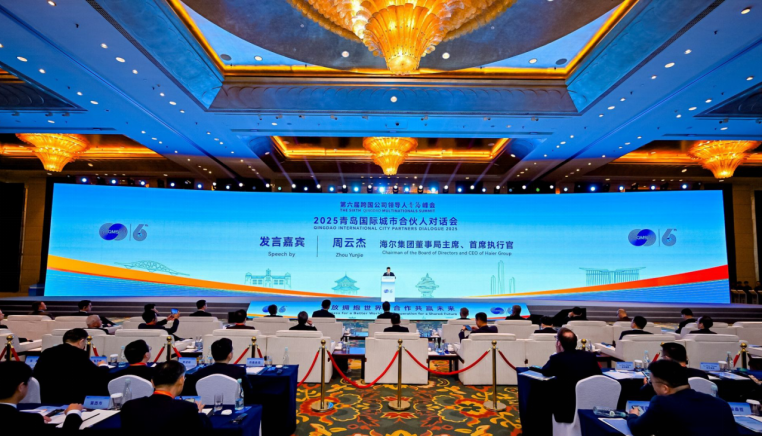
Core Viewpoint - The article discusses the insights shared by Zhou Yunjie, CEO of Haier Group, at the Qingdao International City Partners Dialogue, emphasizing the role of Chinese enterprises in global transformation through "openness, ecology, and innovation" Group 1: Globalization and Market Positioning - Haier leverages its local roots in Qingdao to establish a global presence, with a network of 230,000 outlets across over 200 countries and regions [3] - The company has maintained its position as the world's leading home appliance brand for 16 consecutive years, with Haier accounting for 60% of every 10 Chinese brand appliances sold overseas [3] Group 2: Ecological Development and Collaboration - The future of competition is shifting from direct corporate rivalry to ecological dialogue, focusing on creating a multi-dimensional ecosystem that transcends industry boundaries [4] - Haier's ecological strategy includes three main sectors: smart home, health, and industrial internet, fostering extensive collaboration opportunities with global partners [4][5] Group 3: Sustainable Practices and Innovation - Haier's 6-GREEN strategy aims to establish a low-carbon system across the entire industry chain, transforming China's sustainable practices into international standards [5] - The company is enhancing its global cooperation hub in Qingdao by integrating technology innovation, upgrading industrial clusters, and promoting cross-cultural collaboration [6]

中哈能源走廊启示录:中国技术如何改写中亚能源游戏规则?
Sou Hu Cai Jing· 2025-06-18 06:30
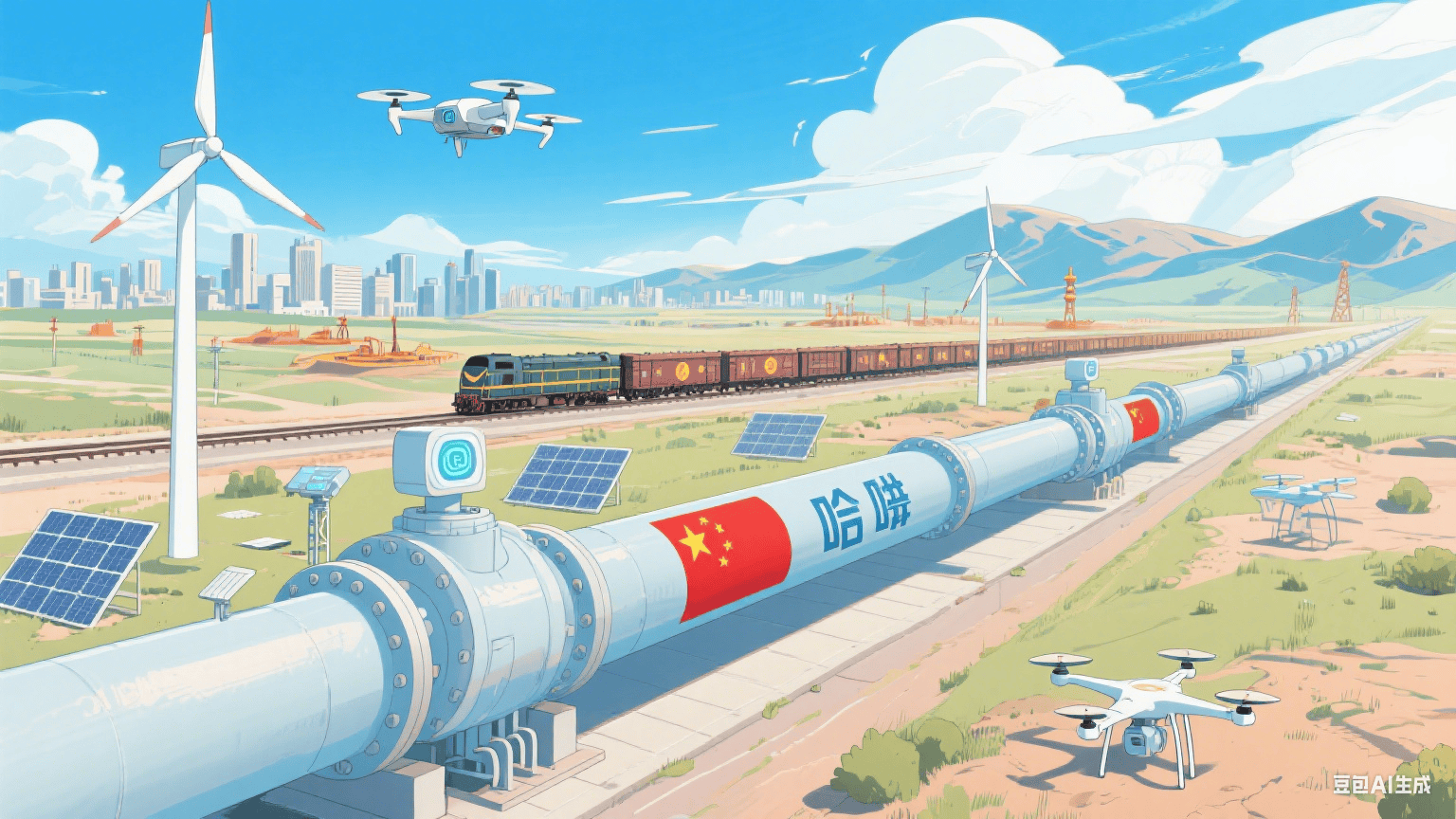
Core Insights - The transformation of the China-Kazakhstan energy corridor signifies a shift from a simple oil export relationship to a comprehensive technological partnership, enhancing Kazakhstan's energy sector capabilities and independence [3][5][11] Group 1: Historical Context and Evolution - Kazakhstan, rich in oil and gas reserves, faced challenges due to outdated Soviet-era technology and reliance on Russian pipelines, leading to a "resource curse" [3][4] - The initiation of the China-Kazakhstan oil pipeline in 2005 marked the beginning of a cooperative relationship, evolving from mere oil sales to a collaborative effort involving technology transfer and infrastructure development [3][4] Group 2: Technological Advancements - Chinese technology has significantly improved oil extraction and refining processes in Kazakhstan, such as increasing oil recovery rates from 30% to 55% in the Kashagan oil field and enhancing gasoline yield from 35% to 42% at the Shymkent refinery [4][5] - The introduction of cost-effective monitoring technologies has reduced operational costs by 60% while increasing fault detection accuracy from 70% to 95% [4][5] Group 3: Economic Impact - The partnership has transformed Kazakhstan from a resource provider to an industrial participant, with significant increases in refinery profits and the establishment of new projects like the world's first asphalt-based carbon material production line [5][9] - The collaboration has led to the creation of over 5,000 jobs in new industries, showcasing the economic diversification driven by technological cooperation [9][10] Group 4: Geopolitical Implications - The energy corridor has shifted Kazakhstan's geopolitical stance, allowing it to choose its energy partners independently and reducing reliance on traditional powers like Russia and the West [8][10] - Kazakhstan's adoption of Chinese technology has enabled it to meet international standards, positioning it favorably in the global energy market [8][9] Group 5: Environmental Considerations - The integration of eco-friendly technologies in oil extraction and refining processes has improved environmental outcomes, addressing pollution issues and promoting sustainable practices [7][10] - Projects like the "green oilfield" initiative demonstrate a commitment to balancing energy development with ecological preservation [7][10] Group 6: Regional Cooperation - The success of the China-Kazakhstan energy corridor has fostered collaborative efforts among Central Asian nations, leading to the establishment of the Central Asia Energy Technology Alliance [10] - This regional cooperation aims to create a unified approach to energy resource management, enhancing collective bargaining power and technological sharing [10]
施耐德电气:敏捷创新和生态共赢双轮驱动助力新能源转型
Sou Hu Cai Jing· 2025-06-14 02:21
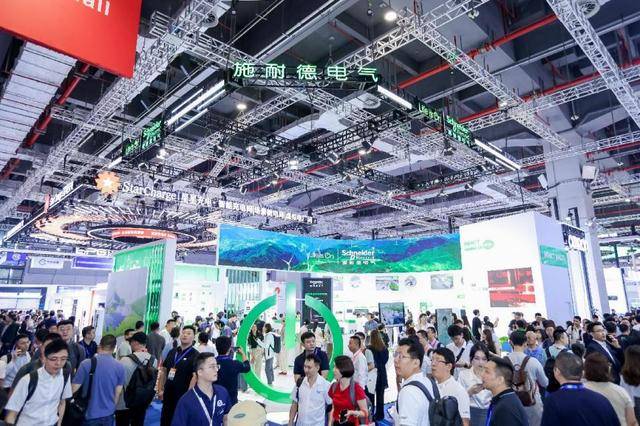
Core Insights - The recent SNEC 2025 conference highlighted key themes such as the international expansion of renewable energy, new power systems, and energy digitalization [1] - Schneider Electric emphasizes the importance of "value deepening" in the renewable energy sector, balancing social and economic values for sustainable development [1] Innovation and Product Development - Innovation is identified as a critical driver for value creation in the renewable energy industry, with agile innovation being essential for maintaining competitiveness [3] - Schneider Electric has launched various industry-specific products, including solutions for photovoltaic, wind power, and energy storage sectors, showcasing their commitment to rapid product development [3] - New products introduced at the SNEC exhibition include the ECC microgrid, solar storage ultra-charging systems, and the EasyPact CVS DC NE circuit breaker [3] Ecosystem Collaboration - Ecosystem collaboration emerged as a central theme at the SNEC exhibition, with Schneider Electric engaging in multiple partnerships with renewable energy companies [5] - A notable collaboration with Beijing Haibo Sichuang Technology Co., Ltd. resulted in the release of a white paper aimed at enhancing safety standards in battery storage systems [5] Commitment to R&D and Market Strategy - Schneider Electric's commitment to the Chinese market is reflected in its "China-centric" strategy and increased R&D investments, with a growth rate exceeding 18% [7] - The company has established five R&D centers and an AI innovation lab in China, leading to a rise in local innovations that serve the global market [7] - The completion of the second phase of the Jinshan Innovation Park and the establishment of a new power system innovation demonstration base are part of Schneider Electric's efforts to promote high-quality development in the renewable energy sector [7] Customer-Centric Approach - Schneider Electric focuses on customer needs under its "China-centric" strategy, enhancing its presence in key application areas such as photovoltaics, energy storage, and charging [9] - The company aims to transform innovative outcomes into development momentum, facilitating a leap in the value of the renewable energy industry [9]
吉曜通行生态日: 整合吉利电池业务 开放生态推动产业链共赢
高工锂电· 2025-05-29 10:52
Core Viewpoint - The article discusses the strategic positioning and technological advancements of Jiyao Tongxing Energy Technology Co., Ltd. (吉曜通行), emphasizing its commitment to safety, innovation, and sustainability in the battery industry, particularly in the context of its new product launch and global market expansion [6][10][25]. Group 1: Strategic Positioning - Jiyao Tongxing aims to achieve a production capacity of 70 GWh by 2027, with eight production bases across China [7]. - The company has integrated its battery business under the Geely Holding Group, aligning with the "Taizhou Declaration" to enhance its strategic direction [7]. - The new brand identity "Jiyao Tongxing ENERGEE" reflects its core values centered around energy, Geely, and green initiatives [7]. Group 2: Technological Innovations - The company emphasizes extreme safety in its battery technology, having passed rigorous safety tests that exceed national standards [19][20]. - The newly launched "Jin Zhuan" battery series features innovations such as intelligent fast charging technology, achieving an 80% to 100% state of charge in just 11.5 minutes, a 75% improvement over conventional batteries [22]. - The battery series also boasts a cycle life of 4500 cycles, showcasing its longevity and reliability [23]. Group 3: Environmental Sustainability - Jiyao Tongxing aims to reduce over 220 million tons of CO2 emissions by 2030 through the development of long-life batteries and a circular economy in the battery industry [15]. - The company is committed to creating a "lower carbon, more environmentally friendly, and more circular" battery ecosystem [15]. Group 4: Collaborative Ecosystem - The company focuses on global synergy and collaboration with partners, including a joint venture with Renault to enhance its market presence [10]. - Jiyao Tongxing promotes an ecosystem of win-win partnerships, emphasizing resource sharing and strategic cooperation with suppliers [14]. - The company believes that true ecological win-win scenarios begin with strategic consensus and collaborative value creation [15].

高端访谈 || 高通中国区董事长孟樸:技术为基、合作为路 与中国汽车业共创智能化新篇
Zhong Guo Qi Che Bao Wang· 2025-05-14 01:43
Core Insights - Qualcomm emphasizes the importance of "technology inclusiveness" and "ecosystem win-win" in its automotive strategy, focusing on three strategic pillars: full-stack layout for automotive business, balancing innovation with safety, and deepening collaboration in the Chinese market [1][2][5] Full-Stack Layout - Qualcomm has been in the automotive industry for over 20 years, evolving from early solutions to the Snapdragon Digital Chassis, which includes platforms for smart cockpit, advanced driver assistance systems (ADAS), and vehicle connectivity [2][3] - The company aims to adapt its focus dynamically based on industry needs, with smart cockpit and driving assistance becoming new growth engines [3][4] Technology and Safety Balance - AI is reshaping automotive interaction and decision-making, with Qualcomm focusing on terminal-side large models and multi-modal model integration to enhance user experience [5][6] - Safety is a core prerequisite for smart driving technologies, with Qualcomm maintaining a defect rate (DPPM) of just a few parts per million to ensure reliability [5][6] Chinese Market Focus - The Chinese automotive market is seen as a core engine for Qualcomm's global strategy, with a high acceptance of new technologies and rapid regulatory responses [6][7] - Qualcomm has established deep integration with Chinese automotive companies, enabling faster application deployment and innovation [7][9] Competitive Advantage - Qualcomm's competitive edge lies in its commitment to forward-looking technology investments and deep ecosystem collaboration, with 20% of its revenue allocated to R&D [8][9] - The company maintains a flexible cooperation model to meet the diverse needs of both new entrants and traditional automakers in the rapidly evolving market [9]

