
生物多样性金融

Search documents
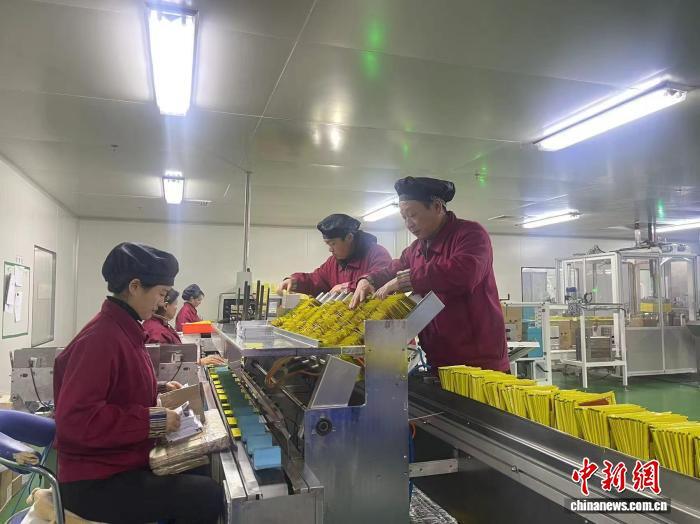
金融支持生物多样性标杆企业 助力西藏创建国家生态文明高地
Zhong Guo Xin Wen Wang· 2025-12-15 13:25
Group 1 - The Agricultural Bank of China (ABC) Tibet Branch and Linzhi Branch provided a financial loan of 10 million yuan to Tibet Qizheng Tibetan Medicine Co., Ltd. for biodiversity development [1] - This loan marks the first special loan focused on biodiversity development in Linzhi City, following the pilot of biodiversity financial standards by the People's Bank of China Tibet Branch [1] - The initiative represents a significant breakthrough in green finance for the ABC Tibet Branch, transitioning from theoretical exploration to practical industry application in biodiversity protection [1] Group 2 - Linzhi, located in the southeastern part of the Tibetan Plateau, is recognized as a key area for biodiversity, often referred to as a "biological gene bank" and "kingdom of flora and fauna" [2] - The loan is aimed at supporting Tibet Qizheng Tibetan Medicine Co., Ltd., a member of the Industrial Biodiversity Protection Alliance and a national green demonstration factory, to deepen cooperation in biodiversity protection [2] - This support not only aims to preserve the wisdom of Tibetan medicine but also seeks to commercialize unique highland plant and animal resources, contributing to the ecological balance and species diversity of the Tibetan Plateau [2] Group 3 - The ABC Tibet Branch established a biodiversity financial leadership group with a four-level institutional linkage to promote biodiversity financial standards tailored to the local context [4] - The initiative includes the development of a pilot program in Linzhi and Changdu, exploring replicable "biodiversity + finance" products or service models [4]


陕西首笔GEP质押生物多样性贷款落地
Shan Xi Ri Bao· 2025-12-14 23:23
Core Insights - The first biodiversity loan in Shaanxi Province, amounting to 10 million yuan, has been secured by Yan'an Nangoumen Water Conservancy Hub Engineering Co., aimed at ecological restoration and biodiversity protection in the Yellow River basin [1][2] - This loan is backed by the ecosystem service value (GEP), marking a significant breakthrough in converting ecological assets into financial capital, addressing the financing challenges faced by ecological protection enterprises [1] Group 1: Financial Innovation - The GEP of the Nangoumen Reservoir's ecological products has been assessed at 626 million yuan, covering various ecological services such as water purification and habitat maintenance [2] - The financing model combines policy guidance, market operation, and professional support, creating a positive cycle of financing support, ecological improvement, value appreciation, and refinancing [2] Group 2: Ecological and Economic Impact - The loan will provide stable funding for ecological protection at the Nangoumen Reservoir, enhancing water quality and vegetation cover, thereby supporting biodiversity in the Yellow River basin [2] - This initiative enriches the green financial product system and offers a replicable model for GEP pledge loans nationwide, facilitating the conversion of ecological resources into financial capital [2] - The People's Bank of China in Shaanxi plans to enhance biodiversity financial policy support, encouraging more financial institutions to participate in GEP pledge loan business and expanding coverage to forests and wetlands [2]
上海国际金融中心一周要闻回顾(12月8日—12月14日)
Guo Ji Jin Rong Bao· 2025-12-14 05:08
Group 1 - Premier Li Qiang held a "1+10" dialogue with leaders of major international economic organizations to discuss global governance and development [1] - The National Financial System Work Conference emphasized the importance of implementing the Central Economic Work Conference's spirit and ensuring effective financial work for 2026 [2] - The International Monetary Fund's Shanghai Center officially commenced operations, with key speeches from prominent financial leaders [3] Group 2 - A meeting in Shanghai focused on enhancing cross-border financial services, summarizing the achievements since the issuance of the action plan in April [4] - The Shanghai government held a seminar on accelerating the construction of the "Five Centers," releasing 15 typical practice cases for 2025 [5] - The 2025 M&A Financial Conference in Shanghai saw the launch of the "China M&A Comprehensive Index (2025)" and the establishment of a M&A alliance [6] Group 3 - The Shanghai Financial Court held a meeting to strengthen collaboration between financial judiciary and regulatory bodies, signing multiple memorandums for cooperation [8] - The Shanghai Futures Exchange announced adjustments to the trading margin and price limits for silver futures contracts [9] - Shanghai Bank and the Shanghai Senior Fund Association launched a strategic cooperation to create a new ecosystem for the silver economy [10] Group 4 - The Shanghai Clearing House supported the issuance of the world's first offshore bond by a non-bank financial institution in the Shanghai Free Trade Zone, with a scale of 500 million yuan and a coupon rate of 1.8% [11] - A joint notice was issued to encourage financial institutions in Shanghai to use "Shanghai Science Points" as a basis for evaluating corporate innovation capabilities for loan issuance [12] - The largest inter-institutional REITs in the market was successfully issued on the Shanghai Stock Exchange, with a scale of 15 billion yuan [13] Group 5 - The Shanghai Stock Exchange hosted a roadshow and investor communication event in Hong Kong, attracting participation from 40 mainland listed companies and nearly 200 overseas institutional investors [14] - The first inter-institutional REITs in the thermal power sector was successfully established, marking a breakthrough in asset securitization in the energy infrastructure field [15][16] - The first technology-themed CDS index product was launched in the interbank market, aimed at enhancing the construction of the "Technology Board" in the bond market [17] Group 6 - The Shanghai branch of the Bank of Communications successfully facilitated the first online signing of a tripartite compensation transfer on the "Suishenban" platform [18] - The Shanghai branch of China Construction Bank held an AI and innovation application competition to empower digital finance [19] - Agricultural Bank of China's Shanghai branch issued its first biodiversity loan of 10 million yuan to support organic agricultural product procurement [20] Group 7 - The first loan interest subsidy for "green transformation" was successfully implemented in Shanghai, amounting to 108 million yuan for energy-efficient upgrades [21] - The Shanghai branch of the Bank of Communications launched the first "Elderly E-loan" credit product to support the development of the silver economy [22] Group 8 - The National Financial Regulatory Administration held meetings to convey the spirit of the Central Economic Work Conference and discuss implementation measures [24][26] - The National Financial Regulatory Administration released a trial management method for commercial bank custody business, outlining principles and requirements for custody operations [27] Group 9 - As of the end of November 2025, China's foreign exchange reserves stood at 3.3464 trillion USD, an increase of 3 billion USD from the previous month [28] - By the end of November, the total social financing stock was 440.07 trillion yuan, with a year-on-year growth of 8.5% [29]
湖北发力支持生物多样性金融 三季度未贷款余额超3600亿
Chang Jiang Shang Bao· 2025-12-09 23:34
Core Viewpoint - The People's Bank of China Hubei Branch is guiding financial institutions to increase credit investment in biodiversity, with a target loan balance exceeding 360 billion yuan by the end of Q3 2025, representing a 34.3% increase from the end of 2024 [1][2] Group 1: Financial Initiatives in Biodiversity - The Hubei Branch has implemented a trial plan for biodiversity financial standards, integrating resources and establishing a project database for financial institutions to connect with biodiversity projects [2] - A collaborative effort with various departments has led to the establishment of a climate data sharing mechanism and the implementation of an ecological environment-oriented development (EOD) project management regulation, resulting in 30 projects receiving credit totaling 24.7 billion yuan [2] Group 2: Sustainable Forestry and Water Ecology - Financial institutions are exploring a "forest rights mortgage + industrial upgrade" model to integrate ecological protection with industrial development, supporting projects like the transformation of low-yield tea gardens and the establishment of medicinal herb bases [3] - Innovative financing models in water ecology, such as "water ecological + specialty credit," have been introduced, including the first nationwide loan linked to sewage treatment volume, amounting to 58 million yuan [3] Group 3: Integration of Financial Services in Agriculture and Tourism - In sustainable agriculture, a model combining financial empowerment, germplasm protection, and industrial income has been developed, with significant credit support for projects like the "Zhi Gui Zong Orange" initiative [4] - The tourism sector is also benefiting from financial support, with loans provided to enhance ecological tourism, including a dedicated loan for the homestay industry that has supported over 540 operators with 180 million yuan [4] Group 4: Government Support and Subsidy Mechanisms - Local governments are establishing biodiversity loan subsidy mechanisms to encourage financial institutions to increase lending in this area, with initiatives like the "Green Development Loan" policy providing interest subsidies for forestry enterprises [5] - The Hubei ecological environment rights trading platform has facilitated access to financial subsidies for 223 enterprises, with total loan support amounting to 3 billion yuan [5]
【CGS-NDI之声】重庆广电第1眼TV专访章俊:金融活水浇灌巴渝大地,共绘“两山”转化新画卷
Xin Lang Cai Jing· 2025-12-03 13:21
Core Viewpoint - The 2025 Green Finance Ecological Conference in Chongqing highlighted the city's strategic position as a "best testing ground" for green finance, leveraging its ecological significance and industrial transformation needs to promote ecological protection and industrial transition [3][12]. Group 1: Green Finance Strategies - The strategy of "疏堵结合,精准赋能" (combining restriction and precision empowerment) was proposed to address the high proportion of heavy industry in Chongqing, focusing on limiting investments in high-pollution and high-energy consumption projects while providing comprehensive support for transitioning enterprises [3][14]. - The introduction of products like the CGT-ESG bond portfolio aims to guide funds towards low-carbon and environmentally friendly sectors, facilitating the green transformation of industrial enterprises [3][14]. Group 2: Biodiversity Finance - Biodiversity finance is identified as a frontier area, emphasizing the importance of quantifying ecological value and designing financial products that attract social capital, transforming biodiversity protection from a purely philanthropic effort into a source of stable returns [4][15]. - The goal is to create "green assets" that generate cash flow and returns, thereby encouraging broader market participation in biodiversity protection [4][15]. Group 3: Collaborative Development - China Galaxy Securities plans to focus on three strategic areas to support Chongqing's development model of "capital, ecology, and industry": enhancing full-chain services, leveraging technology for precision service, and promoting regional collaboration for carbon reduction and ecological protection [5][13]. - The integration of industrial transformation and biodiversity protection is seen as a way to achieve synergistic effects, with innovative financial tools like "green transition bonds" and "ecological credit loans" being explored to support this dual empowerment [8][16].
江西抚州落地全省首笔“以竹代塑”生物多样性挂钩贷款
Xin Hua Cai Jing· 2025-11-27 13:59
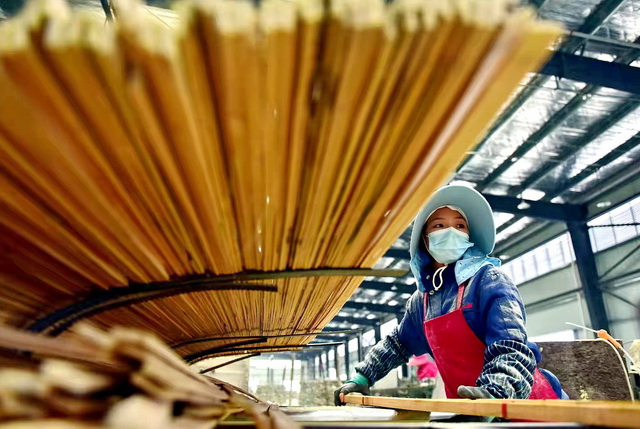
Core Viewpoint - The successful issuance of a 4.9 million yuan biodiversity-linked loan by Zixi Rural Commercial Bank to Jiangxi Weijia Bamboo Cultural Technology Co., Ltd. marks a significant breakthrough in biodiversity finance standards in Jiangxi Province, aligning with the national "Bamboo Replacing Plastic" initiative [1][2]. Group 1: Loan Details - The loan is the first of its kind in the province, aimed at supporting the "Bamboo Replacing Plastic" initiative, which focuses on sustainable bamboo furniture design and manufacturing [1]. - The loan amount is 4.9 million yuan, with the funds allocated for introducing precision cutting equipment and environmentally friendly coating production lines, expected to increase production capacity by 20% and reduce plastic usage by approximately 200 tons annually [2]. Group 2: Biodiversity Rating System - A biodiversity rating system was established for the loan, categorizing companies into four grades (A, B, C, D) based on their ecological and industrial performance, with higher-rated companies receiving better loan terms [1]. - Jiangxi Weijia Bamboo Cultural Technology Co., Ltd. was rated as an A-level (excellent) client due to its high bamboo utilization rate, possession of relevant patents, and compliance with environmental standards [2]. Group 3: Financial Product Innovation - Zixi Rural Commercial Bank developed a tailored financial product called "Bamboo Chain Loan," integrating biodiversity finance with local industry needs, and allowing for alternative collateral options such as bamboo inventory and accounts receivable [2]. - The bank has established a risk-sharing mechanism involving local government support, which includes a risk compensation fund covering up to 80% of principal losses for guaranteed loans [2].
软约束变为硬指标,江西探索生物多样性等级与贷款挂钩
Di Yi Cai Jing· 2025-11-27 07:45
Core Viewpoint - The loan granted to Weijia Bamboo Cultural Technology Co., Ltd. represents Jiangxi Province's first biodiversity-linked loan for "bamboo replacing plastic," marking a significant breakthrough in biodiversity financial standards [1] Group 1: Loan Details - The loan amount is 4.9 million yuan, and it is characterized by a biodiversity rating system that evaluates the ecological contributions of financing entities [1] - The rating system categorizes companies into four levels (A, B, C, D), with higher ratings leading to more favorable loan terms such as limits, interest rates, and durations [1] - The loan aims to support various stakeholders in the bamboo industry, including cooperatives, processing enterprises, and research institutions [2] Group 2: Financial Principles - The core principles of the financial service include prioritizing ecological benefits, supporting the entire bamboo industry chain, and implementing a risk-sharing mechanism among banks, government, and enterprises [2] - The ecological environment, management, financial credit, and development potential are weighted at 40%, 30%, 15%, and 15% respectively in the rating system [2] Group 3: Economic and Ecological Impact - The loan is expected to enhance the sustainable management of over 5,000 acres of bamboo forest, absorbing approximately 6,700 tons of CO2 annually and reducing plastic consumption by 200 tons [6] - Economically, the initiative is projected to help the company achieve an annual output value exceeding 50 million yuan and create 20 new jobs [6] - The loan will be utilized for acquiring precision cutting equipment and environmentally friendly coating production lines [5]
山东首笔“生物多样性+海洋碳汇+可持续渔业”贷款在烟台落地
Xin Hua Cai Jing· 2025-11-25 07:15
Core Insights - The People's Bank of China (PBOC) Yantai Branch has guided Yantai Bank to issue a loan of 9 million yuan (approximately 1.3 million USD) to Changshan Haizhenpin Co., Ltd. for a project focused on "biodiversity + marine carbon sink + sustainable fisheries" [1][2] - This loan marks the first instance of a financial product that simultaneously addresses biodiversity, marine carbon sinks, and sustainable fisheries since the trial of biodiversity financial standards began in Shandong [1][2] - The loan received support from the PBOC's re-lending program aimed at supporting agriculture and small enterprises, benefiting from low-cost funding and interest rate discounts [1][2] Financial Innovation and Support - Following the launch of biodiversity financial standards in October, the PBOC Yantai Branch has actively engaged in promoting financial products that support biodiversity and sustainable fisheries through various initiatives, including meetings and site visits [2][3] - A specialized service team was formed to assess the compliance of the company's ecological breeding model and biodiversity protection measures, facilitating a streamlined loan approval process [2] - The initiative aims to provide timely financial support for ecological-friendly breeding technologies, genetic resource protection, and optimization of breeding environments [2][3] Strategic Importance - The loan is seen as a significant step in promoting green finance and integrating ecological protection with industrial development, serving as a practical example of innovative financial support for biodiversity conservation [3]
全国首笔种质行业生物多样性挂钩贷款落地枣庄
Da Zhong Ri Bao· 2025-11-15 01:32
Core Viewpoint - The successful issuance of China's first biodiversity-linked loan for the germplasm industry in Zaozhuang represents a significant innovation in financing that ties loan terms to biodiversity performance metrics [2][3]. Group 1: Loan Details - Zaozhuang Bank issued a loan of 25 million yuan (approximately 3.5 million USD) for the renovation and upgrading project of the pomegranate seedling breeding and promotion base in Yicheng District, Zaozhuang City [2]. - The loan's interest rate and terms are directly linked to biodiversity performance indicators, providing incentives for companies to enhance germplasm resource protection [2][3]. - The agreement with Shandong Xingyi Health Industry Co., Ltd. stipulates that achieving specific biodiversity goals will result in benefits such as interest rate discounts of 5-30 basis points, an extension of the loan term by one year, and increased loan amounts [2][3]. Group 2: Project Significance - The project has a total investment of 311 million yuan (approximately 43 million USD) and covers an area of about 430 acres, aiming to build a tissue culture laboratory, pomegranate germplasm breeding greenhouses, and a pomegranate big data platform [3]. - Zaozhuang is recognized as "China's Pomegranate Capital" and has the largest collection of germplasm resources in the country, with 523 preserved varieties [3]. Group 3: Implementation and Assurance - To ensure the authenticity of ecological data, a dual safeguard mechanism combining technology and regulation has been established, utilizing blockchain technology for data recording and involving third-party evaluations [3]. - This innovative financial product not only supports the protection of pomegranate germplasm resources but also explores a new path for green development that links measurable ecological performance with financial resources [3].
引导金融资源服务园区企业 第十九届金洽会“园区行”活动走进崇明
Zheng Quan Shi Bao Wang· 2025-11-14 07:27
Core Insights - The 19th Golden Fair "Park Tour" event focused on the Chongming District's Changxing Marine Equipment Industrial Park, aiming to guide financial resources to support local enterprises [1] - The Shanghai Financial Industry Association is enhancing its inclusive finance advisory system to better serve small and micro enterprises, allowing them to access various advisory services online [1] - The Chongming District Finance Bureau is promoting financial innovation aligned with ecological goals, including blue carbon finance and biodiversity finance, to support local industries [2] Group 1 - The Shanghai Financial Industry Association has optimized its inclusive finance advisory network, achieving full coverage of advisory services [1] - The association is organizing industry-finance matchmaking events and promoting a comprehensive service platform for inclusive finance [1] - The focus for this year is to extend advisory services to a broader range of small and micro enterprises, significantly reducing their time and effort in accessing financial services [1] Group 2 - The Chongming District Finance Bureau aims to develop financial products tailored for ecological agriculture and tourism, exploring effective pathways for converting ecological resources into financial assets [2] - The bureau is also looking to facilitate cross-border financial measures in the Changxing Marine Equipment Industrial Park to support marine manufacturing and shipping industries [2] - The Pacific Insurance Company highlighted its strengths in marine insurance, with a premium scale exceeding 4 billion [2] Group 3 - During the interactive session, representatives from technology companies discussed challenges in debt financing, particularly the high loan-to-sales ratio due to delayed revenue from R&D investments [3] - Inclusive finance advisors suggested that banks could use non-financial indicators and a tiered strategy to assist early-stage tech companies with their financing needs [3] - The Golden Fair has been ongoing since September 29, with multiple specialized events planned before the end of the year, and an online exhibition running until September 2026 [3]