
算力需求

Search documents
微软与Meta季报回答了市场焦点问题:算力开支和AI需求,都很强!
Hua Er Jie Jian Wen· 2026-01-29 08:49
据追风交易台,摩根大通分析师Harlan Sur解读微软与Meta最新财报指出,AI基础设施的支出强度已明 确进入新一轮扩张周期。 这表明,在基础模型、AI代理及商业化应用加速部署的推动下,算力需求持续超越供给能力,驱动云 计算与超大规模企业持续加大投入。摩根大通认为,当前供需格局下,主要科技企业的资本支出仍具上 调空间,投资将重点集中于数据中心、服务器及网络基础设施,进而带动相关半导体产业链业绩。该投 资趋势预计将延续至2027年。 供应极限成为常态:需求缺口将持续 供应紧张已成为当前人工智能基础设施建设的核心瓶颈。微软与Meta在最新财报会议中均指出,算力 需求持续超越供应能力。 供需失衡的结构性原因在于基础模型、AI代理及商业化应用的加速部署,推动计算强度呈现指数级增 长。Meta透露,其用于训练生成式广告模型的GPU集群规模已实现翻倍,并正进一步扩展以支持2026 年新一代GEM模型的训练。 这种持续的供应紧缺态势,预计将继续支撑数据中心、服务器及网络基础设施在2026年至2027年间保持 高强度投资。 定制芯片开发成为战略重点 两家科技巨头在最新财报中均表示,AI算力供应紧张态势贯穿2026年。两家 ...


A股“深V”反攻,背后两大推手曝光!
天天基金网· 2026-01-27 05:19
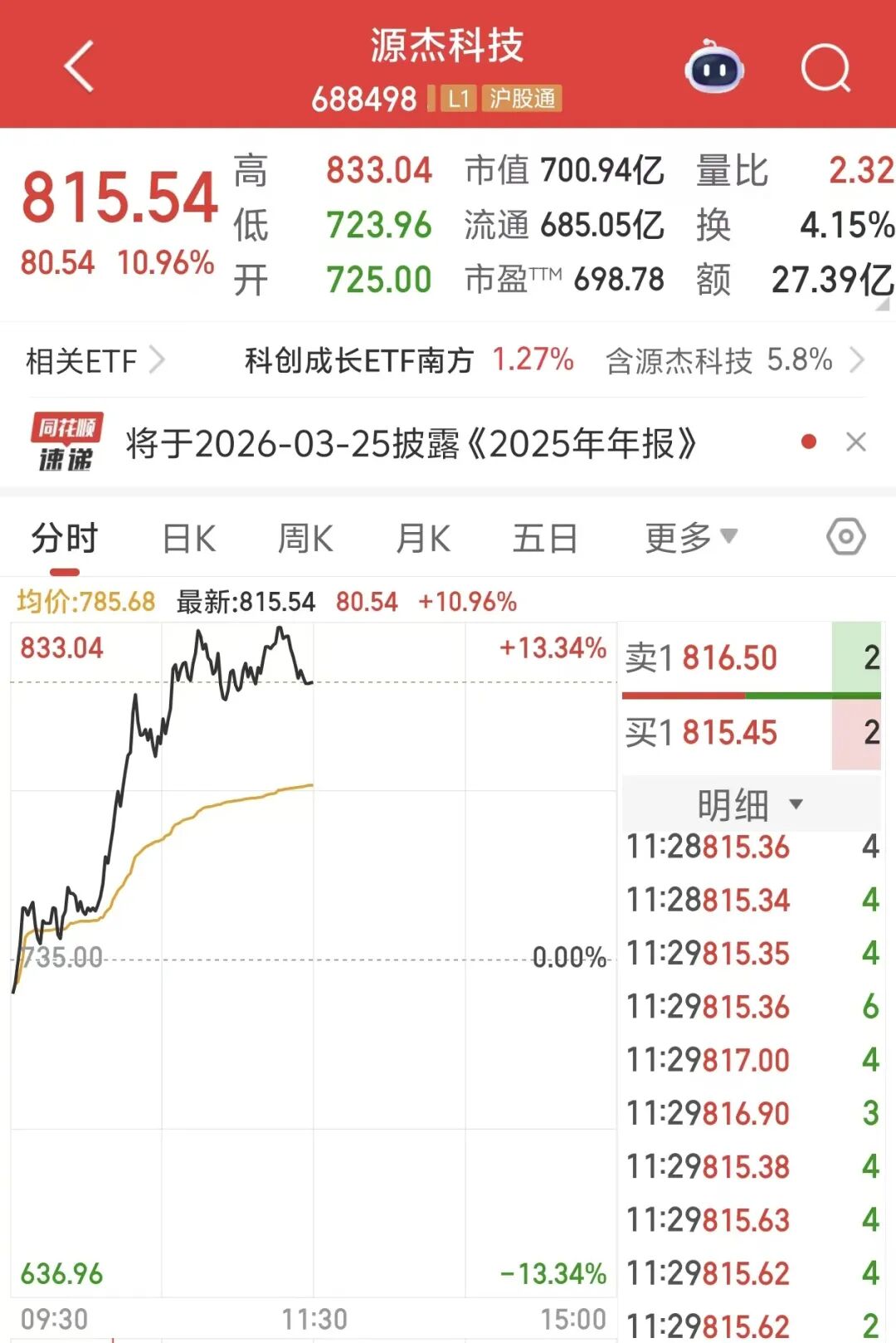
上天天基金APP搜索777注册即可领500元券包,优选基金10元起投!限量发放!先到先得! 今天早盘,A股指数延续昨日跌势,创业板指、深证成指均一度跌超1%。10:02左右,三大股指集 体拉升,创业板指、上证指数先后翻红。 指数拉升背后,"易中天"新易盛、中际旭创、天孚通信放量大涨 ,天孚通信一度涨超11%,这三 只个股上午成交额均挤进A股前五,成为市场做多的重要抓手。 北美算力链上午集体走强。其中,源杰科技涨超10%,盘中股价突破800元,创历史新高,上午收 盘价为815.54元,为A股第三高价股,最新市值为700.94亿元。 半导体产业链则是指数拉升的另一个推手 ,存储芯片和半导体设备板块领涨,精智达、强一股份等 个股大涨。 中际旭创最近市场关注度较高。根据天相投顾提供的数据,2025年四季度末,中际旭创取代宁德 时代成为公募基金第一大重仓股,公募基金持有市值达784.21亿元。 截至上午收盘,上证指数上涨0.03%,深证成指下跌0.37%,创业板指上涨0.44%。 "易中天"大涨 今天上午,新易盛、中际旭创、天孚通信集体上涨,在其带动下,北美算力链走强,罗博特科、源 杰科技、仕佳光子、长光华芯等个股大涨 ...

700亿龙头,冲上800元!历史新高
Zhong Guo Zheng Quan Bao· 2026-01-27 04:30
Market Overview - A-shares continued to decline in early trading, with the ChiNext Index and Shenzhen Component Index dropping over 1% at one point before a collective rebound occurred around 10:02 AM [1] - The Shanghai Composite Index rose by 0.03%, while the Shenzhen Component Index fell by 0.37%, and the ChiNext Index increased by 0.44% by the end of the morning session [3] Key Stocks and Sectors - Notable stocks that surged included New Yi Sheng (300502), Zhongji Xuchuang (300308), and Tianfu Communication (300394), with Tianfu Communication rising over 11% [1] - The North American computing power chain saw significant gains, with Yuanjie Technology rising over 10% and reaching a record high price of 815.54 yuan, making it the third highest-priced stock in A-shares with a market capitalization of 700.94 billion yuan [1] - The semiconductor industry, particularly the storage chip and semiconductor equipment sectors, led the market rally, with stocks like Dongxin Co. hitting the daily limit and others like Purun Co. and Jingzhida rising significantly [8][10] Institutional Insights - Zhongji Xuchuang is gaining attention as it is projected to replace CATL (300750) as the largest holding in public funds by the end of Q4 2025, with a market value of 784.21 billion yuan [6] - The stock has been the most increased in public fund holdings for three consecutive quarters, indicating strong institutional interest [6] Price Trends and Forecasts - Amazon Web Services (AWS) recently raised its EC2 machine learning capacity block prices by approximately 15%, breaking a long-standing trend of declining cloud service prices, reflecting tight supply conditions in computing power [7] - The semiconductor equipment market is expected to grow significantly, driven by AI demand and advancements in packaging technology, with strong growth anticipated in 2026 [11]


未知机构:TF计算机阿里千问3引爆算力需求IDC产业链再迎强催化-20260127
未知机构· 2026-01-27 02:00
【TF计算机】阿里千问3引爆算力需求,IDC产业链再迎强催化 #阿里正式发布万亿参数旗舰推理模型Qwen3-Max-Thinking,总参数量突破1T、预训练数据量达36T Tokens,成为阿 里史上规模最大、能力最强的千问模型。 模型参数与训练数据的极致扩容,直接推动算力需求爆发式增长,为IDC产业链带来确定性增量。 其原生Agent能力的大幅增强,也将加速大模型在各场景落地,进一 【TF计算机】阿里千问3引爆算力需求,IDC产业链再迎强催化 #阿里正式发布万亿参数旗舰推理模型Qwen3-Max-Thinking,总参数量突破1T、预训练数据量达36T Tokens,成为阿 里史上规模最大、能力最强的千问模型。 其原生Agent能力的大幅增强,也将加速大模型在各场景落地,进一步拉动算力产业链景气度上行。 ➡ 万亿参数大模型的训练与推理,对数据中心的单机柜功率、液冷技术及算力调度能力提出更高要求,IDC基础 设施升级迫在眉睫。 阿里算力集群的持续扩张,与"以租代买"模式的深化,让绑定其生态的IDC厂商直接受益。 1 核心IDC供应商:#数据港(阿里系收入占比超80%)、润泽科技、杭钢股份(联合阿里投建浙江云 ...

为什么说AI不是泡沫?这些芯片已经起飞
芯世相· 2026-01-26 04:32
Group 1 - The core argument of the article is that the current investment trend in AI and cloud computing is not a bubble but a significant and irreversible shift in the semiconductor market driven by unprecedented computational demands [2][5][21] - The capital expenditure of the top eight cloud service providers is projected to grow from $145.1 billion in 2021 to approximately $602 billion by 2026, representing an increase of over four times [4][10] - The investment surge is primarily driven by the need for computational power required for generative AI, which is fundamentally different from traditional web services [5][10] Group 2 - The article emphasizes that generative AI requires a vastly different computational approach compared to traditional search engines, with computational loads differing by a factor of 10,000 to 100,000 times [12][16] - The growth trajectory of generative AI is expected to remain strong, with projected growth rates of -8.1% in 2023, 19.7% in 2024, and 22.5% in 2025, indicating a robust demand that is unlikely to decline [20][21] - The demand for logic chips in data centers is expected to grow significantly, with the GPU market projected to increase from $100 billion to over $230 billion, and AI ASICs expected to surge from $9 billion to $84 billion by 2030 [30][33] Group 3 - The storage market is anticipated to experience long-term shortages and high prices, with the DRAM market expected to grow from $97 billion to $194 billion, and HBM market reaching $98 billion by 2030 [36][38] - TSMC's revenue is shifting from N5 to N3 process nodes, indicating a transition in profitability driven by AI demands [41][46] - The bottleneck for AI semiconductors lies in CoWoS packaging capacity, and resolving this bottleneck could lead to an acceleration in investment rather than a slowdown [55][59]



智谱:很快将推出新一代模型 GLM-5,计算机ETF(159998)连续五日获资金净流入,累计“吸金”近1.6亿元
2 1 Shi Ji Jing Ji Bao Dao· 2026-01-09 01:34
Group 1 - The A-share market saw a collective decline on January 8, with the computer ETF (159998) achieving a trading volume exceeding 120 million yuan, and stocks like Baoxin Software, Weining Health, and Zhongke Xingtu leading in gains [1] - The computer ETF has experienced a net inflow of nearly 160 million yuan over the past five days, indicating strong investor interest [1] - The ETF tracks the CSI Computer Theme Index, which includes stocks from companies involved in information technology services, application software, system software, and computer hardware [1] Group 2 - Zhongtai Securities forecasts an improvement in the computer sector's fundamentals due to macroeconomic recovery, AI application implementation, and personnel adjustments, with institutional holdings at historical lows suggesting potential future growth [2] - Huatai Securities anticipates a significant increase in AI computing power demand by 2026, highlighting investment opportunities in both domestic and overseas computing supply chains [2] - In the optical communication sector, demand for 800G and 1.6T optical modules is expected to rise rapidly by 2026, benefiting leading manufacturers and upstream core material segments like optical chips [2]
国泰君安期货商品研究晨报:贵金属及基本金属-20260107
Guo Tai Jun An Qi Huo· 2026-01-07 02:20
Report Investment Rating - No investment rating for the industry is provided in the report [1][2][4] Core Viewpoints - Gold is influenced by rising risk - aversion sentiment [2] - Silver is expected to break new highs [2] - Copper prices are strong due to the boost in computing power demand [2] - Zinc is running on the stronger side [2] - The decrease in LME lead inventory supports its price [2] - Tin is in a range - bound oscillation [2] - Aluminum is oscillating on the stronger side, alumina has rebounded significantly, and cast aluminum alloy follows electrolytic aluminum [2] - Nickel is in a wide - range oscillation due to the game between real - world pressure and cycle - change narratives, and stainless steel is dragged by the real - world fundamentals with the market mainly gambling on Indonesian policies [2] Summary by Commodity Gold and Silver - **Gold**: The prices of domestic gold futures contracts like Shanghai Gold 2602 and Gold T + D declined, while Comex Gold 2602 rose slightly. Trading volume and positions changed, with ETF positions remaining stable. There are geopolitical news such as the Trump administration discussing plans to acquire Greenland. The trend strength is 1 [2][4][6] - **Silver**: Domestic silver futures prices like Shanghai Silver 2602 and Silver T + D decreased, while Comex Silver 2602 increased significantly. Trading volume and positions changed, and inventory decreased. The trend strength is 1 [2][4][6] Copper - **Price and Trading**: The Shanghai copper main contract and LME copper 3M electronic disk prices rose. Trading volume and positions increased. Futures inventory rose, and the cancellation warrant ratio decreased [8] - **News**: The Trump administration is discussing plans for Greenland, and NVIDIA's CFO expects higher data - center chip revenue. The 2025 copper - ore imports in China increased, and there are developments in copper mines and smelters in Chile and other places. The trend strength is 2 [8][10] Zinc - **Price and Market Data**: Shanghai and LME zinc prices rose. Trading volume, positions, and some spot prices increased, while inventory decreased. There are news about China's trade and monetary policies. The trend strength is 1 [11][12][13] Lead - **Price and Inventory**: Shanghai and LME lead prices rose. Trading volume increased, positions changed, spot premiums increased, and LME inventory decreased. There are geopolitical news and expectations of high data - center chip revenue. The trend strength is 1 [14] Tin - **Price and Market**: Shanghai and LME tin prices increased significantly. Trading volume and positions changed, and inventory decreased. There are macro and industry news such as the Fed's stance and new stock listings. The trend strength is 1 [16][17][18] Aluminum, Alumina, and Cast Aluminum Alloy - **Price and Market Data**: Aluminum, alumina, and cast aluminum alloy prices showed various trends. Trading volume, positions, inventory, and other data changed. There are news about the Fed's internal differences and Venezuelan political issues. The trend strength for all three is 1 [20][21] Nickel and Stainless Steel - **Price and Industry News**: Nickel and stainless - steel prices changed. There are multiple industry news in Indonesia, including restrictions on new smelting licenses, changes in nickel - ore production targets, and potential fines for illegal land use. The trend strength for both is 0 [22][23][25]
AI浪潮推动算力需求爆发,数字经济ETF(560800)盘中涨超1%
Sou Hu Cai Jing· 2026-01-07 02:18
Group 1 - The core viewpoint of the news highlights the positive performance of the digital economy theme index and its constituent stocks, with significant increases in stock prices and ETF growth [1][2] - The digital economy ETF has seen a notable increase in trading volume, with an average daily transaction of 20.84 million yuan over the past year and a recent growth of 13.66 million yuan in the last two weeks [1][2] - Major semiconductor companies like ASML and TSMC have reached historical market highs, indicating strong demand in the semiconductor sector, particularly in AI and server DRAM markets [1][2] Group 2 - The AI wave is driving a surge in computing power demand, significantly enhancing the value of hardware sectors such as servers, AI chips, optical chips, and storage [2] - The global DRAM market is expected to grow at a compound annual growth rate of 15.93% from 2024 to 2029, driven by the need for massive data processing [2] - The domestic DRAM industry in China is entering a critical phase, with opportunities arising from advancements in R&D and production capabilities among local manufacturers [2] Group 3 - As of December 31, 2025, the top ten weighted stocks in the digital economy theme index account for 52.63% of the index, indicating a concentrated investment in key players [3] - The digital economy ETF closely tracks the digital economy theme index, selecting companies with high digital infrastructure and application levels [2][3]





铜:算力需求提振,价格强势
Guo Tai Jun An Qi Huo· 2026-01-07 02:03
Report Summary 1. Report Industry Investment Rating - The report does not mention the industry investment rating. 2. Report's Core View - The price of copper is strong due to the boost in computing power demand [2]. 3. Summary by Relevant Catalogs 3.1 Fundamental Tracking - **Futures Data**: The closing price of the Shanghai Copper main - contract was 105,320 with a daily increase of 3.92%, and the night - session closing price was 104,600 with a decrease of 0.68%. The LME Copper 3M electronic - trading price was 13,255 with a 1.28% increase. The trading volume and open interest of Shanghai Copper Index and LME Copper 3M electronic - trading also changed compared to the previous day [2]. - **Inventory Data**: The Shanghai Copper inventory was 93,271, an increase of 2,989 compared to the previous day, and the LME Copper inventory was 146,075, an increase of 3,525. The LME Copper注销仓单 ratio was 21.82%, a decrease of 1.08% [2]. - **Spread Data**: There were changes in various spreads such as LME copper ascension and discount, bonded - area warehouse - receipt premium, etc. For example, the LME copper ascension and discount was 41.98, an increase of 3.38 compared to the previous day [2]. 3.2 Macro and Industry News - **Macro News**: The Trump administration is discussing plans to acquire Greenland, including military options. NVIDIA CFO said that by the end of 2026, the revenue of data - center chips will "definitely" be higher than the $500 billion predicted in October last year, and Huang Renxun said that the demand from Chinese customers is strong [2]. - **Industry News**: In November 2025, China's imports of copper ore and concentrates were 2,526,194.63 tons, a month - on - month increase of 3.05% and a year - on - year increase of 13.13%. Chile's government initiated the preliminary mediation process for the labor - contract negotiation of the Mantoverde copper - gold mine. The second - phase expansion project of Julong Copper Mine completed the main - project construction and core - equipment installation and successfully carried out the linkage test run. The Kamoa - Kakula copper smelter produced its first batch of anode copper, with an expected production of 380,000 - 420,000 tons of mineral copper in 2026 (median 400,000 tons). Codelco's copper production in 2025 was 1.332 million tons, slightly higher than in 2024 [2][4]. 3.3 Trend Intensity - The trend intensity of copper is 2, indicating a strong bullish view [4].
黄金:避险情绪回升白银:新高待破
Guo Tai Jun An Qi Huo· 2026-01-07 01:30
Report Industry Investment Ratings The report does not provide an overall industry investment rating. However, it gives trend intensities for various commodities, which can be used as a reference for investment sentiment: - Strongly Bullish (Trend Intensity = 2): Container Freight Index (European Line) [127] - Bullish (Trend Intensity = 1): Gold, Silver, Copper, Zinc, Lead, Tin, Aluminum, Alumina, Cast Aluminum Alloy, Nickel, Carbonate Lithium, Rubber, Synthetic Rubber, Caustic Soda, Pulp, Methanol, Urea, Fuel Oil, Low - Sulfur Fuel Oil [6][10][13][16][19][22][25][29][62][65][74][80][87][92][116] - Neutral (Trend Intensity = 0): Iron Ore, Rebar, Hot - Rolled Coil, Silicon Ferrosilicon, Manganese Silicon, Log, Paraxylene, PTA, MEG, LLDPE, PP, Glass, Styrene, LPG, Propylene, PVC, Short - Fiber, Bottle Chip, Offset Printing Paper, Pure Benzene, Palm Oil, Soybean Oil, Soybean Meal, Soybean, Corn, Cotton, Egg, Live Pig, Peanut [36][40][45][53][57][68][71][84][96][103][111][128][131][135][139][145][148][157][161][164][170] - Bearish (Trend Intensity = - 1): Sugar [155] Core Views of the Report The report provides a comprehensive analysis of various commodity futures, including their current market trends, influencing factors, and future outlooks. It emphasizes the importance of considering both macro - economic and industry - specific factors when making investment decisions in the commodity futures market. For example, geopolitical events, policy changes, and supply - demand dynamics all play significant roles in determining commodity prices. Summary by Commodity Categories Precious Metals - **Gold**: Safe - haven sentiment has rebounded. With geopolitical uncertainties such as the Trump administration's discussion of obtaining Greenland, gold prices are supported [6]. - **Silver**: A new high is yet to be broken. Market sentiment and macro - economic factors are influencing its price movement [6]. Base Metals - **Copper**: Driven by computing power demand, the price is strong. Nvidia's positive outlook on data - center chip revenue and China's copper import data contribute to the upward trend [10]. - **Zinc**: Running strongly. Price increases are accompanied by changes in trading volume and inventory [13]. - **Lead**: LME inventory reduction supports the price. Geopolitical news and market sentiment also have an impact [16]. - **Tin**: Trading in a range. Supply - demand balance and macro - economic factors are key considerations [19]. - **Aluminum**: Oscillating strongly. Alumina has rebounded significantly, and cast aluminum alloy follows the trend of electrolytic aluminum [22]. - **Nickel**: There is a game between real - world pressure and cycle - change narratives, resulting in wide - range fluctuations. Indonesia's policies on nickel production and exports are important influencing factors [25]. - **Stainless Steel**: The real - world fundamentals are dragging down the market, and the disk is mainly influenced by Indonesia's policies [25]. Energy - Related Commodities - **Crude Oil**: The market is worried about long - term supply surplus, and geopolitical tensions have not intensified, leading to a decline in international oil prices [58]. - **Fuel Oil**: Turning strong, short - term upward movement is more likely. Low - sulfur fuel oil follows the upward trend, and the price difference between high - and low - sulfur fuels has narrowed slightly [116]. Chemical Commodities - **PTA**: In a high - level oscillating market. Supply - demand balance and cost factors are important [57]. - **MEG**: The upside space is limited, and there is still pressure in the medium term. Supply and demand in the polyester industry and inventory levels are key factors [57]. - **Methanol**: Short - term upward trend. Geopolitical events and inventory expectations are influencing the price [87]. - **Urea**: The oscillation center is moving up. Agricultural demand expectations and supply - demand dynamics are important [92]. - **Styrene**: Short - term oscillation. Market valuation and export volume are influencing factors [96]. - **Soda Ash**: The spot market has changed little. Supply and demand in the soda ash industry are relatively stable [48]. - **LPG**: The import cost is firm, and attention should be paid to the realization of negative feedback. PDH and other related industry data are important [103]. - **Propylene**: Demand is stable, and the spot price is slightly rising [103]. - **PVC**: Short - term upward trend, but the upside space may be limited. High production and inventory levels are constraints [111]. Agricultural Commodities - **Palm Oil**: Fundamental drivers are weak, and attention should be paid to macro - economic sentiment [139]. - **Soybean Oil**: Trading in a range, and attention should be paid to spread opportunities [139]. - **Soybean Meal**: Overnight US soybean prices closed lower, and Dalian soybean meal may oscillate. US soybean supply and demand reports and China's soybean imports are important factors [145]. - **Soybean**: Oscillating. Market sentiment and supply - demand balance are key considerations [145]. - **Corn**: Attention should be paid to the spot market. Price changes in different regions and import - related news are important [148]. - **Sugar**: Trading at a low level. Production and consumption data in major producing countries and import policies are important [152]. - **Cotton**: Maintaining a strong trend. Spot trading and downstream demand in the cotton industry are important [157]. - **Egg**: Sentiment in the far - month contracts has weakened. Supply - demand balance and feed prices are key factors [161]. - **Live Pig**: There is still inventory accumulation behavior. Spot prices and futures contract prices are changing, and inventory registration is also an important factor [164]. - **Peanut**: Oscillating. Spot market conditions in different regions are relatively stable [170]. Others - **Container Freight Index (European Line)**: The 02 contract is making up for the premium, and for far - month contracts, attention should be paid to premium - making and geopolitical events [118]. - **Log**: Trading at a low level. Market supply and demand and macro - economic factors are influencing the price [53].