美联储会议纪要

Search documents
美联储会议纪要显示上月官员们普遍支持按兵不动。
Sou Hu Cai Jing· 2025-08-20 18:52
Core Viewpoint - The Federal Reserve's meeting minutes indicate that officials broadly supported maintaining the current interest rates last month [1] Group 1 - The minutes reflect a consensus among Federal Reserve officials to keep interest rates unchanged, suggesting a cautious approach to monetary policy [1]
兴业期货日度策略:反内卷预期暂难证伪,商品整体偏强-20250710
Xing Ye Qi Huo· 2025-07-10 12:09
Report Summary 1. Overall Market Outlook - The expectation of "anti-involution" is difficult to disprove, and commodities are generally strong [1]. 2. Variety Analysis 2.1 Stock Index Futures - The stock index rose and then fell on Wednesday, with the Shanghai Composite Index breaking through 3500 points. The trading volume of the two markets continued to rise to 1.53 trillion yuan. The media, agriculture, forestry, animal husbandry, fishery, and comprehensive finance sectors led the gains, while non-ferrous metals and basic chemicals led the losses [1]. - As the stock index valuation rises to a high level, market caution has increased. Without new positive news, the market will return to high-level volatility in the short term. Considering the significant impact of the mid-year report performance in July, the IF and IH contracts with clear constituent stock earnings may be more resilient. Overall, although there are still uncertainties in the external environment, the A-share market shows resilience, and the trading volume has increased, with the oscillation center expected to continue to move up [1]. 2.2 Treasury Bond Futures - The capital market remained loose, and the bond market remained at a high level. The bond futures rose slightly yesterday and remained within the range. Domestically, the latest inflation data was still weak. Trump announced a second wave of tariff letters involving eight countries. The Fed meeting minutes showed that most officials believed that tariffs might continue to push up inflation [1]. - The central bank continued its net capital withdrawal operation, but the capital market remained loose. The equity market did not continue its strength yesterday, reducing the drag on the bond market. Overall, with high macro uncertainty, the bond market has limited directional drivers. However, with an optimistic capital market outlook, the bond market will remain at a high level. But there are still risks of high valuation pressure and high congestion. Continue to monitor the performance of the equity market, and the stock-bond seesaw may continue [1]. 2.3 Gold and Silver Futures - The US government continued to release new tariff policy information, which had limited impact on the market. The logic of factors such as services and inflation that are favorable to gold prices has not been disproven, and the central bank's continuous gold purchase behavior has not ended. In the short term, gold prices will continue to oscillate at a high level, but the long-term upward trend has not been broken [1][4]. - The gold-silver ratio on the Shanghai Futures Exchange is at the 68.5% quantile in the past three years. The silver price fluctuates with gold, and after the silver price breaks through, the support around 8500 is strong. Strategically, it is recommended to hold the short position of out-of-the-money put options on the August contracts of gold and silver until expiration, or transfer the position to the October contracts [4]. 2.4 Non-Ferrous Metals Futures - **Copper**: The LME copper performed the weakest, and the inventory continued to rise. The Shanghai copper followed the LME copper and fell sharply at the opening yesterday, then oscillated at a low level. The domestic inflation data was still weak, and Trump's tariff policy and the Fed's view on inflation affected the market. The supply at the mine end remained tight, and the demand outlook was still cautious. Affected by Trump's statement of a 50% tariff increase on copper, the COMEX and LME copper prices diverged, with the premium exceeding 25%. However, due to the large inflow of copper in the US, the market's expectation of copper surplus in the US after the tariff implementation increased. The inventory of the three major exchanges has been rising, and the domestic market generally followed the LME, but the decline was slightly smaller. The financial attribute still supports copper prices in the medium to long term, but the tariff policy is uncertain, and the structural mismatch persists, so copper price fluctuations may increase [4]. - **Aluminum and Alumina**: Alumina prices continued to be strong, breaking through 3200. The Shanghai aluminum oscillated higher at night. The domestic inflation data was weak, and Trump's tariff policy and the Fed's view on inflation affected the market. The recent strength of alumina prices was mainly due to the "anti-involution" expectation, but the excess capacity situation remained unchanged. The supply of Shanghai aluminum was constrained, and the import profit was inverted. The demand was cautious due to the off-season, and the inventory showed signs of accumulation. Overall, alumina is temporarily strong due to sentiment, but the upside is uncertain. The medium-term upward trend of Shanghai aluminum remains unchanged, but the short-term demand and inventory are dragging, and it will continue to oscillate at a high level [4]. - **Nickel**: The supply of nickel ore from the Philippines has seasonally recovered, and the port inventory has increased significantly, causing the nickel ore price to decline marginally. In June, the nickel iron production in Indonesia and China decreased by 3.85% month-on-month but increased by 22.21% year-on-year. The supply was relatively abundant, but downstream demand was limited. The price of intermediate products was relatively firm. The nickel fundamentals have not improved, and the off-season demand is not favorable. The supply pressure has increased with the increase in the Philippines' ore supply. Recently, the nickel price has oscillated lower, but the extension of the cobalt export ban in the Democratic Republic of the Congo has boosted the demand for MHP, and the price of intermediate products has rebounded. As the nickel price dropped to 119,000 yuan, the downward momentum weakened, and it will continue to oscillate at a low level in the short term. The short position of out-of-the-money call options strategy can be continued [4][6]. - **Lithium Carbonate**: The prices of spodumene and lepidolite have continued to rise, driving up the lithium price due to increased mining costs. However, the improvement in the lithium carbonate fundamentals is limited. The production capacity of salt lakes has continued to increase seasonally, and the weekly production of lithium carbonate has remained at a relatively high level this year. The downstream demand has not increased, and the production schedules of battery cell and cathode enterprises have been mediocre. The traditional off-season will also limit the growth rate of terminal demand. The lithium carbonate inventory is still in the accumulation cycle, and the upside of the price is limited. It is advisable to short at high levels during this stage of the rebound [6]. - **Silicon Energy**: The supply-side reform and industry restructuring expectations of the polysilicon industry have increased significantly due to the policy signal of capacity regulation. The recent strong performance of the polysilicon spot price has further promoted the rise of the polysilicon futures price. In the short term, the sentiment is strong, but the fundamentals have not fully reflected. Overall, the policy support for the price is strong, and it is advisable to hold the short position of put options [6]. 2.5 Steel and Iron Ore Futures - **Rebar**: The spot price of rebar fluctuated slightly yesterday. The trading volume of construction steel decreased to 88,500 tons. The demand in the off-season has no bright spots, and the market drivers are concentrated on steel supply and raw materials. The "anti-involution" expectation is difficult to disprove, and there are rumors of crude steel production restrictions again. The market expectation is optimistic, but the time for the implementation of supply contraction is uncertain. On the one hand, the profit of electric arc furnaces has recovered, and there is a risk of increased production in the off-season. On the other hand, the profit of long-process steel mills is good, and the production cost has stabilized and rebounded. The spot price of coking coal has increased rapidly, and there are also plans to increase the price of coke. It is expected that the rebar futures price will oscillate strongly, with the bottom rising and the upside limited by the electric arc furnace cost. The option-selling strategy is temporarily better than the single-sided futures strategy. It is recommended to continue to hold the short position of out-of-the-money put options (RB2510P2900) [6]. - **Hot Rolled Coil**: The spot price of hot rolled coil fluctuated yesterday. The demand in the off-season is average, both in reality and expectation. Overseas orders for automobiles and home appliances have weakened, and the domestic "trade-in" policy has limited room. The price difference between domestic and foreign steel has narrowed significantly, and the pressure on direct exports may increase. The market upward drivers are concentrated on steel supply and raw materials. The "anti-involution" expectation is difficult to disprove, and the expectation of crude steel production reduction has increased. The long-process steel mills are actively producing, and the production cost has stabilized and rebounded. The spot price of coking coal has increased rapidly, and there are also plans to increase the price of coke. It is expected that the hot rolled coil futures price will oscillate strongly this week, with the bottom cost rising and the upside limited by the export cost. It is advisable to temporarily wait and see on the single side, and consider continuing to hold the arbitrage strategy of compressing profits on the January contracts [6][8]. - **Iron Ore**: The "anti-involution" expectation is difficult to disprove, and there are rumors of crude steel production restrictions again, but the time for the implementation of steel mill production cuts is uncertain. In the short term, the profit of steel mills still encourages long-process steel mills to maintain an active production rhythm. The daily output of domestic blast furnace hot metal has declined slowly at a high level. Under the background of high hot metal output and low steel mill raw material inventory, the supply-demand contradiction of imported iron ore in July is limited. The iron ore price is running strongly, compressing the profit of steel mills. The upside of the iron ore price in the off-season is mainly limited by the resumption of electric arc furnace production and the narrowing of the steel price difference between domestic and foreign markets, which restricts the upside of steel prices. It is advisable to hold the short position of out-of-the-money put options (I2509-P-700) and continue to hold the iron ore 9-1 positive spread strategy (spread 27.5, +0.5) [8]. 2.6 Coal and Coke Futures - **Coking Coal**: The auction price at the mine mouth has continued to rise, and the replenishment enthusiasm of steel and coke enterprises and the willingness of the trading sector to enter the market have continued to increase. It is expected that the raw coal inventory of coal mines will further decrease, and the temporary supply-demand mismatch is still favorable for coal prices. The long position strategy can be continued. Recently, attention should be paid to the production increase progress of mines after the safety production month [8]. - **Coke**: The production enthusiasm of steel mills is good, and the daily output of hot metal has remained at a relatively high level in the off-season. The demand for coke in the furnace is supported, and steel mills are still purchasing raw materials. The port trading activity has also increased, and the spot price has increased. The futures price has also shown a strong trend [8]. 2.7 Soda Ash and Glass Futures - **Soda Ash**: The fundamental negative factors are clear, that is, supply exceeds demand. Yesterday, the daily production of soda ash increased to 102,900 tons (+500 tons). Kunshan produced products last night, and Lianyungang Alkali Industry plans to increase production on the 11th. The demand lacks bright spots, and the daily consumption of rigid demand is about 98,000 tons (including exports). Alkali plants may continue to accumulate inventory passively. However, at the micro level, after the single-sided position of the September contracts of soda ash reached a record high, it has rebounded after three consecutive days of position reduction. The single-sided position is still as high as more than 1.59 million lots (equivalent to 31.8 million tons), and the virtual position ratio is too high. Be vigilant against the risk of short squeeze in the market due to the "anti-involution" expectation or sentiment. It is advisable to hold the short position of the September contracts of soda ash with a stop-profit line. From the perspective of the production capacity cycle, glass is stronger than soda ash, and the strategy of going long on the January contracts of glass and shorting the January contracts of soda ash can be patiently held (spread -112, -13) [8]. - **Float Glass**: The fundamentals have not changed much. The operating production capacity of float glass has remained stable. Yesterday, the average sales rate of glass in the four major production areas decreased to 97% (-5%). The futures price is at a premium to the Hubei spot price. Attention should be paid to the sustainability of spot purchases based on futures. It is expected that the glass factory will reduce inventory by 1.7 million heavy boxes this week. The main driver of the off-season market comes from the supply side. The "anti-involution" expectation is difficult to disprove, and the production capacity of glass factories using petroleum coke and natural gas processes has been in a loss state, and the probability of cold repair is increasing. It is believed that the probability of the realization of the supply contraction expectation in the far-month contracts may gradually increase. Strategically, it is recommended to go long on the January contracts at low prices on the single side and continue to hold the arbitrage strategy of going long on the January contracts of glass and shorting the January contracts of soda ash (spread -112, -13) [8]. 2.8 Energy Futures - **Crude Oil**: The market is currently in a stage where OPEC+ is accelerating production increases and the US is in a peak demand season. The market assesses that the excess pressure is relatively limited, but the US API inventory shows a significant accumulation of 7.128 million barrels of crude oil, far exceeding expectations, and the monthly spread has started to cool recently. The expectation of tight supply in the US market will be alleviated. It is expected that the short-term rebound space of oil prices is limited, and attention should be paid to shorting opportunities on rebounds [10]. - **Methanol**: This week, the arrival volume was 310,300 (+55,700) tons, with an increase of 126,200 tons in Jiangsu and a decrease of 15,000 tons each in Guangdong and Fujian. Affected by the increase in the arrival volume, the inventory in East China ports increased by 61,000 tons, and that in South China decreased by 15,800 tons. Currently, the port inventory has reached the highest level since April but is still at a historical low for the same period. The factory inventory only increased by 4,600 tons. Although the spot trading volume has declined, the production enterprise's operating rate has also decreased. The "anti-involution" has no direct impact on the methanol industry chain for the time being, but the rebound in coal prices and the disappearance of pessimistic sentiment can provide some support for methanol futures [10]. 2.9 Chemical Futures - **Polyolefins**: Although OPEC+ has increased production, tariffs and geopolitical factors have supported the rebound of crude oil prices. This week, the spot trading has been sluggish, and the production enterprise's inventory has increased, with PE increasing by 12.5% and PP increasing by 2%. The social inventory has also increased, with PE increasing by 2.1% and PP increasing by 3.2%. In previous years, the inventory decreased during the same period, but this year it has continued to increase since June, indicating an oversupply situation. Recently, there have been concentrated production cuts in coal mines and new energy metals, triggering expectations of a new round of supply-side reforms, but it is difficult to have a substantial positive impact on polyolefins in the short term, and the price will continue to decline from July to August [10]. 2.10 Agricultural Futures - **Cotton**: In terms of supply, multiple regiments in Xinjiang have been affected by hail, and the damage to cotton fields varies. The weather theme has boosted the cotton price to run strongly. In terms of demand, terminal orders are mainly small and scattered, and the procurement rhythm has slowed down. Some enterprises have started to take high-temperature holidays or reduce production capacity due to sales pressure and high temperatures. In terms of inventory, the decline rate of the national commercial cotton inventory at the end of June has slowed down compared with last month, but the year-on-year decline in Xinjiang's cotton inventory has increased. Overall, the expectation of tight supply at the end of this year still strongly supports the futures price. It is recommended to continue to hold the previous long positions [10]. - **Rubber**: The market sentiment is optimistic, and the rubber price has oscillated and rebounded. However, the automobile market has entered the traditional off-season, and tire enterprises still face inventory reduction pressure, so the demand expectation is not positive. The production in domestic and Southeast Asian rubber-producing countries has increased smoothly during the peak season, the weather conditions in the producing areas are normal, and the negative impact of climate change on rubber tapping operations has gradually weakened. The price of raw materials in the Hat Yai market has continued to decline. The rubber fundamentals continue to show an increase in supply and a decrease in demand, which may limit the upside of the rubber price [10].
美联储会议纪要公布后,标普500指数持稳,现涨0.4%。
news flash· 2025-07-09 18:08
Core Viewpoint - The S&P 500 index remained stable, increasing by 0.4% following the release of the Federal Reserve meeting minutes [1] Group 1 - The Federal Reserve's meeting minutes were released, impacting market sentiment positively [1] - The S&P 500 index showed resilience in response to the news, indicating investor confidence [1]
黄金再次失守3300美元整数大关,市场聚焦晚间贸易政策细节和美联储会议纪要,黄金恐......?金十研究员高阳正在直播分析,点击进入直播间
news flash· 2025-07-09 11:40
Core Viewpoint - Gold has once again fallen below the $3,300 threshold, with market attention shifting towards the details of trade policies and the Federal Reserve's meeting minutes [1] Group 1 - The current price of gold is under pressure, indicating potential volatility in the market [1] - Market participants are closely monitoring upcoming trade policy details, which could impact gold prices [1] - The Federal Reserve's meeting minutes are anticipated to provide insights that may influence investor sentiment towards gold [1]
贺博生:7.7黄金弱势下跌原油强势上涨晚间行情走势分析及操作建议
Sou Hu Cai Jing· 2025-07-07 11:08
Group 1: Gold Market Analysis - Gold prices experienced a sudden decline, dropping to around $3300 per ounce after reaching a daily high of $3342.82 per ounce, influenced by market anticipation of trade negotiations and tariff updates from the U.S. government [2] - The market is currently observing a cautious sentiment as investors await the outcome of trade discussions and the Federal Reserve's meeting minutes, which are expected to provide further insights [2] - Technical analysis indicates that gold is in a high-level consolidation phase, with key resistance levels at $3345 and $3365, while support is found around $3305 and $3295 [3][5] Group 2: Oil Market Analysis - The oil market is reacting to OPEC+'s decision to increase daily oil production by 548,000 barrels starting in August, which has heightened investor focus on geopolitical tensions in the Middle East and U.S. policy changes [6] - Technical indicators suggest that while the medium-term trend for oil remains upward, short-term movements are showing signs of a downward trend, with key resistance levels at $69.0-$70.0 and support at $65.5-$64.5 [7]

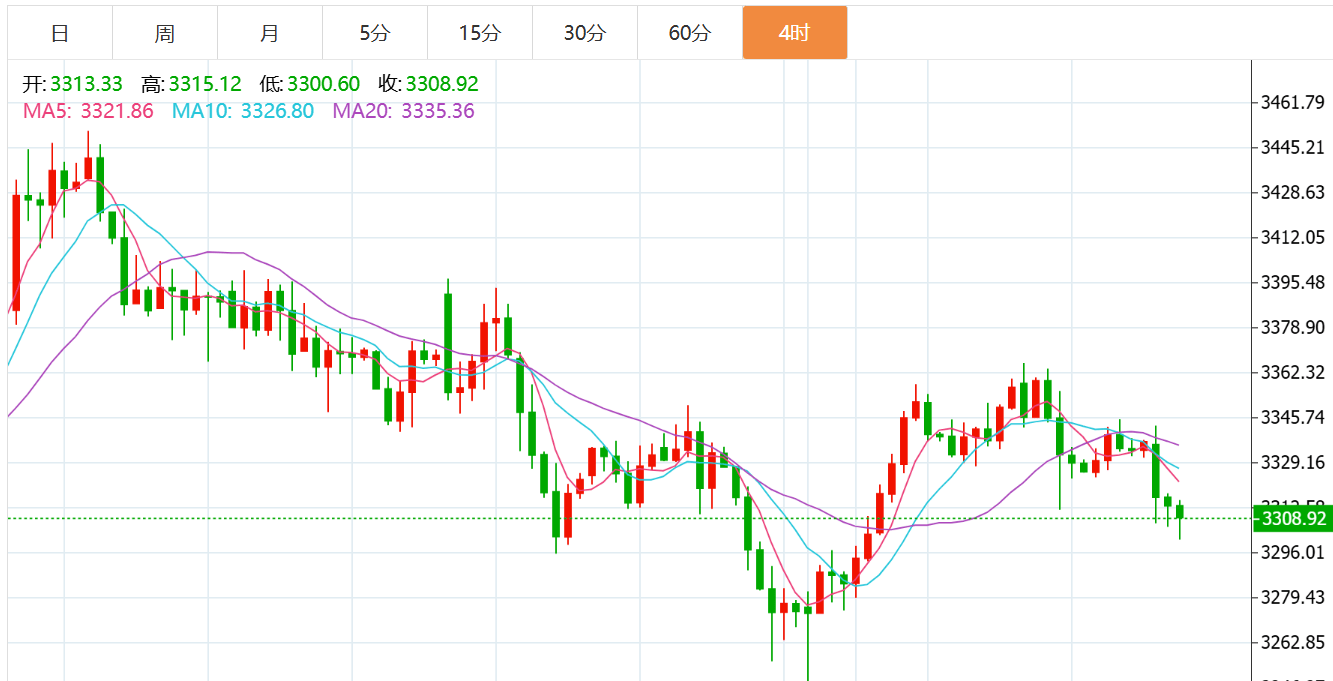
张尧浠:关税豁免大限将尽、金价回落调整还是再度攀升?
Sou Hu Cai Jing· 2025-07-07 00:04
Core Viewpoint - The international gold market experienced a rebound last week, indicating potential for further upward movement despite some volatility [1][3]. Price Movement - Gold opened the week at $3272.74 per ounce, reached a low of $3247.77, and then rebounded to a high of $3365.51 before closing at $3334.83, resulting in a weekly increase of $62.09 or 1.9% [1][3]. Economic Influences - The decline in the US dollar index and signs of economic contraction in the US have provided support for gold prices, with expectations of three interest rate cuts by the Federal Reserve next year [3][5]. - Market reactions to employment data and the potential for further economic stimulus have also contributed to the bullish sentiment for gold [3][5]. Upcoming Events - The focus for the upcoming week includes the Federal Reserve's meeting minutes and the July 9 deadline for tariff exemptions, which could influence market sentiment and gold prices [5][9]. - A dovish tone from the Fed could lead to a weaker dollar and support for gold, while a focus on maintaining high interest rates could have the opposite effect [5][9]. Technical Analysis - The monthly chart indicates a potential topping pattern for gold prices, with risks of a decline to $3000 or $2600 if key support levels are breached [7][9]. - Current support levels to watch include the 60-day moving average and the 20-week moving average, with potential upward movement if prices stabilize above these levels [9]. Price Levels - Key support levels for gold are identified at $3323 or $3304, while resistance levels are at $3340 or $3350 [9]. - For silver, support is noted at $36.85 or $36.70, with resistance at $37.20 or $37.60 [9].
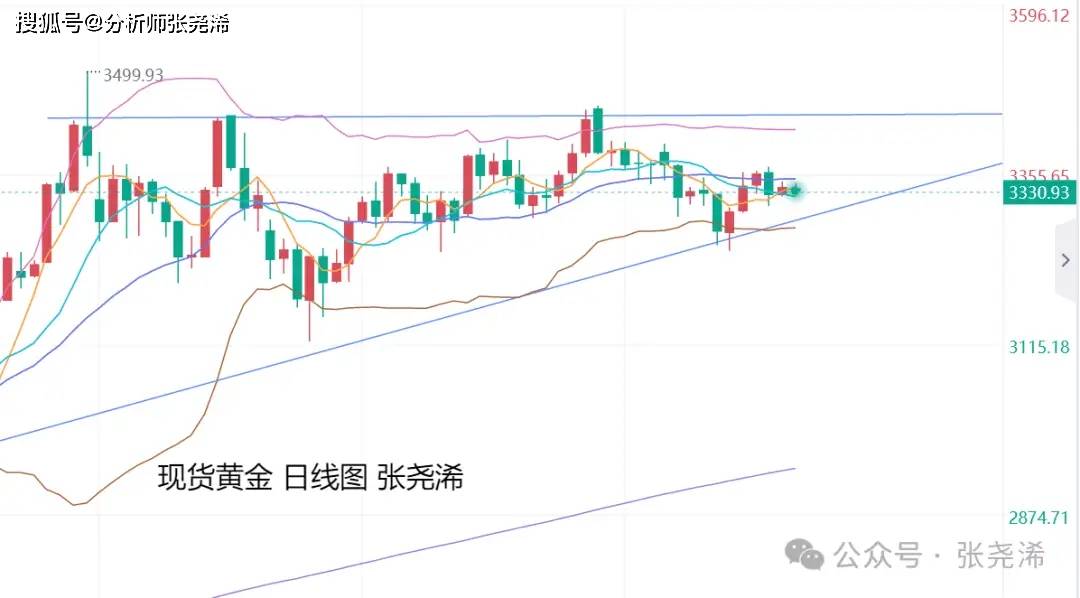
美联储会议纪要即将来袭,按兵不动板上钉钉,预期之下黄金先跌为敬?金十研究员高阳正在直播分析,点击进入直播间
news flash· 2025-06-16 13:07
Group 1 - The Federal Reserve's meeting minutes are anticipated, with expectations of maintaining the current interest rates [1] - There is a suggestion that gold prices may decline in response to the expected decision from the Federal Reserve [1]
分析师:加元走强合乎逻辑 但进一步升值可能受限
news flash· 2025-05-29 12:18
Core Viewpoint - The strengthening of the Canadian dollar is logical following the U.S. federal court's blocking of the Trump administration's comprehensive tariff policy, but further appreciation may be limited [1] Group 1: Economic Factors - The close trade relationship between Canada and the U.S. supports the Canadian dollar due to reduced prospects for cross-border trade disruptions and improved growth expectations in the U.S. [1] - The upcoming release of the Federal Reserve's meeting minutes may lead to a further reduction in market expectations for interest rate cuts, which could suppress the appreciation of the Canadian dollar against the U.S. dollar [1]
ETO Markets 每日汇评:全球市场“地震”!黄金、欧元、镑美集体暴跌
Sou Hu Cai Jing· 2025-05-29 05:28
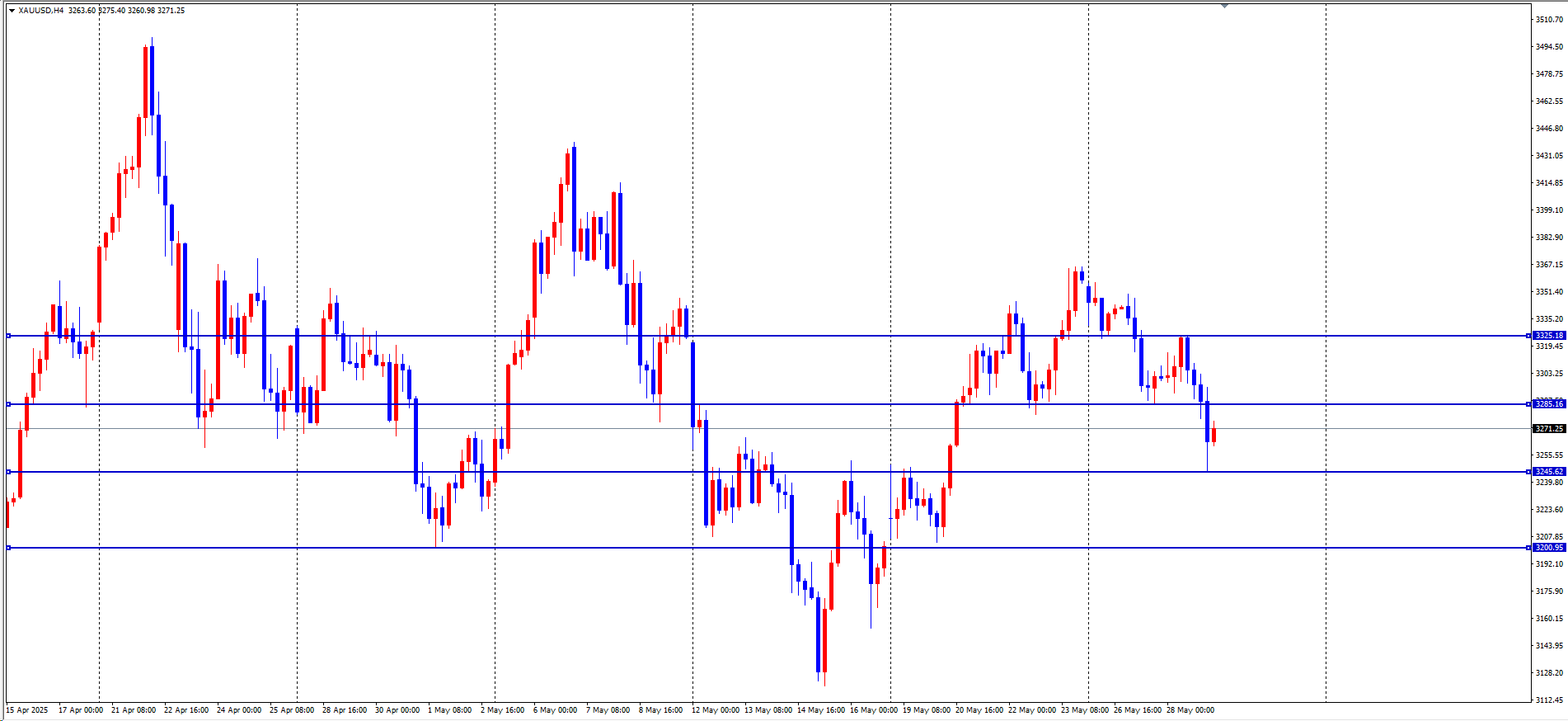
Group 1: Gold Market Analysis - The gold market experienced a pullback near the 61.8% Fibonacci retracement level, leading to a decline but remained above the support level of 3284, resulting in a trading range of approximately 486 points with a long upper shadow on the daily candle [1] - The market sentiment improved due to the U.S. Federal Court ruling on Trump's tariffs, reducing concerns over international trade, which in turn diminished the safe-haven demand for gold as the dollar rebounded [1] - Today's opening saw gold prices drop over $30, reaching a low of approximately 3245, with a technical outlook indicating a primary focus on short positions following a break below the head and shoulders neckline [1] Group 2: Key Levels and Trading Recommendations - Key resistance levels are identified at 3325 and 3285, while support levels are at 3245 and 3200 [3] - The strategy suggests shorting near 3285 with a profit target of 70-100 points and a stop-loss around 3295 [3] Group 3: Euro/USD Market Insights - Eurozone economic data showed weakness, with France's Q1 GDP confirming a slight growth of 0.1% and consumer confidence in April falling below expectations, while Germany saw an unexpected increase in unemployment [6] - European Central Bank officials hinted at potential further rate cuts after the June monetary policy meeting, reinforcing expectations for monetary easing [6] - The EUR/USD pair fluctuated down to around 1.128, with a daily range of approximately 61 points and a candle showing small upper and lower shadows [6] Group 4: Key Levels and Trading Recommendations for Euro/USD - Support levels are at 1.113 and 1.118, while resistance levels are at 1.131 and 1.136 [8] - The recommendation is to enter short positions around 1.126 or 1.125 with a profit target of 30-50 points and a stop-loss at approximately 1.130 [8] Group 5: GBP/USD Market Overview - Reports indicate that long-term UK government bond yields may slightly decline in the coming months due to market expectations that the Bank of England will halt active quantitative tightening from October [11] - The GBP/USD pair traded down to around 1.345, with a daily range of approximately 71 points and a candle showing small upper and lower shadows [11] Group 6: Key Levels and Trading Recommendations for GBP/USD - Key support levels are at 1.332 and 1.336, while resistance levels are at 1.350 and 1.355 [13] - The strategy suggests shorting near 1.346 or 1.345 with a profit target of 30-50 points and a stop-loss around 1.352 [13] Group 7: GBP/JPY Market Dynamics - The GBP/JPY market showed a corrective trend with a slight increase during the U.S. session, reaching resistance at approximately 196.3, before retreating to the 38.2% Fibonacci retracement level [16] - The market remains in a bullish pattern despite the recent pullback [16] Group 8: Key Levels and Trading Recommendations for GBP/JPY - Resistance levels are at 197 and 196.4, while support levels are at 195 and 194.4 [18] - The recommendation is to buy on dips around 195.7 and 195.4 with a profit target of 40-60 points and a stop-loss near 195 [18]
瑞达期货贵金属产业日报-20250528
Rui Da Qi Huo· 2025-05-28 09:04
Report Industry Investment Rating - Not provided Core View of the Report - Due to the continuous improvement in tariff situation expectations, the market's risk aversion sentiment has marginally declined, the US dollar index has strengthened in the short - term, and precious metals in the Shanghai market have continued to correct. The US consumer confidence index in May was significantly higher than expected. The positive progress in tariff negotiations has boosted the short - term strength of the US dollar, putting pressure on the gold price. In the short term, the safe - haven demand for gold may be relatively weakened, and there is a possibility of continued correction. In the medium to long term, the US debt problem may lead to a long - term global trend of de - dollarization, which is structurally beneficial to the gold price. The repeated geopolitical situations in the Middle East and Russia - Ukraine will still boost the safe - haven property of gold. The gold purchase demand of central banks in emerging countries and the continuous net inflow of gold ETFs indicate a stable investment demand for gold. For silver, the improvement in economic expectations provides some support, but it is strongly correlated with the gold price, and it may maintain a volatile pattern recently [2]. Summary According to the Directory Futures Market - The closing price of the Shanghai gold main contract was 772.28 yuan/gram, up 0.68 yuan; the closing price of the Shanghai silver main contract was 8225 yuan/kilogram, up 8 yuan. The main contract positions of Shanghai gold were 199,056 hands, down 5,739 hands; those of Shanghai silver were 350,276 hands, down 14,143 hands. The net positions of the top 20 in the Shanghai gold main contract were 121,281 hands, up 466 hands; those of Shanghai silver were 162,070 hands, up 4,748 hands. The warehouse receipt quantity of gold was 17,247 kilograms, unchanged; that of silver was 1,006,250 kilograms, up 17,930 kilograms [2]. Spot Market - The spot price of gold on the Shanghai Non - ferrous Metals Network was 766.06 yuan/gram, down 10.94 yuan; the spot price of silver was 8211 yuan/kilogram, down 22 yuan. The basis of the Shanghai gold main contract was - 6.22 yuan/gram, down 11.62 yuan; the basis of the Shanghai silver main contract was - 14 yuan/kilogram, down 30 yuan [2]. Supply and Demand Situation - The gold ETF holdings were 922.46 tons, unchanged; the silver ETF holdings were 14,217.5 tons, unchanged. The non - commercial net positions of gold in CFTC were 163,981 contracts, up 2,772 contracts; those of silver in CTFC were 50,042 contracts, up 2,288 contracts. The total supply of gold in the quarter was 1,313.01 tons, up 54.84 tons; the total supply of silver in the year was 987.8 million troy ounces, down 21.4 million troy ounces. The total demand for gold in the quarter was 1,313.01 tons, up 54.83 tons; the global total demand for silver in the year was 1,195 million ounces, down 47.4 million ounces [2]. Option Market - The 20 - day historical volatility of gold was 21.76%, down 0.06%; the 40 - day historical volatility was 27.11%, unchanged. The implied volatility of the at - the - money call option for gold was 27.52%, up 0.03%; the implied volatility of the at - the - money put option was 27.51%, up 0.02% [2]. Industry News - Trump said on social media that he was encouraged by the EU to speed up trade negotiations. The EU is seeking to speed up trade negotiations with the US, focusing on key industries, tariffs, and non - tariff barriers. Hassett said that the tariffs of some countries may be reduced to 10% or lower, and the trade agreement with India is close to completion. Ron DeSantis, the governor of Florida, signed a law recognizing gold and silver as legal tender in the state to protect Floridians from the impact of the US dollar depreciation. The US consumer confidence index in May rose significantly from 85.7 in April to 98, higher than all economists' expectations [2].