能力圈

Search documents
指数牛市狂奔,价值老将为何掉队?
Sou Hu Cai Jing· 2025-09-21 05:25
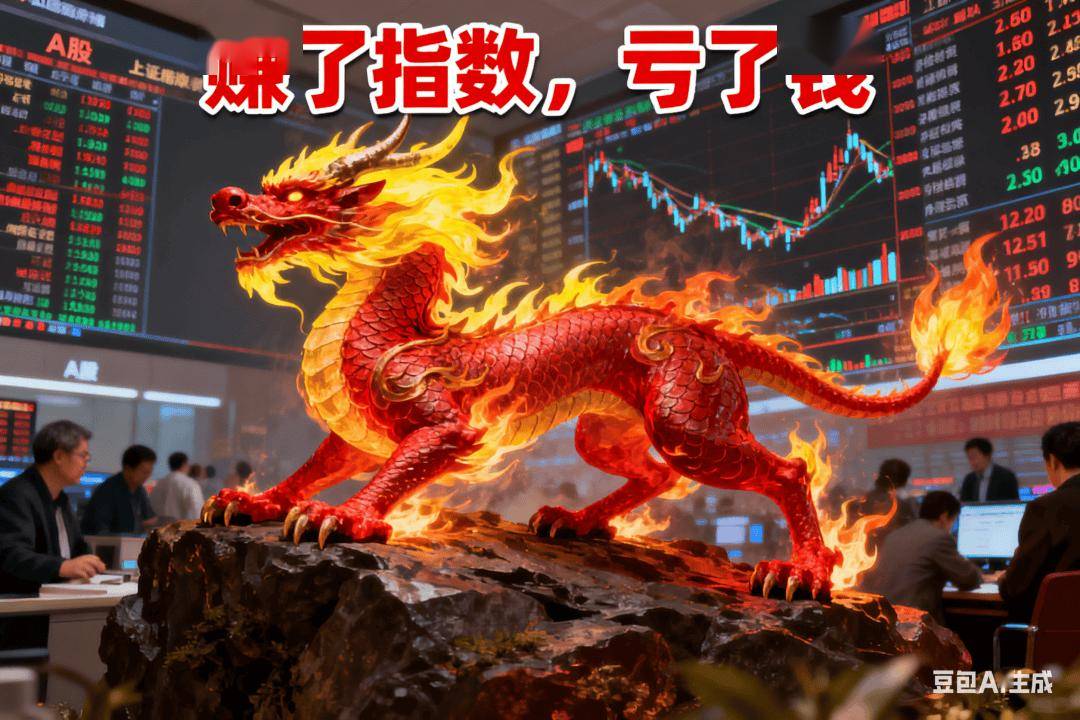
Core Viewpoint - The article discusses the paradox of value investors underperforming during a bull market, highlighting that many investors have lost money despite the overall market index rising significantly [3][7]. Group 1: Market Performance - As of September 18, 2025, the Shanghai Composite Index approached 3900 points, with a cumulative increase of over 15% from previous levels [3][7]. - Over 60% of individual investors experienced losses during this bull market, with an average loss of 28% [7]. - Notably, 13 funds under a prominent institution failed to achieve positive returns, with six funds showing returns below -15% since their inception [4]. Group 2: Fund Performance - Specific funds under the Dongfanghong brand showed particularly poor performance, with the Dongfanghong Qixing Three-Year Holding A fund returning -35.05% since its establishment [5][6]. - Other underperforming funds included Dongfanghong Qirui Three-Year Holding A at -27.48% and Dongfanghong Xinyuan Three-Year Holding A at -20.11% [5][6]. Group 3: Investor Behavior - The article identifies five traps that led to losses for value investors, including chasing speculative trends, neglecting long-term investment principles, and failing to maintain risk awareness [7][8][9]. - Investors often deviated from core value investment principles, leading to poor decision-making during the bull market [7][8]. Group 4: Market Dynamics - The bull market exhibited structural differentiation, with certain stocks and sectors, such as the liquor industry, experiencing declines despite the overall index rising [10]. - Psychological factors, such as greed and fear, significantly influenced investor behavior, leading to poor timing in buying and selling stocks [11][12]. Group 5: Evolving Investment Strategies - Value investors are encouraged to redefine their strategies in light of changing market conditions, focusing on high dividend yield stocks and emerging sectors like AI and biotechnology [13][14]. - The need for continuous adaptation in investment strategies is emphasized, as traditional approaches may no longer be effective in the current market landscape [14][15].

芒格不犯大错的原因:把失败原因排成决策前的检查清单
Sou Hu Cai Jing· 2025-09-19 15:21
Group 1 - Charlie Munger's unique thinking process involves reverse analysis, focusing on understanding failures before seeking success in life and business [4][3] - Munger emphasizes the importance of learning from historical failures across various fields, which aids in making sound decisions and avoiding significant mistakes [4][2] - His approach to knowledge is characterized by originality and a lack of adherence to rigid frameworks, allowing for innovative thinking and problem-solving [6][7] Group 2 - Munger advocates for a rational understanding of complex issues, enabling him to grasp the essence of unfamiliar domains quickly, a trait referred to as the "two-minute effect" by Warren Buffett [13][14] - He believes in the necessity of defining one's circle of competence, ensuring that decisions are made within the boundaries of one's expertise [10][11] - Munger's extensive research into human psychological biases has contributed to the field of behavioral finance, highlighting the impact of these biases on investment decisions [18][15] Group 3 - Munger's practical approach to problem-solving is evident in his broad interests, which span both hard and soft sciences, leading to a unique thought system [17][18] - His commitment to detail and hands-on involvement in projects, such as designing buildings, reflects his belief in the importance of personal engagement in all endeavors [19][20] - Munger's lifestyle choices, such as flying commercial to connect with ordinary people, demonstrate his desire to remain grounded and engaged with the world [27][28] Group 4 - Munger's philosophy emphasizes the significance of internal qualities over timing in achieving success, showcasing his disciplined and respectful nature in personal interactions [21][23] - His generosity and commitment to charitable causes illustrate his understanding of human weaknesses and the importance of giving back to the community [30][31] - The enduring partnership between Munger and Buffett is a testament to their unique qualities, which have led to unprecedented success in investment history [32]
满仓踏空怎么办?
水皮More· 2025-09-13 12:34
Core Viewpoint - The article emphasizes that missing short-term investment opportunities is not a mistake if one focuses on investing in companies with a sustainable competitive advantage and maintains a long-term perspective [5][13][30]. Group 1 - It is normal for a stock with high long-term certainty to not perform as well as others in the short term, which tests the investor's resolve [7][10]. - Switching investment strategies mid-course is discouraged, as it often leads to poor outcomes [11]. - Missing out on short-term gains does not equate to a loss, as staying within one's investment capability is crucial [15][18]. Group 2 - The article references Warren Buffett's strategy of holding cash and waiting for undervalued opportunities, highlighting that even successful investors miss opportunities [22][24]. - A successful investment career can be built on a few correct decisions rather than capturing every market opportunity [25][28]. - Long-term stagnation in a good company's stock price should prompt investors to focus on the company's core competitiveness rather than short-term price fluctuations [30][32]. Group 3 - Patience is essential in investing, as understanding a company's future potential may require a long wait for results [34][36]. - The article suggests that true value investing involves unwavering commitment to a chosen path, which is one of the most challenging aspects of investing [36][37].

查理芒格:反过来想,总是反过来想
首席商业评论· 2025-09-07 04:09
Group 1 - The article highlights the life and investment philosophy of Charlie Munger, emphasizing his journey from a modest background to becoming a prominent investor alongside Warren Buffett [2][3] - Munger's early career included law practice and real estate development, which laid the foundation for his later success in investment [4] - The partnership between Munger and Buffett transformed Berkshire Hathaway from a struggling textile company into a multi-trillion dollar conglomerate, achieving an annualized return of approximately 20% over 45 years [6] Group 2 - Munger's investment philosophy includes the concept of "thinking backward," which focuses on identifying potential failures rather than just successes, leading to a clearer understanding of risks [7] - He emphasizes the importance of knowing one's limitations and only investing in areas where one has expertise, thereby expanding one's circle of competence [7] - Munger advocates for buying great companies at fair prices, as demonstrated by the acquisition of See's Candies, which significantly contributed to Berkshire's cash flow over decades [8] Group 3 - The concept of a "moat" is central to Munger's investment strategy, where he seeks companies with strong competitive advantages that can withstand market pressures over time [9] - Munger employs a multi-disciplinary approach to investing, utilizing various fields of knowledge to avoid narrow thinking and enhance decision-making [10] - He promotes concentrated investing, arguing that good opportunities are rare and should be capitalized on heavily, as evidenced by Berkshire's top holdings consistently representing a large portion of its equity value [11] Group 4 - Munger's lifestyle choices reflect his investment philosophy, emphasizing delayed gratification and disciplined living to maximize long-term benefits [12] - The article concludes with Munger's formula for a remarkable life, which combines backward thinking, a defined circle of competence, a strong moat, and the power of compound interest [13]
价值投资的四个理念,你做到了么?|投资小知识
银行螺丝钉· 2025-09-04 14:11
Group 1 - The core idea emphasizes focusing on companies that can generate profits over the long term, as many stocks may underperform or only occasionally yield profits [2][3]. - The concept of margin of safety is introduced, defined as purchasing an asset worth 1 unit for only 0.6 units [3]. - Various valuation metrics are discussed, including price-to-earnings (P/E) ratio and price-to-book (P/B) ratio, along with absolute valuation methods like discounted cash flow [4]. Group 2 - The article describes the stock market's volatility, likening it to a "Mr. Market" who is erratic and provides daily price quotes, suggesting that investors should not be swayed by short-term fluctuations [7]. - It is advised to establish a personal investment philosophy and understand the intrinsic value of investments to identify undervalued opportunities [7]. - The concept of a "circle of competence" is mentioned, indicating the importance of investing within areas of expertise [8].

X @Yuyue
Yuyue· 2025-08-31 15:13
Investment Strategy & Risk Management - The importance of staying within one's circle of competence to avoid gambling, as highlighted by Charlie Munger and Warren Buffett [1] - Acknowledge success rather than attributing it solely to luck [1] - Reflecting on the losses incurred in the secondary market for contract trading after successes in primary market opportunities like $TRUMP, $WLFI, $XPL, and $PUMP, emphasizing the significance of operating within one's circle of competence [1] Crypto Market Analysis - The potential disappearance of on-chain financial management dividends in the future, leading to concerns about diminishing opportunities for later generations [1] - The current perception of cryptocurrency as mythical by outsiders, suggesting that the cognitive barriers to entry still exist and the crypto dividend is not yet exhausted [1] - Overcoming barriers such as KYC, multiple accounts, and on-chain funds is crucial to capitalize on crypto opportunities before widespread adoption eliminates the "crypto dividend" [1]
X @XQ
XQ· 2025-08-30 19:59
Investment Philosophy - Focus on investing within one's circle of competence to avoid gambling [1] - Learn from historical and real-time cases, especially failures, to avoid repeating mistakes [1] - Emphasize the importance of selecting appropriate role models for learning and imitation [1] Personal Development & Networking - Investing in oneself is the most fundamental investment, regardless of initial capital [3] - AI application skills, programming skills, wealth management skills, emotional intelligence, social skills, reputation, and network are all valuable investments in oneself [3] - Building a strong personal brand can lead to significant opportunities [3] - Cultivating relationships with successful individuals is crucial for learning and growth [1] - Internet facilitates connections with desired role models, enabling learning and emulation [1][3] Risk Management in Crypto Market - Common pitfalls in the crypto market include using leverage, experiencing fund theft, exchange/project failures, and overconfidence leading to poor investment decisions [1]
[8月21日]指数估值数据(想稳健参与市场,买点啥好;红利指数估值表更新;指数日报更新)
银行螺丝钉· 2025-08-21 14:03
Core Viewpoint - The market is experiencing fluctuations, with value styles showing relative strength during these times, indicating potential investment opportunities in value-oriented stocks and funds [3][4][10]. Market Overview - The overall market slightly declined, with the CSI All Share Index down by 0.13% [1]. - Large-cap stocks saw slight gains, while small-cap stocks experienced more significant declines [2]. - The pharmaceutical sector showed overall gains, contrasting with the slight decline in consumer stocks that had previously risen [5][6]. Investment Strategies - In the current market environment, it is advised to maintain a steady position and avoid frequent trading to prevent losses [8][11]. - The recent market behavior resembles the trends observed between 2013 and 2017, suggesting that undervalued stocks across various categories will eventually have their performance phases [9][10]. Value Style Performance - Value styles, including dividend and free cash flow stocks, have seen an increase, although the overall rise has been modest this year [4][18][19]. - The A-share CSI Dividend Index showed a slight decline from the beginning of the year until August 21, while the Hong Kong dividend stocks have seen some gains, albeit limited [20][21]. Fund Performance and Strategies - The "Monthly Salary Treasure" strategy is currently undervalued, with 40% of its portfolio in value-oriented stocks [17]. - The bond portion of the "Monthly Salary Treasure" strategy is focused on medium to short-term bonds, which are currently more favorable compared to long-term bonds that have seen significant declines this year [28][30]. - The strategy includes an automatic rebalancing feature to optimize returns by adjusting the stock and bond allocations based on market movements [28][30]. Valuation Insights - A valuation table for dividend indices has been created for reference, highlighting various metrics such as earnings yield, price-to-earnings ratio, and return on equity [22][41]. - The current valuation of value styles has not improved significantly since the beginning of the year, indicating potential for future appreciation as market conditions evolve [27]. Upcoming Events - A live session is scheduled to discuss historical bull and bear market characteristics and current market stages, providing insights for investors [4].

伯克希尔新进的神秘公司揭晓!股价盘后大涨超10%
Ge Long Hui· 2025-08-15 05:06
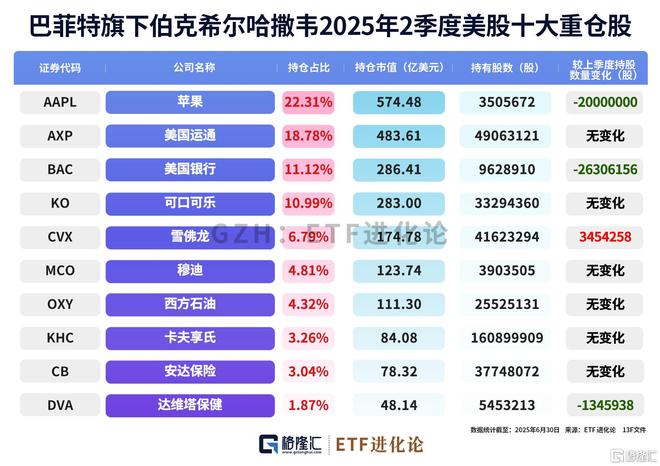
Group 1 - Berkshire Hathaway made a significant investment in UnitedHealth, acquiring 5.039 million shares at a cost of $314 per share, resulting in a market value of $1.57 billion by the end of the quarter, making it the 18th largest holding [1] - UnitedHealth's stock price surged over 10% in after-hours trading following the 13F filing [1] - The company has faced challenges, including a 45% decline in stock price this year and the murder of its CEO, leading to a suspension of annual performance forecasts and an ongoing investigation by the U.S. government [1] Group 2 - As of the end of Q2, Berkshire's U.S. stock holdings reached a market value of $257.5 billion, with the top ten holdings accounting for 87% of the total [2] - The top ten holdings include Apple, American Express, Bank of America, Coca-Cola, Chevron, Moody's, Occidental Petroleum, Kraft Heinz, Chubb, and DaVita [2][3] Group 3 - Berkshire sold approximately $6.92 billion worth of stocks while purchasing only $3.9 billion in Q2, indicating a cautious investment approach [5] - Cash and cash equivalents stood at $344.1 billion, slightly down from $347 billion in the previous quarter, marking the first decline in three years [5] - Warren Buffett emphasized the importance of waiting for the right investment opportunities rather than rushing into potentially poor investments [5] Group 4 - Berkshire's stock investments are highly concentrated, with 70% of the portfolio in five core holdings: Apple, American Express, Bank of America, Coca-Cola, and Chevron [7]