
车网互动(V2G)

Search documents
“智能底座”打破“藩篱” 电力运行新范式应运而生
Xin Hua Cai Jing· 2025-09-26 08:11
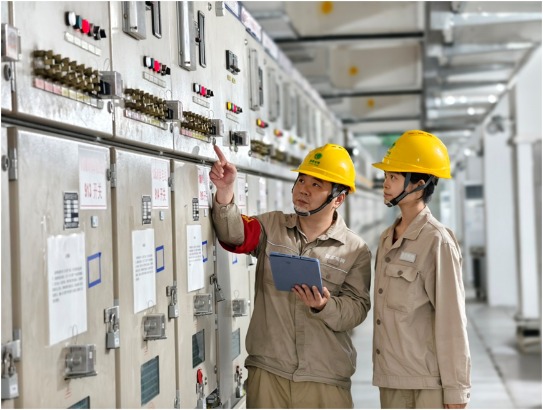
Core Insights - The integration of digital and intelligent technologies in the power industry is breaking traditional barriers and driving efficient collaboration across multiple segments, leading to a new paradigm in power operation [1] Group 1: Enhancing Resilience and Collaboration - The new power system faces significant challenges due to uncertainties on both the supply and demand sides, with digital technologies being key to improving prediction accuracy and system resilience [2] - In Hebei, the State Grid Shijiazhuang Power Supply Company developed a distributed photovoltaic power forecasting platform, achieving a prediction accuracy rate of 97% for power generation planning [2] - The State Grid Henan Electric Power Company optimized its comprehensive renewable energy forecasting model, enhancing the average day-ahead prediction accuracy to 97% and enabling precise load forecasting for the next 10 days [2] - In Sichuan, the State Grid Chengdu Power Supply Company collaborated with the National Supercomputing Center to create an intelligent load forecasting system, achieving a daily average prediction accuracy of 98% [2] Group 2: Innovative Applications of V2G Technology - Shanghai is a pilot city for the large-scale application of Vehicle-to-Grid (V2G) technology, exploring its use in power quality management [3] - The State Grid Shanghai Changxing Power Supply Company implemented a V2G pilot project that successfully addressed low voltage issues in distribution networks by utilizing electric vehicles and mobile charging robots [3] - During peak electricity usage, the project stabilized low voltage levels to around 220V [3] Group 3: Operational Efficiency Improvements - Digital technologies are significantly enhancing operational efficiency in power maintenance, including equipment inspection and fault repair [4] - The State Grid Xinyang Power Supply Company installed a remote intelligent inspection system at a substation, improving inspection accuracy and generating reports autonomously [4] - The State Grid Zhengzhou Power Supply Company launched a virtual command system that automates the management of work orders, increasing the automation rate of service commands to over 70% [4] - The State Grid Chengdu Power Supply Company developed an intelligent operation ticket generation system, reducing the time to create operation tickets from 30 minutes to 3 minutes with a 99.5% accuracy rate [4] Group 4: Project Management Optimization - Digital technologies are also optimizing project management, as demonstrated by the Southern Power Grid's use of drones and laser radar for three-dimensional modeling of power line inspections, reducing inspection time from two days to four hours [7][8]

为什么蔚来换电联盟车企现在没有声音了?
3 6 Ke· 2025-08-27 13:21
Core Viewpoint - NIO's recent success with the launch of the Lido L90 and the new ES8 has overshadowed the struggles of the "NIO Battery Swap Alliance," which has not produced any mass-market battery swap vehicles despite initial enthusiasm [1][4]. Group 1: Alliance Development and Challenges - The NIO Battery Swap Alliance initially included major automakers like Changan, Geely, and Chery, but by mid-2025, no other member had launched a battery swap vehicle [4][5]. - NIO claims to have built over 3,460 battery swap stations and completed over 80 million swap services, but 83% of these services are for non-NIO brands, indicating a lack of participation from alliance members [4][6]. - Automakers are hesitant to fully commit to battery swapping due to concerns over battery standardization and control over battery specifications [6][10]. Group 2: Strategic and Financial Concerns - NIO has invested 18 billion yuan in battery swapping, with each station costing around 5 million yuan, but the average service frequency is only 35 times per day, below the 60 times needed for breakeven [13][15]. - The cost of adapting vehicles for battery swapping is significant, with an estimated additional cost of 12 billion yuan for a production run of 100,000 vehicles [15][16]. - Consumer preferences are shifting, with 68% of potential customers prioritizing battery upgrade possibilities over charging efficiency, complicating NIO's battery-as-a-service (BAAS) model [16][20]. Group 3: Competitive Landscape and Alternatives - CATL has introduced standardized batteries that do not require a unified vehicle platform, attracting brands like Dongfeng and SAIC to its battery swap model [22][23]. - The rapid advancement of fast-charging technology is leading automakers to prefer self-controlled charging solutions over battery swapping, as evidenced by investments from companies like Li Auto and Xpeng [22][23]. - NIO is pivoting towards becoming an energy service provider, integrating battery swap stations with grid systems to generate additional revenue [23][25]. Group 4: Future Implications and Industry Dynamics - The silence from alliance members reflects a broader struggle for energy sovereignty within the electric vehicle industry, as automakers recognize the long-term value of energy networks beyond vehicle sales [29][32]. - The potential for financial instruments, such as asset securitization of battery rental income, could provide a pathway for resolving collaboration issues within the alliance [32][34]. - The evolution of the NIO Battery Swap Alliance may represent the beginning of a more complex narrative in the energy supply standardization process, driven by technology, capital, and consumer behavior [34][35].


中国石油在粤最大容量规模光储超充场站建成
Xin Lang Cai Jing· 2025-08-20 05:24
Core Viewpoint - China National Petroleum Corporation (CNPC) has established a solar energy storage and ultra-fast charging demonstration station in Shenzhen, marking a significant step in the development of renewable energy infrastructure in China [1] Group 1: Project Details - The solar installation at the demonstration station has a peak capacity of 243 kilowatts [1] - The expected annual electricity generation is approximately 219,000 kilowatt-hours [1] - The station features 90 intelligent charging parking spaces and a liquid-cooled ultra-fast charging output of 600 kilowatts [1] Group 2: Technological Significance - The facility is equipped with a 430 kilowatt-hour energy storage system, making it suitable for various types of new energy vehicles [1] - It is the largest capacity solar energy storage and ultra-fast charging station established by CNPC in Guangdong [1] - The station is one of the first pilot demonstration sites for vehicle-to-grid (V2G) interaction [1]

充换电技术迭代升级 新能源汽车“补能”难题加速破解
Zheng Quan Ri Bao· 2025-08-11 08:43
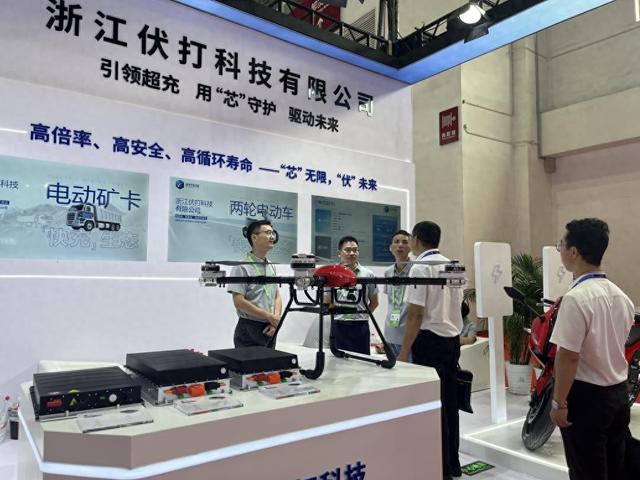
Core Insights - The electric vehicle (EV) market is expanding rapidly, leading to accelerated development in the charging and swapping industry, with a focus on innovative technologies and efficient service ecosystems [1] Group 1: Industry Trends - The second Beijing International Charging and Swapping Exhibition showcased over 100 innovative products, attracting thousands of attendees [1] - High-power charging solutions such as liquid-cooled ultra-fast charging and AI charging robots are gaining traction, with companies emphasizing their high efficiency [2] - The government is supporting the construction of high-power charging facilities, aiming for over 100,000 units by the end of 2027 [2] Group 2: Technological Advancements - The rapid growth of high-voltage fast-charging platforms is evident, with major automakers launching multiple 800V platform models [3] - Vehicle-to-grid (V2G) technology is emerging, allowing electric vehicles to participate in energy management and grid support, potentially recovering battery costs for consumers [3] Group 3: Market Opportunities - The development of charging technology is opening new avenues for the electrification of heavy-duty vehicles, with expectations that commercial vehicle charging station penetration will reach 40% by 2025 [4] - There are significant opportunities in niche markets such as residential and park charging, as well as energy operations, despite competitive public charging networks [4][5] Group 4: Future Outlook - Companies are focusing on creating a sustainable energy ecosystem through market-oriented electricity sales, virtual power plant trading, and comprehensive energy services [5] - The introduction of charging robots is seen as a key direction for industry development, enhancing user experience through automation [5] - The industry faces challenges in achieving profitability and improving user experience while advancing technology and policy support [5]
计划投资超23亿!汉象环能加码郑州航空港汽车城
Sou Hu Cai Jing· 2025-08-06 12:18
Group 1 - Hanxiang Environmental Energy recently established a wholly-owned subsidiary in Zhengzhou Airport Economic Comprehensive Experimental Zone, marking a significant step in attracting high-quality foreign investment and advancing green low-carbon industries in the region [1][4][10] - The new subsidiary, Zhengzhou Qingyun Zhenqing Energy Storage Co., Ltd., has a registered capital of 13 million Singapore dollars (approximately 70 million RMB) and focuses on green smart energy and ecological environment project investments [6][4] - The project aims to invest approximately 2.35 billion RMB, covering around 100 acres, primarily serving the automotive parts manufacturing and logistics enterprises in Zhengzhou Airport [7][9] Group 2 - The core of the project involves constructing large-scale energy storage facilities, including lithium iron phosphate battery storage systems and all-vanadium flow battery storage systems, enhancing grid flexibility and stability [9] - The project will also establish a dedicated charging network with 150 heavy-duty truck charging stations that support vehicle-to-grid (V2G) technology, aiming for large-scale application breakthroughs in the heavy-duty truck sector [9] - Upon completion, the project is expected to generate an annual revenue of 690 million RMB and contribute 70 million RMB in taxes, significantly reducing energy costs for local enterprises and increasing their compliance with green electricity usage [9][12] Group 3 - Zhengzhou Airport is actively optimizing its business environment and developing strategic emerging industries, evidenced by the establishment of Hanxiang Environmental Energy's project [10][12] - The local government is providing tailored support for the project, including policy consultation and resource coordination, to ensure the successful establishment and retention of foreign enterprises [12][13] - The project is anticipated to bring considerable investment, tax revenue, and job opportunities to the region, while also contributing to the green low-carbon transformation and industrial upgrading in Henan Province [13][10] Group 4 - Zhengzhou Airport has become a favored investment destination for foreign capital, with Hanxiang Environmental Energy's investment providing new momentum for the automotive city’s development [10][15] - The region has seen a rapid increase in the electric vehicle industry, with over twenty automotive industry chain enterprises established by early 2025, covering various sectors such as battery production and automotive components [15][17] - The local government is committed to fostering a competitive environment for the new energy vehicle industry, aiming to create a trillion-level industrial cluster [17]

给电动车二次生命,宝马、本田、福特联手搞事情
汽车商业评论· 2025-07-24 16:31
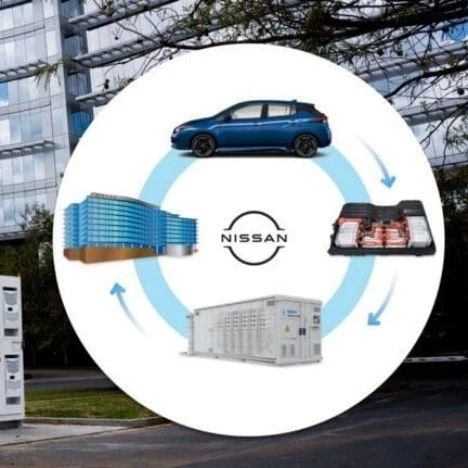
Core Viewpoint - The article discusses the growing importance of Vehicle-to-Grid (V2G) technology in enhancing the efficiency of electric vehicles (EVs) and promoting sustainable energy development, highlighting ChargeScape's collaboration with PSEG Long Island as a significant step in this direction [2][4][5]. Group 1: ChargeScape and V2G Technology - ChargeScape, a startup formed by BMW, Honda, Ford, and Nissan, is at the forefront of integrating EVs into the energy grid through V2G technology [2][4]. - The collaboration with PSEG Long Island marks the first time EVs are included in the utility's demand response program, aiming to intelligently manage the charging behavior of over 6,000 EV owners during peak electricity demand [4][7]. - The AI-driven platform by ChargeScape will optimize charging times and intensity, alleviating grid pressure while providing economic incentives to participants [5][7]. Group 2: Benefits and Challenges of V2G - V2G technology can dynamically adjust EV charging to prevent grid overload, thus enhancing grid stability and efficiency [5][8]. - Concerns about battery degradation due to V2G usage are being addressed, with studies indicating that controlled charging can actually prolong battery life [8]. - The potential for reusing retired EV batteries in energy management is highlighted, as these batteries can support the grid during peak demand periods [10][12]. Group 3: Global Implementation and Regulatory Environment - Utrecht has launched the first large-scale V2G car-sharing service in Europe, demonstrating the need for collaboration among automakers, charging infrastructure providers, energy companies, and local governments for successful V2G implementation [15][16]. - Renault has initiated V2G practices in France, emphasizing the need for unified regulations in Europe to unlock the full potential of V2G technology [17]. - In China, while the rapid adoption of EVs is noted, the implementation of V2G technology faces challenges due to differences in market conditions and regulatory environments compared to the US and Europe [18][19].


【链博会智造观察】新能源技术突围新赛道,行业看好哪些方向?
Huan Qiu Wang Zi Xun· 2025-07-23 11:38
Core Insights - The market for new energy passenger vehicles in China has surpassed traditional fuel vehicles for the first time, indicating a fundamental shift in market dynamics [1] - By June 2025, the retail penetration rate of new energy passenger vehicles is expected to reach 53.3%, an increase of 4.8 percentage points year-on-year [1] - The industry is focusing on improving charging efficiency and battery performance due to rapid market expansion [1] Group 1: Battery Technology Developments - The global lithium battery industry is focusing on three main technological breakthroughs: increasing energy density, enhancing rate performance, and partially replacing lithium with sodium-ion batteries [2] - Solid-state batteries are seen as a key path for increasing energy density, with energy densities exceeding 400-500 Wh/kg and cycle life over 1000 times [2] - However, mass production of solid-state batteries remains a challenge due to issues like low yield rates and manufacturing difficulties [2][4] Group 2: Performance and Safety Concerns - The industry faces challenges such as lithium price volatility and supply chain risks due to reliance on imported nickel and cobalt [4] - There is a conflict between fast charging and battery lifespan, as high-rate charging can lead to lithium plating and thermal runaway risks [4] - A focus on high-rate, high-safety, and long-lifespan lithium batteries is being emphasized, with advancements in nano-coating technology and non-graphite anode materials [4][5] Group 3: Battery Swapping vs. Charging - The battery swapping model is gaining traction as a centralized energy supply method, offering faster service compared to distributed charging [6] - Battery swapping stations can also function as energy storage stations, contributing to grid stability by discharging stored energy during peak demand [8] - Standardization of batteries poses a significant challenge for the widespread adoption of battery swapping, requiring compatibility across different brands and models [8][9] Group 4: Future Prospects - The future of the battery swapping model may be enhanced by advancements in automation and autonomous driving technologies, leading to improved operational efficiency [9] - The integration of big data analytics and intelligent scheduling systems is expected to optimize battery circulation and maximize resource utilization [9]
7万度起步 放电量最大 深圳跑出车网互动国家试点“加速度”
Shen Zhen Shang Bao· 2025-06-27 21:04
Core Insights - Shenzhen has officially surpassed a total discharge volume of 70,000 kWh in the first demonstration of the 2025 Vehicle-to-Grid (V2G) interactive large-scale reverse discharge activity, marking it as the city with the largest single round discharge volume among national pilot cities [1] - The demonstration activity, which started on June 23, involved 84 charging stations and over 2,500 vehicles, creating a comprehensive "mobile energy storage cluster" [1] - V2G technology allows electric vehicles to act as "mobile energy stations," facilitating energy interaction with the grid and playing a crucial role in regulating power supply and demand [1] Summary by Sections Vehicle-to-Grid Interaction - The V2G technology enables electric vehicles to interact with the grid for energy and information exchange, evolving them from mere transportation tools to key players in energy management [1] - Shenzhen is one of the first cities in China to implement large-scale V2G applications, having established a robust charging infrastructure with over 1,055 supercharging stations and more than 420,000 charging piles [1] Participation and Impact - The demonstration attracted over 25 automotive brands and 40 vehicle models, ranging from private cars to heavy-duty trucks, showcasing the vast potential for energy regulation [2] - Specific examples include electric heavy trucks discharging up to 300 kWh per unit and electric buses collectively providing a stable discharge of 3,000 kWh daily across multiple stations [2] Application Scenarios - Shenzhen is accelerating the development of ten pioneering application scenarios, including urban villages, energy storage stations, battery swap stations, and government facilities, to enhance the city's energy capabilities [2]
宁德时代强势加码 换电赛道迎新变局
Zheng Quan Shi Bao· 2025-05-26 18:06
Core Viewpoint - The entry of CATL into the battery swapping market has significantly energized the sector, leading to strategic partnerships and a clearer business model for battery swapping services [2][3][5]. Group 1: Strategic Partnerships and Market Dynamics - CATL has formed strategic partnerships with major players like NIO and Sinopec to develop a comprehensive battery swapping service network, aiming to build at least 500 swapping stations by 2025, with a long-term goal of 10,000 stations [3][5]. - The company has launched 10 new battery swapping models in collaboration with several automakers, indicating a strong push into the consumer market beyond just commercial vehicles [4][5]. - The market sentiment towards battery swapping has shifted positively, with automakers now actively seeking partnerships, reflecting a growing acceptance of the model [3][5]. Group 2: Policy and Market Support - The Chinese government has been supportive of battery swapping, with policies encouraging its development since 2020, including the establishment of national standards and tax incentives for battery swapping vehicles [6][7]. - The battery swapping model is gaining traction among consumers, with over 80% of new users at NIO opting for battery-as-a-service (BaaS) and battery swapping options [7][8]. Group 3: Industry Challenges and Standardization - Despite the positive developments, the battery swapping industry faces challenges such as high initial investment costs and a lack of standardization across different vehicle brands, which hinders scalability [5][9]. - CATL is working to address these challenges by introducing standardized battery sizes and collaborating with NIO to unify industry standards, which could enhance the feasibility of battery swapping [9][10]. Group 4: Future Outlook and Innovations - The battery swapping model is expected to evolve, with predictions that it will penetrate lower-tier vehicle markets, making it accessible to a broader consumer base [7][8]. - The upcoming implementation of new battery safety standards is anticipated to drive more automakers towards adopting battery swapping, as it allows them to mitigate risks associated with battery development [7][8]. Group 5: Financial Services and Market Expansion - The financial services related to battery swapping are still developing, with current insurance models not fully accommodating the battery-as-a-service approach, which could limit cost advantages for consumers [11][12]. - CATL is exploring battery insurance options to reduce costs for consumers, indicating a proactive approach to enhancing the overall battery swapping ecosystem [12].

上海电力开展大规模车网互动全链路集中测试
Zhong Guo Dian Li Bao· 2025-04-11 01:51
Core Insights - The first large-scale V2G (Vehicle-to-Grid) testing in China is being conducted in Shanghai, involving multiple stakeholders including the State Grid Shanghai Electric Power Company and various automotive and charging pile companies [1][2] - The National Development and Reform Commission and the National Energy Administration have announced the first batch of pilot cities and projects for V2G applications, with Shanghai being one of the selected cities [1] Group 1 - The V2G technology allows electric vehicles to charge during low electricity demand and supply power back to the grid during peak demand [1] - Shanghai aims to establish 30,000 to 50,000 smart charging and discharging piles by 2030 as part of its new energy storage development plan [1] Group 2 - The testing framework includes a comprehensive verification system focusing on vehicle-pile compatibility, charging pile grid connection performance, and battery discharge safety [2] - The testing involves 19 vehicle models from 10 automotive companies and 13 V2G charging piles from 9 charging pile companies, covering electric passenger cars, buses, and heavy trucks [2] - The results of the testing will provide critical data for the development of V2G technology standards and its industrial promotion, with a report to be released detailing the tested vehicles and charging piles [2]
