
韧性

Search documents
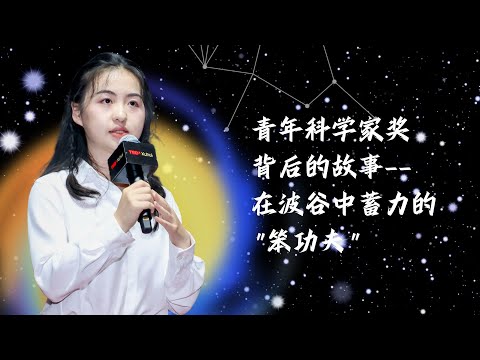
青年科学家奖背后的故事——在波谷中蓄力的“笨功夫” | 邱月淇 | TEDxXuhui Youth
TEDx Talks· 2025-09-17 15:29
Technological Innovation - The healthcare industry highlights the development of "portable MRI" technology, enabling faster diagnosis of stroke [1] - The medical imaging field emphasizes overcoming technical challenges in stroke imaging distortion through portable MRI technology [1] - The research sector acknowledges the promotion of portable MRI stroke imaging technology to primary care levels [1] Research & Development - The scientific community recognizes the dedication of researchers who spend hundreds of days and nights overcoming failures [1] - The academic field emphasizes that true breakthroughs stem from perseverance during challenging times [1] - The global science community acknowledges Qiu Yueqi as the first Chinese researcher to receive the "Young Scientist Translational Award" at the International Society for Magnetic Resonance in Medicine [1] Impact & Vision - The medical technology sector aims to make advanced medical imaging accessible to more people [1] - The healthcare industry showcases the power of Chinese youth in scientific research [1]

巨头Baillie Gifford旗舰基金掌舵人最新分享:如何辨识有韧性的公司及创始人
聪明投资者· 2025-09-15 07:04
Core Viewpoint - The article emphasizes that in an era of uncertainty, only resilient companies that can survive challenges will ultimately succeed [10][6]. Group 1: Investment Strategy - Scottish Mortgage Trust (SMT) manages approximately £15.1 billion (about $19.3 billion) in assets, with around 25% allocated to private companies [5]. - SMT's portfolio includes leading global companies such as MercadoLibre, Amazon, Meta, Pinduoduo, and TSMC, as well as innovative private firms like SpaceX and ByteDance [6]. - Despite facing challenges like rising interest rates and geopolitical uncertainties, SMT has maintained an annualized return of about 12% over the past decade [6]. Group 2: Resilience in Companies - Tom Slater highlights that true long-term winners are not those that appear risk-free but those that demonstrate resilience and adaptability during crises [7]. - Companies like Netflix, which have shown the ability to adapt and innovate, exemplify the characteristics of resilient firms [8]. - Resilience is defined as having the ability to "create climate," allowing companies to thrive even in challenging environments [28]. Group 3: Financial Characteristics of Resilient Companies - Key financial traits of resilient companies include manageable debt levels, sufficient gross margins to absorb sales fluctuations, and consistent cash flow generation [24]. - The article discusses Shopify as an example of a company that has transitioned to a model where it retains about 20% of revenue after covering operational costs, enhancing its flexibility [26]. - Meta and Cloudflare are also cited as examples of companies that have improved their operational efficiency and profitability, positioning them favorably in the market [27]. Group 4: Future Trends and Predictions - The article stresses the importance of focusing on predictable trends, such as advancements in artificial intelligence, cheaper electric vehicle batteries, and stronger cloud computing capabilities [34]. - Companies that align with these long-term themes and demonstrate resilience are more likely to survive and prosper in an uncertain future [34].

2025天下女人国际论坛在京举办
Xin Jing Bao· 2025-09-01 13:31
Group 1 - The "2025 Global Women's Forum" was held in Beijing, focusing on the theme "Resilience: Creating the Future" and aimed to establish a comprehensive platform for women's brand experiences [1][3] - The forum featured over twenty influential leaders and international guests discussing women's resilience in the context of global changes, technological innovation, and social transformation [1][3][4] Group 2 - Yang Lan emphasized the importance of resilience in facing uncertainties, highlighting women's unique traits such as empathy and communication skills, which are increasingly valuable in the AI era [3][9] - The "Wutong Growth Model" was introduced by the "Global Women's Research Institute," integrating theories of women's development and lifelong learning to support women's growth and social participation [3] Group 3 - The forum included discussions on the role of women in various industries, with speakers sharing personal stories of resilience and the impact of women's leadership in driving change [4][6] - The concept of psychological resilience was explored, with speakers illustrating how individuals can transform challenges into growth opportunities [7][8]
柔韧之力、创见未来 2025天下女人国际论坛圆满收官
Huan Qiu Wang· 2025-09-01 07:01
Core Insights - The "2025 Global Women's Forum" held in Beijing focuses on the theme "Resilience Power, Creating the Future," aiming to establish a comprehensive platform for women's brand experiences in China [2][5] - The forum features three main themes, four sub-forums, and over twenty influential speakers discussing women's resilience in the context of global changes, technological innovations, and social transformations [2][5] Group 1: Key Themes and Discussions - The core topic of the forum is how women can leverage resilience to face challenges and create future opportunities amidst significant global changes [5] - Yang Lan emphasizes that resilience is crucial for coping with uncertainties, highlighting women's unique traits such as empathy and communication skills, which are increasingly valuable in the AI era [7][11] - The "Wutong Growth Model" introduced by the "Global Women's Research Institute" integrates theories of women's development and lifelong learning, providing a comprehensive growth path for women [7][11] Group 2: Notable Speakers and Their Contributions - Yang Liu shares stories of outstanding women in the culinary industry, illustrating how their resilience has allowed them to become key players in their fields [9] - Gabrielle Saint-Genis discusses the importance of resilience in business, sharing key principles for navigating change and maintaining brand value [11] - Wang Shi highlights the impact of women's strength and resilience in achieving significant challenges, asserting that women's influence extends beyond just half of society [13] Group 3: Economic and Innovation Insights - Guan Qingyou analyzes the economic transformation and business opportunities in the context of global supply chain rebalancing, stressing the need for resilience in the current economic environment [17] - Wang Shutong discusses the opportunities for female entrepreneurs in the evolving landscape of globalization and community-based economies [15] - Han Ying emphasizes the unique value women bring to their careers, linking resilience to the ability to innovate and adapt in their fields [19] Group 4: Psychological Resilience and Personal Growth - Various speakers, including Wei Wei and Ni Xiaolian, share personal stories of overcoming challenges, emphasizing the importance of psychological resilience in personal and professional growth [25][27] - Zhang Xichao discusses the significance of self-awareness in developing resilience and happiness, highlighting its role in navigating life's challenges [31] - Liu Genghong and Wang Wanfei illustrate how maintaining personal rhythm and passion contributes to psychological resilience [33] Group 5: Awards and Recognition - The "2025 Women's Creativity Awards" ceremony honors female leaders who have demonstrated exceptional creativity in their respective fields, showcasing the achievements of women across various industries [37]

卫河在邯郸(遗产小道·运河上的中国)
Ren Min Ri Bao Hai Wai Ban· 2025-08-10 22:54
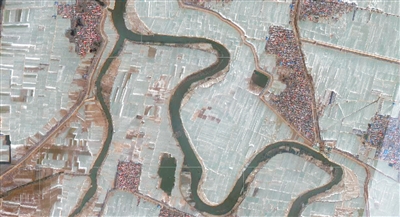
Core Points - The article discusses the historical and cultural significance of the Grand Canal in China, particularly focusing on the confluence of the Zhanghe and Wei rivers, and their roles in shaping the region's ecology and civilization [7][11][12] - It highlights the ongoing challenges and transformations faced by the waterways, emphasizing the need for sustainable management and preservation of these cultural heritages [21][22][25] Group 1: Historical Context - The Zhanghe River has been historically significant, with records dating back to 213 AD when Cao Cao connected it to the Grand Canal [2][11] - The article notes the impact of natural disasters, such as floods, on the rivers and the surrounding areas, which have shaped the local culture and economy [4][11] Group 2: Cultural Heritage - The Grand Canal is recognized as a UNESCO World Heritage site, celebrating its role as a "civilization artery" over three millennia [7][8] - The article emphasizes the importance of understanding the cultural and historical narratives associated with the waterways, which contribute to the region's identity [12][25] Group 3: Environmental and Economic Aspects - The rivers serve as vital resources for irrigation, transportation, and ecological balance, reflecting the interconnectedness of natural and human systems [11][22] - The article discusses the economic implications of the waterways, including agricultural practices and local culinary traditions influenced by the river's geography [11][19] Group 4: Future Directions - There is a call for enhanced recognition and preservation efforts for the lesser-known segments of the Grand Canal, particularly the Wei River section, which is currently underrepresented [8][12] - The article suggests that a deeper understanding of the rivers' historical and cultural significance can lead to better management strategies and community engagement in heritage conservation [25][26]
选材宝典!70张超高清图材料各项性能对比
材料汇· 2025-08-03 15:39
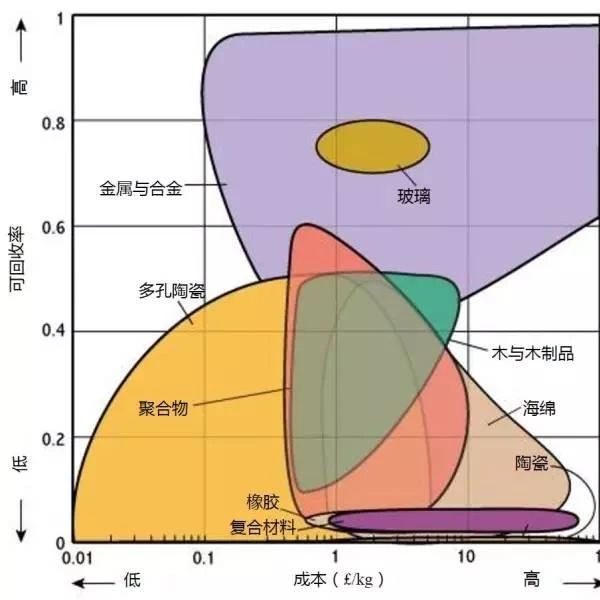
Core Viewpoint - The article provides a comprehensive guide on material selection based on various mechanical properties such as Young's modulus, strength, and cost, emphasizing the importance of choosing the right materials for specific applications. Group 1: Young's Modulus and Density - When hard materials are needed, such as for top beams or bicycle frames, materials at the top of the chart should be selected [2] - For low-density materials, such as packaging foam, materials on the left side of the chart are recommended [2] - Finding materials that are both rigid and lightweight is challenging, and composite materials are often a good choice [3] Group 2: Young's Modulus and Cost - For hard materials, the top materials in the chart should be chosen for applications like top beams and bicycle frames [14] - For low-cost materials, those on the left side of the chart are preferred [14] - If a cheap and hard material is required, materials in the upper left corner of the chart, mostly metals and ceramics, should be selected [15] Group 3: Strength and Density - The strength indicated in the chart refers to tensile strength, with ceramics showing compressive strength [26] - High-strength and low-density materials are located in the upper left part of the graph [26] - Strength is a critical indicator of a part's ability to resist failure under load [26] Group 4: Strength and Cost - The strength indicated is tensile strength, except for ceramics which indicate compressive strength [38] - Many applications require materials with high strength, such as screwdrivers and seat belts, but these materials are often expensive [38] - Only a few materials can meet both strength and cost requirements, typically found in the upper left part of the chart [38] Group 5: Strength and Toughness - The strength indicated is tensile strength, while ceramics indicate compressive strength [50] - Typically, materials with poor toughness also have low strength; increasing strength may reduce toughness [50] - Strength measures a material's ability to resist external forces, while toughness measures its ability to absorb energy before failure [50] Group 6: Strength and Elongation at Break - Ceramics have very low elongation at break (<1%); metals have moderate elongation (1-50%); thermoplastics have high elongation (>100%) [61] - Rubber exhibits long-term elastic elongation, while thermosetting polymers have low elongation (<5%) [61] Group 7: Strength and Maximum Working Temperature - The chart applies to components used in environments where working temperatures exceed room temperature, such as cookware and automotive parts [73] - Polymers have lower maximum working temperatures, metals have medium, and ceramics can withstand very high temperatures [73] Group 8: Specific Strength and Specific Stiffness - Specific strength is defined as strength divided by material density, while specific stiffness is stiffness divided by material density [84] - High strength and high stiffness usually coexist, as they largely depend on the bonding forces between atoms [84] Group 9: Resistivity and Cost - The chart is primarily for selecting materials that require low prices and good electrical insulation or conductivity [97] - Good electrical conductors are typically good thermal conductors, while good electrical insulators are good thermal insulators [97] Group 10: Recyclability and Cost - The chart identifies materials' recyclability features, especially for expensive and recyclable materials [108] - Metals are particularly suitable for recycling due to ease of sorting and remelting, while ceramics are rarely recycled [108] Group 11: Production Energy Consumption and Cost - The energy consumed in producing a material is a factor in raw material costs, with most materials located in the low-cost/low-energy or high-cost/high-energy quadrants [121] - Metals often require significant energy for extraction, such as aluminum production consuming a substantial portion of total energy in the U.S. [123]
悟规律 明方向 学方法 增智慧丨走出一条中国特色城市现代化新路子
Zhong Yang Ji Wei Guo Jia Jian Wei Wang Zhan· 2025-07-29 00:28
Core Viewpoint - The recent Central Urban Work Conference emphasizes the construction of modern urban cities with six key aspects: innovation, livability, beauty, resilience, civilization, and intelligence, aiming to align urban development with national goals [7][8][12]. Group 1: Urban Development Goals - The conference highlights the transition of urbanization from rapid growth to stable development, focusing on quality improvement rather than mere expansion [12]. - The six aspects of modern urban cities are designed to meet the aspirations of the people for a better life, making urban development goals more comprehensive and aligned with high-quality development requirements [8][9]. Group 2: Innovation as a Key Driver - Innovation is identified as the primary driver for urban development, essential for transitioning from extensive growth to quality enhancement [17][18]. - The importance of innovation is underscored by the need for cities to adapt to new technological revolutions and industrial transformations, positioning themselves as centers for economic and social development [18][19]. Group 3: Specific Urban Development Strategies - The conference proposes a systematic transformation in urban development, emphasizing five key shifts: from extensive to intensive development, from quantity to quality, from uniformity to uniqueness, from construction to governance, and from fragmentation to coordination [12][13][16]. - Each city is encouraged to develop its unique innovation ecosystem based on its resources and characteristics, avoiding a one-size-fits-all approach [20][21]. Group 4: Role of Different Cities - Different cities are to be positioned according to their unique resources and industrial bases, with specific strategies for innovation and development tailored to their strengths [21]. - The national strategy includes supporting major cities like Beijing and Shanghai as international innovation centers while fostering regional innovation hubs in other areas [21].

新格局 新增长-2025中国企业数字化转型指数报告
Sou Hu Cai Jing· 2025-07-26 01:32
Group 1 - The core message of the report emphasizes that innovation and resilience are the key capabilities for Chinese enterprises to achieve counter-cyclical growth in the context of a restructured global business landscape [6][8][10] - The 2025 Accenture China Enterprise Digital Transformation Index score has risen to 49, marking a steady increase over three consecutive years, indicating that enterprises are entering a critical phase of transformation [10][44][47] - The report identifies three major trends in enterprise transformation: a commitment to innovation and globalization, the strategic integration of AI, and the upgrading of resilience to combat vulnerabilities [10][14][48] Group 2 - To achieve new growth in the new landscape, enterprises must focus on four key tasks: leveraging innovation for breakthroughs, integrating AI into global strategies, building an AI-driven digital core, and reshaping talent and organizations [2][16][20] - The report showcases case studies from companies like Leading Intelligent, Nestlé China, and Midea, highlighting their experiences in digital transformation, innovation, AI application, and organizational change [2][62] - The report notes that 2025 is a pivotal year for the Chinese economy and enterprises, with significant shifts in global trade and economic order, as well as advancements in AI technology redefining competitive dynamics [10][30][31]

城市发展,如何更加以人为本?
Yang Shi Xin Wen Ke Hu Duan· 2025-07-17 01:38
Core Insights - The central urban work conference held in Beijing emphasized the goal of building modern, innovative, livable, beautiful, resilient, civilized, and smart cities, marking a shift from rapid urbanization to stable development [1] Group 1: Urban Development Transition - China's urbanization is transitioning from a phase of rapid growth to stable development, focusing on improving existing urban spaces rather than expanding them [1] - The conference highlighted the need for new ideas and methods to address the challenges faced by over 900 million urban residents in the context of urban space optimization and quality enhancement [1][3] Group 2: Urban Safety Initiatives - Urban safety is identified as a fundamental aspect of city development, necessitating simultaneous efforts in both above-ground and underground infrastructure [2] - There is a need for significant updates and renovations of aging underground pipelines and improved emergency response systems to address urban disasters [2] Group 3: Urban Renewal Focus - The renewed emphasis on urban renewal is seen as a critical strategy for enhancing urban quality and efficiency, moving beyond just the renovation of old neighborhoods to include optimizing urban spatial structures and promoting green, low-carbon development [3] Group 4: Public Service Improvement - The conference underscored the importance of expanding public services to non-resident populations, addressing the disparity in service availability between urban and rural areas [4][5] - There is a call for more diverse and accessible public service facilities, particularly in the context of an aging population, to support community-based elder care [4][5] Group 5: Shift in Development Philosophy - A significant shift in development philosophy is required, moving from a focus on construction to governance and management, emphasizing the importance of people in urban development [7] - The conference advocates for a people-centered approach, recognizing that urban development should prioritize the needs and contributions of its residents [7]

城市如何让生活更美好
Guohai Securities· 2025-07-16 08:05
Investment Insights - In 2024, China's urban population is projected to reach 940 million, with an urbanization rate of 67%[2] - The focus of urban development is shifting from large-scale expansion to improving existing stock, emphasizing quality and efficiency[2] Definition of a Good City - A "good city" in China is defined by its ability to be innovative, livable, beautiful, resilient, civilized, and smart, as highlighted in recent government meetings[3] Innovation and Economic Growth - As of January 2025, China has 463,000 high-tech enterprises, with 169,000 in the industrial sector, contributing significantly to global R&D efforts[4] - R&D expenditure as a percentage of GDP is nearing 2.7%, surpassing the EU average and approaching OECD levels[4] Livability and Quality of Life - The average housing area per urban resident exceeded 40 square meters by the end of 2023, with over 68 million affordable housing units built since the 18th National Congress[6] - Approximately 150 million rural migrants have settled in cities since 2014, enhancing urban public service coverage[6] Environmental Sustainability - PM2.5 concentration in major cities dropped by 51% from 2015 to 2025, with an average of 24.5 µg/m³ recorded by May 2025[7] - The proportion of good water quality in surface water reached 90.4% in 2024, with a target to eliminate urban black and odorous water bodies by 2025[7] Urban Resilience - By 2024, approximately 100,000 kilometers of urban pipelines have been upgraded to enhance disaster resilience and safety[8] - A total investment of over 1 trillion yuan is planned for the construction of 3,000 "dual-use" facilities in major cities[9] Cultural Heritage and Historical Preservation - The protection of historical buildings and cultural heritage is prioritized, with a focus on preserving urban historical context and preventing large-scale demolitions[10][14] Smart City Development - By May 2025, China has built 4.486 million 5G base stations, with 207 cities achieving gigabit internet status, enhancing urban connectivity[11] - The integration of data governance and smart applications is crucial for improving urban management and public services[11] Housing and Community Development - In 2024, 74,000 dilapidated houses are set for renovation, with 1,863 urban village projects benefiting 1.367 million households[18] - The initiative to build "good houses" focuses on safety, comfort, and sustainability, with new standards implemented from May 2024[19]