高端化战略

Search documents
中金:维持TCL电子跑赢行业评级 上调目标价至14.7港元
Zhi Tong Cai Jing· 2026-01-21 01:28
中金发布研报称,维持TCL电子(01070)2025/2026年盈利预测不变,引入2027年归母净利润32.35亿港 元。当前股价对应9.9x/8.5x2026/2027年P/E。维持跑赢行业评级,考虑跨年估值切换,该行上调目标价 24.6%至14.7港元,对应13.4x/11.5x2025/2026年P/E,涨幅空间35%。 坚定全球化、高端化战略方向,核心业务持续有质量增长 尽管市场环境波动,TCL依然坚持高端化、大尺寸方向,拉动内销盈利持续改善。4Q25TCL系彩电线 上、线下零售均价分别同比+23%/+3%,明显好于行业。该行预计4Q25公司内销彩电出货量在结构升级 拉动下盈利压力相对有限。根据群智咨询预测,2025年全球TV出货量2.21亿台,同比-0.7%;但TCL TV 出货量达3041万台,同比+5.4%,排名第二。公司在北美持续推进渠道转型、产品结构升级,在欧洲积 极拓展渠道覆盖率,拉动海外业务逆势增长。 中金主要观点如下: 预测2025年盈利同比增长45%~60% 公司公告:1)2025年TCL电子经调整归母净利润23.3亿港元~25.7亿港元,同比增长45%~60%,盈利区间 的中枢超过 ...
中金:维持TCL电子(01070)跑赢行业评级 上调目标价至14.7港元
智通财经网· 2026-01-21 01:28
智通财经APP获悉,中金发布研报称,维持TCL电子(01070)2025/2026年盈利预测不变,引入2027年归 母净利润32.35亿港元。当前股价对应9.9x/8.5x 2026/2027年P/E。维持跑赢行业评级,考虑跨年估值切 换,该行上调目标价24.6%至14.7港元,对应13.4x/11.5x 2025/2026年P/E,涨幅空间35%。 预测2025年盈利同比增长45%~60% 公司公告:1)2025年TCL电子经调整归母净利润23.3亿港元~25.7亿港元,同比增长45%~60%,盈利区间 的中枢超过股权激励目标(23.28亿港元)。2)公司与索尼正在洽谈意向合作,包括可能与索尼成立合资公 司以承接其家庭娱乐业务。 坚定全球化、高端化战略方向,核心业务持续有质量增长 尽管市场环境波动,TCL依然坚持高端化、大尺寸方向,拉动内销盈利持续改善。4Q25 TCL系彩电线 上、线下零售均价分别同比+23%/+3%,明显好于行业。该行预计4Q25公司内销彩电出货量在结构升级 拉动下盈利压力相对有限。根据群智咨询预测,2025年全球TV出货量2.21亿台,同比-0.7%;但TCL TV 出货量达3041万 ...
研报掘金丨国海证券:维持比亚迪“买入”评级,高端化+新车型蓄势待发
Ge Long Hui· 2026-01-19 06:08
Core Viewpoint - BYD's overseas export performance is strong, with a focus on high-end models and new vehicle launches, indicating a positive growth trajectory for the company in the coming years [1] Sales Performance - In December 2025, the company is projected to sell 420,000 vehicles, representing a year-on-year decrease of 18.3% - Cumulative sales from January to December 2025 are expected to reach 4.6024 million vehicles, showing a year-on-year increase of 7.73% [1] High-End Strategy - The models Fangchengbao and Tengshi have shown significant month-on-month growth, with an increase in the proportion of high-end brands - The Ti7 is anticipated to become a blockbuster in the home SUV market in 2025, marking a significant breakthrough in BYD's high-end strategy [1] Overseas Market Growth - The overseas business is identified as a crucial growth engine for BYD, with expectations for continued high growth in sales in the overseas market in 2026 - The company aims to leverage its scale advantages to enhance component procurement capabilities, thereby improving price competitiveness and solidifying its global market position [1] Revenue Forecast - Based on the latest sales data, the revenue forecasts for 2025 to 2027 have been adjusted to 854.9 billion, 995.9 billion, and 1,111.7 billion yuan, with year-on-year growth rates of 10%, 16%, and 12% respectively - The forecast considers a new product cycle in 2026 and continued high growth in overseas markets [1]


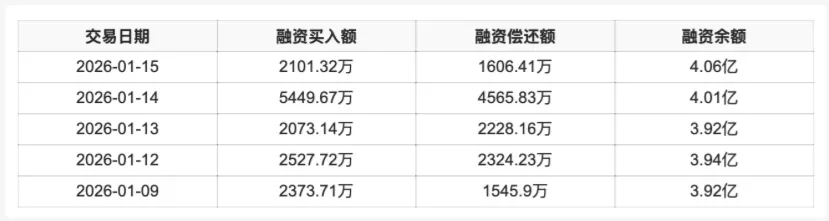
爱玛科技1月15日获融资买入2101.32万元
Cai Jing Wang· 2026-01-17 13:30
Core Viewpoint - Aima Technology is experiencing a mixed performance with ongoing challenges in international expansion and increased competition in the electric two-wheeler market, while also undergoing internal adjustments such as layoffs in certain departments [3][9][10]. Financing and Market Activity - On January 15, Aima Technology's stock rose by 0.33% with a trading volume of 152 million yuan. The financing data shows a net buying amount of 4.9491 million yuan for that day [1][2]. - As of January 15, the total financing and margin trading balance for Aima Technology reached 409 million yuan [2]. Business Operations and Layoffs - Aima Technology has confirmed that it is not undergoing significant layoffs exceeding 50%, but is optimizing its workforce to align with business needs. Departments affected include the international division and the high-end brand "Zero" [3][9]. - The company’s international business has not shown significant growth, with revenue from international operations remaining around 1% of total revenue from 2022 to 2024 [3][10]. Financial Performance - For the first half of 2025, Aima reported revenue of 13.031 billion yuan, a year-on-year increase of 23.04%, and a net profit of 1.212 billion yuan, up 26.14% [9][10]. - However, Aima's growth is lagging behind competitors like Yadea and Ninebot, which reported higher revenue and profit growth rates during the same period [9][10]. Market Competition - Aima faces intense competition from leading brands like Yadea and emerging players in the electric two-wheeler market. The company’s revenue heavily relies on electric two-wheeler sales, which account for over 95% of total revenue [10][11]. - The introduction of new national standards for electric bicycles is expected to increase production costs and potentially suppress market demand, further intensifying competition [11][14]. Product Development - Aima launched its high-end electric motorcycle brand "Zero" in July 2025, with plans to release its first model in the first quarter of 2026 [4][5][7]. - The "Zero" brand aims to create a new growth trajectory for Aima, although it faces stiff competition in the high-end market segment [7][9].


李宁捧着“火柴棍” 想学安踏“飞上天”
阿尔法工场研究院· 2026-01-15 06:18
Core Viewpoint - The article discusses the strategic significance of the Swedish outdoor brand Haglöfs, referred to as "火柴棍" (matchstick), for Li Ning's multi-brand operation capabilities in the high-end outdoor market [3][5]. Group 1: Company Overview - Haglöfs has opened its first VASA concept store in Shanghai, marking its 21st store in mainland China, and is a flagship project under a joint venture between Li Ning's family-controlled company and Ryan Capital [4][5]. - Li Ning Group reported a revenue of 14.817 billion yuan for the first half of 2025, a year-on-year increase of 3.3%, with a market capitalization of approximately 44.2 billion yuan and a price-to-sales ratio of about 1.5 times [5]. - In comparison, Anta Group achieved a revenue of 38.544 billion yuan, a 14.3% year-on-year increase, with a market capitalization of around 200.6 billion yuan and a price-to-sales ratio of 2.6 times [5]. Group 2: Market Positioning - The outdoor market is characterized by clear segmentation, with high-end brands like Arc'teryx and Patagonia dominating consumer perception, while domestic brands like KAILAS are also making strides [9][10]. - Haglöfs needs to establish its positioning in a crowded market, where it faces challenges in brand recognition and competition from both international and domestic brands [10][23]. Group 3: Market Trends - The outdoor sports participation in China has surpassed 400 million, indicating a shift from niche to mass consumption, with significant growth in the ice and snow industry and climbing market [24][25][26]. - The online sales growth of sports and outdoor apparel has consistently outpaced the overall apparel market, highlighting a favorable trend for these segments [27]. Group 4: Strategic Challenges - Haglöfs faces challenges in brand recognition, as it is perceived as a second-tier brand internationally, which may hinder its market penetration in China [23]. - Li Ning's multi-brand strategy has shown mixed results, with the performance of acquired brands like Clarks and Bossini under scrutiny, raising questions about the operational capabilities of Li Ning in managing diverse brands [35][39]. Group 5: Future Outlook - The success of Haglöfs is crucial for Li Ning's high-end strategy, as it could enhance Li Ning's competitive position against Anta in the multi-brand landscape [45]. - However, the future of Haglöfs in the Chinese market remains uncertain due to challenges in brand recognition, intense competition, and the operational effectiveness of its parent company [45].


比亚迪再出手,中国车市又新增一个汽车品牌;鸿蒙智行尚界Z7轿跑曝光丨汽车交通日报
创业邦· 2026-01-11 10:56
Group 1 - BYD has launched a new automotive brand called Linghui, which includes four new models: three pure electric sedans (Linghui e5, e7, e9) and one plug-in hybrid MPV (Linghui M9) [2] - The Linghui brand aims to cater to the B2B market for bulk purchases, differentiating it from BYD's consumer-oriented models, and is part of BYD's strategy to enhance its high-end offerings [2] - The new models are based on existing BYD platforms, including adaptations of the Dynasty and Ocean series vehicles [2] Group 2 - The Beijing-Tianjin-Hebei region is leading the nation in new energy vehicle production, with a projected total output of 2.85 million vehicles in 2024, marking an 11.8% year-on-year increase [3] - New energy vehicle production in the region is expected to reach 676,000 units, a significant 154% increase year-on-year, establishing the region as a national leader in this sector [3] - The automotive industry in the region is projected to generate over 840 billion yuan in output value, demonstrating strong growth and significant demonstration effects [3] Group 3 - The average retail price of passenger cars has risen from 151,000 yuan in 2019 to 183,000 yuan in 2023, with a slight expected decrease to 182,000 yuan in 2025 [4] - The average price of new energy vehicles is projected to decline from 184,000 yuan in 2023 to 161,000 yuan in 2025, indicating a structural change in consumer preferences [4] - The upcoming expiration of tax exemptions for new energy vehicles is expected to create pressure for modifications in certain short-range and high-energy consumption models [4]

realme重回OPPO“襁褓”,陈明永不再执着高端化
3 6 Ke· 2026-01-08 13:13
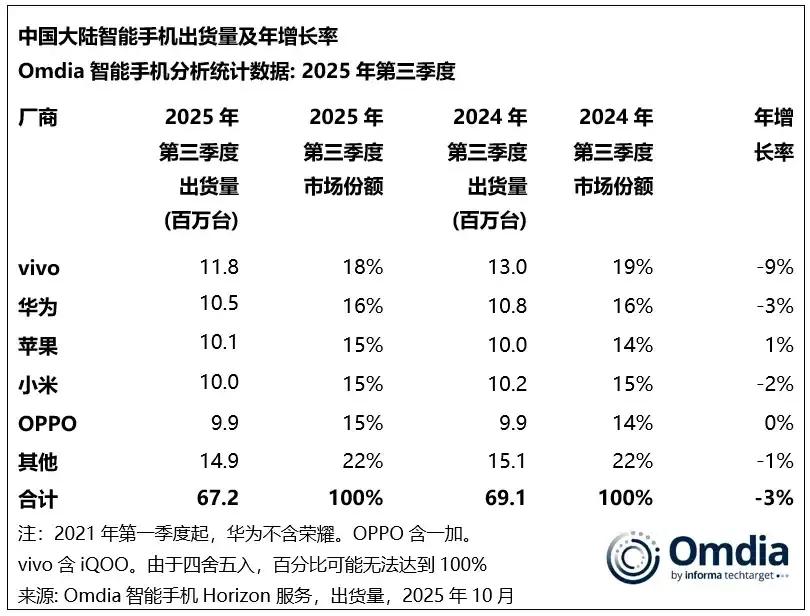
Core Viewpoint - OPPO is shifting its strategy from aggressive high-end market expansion to consolidation and cost reduction, as evidenced by the return of its sub-brand realme under its umbrella [1][2][12]. Group 1: Market Performance - OPPO's global shipment volume in Q1 2025 was approximately 23.5 million units, with a market share of 7.7%, ranking fifth [3]. - By Q3 2025, OPPO's shipment volume in mainland China dropped to 9.9 million units, also ranking fifth [4]. - The company faced significant challenges in maintaining its market position, with a notable decline in performance compared to competitors [3][4]. Group 2: Strategic Shift - OPPO's high-end strategy, initiated in 2020, aimed to elevate its brand through significant investments in technology and product development, including self-developed chips and premium devices [5][11]. - The company has recognized the unsustainable nature of its high-end focus, leading to a strategic pivot towards more practical market survival and share acquisition [10][12]. - The return of realme is seen as a critical move to enhance overall sales and consolidate resources, allowing OPPO to leverage its strengths in the mid-range and budget segments [12][13]. Group 3: Organizational Changes - Significant personnel changes occurred in late 2025, indicating a fundamental shift in OPPO's strategic direction, with key executives reassigned to focus on overseas markets rather than high-end domestic competition [8][10]. - The restructuring reflects OPPO's need to adapt to external pressures and prioritize market share over high-end aspirations [9][10]. - The integration of realme into OPPO's brand matrix aims to streamline operations and enhance competitiveness against rivals like Xiaomi and Honor [12][14].
赛力斯破局之道:长期主义锚定高端 双轮驱动穿越行业周期
Quan Jing Wang· 2026-01-08 06:53
Core Insights - The Chinese electric vehicle (EV) market in 2025 is experiencing a contradiction between "scale expansion and profit pressure," with ongoing price wars and accelerated淘汰赛 leading to clearer industry differentiation [1] - Seres has successfully listed on the Hong Kong Stock Exchange, becoming the first luxury EV company in China to achieve "A+H" dual listing, signaling a new phase of capital internationalization and strong market value recognition [1][4] - Despite industry-wide pressures, Seres has maintained profitability and growth, showcasing a unique competitive advantage rooted in a "long-termism" strategy [1][7] Industry Overview - In 2025, EV sales in China reached 12.466 million units, accounting for 50.3% of total vehicle sales, marking a significant shift as EVs surpassed traditional fuel vehicles [1] - The focus of competition has shifted from "quantity expansion" to "quality competition," indicating a transition to high-quality development in the industry [1] Financial Performance - The average gross margin for automotive companies in the first three quarters of 2025 was approximately 19.99%, with a slight year-on-year decline, contrasting with Seres' strong performance of a net profit of 5.312 billion yuan and a gross margin of 29.95% in Q3 [2] - Seres achieved sales of 472,269 EVs in 2025, with a record monthly sales of 60,981 units in December, representing a year-on-year growth of 63.40% [2] Strategic Positioning - Seres has opted for a high-end strategy, focusing on the mid-to-high-end market with flagship models like the Wanjie M5, M7, M8, and M9, which have collectively delivered over 970,000 units [3] - The company’s strategy has led to a virtuous cycle of simultaneous sales and profit growth, validating its approach [3] Capital Market Engagement - Seres raised 14.016 billion HKD in its IPO, the largest for a Chinese car company to date, with 70% of the funds allocated for R&D and product capability enhancement [4] - The company’s inclusion in the CSI A100 index reflects its growing influence in the A-share market, potentially attracting more long-term investment [4][5] Institutional Confidence - Over 40 brokerage firms have issued reports rating Seres as "buy" or "overweight," indicating strong institutional confidence in its growth potential [6] - Analysts project a 25x PE for A-shares and 20x PE for H-shares in 2026, with target prices of 195.80 yuan and 171.76 HKD respectively [6] Innovation and Competitive Advantage - Seres maintains high R&D investment, with 5.198 billion yuan spent in the first half of 2025, a 154.9% increase year-on-year, leading to significant technological advancements [8] - The collaboration with Huawei has strengthened Seres' competitive edge, creating a differentiated barrier in the market [8] Long-term Strategy - Seres exemplifies long-termism by focusing on high-end EVs and consistent R&D investment, providing a strategic reference for sustainable growth in technology-intensive industries [9] - The company's approach highlights the importance of innovation and value creation in navigating industry cycles and achieving lasting success [9]


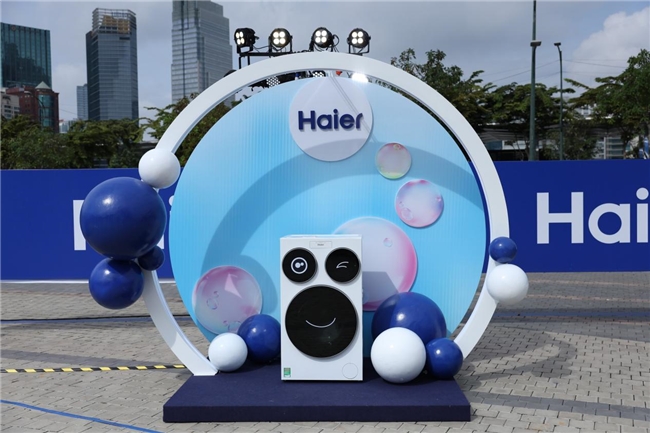
海尔三筒洗衣机越南热卖,夯实高端第一地位
Jin Tou Wang· 2026-01-06 08:26
Core Insights - Haier's three-tub washing machine has quickly gained popularity in the Vietnamese market since its launch in October, achieving a market share increase from 0% to 13% in the high-end price segment above 2000 VND, reflecting strong user satisfaction and market performance [1][3] Group 1: Product Features and Advantages - The washing machine features a unique "12kg large tub + dual 1kg small tubs" design, filling a gap in the local market and providing effective health and cleanliness benefits, which has garnered positive feedback from users [3] - The product's design allows for separate washing of adult and children's clothes, addressing the needs of young middle-class families who prioritize quality of life and hygiene [3] - The machine includes advanced sterilization technologies such as UV sterilization and 95°C high-temperature washing, catering to the humid climate of Vietnam and enhancing its appeal to consumers [5] Group 2: Market Position and Strategy - Haier and AQUA brands hold the top position in Vietnam's high-end washing machine market, and the successful launch of the three-tub washing machine further solidifies Haier's leadership in this segment [5] - The product's success is attributed to Haier's commitment to globalization and high-end strategies, as well as its ability to accurately identify high-end user needs [5] - The washing machine has also been introduced in other Southeast Asian countries like Malaysia and Thailand, as well as in European markets such as Italy and France, receiving enthusiastic responses, with plans for further expansion into Africa and South Asia [5]

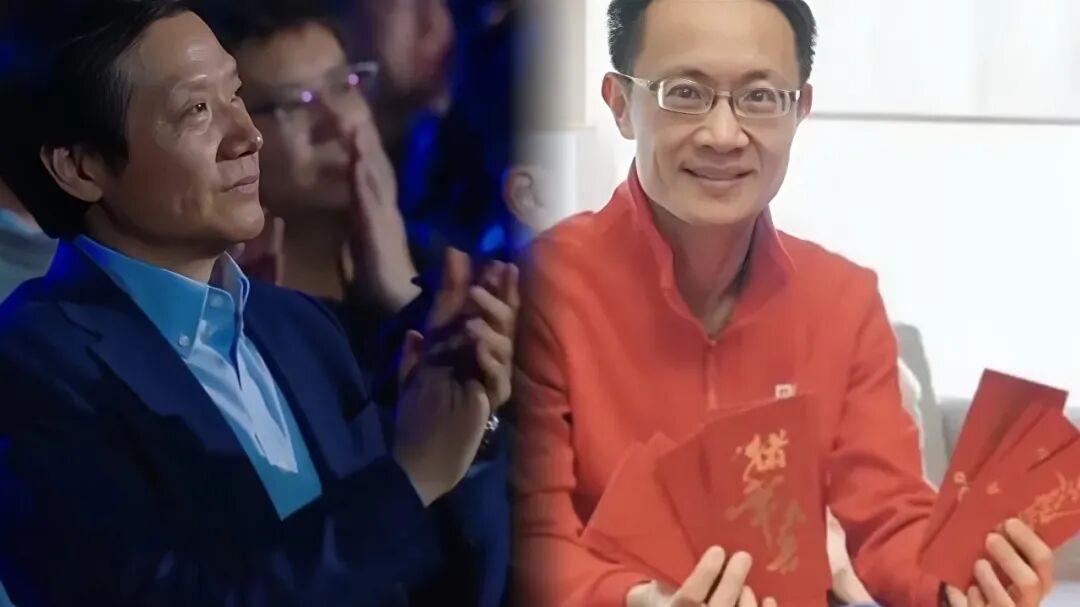
小米二把手要套现百亿走人,雷军懵了
Xin Lang Cai Jing· 2025-12-30 11:04
Group 1 - Lin Bin, co-founder and vice chairman of Xiaomi, plans to cash out $2 billion (approximately 14 billion yuan) worth of Xiaomi shares starting December 2026, with a maximum of $500 million per year [3][36] - The proceeds from the share sale are intended to establish an investment fund focusing on emerging technologies and sports industries, indicating Lin Bin's confidence in Xiaomi's future [5][36] - Lin Bin currently holds 2.155 billion shares of Xiaomi, representing 8.31% of the total shares, making him the second-largest shareholder [5][37] Group 2 - Xiaomi's latest financial report shows total revenue of 113.1 billion yuan for the third quarter, marking a 22.3% year-on-year increase, with adjusted net profit soaring by 80.9% [21][56] - The revenue from Xiaomi's smart electric vehicles and AI innovation businesses reached 29 billion yuan, with over 100,000 new cars delivered in the quarter, achieving profitability for the first time [26][61] - Xiaomi's smartphone business remains a major revenue contributor, with Q3 revenue of 46 billion yuan and a global smartphone shipment of 43.3 million units, continuing a nine-quarter growth trend [26][61] Group 3 - Xiaomi's IoT and lifestyle products generated 27.6 billion yuan in revenue, reflecting a 5.6% year-on-year growth, with the AIoT platform connecting 1.04 billion devices [31][66] - The company has launched the Xiaomi 17 Ultra smartphone series, continuing its strategy to penetrate the high-end market, with prices starting at 6,999 yuan [31][68] - Xiaomi's global active user base has reached 742 million, with over 15,000 hardware partners and a developer community of 1.2 million [33][68]