多模态大模型

Search documents
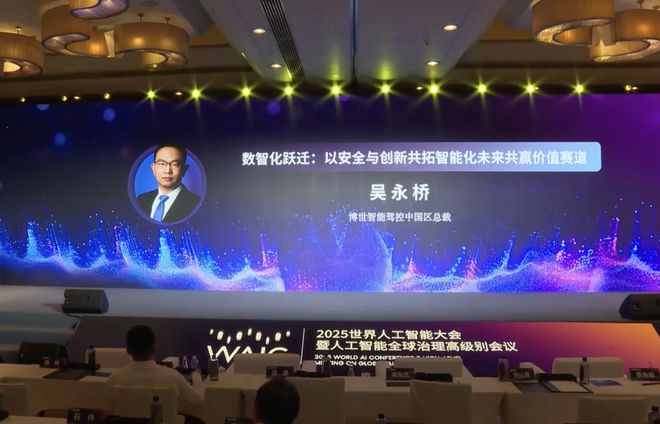
VLA上限更高,为何博世坚持“一段式端到端”,力赞特斯拉?
Guan Cha Zhe Wang· 2025-07-28 09:35
Core Insights - Bosch's President of Intelligent Driving in China, Wu Yongqiao, emphasized the shift in the relationship between Bosch and China, stating that "in the past, China needed Bosch, now Bosch needs China" [12] Group 1: Future of Intelligent Driving Technology - The future development of intelligent driving technology is focused on two main paths: Vision-Language-Action (VLA) and end-to-end models [3] - VLA is a multi-modal large model that integrates vision, language, and action decision-making, capable of understanding complex traffic scenarios and commands [3][4] - The end-to-end model simplifies the traditional modular architecture of autonomous driving into a single neural network that directly outputs driving commands from sensor data [3] Group 2: Challenges of VLA Implementation - Wu highlighted that while VLA is a promising direction, its implementation faces significant challenges, including difficulties in multi-modal feature alignment and data acquisition [6] - The requirement for large models (7B or 10B parameters) poses high demands on chip capabilities, which current intelligent driving chips cannot support [6][4] - Wu believes that it may take 3 to 5 years for chips capable of running large models to become available, making the deployment of VLA models currently impractical [6] Group 3: Bosch's Strategic Focus - Bosch is committed to refining the end-to-end model to achieve performance comparable to Tesla's Full Self-Driving (FSD) system, aiming for a highly human-like driving experience [9] - Wu acknowledged that while Huawei's ADS is also using an end-to-end architecture, it currently lags behind Tesla in data and computing power [9] Group 4: Future of Intelligent Driving as Standard Equipment - Wu predicts that intelligent driving will become standard equipment in vehicles, similar to seat belts and airbags, with differentiation shifting to the vehicle's cabin [12] - He noted that as intelligent driving becomes less of a differentiator, manufacturers will focus on creating unique cabin experiences to attract customers [12][14] Group 5: Bosch's Investment in Intelligent Mobility - Bosch is increasing its investment in intelligent mobility in China, with the intelligent mobility division becoming the largest business segment for Bosch in the country [12] - The sales revenue for Bosch's intelligent mobility group in China is projected to grow by 4% in 2024, reaching 116.6 billion RMB [12] - Wu stated that 65% of Bosch's new business in China over the next five years will be related to intelligent and electrification solutions [12]


2025年AI驱动下通信云行业的全球化变革
艾瑞咨询· 2025-07-28 09:04
Core Insights - The global internet communication cloud market is projected to reach approximately $6.8 billion in 2024, with expectations of a new growth cycle in the next 2-3 years driven by AI applications [1][7] - AI and communication are mutually empowering, leading to a transformation of communication infrastructure into immersive AI interaction platforms [4][40] Market Overview - The global internet communication cloud market is expected to grow to $6.8 billion in 2024, with a slowdown in growth due to the maturity of AI application scenarios and macroeconomic challenges [7][11] - The current penetration rate of AI in the cloud communication market is around 15%, with potential for growth in new application scenarios such as AI companionship and customer service [7][36] Technological Focus - Developers are increasingly demanding security, intelligence, and openness in communication cloud services, driven by regulatory requirements and the need for data privacy [2][14] - The evolution of communication cloud services is shifting from basic information transmission to AI interaction hubs, focusing on scenario-based empowerment and data value extraction [2][24] Development Trends - The integration of GenAI is driving the convergence of text, voice, and video interactions, prompting communication cloud providers to enhance transmission effectiveness for new use cases [3][43] - Future competition will center around "multimodal large models × scenario-based services," reshaping human-computer interaction paradigms [3][40] Domestic Market Characteristics - The Chinese internet application market is entering a phase of refined operations, with enterprises focusing on enhancing product competitiveness through stable and reliable communication services [11][36] - Despite the exploration of potential blockbuster AI applications, the market remains dominated by "model as application" approaches without significant breakthroughs [11][36] International Market Characteristics - Global demand for communication cloud services is converging on security, intelligence, and openness, influenced by regional policy environments and user behaviors [14][19] - In mature markets like Europe and North America, data privacy and compliance are top priorities, while emerging markets focus on localized adaptations and innovative scenarios [14][19] Security Upgrades - Over 82% of countries are establishing or enhancing data privacy regulations, making compliance a cornerstone for global market entry [17][19] - The demand for self-controlled communication platforms is rising due to geopolitical tensions, necessitating a focus on data security and compliance with local laws [19][22] Smart Upgrades - Communication cloud providers are concentrating on core communication capabilities while integrating third-party AI models to meet customer demands for generative AI capabilities [24][26] - The transition from auxiliary tools to immersive human-computer interaction is underway, with a focus on low-accuracy, low-real-time value scenarios for initial breakthroughs [26][29] Open Upgrades - The openness of communication cloud platforms is reflected in product and ecosystem dimensions, enabling developers to customize functionalities and enhance efficiency [29][33] - As businesses globalize, cross-platform compatibility will become a critical consideration for developers, necessitating stable communication functions across various devices and systems [29][36] Industry Trends - The integration of large models and security technologies is becoming a key focus for communication cloud providers, enhancing their capabilities in a competitive landscape [33][40] - The future of communication cloud services will involve leveraging multimodal large models and wearable hardware to create new interaction paradigms and maximize data value [43][45]

“AI六小虎”战局升级:阶跃星辰冲刺10亿元营收,大模型进入商业化比拼时代|聚焦2025WAIC
Hua Xia Shi Bao· 2025-07-28 04:19
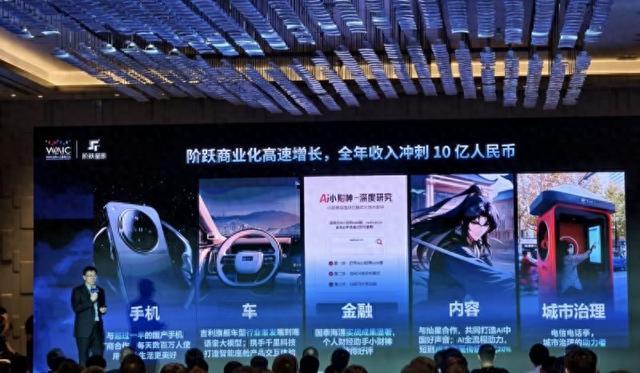
Core Viewpoint - The company aims to achieve an annual revenue target of 1 billion yuan, the highest among the "AI Six Tigers" so far, despite not yet reaching profitability [2][3]. Group 1: Revenue and Business Model - The company has signed contracts worth several hundred million yuan in the first half of the year, indicating strong revenue potential [3]. - Revenue primarily comes from the application of terminal large models in key sectors such as automotive, mobile phones, and IoT devices, with significant partnerships established [3]. - The company has collaborated with over half of the leading domestic smartphone manufacturers and has launched an AI smart cockpit in partnership with Geely [3]. Group 2: Model Development and Technology - The newly released Step 3 model emphasizes generality and multi-modal capabilities, allowing for better adaptability across various applications [4][6]. - The Step 3 model has achieved a performance efficiency of up to 300% on domestic chips compared to competitors, showcasing cost optimization efforts [7]. - The company has formed the "MoCore Ecological Innovation Alliance" with nearly 10 chip and infrastructure manufacturers to enhance the integration of chips, models, and platforms [7]. Group 3: Funding and Future Plans - The company is seeking new funding, with participation from Shanghai State-owned Capital Investment Co., Ltd. in its latest financing round [4]. - There are currently no immediate plans for an IPO, with only one of the "AI Six Tigers" having initiated the process [5]. - The company remains open to using various chip technologies, including NVIDIA, to ensure competitive performance in model development [8][9].
全球约八成医疗机构正在部署或设点生成式AI工具 人工智能正重构医疗健康全产业链
Shang Hai Zheng Quan Bao· 2025-07-27 18:48
Group 1 - The core viewpoint of the articles is that artificial intelligence (AI) is fundamentally reshaping the global healthcare industry, with approximately 80% of medical institutions deploying or planning to implement generative AI tools [2][3] - AI is becoming the core engine driving leapfrog development in the healthcare sector, enabling new applications in clinical diagnosis, drug and device development, and hospital management [1][2] - The integration of AI technologies into healthcare is leading to a new paradigm characterized by intelligent, precise, and personalized medicine [1] Group 2 - The rapid development of AI technology is profoundly reconstructing the entire healthcare industry chain, with significant advancements from research labs to clinical applications and hospital management systems [2] - Challenges such as data barriers, regulatory ethics, and technical standards are emerging as major obstacles to the development of AI in healthcare [3] - Trust issues and the "black box" nature of algorithms are identified as the biggest barriers to the application of AI in healthcare, necessitating the establishment of transparent and inclusive systems [3]
AI教父辛顿尖峰对话:各国应大量研究并分享让AI善良的技术
2 1 Shi Ji Jing Ji Bao Dao· 2025-07-27 06:30
Core Insights - The dialogue between Geoffrey Hinton and Zhou Bowen at the World Artificial Intelligence Conference highlighted the advancements in AI, particularly in multimodal models and their potential consciousness [1][4][5] - Hinton emphasized the importance of training AI to be both intelligent and kind, suggesting that different techniques are required for each aspect [6][7] Group 1: AI Consciousness and Learning - Hinton argues that current multimodal chatbots possess a form of consciousness, challenging traditional definitions of subjective experience [4][5] - He believes that intelligent agents can learn from their own experiences, potentially acquiring knowledge beyond human capabilities [6][7] Group 2: Training AI for Kindness - Hinton suggests that while it is possible to develop AI that is both smart and kind, the methodologies for achieving these traits differ significantly [6][7] - He advocates for international collaboration in sharing techniques that promote AI kindness, even if countries are reluctant to share methods for enhancing intelligence [6][7] Group 3: Advice for Young Scientists - Hinton encourages young researchers to explore areas where "everyone is wrong," as this can lead to significant breakthroughs [2][10] - He stresses the importance of perseverance in pursuing new ideas, even in the face of skepticism from mentors [2][10] Group 4: AI's Role in Scientific Advancement - Hinton acknowledges the clear benefits of AI in scientific research, citing examples like protein folding and weather prediction where AI has outperformed traditional methods [8][9] - He believes that AI will continue to drive progress across various scientific fields, enhancing predictive capabilities [8][9]
AI教父Hinton对话上海AI Lab周伯文:多模态聊天机器人已经具有意识,让AI聪明和让AI善良是两件事
量子位· 2025-07-26 15:56
Core Viewpoint - Geoffrey Hinton, known as the "father of artificial intelligence," visited Shanghai, China, for discussions on AI advancements, emphasizing the intersection of AI and scientific discovery [1][2][3] Group 1: Hinton's Visit and Discussions - Hinton's visit included a public dialogue with Zhou Bowen, director of the Shanghai Artificial Intelligence Laboratory, focusing on cutting-edge AI research [2][3] - The dialogue covered topics such as multimodal large models, subjective experience, and training "kind" superintelligence [3][9] - Hinton's presence was met with enthusiasm, as attendees applauded and recorded the event, highlighting his significance in the AI field [2] Group 2: AI and Scientific Discovery - Zhou Bowen presented the "SAGE" framework, which integrates foundational models, fusion layers, and evaluation layers to elevate AI from a tool to an engine for scientific discovery [3] - Hinton noted that AI has the potential to significantly advance scientific research, citing examples like protein folding and weather prediction, where AI outperforms traditional methods [16][17] Group 3: Perspectives on AI Consciousness - Hinton expressed the view that current multimodal chatbots possess a form of consciousness, challenging conventional beliefs about AI capabilities [9][13] - He discussed the importance of understanding subjective experience in AI, suggesting that many misconceptions exist regarding how these concepts operate [12] Group 4: Training AI for Kindness - Hinton proposed that training AI to be both intelligent and kind involves different methodologies, allowing countries to share techniques for fostering AI kindness without compromising intelligence [14][15] - He emphasized the need for ongoing research to develop universal methods for instilling kindness in AI systems as they become more intelligent [15][16] Group 5: Advice for Young Researchers - Hinton advised young researchers to explore areas where they believe "everyone is wrong," encouraging persistence in their unique approaches until they understand the reasoning behind established methods [18]

可灵AI多图参考生视频模型升级:效果“提升102%”;小鹏机器人新成立智能拟态部,主攻机器人多模态丨AIGC日报
创业邦· 2025-07-26 01:02
Group 1 - Xiaopeng Robotics has established a new Intelligent Mimetic Department focused on multi-modal robotics, with research directions including embodied intelligence, native multi-modal large models, world models, and spatial intelligence [1] - Keling AI has upgraded its multi-image reference video model, achieving a 102% improvement in performance, particularly in character, subject, and scene consistency, dynamic quality, and maintaining artistic style [2] - Zhipu's upcoming GLM-4.5 series AI models are expected to adopt a new mixture of experts (MoE) architecture, with two models anticipated: GLM-4.5 (355B-A32B) and GLM-4.5-Air (106B-A12B) [3] - Alibaba has released the open-source Qianwen 3 inference model, which matches the performance of top closed-source models Gemini-2.5 pro and o4-mini, marking a significant achievement in the open-source domain [4]

员工因反对穿超短裙发奖品被辞退?猿辅导:因工作不达标;农夫山泉股价大涨近6%;宇树最新款人形机器人,3.99万元起丨邦早报
创业邦· 2025-07-26 01:02
Group 1 - The core viewpoint of the article discusses the results of a driving assistance test conducted by Dongche Di, which has sparked controversy among various car manufacturers, particularly regarding the performance of Tesla vehicles [2][3] - The test involved nearly 40 models from over 20 brands, simulating 15 types of high-risk accident scenarios in urban and highway settings [2] - Tesla's Model 3 and Model X achieved a 100% pass rate, making them the only models to pass all tests, which has led to responses from other car manufacturers highlighting common technical challenges in the industry [2] Group 2 - Nongfu Spring's stock price surged nearly 6%, reaching a peak of 47.4 HKD, marking a new high since January 2022, with a market capitalization of 523 billion HKD [6] - Huang Renxun confirmed the existence of a "secret option pool" for rewarding outstanding employees, emphasizing immediate rewards without lengthy approval processes [8] - The company plans to utilize machine learning to review compensation for its 42,000 employees, focusing on employee welfare as a priority [8] Group 3 - BOSS Zhipin responded to a controversy regarding a job seeker's resume being inappropriate, stating that the involved account has been permanently banned from the platform [13] - Xiaopeng Robotics established a new department focused on multi-modal robotics, indicating a strategic shift towards advanced AI applications [13] - Chery clarified its collaboration with JSW Group, stating that it only involves parts supply and does not extend to technology transfer [16] Group 4 - Tesla's Optimus robot production is significantly behind schedule, with only a few hundred units produced this year, far from the 5,000-unit target set by CEO Elon Musk [24] - Google CEO Sundar Pichai's personal wealth has surpassed 1 billion USD, marking a rare achievement for a non-founder CEO [24] - Shentong Express announced plans to acquire Daniao Logistics for 362 million CNY, which will become a wholly-owned subsidiary post-transaction [25] Group 5 - Sony plans to acquire 2.5% of Bandai Namco's shares to jointly develop and promote anime IPs [25] - NewPrinces is set to acquire Carrefour's Italian business for nearly 1 billion EUR, aiming to become the second-largest food and beverage group in Italy [25] - AI startup Anthropic is negotiating to raise its valuation to over 150 billion USD in a new funding round, significantly increasing from its current valuation of 61.5 billion USD [25] Group 6 - OSL Group completed a 300 million USD equity financing, marking the largest public equity financing in Asia's digital asset sector [25] - Shanghai Guotou will participate in a new funding round for the AI startup Jiyue Xingchen, with expected funding exceeding 500 million USD [25] - Yuzhi Tongxing completed a multi-million angel round financing, focusing on AI technology integration [26] Group 7 - Unitree Technology launched its third humanoid robot, UnitreeR1, priced from 39,900 CNY, featuring multi-modal capabilities [26] - Neuralink is collaborating on clinical trials for smart bionic eyes, aiming to assist the visually impaired [28] - Volvo's 2026 S60 model was launched with upgraded features, including a 360-degree panoramic camera and adaptive cruise control, priced from 306,900 CNY [28]



商汤科技完成配售25亿港元 加速布局具身智能
Jing Ji Guan Cha Wang· 2025-07-24 10:35
Core Viewpoint - SenseTime successfully completed the placement of 1.667 billion new Class B shares, raising approximately HKD 2.5 billion, with funds primarily allocated for AI core business development and strategic layout in cutting-edge fields like embodied intelligence and real-world assets [1][2]. Group 1: Fundraising Details - The placement of 1.667 billion shares represents 4.58% of the company's issued Class B shares and 4.50% of the total issued shares, with a subscription price of HKD 1.50 per share, reflecting a discount of approximately 6.25% from the closing price on July 23 [2]. - The entire placement was fully subscribed by Infini Capital, which focuses on global capital allocation needs for Middle Eastern sovereign wealth funds and family offices [2]. Group 2: Allocation of Funds - 30% of the net proceeds will be used for the development of AI core business, including the expansion of the "SenseTime Big Device" infrastructure platform [3]. - Another 30% will support the research and development of generative AI and multimodal large models, aiming to commercialize applications in vertical fields such as smart hardware and digital finance [3]. - 20% will be invested in the integration of embodied intelligence and emerging technologies, while the remaining 20% will be allocated for general operating expenses [3]. Group 3: Strategic Developments - SenseTime plans to establish an independent company focused on embodied intelligence, with a core team including its chief scientist and former JD Research Institute director [4]. - The company has restructured its organizational framework into a "1+X" model, where "1" represents the core business and "X" represents the ecosystem of independent enterprises, including sectors like smart vehicles and home robots [4]. Group 4: Industry Context - The AI industry in China is experiencing significant growth in financing, with leading companies like SenseTime accelerating their technological layouts through capital operations [5]. - The competition in AI technology is evolving from algorithmic levels to hardware and application scenarios, with a shift towards "technology leadership" rather than just "high cost-performance alternatives" [5]. - SenseTime has engaged in deep collaborations with various embodied intelligence companies, developing projects like the "embodied intelligence brain" and emotional support robots [5][6].
出现断层了?ICCV2025的自动驾驶方向演变...
自动驾驶之心· 2025-07-24 09:42
Core Insights - The article highlights the latest advancements in autonomous driving technologies, focusing on various research papers and frameworks that contribute to the field [2][3]. Multimodal Models & VLA - ORION presents a holistic end-to-end framework for autonomous driving, utilizing vision-language instructed action generation [5]. - An all-in-one large multimodal model for autonomous driving is introduced, showcasing its potential applications [6][7]. - MCAM focuses on multimodal causal analysis for ego-vehicle-level driving video understanding [9]. - AdaDrive and VLDrive emphasize self-adaptive systems and lightweight models for efficient language-grounded autonomous driving [10]. Simulation & Reconstruction - ETA proposes a dual approach to self-driving with large models, enhancing efficiency through forward-thinking [13]. - InvRGB+L introduces inverse rendering techniques for complex scene modeling [14]. - AD-GS and BézierGS focus on object-aware scene reconstruction and dynamic urban scene reconstruction, respectively [18][19]. End-to-End & Trajectory Prediction - Epona presents an autoregressive diffusion world model for autonomous driving, enhancing trajectory prediction capabilities [25]. - World4Drive introduces an intention-aware physical latent world model for end-to-end autonomous driving [30]. - MagicDrive-V2 focuses on high-resolution long video generation for autonomous driving with adaptive control [35]. Occupancy Networks - The article discusses advancements in 3D semantic occupancy prediction, highlighting the transition from binary to semantic data [44]. - GaussRender and GaussianOcc focus on learning 3D occupancy with Gaussian rendering techniques [52][54]. Object Detection - Several papers address 3D object detection, including MambaFusion, which emphasizes height-fidelity dense global fusion for multi-modal detection [64]. - OcRFDet explores object-centric radiance fields for multi-view 3D object detection in autonomous driving [69]. Datasets - The ROADWork Dataset aims to improve recognition and analysis of work zones in driving scenarios [73]. - Research on driver attention prediction and motion planning is also highlighted, showcasing the importance of understanding driver behavior in autonomous systems [74][75].