
内卷式竞争

Search documents
外卖大战风向变了:内卷式竞争,没有出路
3 6 Ke· 2025-08-14 10:40
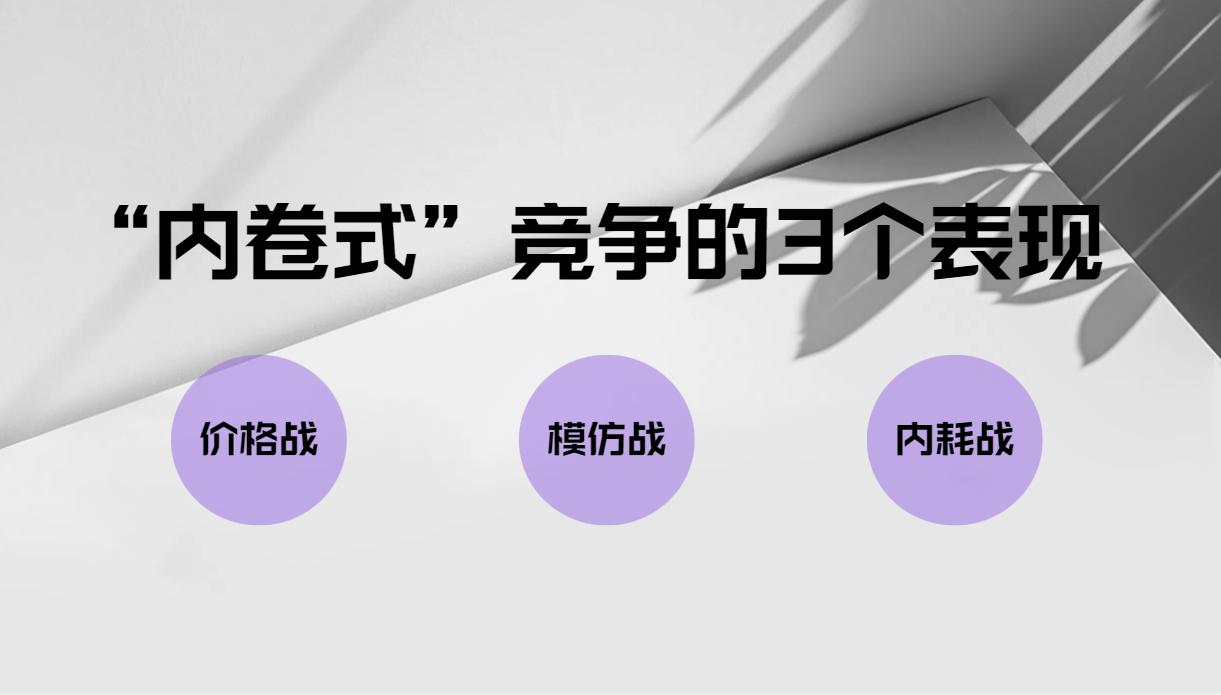
Core Viewpoint - The ongoing competition in the food delivery industry is shifting from aggressive subsidy wars to a more rational approach, as major players like JD.com, Meituan, and Ele.me express their intention to resist "involutionary" competition [1][2][3]. Group 1: Characteristics of Involutionary Competition - Involutionary competition is characterized by chaotic expansion and zero-sum games among companies vying for limited market share [8]. - Three typical manifestations of involutionary competition include: 1. Price Wars: When prices are driven down to unsustainable levels, leading to losses across the industry [9]. 2. Imitation Wars: Companies blindly follow trends without maintaining their unique offerings, resulting in homogenized products [10]. 3. Internal Strife: Companies focus on undermining competitors rather than expanding the market, often through unethical practices [12][13]. Group 2: Strategies to Avoid Involutionary Competition - Companies should focus on creating value rather than competing on price, ensuring customers perceive their offerings as worth the price [16][20]. - Differentiation is essential for competitive advantage, allowing companies to avoid resource-draining competition by offering unique value propositions [21][24]. - Transitioning from zero-sum games to win-win relationships is crucial, as illustrated by the example of Ford and General Motors, where mutual support can lead to overall industry health [25][30].

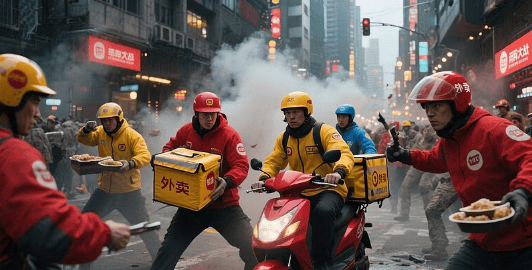
外卖平台砸钱补贴为获客拉新 中小商家不参加则流量减少?
Sou Hu Cai Jing· 2025-08-14 08:52
Core Viewpoint - The competition in the tea and coffee delivery market has intensified due to aggressive subsidies from platforms, leading to concerns about "involutionary" competition characterized by low prices and low quality [3][5][6] Group 1: Involutionary Competition - Involutionary competition is defined as "low-price, low-quality competition," where businesses are forced to lower product quality to compete [5][6] - This phenomenon is prevalent in platform economies, where platforms influence market dynamics, compelling merchants to engage in price wars [6][12] - The ideal competitive progression in an industry should move from price competition to differentiation and ultimately to innovation, but involutionary competition traps businesses at the price level [5][6] Group 2: Market Dynamics and Consumer Behavior - The current focus of competition is on the instant retail market, which aligns with the preferences of younger consumers who favor immediate satisfaction [7][10] - Platforms are using substantial subsidies as a marketing strategy to attract users, effectively reallocating funds from traditional advertising to consumer discounts [9][10] - The surge in orders due to subsidies can overwhelm merchants, leading to operational challenges and potential declines in product quality [11][12] Group 3: Impact on Merchants - Merchants face a dilemma between maintaining quality and meeting increased demand driven by subsidies, which can lead to a cycle of low prices and low quality [11][12] - Small and niche businesses are particularly vulnerable to the competitive pressures created by platform subsidies, as they may not have the resources to participate effectively [12][14] - The initial focus of subsidies on larger brands can disadvantage smaller merchants, even when subsidies are made available to all [13][14] Group 4: Recommendations for Platforms - Platforms should focus on creating long-term value for both merchants and consumers rather than relying solely on price competition [15][16] - Effective use of data analytics to assist merchants in inventory management and demand forecasting can provide more substantial benefits than mere financial incentives [16] - Regulatory approaches should be nuanced, avoiding blanket restrictions while addressing specific issues faced by smaller merchants [17][18][19]

快递费上调确认!继义乌后 广东也涨了:底价上调0.4元 各家不得低于1.4元揽收
Mei Ri Jing Ji Xin Wen· 2025-08-13 09:01
Core Viewpoint - The express delivery industry in Guangdong has implemented a price increase, raising the minimum charge to 1.4 yuan per ticket, which is expected to stabilize the financial situation of many delivery points [1][2]. Group 1: Price Increase Details - Starting from August 5, the overall base price for express delivery in Guangdong has been raised by 0.4 yuan per ticket, with the average price exceeding 1.4 yuan [1]. - The increase in base price is aimed at ensuring that no express company can collect below the cost price of 1.4 yuan, particularly affecting e-commerce customers who have high delivery demands [1]. - Prior to Guangdong, the city of Yiwu in Zhejiang had already initiated a price increase mechanism, raising the base price from 1.1 yuan to 1.2 yuan [1]. Group 2: Industry Context - The express delivery industry has been plagued by a "low-price for volume" competition, leading to reduced profit margins for delivery points and poor service quality [2]. - The average price per ticket for express delivery has significantly decreased from 28.55 yuan in 2007 to 7.49 yuan in June of this year [2]. - Major express companies like SF Express, Shentong, Yunda, and Zhongtong have seen their average ticket revenue drop by approximately 40% since 2017, with only Zhongtong showing a slight increase [2]. Group 3: Regulatory Environment - The State Post Bureau has emphasized the need for stronger industry regulation and has taken steps to combat "involutionary" competition and improve service quality [3]. - Following regulatory discussions, stocks of major express companies have surged, with Yunda's stock increasing by 22.4%, Shentong by 47.54%, and others also showing significant gains [3].

对话山东大学曲创:治理内卷,应注重保护平台企业竞争积极性
Nan Fang Du Shi Bao· 2025-08-12 15:33
Core Viewpoint - The recent "takeaway war" has intensified due to marketing strategies like "the first cup of milk tea in autumn," highlighting the tea and coffee sectors as primary battlegrounds for delivery subsidies [1][8] Group 1: Nature of Competition - Price competition is a common market strategy, but attention should be paid to whether platforms force merchants to participate in subsidies and if these subsidies favor leading brands over smaller businesses [3][5] - The essence of the "takeaway subsidy war" is competitive behavior, driven by optimistic economic expectations, which should be protected [4][20] - "Involutionary" competition is characterized by low-price, low-quality dynamics, necessitating a focus on the underlying causes and key players involved [5][6] Group 2: Market Dynamics - "Involutionary" competition often arises from external forces, such as government subsidies in the new energy vehicle sector, which distort normal market competition [7] - The current competition landscape is shifting towards instant retail, appealing to the consumption habits of younger generations [9][10] - Platforms are willing to invest heavily in subsidies as an effective customer acquisition strategy, reallocating funds from traditional advertising to user subsidies [10][17] Group 3: Impact on Merchants - The surge in orders due to subsidies can overwhelm merchants' production capacities, leading to potential quality degradation or operational challenges [12][14] - Smaller merchants, particularly niche shops and family-run businesses, face significant challenges in participating in subsidy programs, which may threaten their survival [15][16] - The competitive advantage of smaller merchants may diminish as larger brands benefit more from subsidy programs, even when subsidies are applied uniformly [14][16] Group 4: Regulatory Considerations - Regulatory focus should be on whether platform subsidies harm market competition or consumer interests, with a need for nuanced, case-by-case analysis rather than blanket restrictions [16][21] - Encouraging platforms to support small merchants through favorable policies can help maintain a diverse market and effective competition [16][21][22] - The current economic climate suggests that regulatory measures should not stifle competitive behavior, as active competition reflects market vitality [20][21]

碳酸锂狂飙的4天:多空决战宜春,投资者半夜蹲守矿山
Di Yi Cai Jing· 2025-08-12 10:09
Core Viewpoint - The recent developments in the lithium mining sector, particularly the suspension of operations at Ningde Times' lithium mine in Yichun, are seen as a significant signal of supply contraction in the context of the "anti-involution" campaign initiated by the government [2][5][8]. Industry Summary - On August 7, a statement from the China Nonferrous Metals Industry Association highlighted the dangers of "involution" competition, which triggered a surge in market interest and speculation regarding lithium supply [2][3]. - Following the announcement of the suspension of operations at Ningde Times' Yichun lithium mine due to the expiration of its mining license, lithium carbonate futures experienced a dramatic price increase, with a rise of 18.5% from August 7 to August 12, reaching a price of 82,520 yuan per ton [3][5]. - The Yichun mining operations are critical, with eight involved mining companies accounting for approximately 20% of China's monthly lithium production, and the suspension is viewed as a major indicator of potential supply issues [4][11]. - The market is currently engaged in a tug-of-war between bullish and bearish sentiments, with investors closely monitoring the situation as they speculate on the future of lithium prices and supply dynamics [6][10]. - The deadline of September 30 for the submission of resource verification reports by the eight mining companies is seen as a pivotal point for the market, with potential implications for future lithium supply and pricing [8][11]. Company Summary - Ningde Times' lithium mine in Yichun has been a focal point of market speculation, with the company expressing optimism about the renewal of its mining license prior to the suspension [6][7]. - Other companies involved in lithium mining, such as Guoxuan High-Tech and Keli Yuan, have reported that their operations remain normal and their mining licenses are still valid [11]. - Analysts suggest that if Ningde Times' mine resumes operations after three months and other mines remain unaffected, the overall impact on lithium supply may be limited to a reduction of approximately 30,000 to 35,000 tons [11].


“消费升级背景下即时零售的创新、竞争与治理”研讨会在京召开
Zheng Quan Ri Bao Wang· 2025-08-11 07:13
Group 1 - The seminar focused on the innovation, competition, and governance of the instant retail industry against the backdrop of consumption upgrades and the revision of the Anti-Unfair Competition Law [1] - Experts emphasized the need to observe the negative effects of legal regulation and governance on different market segments, suggesting tailored governance measures based on specific behaviors and outcomes [1][3] - The development of instant retail is driven by macroeconomic pressures, mature hardware and technology conditions, vast market potential, and consumer habits for immediate consumption [2] Group 2 - Instant retail represents an innovative business model that transcends traditional retail limitations, enhancing industry efficiency through service radius expansion and algorithm optimization [3] - Concerns regarding "involutionary competition" highlight the need to differentiate between legitimate price competition and destructive competition, avoiding oversimplified interpretations [3] - Governance strategies should focus on precise regulation of specific behaviors like below-cost dumping and forced price reductions, rather than imposing blanket restrictions on price competition [3]
杭州硕丰自有资金投资有限公司:外卖大战降温,专家吁多管齐下破内卷
Sou Hu Cai Jing· 2025-08-10 17:46
Group 1 - The competition among food delivery platforms in China has intensified, leading to a "subsidy war" characterized by extremely low prices, such as 0 RMB milk tea and 1 RMB hamburgers, but recent regulatory actions have started to cool this competition [1][3] - Delivery riders and merchants are experiencing increased pressure; while order volumes and incomes have surged temporarily, the intense workload is causing physical strain, and the exit of subsidies may lead to challenges for new riders [3] - A medium-tier fast food company's management reported a 12%-15% decline in dine-in customer traffic due to delivery subsidies, with delivery orders increasing from 15% to 22% of total sales, resulting in losses of approximately 8 RMB per order [3] Group 2 - The phenomenon of "involution" in platform economics is twofold: platforms compete for user traffic through substantial subsidies, while merchants are compelled to offer discounts to gain visibility on these platforms [4] - Experts emphasize the need for regulatory measures to prevent "involution" in competition, suggesting that the government should utilize existing laws to regulate predatory pricing and promote fair competition [4] - Recommendations for companies include avoiding short-sighted subsidy wars and instead focusing on differentiated development through improved service quality and technological innovation to gain competitive advantages [4]
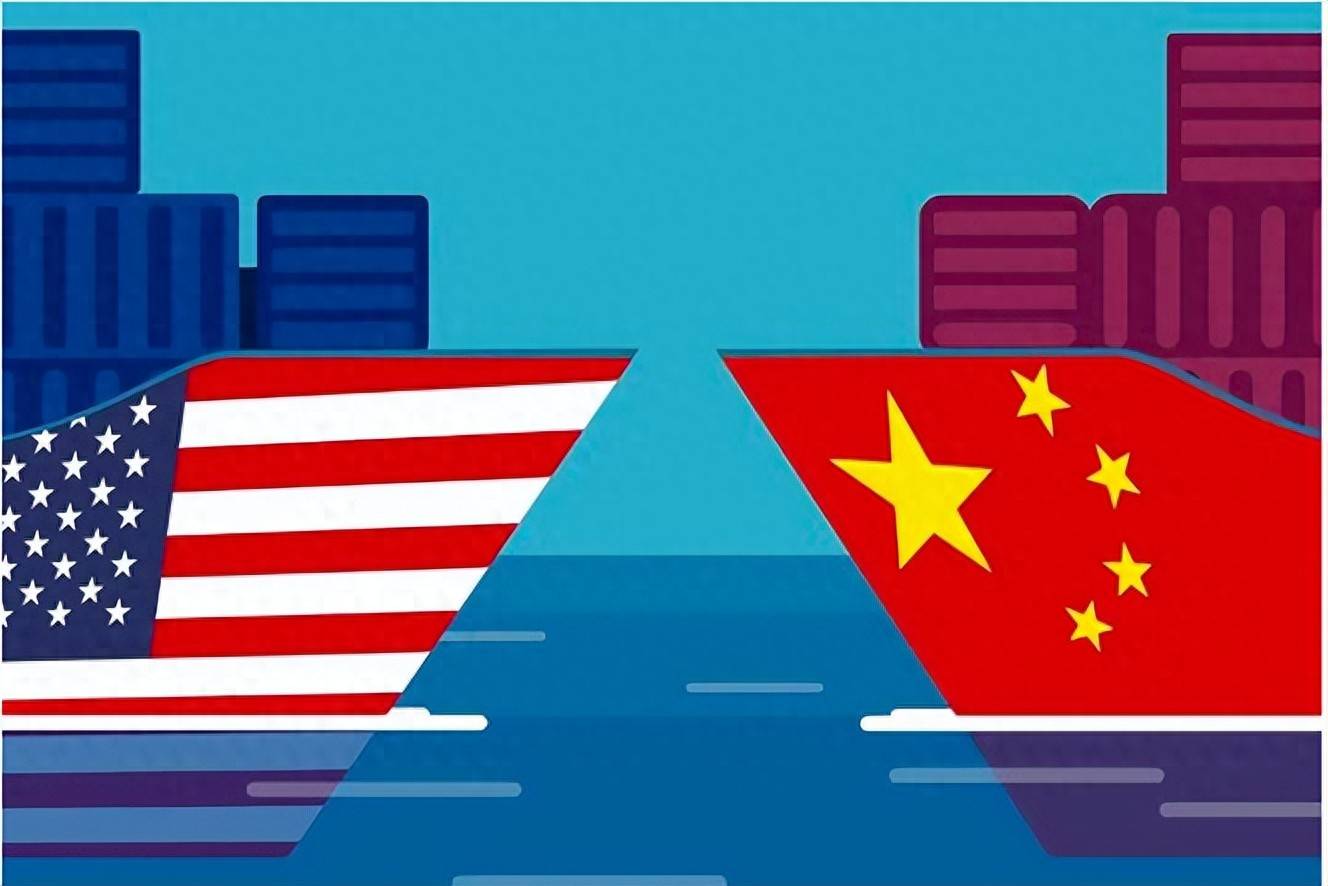
美国财长贝森特:希望中方转向消费型经济体
Sou Hu Cai Jing· 2025-08-10 15:30
Group 1 - The core focus of the recent US-China trade talks is whether to extend the current tariff suspension period by another 90 days, indicating ongoing negotiations and significant differences between the two parties [2][3][23] - The discussions have evolved from narrow topics, such as rare earth issues, to broader economic framework concerns, reflecting a deepening dialogue between the two nations [8][23] - US Treasury Secretary Bessent expressed satisfaction with the progress of negotiations, suggesting that both sides are taking the talks seriously and are willing to engage in more substantial discussions [6][7] Group 2 - Bessent emphasized the need for China to transition to a consumption-driven economy, a sentiment echoed by previous US officials, highlighting the long-standing concerns about China's reliance on manufacturing and exports [8][10][21] - The potential shift towards a consumption-based economy is seen as a necessary response to external pressures, including tariffs, which may force China to adapt its economic structure [10][15][18] - Recent measures in China, such as financial incentives for childbirth and discussions around free education, are aimed at stimulating domestic consumption and addressing demographic challenges, aligning with the broader goal of economic transformation [21][22][23]
经济观察丨外卖大战降温 专家吁多管齐下破内卷
Zhong Guo Xin Wen Wang· 2025-08-10 06:59
Group 1 - The external delivery platform subsidy war is cooling down following a meeting with China's State Administration for Market Regulation, which emphasized the need to avoid irrational promotions [1] - The "involution" competition issue remains a concern, as delivery riders and merchants face increased pressure despite short-term gains in order volume and income [1][2] - A medium-sized fast-food company's management reported a 12%-15% decline in dine-in customer flow due to delivery subsidies, with delivery orders increasing from 15% to 22% [1] Group 2 - Over-competition and "involution" can harm market efficiency and fairness, with subsidies failing to cultivate user habits or expand overall market size [2] - The subsidy war may accelerate the "Matthew effect," where financially strong platforms use extensive subsidies to squeeze out competitors, leading to increased market concentration [2] - The dual "involution" in platform economics involves both competition among platforms for user traffic and merchants being forced to participate in subsidies to gain private traffic [2] Group 3 - Recommendations for government regulation include flexible enforcement, such as reminders to platforms to standardize competitive behavior, and utilizing existing laws to regulate predatory pricing [3] - Platforms are advised to avoid short-sighted subsidy competition and instead pursue differentiated development paths through service quality improvement and technological innovation [3]

外卖大战降温 专家吁多管齐下破内卷
Zhong Guo Xin Wen Wang· 2025-08-10 00:41
Core Viewpoint - The competition among food delivery platforms in China is cooling down following regulatory interventions, but the underlying issue of "involution" in competition remains a concern [1][2]. Group 1: Impact of Subsidy Wars - The recent subsidy wars led to a significant increase in order volume, but delivery riders reported heightened stress and physical exhaustion due to the intense workload [1]. - A mid-tier fast-food company's management noted a 12%-15% decline in dine-in customer traffic due to subsidies, with the proportion of delivery orders rising from 15% to 22% [1]. - Platforms are pressuring merchants to offer additional discounts, resulting in losses of approximately 8 RMB per order for some businesses, which could jeopardize the financial stability of small and medium-sized restaurants in the long term [1]. Group 2: Market Dynamics and Competition - Experts argue that excessive competition and "involution" harm market efficiency and fairness, with subsidies failing to cultivate genuine user habits or expand overall market size [2]. - The "Matthew effect" may be accelerated by subsidy wars, where financially strong platforms dominate the market, leading to increased market concentration [2]. - The dual nature of "involution" in platform economies is highlighted, where platforms compete for user traffic through large subsidies, while merchants are compelled to participate in these subsidies to gain visibility [2]. Group 3: Regulatory and Strategic Recommendations - Recommendations for government regulation include flexible enforcement, such as reminders to platforms to standardize competitive behavior, and utilizing existing legal frameworks to regulate predatory pricing [3]. - Platforms are advised to avoid short-sighted subsidy competition and instead pursue differentiated development strategies by enhancing service quality and technological innovation to gain competitive advantages [3].