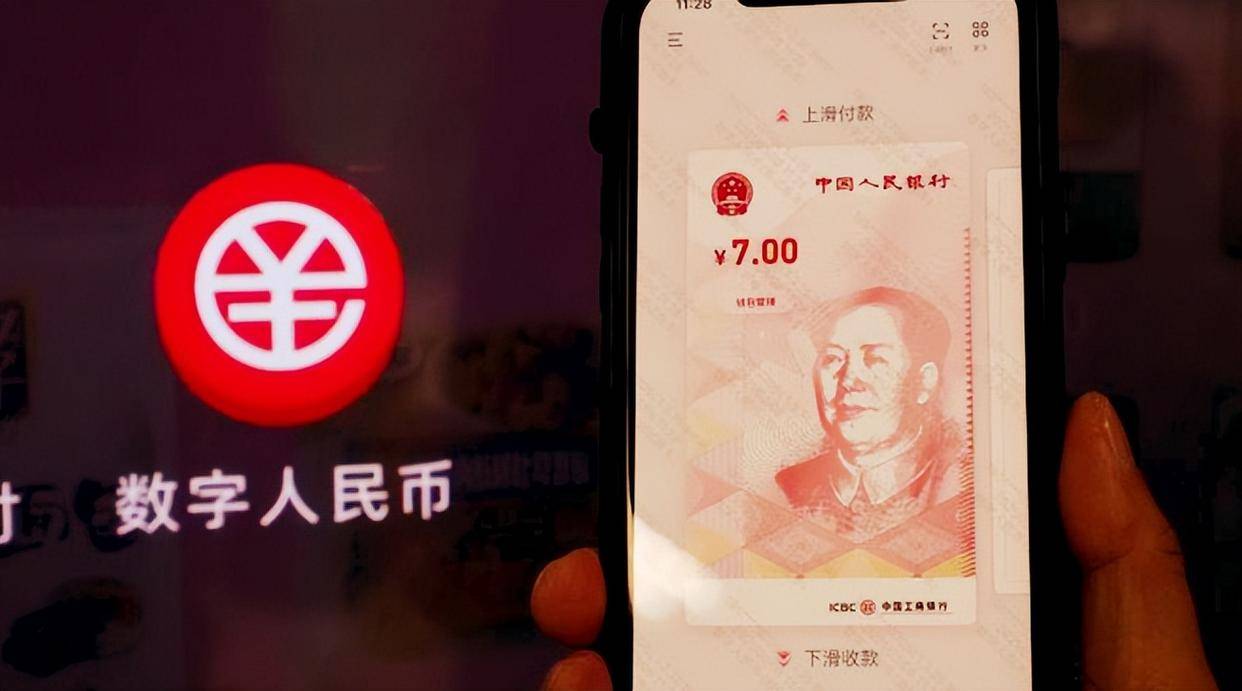
数字货币

Search documents
国投智能(300188.SZ):尚未形成直接应用于货币桥业务的独立产品
Ge Long Hui· 2025-12-10 06:51
格隆汇12月10日丨国投智能(300188.SZ)在互动平台表示,公司在电子数据取证、公共安全大数据、新 网络空间安全等领域的技术储备,可适配数字货币场景下的合规追溯、安全防护等需求。截至目前,公 司尚未形成直接应用于货币桥业务的独立产品。 ...

比特币,从神秘诞生到全球关注|画说热点
Sou Hu Cai Jing· 2025-12-10 04:31
综合大众日报 智通财经 漫画:杨仕成 比特币的故事始于2008年,当时一个化名为中本聪(Satoshi Nakamoto)的人或团体发布了一篇名为《比特币:一种点对点的电子现金系统》的论文。这 篇论文提出了一种基于区块链技术的数字货币系统,旨在允许用户之间直接进行交易,无需中介机构。2009年,比特币网络正式启动,中本聪挖掘了创世 区块,标志着比特币的诞生。 1 与当下大多数货币不同,比特币不依靠特定货币机构(如政府)发行,依靠的是特定算法计算产生,这个算法平台依据分布式构架的程序产生构造解。 5 2 比特币其实是基于区块链技术的加密数据。打个比方,比特币的发行机制就是解一个数学方程组,方程组的解对应着一个比特币的代码。获取比特币的过 程就相当于解方程的过程,这意味着所有人都有机会参与发行比特币。而这个方程组的解(比特币总量)的总量恒定为2100万个。 3 中央民族大学法学院教授、中国科技金融法律研究会副会长邓建鹏称,银行之间转账是由银行来记录,银行是中心。在比特币的网络中,没有一个特定的 中心,而比特币奖励机制刺激全球的矿工(即拥有特殊计算机芯片的人)记录他们的交易信息。换句话说,挖矿的过程就是用利己利人的 ...


金融学家黄益平:兼具政策影响力与学术权威的数字货币研究者|数字货币专家赋能
Sou Hu Cai Jing· 2025-12-09 08:37
"稳定币和央行数字货币并非零和",黄益平在 2025 夏季达沃斯访谈中提出,两者可在不同场景互补:CBDC 侧重法偿性与监管可控,适合大额、跨境及公 共支付;合规稳定币则依托市场机制,满足零售与链上生态需求。他建议,可在香港先行试点"盯住离岸人民币"的稳定币,既为境外人民币资产提供链上结 算工具,也为内地资本项目未完全开放留出"风险隔离墙"。 【邀请诺贝尔奖、图灵奖得主、两院院士、各行业专家,请联系五洲名家智库】 1957 年生于浙江的黄益平,拥有澳大利亚国立大学经济学博士,是北京大学国家发展研究院教授、院长,两度被任命为中国人民银行货币政策委员会委员 (2015—2018、2024—至今),并兼任中国金融四十人论坛学术委员会主席、北京大学数字金融研究中心主任。丰富的政策咨询与海外投行经历,使他对数 字货币、宏观金融与监管科技始终保持前沿视角。 数字货币:全球货币体系重构的"增量变量" 黄益平指出,数字货币并非短期风口,而是"正在改写支付、清算与储备资产规则"的增量变量。全球九成以上的虚拟资产交易已借助稳定币完成,而 90% 的稳定币与美元挂钩,"这相当于在现有跨境支付系统之外,再建一条由私营机构主导的美元清 ...
虚拟货币史诗级诈骗引发系列跨国诉讼 “数字货币”律师十八般武艺斗法黑科技丨律新观察
Sou Hu Cai Jing· 2025-12-09 07:41
作者丨律新社研究员 李德胜 出品丨律新社研究中心 数字货币正成为犯罪新"蓝海"? 数字货币网络诈骗正不断升级:高智商化、专业化、跨国化。虚拟货币交易链路难以追踪、跨境取证固证复杂、涉案财产查扣困难,数字货币一旦进入维 权纠纷,也往往成为法律服务的难点。 据区块链信息平台PANews发布的《2025年全球稳定币产业发展报告》显示,截至2025年7月,稳定币总市值突破2500亿美元,年转账额达36.3万亿美元, 已超越Visa与万事达的年交易总额。这一数据标志着一个历史性转折:数字货币正从极客圈的实验品跃升为主流金融工具。然而,技术与金融的碰撞往往 伴随风险的几何级数增长。 与此同时,全球监管框架加速成型。美国通过《GENIUS法案》、香港实施《稳定币条例》,中国内地检察机关推动USDT交易异常监测机制。监管与犯 罪的赛跑,催生了一片法律服务的蓝海,但这片海域并非风平浪静,而是暗流涌动。 律新社研究中心近日在调研中了解到,数字货币业务律师正在成为新业务"标签",而能否在其中乘风破浪,取决于对趋势的洞察、对技术的理解,以及对 跨域合规的驾驭力。与此同时,多家律所已经布局"数字货币研究中心",一场看不见硝烟的法律与金 ...

数字货币专家解读:机遇与方向在哪?|数字金融专家出席演讲
Sou Hu Cai Jing· 2025-12-08 20:44
Core Insights - The recent launch of the multilateral digital currency bridge project has sparked significant interest in digital currencies, positioning them as a focal point in the financial sector [1] Group 1: Expert Opinions - Huang Yiping emphasizes the need to clearly distinguish between central bank digital currencies (CBDCs) and digital assets like Bitcoin, highlighting that the digital yuan is a sovereign-backed legal currency with inherent value, unlike the volatile Bitcoin [3] - Ouyang Weimin stresses the importance of adhering to fundamental principles in digital currency innovation, warning against "pseudo-innovation" that detaches from practical realities, and advocating for deep integration with the real economy [3] - Wu Xiaoqiu presents a perspective that prioritizes financial openness and the internationalization of the renminbi, suggesting that while digital currencies are important, they should not distract from broader strategic financial reforms [3] Group 2: Digital Currency Advantages - Digital currencies have demonstrated efficiency and low costs in cross-border payments, with the multilateral digital currency bridge enabling interbank settlements among multiple countries [4] - The consensus among the experts points towards a core direction of "compliance innovation and serving the real economy," which is essential for understanding the development logic of digital currencies [4]

比特币向下跌破88000美元
Xin Lang Cai Jing· 2025-12-07 14:48
每经AI快讯,12月7日,比特币向下跌破88000美元,过去24小时内下跌2.06%。 每经AI快讯,12月7日,比特币向下跌破88000美元,过去24小时内下跌2.06%。 ...
中国为何此时筑牢虚拟货币防线?从石油到稳定币美元找新锚
Sou Hu Cai Jing· 2025-12-03 14:21
Group 1: Digital Currency Regulations - The U.S. White House has established a presidential task force on digital asset markets while banning the development of central bank digital currencies (CBDCs) within the U.S. [1] - China has intensified its crackdown on virtual currencies, with over 150 cases of money laundering related to virtual currencies reported since 2025, involving amounts exceeding 10 billion RMB [3]. - The People's Bank of China has identified stablecoins as a significant risk, with global cryptocurrency market volatility exceeding 70% in 2025, raising concerns about the transparency and safety of the underlying assets of stablecoins [3]. Group 2: U.S. Debt and Stablecoins - The U.S. federal debt is growing at nearly $2 trillion annually, surpassing $37.2 trillion, with stablecoins being seen as a new anchor for the dollar [4]. - Currently, the global stablecoin market is approximately $267.4 billion, with 95% being dollar-pegged stablecoins, which are heavily invested in short-term U.S. Treasury bonds [4]. - The "Payment Stablecoin Act" mandates that stablecoin issuers must invest 100% of their reserves in U.S. cash or short-term Treasury bonds, creating a mechanism for debt absorption that links stablecoin growth to U.S. debt demand [4]. Group 3: Historical Context and Future Outlook - The evolution of the dollar's anchoring mechanisms has transitioned from the gold standard established in 1944 to the current reliance on stablecoins, with over 98% of stablecoin market value pegged to the dollar [5]. - The U.S. is working on establishing a "digital dollar anchor," as emerging digital economic scenarios increasingly depend on this framework [5]. - The competition between the U.S. and China in the digital currency space is expected to deepen over the next five years as dollar stablecoins approach the trillion-dollar mark [8]. Group 4: Strategic Considerations for China - China's recent actions to strengthen its defenses against virtual currencies reflect strategic considerations, including the potential financial risks associated with the deep integration of U.S. stablecoins and Treasury bonds [6]. - Cross-border capital flows through virtual currencies have increased by 150% in 2024, posing new challenges for traditional regulatory measures [6]. - The internationalization of the renminbi is at a critical stage, with cross-border trade settlements in renminbi surpassing 31.5% in Q3 2024, necessitating measures to prevent stablecoin systems from creating barriers to this process [6]. Group 5: Digital Currency Initiatives in China - The pilot program for China's digital currency has expanded to 26 regions, covering various scenarios such as cross-border trade and supply chain finance [7]. - China is actively participating in the formulation of international digital currency regulations while balancing risk management and cooperation [7]. - The approval of 16 virtual asset service providers in Hong Kong since 2023 supports China's differentiated strategy of strict domestic regulation while piloting overseas [7].

天阳科技跌2.00%,成交额6664.15万元,主力资金净流出781.19万元
Xin Lang Zheng Quan· 2025-12-03 02:29
Core Viewpoint - Tianyang Technology's stock has experienced fluctuations, with a year-to-date increase of 21.53% but a recent decline in the last 5, 20, and 60 trading days [1][2] Group 1: Stock Performance - As of December 3, Tianyang Technology's stock price is 19.08 CNY per share, with a market capitalization of 9.313 billion CNY [1] - The stock has seen a net outflow of 7.8119 million CNY in principal funds, with significant selling pressure in large orders [1] - The company has appeared on the "Dragon and Tiger List" three times this year, with the most recent net purchase of 231 million CNY on June 16 [1] Group 2: Financial Performance - For the period from January to September 2025, Tianyang Technology reported revenue of 1.516 billion CNY, a year-on-year increase of 8.11%, while net profit attributable to shareholders decreased by 32.25% to 57.7671 million CNY [2] - The company's main business revenue composition includes 69.43% from technology development, 28.56% from technology services, 1.40% from consulting services, and 0.47% from system integration [1] Group 3: Shareholder Information - As of September 30, 2025, the number of shareholders is 49,500, a decrease of 24.01%, while the average circulating shares per person increased by 36.27% to 8,526 shares [2] - The company has distributed a total of 110 million CNY in dividends since its A-share listing, with 42.7816 million CNY distributed in the last three years [3] - Among the top ten circulating shareholders, Huabao Zhongzheng Financial Technology Theme ETF holds 6.4686 million shares, an increase of 3.2689 million shares compared to the previous period [3]

数智联盟打造全球数字资产确权与数字人民币跨境结算重要基础设施
Sou Hu Cai Jing· 2025-12-03 00:27
Core Viewpoint - The establishment of the Digital Intelligence Alliance marks a strategic response to the accelerating global digital economy and the restructuring of the international financial system, positioning itself as a key player in building digital financial infrastructure for the future [1][14]. Group 1: Global Trends in Digital Economy - The global financial technology competition has entered a new phase, with digital currencies becoming a crucial focus for international finance [1]. - Asset tokenization is emerging as a new standard in the financial industry, ensuring data credibility, transparency, and immutability [2]. - Intelligent regulation is evolving as a key direction for global regulatory systems, emphasizing risk warning, cross-border compliance, and data traceability [3]. - These trends are collectively driving a reconstruction window for global digital financial infrastructure [4]. Group 2: Core Positioning of the Digital Intelligence Alliance - The Digital Intelligence Alliance aims to be a participant and builder of global digital asset infrastructure, focusing on four main areas: asset rights confirmation, payment settlement, on-chain governance, and inclusive finance [6][7]. - Key initiatives include the establishment of a unified, trustworthy, and verifiable digital asset custody platform, which will cover asset ownership registration, digital certificate generation, data storage, and cross-border asset recognition [8]. - The alliance will promote a traceable and auditable governance system for digital assets, achieving full data transparency, automated compliance checks, intelligent risk monitoring, and verifiable transaction paths [9]. - The construction of a cross-border payment and settlement system for the digital yuan will expand its application in international trade and supply chain finance [10][11]. - The alliance will assist in the digital upgrade of international trade and supply chain finance, focusing on the digitization of trade certificates and the on-chain confirmation of orders and receivables [12][13]. Group 3: Building International Digital Financial Standards - The Digital Intelligence Alliance will transition from a single platform to a participant in international digital financial standards, focusing on the standardization of international digital asset management rules and the formulation of cross-border usage norms for the digital yuan [6][7]. - Collaboration mechanisms with overseas nodes and international organizations will be established to support the internationalization of the renminbi [13]. Group 4: Contribution to Global Financial Order - The official launch of the Digital Intelligence Alliance represents a significant step in upgrading China's digital financial system and is a product of the new phase of the global digital economy [14]. - By constructing an open, compliant, and sustainable digital financial infrastructure, the alliance aims to provide long-term value for national strategies, international trade, and public users [14].


号称取代微信支付宝的数字人民币,为啥现在无人问津了,背后原因很真实
Sou Hu Cai Jing· 2025-12-02 23:14
Core Viewpoint - The digital RMB, or DCEP, is a state-issued digital currency that aims to modernize payment systems but faces challenges in user adoption and market penetration [1][4][7]. Group 1: Definition and Features - Digital RMB is a digital version of the Chinese yuan, allowing users to make payments via a mobile app or a chip on a bank card [1]. - It is a legal tender issued by the state, offering higher security compared to private payment platforms like WeChat Pay and Alipay [3]. - Digital RMB can be used offline, providing a unique advantage in situations where internet access is unavailable [3]. Group 2: User and Merchant Perspectives - Users lack motivation to adopt digital RMB due to the convenience of existing platforms like WeChat Pay and Alipay, which offer faster payment processes [4]. - Digital RMB does not provide significant incentives or rewards for users, unlike its competitors that offer cashback and points [4]. - Merchants are hesitant to support digital RMB due to the additional costs of new payment equipment and employee training, especially when existing systems are already in place [4][5]. Group 3: Technical and Usage Limitations - The payment network for digital RMB is not fully developed, leading to slower transaction speeds and less stability compared to established platforms [5]. - The limited acceptance of digital RMB in various retail environments restricts its practical use, as many merchants do not support it [5]. - Users are accustomed to existing payment methods, making it difficult to shift their habits even if digital RMB has advantages [5]. Group 4: Initial Expectations vs. Reality - Initial media coverage created high expectations for digital RMB, suggesting it would replace WeChat Pay and Alipay, which has not materialized [7]. - The gap between expectations and actual adoption has led to decreased interest in digital RMB [7]. Group 5: Future Outlook - Digital RMB is expected to coexist with existing payment systems rather than replace them, serving as a supplementary tool in the payment ecosystem [14]. - Its primary value may lie in enhancing national financial management and policy implementation rather than everyday transactions [14][15].