
粮食安全

Search documents
“把当家品种牢牢攥在自己手里”——种业振兴行动五年成效回望
Huan Qiu Wang· 2025-12-11 07:27
Core Viewpoint - The Chinese government emphasizes the importance of seed industry development for food security, with significant initiatives and policies aimed at revitalizing the seed industry and ensuring self-sufficiency in seed production [1][2]. Group 1: Seed Industry Development - The seed industry is recognized as a cornerstone of food security, with a focus on self-reliance in seed production and the cultivation of domestic varieties [1]. - The "14th Five-Year Plan" has seen the implementation of the Seed Industry Revitalization Action Plan, leading to notable achievements such as over 95% of crop varieties being independently bred and domestic market shares for livestock and aquaculture seeds exceeding 80% and 85%, respectively [1][2]. Group 2: Resource Management - A nationwide agricultural germplasm resource survey, the largest since the founding of New China, has collected 139,000 crop resources and 1.07 million livestock genetic materials, aiding in the recovery of endangered species [2]. - The establishment of a national information service platform has facilitated the sharing and utilization of germplasm resources, benefiting over 1,500 breeding innovation entities [2]. Group 3: Crop and Livestock Innovations - New crop varieties such as disease-resistant wheat and high-yield soybeans have been developed, significantly contributing to increased grain production [3]. - The domestic market share for white feather broiler breeds has surpassed 28%, with successful exports to countries like Tanzania and Pakistan [3]. Group 4: Base Construction and Upgrades - The establishment of national seed production bases has been prioritized, with significant improvements in high-standard farmland coverage, reaching 86% for major crops [6][7]. - Advanced technologies such as IoT systems for rice seed production have been implemented, enhancing efficiency and traceability in seed production [8]. Group 5: Enterprise Support and Market Dynamics - The government has identified 270 key seed enterprises to strengthen the industry, with significant investments in R&D leading to improved competitiveness in international markets [9][10]. - The seed industry has seen a doubling of R&D investment since 2020, with a notable shift towards achieving a trade surplus in seed exports for the first time [10]. Group 6: Regulatory and Legal Framework - The government has strengthened the legal framework for seed protection, including revisions to the Seed Law and enhanced intellectual property protections [11]. - Continuous enforcement actions have led to a 20% decrease in seed-related infringement cases since 2020, improving market integrity [11].
确保粮食安全重在锻造韧性
Jing Ji Ri Bao· 2025-12-10 22:36
锻造市场韧性,构建内部循环畅通、外部链接多元、风险分散可控、调控灵敏高效的粮食供应链。国内 层面,推动形成全国统一的大市场,破除区域壁垒,畅通物流与信息流,提升供应链效率与可靠性。完 善多层次市场体系,发展期货、期权等衍生工具,助力企业规避风险,平滑周期性波动;健全监测预警 与调控机制,灵活运用储备吞吐和进出口调节,防止市场大起大落。国际层面,推进进口来源与运输通 道多元化,降低单一渠道依赖风险;积极参与国际粮农治理,推动构建更加公平的贸易规则,塑造有利 外部环境,培育具备全球竞争力的大粮商,增强关键环节掌控力与国际市场话语权。 粮食安全风险如影随形。只有将粮食安全建立在可操作、可检验、可迭代的实战实用能力之上,才能做 到"平时稳得住、急时调得动、关键时扛得起",在任何风浪中牢牢端稳中国饭碗,为经济社会高质量发 展筑牢根基。 (文章来源:经济日报) 锻造粮食生产韧性,构建稳产高产、绿色低碳、抗风险能力强的现代生产体系。坚持产量产能一起抓, 既保当前丰收,又能持续提升产能。抓住耕地与种子两个关键,严守耕地红线,持续建设高标准农田, 提升耕地质量;推进种业振兴,研发推广抗逆品种、智能装备与防灾减灾技术。坚持生产生 ...
“十五五”农业怎么干?增强粮食供给保障 强化科技装备支撑
2 1 Shi Ji Jing Ji Bao Dao· 2025-12-10 14:38
Core Viewpoint - The article emphasizes the importance of enhancing agricultural comprehensive production capacity and quality efficiency as a major task in building an agricultural power, highlighting five key tasks to achieve this goal [1]. Group 1: Key Tasks for Enhancing Agricultural Production - The five key tasks include: enhancing the supply guarantee capacity of important agricultural products, constructing a diversified food supply system, strengthening arable land protection and quality improvement, reinforcing technological and equipment support, and improving agricultural development quality and efficiency [1][2]. - The first priority among these tasks is to enhance the supply guarantee capacity of important agricultural products, particularly focusing on grain production [2]. Group 2: Grain Production Strategies - The government plans to implement a new round of actions to increase grain production capacity, aiming to stabilize grain planting areas and improve yields through various measures [3]. - There is a focus on optimizing the supply structure of important agricultural products, including consolidating staple grains and increasing the production of high-quality varieties [3]. Group 3: Agricultural Technology and Innovation - Strengthening arable land protection and quality improvement is crucial, with a strict arable land protection system and the promotion of high-standard farmland construction as key initiatives [4][5]. - The article highlights the need to enhance the overall effectiveness of the agricultural technology innovation system, fostering collaboration among various innovation entities to drive agricultural development [5][6]. Group 4: Seed Industry and Agricultural Machinery - The seed industry and agricultural machinery are identified as critical areas for technological empowerment, with an emphasis on advancing seed industry revitalization and improving agricultural machinery quality [6]. - The government aims to accelerate the development of high-yield, high-quality, and resilient crop varieties while also addressing the shortcomings in agricultural machinery [6].
青春探海记——解锁蓝色强省的资源密码
Feng Huang Wang Cai Jing· 2025-12-10 00:19
我们是新时代的"青年探险家", 手握科技的罗盘,胸怀报国的志向。 今天,让我们循着百年航海图, 开启一场青春与海洋的对话, 解锁深藏于蔚蓝之中的强省密码, 用青春智慧绘制新时代的"郑和海图"! BLUE GRANARY ना lilitial 这是我们用青春标记的第一个坐标! 从'捕鱼人'到'牧海者', 我们正在把万里海疆建成智能化的'蓝色农场'。 让中国人的饭碗装更多优质蛋白, 这是青年一代对'粮食安全'的坚定回答。 我们是新时代的"青年探险家",手握科技的罗盘,胸怀报国的志向。今天,让我们循着百年航海图,开启一场青春与海洋的对话,解锁深藏于蔚蓝之中的 海洋强省密码,用青春智慧绘制新时代的"郑和海图"! FUTURE METAL 4 3 K 上 1月 (新能源汽车 7.00 用青春智慧,唤醒沉睡亿年的宝藏。 这些深海'未来金属', 将是实现科技自立自强的重要基石。 我们这一代,要做战略资源的'开拓者', 而非坐等资源的'继承者'。 Tel 7 - 2 PPP 2 Fir DEEP-SEA TREASURES 117 B a t : il = 1. 1 听!风、浪、潮汐都在为我们歌唱。 我们正在把大海的呼吸, ...


筑牢发展安全根基 守住风险防控底线
Zhong Guo Zheng Quan Bao· 2025-12-09 20:22
Group 1 - The core viewpoint emphasizes the importance of balancing development and security to ensure high-quality economic growth and stability in the face of complex internal and external challenges [1][6] - The Xinjiang Tarim Basin 750 kV power transmission and transformation project has been fully operational, enhancing China's energy security [1] - The agricultural sector has shown positive results, with summer grain production reaching 299.48 billion jin and early rice production increasing by 680 million jin [1] Group 2 - The implementation of the seed industry revitalization action and high-standard farmland construction aims to ensure food security and self-sufficiency in grain production [2] - The release of the world's first mass-producible sodium-ion battery by CATL enhances China's influence in the battery industry [2] - The high-tech manufacturing sector's added value increased by 9.6% year-on-year in the first three quarters, with China leading in the production of most major industrial products globally [2] Group 3 - Major infrastructure projects, including water conservancy and transportation upgrades, are being accelerated to support economic stability and growth [3] - China's GDP is projected to reach 140 trillion yuan in 2025, reinforcing its position as the world's second-largest economy [3] - The government is actively implementing measures to stabilize the real estate market, including financial support for housing demand [4][5] Group 4 - Over 60 cities have introduced housing subsidies or "old-for-new" policies, and the financing coordination mechanism for urban real estate has facilitated over 7 trillion yuan in loans [4] - The sales area and sales volume of new commercial housing from January to October have seen a reduction in year-on-year decline, indicating a gradual recovery in the real estate market [5] - The establishment of the Inner Mongolia Rural Commercial Bank has significantly enhanced the risk resistance capacity of local financial institutions [5] Group 5 - The issuance of 5 trillion yuan in special government bonds aims to support state-owned banks and enhance the financial system's risk management capabilities [6] - The government is focusing on proactive measures to address risks in key sectors, ensuring a stable foundation for high-quality development [6][7] - The construction of a unified national electricity market is progressing, with significant reforms aimed at overcoming regional barriers [7] Group 6 - The release of a new generation of ultra-fast real-time oscilloscopes is expected to support advancements in semiconductors and 6G communication technologies [7] - The "14th Five-Year Plan" outlines strategic initiatives to enhance agricultural productivity, energy systems, and safety measures across various sectors [8] - The emphasis on maintaining a reasonable proportion of manufacturing and advancing core technologies is crucial for securing China's economic stability and growth [8]
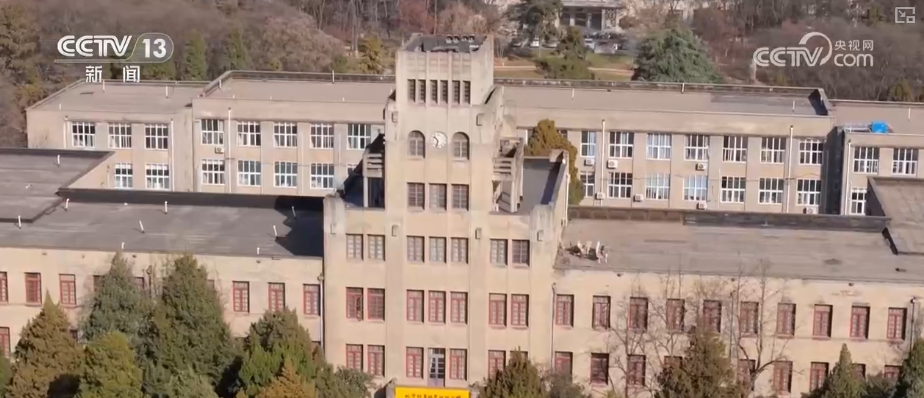
胸怀社稷,情系“三农”!麦浪有声 用科研成果守护大国粮仓
Yang Shi Wang· 2025-12-09 10:34
央视网消息:有一所大学,诞生于山河破碎的烽火硝烟,扎根在中华农耕文明发祥地,把"民为国本、食为民天"的初心使命, 深深根植在共和国的广袤田野。 西北农林科技大学党委宣传部部长李筱英介绍,那时候关中平原小麦亩产量不足50公斤,一亩地不能养活一口人。辛树帜校长对大 家说,我们来这里,是为改变这里的落后面貌,变旱塬为水乡,变荒漠为粮仓,让原野牛羊成群,叫林果遍布山岗。 "九一八"事变后,为"充实民生和国防",1934年,国立西北农林专科学校成立。楼前奠基石上"民为国本、食为民天"八个大字,是 这所大学永不褪色的初心。 校史馆内,泛黄的学籍档案记录着首批101名本科生的名单,赵洪璋就是其中之一。这位清瘦的青年,成功选育小麦品种"碧蚂一 号"。在新中国成立初期的1959年,推广种植面积超9000万亩,把亩产从不足50公斤提高到了150~200公斤,被毛主席称赞说,"一 个品种挽救了大半个新中国"。 西北农林科技大学农学院教授李学军介绍,赵老师前后拿了好几个科学大会奖,他讲这些奖状奖杯,都不如老百姓的口碑。他们现 在在四五个省搞的小麦品种示范园,就是对赵老师当年生态学育种理论的继承和发展。 西北农林科技大学三号楼,这座建 ...
粮食安全看山东”之威海:聚焦高质量发展,建设“绿色粮仓
Zhong Guo Fa Zhan Wang· 2025-12-09 06:54
中国发展网讯 党的二十大报告指出,全方位夯实粮食安全根基,确保中国人的饭碗牢牢端在自己手 中;推动经济社会发展绿色化、低碳化是实现高质量发展的关键环节。近年来,威海市发展改革委认真 贯彻聚焦绿色低碳高质量发展,全面系统推进绿色储粮工作,积极打造绿色"威海粮仓"。 强化保障,推进绿色储粮工作 创新仓储管理。修订印发《威海市地方储备粮管理办法》,研究制定"国有粮食企业高质量发展粮食安 全百分考核办法",开展仓储规范化管理提升行动、智慧粮库建设和质量体系认证、安全生产等级达 标、争创红旗仓等活动,聘请第三方专家对企业"两个安全"进行联合检查,推动现代化、智能化仓储管 理转型。全市12个储备粮承储库点全部实现数据通、视频通和全环节智能、绿色、低耗管理,50%的中 心粮库通过质量体系认证。 强化资金支持。加强与财政部门沟通,争取更高比例给予资金补助。全市绿色仓储升级提升改造项目实 际投资664万元,地方财政拨付补助资金531万元,支持比率达80%。近三年争取商品粮大市(县)奖励 资金4000多万元,全部用于支持仓房新建、升级改造及智慧粮库等项目建设,其中2024—2025年项目按 不高于投资总额70%的比例补助。 创新 ...
“粮食安全看山东”之枣庄国新粮油:储粮提效,运粮提速,供粮提质
Zhong Guo Fa Zhan Wang· 2025-12-09 03:34
Core Viewpoint - Shandong Guoxin Grain and Oil Development Group is positioned as a key player in ensuring regional grain security and driving industrial transformation through innovative strategies and technological advancements [1] Group 1: Smart Storage and Technological Empowerment - The company has invested 388 million yuan to establish a grain storage and logistics center, increasing storage capacity by 260,000 tons, ranking among the top in the province [2] - A green storage upgrade project with a total investment of 210 million yuan is set to start in 2025, aiming to reduce energy consumption by 20% and enhance emergency support capacity to 90 days [2] - The implementation of a comprehensive information monitoring system has led to a 100% safety rate in grain quality, transitioning from passive to proactive management [3] Group 2: Collaborative Supply Chain and Market Expansion - The company has innovated a "grain storage + industry assistance" model, covering 1,100 acres with a water-saving rate of 40% and a fertilizer utilization increase of 20% [4] - Collaborations with 13 major enterprises have been established to enhance market reach and operational efficiency, resulting in a doubling of grain sales volume from January to September 2025 [5] - A multi-modal transport network has been developed to facilitate grain logistics, connecting major production areas and expanding market influence [5] Group 3: Brand Revitalization and Product Innovation - The company is revitalizing its old brands through cultural empowerment, channel reconstruction, and product innovation, launching 11 new eco-friendly products [6] - A research and development center has been established to focus on high-value products, addressing market demands and technological advancements [7] - An investment of 290 million yuan in a smart cold chain logistics park aims to create an integrated platform for cold storage, wholesale, and e-commerce by December 2026 [7]
中国11月大豆进口创四年新高,全年进口量或将破纪录
Huan Qiu Wang Zi Xun· 2025-12-08 10:12
Core Insights - China's soybean imports reached 8.11 million tons in November, marking a 13.4% increase from 7.15 million tons in the same month last year, and the highest level for the same period in four years [1] - Despite a 14.5% month-on-month decline from October's 9.48 million tons, the cumulative import total for the first 11 months of the year increased by 6.9% year-on-year, reaching 13.79 million tons, setting a solid foundation for a potential record annual import volume [1] - Analysts predict that total soybean imports for the year could reach a record 110 million tons, driven by significant purchases of Brazilian and U.S. soybeans [1][4] Import Dynamics - The import landscape has been influenced by changes in international trade relations, particularly the U.S.-China trade tensions that previously halted U.S. soybean purchases for several months [4] - Following a trade truce agreement between the U.S. and China at the end of October, China has gradually resumed purchasing U.S. soybeans, with COFCO leading the way by pre-purchasing approximately 2.7 million tons [4] - This volume is still below the U.S. government's target of 12 million tons by the end of the year, although there are indications that the deadline may be extended to February next year [4] Demand Drivers - The continuous growth in China's soybean imports is driven by multiple factors, including the strong demand from the domestic pig farming industry for soybean meal and other feed proteins [4] - The stabilization of domestic pig production capacity has maintained high demand for quality feed ingredients [4] - The relative price advantage of international soybeans, particularly from Brazil, has also stimulated purchasing interest among importers [4] Future Outlook - Industry analysts generally expect China's soybean import levels to remain high, supported by ongoing consumption upgrades and the modernization of the livestock industry [5] - Adjustments in the global soybean supply chain and China's diversified import strategies to ensure food security will also contribute to stable growth in soybean import volumes [5]
周期演绎到了什么阶段?
2025-12-08 00:41
Summary of Key Points from Conference Call Records Industry Overview Potash Market - The potash market is experiencing short-term supply-demand tightness, with inventory levels significantly below safety lines. As of the end of November, potash inventory was approximately 2.3 million tons, a 25% year-on-year decrease, far below the historical safety line of 4 million tons [3][4] - The price of newly signed contracts for potash is $348 per ton, reflecting a $3 increase from the previous year, indicating a continued tight market in 2025 [3] - Limited global new production capacity is expected to maintain market tightness, with only a few companies in Laos contributing to new capacity [3][5] New Energy Pricing Mechanism - There are significant regional disparities in the results of the new energy pricing mechanism across provinces, with Gansu achieving a low price of 0.19 yuan/kWh, while Shanghai aligns with coal benchmark prices at 0.41 yuan/kWh [6] - High abandonment rates of new energy in regions like Gansu and Xinjiang pose challenges for project profitability, leading to a significant drop in medium- and long-term contract prices [7][8] Construction Materials Sector - The construction materials sector has seen a year-on-year decline in revenue and performance in the first three quarters of 2025, although the decline has narrowed compared to last year. Leading companies are achieving success through retail transformation and product expansion [10] - The demand for construction materials in 2025 is expected to be stable, with more demand coming from renovations of second-hand homes and existing properties [11] - The sector is witnessing a price increase trend in waterproofing, gypsum board, and coatings, driven by market consolidation and the exit of smaller players [11][12] Company-Specific Insights Recommended Companies - **Yara International**: Expected to expand its potash production capacity to 2 million tons by the end of 2024, with further contributions from expansions planned for 2026 [5] - **Oriental Tower**: Currently has a production capacity of 1 million tons and is accelerating its XDL project, which is anticipated to unlock growth potential [5] Construction Materials Leaders - Companies like **Three Trees**, **Oriental Yuhong**, and **Beixin Building Materials** are shifting focus from large B-end businesses to faster-growing small B and C-end channels, improving cash flow and profitability [12] - **Tubaobao**, a leading board manufacturer, is noted for its strong cash flow and high dividend yield, making it a suitable long-term investment [15] - **Beixin Building Materials** is actively pursuing overseas expansion to mitigate domestic demand downturns, with plans for acquisitions and product diversification [13][14] Market Challenges and Opportunities Coal Industry - The price of thermal coal has decreased to 791 yuan/ton, reflecting a year-on-year decline due to insufficient demand and accumulated inventory [16][17] - Coal companies face challenges with pricing mechanisms, including a floating long-term pricing structure that limits profitability [18] Real Estate Market - The real estate market in 30 key cities is experiencing stagnant transaction volumes, with a continuous decline in the de-stocking rate [19] - Core cities are seeing significant pressure on new home sales and declining second-hand home prices, leading to liquidity risks for some major real estate companies [20][21] - Despite the challenges, there are trading opportunities in undervalued central enterprises and companies with improving operational quality [23] Conclusion - The potash market is expected to remain tight, with limited new capacity and rising prices. The new energy sector faces profitability challenges due to regional pricing disparities. The construction materials sector is adapting to market changes, with leading companies focusing on retail and overseas expansion. The coal industry is under pressure from pricing mechanisms, while the real estate market presents both risks and opportunities for investors.