
AI芯片

Search documents
美国暂不对中国芯片加税,离岸人民币收复7关口 | 财经日日评
吴晓波频道· 2025-12-26 00:29
Monetary Policy - The People's Bank of China (PBOC) will continue to implement a moderately loose monetary policy, emphasizing counter-cyclical and cross-cyclical adjustments to support stable economic growth and reasonable price recovery [2] - The PBOC aims to maintain ample liquidity and ensure that the growth of social financing and money supply aligns with economic growth and price level expectations [2] - The focus may shift towards improving the transmission mechanism of interest rates to reduce idle capital in the financial system [2][3] U.S.-China Trade Relations - The U.S. government announced it will not impose additional tariffs on Chinese chips for at least 18 months, with a planned tariff increase set for June 2027 [4] - This decision is seen as a temporary measure to avoid escalating trade tensions, especially as the U.S. seeks to attract global chip production back to its shores [5] Foreign Investment - The new "Encouraged Foreign Investment Industries Directory" will take effect on February 1, 2026, with a total of 1,679 entries, an increase of 205 from the previous version [6] - The directory emphasizes advanced manufacturing and modern service industries, particularly in central and western regions of China [6][7] Currency Exchange Rates - The offshore RMB has risen above the 7 mark against the USD for the first time since October, with a year-to-date appreciation of 4.6% [8] - The recent strengthening of the RMB is attributed to a weakening dollar and expectations of continued interest rate cuts by the Federal Reserve [8][9] Real Estate Policy - Beijing has relaxed housing purchase restrictions for non-local families, reducing the required social security or tax payment period for purchasing homes [10] - The policy aims to stimulate housing demand, particularly for families with multiple children, and aligns with the current market conditions [11] Chip Industry Developments - NVIDIA has reached a non-exclusive licensing agreement with Groq, acquiring its chip technology while allowing Groq to operate independently [12] - This move is seen as a strategy to enhance NVIDIA's AI chip capabilities without triggering antitrust concerns [12][13] Fund Manager Changes - A record 453 fund managers have left their positions this year, indicating significant changes within the industry amid regulatory reforms [14] - The reforms are aimed at linking fund performance to manager compensation, promoting a more competitive environment [15]



中天精装:公司参股企业科睿斯半导体科技(东阳)有限公司主营FCBGA高端封装基板业务
Zheng Quan Ri Bao Zhi Sheng· 2025-12-25 11:37
Core Viewpoint - The company Zhongtian Precision Decoration announced its involvement in a semiconductor packaging business through its equity stake in CoreSys Semiconductor Technology (Dongyang) Co., Ltd, which focuses on FCBGA high-end packaging substrates for high-performance chips [1] Group 1: Company Developments - CoreSys is set to launch its first phase of production in September 2025, focusing on packaging for TPU, CPU, GPU, and AI chips [1] - The company is currently in the process of creating samples for certain clients, with progress reported as smooth [1] - Zhongtian Precision Decoration will continue to monitor and support the operational development of its equity stake in CoreSys, committing to timely information disclosure regarding any significant external investment or capital operation plans that may impact the company [1]

东海证券晨会纪要-20251225
Donghai Securities· 2025-12-25 03:45
Group 1: US Economic Insights - The US economy demonstrated unexpected resilience in Q3 2025, with GDP growth rate rising to 4.3%, significantly above the expected 3.3% [5][6] - Personal consumption was the main driver of GDP growth, contributing 2.4% to the GDP, up from 1.7% in the previous quarter [5][6] - The trade deficit narrowed, with exports increasing by 8.8% compared to a previous decline of 1.8%, contributing positively to GDP [5][7] Group 2: Haiguang Information (688041) Overview - Haiguang Information is a leading domestic CPU manufacturer, focusing on high-performance processors and GPGPU products, with a strong market position in the AI chip sector [11][12] - The company has developed multiple CPU series, including the flagship 7000 series for data centers and the 5000 series for industry clients, achieving commercial success with the Haiguang 4 CPU [11][12] - The demand for Haiguang's CPUs is expected to rise due to the acceleration of AI server shipments and domestic innovation needs, with a projected 24.3% growth in global AI server shipments in 2025 [12][13] Group 3: Market Projections for Haiguang - Revenue projections for Haiguang Information are optimistic, with expected revenues of 143.05 billion, 207.76 billion, and 287.59 billion yuan for 2025, 2026, and 2027 respectively, reflecting growth rates of 56.13%, 45.23%, and 38.43% [14] - The net profit forecast for the same period is 30.57 billion, 44.90 billion, and 64.58 billion yuan, with growth rates of 58.32%, 46.87%, and 43.83% [14] - The company is expected to maintain a leading position in the domestic market, benefiting from the ongoing push for domestic alternatives to Intel and AMD [12][14]

TPU惹急黄仁勋,200亿美元拿下「TPU之父」核心团队、技术授权
机器之心· 2025-12-25 03:12
Core Viewpoint - The article discusses Nvidia's strategic move to secure talent and technology from AI chip startup Groq through a non-exclusive licensing agreement, highlighting the competitive pressure from Google's TPU and Groq's LPU technology in the AI chip market [1][3][14]. Group 1: Nvidia's Strategic Move - Nvidia has entered a non-exclusive licensing agreement with Groq, allowing it to acquire key personnel, including Groq's CEO and several core engineers, without a direct acquisition [3][4]. - The deal is valued at approximately $20 billion, significantly higher than Groq's previous valuation of $6.9 billion [3][4]. - Groq will continue to operate independently, with its CFO taking over as CEO, and its GroqCloud service will remain functional [4]. Group 2: Groq's Technology and Competitive Edge - Groq's LPU (Language Processing Unit) is designed specifically for AI inference, claiming to operate at speeds up to 10 times faster than Nvidia's GPUs while consuming only one-tenth of the energy [4][11]. - The architecture of Groq's LPU eliminates traditional hardware schedulers, relying instead on a compiler to manage data flow, which enhances performance and reduces latency [9][11]. - Groq's memory design integrates SRAM directly on the chip, achieving a bandwidth of 80TB/s, which is over 20 times that of traditional HBM solutions, although it results in a smaller chip capacity [11]. Group 3: Market Dynamics and Competition - The AI computing market is shifting from training to inference, with predictions indicating that inference will account for 75% of total AI computing by 2030, reaching a market size of $255 billion [14]. - Google's TPU has shown a cost advantage over Nvidia's systems, with reports indicating a 30-40% lower total cost of ownership for TPU v7 [14]. - Groq has gained attention in the market, recently signing a $1.5 billion deal with Saudi Aramco to build a large AI inference data center and completing a $750 million funding round, increasing its valuation to $6.9 billion [15][16].

英伟达:不是收购Groq,只是(获得)技术授权
Xin Lang Cai Jing· 2025-12-24 22:38
Core Viewpoint - Nvidia clarified that it is not acquiring Groq but rather obtaining a technology license, intending to integrate Groq's products into its future offerings [1] Group 1 - Nvidia's statement indicates a strategic move to enhance its product lineup without a full acquisition [1] - The initial reports suggested a cash acquisition of approximately $20 billion for the AI chip startup Groq [1]
寒武纪跌2.01%,成交额27.50亿元,主力资金净流出240.58万元
Xin Lang Zheng Quan· 2025-12-24 02:19
Core Viewpoint - The stock of Cambricon Technologies Co., Ltd. has experienced fluctuations, with a notable increase of 98.95% year-to-date, but a recent decline in trading performance over the past few days [1][2]. Group 1: Stock Performance - As of December 24, Cambricon's stock price was 1309.10 CNY per share, with a market capitalization of 5520.28 billion CNY [1]. - The stock has seen a trading volume of 27.50 billion CNY, with a turnover rate of 0.50% [1]. - Year-to-date, the stock has risen by 98.95%, but it has decreased by 0.49% over the last five trading days, 0.42% over the last twenty days, and 3.06% over the last sixty days [1]. Group 2: Financial Performance - For the period from January to September 2025, Cambricon reported a revenue of 46.07 billion CNY, reflecting a year-on-year growth of 2386.38% [2]. - The net profit attributable to shareholders for the same period was 16.05 billion CNY, showing a significant increase of 321.49% year-on-year [2]. Group 3: Shareholder Information - As of September 30, 2025, the number of shareholders for Cambricon was 62,000, which is an increase of 52.13% compared to the previous period [2]. - The average number of circulating shares per shareholder was 6748 shares, a decrease of 34.13% from the previous period [2]. - Major shareholders include Hong Kong Central Clearing Limited and various ETFs, with some experiencing a reduction in holdings [3].

谨慎加仓
第一财经· 2025-12-23 10:52
Core Viewpoint - The A-share market exhibits characteristics of "low gains and high differentiation," with the Shanghai Composite Index affected by adjustments in commercial aerospace and tourism sectors, while the Shenzhen Component Index is driven by technology growth stocks, and the ChiNext Index leads due to dual support from new energy and technology sectors [4]. Market Performance - 1,508 companies experienced an increase in stock prices [5]. - The market shows a "more declines than gains" pattern, with significant sector differentiation. Key sectors include technology growth (lithography machines, liquid-cooled servers, semiconductor equipment), cyclical resources (energy metals, battery chemicals), and regional themes (Hainan Free Trade Zone), while commercial aerospace and satellite navigation themes have declined, and tourism and education sectors have adjusted [6]. - The total trading volume of the two markets reached 1 trillion yuan, an increase of 2.04%, driven by the rise of heavyweight stocks and adjustments in small and mid-cap stocks. Strong performances were noted in semiconductor equipment, insurance, and lithium battery sectors, which were key in driving indices and trading volume [7]. Fund Flows - There is a net outflow of institutional funds, while retail investors show a net inflow. Institutions are withdrawing from high-position sectors like telecommunications and military, reallocating towards new energy batteries and AI chips, indicating a "rebalancing within growth tracks." Concurrently, there is an increased allocation to safe-haven assets like precious metals and high-dividend blue chips. Retail investors prefer small-cap and low-priced stocks, speculating on rebounds from oversold conditions, with some funds flowing into stocks like Luchang Technology, Zhongli Group, and Guotai Junan, which are seeing withdrawals from main players [8][9].

不再正面挑战亚马逊,英伟达据称重组云团队
硬AI· 2025-12-23 09:24
Core Insights - Nvidia has made a significant strategic shift in its cloud business, moving away from competing directly with AWS and focusing on internal needs for its chips [2][3] - The restructuring involves integrating the DGX Cloud team into the engineering and operations organization, which will now primarily serve Nvidia engineers rather than external enterprise clients [3][4] Summary by Sections Cloud Business Strategy - Nvidia's CEO Jensen Huang has abandoned the vision of creating a cloud service to compete with AWS, opting instead for a strategy that prioritizes internal chip demand [3][4] - The DGX Cloud service, initially aimed at establishing direct relationships with AI developers, will now focus on supporting Nvidia's internal engineering needs [5][8] Team Restructuring - The cloud team, consisting of hundreds of employees, has been merged into the engineering and operations division led by senior vice president Dwight Diercks [3][4] - Key personnel changes have occurred, including the reassignment of executives and the departure of some team members [3][4] Market Challenges - Nvidia's DGX Cloud has struggled to attract sufficient customers, partly due to operational challenges in providing support across different cloud service providers [7] - The company has been cautious about expanding this business to avoid upsetting major chip customers who are also cloud service providers [7] Financial Outlook - Earlier this year, Nvidia indicated that its cloud business could potentially generate $150 billion in revenue, surpassing AWS's current annual revenue [8] - Nvidia plans to invest $26 billion in renting servers over the next few years to support its cloud initiatives [10] Competitive Landscape - Despite competition from companies like Google and Amazon, Nvidia maintains a strong position in the AI chip market [9] - Nvidia has become one of the largest renters of its own servers, which are procured from AWS and Google, while also using them for developing various AI models [9]

亏损超28亿,又一GPU巨头冲击IPO,估值120亿
2 1 Shi Ji Jing Ji Bao Dao· 2025-12-23 02:23
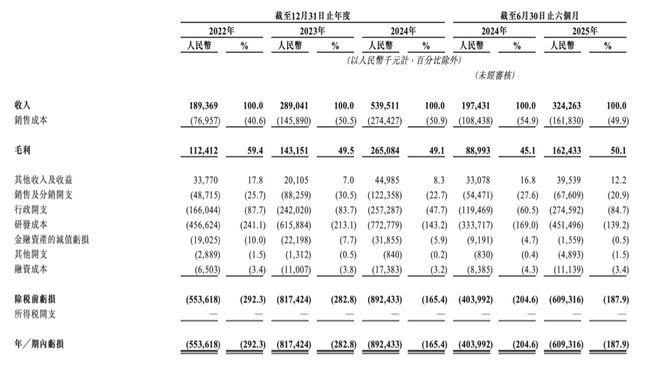
Core Viewpoint - Shanghai Tensu Zhixin Semiconductor Co., Ltd. has passed the Hong Kong Stock Exchange listing hearing, potentially becoming a new player in the domestic GPU market alongside Wallen Technology, which recently also passed the listing hearing [1][20]. Company Overview - Established in 2015, Tensu Zhixin is a pioneer in the domestic GPU sector, launching its first general-purpose GPU product in 2021 and achieving mass production [2][21]. - The company has diversified its business from AI training to include AI inference and intelligent computing solutions, reflecting a broader market strategy [5][24]. Financial Performance - Tensu Zhixin reported revenues of RMB 189.37 million in 2022, RMB 289.04 million in 2023 (up 52.91%), and projected RMB 539.51 million in 2024 (up 86.85%), with a compound annual growth rate of 68.8% [4][24]. - The company has accumulated losses of RMB 6.09 billion, with net losses recorded at RMB 553.62 million in 2022, RMB 817.42 million in 2023, and RMB 892.43 million in 2024 [10][22]. Product Development - Tensu Zhixin is the first company in China to achieve mass production of both inference and training general-purpose GPU chips, utilizing 7nm process technology [3][22]. - The company has accelerated its product development, launching multiple generations of its training series (Tianwei Gen 1, Gen 2, and upcoming Gen 3) and inference series (Zhilai Gen 1 and Gen 1X) [3][25]. Revenue Breakdown - The revenue from general-purpose GPU products has shown significant growth, with training series products contributing the majority of income, while inference series products are gradually increasing their share [11][24]. - The average selling price of training products has risen from approximately RMB 24,400 to RMB 38,600, although it has seen a decline to around RMB 30,400 in the first half of 2025 due to increased sales of older models [5][24]. Market Position - The AI inference market is expected to outpace the AI training market in growth, with Tensu Zhixin focusing on optimizing its next-generation Zhilai products for emerging large language models [8][27]. - The company has initiated AI computing solution offerings, with the number of projects increasing from 6 in 2023 to 26 in 2024, indicating a strong market demand [8][27].
融资十轮、出货五万片 天数智芯披露十年造芯路
2 1 Shi Ji Jing Ji Bao Dao· 2025-12-23 00:41
Core Viewpoint - TianShu Intelligent Chip, established in 2015, has become a leader in the Chinese GPU market, achieving significant milestones in AI chip production and revenue growth over the past decade [1][2]. Group 1: Company Overview - TianShu Intelligent Chip is the first Chinese company to achieve mass production of general-purpose GPU chips for both inference and training, utilizing 7nm technology [1]. - The company has delivered over 52,000 general-purpose GPU products as of mid-2023, showcasing its growth trajectory [1]. Group 2: Revenue and Financial Performance - The revenue from the training series of general-purpose GPU products has been the primary source of income, with significant growth from 189 million RMB in 2022 to 540 million RMB in 2024, reflecting a compound annual growth rate of 68.8% [2][6]. - The company recorded net losses of 554 million RMB, 817 million RMB, and 892 million RMB from 2022 to 2024, with a loss of 609 million RMB reported in the first half of 2025 [5]. Group 3: Product Development and Sales - The sales performance of AI training products has remained stable, with the average selling price increasing from approximately 24,400 RMB to 38,600 RMB between 2022 and 2024 [3]. - The inference product line, including the ZhiKai series, saw a significant increase in shipment volume from 38 units to 9,800 units between 2022 and 2024, although the average selling price decreased due to market competition [4]. Group 4: Gross Margin and Profitability - The gross margin for training products has remained high, between 53% and 61%, while the gross margin for inference products has shown improvement, rising from 35.8% to 46.7% by 2024 [6][8]. - The company aims to enhance product performance and complexity to improve pricing power and overall profitability [7]. Group 5: Strategic Initiatives and Future Outlook - TianShu Intelligent Chip is expanding its business into AI solutions, with the number of solution projects increasing from 6 in 2023 to 10 in the first half of 2025 [4][8]. - The company plans to improve cost control and product design standards to enhance profitability in its AI solutions segment, which has seen a gross margin increase from 25.9% in 2023 to 45.7% in the first half of 2025 [8].