
食品安全

Search documents
数说前11个月食品安全形势 全力守护“舌尖上的安全”
Yang Shi Wang· 2025-12-24 03:08
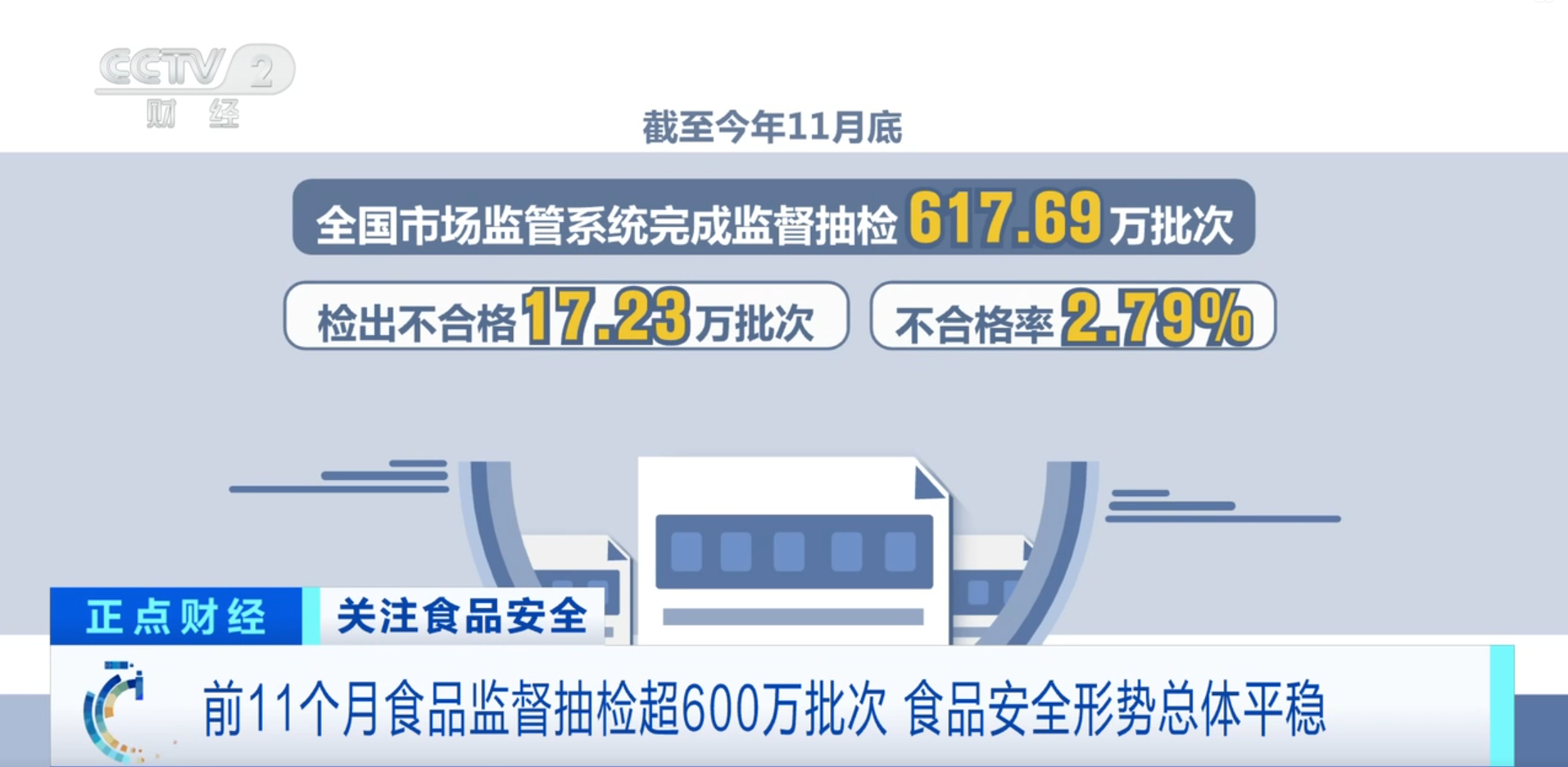
央视网消息:12月23日上午,市场监管总局通报了今年全国市场监管系统开展食品安全监督抽检的情况。今年前11个月,食品监督抽检超600万批次, 食品安全形势总体平稳。 市场监管总局食品安全总监 孙会川:比如,食用植物油违法添加"一滴香"(乙基麦芽酚)问题得到好转,抽检不合格率从2020年的2.08%降至今年的 0.08%。又比如,花生油中黄曲霉毒素B1不合格率连续4年下降,从2021年的3.33%降至今年的0.76%。再比如,粉丝粉条、餐饮自制油饼、油条铝残留不合 格率连续5年持续下降,分别从2020年的2.56%、9.65%降至今年的0.86%、2.71%。 此外,针对抽检发现的问题,市场监管总局指导各地及时开展核查处置,今年以来完成不合格食品核查处置任务19万余件,罚没金额4.51亿元,移送公 安机关案件900余件。 截至11月底,今年全国市场监管系统共完成监督抽检617.69万批次,检出不合格17.23万批次,不合格率2.79%。抽检结果显示,39大类抽检食品中有24 大类食品抽检不合格率低于1%,消费量大的米、面、油、肉、奶不合格率连续5年处于低位,一些长期攻坚的重点指标显著下降。 ...

今日看点|第二十三届中国食品安全大会将举行
Jing Ji Guan Cha Wang· 2025-12-24 01:12
Group 1 - The 23rd China Food Safety Conference will be held from December 24 to 28 in Beijing [2] - On December 24, a total of 5 companies will have their restricted shares unlocked, with a total unlock volume of 109 million shares, amounting to a market value of 3.942 billion yuan [3] - Among the companies, Zhongli Co., Ltd. has the highest unlock volume of 107 million shares and the highest unlock market value of 3.858 billion yuan [3] Group 2 - Thirteen companies disclosed stock repurchase progress on December 24, with one company announcing a new repurchase plan exceeding 10 million yuan [4] - Weimais has the highest repurchase plan amount, proposing to repurchase up to 100 million yuan [4] - Nine companies announced progress on private placements, with Xinqianglian having the highest proposed fundraising amount of up to 1.5 billion yuan [5] Group 3 - Four A-shares will have their equity registration today, with the highest dividend payouts being 6.00 yuan per 10 shares for Bolong Technology and Aohai Technology, and 1.56 yuan for Bank of Communications [6]

我国大宗食品抽检不合格率连续5年处于低位
Xin Lang Cai Jing· 2025-12-23 22:12
Core Viewpoint - The overall food safety situation in China is stable, with low non-compliance rates for major food categories over the past five years, and significant improvements in key indicators [1] Group 1: Food Safety Statistics - The non-compliance rate for edible vegetable oil due to illegal addition of ethyl maltol (commonly known as "one drop of fragrance") has improved, decreasing from 2.08% in 2020 to 0.08% this year [1] - The non-compliance rate for aflatoxin B1 in peanut oil has continuously declined for four years, dropping from 3.33% in 2021 to 0.76% this year [1] - The compliance rate for domestic infant formula products has remained above 99.95% for four consecutive years [1]
泰州医药高新区检察院守护“舌尖上的安全”
Xin Lang Cai Jing· 2025-12-23 19:08
自2022年集中管辖全市危害食品安全刑事案件以来,江苏泰州医药高新技术产业开发区人民检察院依法 履行检察职能作用,全力守护人民群众"舌尖上的安全"。一是持续加大对危害食品安全犯罪的打击力 度,批准逮捕19件27人,起诉102件208人,监督立案2件,监督撤案14件。二是联合公安机关及农业农 村、市场监管等部门,建立线索备案机制,构建"共管共治"的食品安全防护体系。三是针对部分商超违 规使用"生鲜灯"等问题开展专项调查,制发检察建议。 马明明 (来源:法治日报) 转自:法治日报 ...
一问到底丨如何守护舌尖上的安全?聚焦食品添加剂、校园餐、直播售卖等
Yang Shi Wang· 2025-12-23 15:48
Core Viewpoint - The National Market Supervision Administration (NMSA) has conducted a comprehensive food safety inspection, revealing a stable overall food safety situation in China, with specific focus on meat products and edible oils, and has implemented new regulations to enhance food safety in various sectors, including e-commerce and school cafeterias [1][4][11]. Group 1: Food Safety Inspection Results - As of November this year, the NMSA completed 6.1769 million batches of food safety inspections, detecting 172,300 non-compliant batches, resulting in a non-compliance rate of 2.79% [1] - Among 39 categories of inspected foods, 24 categories had a non-compliance rate of less than 1%, with staple foods like rice, flour, oil, meat, and milk showing low non-compliance rates of 0.17%, 0.01%, 0.66%, 0.52%, and 0.08% respectively [1][3]. Group 2: Special Rectification of Meat Products and Edible Oils - The NMSA has focused on rectifying issues related to adulteration in meat products and edible oils, inspecting 2.45 million meat production and operation entities, leading to 35,529 cases filed and 1,511 cases referred for criminal investigation [4] - For edible oils, 1.892 million entities were inspected, resulting in 2,581 cases being filed, indicating significant progress in addressing these issues [4]. Group 3: Improvement in Infant Formula Safety - The compliance rate for domestic infant formula has remained above 99.95% for four consecutive years, with inspections covering all registered production and sales enterprises [3]. Group 4: Issues with Food Additives and Counterfeit Products - The NMSA has intensified efforts against counterfeit and substandard food products, filing 129,600 cases and seizing 2,071 tons of counterfeit food, while also addressing the misuse of food additives with 13,180 cases investigated and fines totaling 90.38 million yuan [7]. Group 5: Enhancements in Campus Food Safety - New measures have been implemented to strengthen food safety in schools, including the establishment of a dual food safety supervisor system for contracted school cafeterias to prevent management responsibility from being shifted [10][11]. Group 6: New Regulations for E-commerce and Chain Stores - The NMSA is set to release new regulations for live-streaming e-commerce, clarifying the food safety responsibilities of platforms and streamers, and enhancing consumer protection against substandard products [11][17] - Regulations for chain stores require headquarters to manage food safety across all branches, ensuring accountability and compliance with safety standards [19][21].
我国米面油等大宗食品抽检不合格率连续5年处于低位
Xin Hua Wang· 2025-12-23 11:39
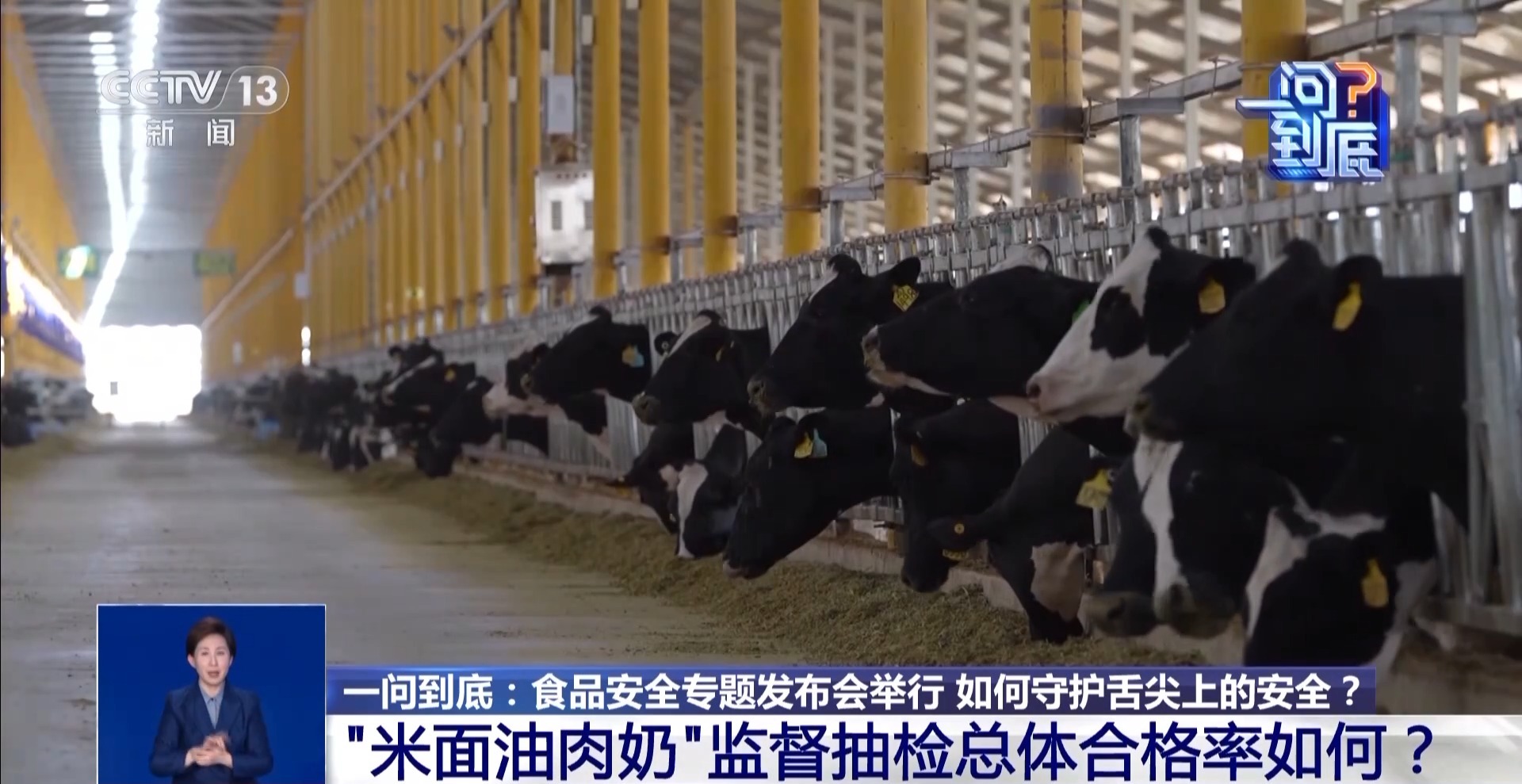
Core Insights - The overall food safety situation in China is stable, with low non-compliance rates for major food categories over the past five years [1] - Significant improvements have been observed in the non-compliance rates for specific food safety indicators, particularly in edible oils and infant formula [1] Group 1: Food Safety Status - Major food categories such as rice, flour, oil, meat, and milk have maintained low non-compliance rates for five consecutive years [1] - The non-compliance rate for ethyl maltol (commonly known as "one drop fragrance") in edible vegetable oils decreased from 2.08% in 2020 to 0.08% in 2023 [1] - The non-compliance rate for aflatoxin B1 in peanut oil has dropped from 3.33% in 2021 to 0.76% in 2023 [1] Group 2: Regulatory Actions - The State Administration for Market Regulation has completed 190,000 cases of non-compliant food investigations this year, with fines totaling 451 million yuan [2] - A total of 57,540 inspections of school canteens and off-campus catering units were conducted, resulting in 12,067 legal cases filed [2] - The regulatory body has intensified efforts against counterfeit and substandard food in rural areas and has taken action against fraudulent practices in meat products and edible oils [2]
今年前11个月食品监督抽检超600万批次 不合格率2.79%
Yang Shi Xin Wen· 2025-12-23 10:36
Summary of Key Points Core Viewpoint - The overall food safety situation in the country remains stable, with a low rate of non-compliance in food safety inspections, indicating effective regulatory measures and improvements in food quality. Group 1: Food Safety Inspection Results - As of the end of November this year, the national market supervision system completed 6.1769 million batches of food safety inspections, detecting 172,300 non-compliant samples, resulting in a non-compliance rate of 2.79% [1] - Out of 39 major categories of inspected food, 35 categories had a non-compliance rate lower than the overall rate, and 24 categories had a non-compliance rate below 1% [1] Group 2: Status of Bulk Food Products - Major food products such as rice, flour, oil, meat, and milk have maintained a low non-compliance rate for five consecutive years, with this year's rates being 0.17%, 0.01%, 0.66%, 0.52%, and 0.08% respectively [1] Group 3: Infant Formula Quality - The compliance rate for domestic infant formula products has remained high, consistently above 99.95% for four consecutive years, covering all registered and on-sale enterprises and all indicators of national food safety standards [1] Group 4: Improvement in Key Indicators - The non-compliance rate for edible vegetable oil containing ethyl maltol, known as the "one drop of fragrance" issue, has improved significantly, dropping from 2.08% in 2020 to 0.08% this year [2] - The non-compliance rate for aflatoxin B1 in peanut oil has decreased for four consecutive years, from 3.33% in 2021 to 0.76% this year [2] - The non-compliance rates for aluminum residues in vermicelli and homemade fried dough sticks have also shown a continuous decline over five years, from 2.56% and 9.65% in 2020 to 0.86% and 2.71% this year respectively [2]
市场监管总局:今年以来完成不合格食品核查处置任务19万件
Ren Min Ri Bao· 2025-12-23 10:18
Group 1 - The core viewpoint of the articles highlights improvements in food safety in China, with a significant reduction in the rate of non-compliant food products detected through inspections [1][2] Group 2 - As of the end of November this year, the national market supervision system completed 6.1769 million batches of inspections, detecting 172,300 non-compliant samples, resulting in a non-compliance rate of 2.79% [1] - Key indicators have shown significant declines, such as the non-compliance rate for edible vegetable oil containing ethyl maltol dropping from 2.08% in 2020 to 0.08% this year [1] - The non-compliance rate for aflatoxin B1 in peanut oil has decreased for four consecutive years, from 3.33% in 2021 to 0.76% this year [1] - The non-compliance rates for vermicelli and homemade fried dough sticks have also decreased over five years, from 2.56% and 9.65% in 2020 to 0.86% and 2.71% this year, respectively [1] - Overall food safety status remains stable, with 35 out of 39 food categories having non-compliance rates lower than the overall rate, and 24 categories below 1% [1] - Major food items such as rice, flour, oil, meat, and milk have maintained low non-compliance rates for five consecutive years, with rates of 0.17%, 0.01%, 0.66%, 0.52%, and 0.08% this year [1] Group 3 - The compliance rate for domestic infant formula food has remained above 99.95% for four consecutive years, covering all registered and on-sale enterprises [2] - The market supervision department has completed 190,000 tasks related to the verification and disposal of non-compliant food this year, with fines totaling 451 million yuan and over 900 cases referred to public security [2] - Risk alerts regarding food safety issues have been communicated to relevant departments such as agriculture and customs, enhancing regulatory collaboration [2]
杭州市市场监督管理局关于食品安全监督抽检情况第十六期通告
Zhong Guo Zhi Liang Xin Wen Wang· 2025-12-23 08:17
Core Insights - The article reports on the food safety supervision and sampling conducted by the Hangzhou Market Supervision Administration, revealing a total of 2,345 batches tested, with 36 batches found to be non-compliant with safety standards [3][4][5][6] Group 1: Food Production Sector - In the food production sector, 881 samples were tested, with 878 passing and 3 failing. The non-compliant products included a batch of sesame mooncakes from Hangzhou Xu Di Di Food Co., which had excessive bacterial counts, and a batch of frozen rice cakes from Hangzhou Hong Ye Ye Food Co., which had unacceptable peroxide levels [3] - Another non-compliant product was a batch of five-spice peanuts from Hangzhou Lin'an Songjin Fried Food Factory, which contained unacceptable levels of aflatoxin [3] Group 2: Food Distribution Sector - The food distribution sector saw 845 samples tested, with 825 passing and 20 failing. Non-compliant products included batches of longan from various vendors that exceeded sulfur dioxide residue limits, and a batch of yam that contained unacceptable levels of pesticides [4] - Specific vendors cited for non-compliance included Hangzhou Lin'an Yan Bo Fruit Store and Hangzhou Xiaoshan Yingfeng Street Bo Yin Food Business, among others, with various pesticide and residue violations [4] Group 3: Catering Service Sector - In the catering service sector, 619 samples were tested, with 606 passing and 13 failing. Non-compliant products included batches of chili peppers and eggs from multiple restaurants that contained prohibited substances such as antibiotics and excessive peroxide levels [5] - Notable establishments with violations included Hangzhou Tide Restaurant Management Co. and Hangzhou Lin'an Yao Jie Traditional Steamed Dish Restaurant, which had issues with antibiotic residues in their food products [5] Group 4: Regulatory Actions - The Hangzhou Market Supervision Administration has referred the non-compliant products and their respective producers to local market regulatory authorities for further action in accordance with the Food Safety Law of the People's Republic of China [6]
喂料用药随意 药品残留超标
Xin Lang Cai Jing· 2025-12-22 20:23
Core Viewpoint - The article highlights the emerging issues in the aquaculture industry, particularly the phenomenon of "sliding in the gap," where many enterprises and farmers operate without proper licenses and fail to adhere to safety regulations, posing significant risks to food safety and public health [1][2][4]. Group 1: Industry Issues - Many aquaculture enterprises in Guizhou are found to operate without licenses, lacking records for inputs and failing to conduct quality checks before sales [2][3]. - The absence of proper management leads to the use of unregulated drugs, resulting in excessive drug residues in fish products, which can pose health risks to consumers [2][4]. - A specific case revealed that a catfish farm had enrofloxacin levels at 119.31 μg/kg, exceeding the national safety standard of 100 μg/kg [4]. Group 2: Regulatory Actions - The local prosecutor's office initiated a public interest lawsuit against the agricultural bureau for failing to enforce food safety regulations, leading to a court ruling that mandated the bureau to ensure compliance among aquaculture enterprises [3]. - Following the court's decision, the agricultural bureau developed a template for recording aquaculture inputs to enhance traceability and accountability [3]. Group 3: Safety Hazards - The use of banned substances was reported, with a farm found storing tetracycline and ceftriaxone, which violates veterinary drug regulations [5]. - The lack of awareness among farmers regarding safety standards and regulations contributes to the prevalence of unsafe practices in aquaculture [6]. Group 4: Recommendations for Improvement - Experts suggest that collaboration among agricultural, market regulation, and judicial departments is essential to strengthen food safety measures and enforce penalties for violations [7]. - The industry should promote the development of eco-friendly fish species and improve aquaculture practices to ensure both quality and safety of fish products [7].