
数字技术

Search documents
东西问·北京文化论坛|吴丹娜:数字技术与“Z世代”助推俄中文化交流
Zhong Guo Xin Wen Wang· 2025-09-23 14:33
Core Insights - The article discusses the role of digital technology and Generation Z in enhancing cultural exchanges between China and Russia, highlighting the increasing interest in each other's cultures and the impact of modern technology on these interactions [1][3]. Group 1: Cultural Exchange Dynamics - Beijing has become a significant platform for cultural interaction between China and Russia, with various events and performances showcasing both cultures [3]. - Russian ballet is particularly popular in China, with tickets for performances selling out quickly, indicating a strong interest in Russian cultural elements [4]. - Conversely, Russians are increasingly interested in Chinese culture, as evidenced by the success of co-produced films and cultural festivals celebrating Chinese traditions [5]. Group 2: Impact of Digital Technology - The rapid advancement of technology has transformed cultural experiences, allowing individuals to engage with different cultures without traveling, thus breaking down geographical and economic barriers [7]. - Digital technology provides diverse and immersive experiences, particularly appealing to younger audiences, facilitating broader cultural exchanges between Chinese and Russian youth [7][9]. Group 3: Role of Generation Z - Generation Z plays an active role in cultural exchanges, acting as creators and connectors rather than passive observers, utilizing their familiarity with technology to engage in cultural dialogue [9]. - This generation's interactions are characterized by immediacy, visual engagement, and interactivity, reshaping traditional cultural narratives and promoting new forms of cultural expression [9]. Group 4: Future Cultural Cooperation - The upcoming 2025 Beijing Cultural Forum will focus on the integration of culture and technology, reflecting a global trend towards innovation in cultural dialogue and collaboration [11]. - There is a public expectation for deeper cultural understanding and friendship between China and Russia through enhanced cooperation in various cultural sectors, including performing arts and digital platforms [12].



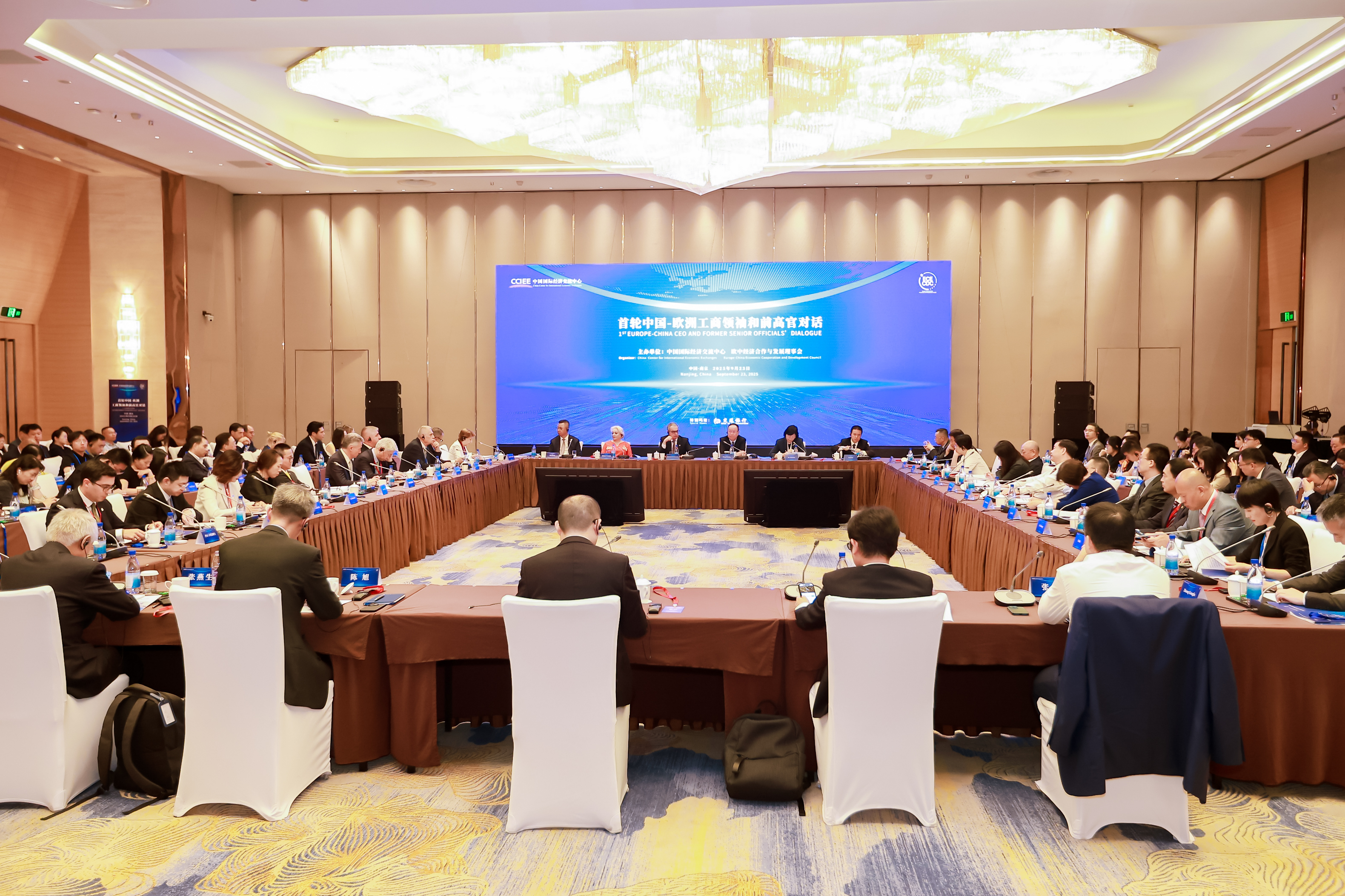
“首轮中国-欧洲工商领袖和前高管对话”在南京举行
Zhong Guo Jing Ji Wang· 2025-09-23 12:30
Core Insights - The dialogue between Chinese and European business leaders focused on new challenges and opportunities in China-Europe economic and trade relations, as well as deepening practical cooperation in key areas [1][4] Group 1: Economic and Trade Relations - Despite global geopolitical tensions and supply chain restructuring, China-Europe trade remains resilient, with bilateral trade expected to reach $787.5 billion in 2024, maintaining a historical high [4] - Industrial goods and intra-industry trade dominate the trade landscape, with significant complementarity in mid-to-high-end manufacturing, consumer goods, and technology products [4] - The importance of service trade is increasing, providing new momentum for China's service industry modernization and broad opportunities for EU companies in the Chinese market [4] Group 2: Strategic Cooperation - Both sides emphasize the importance of stabilizing China-Europe economic relations, expressing concerns that excessive politicization could harm market and supply chain interests [4] - There is a call for practical cooperation in areas such as digital technology, clean energy, energy storage, and green transformation [4] - The 50th anniversary of China-Europe diplomatic relations serves as both a historical reflection and a starting point for future collaboration, highlighting the need for consensus-building through communication and cooperation to address international complexities [4] Group 3: Future Outlook - The meeting resulted in the release of a think tank research report titled "Building a Future-Oriented New Strategic Partnership between China and Europe," outlining key areas for practical cooperation and future prospects [4]
东西问·北京文化论坛|短评:科技将如何重塑全球文明对话?
Zhong Guo Xin Wen Wang· 2025-09-23 11:50
Core Insights - The 2025 Beijing Cultural Forum highlights the deep integration of culture and technology, showcasing successful cross-disciplinary practices such as AI restoration of Dunhuang murals and VR recreations of historical sites [3][4] - The forum emphasizes that while technology enhances cultural preservation and dialogue, it also poses risks of oversimplification and loss of cultural subjectivity [4][6] - The theme of the forum, "Cultural and Technological Integration Development," reflects a keen awareness of global development trends and philosophical considerations underlying technological advancements [6] Summary by Sections - **Cultural and Technological Integration**: The forum serves as a platform to explore how digital technologies like mobile internet and AI are reshaping cultural production, dissemination, and reception [4][6] - **Risks of Technology**: The article warns that the asymmetry in technological development could deepen cultural and communication divides, as dominant cultures may encode their values into technological infrastructures [6] - **Forum Structure and Topics**: The forum includes a main session, six parallel forums, and over twenty professional salons, focusing on topics such as digital empowerment of cultural heritage and the new dynamics of human cooperation [8] - **Beijing as a Case Study**: The city exemplifies the integration of technology and culture, with initiatives ranging from the digital revival of the Forbidden City to the creative transformation of traditional neighborhoods [8] - **Dialogue on Cultural Diversity**: The forum promotes discussions on mutual respect and understanding among diverse civilizations, which is particularly valuable in the context of current global challenges [10]

数字技术助推产业升级,章丘乡村焕发勃勃生机
Qi Lu Wan Bao· 2025-09-23 09:37
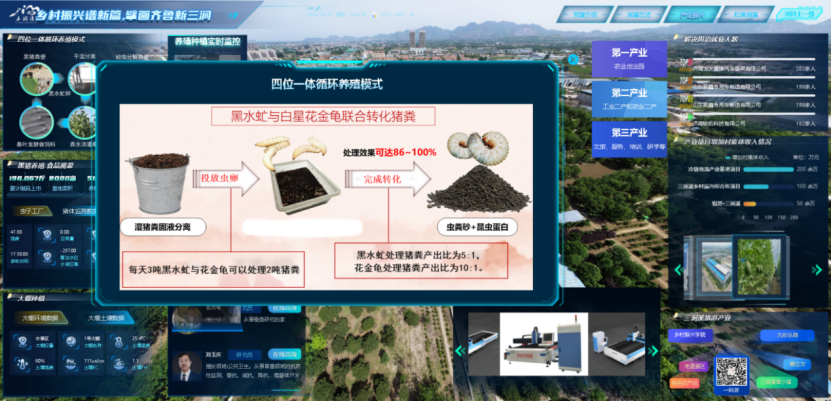
Core Viewpoint - The integration of digital technology in traditional agriculture has significantly transformed farming practices, enhancing efficiency and productivity through the use of IoT and big data [1][4]. Group 1: Digital Transformation in Agriculture - The collaboration between China Unicom and Sanjianxi Village has led to the implementation of a comprehensive IoT sensor system that monitors various agricultural processes, including black pig farming and organic planting [1][4]. - The "four-dimensional circular agriculture" model emphasizes the importance of data management in optimizing agricultural practices, with a focus on tracking the entire lifecycle from pig farming to vegetable cultivation [2][4]. Group 2: Cost Reduction and Efficiency - Digital management has resulted in a significant increase in black pig output, rising from approximately 3,000 to 10,000 heads annually, while also reducing labor costs through data monitoring [4][6]. - Enhanced product quality has been achieved through precision farming, leading to improved taste and higher market value for crops such as tomatoes and cucumbers [6]. Group 3: Skills Development and Community Engagement - China Unicom is actively providing digital skills training for local farmers and small business owners, covering areas such as IoT software, e-commerce, and digital content creation [6][8]. - The initiative aims to empower villagers to effectively utilize digital tools, likening the acquisition of data to driving on a highway, where understanding how to navigate is crucial [6]. Group 4: Integration of Industries - The digital initiatives not only support the primary agricultural sector but also promote the integration of secondary and tertiary industries, enhancing local economic development [8][9]. - The introduction of a digital rural platform and a "one-code tour" mini-program facilitates access to local tourism and culinary information, benefiting the community [8][9]. Group 5: Replicable Model for Future Development - The success of the Sanjianxi model is attributed to a collaborative ecosystem involving government, enterprises, and local communities, creating a sustainable and mutually beneficial environment [9]. - China Unicom plans to replicate this model in other rural areas by employing standardized modules tailored to local needs, focusing on AI governance and digital agriculture [9].

报告:数字技术重塑文旅体验 IP运营、智慧文旅等成招聘新风向
Zhong Guo Jin Rong Xin Xi Wang· 2025-09-23 06:21
Core Insights - The report by 51job highlights a significant increase in demand for hybrid talent combining technology and culture in the tourism and cultural sectors, driven by diverse consumer needs [1][2] - The integration of digital technologies such as AI, VR/AR, and big data is reshaping service models towards intelligent and personalized experiences, making technical skills a necessity in hiring [2][3] - Emerging roles like "Smart Tourism Solution Architect" and "Immersive Experience Designer" reflect the industry's urgent need for professionals with both technical and cultural expertise [1][2] Group 1: Talent Demand and Consumer Trends - The report indicates that by the first half of 2025, domestic travel in China is expected to reach 3.285 billion trips, marking a 20.6% year-on-year increase, which is driving the emergence of new job roles [1] - Consumer preferences are shifting from traditional sightseeing to immersive cultural experiences, leading to a transformation in tourism products towards personalization and experience [1][2] - The demand for traditional roles is declining, while innovative functions such as cultural IP value extraction and immersive experience design are on the rise [1] Group 2: Technological Integration and Job Market Changes - The report emphasizes that digital technologies are becoming core drivers of innovation in the tourism industry, with functionalities like smart itinerary planning and virtual tours gaining popularity [2] - Key hiring criteria now include practical skills in digital tools, with 67.4% of top companies prioritizing candidates' abilities in AI and VR, and 60% focusing on data analysis [2] - The job market is evolving to include positions that blend cultural insight with technical skills, such as "Cultural Tourism IP Operations Director" and "Metaverse Product Manager," with salaries ranging from 250,000 to 700,000 yuan [2]
方颖:把坚持问计于民落到实处
Jing Ji Ri Bao· 2025-09-23 00:04
Core Points - The year marks the conclusion of the "14th Five-Year Plan" and the planning for the "15th Five-Year Plan," emphasizing the importance of scientific planning in governance and modernization of the governance system [1][2] - The "15th Five-Year Plan" is crucial for implementing the strategic deployments of the 20th National Congress of the Communist Party and advancing Chinese-style modernization [1][2] - Historical evidence shows that long-term planning has significantly contributed to China's economic development and social stability, transitioning from basic needs to overall well-being [2] Group 1 - The importance of scientific decision-making, democratic decision-making, and legal decision-making in the planning process is highlighted, ensuring that top-level design and public consultation are integrated [3][4] - The "14th Five-Year Plan" involved extensive public engagement, with over 311.3 million suggestions collected online, setting a precedent for public participation in planning [3][4] - The need for a systematic approach in planning is emphasized, focusing on the interconnections between micro and macro, local and overall, and current and long-term relationships [6] Group 2 - The establishment of effective channels for public consultation is necessary to gather genuine public opinion and enhance understanding of strategies and plans [4] - Utilizing digital technology can improve data collection and analysis, allowing for better understanding of public needs and governance challenges [5][6] - A systematic view is essential for integrating top-level design with public input, ensuring that societal concerns are embedded in the overall planning framework [6]
赛场频现中原新实力
He Nan Ri Bao· 2025-09-22 23:25
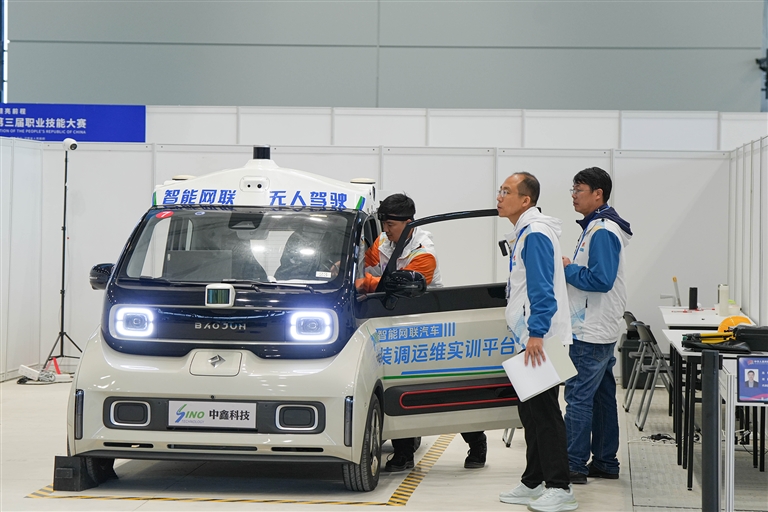
与传统汽车维修不同,这里没有油污和扳手,取而代之的是精密的电路模块和智能传感器。选手们需要快速 定位问题电路模块,排除各种技术障碍,展现对新兴技术的理解力和解决问题的能力。 第三届全国技能大赛智能网联汽车装调运维赛场上,河南选手李晓强(左一)正在专心进行比赛。河南日报 社全媒体记者 徐聪 摄 千百年来,技能推动下的创新创造,始终是推动发展的重要力量。第三届全国技能大赛设置的106个竞赛项目 中,智能制造、高端装备、数字技术等赛项占比超过50%。河南代表团参加了全部106个赛项的比赛。 "我参加的项目叫无人机系统,是前两届全国技能大赛所没有的,同时又是世赛选拔项目,将首次出现在明年 举办的第48届世界技能大赛中。"9月22日晚,来自河南技师学院的21岁选手王钰航说,"无人机系统项目融合 了机械、电子和计算机工程知识技能,考核选手对无人机的安装、调试、维护、编程及飞行任务完成能力, 是无人机行业的未来发展方向。" 赛项难度大,更激发了王钰航的好胜心。"我全身心投入比赛,个人的技能有了质的飞跃。同时,通过观察其 他选手,也发现了更适合自己的学习方法。"他说。 王钰航的成长足迹里,藏着个人精进技能的密码;我省所有选手 ...
经济半小时|飞行员有了“数字陪练” 新技术“跨界”催生新职业
Yang Shi Xin Wen· 2025-09-22 22:29
Group 1 - The core industry value added of the digital economy accounts for about 10% of GDP, becoming a key force supporting high-quality economic development [1] - The digital economy is expanding in scale, with applications in various fields such as virtual reality and artificial intelligence, leading to the emergence of new professions [1] - The Shenzhen Nanshan Museum has integrated the Dunhuang Grottoes into its exhibition through digital technology, showcasing a new mode of exhibition [3] Group 2 - A virtual reality development engineer and his team spent six months creating the digital Dunhuang virtual reality exhibition, involving data processing and content design [5] - The virtual reality team consists of over 20 members, highlighting the increasing number of new roles and collaboration among different job functions [5][7] - The team has developed over 20 virtual reality products, primarily applied in cultural tourism and digital performances, with a growing demand for talent [7] Group 3 - Digital technology is creating new employment opportunities, such as flight simulators for training pilots, which are becoming increasingly important in talent training and safety drills [9] - A domestic technology team is collaborating to develop a new flight simulator system to meet the growing demand for higher simulation quality [9][11] - A gaming company is also forming an "industrialization group" to apply gaming technology to various cutting-edge applications [13] Group 4 - The demand for animation production efficiency has surged, leading to the emergence of new professions focused on developing AI tools for animation [15] - A team has developed AI tools for animation production, aiming to promote these tools in overseas markets [17] - The digital economy in China exceeds 50 trillion yuan, contributing over 40% to GDP, with the gaming industry rapidly growing and projected to exceed 325.783 billion yuan in 2024 [18]

不止信贷!绿色金融新十年,数字技术成关键变量
Bei Jing Shang Bao· 2025-09-22 10:32
Core Insights - The establishment of the Green Finance Working Group by the People's Bank of China in 2014 has led to significant growth in green finance over the past decade, becoming a crucial pillar for economic green transformation and sustainable development [1] - The focus of green finance development is shifting towards policy standardization, international collaboration, and the integration of digital technologies like AI and blockchain to enhance financial support for green transitions [1][9] Policy System Improvement - The green finance policy system in China has become increasingly refined, with substantial product innovation and a market scale that ranks among the top globally [3] - Key achievements include the release of the "Green Finance Support Project Catalog," which standardizes various green financial products and covers the entire production-consumption chain [3] - The introduction of the "Biodiversity Finance Catalog" aims to balance ecological protection with economic development, establishing a comprehensive framework for green finance [3] Capital Market Developments - The implementation of the "Implementation Opinions on Capital Market's Role in Green Low-Carbon Transition" is set to enrich the product system for green finance in the capital market [4] - As of April 30, 2025, over 45% of A-share listed companies are expected to disclose sustainability reports, with a significant increase in carbon emission disclosures [4] Industry Transformation Challenges - The transition towards carbon neutrality faces urgent demands in key sectors like energy and infrastructure, with a focus on aligning financial supply with these needs [6] - Challenges include systemic issues related to energy consumption capacity, technical hurdles in energy storage, and economic viability of energy projects [6] Financial Institutions' Role - Financial institutions are urged to provide low-cost, efficient, and customized financing services to meet the specific needs of renewable energy projects [7] - Institutions like CITIC Securities are actively developing innovative financial products, including green bonds and carbon-neutral bonds, to support clean energy initiatives [7] Digital Technology Integration - Digital technologies such as AI and blockchain are seen as key enablers for addressing the challenges in green finance, particularly in measuring and verifying environmental benefits [9][10] - The use of blockchain ensures the authenticity and transparency of green assets, while AI enhances data processing and predictive capabilities for energy projects [10][11] Future Directions - The next decade will focus on enhancing the policy framework for green finance, promoting innovation, and fostering international cooperation [5] - There is a need for a new ecosystem and business models based on digital technology to effectively cover smaller projects and activate the long-tail market in green finance [11]
人民财评:数字动能,激活乡村振兴新引擎
Ren Min Wang· 2025-09-22 06:46
Group 1 - The core idea of the articles emphasizes the role of e-commerce platforms in enhancing farmers' income and promoting rural revitalization during the Chinese Harvest Festival [1][2][3] - E-commerce platforms have initiated special promotional activities during the Harvest Festival, providing subsidies and operational support to farmers, resulting in over 130 billion yuan in agricultural product sales [1] - Digital technology, including live-streaming and traceability systems, has significantly improved the marketing of agricultural products, allowing farmers to convert their hard work into tangible income [1][3] Group 2 - E-commerce training programs are empowering farmers with digital skills, transforming them from mere producers to effective sellers, with a projected rural online retail sales of 2.52 trillion yuan by the end of 2024 [2] - The application of traceability systems using QR codes and blockchain technology enhances consumer trust by providing detailed information about agricultural products, thus promoting quality over quantity in agricultural production [3] - The integration of digital technology in agriculture is seen as a new engine for rural revitalization, with expectations for deeper collaboration between e-commerce and agriculture in the future [3]