
智慧农业

Search documents
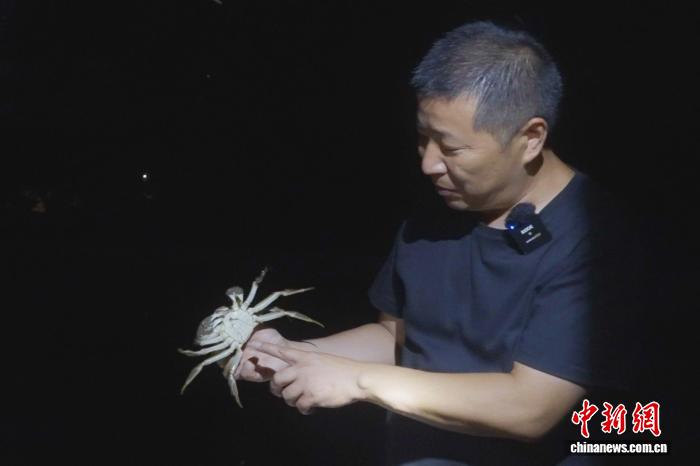
秋风起时看“头雁” “金蟹”谱写共富经
Zhong Guo Xin Wen Wang· 2025-11-19 06:39
Core Insights - The article highlights the success of Shanghai Shengmiao Aquaculture Cooperative in crab farming, particularly the achievements of its chairman, Ma Yonghua, who has won multiple awards for the quality of his crabs [1][3][7] Group 1: Business Model and Innovations - The cooperative has shifted from a quantity-focused approach to a quality-driven model, implementing a unique "counting farming method" that limits the number of crab seedlings per acre to 600, resulting in higher quality crabs [3][4] - The cooperative's crabs are marketed as premium products, primarily sold in gift boxes, rather than entering the general market, which enhances their value [3][4] - The cooperative has achieved a green food certification, making it one of the few in Shanghai to do so, by utilizing an ecological farming model that includes water recycling and crop rotation [4][5] Group 2: Community Impact and Leadership - Ma Yonghua has taken on a leadership role in the community, participating in the "head goose" training program by the Ministry of Agriculture and Rural Affairs, and helping local farmers increase their income through ecological farming practices [5][6] - The cooperative's model allows for significant income increases for local farmers, with estimates suggesting an additional income of nearly 2000 yuan per acre through integrated farming [5][6] - The transformation of local farmers' attitudes from skepticism to active participation in the cooperative's practices demonstrates the positive impact of Ma's leadership [5][6] Group 3: Seasonal and Diversified Production - The cooperative has diversified its production, growing various crops throughout the year, including watermelons, peaches, and other aquatic products, which helps maintain year-round employment for workers [6][7] - The application of smart agricultural technologies, such as mechanization and drone usage, has revitalized traditional farming practices, contributing to the overall efficiency of the cooperative [6][7] - The article emphasizes the importance of modern agricultural management and the role of innovative leaders in driving rural revitalization [6][7]

科技引领 品牌赋能 中部农博会为乡村振兴与农业现代化注入新活力
Zhong Guo Fa Zhan Wang· 2025-11-19 05:14
Core Insights - The 26th China Central (Hunan) Agricultural Expo was held from November 14 to 17, showcasing over 3,500 enterprises from 17 provinces and regions in China and more than ten countries, emphasizing the theme of "Technology Leading, Brand Empowerment, and Supporting Rural Revitalization" [1][2] Group 1: Exhibition Highlights - The expo featured a diverse range of agricultural products, including Tianjin's "Imperial Tribute Rice," Jilin's ginseng, and Xinjiang's melons and grapes, demonstrating the rich variety of local and international agricultural goods [2][3] - Hunan's agricultural products, such as "Dongting Fragrant Rice" and "Hunan Tea Oil," were prominently displayed, showcasing the province's branding efforts and the success of geographical indication products [2][3] Group 2: International Participation - The expo included international products from countries like Laos, South Africa, and Thailand, enhancing global agricultural exchanges and showcasing South Africa as the guest country with its unique products [3] Group 3: Technological Advancements - Hunan's agricultural sector is highlighted for its advancements in smart agriculture, with companies like Zhonglian Smart Agriculture showcasing their integrated data collection and decision-making systems for crop management [4][6] - The province has made significant strides in seed industry innovation, producing 30% of the country's hybrid rice seeds and fostering leading enterprises in the sector [5][6] Group 4: Economic Impact - The expo facilitated substantial economic activity, with 28 projects signed worth approximately 10 billion yuan, and total sales exceeding 600 million yuan during the event [7][8] - The event has evolved from a simple product exhibition to a comprehensive platform for brand display, technology exchange, trade negotiation, and investment attraction, contributing to rural revitalization [8][9] Group 5: Future Developments - The expo aims to create a modern agricultural service ecosystem by integrating exhibition, circulation, data, and finance, positioning itself as a continuous empowering hub for the agricultural industry [8][9]
国内首个生产型大白菜无人农场科技感满满
Ke Ji Ri Bao· 2025-11-18 23:56
在一片绿油油的蔬菜试验田里,无人耕整装备精准翻耕,无人收获机高效采收白萝卜、大白菜等作物。 这不是未来农业的科幻场景,而是日前记者在全国首个生产型大白菜无人农场看到的真实画面。 根茎类蔬菜收获区更显热闹。白萝卜、胡萝卜专用收获机"张开大口",精准夹住萝卜缨叶,轻松将其从 土壤中拔出,松土、扶叶、夹拔、输送、切缨等工序一次性完成。切缨后的萝卜直接被传送至运输机器 人上,实现收获与转运全自动衔接。相较传统人工方式,单台收获机作业效率相当于50名劳动力,大幅 降低人工投入。 在白菜收获区,全国首台纯国产的大白菜无人收获机亮相。该机通过北斗定位与视觉精准对行系统,自 动识别白菜位置,平稳执行扶正、抱球、切割、传送等采收动作,实现大白菜精准有序采收,作业过程 安全高效、秩序井然。 "太舟坞示范区通过物联网、无人农机与智能管理系统的深度融合,实现了大白菜、胡萝卜等主要露地 蔬菜全程机械化、少人化生产,显著提升了作业效率,降低了用工成本。"北京市农林科学院副院长杨 国航表示,全国首个生产型大白菜无人农场是该院"奇稷智慧农场"系列的重要组成,标志着智慧农 业"北京模式"在全国蔬菜领域率先落地,为蔬菜产业高质量发展提供了新路径 ...
智慧农机深耕“无人农场” 勾勒中国农业新图景
Zhong Guo Xin Wen Wang· 2025-11-18 10:54
Core Insights - The article discusses the development of unmanned farms in China, highlighting the integration of advanced technologies to automate agricultural processes, thereby transforming traditional farming practices into a more efficient and precise model [1][3][4]. Group 1: Unmanned Farm Operations - An unmanned farm covering over 830 acres has been established in Zouping, Shandong, utilizing "space-ground integration" technology to achieve full automation in the cultivation, planting, management, and harvesting of crops like wheat and corn [1][3]. - The unmanned farm employs various irrigation systems and ground IoT devices, along with drones and remote sensing satellites, to monitor crop growth, soil moisture, weather conditions, and pest threats [1][3]. Group 2: Technological Advancements - The unmanned farm features five types of unmanned agricultural machines and ten types of smart equipment, enabling full-scene autonomous driving and operation [3][4]. - A three-dimensional perception network has been established using satellite remote sensing, drone surveillance, and ground sensors, allowing for automatic monitoring and diagnosis of agricultural conditions [3][4]. Group 3: Economic Impact - The implementation of unmanned farming has resulted in a reduction of labor by over 70%, a cost savings of at least 10%, and an increase in yield by no less than 5% [4][5]. - Farmers are increasingly adopting smart agriculture practices, with one farmer expanding his operations from 10 acres to 100 acres, benefiting from improved efficiency through the use of unmanned machinery [5]. Group 4: Future of Agriculture - The shift towards unmanned farms is seen as a response to the aging rural labor force, with technology attracting younger individuals to the agricultural sector [5]. - The article suggests that traditional farming roles may diminish as larger, more professionalized farms emerge, leading to a fundamental transformation in agricultural production methods [5].

从玉智农与八爪智能签署战略协议 共筑“AI+低空经济”智慧农业新标杆
Zhi Tong Cai Jing· 2025-11-18 05:45
Core Insights - The collaboration between Yuzhinong and Inner Mongolia Bazhua Intelligent Technology Co., Ltd. marks a significant step in the field of smart agriculture, aiming to leverage cutting-edge technology to transform traditional production models and modernize agriculture [1][2]. Group 1: Partnership Overview - The partnership focuses on integrating "AI" and "low-altitude economy" to empower Yuzhinong's existing agricultural operations strategically [1]. - Both companies possess strong capabilities and complementary advantages, with Yuzhinong being a publicly listed company in Hong Kong with extensive agricultural application scenarios and market resources, while Bazhua Intelligent is a hard-tech company with proprietary technology in autonomous laser weeding [1][2]. Group 2: Key Cooperation Areas - Three core areas of cooperation have been defined: 1. Establishing demonstration parks to set industry benchmarks, with Bazhua's autonomous laser weeding robots being deployed in Yuzhinong's high-standard farmland and vegetable bases [2]. 2. Jointly forming a "Smart Agriculture AI Algorithm Joint Laboratory" to tackle challenges in agricultural visual models in complex field environments [2]. 3. Co-creating data assets from agricultural data generated during the collaboration, which will be jointly owned and viewed as strategic resources for future data markets [2]. Group 3: Technological Strengths - Bazhua Intelligent boasts a high R&D team ratio of 70.6% and has applied for 33 patents, with 100% of its core intellectual property being independently developed [4]. - The company's flagship product, the high-performance autonomous laser weeding robot, achieves weeding efficiency 40 times that of manual labor, with a weeding accuracy rate exceeding 95% and a crop damage rate below 5% [2][4]. Group 4: Industry Impact - This strategic partnership is seen as a deep integration of capital markets and hard technology in agriculture, responding to national strategies for agricultural transformation through "AI + low-altitude economy" [4]. - The collaboration aims to address rural labor shortages, ensure food security, and promote sustainable agricultural development, providing replicable and scalable modern solutions for agricultural modernization in China and globally [4].

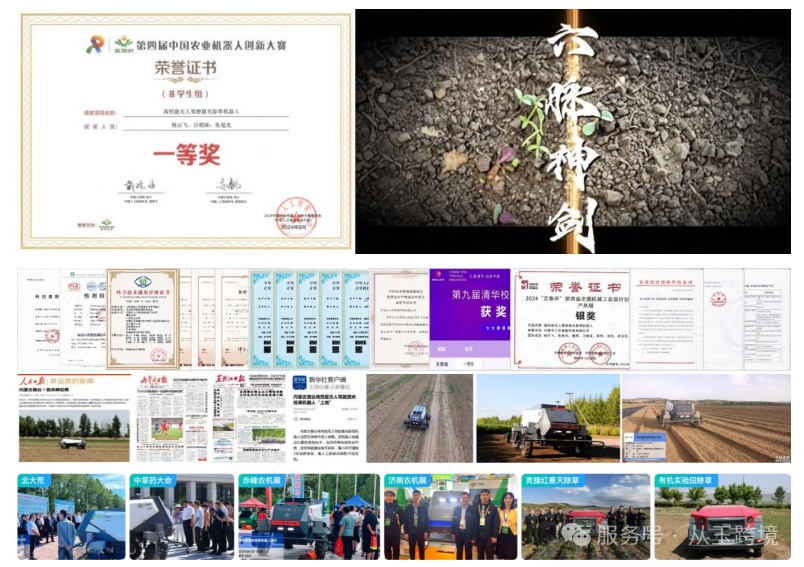
学习贯彻四中全会精神 金融助力首都乡村全面振兴
Bei Jing Ri Bao Ke Hu Duan· 2025-11-17 22:44
Core Viewpoint - Rural revitalization is a key support for Chinese-style modernization and a necessary path to achieve common prosperity, with finance playing a crucial role in resource allocation and development [1] Group 1: Financial Support for Rural Revitalization - Agricultural Bank of China (ABC) Beijing Branch has focused on enhancing financial services for rural revitalization, investing over 49 billion yuan in loans for agricultural enterprises during the 14th Five-Year Plan, with agricultural loan balances increasing by nearly 15 billion yuan since the end of 2020 [2] - The bank has developed a "Three Rural" financial service system, implementing 20 measures to support the "Hundred Thousand Project" in areas such as ecological livability and rural governance, and has created various innovative financial products [2][3] - ABC has launched a series of specialized loans totaling over 2.8 billion yuan to meet the diverse needs of agricultural clients, including products like "Peach Loan" and "Smart Animal Husbandry Loan" [3] Group 2: Enhancing Financial Services in Key Areas - The bank aims to ensure food security by creating a comprehensive financial service model that supports the entire agricultural supply chain, collaborating with major agricultural enterprises to enhance financial supply capabilities [4] - ABC is actively involved in rural infrastructure projects, providing efficient financial services for public infrastructure needs, and has facilitated significant compensation payments to farmers [4] Group 3: Recommendations for National Financial Support - It is recommended to strengthen the top-level design of rural financial development strategies, emphasizing the importance of addressing "three rural issues" and promoting urban-rural integration [6] - A multi-layered, sustainable investment system for rural revitalization should be established, including a national rural revitalization guiding fund to support key areas like agricultural technology innovation and rural tourism [9] Group 4: Focus on Technological Empowerment - The emphasis is on supporting the development of new agricultural productivity through technology, advocating for a diversified investment framework that includes policy, commercial, and cooperative finance [8] - Encouraging the transformation of scientific research achievements into practical applications in agriculture, and promoting the integration of technology and industry [8] Group 5: Supporting Agricultural Industry Quality Improvement - The focus is on enhancing the quality of rural industries by promoting the integration of agriculture with tourism and other sectors, and developing a modern agricultural system in Beijing [11] - Initiatives to build strong agricultural brands and support the development of geographical indication products are highlighted [12] Group 6: Improving Services for Farmers - Financial services should aim to benefit farmers directly, with a focus on improving public services and infrastructure in rural areas [13] - Strategies to help farmers increase income through the development of local specialty industries and the transformation of rural assets into tradable capital are proposed [13]

跨越山海,中拉合作又向新
Ren Min Ri Bao· 2025-11-17 22:20
Core Points - The 18th China-Latin America Entrepreneurs Summit was held in Zhengzhou, attended by over 1,000 participants from government, business, and academia, resulting in 73 preliminary cooperation intentions [1] - The year 2025 marks the 10th anniversary of the China-Latin America Forum, indicating a new phase of high-quality development in China-Latin America relations [1] - There is an increasing acceptance of Latin American agricultural products in the Chinese market, with notable sales of products like lobsters, avocados, and blueberries [1] - Yutong has sold nearly 30,000 new energy buses in Latin America and is also building charging stations and providing after-sales services, receiving positive feedback from local populations [1] - The freight route from Zhengzhou to Mexico City has seen nearly 700 flights, now increased to five flights per week, extending services to Colombia, Peru, and Venezuela [1] - A dialogue on smart agriculture was held during the summit, with agreements signed for cooperation in agricultural technology demonstration bases and crop trials [1] Industry Insights - The summit highlighted the deepening strategic trust and practical cooperation between China and Latin America, emphasizing mutual benefits and innovation [1] - The cooperation in smart agriculture aims to enhance agricultural transformation towards intensification, with specific projects planned in Uruguay [1][2] - The trade relationship is not only about goods but also about building a connection between the peoples of Latin America and China, focusing on mutual development [2]
4万余种农特产,1500万元消费券……浙江农业“嘉年华”来啦
Sou Hu Cai Jing· 2025-11-17 18:13
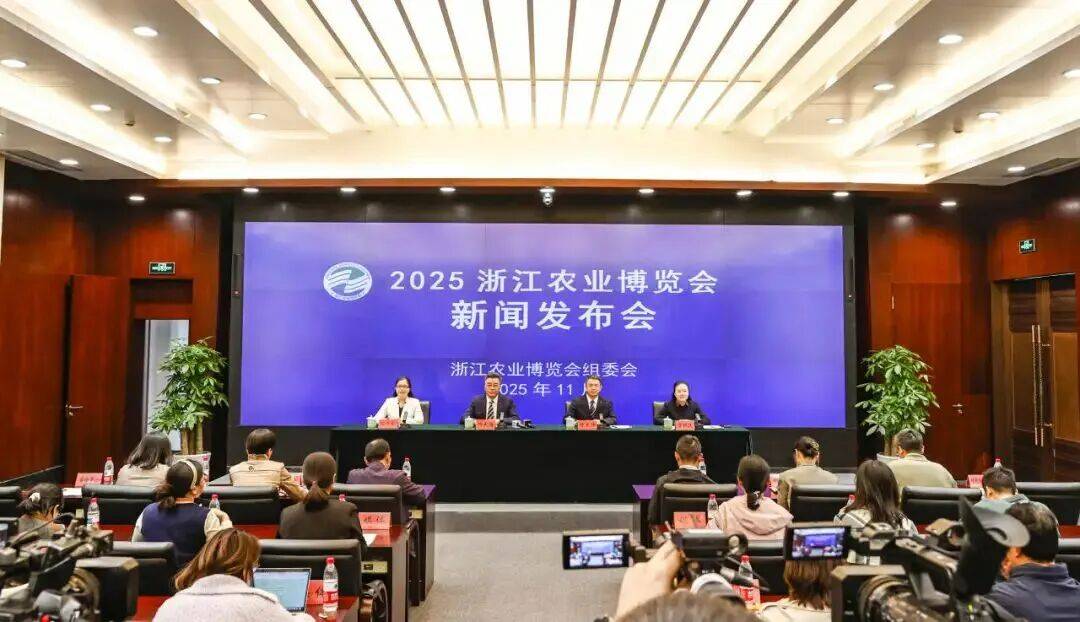
Core Points - The 2025 Zhejiang Agricultural Expo will be held from November 21 to 25 at the Hangzhou International Expo Center, featuring a theme of "Vigorously Developing Local Specialties, Enjoying a New Life of Common Prosperity" [1] - The expo will cover an exhibition area of 60,000 square meters, showcasing over 3,500 enterprises and more than 40,000 products [1][3] - A total of over 15 million yuan in consumer vouchers will be distributed to stimulate market activity and boost agricultural product consumption [3] Exhibition Details - The expo will feature six exhibition halls, including achievement exhibition areas, provincial and municipal unit areas, regional cooperation areas, agricultural brand areas, county and city sales areas, and a special area for local snacks [3] - This year marks the first time a leading enterprise exhibition area will be set up, with 56 provincial-level agricultural leading enterprises participating, including 19 national-level enterprises, representing a 26% increase year-on-year [3] - The participation of external provinces has expanded, with Shanxi, Inner Mongolia, Henan, Hunan, and Guizhou being represented for the first time [3] Technological Innovations - The expo will highlight "smart agriculture" with new scenarios, showcasing models like "Agricultural Industry Brain + Future Farm" and applications in digital pig farming and AI fishery factories [4] - Focus will be on the development of new agricultural productivity, showcasing achievements in technology-driven agriculture, machinery promotion, and green technology [4] - The event will also present the latest advancements in agricultural machinery and integrated service models combining agriculture technology and low-altitude economy with AI [4] Visitor Experience - Interactive experiences will be available, including various routes and immersive exhibition areas featuring local specialties such as Yuhang matcha, Sanmen blue crab, and Qinyuan mushrooms, along with 80 types of local snacks [4] - The expo will include interactive projects like tea art, intangible cultural heritage paper-cutting, AI consultations, and blind box oyster opening, enhancing the agricultural experience for visitors [4] Access and Logistics - The expo will be held on the first and third floors of the Hangzhou International Expo Center, with five convenient transportation options available for visitors [6] - Daily opening hours will start at 9 AM, with varying closing times, and attendees can register in advance or enter with an ID [6]
农发行黑龙江省分行以政策性金融之力推动智慧农业做大做强
Zheng Quan Ri Bao· 2025-11-16 14:39
Core Insights - Heilongjiang Province, as China's largest grain-producing province, emphasizes the importance of smart agriculture for ensuring food security and enhancing production capacity [1] - The Agricultural Development Bank of China (ADBC) in Heilongjiang has significantly increased its credit support for modern agriculture, focusing on key areas such as smart agriculture, digital agriculture, and agricultural technology innovation [1] Group 1: Financial Support for Agricultural Development - ADBC Heilongjiang has provided a total of 13.178 billion yuan in agricultural technology loans since the 14th Five-Year Plan, facilitating the transformation and high-quality development of smart agriculture [1] - The bank has issued loans totaling 250 million yuan for the infrastructure construction of the Jiamusi National Agricultural High-tech Industry Demonstration Zone, marking a significant step in supporting the agricultural technology innovation ecosystem [2] - ADBC has also provided 80 million yuan in loans to a rice processing enterprise within the demonstration zone, reinforcing the financial services for the entire grain industry chain [2] Group 2: Empowering Agricultural Machinery Manufacturing - Heilongjiang Chongxing Machinery Equipment Co., Ltd. has received 47 million yuan in loans from ADBC, enabling the supply of advanced agricultural machinery to local farmers [3] - The company has successfully provided 185 satellite leveling machines and 335 sets of agricultural tracks, enhancing the quality of agricultural production [3] - Investments in advanced production equipment have allowed the company to maintain a competitive edge in the agricultural machinery sector [3] Group 3: Promoting High-Standard Farmland Construction - The city of Shuangyashan is actively advancing high-standard farmland renovation, transforming small plots into large, efficient agricultural fields equipped with smart agricultural facilities [4] - ADBC Shuangyashan has issued 1.263 billion yuan in loans for the "storing grain in the ground" initiative, aimed at improving agricultural production conditions [4] - The bank is committed to enhancing the efficiency of loan processing and fund disbursement to support high-standard farmland projects [4] Group 4: Future Directions - ADBC Heilongjiang plans to continue fostering new agricultural productivity and strengthen the technology-driven agricultural cooperation platform to promote the growth of smart agriculture [5]
金融赋能:强农兴农“智慧”先行
Zheng Quan Ri Bao Zhi Sheng· 2025-11-16 10:09
Core Insights - The core focus of the article is on the development of smart agriculture in China, emphasizing the establishment of a standard system to enhance the industry and the role of financial institutions in supporting this growth [1][2]. Industry Overview - The Ministry of Agriculture and Rural Affairs has released a guide to build a smart agriculture standard system, aiming to promote the industry's development and improve standardization efforts [1]. - China's smart agriculture market is projected to reach approximately 105 billion yuan in 2024, with a year-on-year growth of 11.7%, and is expected to grow to 120 billion yuan by 2025 [1]. Financial Support Mechanisms - Financial institutions, including policy banks and commercial banks, are actively creating a multi-layered financial service system to support smart agriculture, providing traditional credit support and innovative products [1]. - The People's Bank of China in Heilongjiang has introduced a combination of services to support the development of smart agriculture, enhancing the mechanization rate of crop farming to 99.07%, which is 26 percentage points higher than the national average [3][4]. Technological Integration - The integration of technology and finance is transforming traditional agriculture, with smart farming equipment like intelligent corn fertilization machines being utilized to enhance efficiency and productivity [4][5]. - Financial institutions are developing tailored financial services for technology-driven agricultural enterprises, facilitating the growth of smart agriculture [4][6]. Product Innovations - Various banks in Heilongjiang are launching innovative financial products to support smart agriculture, such as "Dragon Grain Financing" and "Agricultural Socialized Service Loans," aimed at enhancing the agricultural value chain [6][7]. - The Industrial and Commercial Bank of China is utilizing satellite remote sensing technology to monitor agricultural loan clients' crop conditions, enabling efficient loan management [7]. Impact on Agricultural Modernization - The comprehensive financial support aligns with Heilongjiang's agricultural modernization strategy, promoting the adoption of advanced technologies like Beidou navigation and drones in smart agriculture [8].