通用人工智能

Search documents
把经济建设这个中心抓得更牢
Sou Hu Cai Jing· 2025-11-03 21:52
Core Insights - The latest data from the National Bureau of Statistics indicates that China's automotive manufacturing, railway, shipping, aerospace, and other transportation equipment manufacturing industries have maintained double-digit growth year-on-year in the first three quarters [1] - High-tech manufacturing sectors, such as intelligent drone manufacturing and intelligent vehicle-mounted equipment manufacturing, have seen significant increases in value added, with growth rates of 59.9% and 25.1% respectively [1] - The 20th Central Committee of the Communist Party emphasizes the importance of economic construction, high-quality development, reform and innovation, and the need to meet the growing demands of the people [1] Investment and Economic Strategy - The focus on enhancing quality while expanding total volume is crucial, with a need to balance reasonable growth rates with structural optimization [2] - Key performance indicators will include total factor productivity, innovation capability, industrial resilience, resource allocation efficiency, and public service quality [2] - The approach aims to stabilize short-term growth while laying a foundation for long-term high-quality development [2] Industrial Development - Strengthening and optimizing the real economy is essential for implementing the focus on economic construction at the industrial and supply side [3] - The development of the domestically produced C919 aircraft exemplifies the need for a coordinated system involving research, manufacturing, certification, market expansion, and talent cultivation [3] - There is a call to address weaknesses in the industrial supply chain, particularly in core components, basic processes, and key materials [3] Market Integration - Promoting a unified national market is vital for enhancing domestic circulation and strengthening the domestic market [4] - Efforts will be made to streamline regulations and eliminate unreasonable regional barriers to improve the business environment [4] - The focus will also be on optimizing consumer environments and directing investments towards key areas that address shortcomings and enhance capabilities [4] Innovation and Productivity - Cultivating new productive forces is essential for aligning economic construction with innovation across various chains, including industry, finance, and talent [5] - Emphasis will be placed on demand-driven research organization and improving the efficiency of transitioning from pilot projects to large-scale applications [5] - Continuous reforms in key areas such as property rights protection, market-oriented resource allocation, and financial systems are necessary to remove obstacles to high-quality development [5]
人形机器人大概要进入第一轮寒冬
自动驾驶之心· 2025-11-03 08:55
Core Viewpoint - The humanoid robot industry is facing significant challenges and may be entering a period of stagnation, with many companies failing to meet expectations and a lack of clear pathways to mass production [3][10]. Industry Performance - Internationally, companies like Tesla are struggling, with the Gen2 model facing overheating and durability issues, leading to a halt in production plans for this year, while Gen3 has been postponed to Q1 next year [3][4]. - Meta's AI chief and Google DeepMind's head have both indicated that true intelligence in humanoid robots is still years away, estimating a timeline of at least 5-10 years before robots can enter the home market [4]. Domestic Market Observations - The domestic market appears to be experiencing a false sense of prosperity, with many orders being reported as non-deliverable or merely framework orders that do not require immediate fulfillment [5][6]. Technological Limitations - Despite advancements in hardware, the industry has not achieved practical widespread application of robots, with AI technology not yet demonstrating the general intelligence needed for humanoid robots [8][9]. - Current AI applications in robotics are limited to specific scenarios and lack generalization capabilities, which could lead to failures in more complex environments like homes [12]. Challenges in Learning and Adaptation - Video learning, while a promising area, has not yet produced results that demonstrate the ability to generalize operations, with many companies still relying on real-world data collection rather than effective video learning techniques [15][17]. Potential Upsides - There are two uncertain factors that could influence the industry positively: 1. The performance of Tesla's Optimus Gen3, which is seen as a potential game-changer if it exceeds expectations [18][19]. 2. The possibility of hardware advancements leading to new market opportunities, as seen with companies like Yushun, which have successfully carved out niches in the entertainment sector [22][23]. Conclusion - The humanoid robot industry may be in a phase of necessary recalibration, similar to the early challenges faced by the electric vehicle sector, where technological advancements continued despite market difficulties [24].



美媒:结盟巨头、影响美国经济,OpenAI已“大到不能倒”?
Feng Huang Wang· 2025-11-03 06:57
Core Insights - OpenAI has become a significant player in the AI industry, with a valuation reaching $500 billion, despite not yet being profitable and generating only $13 billion in revenue this year [3][4]. - There are concerns about OpenAI's potential failure and its systemic risk to the U.S. economy, particularly if the expectations surrounding its AI capabilities do not materialize [2][9]. - The company is seen as a pivotal entity in the tech sector, with its influence likened to that of major corporations during past economic crises [2][7]. Company Overview - OpenAI's current valuation of $500 billion coincides with U.S. government efforts to promote AI development as a means to invigorate the economy [3]. - The company was initially founded as a non-profit in 2015 and has since evolved into a major player in the tech industry [3]. - OpenAI's CEO, Sam Altman, envisions that general artificial intelligence (AGI) could be crucial for solving significant global challenges, including cancer treatment [6]. Financial Structure and Market Position - OpenAI has undergone restructuring to simplify its corporate structure, facilitating private investment and potential plans for an initial public offering (IPO) valued at $1 trillion [5]. - Microsoft holds a 27% stake in OpenAI, and the partnership has contributed to significant market valuations for both companies [7][8]. - OpenAI's collaborations with tech giants like Nvidia and Oracle are seen as strategic moves to leverage high valuations for acquiring essential assets [8]. Industry Impact and Future Outlook - The AI sector is viewed as underestimating the potential of AI technologies, with calls for increased investment to match the anticipated advancements [8][9]. - Some industry leaders express optimism about the exponential capabilities that AI investments could unlock, potentially transforming various sectors [9]. - However, there are contrasting views that liken OpenAI's situation to historical economic bubbles, raising concerns about its long-term sustainability [9][10].
奥特曼否认OpenAI明年上市,称年收入远超130亿美元
Cai Jing Wang· 2025-11-03 05:35
Core Insights - OpenAI's CEO Sam Altman denied rumors of an IPO in 2024, stating there is no specific date or decision from the board regarding going public [1][2] - OpenAI's revenue is reportedly much higher than the previously mentioned $13 billion, with Altman expressing optimism about future earnings [2] Company Structure and Financials - OpenAI has completed a capital restructuring, establishing a non-profit organization called OpenAI Foundation, which holds approximately $130 billion in equity of its for-profit arm, now named OpenAI Group PBC [1] - The OpenAI Foundation owns 26% of the for-profit entity, while current and former employees and investors collectively hold 47% [1] Investment and Valuation - Microsoft supports the restructuring, with its investment in OpenAI Group PBC now valued at around $135 billion, representing 27% of the diluted shares [2] - Despite significant funding and revenue generation, OpenAI is expected to continue facing losses, with estimates suggesting a quarterly loss exceeding $12 billion [2]

奥特曼否认OpenAI明年上市传闻,称公司年收入远超130亿美元
Xin Lang Cai Jing· 2025-11-03 03:29
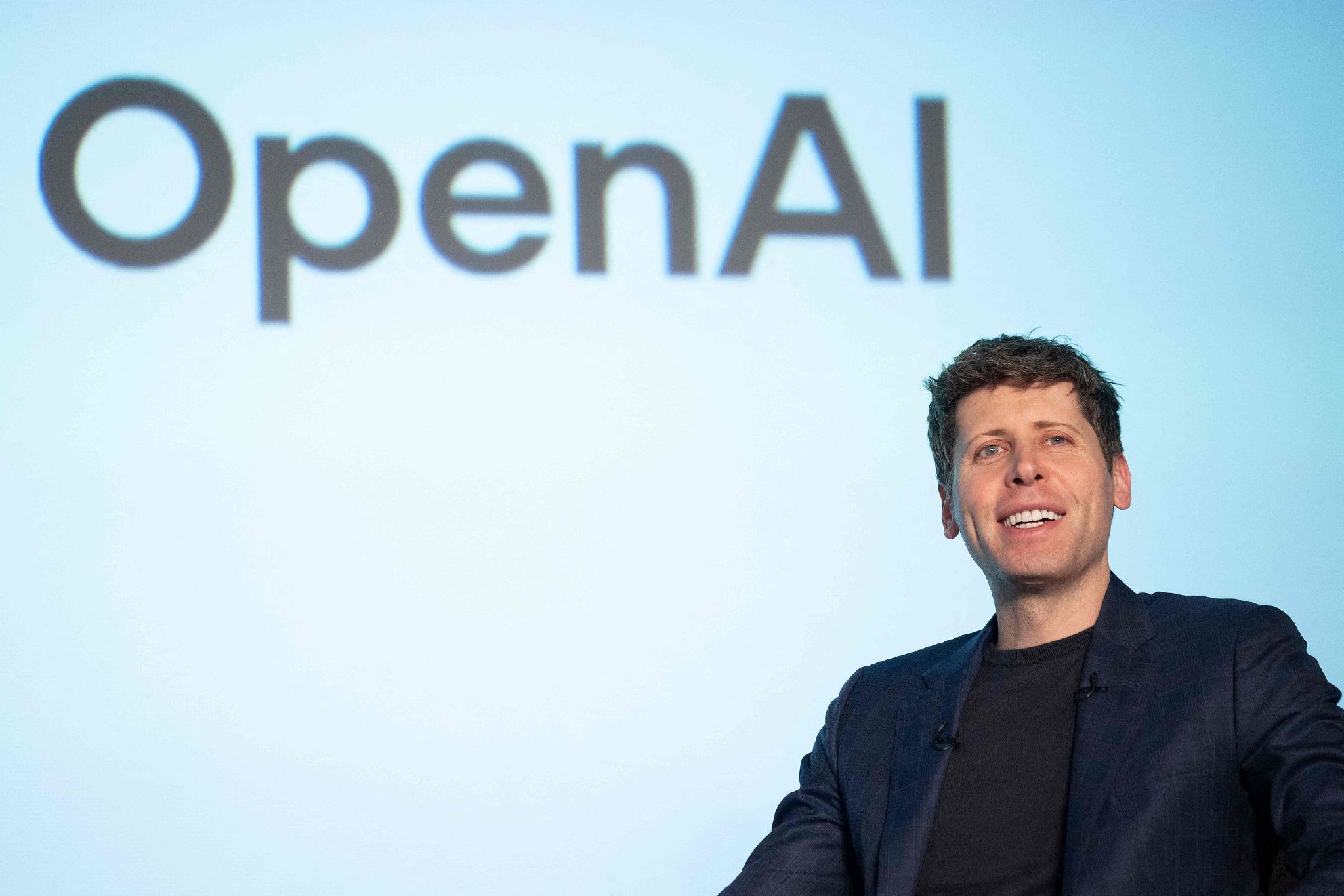
11月3日消息,在最新的一档播客节目中,OpenAI首席执行官山姆·奥特曼否认了公司明年上市的传闻,并透露了公司的营收状况。 针对近日有关OpenAI计划明年上市的报道,奥特曼称,上市没有具体的日期,董事会也没有就此做出任何决定。"我只是觉得事情最终会朝着那个方向发 展。" 宣布完成资本重组的当天,奥特曼表示,鉴于公司未来所需的资本规模,首次公开募股(IPO)是公司最有可能选择的路径。 在最新的播客中,奥特曼表示出对公司收入预测的乐观,并称他将抓住机会反击批评者。被问到OpenAI如何能在年收入仅130亿美元的情况下做超万亿美元 的财务承诺时,奥特曼说"我们的实际营收远超这个数字"。近几周OpenAI相继宣布与英伟达、博通、甲骨文等企业达成大规模人工智能基础设施合作。 尽管OpenAI持续从投资者那里筹集数十亿美元的资金,并产生更多收入,但奥特曼也警告称亏损将持续存在。此前有媒体根据微软公布财报分析称, OpenAI当季亏损或超过120亿美元。财报显示,微软对OpenAI的投资导致净利润减少31亿美元。基于微软持有约27%的OpenAI股份,分析师推测,这意味着 OpenAI本季度净亏损约115亿美元。考虑到 ...
摩尔线程IPO注册获批 科创板将迎国产GPU第一股|一周市场观察
Sou Hu Cai Jing· 2025-11-02 13:13
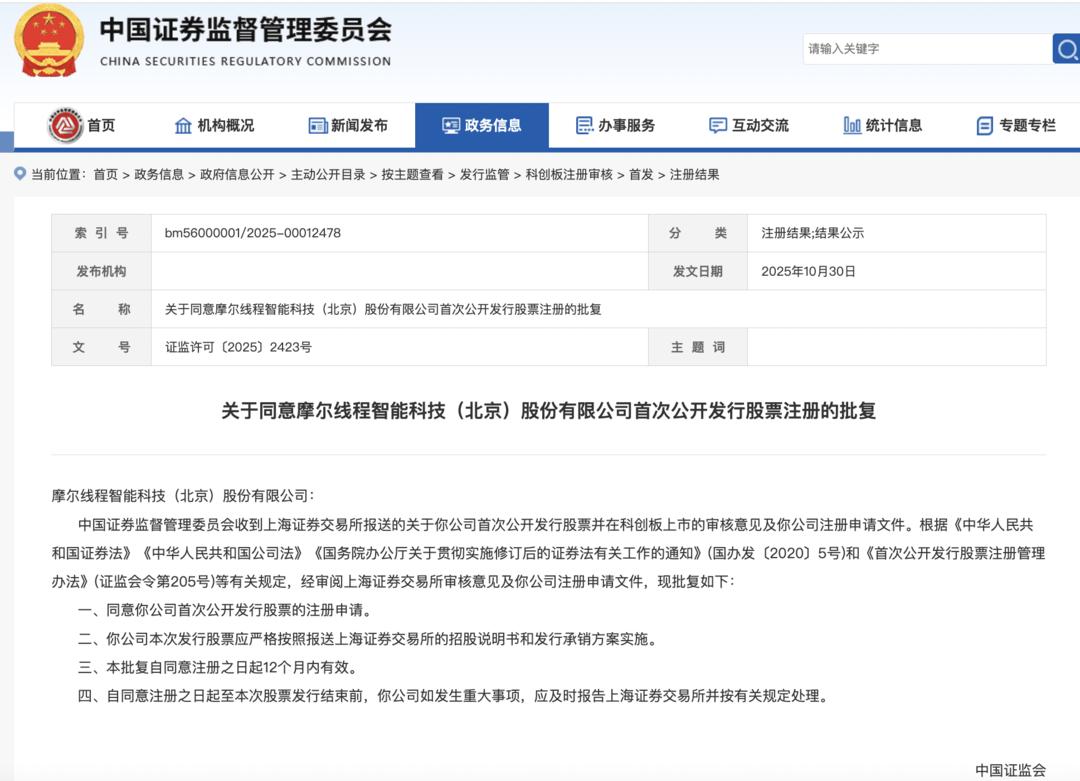
Core Viewpoint - Moer Technology has received approval for its IPO registration on the Sci-Tech Innovation Board, marking it as a significant player in the domestic GPU market and reflecting the implementation of the "1+6" policy for hard technology enterprises [1][3] Group 1: Company Overview - Moer Technology, established in October 2020, focuses on the independent research and design of full-function GPUs, with a founding team that includes former NVIDIA executives [3] - The company plans to raise approximately 8 billion yuan through its IPO to invest in various AI and graphics chip development projects and to supplement working capital [3] Group 2: Financial Performance - From 2022 to 2024, Moer Technology's revenue is projected to grow from 46 million yuan to 438 million yuan, with a compound annual growth rate exceeding 208%, and revenue for the first half of 2025 is expected to reach 702 million yuan [4] - The company's gross margin is expected to improve significantly from -70.08% in 2022 to 69.14% in the first half of 2025 [4] Group 3: Industry Context - The domestic GPU market is rapidly emerging, with increasing competition among local companies to establish themselves as alternatives to international giants like NVIDIA [5][7] - The successful registration of Moer Technology's IPO is seen as a reflection of both policy and market support for hard technology enterprises, indicating a growing maturity in domestic GPU technology [5][7] - Domestic GPUs are gradually closing the performance and cost gap with international products, with some capabilities already demonstrating potential for replacement in specific scenarios [7]
AI资本潮来袭!OpenAI冲刺万亿估值,中美企业扎堆上市迎爆发期!
Sou Hu Cai Jing· 2025-11-02 12:56
Core Insights - OpenAI is preparing for a potential IPO with a valuation target of $1 trillion, aiming to raise at least $60 billion, which would make it one of the largest IPOs in history [3][5][10] - The company plans to submit its IPO application as early as the second half of 2026, with a goal to complete the listing by 2027 [3][5] - OpenAI's CFO has indicated that the company is facing unprecedented demands for computing power and infrastructure, making an IPO a viable financing option [5][7] Financial Performance - OpenAI's projected annual revenue is expected to reach $20 billion by the end of 2025, driven by products like ChatGPT Enterprise and API services [8] - Despite the revenue growth, the company is experiencing significant losses, indicating a high-investment, high-loss business model typical in the AI sector [14][16] Market Context - The AI sector is witnessing a capital frenzy, with companies like Nvidia reaching a market cap of $5 trillion, and CoreWeave's stock tripling post-IPO [10][11] - In China, there is a surge in AI companies seeking to go public, with 48 AI firms having submitted applications to the Hong Kong Stock Exchange as of July 2025 [11] Governance and Challenges - OpenAI's governance structure includes a non-profit foundation that retains control over significant decisions, ensuring the focus remains on safe and beneficial AI development [24][30] - The IPO process poses challenges for AI companies, including the need for robust governance and the ability to withstand market scrutiny [28][29] Future Outlook - The IPO for OpenAI represents a significant transition from private innovation to public accountability, marking a pivotal moment for AI technology in the global economy [30][33] - The success of AI companies will depend on their ability to deliver real value and solve practical problems, as the market becomes increasingly competitive [34]

英伟达拟 10 亿美元砸向这家 AI 编码创企!Copilot 技术大佬带队、成立两年估值近千亿
AI前线· 2025-11-02 05:58
Core Insights - Nvidia plans to invest up to $1 billion in AI startup Poolside, potentially quadrupling its valuation to $12 billion with a $2 billion funding round [2][4] - Poolside, founded in 2023, focuses on AI-driven coding assistance, aiming to develop a "code-writing AI assistant" and eventually achieve general artificial intelligence (AGI) [5][10] - The company has raised a total of $626 million across three funding rounds, with a current valuation of $3 billion [13] Company Overview - Poolside was established by Jason Warner and Eiso Kant, both experienced software engineers, with Warner previously serving as CTO at GitHub [5][7] - The company is headquartered in Paris, France, and aims to revolutionize software development through specialized AI rather than relying on general models [10][11] Funding and Valuation - Poolside is in discussions for a new funding round with a pre-money valuation of $12 billion, where Nvidia plans to contribute at least $500 million [2][13] - The company has already secured over $1 billion in investment commitments for its latest funding round, including approximately $700 million from existing investors [2][13] Technology and Innovation - Poolside has developed its own AI model for tasks like code auto-completion and context-specific code recommendations, targeting large enterprises and public sector clients [12][19] - The company employs a reinforcement learning method (RLCEF) to train its AI on real projects, allowing it to learn from execution feedback [15][18] - Poolside's unique approach includes building its infrastructure from scratch, ensuring control over data, algorithms, and training frameworks [22][23] Market Position and Strategy - Poolside aims to create an AI that can understand and autonomously conduct software development, moving beyond traditional coding assistants [21][29] - The company has established a highly experimental parallel training system to explore various architectures and optimization strategies, with plans to release its core model by 2025 [28][29] - Poolside's deployment strategy allows clients to run models on their own cloud infrastructure, enhancing data privacy and enabling localized optimization [29][30]


从视频生成工具到“世界模型”距离有多远?
Zhong Guo Jing Ying Bao· 2025-10-31 09:49
Core Insights - OpenAI's Sora is positioned as a significant milestone towards achieving AGI, with its second generation, Sora2, launching in October 2025 and achieving over 1 million downloads within five days, surpassing ChatGPT's growth rate [1] - The video generation model sector has attracted major tech companies like Google and Meta, as well as numerous startups, indicating a competitive landscape [1] - The rise of AI video generation tools is democratizing content creation, allowing a broader audience to produce high-quality content, thus shifting the focus back to creativity and imagination [2] Industry Trends - The video generation technology is entering a mature phase, impacting various fields including social media, micro-dramas, and professional content creation, leading to a comprehensive transformation of the video content ecosystem [4] - AI-generated videos are becoming a new form of social currency on platforms like Douyin and WeChat, catering to consumer demands for personalization and emotional expression [2] - The market for AI video generation is projected to grow from $615 million in 2022 to $717 million in 2023, with an expected CAGR of 20% reaching $2.563 billion by 2032 [8] Competitive Landscape - Companies like Meituan are entering the video generation space, focusing on integrating these technologies into their existing business models rather than competing solely on technical specifications [6][7] - The competition is shifting from a focus on general models to vertical ecosystems, emphasizing the importance of aligning AI-generated content with specific business scenarios [7] - The development of specialized models for targeted tasks is anticipated, moving away from the traditional LLM approach of "base model + fine-tuning" [7] Challenges and Considerations - Achieving the vision of a "world model" requires overcoming significant challenges, including accurate simulation of complex physical laws and ensuring content controllability [7] - Concerns regarding the misuse of AI-generated content and the potential for creating indistinguishable fake videos pose regulatory and societal challenges [7]
分论坛:AI开花、科技自立|启航新征程·国泰海通2026年度策略会
国泰海通证券研究· 2025-10-31 09:17
Core Viewpoint - The article discusses the upcoming conference focused on AI and its impact on various industries, highlighting the importance of AI in driving business transformation and innovation. Group 1: Conference Agenda - The conference will feature several key speakers discussing various topics related to AI, including its role in enterprise transformation, the empowerment of AI ecosystems through domestic computing power, and the development of general artificial intelligence and large model construction [2][3]. - Notable sessions include discussions on AI applications in the financial sector and the prospects of the intelligent economy, as well as exploring the digital foundation and potential of AI in enterprise-level applications [3]. Group 2: Participants and Contact Information - Attendees are encouraged to contact their respective sales representatives at Guotai Junan Securities for registration and further information regarding the conference [4].