企业转型

Search documents
中国服装行业:本土龙头企业崛起,国际品牌作出调整
3 6 Ke· 2025-05-14 08:28
Core Insights - Despite global economic headwinds, the Chinese apparel industry, particularly the sportswear segment, demonstrates significant resilience driven by consumer confidence, lifestyle changes, and government policy support [1][15] - The 2025 China Market Enterprise Transformation Index highlights key success factors for leading apparel companies, including business robustness, early innovation outcomes, and R&D investment [1][15] - Retail sales of clothing, footwear, and textiles in China grew by 12.9% year-on-year in 2023, reaching 1.4 trillion RMB, with sportswear being a major growth driver due to increased public health awareness and major sporting events [1][15] Industry Performance - In 2024, growth momentum in the apparel sector nearly stagnated due to domestic and international economic challenges, but initial signs of recovery emerged in early 2025 supported by government stimulus measures [2] - The competition in the sportswear sector is intensifying as domestic brands adapt to changing consumer preferences and build digital ecosystems [14][15] Company Analysis - Anta Sports ranked second in 2025, leveraging a multi-brand strategy and vertical integration to dominate the Chinese sportswear market, with a revenue increase of 16.2% in 2023, reaching 62.4 billion RMB [6][7] - Bosideng transformed from a mass-market brand to a leader in the high-end down jacket segment, achieving a revenue of 23.2 billion RMB in the 2023/24 fiscal year, a 38.4% increase [7] - Lululemon's ranking rose significantly from ninth to fifth, with a 19% revenue growth in 2023, reaching $9.6 billion, and a remarkable 67% growth in the Chinese market [8] - Adidas dropped from fourth to eighth place, facing challenges in customer engagement despite maintaining a lead in sustainability practices [9] Key Factors for Success - Business robustness, diversification, and customer engagement are critical for success in the apparel industry [5][17] - Continuous investment in innovation and R&D is essential for maintaining competitive advantages, as demonstrated by Anta and Bosideng [14][17] - Digital interaction and personalized services are vital for building consumer loyalty and driving sales growth [14][15]



凯伦股份(300715):检测设备转型元年,看好公司业绩估值双升空间
Tianfeng Securities· 2025-05-14 07:35
Investment Rating - The report initiates coverage with a "Buy" rating for the company [6][64]. Core Views - The company is undergoing a transformation from its traditional waterproof materials business to the display panel and semiconductor testing equipment sectors, which are expected to provide significant growth opportunities [2][13]. - The acquisition of Suzhou Jiazhi Technology is anticipated to enhance the company's performance, with a commitment to achieve a cumulative net profit of no less than 240 million yuan from 2025 to 2027 [1][51]. - The report highlights the potential for a turnaround in the company's main business after reaching a low point, alongside the expected growth in the newly acquired testing equipment business [64]. Summary by Sections Company Overview - The company has historically focused on waterproof materials but is now shifting towards the display panel and semiconductor testing equipment markets, with a diversified shareholding structure [2][13][16]. - The company has faced challenges in its waterproof business since 2021, with a projected loss of 540 million yuan in 2024 [2][18]. Jiazhi Technology - Jiazhi Technology, established in 2017, is positioned in the second tier of the panel testing equipment market and has begun sales in semiconductor testing equipment [3][32]. - The market for panel testing equipment is expected to recover gradually, with a projected demand of 9.6 billion yuan in 2024 [39][40]. Financial Projections - The company's revenue from waterproof materials is projected to reach 2.4 billion yuan in 2025, with a growth rate of 4% [63]. - Jiazhi Technology's revenue is expected to grow significantly, reaching 511 million yuan by 2027, with a compound annual growth rate of 34% [64][51]. Market Dynamics - The report notes that the display panel testing equipment market is currently dominated by two leading companies, with Jiazhi holding approximately 6% market share [47]. - The semiconductor testing equipment segment is still in the early stages, with limited volume production expected in the short term but significant long-term potential [50].

真“带血工厂”、纯“手工制作”,吃出“带血创口贴”打工人破防了
凤凰网财经· 2025-05-11 13:13
Core Viewpoint - The recent incident involving a consumer finding a bloodied band-aid in a rice dumpling purchased from Lai Yi Fen has raised significant concerns about food safety and quality control within the company and its supplier, Wu Fang Zhai, especially with the upcoming Dragon Boat Festival [1][7][9]. Group 1: Incident Details - A consumer reported finding a bloodied band-aid in a Lai Yi Fen rice dumpling, leading to widespread outrage and calls for accountability [1]. - The implicated product is identified as Lai Yi Fen's honey date rice dumpling, which is part of their "Gao Zong" series, reportedly produced by Wu Fang Zhai [3][7]. - Lai Yi Fen's customer service has acknowledged the issue and stated that it is under investigation, while Wu Fang Zhai is also verifying the situation [6]. Group 2: Company Background and Market Position - Lai Yi Fen, established in 1999 and listed in 2016, is a leading player in the snack food industry, with a market capitalization of 4.428 billion yuan as of May 9, 2024 [1][7]. - Wu Fang Zhai, known as the "King of Rice Dumplings," held a market share of 37% in 2021, significantly surpassing competitors [7]. Group 3: Quality Control Issues - Lai Yi Fen's reliance on a contract manufacturing model has led to challenges in quality control, which has been a recurring issue for the company [9][11]. - Historical complaints about Lai Yi Fen's products include reports of foreign objects such as staples and hair, which have previously affected its IPO process and brand reputation [9][11]. - The company has implemented a comprehensive quality control system, but the extensive number of contract manufacturers makes it difficult to ensure consistent quality across all products [11][12]. Group 4: Financial Performance and Market Reaction - Lai Yi Fen's financial performance has been declining, with a reported revenue of 3.37 billion yuan in 2024, down 15.25% year-on-year, and a net loss of 75.26 million yuan [13][14]. - The company's stock price has dropped 46% from its peak of 24.6 yuan in January 2025 to 13.24 yuan by May 9, 2024, reflecting market skepticism about its ability to transform and address ongoing quality issues [15][16]. Group 5: Future Challenges and Strategic Shifts - Lai Yi Fen is attempting to pivot towards a "lifestyle convenience store" model, which demands even higher food safety standards [12][16]. - The company faces a significant trust crisis among consumers, which could hinder its efforts to innovate and regain market confidence [17].

Integra LifeSciences(IART) - 2025 Q1 - Earnings Call Transcript
2025-05-05 12:30
Financial Data and Key Metrics Changes - Total revenue for Q1 2025 was approximately $383 million, reflecting a reported growth of 3.7% and an organic decline of 3.5% compared to the previous year [7][23] - Adjusted EPS for the quarter was $0.41, down 25% compared to 2024 [23] - Gross margins were 52.2%, down 220 basis points from 2024, impacted by manufacturing variances and increased network optimization spending [24] - Adjusted EBITDA margins were 16.6%, down 290 basis points compared to 2024 [24] - Operating cash flow for Q1 was negative $11.3 million [24] Business Line Data and Key Metrics Changes - Codman Specialty Surgical (CSS) segment reported revenues of $281 million, with a reported growth of 9.4% and an organic decline of 1.1% [25] - Tissue Technologies revenues were $102 million, down approximately 9% on both a reported and organic basis [28] - The ENT business saw approximately $29 million in revenue from the Aclaren acquisition, with organic growth being flat due to supply constraints [25] Market Data and Key Metrics Changes - Global neurosurgery revenues declined 4.7% organically, primarily due to ship holds affecting several product lines [25] - International performance within CSS declined by high single digits, attributed to the timing and duration of ship holds [27] - Sales in wound reconstruction were down due to Integra Skin and ship holds on other products [28] Company Strategy and Development Direction - The company is focused on a turnaround strategy, emphasizing portfolio prioritization and disciplined program management to enhance operational execution [9][10] - A compliance master plan is in place to address quality system regulations and FDA observations, with significant progress reported in site assessments [12][14] - Investments are being made in manufacturing infrastructure to support long-term sustainable growth [8][18] Management's Comments on Operating Environment and Future Outlook - Management expressed confidence in the long-term growth potential of the specialized product portfolio despite current challenges [8] - The anticipated revenue headwinds from ship holds are within the assumptions made when setting guidance [20] - The company expects a revenue range of $390 million to $400 million for Q2 2025, reflecting a decline due to ship holds [19][35] Other Important Information - The company identified additional ship holds for certain products, now expecting total ship holds for the year to be between $55 million and $70 million [13][36] - The impact of recently announced global tariffs has been incorporated into the updated 2025 guidance, estimated at approximately $22 million [20][33] Q&A Session Summary Question: Guidance for Q2 and confidence in the second half of the year - Management acknowledged the impact of newly identified ship holds on Q2 guidance but noted that the guidance reflects improved production and normal seasonality [44][45] Question: Tariff impact and mitigation efforts - Management confirmed that several mitigation strategies are being pursued, including tariff exemptions and sourcing optimization, but did not include their impacts in the current guidance [47][49] Question: Demand for private label products - Management anticipates a step-up in private label demand in the second half of the year, although the forecast has been adjusted to reflect a low single-digit decline for the full year [53] Question: Remediation efforts and FDA compliance - Management is on track to complete assessments and remediation plans by year-end, with ongoing dialogue with the FDA regarding compliance [78][80] Question: Impact of ship holds on revenue guidance - Management indicated that the updated guidance allows for additional supply disruptions while still achieving the high end of the revenue range [71]

当自己的商业模式被摧毁时, 我们能做什么?
Hu Xiu· 2025-05-04 01:40
Core Viewpoint - Flexport CEO Ryan Petersen stated that since the implementation of tariffs, the shipping order volume from China to the U.S. has decreased by 60%, posing a significant threat to many small businesses in the U.S. that rely on this trade, potentially leading to thousands of company closures and millions of job losses, which he describes as an extinction-level risk [1]. Group 1 - The high tariffs are not just an additional cost but can directly destroy viable business models for many American small enterprises [1]. - The long-term maintenance of such high tariffs could result in severe economic consequences, including widespread business failures and job losses [1]. Group 2 - The article reflects on the interconnectedness of businesses that depend on importing goods from China, highlighting the potential for disruption in this ecosystem [2]. - It emphasizes the need for businesses to adapt to external changes, suggesting that adjustments to business models are a regular necessity [3]. Group 3 - The article provides practical advice for businesses affected by the tariffs, such as exploring new supply sources, including domestic options, to mitigate the impact of high tariffs [10][13]. - It suggests that businesses can pivot to exporting goods as an alternative strategy, leveraging existing relationships and networks [10]. - The potential for creating new business models, such as consulting based on the experience gained from adapting to new supply chains, is also discussed [14].
央企接盘能否拯救康佳?内斗、跨界与“薛定谔式”转型的十年困局
3 6 Ke· 2025-05-01 02:23
Core Viewpoint - The recent allegations against Konka Group regarding inflated performance figures and the company's poor financial results highlight significant challenges and potential risks for the company moving forward [1][2][4]. Financial Performance - Konka Group's 2024 financial report revealed a revenue of 11.115 billion, a year-on-year decline of 37.73%, and a net loss of 3.296 billion, which exceeded expectations and represented a 52.31% increase in losses compared to the previous year [5]. - The company's asset-liability ratio surged to 92.65%, marking a new high since its listing [5]. - The semiconductor business revenue plummeted from 340 million in 2023 to 170 million in 2024, a staggering decline of 94.99% [13]. Management and Governance Issues - Despite significant losses, several executives received salary increases, raising concerns about management's accountability and priorities [2]. - The allegations of performance inflation by a shareholder during a sensitive period of ownership transition suggest potential governance issues within the company [1][3]. Market Position and Competition - Konka's market share in the television sector has dwindled to below 5%, with Q1 2025 shipments falling below 500,000 units, indicating a significant loss of competitive edge [6]. - The company's sales gross margin has been notably low, with a maximum of only 4.40% over the past four years, compared to competitors like Midea and Hisense, which maintain margins above 20% [7]. Strategic Challenges - Konka's historical focus on real estate during a critical transition to LCD technology has hindered its ability to compete effectively in the television market [10][11]. - The company's attempts at diversification into supply chain management and semiconductor sectors have not yielded significant results, with the core business still heavily reliant on consumer electronics, accounting for 91.20% of revenue [13]. Future Outlook - The recent announcement of a potential professional integration with other state-owned enterprises presents both opportunities and challenges for Konka, as it seeks to address liquidity issues and enhance operational efficiency [22][23]. - The market has shown some optimism regarding Konka's potential recovery, as indicated by stock price increases following news of the integration [24].

Sonoco(SON) - 2025 Q1 - Earnings Call Transcript
2025-04-30 12:30
Financial Data and Key Metrics Changes - Net sales increased by 31% to $1.7 billion, driven by favorable pricing and the full quarter impact of the S&P EMEA acquisition [12][18] - Adjusted EBITDA rose by 38% to $338 million, with an adjusted EBITDA margin improvement of 170 basis points to 16.6% [13][18] - Adjusted earnings per share increased by 23% to $1.30, primarily due to strong productivity and favorable price-cost performance [12][18] Business Line Data and Key Metrics Changes - Consumer Packaging segment saw an 83% increase in sales, with adjusted EBITDA growing by 127% year over year [13][14] - Industrial Packaging segment sales decreased by 6% to $558 million, with adjusted EBITDA increasing by 6% to $101 million [14][15] - All Other business segment reported sales of $85 million and adjusted EBITDA of $14 million, affected by the divestiture of Protective Solutions [15] Market Data and Key Metrics Changes - North American metal packaging business achieved a 10% organic volume mix improvement, with aerosol business up approximately 25% [10][34] - EMEA metal packaging adjusted EBITDA increased by approximately 23% year over year, despite slower market conditions in Europe [10][14] - Consumer segment volumes globally increased by mid-single digits, with North America and South America showing slight growth while Europe and Southeast Asia experienced declines [31][32] Company Strategy and Development Direction - The company is focused on a fewer bigger businesses strategy, enhancing core sustainable packaging platforms and reinvesting in higher return opportunities [11][12] - Integration of the Ebiosis acquisition is underway, with expected synergy savings of approximately $40 million in 2025, targeting a total of $100 million over two years [8][20] - The company aims to increase long-term profitability and return capital to shareholders, with a strong emphasis on cash generation and debt reduction [24][26] Management's Comments on Operating Environment and Future Outlook - Management expressed confidence in navigating economic uncertainties, highlighting the resilience of the consumer packaging business during economic stress [22][23] - The company reaffirmed its full-year guidance, expecting adjusted EPS in the range of $6 to $6.20, with anticipated headwinds from higher effective tax rates and industrial volume softness [18][19] - Management noted strong cash flow generation, projecting operating cash flow between $800 million to $900 million and free cash flow between $450 million to $550 million [19][26] Other Important Information - The company completed the sale of its thermoform and flexible packaging business for approximately $1.8 billion, significantly reducing debt and strengthening the balance sheet [6][16] - The company has reduced its net leverage to just under four times net debt to adjusted EBITDA, with a target of 3 to 3.3 times by the end of 2026 [16][70] Q&A Session Summary Question: Can you provide more details on volume performance by region and segment? - Management indicated mid-single digit growth globally in the consumer segment, with slight increases in North America and South America, while Europe and Southeast Asia saw declines [31][32] Question: Are there any changes in purchasing behavior or supply chain issues? - Management noted minimal changes in purchasing behavior, with expectations of increased pull-through from consumer customers in the near future [41][42] Question: What are the opportunities in managing the global network? - The company is evaluating the best locations for production across its global platforms to provide cost-effective solutions and gain market share [47][48] Question: What is the outlook for the ThermoSafe business? - Management is pleased with the performance and is preparing for a decision on the business by the end of the year [65] Question: What is the expected impact of the URB price increase? - Management expects the benefits of the URB price increase to be realized primarily in the second half of the year, with each $10 increase in the index representing about $6 million in annualized revenue [84]

曾想“蛇吞象”收购修正药业的吉药控股走向退市
Xin Lang Cai Jing· 2025-04-27 05:50
Core Viewpoint - Jiyou Holdings has received a notice of termination of listing due to its stock price being below 1 yuan for 20 consecutive trading days, with a current stock price of 0.21 yuan and a total market value of 140 million yuan [1] Group 1: Company Background - Jiyou Holdings was originally known as Shuanglong Co., which produced white carbon black, a functional material used in various fields including national defense [1] - The company transitioned into the pharmaceutical industry in 2014 by acquiring Jinbao Pharmaceutical for 1 billion yuan, marking its entry into the healthcare sector [3][4] Group 2: Financial Performance - From 2014 to 2016, Jiyou Holdings experienced revenue growth from 300 million yuan to 700 million yuan, with net profit increasing from under 50 million yuan to over 100 million yuan [4] - In 2019, the company achieved its highest revenue of over 1 billion yuan but also reported its first loss since going public, with a net profit loss exceeding 1.7 billion yuan [5][7] - The company’s asset-liability ratio increased significantly from 38% in 2017 to 87% in 2019, indicating deteriorating financial health [5][7] Group 3: Acquisition Attempts and Challenges - Jiyou Holdings attempted to acquire Xiu Zheng Pharmaceutical in July 2019, but the deal was terminated shortly after, leading to significant public relations issues [6] - Since 2019, the company has not reported any profitable years, accumulating nearly 3 billion yuan in losses [7] Group 4: Legal and Operational Issues - The company faced multiple lawsuits due to overdue debts and guarantees, resulting in frozen bank accounts and assets [7] - In 2022, the former chairman and a vice president were arrested for alleged job-related crimes, further complicating the company's operational stability [8] Group 5: Bankruptcy Proceedings - In 2023, Jiyou Holdings applied for bankruptcy reorganization, but the court terminated the pre-reorganization process due to the failure of the proposed plan, increasing the risk of delisting [9]


转型多年业绩仍未见起色,光正眼科2024年再度由盈转亏
Xin Jing Bao· 2025-04-24 08:59
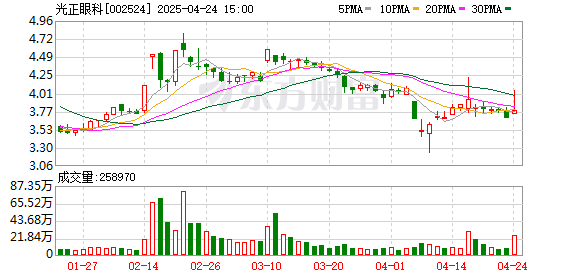
Core Viewpoint - Guangzheng Eye Hospital Group Co., Ltd. reported a significant decline in revenue and net profit for 2024, indicating ongoing challenges in its business transformation efforts [2][4]. Financial Performance - The company achieved a revenue of 893 million yuan, a year-on-year decrease of 16.94% [2]. - The net profit attributable to shareholders turned from profit to a loss of 175 million yuan, a drastic decline of 1987.12% year-on-year [2]. - The non-recurring net profit has remained negative for 12 consecutive years [2]. Business Segment Analysis - The medical sector generated 778 million yuan in revenue, down 6.88% year-on-year, accounting for 87.17% of total revenue [3]. - The steel structure segment saw a revenue drop of 61.78% to 79.19 million yuan, representing 8.87% of total revenue [3]. - The energy sector reported a revenue increase of 10.66% to 35.36 million yuan, making up 3.96% of total revenue [3]. Major Projects and Challenges - The refractive and cataract projects in the eye care business generated revenues of 258 million yuan and 288 million yuan, respectively, both showing declines of 13.09% and 8.88% year-on-year [3]. - The company has opened 14 specialized eye hospitals and 3 vision clinics in 10 major cities [3]. - The company has cumulatively recognized goodwill impairment provisions of 374 million yuan, with 135 million yuan recognized in 2024 alone for two acquired eye hospitals [4]. Strategic Transformation - Guangzheng Eye Hospital has undergone several strategic shifts, moving from steel structure operations to focusing on eye care services [5][6]. - The company had high expectations for its eye care business, but it has not yet yielded the anticipated results, leading to further losses [4][7]. - The competitive landscape in the eye care industry has intensified, impacting the company's revenue and profit margins [4][7].

70%的企业转型失败,因为太追求效率至上
3 6 Ke· 2025-04-23 02:54
Core Insights - 70% of transformation initiatives ultimately fail, primarily due to organizations focusing on efficiency rather than effective transformation strategies [1][2] - Companies employing a "designed simplicity" approach see a 42% increase in transformation success rates compared to those focused on efficiency [3][4] Group 1: Transformation Challenges - Organizations have initiated nearly one new transformation project annually since 2018, with an average of three projects ongoing at any time [1] - 70% of procurement professionals find achieving transformation goals more difficult than expected, with an average score of 58 out of 100 for cost-saving targets [1][3] Group 2: Efficiency vs. Designed Simplicity - The efficiency-focused approach emphasizes rapid deployment and iterative optimization, but its effectiveness in functional transformations is limited [2][3] - Even with a focus on efficiency, the success rate of transformations only improves by 5%, while designed simplicity significantly enhances success rates [3][4] Group 3: Principles of Designed Simplicity - Designed simplicity centers on user experience, aiming to reduce complexity and enhance process understanding and execution [4][5] - Key principles include ensuring new processes are free of gaps, easy to complete, and capable of addressing rare scenarios [4][6] Group 4: Employee Engagement and Experience - Designed simplicity involves close collaboration among leaders, managers, and employees to ensure processes are user-friendly and effective [6][7] - This approach leads to a 123% increase in employee satisfaction and a 68% improvement in operational efficiency [12] Group 5: Implementation Steps - Organizations should follow a structured approach to implement designed simplicity, including assessing current workflows, analyzing complexities, and optimizing processes [17][18][19] - Continuous feedback and monitoring are essential to ensure the new processes are adopted effectively and to make necessary adjustments [24]