平台经济

Search documents
税务部门曝光2起MCN机构涉税违法和1起网络主播偷逃税案件
经济观察报· 2025-09-19 04:29
Core Viewpoint - MCN institutions, as key participants in the platform economy, must fully understand and fulfill their tax obligations to ensure compliance and promote healthy industry development [2][6]. Group 1: Tax Obligations of MCN Institutions - MCN institutions are independent taxpayers and are required to pay value-added tax and corporate income tax on their operating income [2][3]. - MCN companies must fulfill withholding obligations for personal income tax when paying remuneration to streamers, regardless of whether they have signed agency contracts [2][4]. - Non-compliance with tax withholding obligations is considered a violation of the law and will lead to legal consequences [2][4]. Group 2: Recent Tax Violations and Consequences - Recent tax violations by MCN institutions include cases of tax evasion and improper tax benefits, such as the case of Hebei Chuming Cultural Media Co., which evaded taxes amounting to 12.61 million yuan [4][5]. - The tax authorities have imposed penalties totaling 20.10 million yuan on the company for enjoying improper tax benefits and failing to withhold personal income tax [5]. - The case has been referred to the public security authorities for further investigation, highlighting the seriousness of tax violations in the industry [5]. Group 3: Industry Growth and Regulatory Environment - The number of MCN institutions is projected to reach approximately 29,000 by May 2025, reflecting significant growth in the industry [4]. - The rapid development of the platform economy necessitates that MCN institutions operate within a regulated framework to avoid tax-related risks and promote fair competition [6]. - The introduction of regulations aims to ensure that all participants in the online economy, including streamers and MCN institutions, adhere to tax laws and contribute to the economy [6].


税务部门曝光2起MCN机构涉税违法和1起网络主播偷逃税案件
Jing Ji Guan Cha Wang· 2025-09-19 03:52
Core Viewpoint - Recent tax violations involving MCN institutions and a network anchor highlight the urgent need for compliance with tax obligations in the rapidly growing platform economy [1][2]. Group 1: Tax Violations - The tax authorities in Hebei, Hunan, and Liaoning have exposed two cases of tax violations by MCN institutions and one case of tax evasion by a network anchor [1]. - Hebei Chuming Cultural Media Co., Ltd. was found to have evaded taxes amounting to 12.61 million yuan by issuing false invoices and failing to withhold personal income tax of 3.597 million yuan for its contracted anchors [3]. - The penalties imposed on Hebei Chuming included a total of 20.1006 million yuan in back taxes, late fees, and fines for tax violations [3]. Group 2: MCN Institutions and Their Role - MCN institutions serve as agents for content creators, providing services such as planning, production, and marketing, and are crucial in connecting creators with advertisers and brands [2]. - The number of MCN institutions is projected to reach approximately 29,000 by May 2025, an increase of about 2,200 from 2024 [2]. Group 3: Legal Obligations and Compliance - MCN institutions must understand and fulfill their tax obligations, including paying value-added tax and corporate income tax, as well as withholding personal income tax for their contracted anchors [1][4]. - The recent regulations emphasize that the online economy is not exempt from legal obligations, and all entities must adhere to tax laws to ensure fair competition and healthy industry development [4].
平均年龄约39.8岁 748万网约车司机收入如何
Di Yi Cai Jing· 2025-09-18 13:04
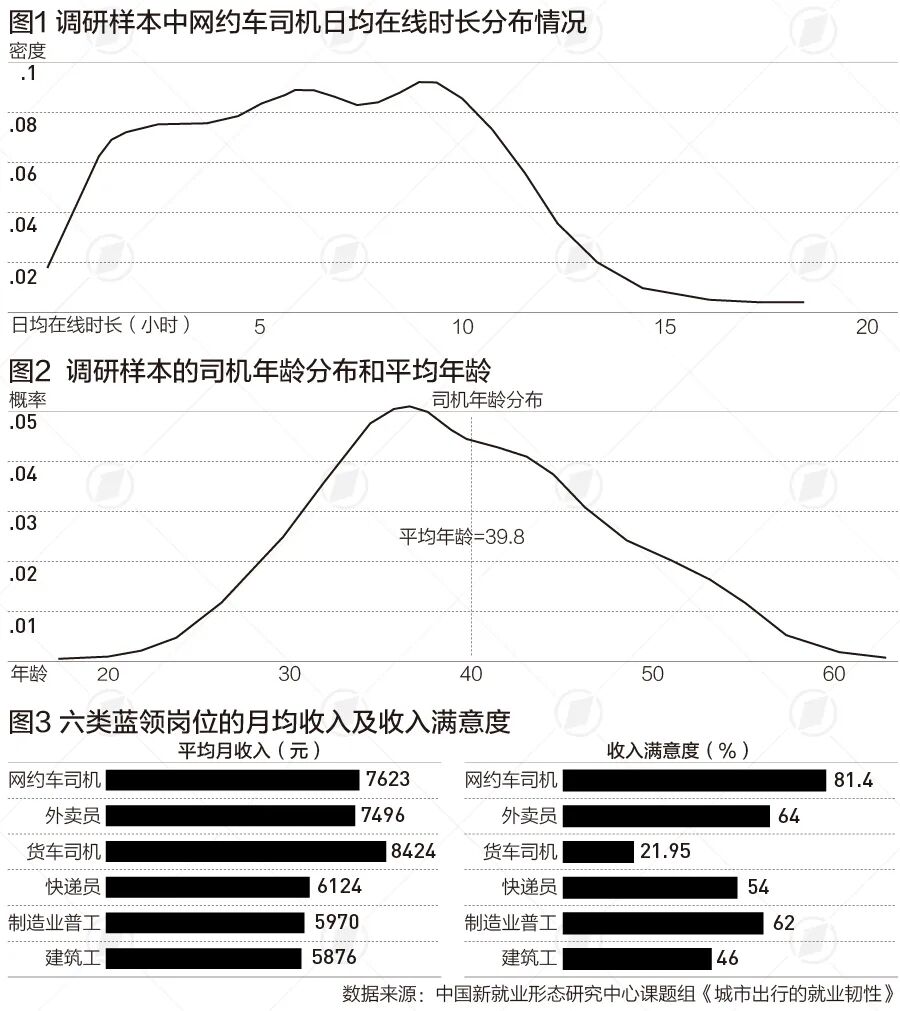
Core Insights - The ride-hailing industry has become a significant channel for absorbing labor in new employment forms, creating a large and flexible employment pool [1] Employment and Income Characteristics - As of October 2024, a total of 7.483 million ride-hailing driver licenses have been issued in China, with an average age of approximately 40 years among drivers, indicating a "middle-aged" demographic [2][3] - The average monthly income for ride-hailing drivers is 7,623 yuan, ranking second among six categories of blue-collar jobs, with drivers in first-tier cities earning an average of 11,557.1 yuan if they work at least 8 hours daily [7][8] - About 62.8% of drivers are the sole earners in their households, indicating significant economic responsibility, with around 80% of families experiencing financial pressure [4][5] Driver Demographics and Background - The majority of ride-hailing drivers are middle-aged males, with women making up less than 10% of the workforce, although this percentage is gradually increasing [3] - Over 90% of drivers have prior work experience in manufacturing, construction, or self-employment, showcasing diverse and mobile career backgrounds [3] Work Patterns and Flexibility - The average daily online working hours for drivers is approximately 6.41 hours, with a peak around 10 hours, while only about 30% of drivers are classified as "highly active" [4][5] - Many drivers transitioned from manufacturing jobs due to the transparent income structure, flexible working hours, and enhanced respect in their roles [5] Industry Challenges and Recommendations - The ride-hailing industry has seen a 159% increase in licensed drivers since 2020, with a corresponding 38.3% growth in monthly order volume, leading to intensified competition and price pressures [8] - The average commission rate for drivers is 18.9%, with most drivers experiencing rates between 18% and 20%, which impacts their income perception [8] - Recommendations include improving industry governance, ensuring algorithm fairness and transparency, and exploring diversified income growth models amidst market saturation [8]
信号明确:马云刘强东,大佬们都回来了
商业洞察· 2025-09-18 09:25
Core Viewpoint - The return of prominent figures in China's internet sector, such as Liu Qiangdong and Jack Ma, signifies a shift in the business landscape driven by internal crises and changes in macroeconomic policies and regulatory environments [2][6][17]. Group 1: Return of Founders - Liu Qiangdong's recent public appearance, including his first live cooking session, marks a significant shift in his engagement with the market, driven by competitive pressures from rivals like Pinduoduo and Douyin [9][10]. - Jack Ma has also re-emerged, reportedly increasing his involvement in Alibaba's operations, indicating a renewed focus on business management and direction [5][12]. - The active participation of these founders reflects a broader trend of leaders taking charge amid survival challenges faced by their companies [6][11]. Group 2: Economic and Regulatory Context - The internet sector has experienced a period of intense regulation since late 2020, which led to a cautious approach from entrepreneurs [14][15]. - Recent policy shifts have indicated a supportive stance towards the private economy, encouraging innovation and growth, which has prompted founders to re-engage publicly [16][17]. - The return of these leaders serves as a signal to other entrepreneurs that the environment is conducive for business activities, marking a transition from strict regulation to support for growth [17][18]. Group 3: Implications for the Industry - The actions of Liu Qiangdong and Jack Ma are not merely personal endeavors but reflect significant transformations within their companies and the broader economic landscape [18][19]. - The competitive landscape in China's internet sector is expected to intensify, with a focus on genuine competition rather than previous periods of rapid growth without substantial challenges [19].



信号明确:马云刘强东,大佬们都回来了
Sou Hu Cai Jing· 2025-09-18 05:05
Core Insights - The return of prominent figures in China's internet sector, such as Liu Qiangdong and Jack Ma, signifies a shift in the industry dynamics, driven by both internal company challenges and external economic conditions [1][5][9] - Liu Qiangdong's recent public appearance, including his first live cooking session, reflects a strategic response to competitive pressures from rivals like Pinduoduo and Douyin, as well as a need to revitalize JD's market position [6][7][9] - Jack Ma's increased involvement with Alibaba, despite not holding an official position, indicates a renewed focus on steering the company towards AI and adapting to the evolving market landscape [3][8][9] Company Dynamics - Liu Qiangdong's internal address highlighted issues of complacency within JD, emphasizing a return to a fighting spirit reminiscent of the company's early days [7][9] - The shift in Alibaba's leadership dynamics, with Jack Ma actively engaging in business discussions, aims to recalibrate the company's direction after a tumultuous period marked by regulatory challenges [8][9] - Both leaders' re-emergence is seen as a response to the changing regulatory environment, which has transitioned from strict oversight to a more supportive stance towards private enterprises [9] Economic Context - The macroeconomic landscape in China is stabilizing, with government policies now favoring the growth of the private sector and platform economy, contrasting sharply with the previous regulatory crackdown [8][9] - The return of these internet giants serves as a signal to other entrepreneurs that the environment for innovation and growth is improving, encouraging a more aggressive approach to business [9] - The evolving narrative in the Chinese internet sector suggests a move towards more competitive and aggressive strategies, marking a new chapter in the industry [9]

外卖市场理性竞逐,稳就业、促消费价值凸显
Xin Jing Bao· 2025-09-17 13:04
Group 1 - The new service industry is rapidly creating job opportunities, with platforms like Taobao Flash Delivery reporting over 2 million active riders daily in August, generating over 1 million new jobs compared to the same period last year [1] - The number of riders earning over 10,000 yuan in July increased to 2.8 times that of the previous year, indicating significant income growth in the sector [1] - The overall number of delivery riders in the food delivery market has shown a notable increase, with a year-on-year growth rate of 74.8% for new blue-collar jobs in the delivery sector [1][2] Group 2 - The consumption spillover effect is significant, with each 1 yuan coupon from Taobao Flash Delivery driving an additional 6.76 yuan in consumer spending, encompassing both delivery and various online and offline purchases [2] - The rise of instant retail and new consumption habits is reshaping consumer expectations for quick delivery across various categories, from food to personal care products [2] - The "warehouse-store" model has matured, with Taobao Flash Delivery operating around 50,000 front warehouses, enhancing the ability to meet urgent consumer needs [2] Group 3 - The food delivery market has also contributed to indirect employment and supported the growth of small and medium-sized businesses, with significant increases in hiring within the restaurant sector [3] - Over 300,000 small shops achieved peak sales on Taobao Flash Delivery on the first day of autumn, and over 640,000 stores saw a more than 100% increase in night orders since July [3] - Platforms are enhancing worker protections, with Taobao Flash Delivery and Ele.me providing subsidies for pension and medical insurance, covering up to 100% of costs [3]
环球热评局:以“价值创造”为锚,外卖理性竞争释放普惠价值
Huan Qiu Wang· 2025-09-15 04:13
Core Viewpoint - The rapid growth of the food delivery market has led to significant job creation and improvements in labor rights, with platforms like Taobao Shanguo and Meituan actively enhancing rider protections and income opportunities [1][4][5] Group 1: Employment and Labor Rights - Taobao Shanguo reported over 2 million active riders in August, creating more than 1 million new jobs compared to the previous year [1] - The overall employment landscape has improved, with the food delivery sector contributing to a significant increase in job opportunities and income for riders [4] - The number of riders earning over 10,000 yuan per month has increased to 2.8 times compared to last year [4] Group 2: Market Growth and Competition - The food delivery market has seen a doubling in scale, with daily orders increasing from around 100 million in May to over 200 million currently, peaking at nearly 300 million [1] - New platforms have entered the market, leading to healthy competition and innovation in service delivery, with significant growth in night orders across various cities [2] - The introduction of "warehouse stores" has met consumer demand for timely delivery, contributing to increased consumption [2] Group 3: Consumer Behavior and Spending - Online retail sales grew by 6.3% year-on-year, accounting for 24.9% of total retail sales, indicating strong digital consumption [1] - A study from Peking University found that every 1 yuan spent on Taobao Shanguo coupons generates an additional 6.76 yuan in overall consumption [2] Group 4: Business Model Innovation - Platforms are innovating their business models, such as Taobao's new membership system that integrates various services to enhance consumer engagement [3] - Differentiated strategies are emerging among platforms, with Meituan focusing on local commerce and Taobao Shanguo leveraging Alibaba's ecosystem [3] Group 5: Societal Impact - The competitive landscape has created shared value, benefiting not only the platforms but also the broader community, including small businesses and indirect employment opportunities [4][5] - The food delivery sector's growth has positively impacted the restaurant industry, with many small businesses experiencing a revival [4]

规范平台企业涉税信息报送见成效
Jing Ji Ri Bao· 2025-09-14 22:39
Core Viewpoint - The implementation of the "Regulations on Reporting Tax Information by Internet Platform Enterprises" aims to create a fair tax environment and promote the healthy development of the platform economy, effectively curbing illegal fundraising activities and supporting the construction of a unified national market [1][2]. Group 1: Impact on Tax Compliance - Since the regulations were publicly solicited for opinions, the number of "shell platforms" has decreased by over 100, effectively curbing illegal fundraising activities [1]. - The regulations enable tax authorities to access tax information of operators and employees within platforms, breaking down information barriers and making income and tax costs more transparent [1][2]. Group 2: Prevention of Tax Evasion - Some platform workers previously converted labor income into business income to evade taxes, which is now being addressed through the regulations [2]. - The tax authorities have clarified income classification standards and optimized the withholding tax process for labor income, reducing the tax burden on platform workers while preventing income conversion violations [2]. Group 3: Monitoring and Enforcement - Certain platforms have attempted to assist operators in splitting income to evade taxes, which is considered tax fraud [3]. - Tax authorities will utilize data comparison and risk analysis to detect and penalize income splitting and false declarations, ensuring compliance with tax obligations [3]. - The tax department plans to enhance collaboration with relevant agencies to monitor and analyze the registration of individual businesses, aiming to prevent tax evasion through improper income classification [2][3].
深夜,中国资产爆发,阿里巴巴涨超8%
2 1 Shi Ji Jing Ji Bao Dao· 2025-09-12 00:13
Group 1: Inflation Data - The U.S. Consumer Price Index (CPI) for August increased by 0.4% month-on-month, with a year-on-year increase of 2.9% before seasonal adjustment [2] - Core CPI, excluding volatile food and energy prices, rose by 0.3% month-on-month and 3.1% year-on-year before seasonal adjustment [2] - Overall, the August CPI data aligns with economists' expectations, but there are underlying price pressures noted in specific categories [3] Group 2: Price Pressures - Prices for fruits and vegetables increased by 1.6%, while automotive fuel prices rose by 1.8% in August [3] - Household food prices saw a 0.6% increase, marking the largest rise in three years, influenced by tariffs as the U.S. is now a net importer of food [3] - Analysts suggest that the impact of new tariffs, effective from August 7, may not have fully materialized, indicating potential for continued inflation in goods [3] Group 3: Stock Market Performance - Major tech stocks experienced mixed results, with Tesla rising over 6% due to strong demand expectations for its Model Y [3] - The Philadelphia Semiconductor Index increased by 0.63%, reaching a historical high, with notable gains in companies like Lam Research and Micron Technology [4] - Chinese concept stocks saw significant gains, with the Nasdaq Golden Dragon China Index rising by 2.89% [4] Group 4: Chinese Market Dynamics - Alibaba's stock surged by 8%, reaching a nearly four-year high, while NIO and Baidu also saw substantial increases [5] - U.S. investors' interest in the Chinese market has reached its highest level since 2021, driven by a combination of external and internal factors [5] - The Chinese government's policy shift towards stabilizing expectations and capital returns has positively impacted market sentiment [5] Group 5: Future Outlook - The Nasdaq Golden Dragon China Index may enter a phase of "stepwise upward movement with high volatility," with potential to reach 8500 to 9000 points [6] - Key factors for future performance include the pace of Federal Reserve interest rate cuts, sustainability of leading companies' earnings, and ongoing reforms in capital markets [6] - There is an expectation of more catalysts to enhance the value of Chinese assets, as overseas investment in China remains relatively low [6]




天九共享平台600万用户,引领民营经济数字化新潮流
Sou Hu Cai Jing· 2025-09-11 14:17
Core Insights - Tianjiu Shared Group celebrated its 34th anniversary on August 18, with its platform "Tianjiu Boss Cloud" surpassing 6 million registered users, marking a significant milestone in the business sector [1][3] Company Overview - Founded in 1991, Tianjiu Shared Group is a big data-driven entrepreneur resource-sharing platform operating in over 40 cities globally [3] - The platform has become one of the largest entrepreneur big data resource platforms in China, aligning with the trends of platformization and intelligence in the current market [3] User Base and Impact - The 6 million registered users span various industries, regions, and development stages, creating a dynamic demand map, resource network, and intelligent ecosystem [3] - The platform enhances resource and relationship connections among businesses, facilitating commercial cooperation and opportunity sharing [3] Technological Advancements - Continuous investment in AI technology has been pivotal for the growth of Tianjiu Boss Cloud, with its self-developed "Tianxing Qiong" model receiving national recognition for enterprise-level AI service capabilities [4] - The model's compliance with national regulations has redefined the service experience for enterprises, enabling precise service delivery and intelligent connections [4] Policy Alignment - Tianjiu Shared Group's development aligns with national policies promoting the healthy and sustainable growth of platform economies, as highlighted in the 2025 government work report [4] - The implementation of the "Interim Measures for the Management of Generative Artificial Intelligence Services" provides a favorable environment for compliant AI enterprises like Tianjiu [4] Future Directions - The company aims to build a new paradigm of "intelligent connection - precise empowerment - ecological win-win" driven by AI, injecting growth vitality into enterprises and supporting the sustainable development of China's private economy [4] - Tianjiu Shared Group emphasizes its mission of "empowering the business world, sharing happiness," focusing on accelerating business for new economy enterprises and aiding traditional enterprises in their transformation [5] Achievements and Recognition - The company has received numerous accolades, including being named one of China's top ten innovative enterprises and one of the best employers in China, reflecting its excellence in the business field and social responsibility [5]