
电动化转型

Search documents
销量转型双承压,福特中国重启“渠道整合”能否破局?
Bei Ke Cai Jing· 2025-09-28 10:35
Core Viewpoint - Ford China is restructuring its sales channels by establishing a wholly-owned subsidiary, Ford Automotive Sales Service (Shanghai) Co., Ltd., to manage marketing, sales, and service for Ford's passenger cars and pickups in China, effective October 1 [2][4]. Group 1: Company Restructuring - The new subsidiary will consolidate the sales services of Ford's two joint ventures in China: Jiangling Ford and Changan Ford, aiming to enhance operational efficiency and profitability amid increasing market competition [3][6]. - Chen Xiaobo has been appointed as the president of the new sales service company, reporting to Ford China's president and CEO, Wu Shengbo [5][6]. - Jiangling Motors has signed a distribution service contract with the new company, indicating that it will still participate in the sales of Ford vehicles, sharing sales responsibilities with the new entity [7]. Group 2: Market Challenges - Ford is facing significant pressure in the Chinese market, with declining sales and the need for transformation, as evidenced by a 16.43% year-on-year drop in Changan Ford's sales in the first five months of the year [4][12]. - Jiangling Ford's projected sales from 2022 to 2024 are not expected to exceed 50,000 units, with losses exceeding 1.6 billion yuan during the same period [13]. - The competitive landscape in the Chinese automotive market is intensifying, prompting Ford to consolidate resources to improve efficiency and maintain competitiveness [10][14]. Group 3: Historical Context - This is not Ford's first attempt at channel integration in China; previous efforts, such as the establishment of the National Dealer Service Development (NDSD) in 2018, were unsuccessful due to limitations in resource allocation [9]. - The automotive industry expert Mei Songlin noted that the current market conditions necessitate channel consolidation to enhance operational efficiency, especially as foreign and joint venture brands face declining sales [10].


尹同跃21年终圆“上市梦” 港股今年最大车企IPO诞生
Zhong Guo Jing Ying Bao· 2025-09-28 09:15
Core Viewpoint - Chery Automobile officially listed on the Hong Kong Stock Exchange on September 25, 2023, raising HKD 91.4 billion, marking the largest IPO for a car company in the Hong Kong market this year [1] Group 1: IPO Details - Chery set its IPO price at HKD 30.75 per share and attracted over HKD 45.73 billion in subscriptions from more than ten cornerstone investors, including notable institutions and local governments [1][4] - Following its debut, Chery's stock price rose, reaching HKD 32.80 per share by September 27, with a market capitalization of approximately HKD 1,891 billion [1] Group 2: Historical Context - Chery has attempted to go public seven times since 2004, with the goal of completing its IPO by 2025 [2] - The company faced several challenges in previous attempts, including regulatory hurdles, but successfully submitted its prospectus to the Hong Kong Stock Exchange in February 2025 [2][3] Group 3: Financial Performance - Chery's revenue is projected to grow from CNY 92.62 billion in 2022 to CNY 269.90 billion by 2024, with net profit increasing from CNY 5.81 billion to CNY 14.33 billion during the same period [4] - In Q1 2025, Chery reported revenue of CNY 68.22 billion, a year-on-year increase of 24.2%, and a net profit of CNY 4.73 billion, up 90.9% [4] Group 4: Market Position and Strategy - Chery is the second-largest independent passenger car brand in China and the eleventh largest globally, with a 49.4% year-on-year increase in passenger car sales [4] - The company aims to enhance its electric vehicle (EV) offerings, with a target to increase the share of EV revenue from 27.3% in Q1 2025 to a leading position in the industry by 2024 [5][6] Group 5: Future Directions - Chery's strategic plan includes significant investments in R&D, focusing on electric and intelligent vehicle technologies, with a commitment of over CNY 100 billion over the next five years [6][7] - The company plans to expand its global presence and optimize its supply chain to reduce costs and enhance competitiveness in the evolving automotive market [7]

奔驰三大高管轮舞,留下最大悬念
汽车商业评论· 2025-09-27 23:07
Core Insights - Mercedes-Benz is undergoing a strategic leadership transition with the appointment of Jörg Burzer as the new Chief Technology Officer, succeeding Markus Schäfer, who is stepping down after a successful tenure [3] - The company is facing a slowdown in global electric vehicle demand, prompting a reassessment of its electrification strategy and cost optimization efforts [5] - The new management team aims to enhance operational efficiency and competitiveness through a series of reforms, including a 10% reduction in production costs and over 20% in fixed costs by 2027 [5][6] Leadership Changes - Jörg Burzer's role focuses on ensuring the company's technological advancement in electrification and digitalization [3] - Michael Schiebe will take over production, quality, and supply chain management, transitioning from his previous role at AMG [3][6] - The appointments are designed to combine continuity with fresh perspectives, leveraging the experience of seasoned managers to drive transformation [6] Strategic Adjustments - Mercedes-Benz is committed to enhancing efficiency and profitability while streamlining operations [5] - The introduction of the new electric CLA model will utilize the Mercedes-Benz Modular Architecture (MMA) and the proprietary MB.OS operating system to improve product competitiveness [5] - The company is also focusing on data-driven personalized services to increase customer engagement and brand loyalty [5] AMG's Challenges - AMG is at a critical juncture, facing backlash over its shift from traditional V8 engines to a four-cylinder hybrid system in the new C63 model, which has seen a significant drop in market prices [15][17] - The brand is also dealing with a recall of up to 80% of the AMG One vehicles due to safety issues, impacting its reputation [17] - Despite these challenges, AMG is developing a new V8 engine and electric models, aiming to balance traditional performance with future electrification [18][19] Future Outlook - The new leadership must navigate the complexities of maintaining the appeal of traditional engines while advancing electric vehicle offerings [19] - The upcoming AMG leader will face the challenge of redefining performance in a quieter automotive landscape, with the company committed to retaining high-displacement engines for the time being [19]

德国汽车工业协会主席:德中汽车产业合作“1+1>2”
Zhong Guo Xin Wen Wang· 2025-09-27 12:57
Core Insights - The President of the German Automotive Industry Association, Muhiya, emphasized the complementary strengths of the German and Chinese automotive industries, suggesting that deepening cooperation could accelerate innovation and create a synergistic effect of "1+1>2" [1] - The geopolitical tensions, trade frictions, and rapid product iterations are increasing pressure on companies, making international dialogue and cooperation more crucial than ever, particularly for Germany and China [1] - The bilateral trade volume between Germany and China reached 201.8 billion USD, with China being Germany's largest source of imports, highlighting the stability of their economic relationship [1] - The successful Munich International Motor Show featured 116 Chinese companies, indicating significant opportunities for mutual learning and the necessity for close collaboration to address industry challenges [1] - German companies have extensive experience in automotive safety standards, while Chinese companies excel in large-scale market applications, rapid product iterations, and charging infrastructure, creating favorable conditions for the electric transformation of the automotive industry [1] Supply Chain and Technological Transformation - The current geopolitical tensions have led to supply chain fragmentation, complicating supply chain management [2] - The development of new technologies such as digital logistics and artificial intelligence is driving the transformation of supply chains [2] - Deepening automotive industry cooperation between Germany and China is essential for stabilizing supply chains and addressing challenges such as raw material scarcity and cost pressures, thereby enhancing industry resilience [2]
MAZDA EZ-60正式上市,15万元级市场再添价值标杆
Zhong Guo Qi Che Bao Wang· 2025-09-26 13:30
Core Viewpoint - The launch of the MAZDA EZ-60 marks a significant entry into the competitive 150,000 RMB electric vehicle market in China, featuring dual power options and a price range of 119,900 to 160,900 RMB [1][17] Group 1: Product Features - The EZ-60 is positioned as a key model in Mazda's transition to electric vehicles, showcasing advanced intelligent configurations, safety features, and driving performance [3][4] - It offers six configurations and seven body colors, emphasizing a user-friendly approach to design and functionality [1][4] - The vehicle's design follows the "near-future new soul" theme, breaking away from the homogenization seen in many electric vehicles, with notable features like a 60mm deep front light strip and a unique "Nebula Purple" paint [6] Group 2: Performance and Technology - The EZ-60 incorporates a continuously variable damping suspension system, enhancing comfort and stability, and is engineered to minimize head movement for passengers [8] - It features a 26.45-inch 5K display and a 100-inch naked-eye 3D HUD, providing an immersive user experience and advanced interaction capabilities [9][11] - The vehicle's aerodynamic design includes nine airflow channels, optimizing drag by 60.8 counts and improving range by 41 kilometers [6] Group 3: Safety Standards - The EZ-60 has achieved top safety certifications, including the "TOP Safety" certification and accolades for its body structure and materials [12][14] - It employs a robust body structure with high-strength steel making up 86.5% of its composition, ensuring enhanced safety during collisions [14] - The battery system is designed with eight layers of protection, meeting stringent safety standards and allowing for rapid charging capabilities [14] Group 4: Market Strategy and Consumer Engagement - The company has introduced seven exclusive purchase benefits to enhance customer experience, including low-interest financing options and free lifetime services [16] - The vehicle is now available for test drives at dealerships across China, with promotional activities to engage potential customers [17] - The pricing strategy aims to disrupt the value ceiling in the 150,000 RMB electric vehicle segment, targeting quality-conscious consumers [17]

保时捷调整电动化转型节奏 采取燃油与纯电“双轨并行”策略
Cai Jing Wang· 2025-09-26 07:32
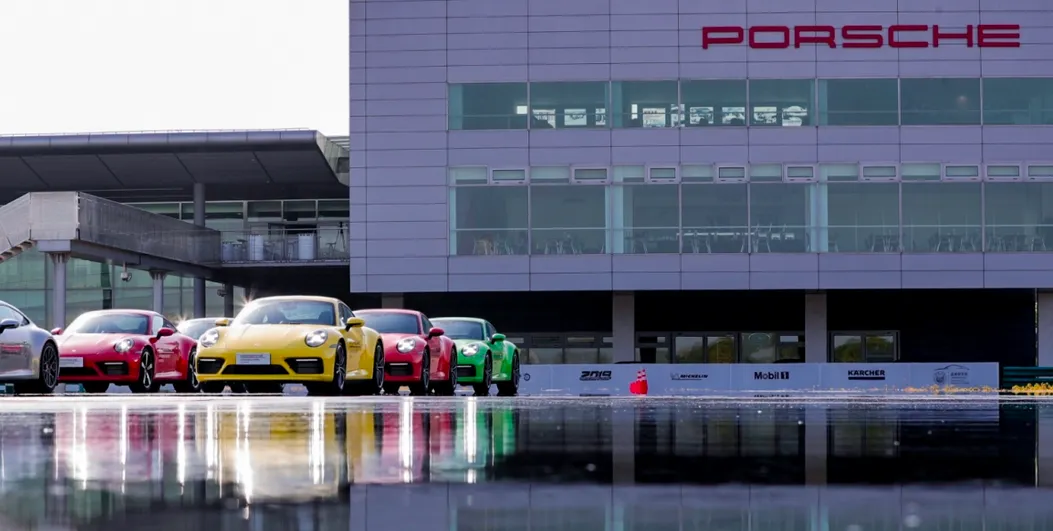
Core Viewpoint - Porsche has officially adjusted its product strategy to include new internal combustion engine models, extend the market lifecycle of existing fuel and plug-in hybrid models, and delay the launch of certain electric vehicle models, indicating a shift from aggressive electrification goals to a dual-track approach of fuel and electric vehicles [1][3][5] Strategic Adjustment - The decision clarifies Porsche's future product strategy, with a revised timeline for the electric platform development initially planned for the 2030s, while continuing to update existing electric models [3][5] - New internal combustion engine models will be added to the product matrix, and the lifecycle of current internal combustion models will be extended, with replacement models included in the planning [3][5] - A new SUV series, originally planned to be fully electric, will now launch with internal combustion and plug-in hybrid variants first, while the existing electric lineup will continue to be updated [3][5] Financial Performance - The strategic adjustment aims to enhance financial performance in the upcoming fiscal year, although it will incur significant depreciation and provisions in the short term [3][6] - Porsche's net profit for 2024 is projected at €3.595 billion, a 30.3% decline year-on-year, with a sales return rate of 14.1%, down from 18% in 2023 [6] - In the first half of this year, Porsche's net profit dropped to €718 million, a 66.6% decrease, with the sales return rate falling from 15.7% to 5.5% [6] Sales and Market Dynamics - In the first half of 2025, Porsche's global sales reached 146,000 units, a 6% decline year-on-year, with sales in China dropping 28% to 21,300 units [7] - The high costs and lower profit margins of electric vehicles, coupled with increased tariffs in the U.S., have led Porsche to lower its financial forecasts, with a revised sales return rate expectation of 5% to 7% for 2025 [7] - Other international automakers, including Audi, Mercedes, BMW, and Volvo, are also adjusting their electrification strategies, moving away from strict timelines for phasing out internal combustion engines [8][9]
福特在华渠道“二合一”,如何“收编”福特纵横成关键
经济观察报· 2025-09-25 10:26
Core Viewpoint - Ford is restructuring its sales channels in China by establishing a wholly-owned subsidiary, Ford Sales Service Company, to manage marketing, sales, and service for its passenger cars and pickup trucks in the Chinese market, marking a significant shift in its operational strategy [2][5]. Group 1: Company Restructuring - On September 23, Ford China announced the establishment of Ford Sales Service Company, which will officially start operations on October 1 [2]. - Chen Xiaobo has been appointed as the president of Ford Sales Service Company, previously holding key positions in Changan Ford and other marketing roles [2]. - The new company will unify the sales of Changan Ford, Ford imported vehicles, and Jiangling Ford, which includes models like Changan Ford Edge and Explorer, as well as Jiangling Ford's Lingrui and F-150 Raptor [3][4]. Group 2: Financial Performance and Challenges - Jiangling Ford Technology Company has been operating at a loss since its inception, with revenues of 1.24 million, 6.43 million, and 53.23 million from 2022 to 2024, and net losses of 1.06 million, 8.39 million, and 6.77 million respectively, totaling approximately 16.22 million in losses over three years [4]. - As of mid-2023, Jiangling Ford Technology Company reported total assets of about 875 million and a negative net asset of 1.42 billion [4]. Group 3: Strategic Implications - The establishment of Ford Sales Service Company aligns with CEO Jim Farley's strategy to reduce investment in China and focus on high-return businesses, indicating a strategic retreat in the Chinese market [5]. - The integration of sales channels is seen as a necessary step to streamline operations and improve profitability, as the previous fragmented sales structure was no longer suitable for Ford's strategy in China [4][5].
21年上市长跑,奇瑞汽车港股“上岸”,成年内最大车企IPO
Xin Hua Cai Jing· 2025-09-25 07:35
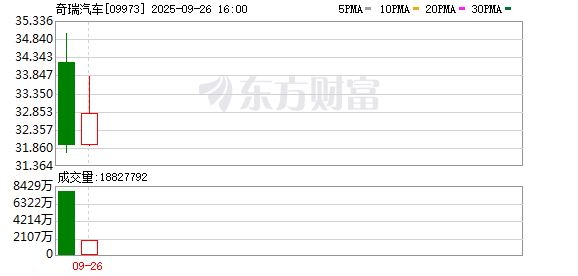
Core Viewpoint - Chery Automobile officially listed on the Hong Kong Stock Exchange on September 25, marking the largest IPO of a car company in Hong Kong this year, with a final offer price of HKD 30.75 and net proceeds of approximately HKD 88.793 billion [1][2]. Group 1: IPO Details - The IPO raised approximately HKD 84.41 billion, with 35% allocated for R&D of various passenger car models, 25% for next-generation vehicles and advanced technologies, 20% for expanding overseas markets, and 10% for enhancing production facilities in Wuhu, Anhui [2]. - The stock opened with a gain of over 10%, reaching an opening price of HKD 34.2 and a current price of HKD 34.5, reflecting a 12.2% increase and a total market capitalization of HKD 199.3 billion with a P/E ratio of 11.51 [1]. Group 2: Financial Performance - In 2024, Chery's total sales exceeded 2.6 million units, a year-on-year increase of 38.4%, with overseas exports reaching 1.1446 million units, leading the Chinese brand passenger car export rankings [3]. - Revenue grew from CNY 92.618 billion in 2022 to CNY 269.897 billion in 2024, with Q1 2025 revenue at CNY 68.223 billion, maintaining a year-on-year growth of 24.25% [3]. - Net profit surged from CNY 5.806 billion in 2022 to CNY 14.334 billion in 2024, with Q1 2025 net profit reaching CNY 4.726 billion, a year-on-year increase of 90.87% [3]. Group 3: Historical Context - Chery's journey to IPO spanned 21 years, marked by multiple attempts and challenges, including ownership disputes and regulatory hurdles, with the first attempt in 2004 and the successful listing in 2025 [4][5]. - The company faced significant obstacles, including the global financial crisis in 2008 and issues related to shareholder structure, which delayed its IPO plans [4][5]. Group 4: Global Expansion and Strategy - Chery has been a leader in exports, with over 13 million vehicles sold globally and a presence in over 100 countries, achieving significant sales in Europe, South America, and the Middle East [6]. - The company plans to allocate 20% of the IPO proceeds for overseas market expansion and global strategy execution, indicating a focus on increasing its international market share [6]. Group 5: Internal Reorganization and Future Challenges - Chery has undertaken internal restructuring to streamline operations, including the establishment of a unified smart driving brand and the integration of various technology divisions [7]. - Despite strong performance, Chery faces challenges in the electric vehicle sector, with its EV revenue share increasing from 13.2% in 2022 to 29.3% in 2025, still below the industry average of 45% [7].
乘联分会秘书长崔东树:预计“十五五”期间中国汽车年销量将达4000万台
Huan Qiu Wang· 2025-09-25 03:33
Core Viewpoint - The Chinese automotive industry is expected to achieve annual sales of 40 million units during the "15th Five-Year Plan" period, building on a solid foundation established during the "14th Five-Year Plan" with a steady growth trend [1][2] Group 1: Industry Growth Trends - The average annual growth rate of the Chinese automotive industry during the "14th Five-Year Plan" was maintained at 3%, with exports showing a remarkable average growth of 9%, indicating strong international competitiveness [1][2] - The domestic market also experienced a slight average growth of nearly 2%, providing crucial support for the stable operation of the industry [1] Group 2: Growth Drivers for Future Sales - The penetration of automotive consumption is expected to deepen in the central and western regions and small county markets, driven by economic development and improved infrastructure, potentially surpassing the growth rates of major cities like Beijing and Shanghai [2] - The transition to electrification is anticipated to shorten the vehicle ownership cycle, with the effective lifespan of electric vehicles estimated at around 10 years compared to 18 years for traditional combustion engine vehicles, leading to increased demand for new energy vehicle replacements [2] - The share of Chinese automobiles in overseas markets is expected to gradually expand, supported by advancements in technology, product quality, and brand development, particularly in the new energy vehicle sector [2]
汽车视点 | 21年上市长跑,奇瑞汽车港股“上岸”,成年内最大车企IPO
Xin Lang Cai Jing· 2025-09-25 03:28
Core Viewpoint - Chery Automobile officially listed on the Hong Kong Stock Exchange on September 25, 2023, marking the largest IPO of a car company in Hong Kong this year, with a final offering price of HKD 30.75 and net proceeds of HKD 88.793 billion [1][2] Fundraising and Utilization - The net proceeds from the IPO are approximately HKD 84.41 billion, with planned allocations: 35% for R&D of various passenger car models, 25% for next-generation vehicles and advanced technology, 20% for expanding overseas markets, 10% for enhancing production facilities in Wuhu, and 10% for working capital and general corporate purposes [2] - The IPO received strong market response, with cornerstone investors subscribing a total of USD 587 million (approximately HKD 45.73 billion) [2] Financial Performance - In 2024, Chery's total sales exceeded 2.6 million units, a year-on-year increase of 38.4%, with overseas exports reaching 1.1446 million units, leading the Chinese brand passenger car export rankings [3] - Revenue grew from CNY 92.618 billion in 2022 to CNY 269.897 billion in 2024, with Q1 2025 revenue at CNY 68.223 billion, maintaining a year-on-year growth of 24.25% [3] - Net profit rose from CNY 5.806 billion in 2022 to CNY 14.334 billion in 2024, with Q1 2025 net profit reaching CNY 4.726 billion, a year-on-year increase of 90.87% [3] Historical Context - Chery's journey to IPO has been lengthy, spanning 21 years with multiple attempts hindered by various challenges, including complex equity relationships and macroeconomic changes [4][5] - The company faced numerous setbacks in its IPO attempts, including the 2008 global financial crisis and regulatory issues, which delayed its market entry [5] Global Expansion and Strategy - Chery has been a leader in exports, with over 13 million vehicles sold globally and a presence in over 100 countries [6] - The company plans to allocate about 20% of the IPO proceeds for overseas market expansion and global strategy execution, indicating a focus on increasing its global market share [6] Organizational Changes - Chery has undertaken significant internal restructuring to streamline its operations, including the establishment of a unified smart driving brand and the formation of a centralized intelligent technology center [7] - Despite strong performance, Chery faces challenges in the electric vehicle sector, with its EV revenue share increasing from 13.2% in 2022 to 29.3% in the first eight months of 2025, still below the industry average of 45% [7] Conclusion - The successful IPO marks a significant milestone for Chery, positioning the company for a more standardized and internationalized development path, enhancing its competitiveness in the global automotive industry [8]
