
碳达峰

Search documents
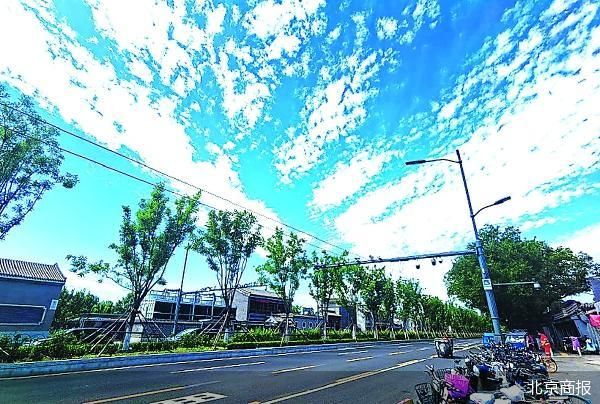
北京PM2.5浓度四年再降近两成
Bei Jing Shang Bao· 2025-10-19 15:40
Core Points - Beijing has achieved significant improvements in air quality, with PM2.5 levels decreasing from 38 µg/m³ in 2020 to 30.5 µg/m³ in 2024, marking a 19.7% reduction over four years [1][3] - The city recorded 290 days of good air quality in 2024, the highest in history, with only 2 days of heavy pollution, a reduction of 8 days compared to 2020 [3][4] - The ecological environment has improved, with the ecological environment quality index (EI) reaching 71.4 in 2024, indicating a stable and good ecological status [4] Air Quality and Water Environment - PM2.5 levels have consistently met national secondary air quality standards for four consecutive years, earning recognition from the UN Environment Programme as a "Beijing Miracle" [3][7] - Water quality has also improved significantly, with 87.2% of rivers classified as I-III grade, an increase of 23.4 percentage points since 2020 [3][5] - Sensitive species such as mayflies and stoneflies have been observed in local rivers, indicating a healthier aquatic ecosystem [3][5] Energy Consumption and Carbon Emission - The energy consumption per unit of GDP in Beijing has decreased to 0.163 tons of standard coal, making it the most efficient in the country [7][8] - Renewable energy consumption has increased to 17% of total energy use, a 6.6 percentage point increase since 2020, with renewable energy generation capacity growing by 42% [7][8] - The city aims to transition from energy consumption control to carbon emission control in the upcoming "15th Five-Year Plan" [9][10] Industrial and Transportation Developments - The industrial sector has seen a 30.8% reduction in energy consumption per unit of added value compared to 2020, exceeding the planned target [8][9] - Over 80% of vehicles in Beijing meet the National V emission standards, with 1.2 million new energy vehicles promoted [9][10] - The city has achieved a significant reduction in coal consumption, dropping from 2,180 million tons in 2012 to 320,000 tons in 2024, with coal accounting for only 0.3% of total energy consumption [9][10] Policy Support and Future Plans - Beijing plans to allocate over 80 million yuan in support for 52 projects aimed at promoting green and low-carbon development [10][11] - The city will continue to focus on air pollution prevention, green low-carbon transformation, and optimizing energy structure in the "15th Five-Year Plan" [11]

氟化工行业周报:制冷剂趋势不变,积极把握回调后的布局机会-20251019
KAIYUAN SECURITIES· 2025-10-19 08:43
Investment Rating - The investment rating for the chemical raw materials industry is "Positive" (maintained) [1] Core Views - The report emphasizes that the refrigerant trend remains unchanged, suggesting to actively seize layout opportunities after market corrections [4][22] - The fluorochemical industry chain has entered a long prosperity cycle, with significant growth potential across various segments, including fluorite, refrigerants, and high-end fluorinated materials [22] Summary by Sections 1. Industry Overview - The fluorochemical index decreased by 8.97% from October 13 to October 17, underperforming the Shanghai Composite Index by 7.50% [6][24] - The average price of fluorite (97% wet powder) as of October 17 is 3,620 CNY/ton, down 0.44% week-on-week, but up 3.12% year-on-year [19][34] 2. Refrigerant Market - As of October 17, prices for various refrigerants are as follows: R32 at 62,500 CNY/ton, R125 at 45,500 CNY/ton, R134a at 53,000 CNY/ton, R410a at 53,000 CNY/ton, and R22 at 16,000 CNY/ton [20][23] - The market for R32 and R134a is expected to remain warm due to slight recovery in domestic production demand and seasonal export orders [21][22] 3. Key Companies and Performance - Recommended stocks include Jinshi Resources, Juhua Co., Sanmei Co., and Haohua Technology, with other beneficiaries being Dongyangguang, Yonghe Co., Dongyue Group, and Xinzhou Bang [11][22] - Sanmei Co. expects a net profit of 1.524 to 1.646 billion CNY for the first three quarters of 2025, representing a year-on-year increase of 171.73% to 193.46% [10]


以废代原”减碳更实在 | 大家谈 如何当好“碳路先锋
Zhong Guo Hua Gong Bao· 2025-10-17 04:30
Core Viewpoint - The chemical industry is positioned as a key player in achieving carbon peak and carbon neutrality in China's green low-carbon economy, emphasizing the potential for waste utilization to balance carbon reduction and development [1][2] Group 1: Carbon Reduction Strategies - The chemical industry can leverage waste materials to replace traditional raw materials, thus achieving both carbon reduction and economic development [1] - Shanxi Huayu Energy Chemical Co., Ltd. transforms gasification coarse slag into a substitute for red clay in brick production, saving 10,000 tons of standard coal annually and reducing CO2 emissions by 24,500 tons [1] - The company also utilizes low-sulfur waste alcohol, distillation waste gas, and dried sludge in boilers, saving 1,000 tons of standard coal per year [1] Group 2: Utilization of By-products - Chemical enterprises can synchronize carbon reduction and cost reduction by effectively utilizing by-products [2] - The Luan Chemical Fengxi Group's project produces 5 tons of low-grade steam per hour as a by-product, which was previously wasted; after implementing a technology upgrade, this steam generates 9,600 kWh of electricity daily, reducing CO2 emissions by approximately 7.06 tons per day [2] - The project also recycles condensate for reuse in the system, reducing desalination water preparation and achieving dual cost savings [2]
“以废代原”减碳更实在 | 大家谈 如何当好“碳路先锋”
Zhong Guo Hua Gong Bao· 2025-10-17 03:43
Core Viewpoint - The chemical industry is positioned as a key player in achieving carbon peak and carbon neutrality in China, emphasizing the importance of integrating carbon reduction with economic development through innovative waste utilization methods [1][2] Group 1: Carbon Reduction Strategies - The chemical industry can achieve carbon reduction and economic growth by transforming industrial waste into alternative raw materials, exemplified by Huayu Energy Chemical Shanxi Co., which repurposes gasification residue for brick production, saving 10,000 tons of standard coal and reducing CO2 emissions by 24,500 tons annually [1] - Shanxi Company also utilizes low-methane, low-sulfur waste alcohol and other waste materials in boilers, saving 1,000 tons of standard coal in energy consumption each year [1] Group 2: Utilization of By-products - Chemical enterprises can synchronize carbon reduction and cost reduction by effectively utilizing by-products, as demonstrated by Luanan Chemical Fengxi Group's project, which generates 7 tons of low-grade steam per hour from a melamine production line [2] - The project has implemented a "by-product steam power generation + condensate recovery" upgrade, producing 9,600 kWh of electricity daily, which replaces coal-fired power and reduces CO2 emissions by approximately 7.06 tons per day, while also saving on electricity costs [2]
打造能源体系“盐城样本”,盐城市新型电力系统建设推进会成功举办
Yang Zi Wan Bao Wang· 2025-10-17 01:33
Core Viewpoint - Yancheng has become the first city in the Yangtze River Delta to exceed 20 million kilowatts of installed renewable energy capacity, marking a significant milestone in the development of a new power system and contributing to national carbon peak goals [1][2] Group 1: Conference Overview - The Yancheng New Power System Construction Promotion Conference was held on October 16, organized by the Yancheng Development and Reform Commission and the State Grid Yancheng Power Supply Company, with around 60 representatives from government departments and enterprises [1] - The conference included a site visit to the new power system research and training base, showcasing achievements in the collaborative development of source, grid, load, and storage systems [1] Group 2: Progress and Future Goals - The Yancheng Development and Reform Commission reported on the overall progress of the new power system, setting a target of exceeding 41.5 million kilowatts of total installed power capacity and over 30 million kilowatts of renewable energy capacity by 2027 [2] - The six major actions outlined include enhancing green energy capacity, ensuring multi-energy collaboration, upgrading the smart grid, optimizing new energy storage efficiency, promoting local consumption of green electricity, and flexible regulation by new entities [2] Group 3: Company Initiatives - Yancheng Power Supply Company highlighted its advancements in smart grid upgrades and new energy storage optimization, including the acceleration of 2.65 million kilowatts of offshore wind power and 870,000 kilowatts of centralized photovoltaic projects [2] - The company is also exploring new technologies such as V2G and S2G models, and expanding applications in bus battery swapping and thermal-electric coupling to support renewable energy consumption [2]
德力佳(603092) - 德力佳首次公开发行股票并在主板上市招股意向书
2025-10-16 11:32
德力佳传动科技(江苏)股份有限公司 (Delijia Transmission Technology (Jiangsu) Co.,Ltd.) (江苏省无锡市锡山区安泰一路 67 号) 首次公开发行股票并在主板上市 招股意向书 保荐人(主承销商) (深圳市前海深港合作区南山街道桂湾五路128号前海深港基金小镇B7栋401) 1-1-0 德力佳传动科技(江苏)股份有限公司 招股意向书 中国证监会、交易所对本次发行所作的任何决定或意见,均不表明其对发 行人注册申请文件及所披露信息的真实性、准确性、完整性作出保证,也不表 明其对发行人的盈利能力、投资价值或者对投资者的收益作出实质性判断或保 证。任何与之相反的声明均属虚假不实陈述。 根据《证券法》规定,股票依法发行后,发行人经营与收益的变化,由发 行人自行负责;投资者自主判断发行人的投资价值,自主作出投资决策,自行 承担股票依法发行后因发行人经营与收益变化或者股票价格变动引致的投资风 险。 致投资者的声明 1、公司上市目的 德力佳传动科技(江苏)股份有限公司是一家主要从事高速重载精密齿轮 传动产品研发、生产与销售的企业,下游应用领域目前主要为风力发电机组, 核心产品为 ...
证监会:不盲目追求信披家数,鼓励中小企业量力而行
Zhong Guo Jing Ying Bao· 2025-10-16 09:44
Core Viewpoint - The China Securities Regulatory Commission (CSRC) emphasizes the importance of sustainable information disclosure by listed companies, highlighting improvements in disclosure rates and the need for high-quality reporting to meet investor demands [1][2]. Group 1: Current Disclosure Status - In 2024, a total of 1,869 listed companies disclosed sustainability reports, achieving an overall disclosure rate of 34.7%, an increase of approximately 10 percentage points compared to the previous two years [1]. - The market capitalization of the companies that disclosed sustainability reports accounts for about 70% of the total market [1]. - Additionally, 612 companies disclosed social responsibility reports, with 99.3% of these companies providing quantitative indicators, and over 80% disclosing more than 25 indicators [1]. Group 2: Future Directions - The CSRC plans to gradually improve the disclosure system by learning from international best practices and enhancing the alignment with global sustainability rules [2]. - The CSRC will guide stock exchanges to develop disclosure guidelines based on company needs and will conduct policy evaluations after mandatory disclosures are implemented next year [2]. - The CSRC aims to promote high-quality disclosures by encouraging companies to adopt sustainable development practices, enhance awareness of sustainability risks and opportunities, and provide training and case studies to assist companies [2].
全文|国际可持续准则理事会(ISSB)张政伟:绿色低碳转型是历史必然趋势 呼吁企业成为可持续信息披露先行者
Xin Lang Zheng Quan· 2025-10-16 07:52
Core Viewpoint - The 2025 Sustainable Global Leaders Conference emphasizes the importance of sustainable information disclosure as a critical bridge connecting funds and projects in the context of global green transformation [1][3]. Group 1: Sustainable Information Disclosure - The ISSB aims to create a global unified language for sustainable information disclosure, drawing from the successful experience of international accounting standards [1][2]. - Current sustainable information disclosure faces three core challenges: high compliance costs, lack of comparability, and fragmented standards, which can lead to "greenwashing" [2][10]. - The ISSB's standards are characterized by high quality, verifiability, and enforceability, distinguishing them from previous voluntary standards [2][11]. Group 2: China's Commitment - China is actively participating in the global sustainable disclosure framework, with plans to establish a unified sustainable information disclosure system and verification business by 2030 [3][12]. - The upcoming 14th Five-Year Plan will introduce significant policy changes, including a comprehensive carbon management system that will impact all industries [3][12]. Group 3: Benefits for Enterprises - Adopting ISSB standards will provide enterprises with four key benefits: identifying risks and opportunities in their value chain, quantifying the impact on enterprise value, enhancing core competencies through compliance, and integrating sustainable disclosure into financial reporting [3][12]. Group 4: Collaborative Efforts - The transition to a green low-carbon economy is seen as an inevitable historical trend, requiring collaboration among financial institutions and enterprises to build a sustainable information disclosure ecosystem [4][13]. - The conference aims to gather global wisdom to explore new paths for sustainable development, highlighting the importance of collective action in addressing sustainability challenges [6].
北京纯电动巡游出租汽车占比已接近100%
Xin Jing Bao· 2025-10-16 04:45
Core Viewpoint - The Beijing transportation sector is actively pursuing a green and low-carbon development path during the "14th Five-Year Plan" period, with significant reductions in energy consumption and carbon emissions expected by 2025 [1][2][5] Energy Consumption and Emissions - As of June 2025, the total energy consumption of Beijing's transportation sector is projected to be approximately 1.187 million tons of standard coal, with an annual target of around 2.46 million tons, representing a 22% decrease compared to the end of the "13th Five-Year Plan" (2019) [2][3] - Carbon emissions from operational vehicles are estimated to be around 1.3984 million tons, with an annual target of approximately 2.92 million tons, reflecting a 30% reduction from the end of the "13th Five-Year Plan" [2] Green Transportation Development - The proportion of green travel in the central urban area has increased from 74.0% at the end of the "13th Five-Year Plan" to 75.6%, indicating a growing preference for sustainable travel options among citizens [3] - The number of new energy vehicles in the transportation sector has reached 122,000, with a new energy vehicle penetration rate of 45%, marking a 25 percentage point increase from the end of the "13th Five-Year Plan" [5] Infrastructure and Service Improvements - By August 2025, the operational mileage of urban rail transit is expected to reach 879 kilometers, with an annual passenger volume exceeding 3.6 billion [3] - The integration of various transportation modes, including rail and new energy freight vehicles, is being emphasized to enhance the efficiency of goods transportation [4] Policy and Future Goals - A series of policies, such as financial subsidies for public transport vehicle upgrades and incentives for electric taxis, are being implemented to promote the transition to new energy vehicles [5] - The "15th Five-Year Plan" will focus on achieving carbon peak, building a beautiful China, and enhancing transportation integration, with an emphasis on green travel, green transportation, and green facilities [5]
全文|证监会毕晓颖:按照“积极借鉴、以我为主、兼收并蓄、彰显特色”原则 坚定不移逐步完善可持续披露制度
Xin Lang Zheng Quan· 2025-10-16 04:31
Core Points - The 2025 Sustainable Global Leaders Conference was held in Shanghai from October 16 to 18, focusing on sustainable development and corporate disclosure practices [1][2] - The China Securities Regulatory Commission (CSRC) emphasized the importance of enhancing the sustainable information disclosure system for listed companies, guided by the new "National Nine Articles" [2][4] - A total of 1,869 listed companies disclosed sustainability reports, achieving an overall disclosure rate of 34.7%, which is a 10 percentage point increase from the previous two years [5][6] Group 1: Sustainable Disclosure System - The CSRC is committed to supporting high-quality sustainable disclosures by listed companies, following principles of gradual improvement and practical guidance [2][8] - The sustainable disclosure system has been established with mandatory guidelines from exchanges and reference standards for companies [5][6] - The number of companies disclosing sustainability reports has increased significantly, with 612 companies also disclosing social responsibility reports [5][6] Group 2: Quality of Disclosure - The content of sustainability disclosures has become more detailed and objective, with 99.3% of companies reporting quantitative indicators [5][6] - There is a notable increase in the disclosure of climate-related risks and greenhouse gas emissions, with 62.1% and 65.9% of companies respectively providing this information [5][6] - Governance structures related to sustainability have been strengthened, with 67.3% of companies establishing governance frameworks [5][6] Group 3: Focused Topics and Ratings - The introduction of guidelines has led to a more focused approach to sustainability topics, with increased attention on climate change and fair treatment of small and medium enterprises [6][7] - By the end of last year, one-third of companies listed on the Shanghai and Shenzhen stock exchanges saw improvements in their MSCI ESG ratings, with the proportion of top-rated companies increasing from 0 to 7.2% over five years [6][7] Group 4: Future Directions - The CSRC plans to continue refining the sustainable disclosure system, incorporating international best practices while considering local conditions [8][9] - A phased approach will be taken for mandatory disclosures, with approximately 400 companies required to disclose sustainability reports by 2026 [9][10] - The focus will remain on practical implementation and high-quality development, ensuring that disclosures reflect genuine sustainable practices [10][11]