即时零售

Search documents
顺丰同城元旦同城配送单量同比增长55%,携手敦煌美术研究所神马IP共启新年
Ge Long Hui· 2026-01-06 02:13
Core Insights - The instant retail model continues to thrive during the New Year holiday, highlighting the full value of instant delivery services [1] Delivery Performance - During the New Year holiday, the largest third-party delivery platform, SF Express, reported a 55% year-on-year increase in average daily delivery volume [1] - Beverage orders doubled year-on-year, while fast food orders increased by over 90% [1] - Categories such as supermarkets, beauty products, and electronics also saw high double-digit growth in order volume [1] Business and Consumer Demand - The dual nature of December 31 as both a New Year’s Eve and a workday led to a concentrated release of consumer and business demands [1] - On December 31, the C-end business volume of SF Express doubled compared to regular days, with many users utilizing value-added services for festive gifting and important business document deliveries [1] - The volume of documents and certificates saw several-fold growth, while flower orders increased by over 110% compared to regular days [1] Service Enhancement - SF Express enriched its service offerings through cultural collaborations, such as partnering with the Dunhuang Academy for the design of six horse IP images, which convey good wishes for the New Year [1]
四月国民经济延续回升向好态势
Ren Min Ri Bao· 2026-01-06 01:57
Group 1 - The core viewpoint of the articles indicates that China's national economy showed stable growth in April, with improvements in production, demand, and high-quality development [1][2] Group 2 - In April, the industrial added value of large-scale industries increased by 6.7% year-on-year, with over 80% of industries and nearly 60% of products experiencing a rebound in growth [1] - The service production index grew by 3.5% year-on-year, indicating overall stability in the service sector [1] - The total import and export volume in April increased by 8% year-on-year, with the first four months of 2023 achieving a record high for the same period [1] - Retail sales of consumer goods in April rose by 2.3% year-on-year, reflecting an expanding market demand [1] - Fixed asset investment grew by 4.2% year-on-year from January to April, with manufacturing investment increasing by 9.7% [1] - The manufacturing purchasing managers' index expanded for two consecutive months, with the production and business activity expectation index at 55.2% and the service business activity index at 50.3% [1] Group 3 - The added value of equipment manufacturing and high-tech manufacturing industries increased by 9.9% and 11.3% year-on-year in April, respectively [2] - New retail models such as instant retail and live streaming sales contributed to an 11.1% year-on-year growth in online retail sales of physical goods from January to April [2] - Investment in the livelihood sector increased significantly, with education and sports investments growing by 7.7% and 12.7% year-on-year, respectively, outpacing overall investment growth [2]
申万宏源证券晨会报告-20260106
Shenwan Hongyuan Securities· 2026-01-06 00:41
Core Insights - The report highlights a positive outlook for the Chinese equity market in 2025, characterized by a recovery phase after initial volatility, driven by themes such as technology, new consumption, and AI [12] - The report emphasizes the importance of diversified investment strategies for 2026 to mitigate risks associated with concentrated positions and to enhance portfolio resilience [2][12] - The e-commerce sector is experiencing stable growth, with online retail sales reaching 14.5 trillion yuan, a year-on-year increase of 9.1%, indicating a solid market foundation despite high base effects from previous policies [12] Group 1: Investment Strategies - The report suggests a multi-track investment approach for 2026, focusing on both defensive and offensive strategies to navigate market fluctuations [2][12] - It notes that the issuance of new equity funds has increased significantly, with 334 new funds launched in 2025, totaling 161.9 billion yuan, reflecting renewed investor interest [12] - The report recommends specific companies in the e-commerce sector, including Alibaba, Meituan, Pinduoduo, and JD.com, as potential investment opportunities [2][12] Group 2: E-commerce Sector Analysis - The report indicates that the competition in the instant retail sector has peaked, with platforms shifting towards differentiated strategies to improve user experience [12][13] - It highlights the impact of the "Double Eleven" shopping festival, where major platforms saw significant sales growth, with Alibaba and JD.com reporting increases of 9.3% and 8.3% respectively [12] - The report also discusses the ongoing advancements in AI technology within the e-commerce space, with major players launching numerous updates to enhance user engagement and operational efficiency [12][13] Group 3: Company-Specific Insights - Kuaishou's revenue forecasts for 2025-2027 have been adjusted to 142.2 billion yuan, 155.2 billion yuan, and 169.3 billion yuan, reflecting macroeconomic pressures and changes in the live-streaming ecosystem [14] - The report maintains a "buy" rating for Kuaishou, citing its innovative AI models that are expected to drive user growth and engagement [14] - Fuda Co., Ltd. is noted for its strategic partnerships in the robotics sector, which are anticipated to enhance its market position and drive future growth [17]
2025年第53周:酒行业周度市场观察
艾瑞咨询· 2026-01-06 00:03
Industry Environment - The liquor industry is undergoing a channel transformation, with traditional inventory strategies failing and instant retail emerging as a new opportunity. Leading companies like Moutai and Luzhou Laojiao are exploring online channels and new models such as "live streaming + instant fulfillment" [3] - The scattered liquor market is expected to grow from 80 billion yuan in 2024 to over 100 billion yuan in 2025, driven by companies like Gujing Gongjiu and Kuozi Jiao, which are targeting young consumers with experiential and diverse product offerings [5] - The competition in the liquor industry is shifting towards "value deepening," with companies focusing on product reconstruction and cultural resonance to meet the demands of younger and female consumers [6] Market Trends - The trend of low-alcohol liquor is gaining traction, with major brands like Wuliangye and Gujing Gongjiu launching new products to cater to younger consumers' preferences for lower alcohol content. The low-alcohol market is projected to reach 57 billion yuan by 2025 [7] - The white liquor market is experiencing a shift from "face consumption" to "substance consumption," with a focus on quality and experience rather than just brand prestige [9][14] - The scattered liquor market is becoming a new growth area, with brands leveraging community consumption and flexible pricing strategies to attract consumers [20][21] Sales and Marketing Strategies - Companies are increasingly focusing on enhancing bottle opening rates to address high inventory levels and declining consumption. Some brands have reported significant increases in opening rates through targeted marketing strategies [15] - The concept of "user co-creation" is emerging as a key strategy for brands to engage consumers and enhance brand loyalty, with companies like Wuliangye and Fenjiu exploring new ways to connect with their audience [16][17] - The wedding market is seeing a resurgence, with a 30% increase in wedding events in certain regions, although overall liquor consumption at these events is declining due to economic pressures [19] Brand Dynamics - Moutai is facing challenges with declining prices and inventory buildup, prompting the company to optimize its product structure and marketing strategies to attract younger consumers [12][14] - The introduction of new products and collaborations, such as the partnership between Water Well and actor Tony Leung, is aimed at enhancing brand image and connecting with consumers on an emotional level [26][34] - The rise of health-oriented products, particularly in the health liquor segment, is attracting younger female consumers, with brands like Jinjiu successfully tapping into this demographic [36] Future Outlook - The liquor industry is expected to continue evolving, with a focus on digital transformation and the integration of AI technologies to enhance operational efficiency and consumer engagement [37] - The scattered liquor market is projected to exceed 100 billion yuan, indicating a significant shift in consumer preferences towards more affordable and accessible options [20][21] - The industry is likely to see a continued emphasis on quality and value, as brands adapt to changing consumer demands and market conditions [22][29]





剧透2026河南超市大戏
He Nan Ri Bao· 2026-01-05 23:25
Core Insights - The supermarket industry in Henan is poised for intense competition by 2026, with various brands including local and international players preparing to enter the market [5][6][7] - The resurgence of consumer demand for physical supermarket experiences is a key driver behind this competitive landscape, marking a shift from e-commerce dominance to a renewed focus on brick-and-mortar stores [10][11] - The competition will not only focus on scale and pricing but will also emphasize supply chain efficiency, digitalization, innovation, and customer service [9][12] Industry Overview - By 2026, Henan's supermarket sector will feature brands like Fat Donglai, Fresh Wind Life, and Sam's Club, indicating a significant influx of both local and foreign retail forces [5][7] - The competitive density in Zhengzhou is comparable to that of first-tier cities in China, highlighting the strategic importance of this market [5] Consumer Behavior - There is a notable return of consumers to physical stores, with weekend foot traffic in supermarkets becoming a new norm, reflecting a shift in shopping habits [10][11] - The previous decade saw a decline in physical retail due to the rise of e-commerce, but the current trend indicates a reversal as consumers seek in-store experiences [10][11] Competitive Dynamics - The competition among supermarkets will be characterized by a focus on customer experience, product differentiation, and innovative service offerings rather than just price wars [9][14] - The expected benchmark for success in the Henan supermarket industry includes achieving single-store sales of 300 million yuan and an average transaction value exceeding 100 yuan [14] Strategic Shifts - Supermarkets are increasingly adopting a dual-channel strategy, integrating online and offline sales to meet the demands of consumers seeking immediate satisfaction [14][15] - The trend towards developing private label brands is seen as a way to enhance profit margins and differentiate offerings, although it requires significant investment in supply chain management and product development [16] Regional Advantages - Henan's population, logistics infrastructure, and agricultural resources provide a solid foundation for the growth of the supermarket industry, with nearly 100 million residents contributing to a robust consumer market [11][12] - The region's transportation network, including high-speed rail and extensive highways, supports efficient supply chain operations for retail businesses [11] Future Considerations - The rise of instant retail poses challenges for supermarkets, necessitating careful planning regarding product offerings and cost management to maintain profitability [17] - The establishment of front warehouses is becoming a trend, but it requires substantial investment and may not be feasible for all retailers [17][18]

华润啤酒20260105
2026-01-05 15:42
Summary of China Resources Beer Conference Call Company Overview - **Company**: China Resources Beer - **Industry**: Beverage (Beer and Liquor) Key Points and Arguments Revenue and Sales Outlook - China Resources Beer expects stable revenue and sales in 2026, consistent with 2024 and 2025, with no significant growth anticipated [2][4] - The company aims to maintain overall revenue stability by focusing on market trends towards premium and niche products [2][7] Profitability and Cost Management - Gross margin improved in the first half of 2025 due to lower procurement costs, but decreased in the second half due to reduced benefits [2][5] - The anticipated rise in aluminum can prices in 2026 is expected to have a limited impact on gross margins, with the company confident in managing costs effectively [2][5][17] - China Resources Beer plans to continue cautious expense control and efficiency improvements to counter rising material costs [2][6] Market Dynamics - The restaurant channel is expected to gradually recover, supported by national policies encouraging consumption, which is projected to positively impact the company [2][8] - The liquor business faces impairment issues, with the amount yet to be determined, reflecting significant changes in the market that require a redefinition of development strategies [2][9] Business Performance Expectations - For 2025 and 2026, the company anticipates stable business performance with slight revenue growth and profit growth potentially exceeding revenue growth, reaching mid to high single-digit levels, assuming no major economic changes [2][10] Strategic Planning - The "15th Five-Year Plan" includes promoting premium product development, expanding in South China (especially Guangdong), and enhancing cost efficiency to achieve profit growth faster than revenue growth [2][11] - The company has seen success in the South China market, benefiting from competitors facing inventory pressures [2][12] Sales Channels and Partnerships - Instant retail channels significantly contribute to sales, accounting for a mid-single-digit percentage of overall sales [3][14] - Collaborations with partners like Wanma Delivery have deepened, allowing for better understanding of customer needs and the introduction of differentiated products [3][13] Cost and Pricing Strategy - Barley and aluminum can prices are largely locked in, with manageable pressure on barley prices and slight increases in aluminum can prices expected [16][18] - The company has effective measures in place to address future uncertainties regarding costs [16] Regional Focus and Product Growth - In 2026, the company will focus on East and South China markets, with supermarkets as key development areas [19] - China Resources Beer aims for double-digit growth in 2026, while maintaining stable performance for its core products [20] Brand Development - The Chaoyong brand has significant market potential within the 8-10 RMB price range, although achieving large-scale sales remains challenging [21] - The company will adopt a multi-faceted strategy to adjust development directions based on market conditions [21] Dividend Policy - China Resources Beer plans to gradually increase its dividend payout ratio, targeting 60% in 2025 and aiming for over 70% in the next two to three years [22]
聚焦一线网点生存战,2026快递行业六大趋势前瞻
3 6 Ke· 2026-01-05 12:39
Core Insights - The logistics industry is entering a phase of stock competition, with growth rates slowing to single digits due to various factors such as weak e-commerce growth and regulatory pressures [2][4] - The rise of instant retail is reshaping consumer behavior and threatening traditional logistics business models, with significant growth expected in the sector [15][18] - The integration of AI technology is revolutionizing operational efficiency in the logistics sector, enhancing service quality and operational management [9][11] Group 1: Industry Trends - Trend 1: The industry is shifting towards stock competition, leading to intensified price competition and a need for companies to innovate and improve service quality [4] - Trend 2: The challenge of increasing delivery fees persists due to ongoing price wars and a lack of motivation for fee increases among logistics providers [5][7] - Trend 3: AI is being embedded across all logistics processes, significantly improving efficiency and reducing complaint rates [9][10] Group 2: Market Dynamics - Trend 4: The elimination of underperforming logistics points is accelerating due to increased competition and regulatory pressures, with a focus on cost reduction and service improvement [12][14] - Trend 5: Instant retail is rapidly growing, with major platforms achieving significant daily order volumes, posing a threat to traditional logistics operations [15][17] - Trend 6: Chinese logistics companies are expanding internationally, driven by domestic competition and global opportunities, although they face challenges such as high operational costs and cultural differences [19][21]
逆周期调整站位,酒类流通向外谋出路的一年
Sou Hu Cai Jing· 2026-01-05 08:12
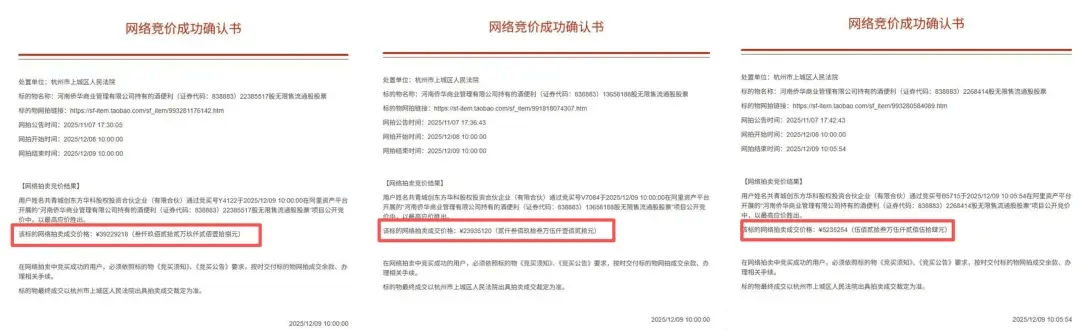
Core Insights - The year 2025 in the liquor industry is characterized by "adjustment," with companies undergoing transformations and facing significant challenges in the market [1] - Liquor distribution companies are under pressure due to declining revenues, high inventory levels, and changing relationships with manufacturers and consumers [1][3] Industry Overview - The liquor distribution market is experiencing a "cold winter," with significant financial distress highlighted by the auction of a major liquor company's shares at a price significantly lower than its assessed value [3] - Leading companies like Huazhi Liquor have reported substantial revenue declines, with a 34.07% year-on-year drop in revenue for the first three quarters of 2025 [3] - The average inventory turnover days for the industry have reached nearly 900 days, a 10% increase year-on-year, with inventory levels rising by 25% [4] Changing Business Models - The traditional "pressing goods" operation model is becoming unsustainable, prompting liquor distributors to seek new strategies for survival [5] - There is a shift from isolated operations to collaborative efforts among distributors, manufacturers, and consumers, aiming to rebuild the value chain [5][6] Strategic Collaborations - Companies are increasingly pursuing "manufacturer integration" as a practical strategy, with partnerships aimed at creating efficient service platforms [6][8] - Innovative models like the "Ten Thousand Merchants Alliance" are transforming distributors from mere purchasers to collaborative partners, enhancing their roles in the supply chain [8][10] Consumer Engagement - Liquor distribution companies are adjusting their relationships with consumers, focusing on reducing delivery times and enhancing service responsiveness [13] - The rise of instant retail is reshaping consumer behavior, with companies like Yima Songji achieving significant growth in market presence and transaction volume [13][15] - Investments in digital infrastructure and consumer data analytics are becoming critical for companies to understand and meet consumer needs effectively [17] Future Outlook - The core competitive advantage for liquor distribution companies in the next 3-5 years will hinge on data insights, terminal operations, and supply chain efficiency [17] - The ongoing themes of destocking and structural adjustment will continue to dominate the industry landscape as companies refine their strategies for survival and growth [17]

电商平台:“国补”带动3C热销
Bei Jing Shang Bao· 2026-01-04 15:44
Core Insights - The "National Subsidy" policy launched on January 1, 2026, has significantly boosted consumer demand for home appliances and electronics during the New Year holiday, with some e-commerce platforms reporting over 100% increase in foot traffic at offline stores [1][2] Group 1: National Subsidy Policy - The "National Subsidy" program includes a variety of products such as refrigerators, washing machines, televisions, air conditioners, and smart glasses, with a focus on energy-efficient and water-efficient models [1][2] - Consumers in Beijing can receive subsidies for purchasing eligible products through a designated app, which allows them to claim online or offline subsidies after completing identity verification [1] Group 2: E-commerce and Retail Impact - Major e-commerce platforms like JD.com and Tmall are competing for consumer attention by offering additional discounts and promotional events during the subsidy period, with Tmall providing up to 950 yuan in extra coupons [2] - Offline retail stores, particularly in Beijing, have seen a surge in customer traffic, with Su Ning reporting a 110% increase in foot traffic and a significant rise in sales of energy-efficient products during the holiday [2] Group 3: Instant Retail Trends - Instant retail platforms are capitalizing on holiday shopping trends, with significant sales increases in products appealing to younger consumers, such as craft beer and smartwatches, which saw over 100% and 610% year-on-year growth, respectively [3] - The shift in consumer behavior towards personalized and immediate shopping experiences is evident, as younger consumers prefer instant gratification over traditional bulk purchasing for holiday goods [3]



“国补”带动3C家电热销 电商元旦供需两旺
Bei Jing Shang Bao· 2026-01-04 10:37
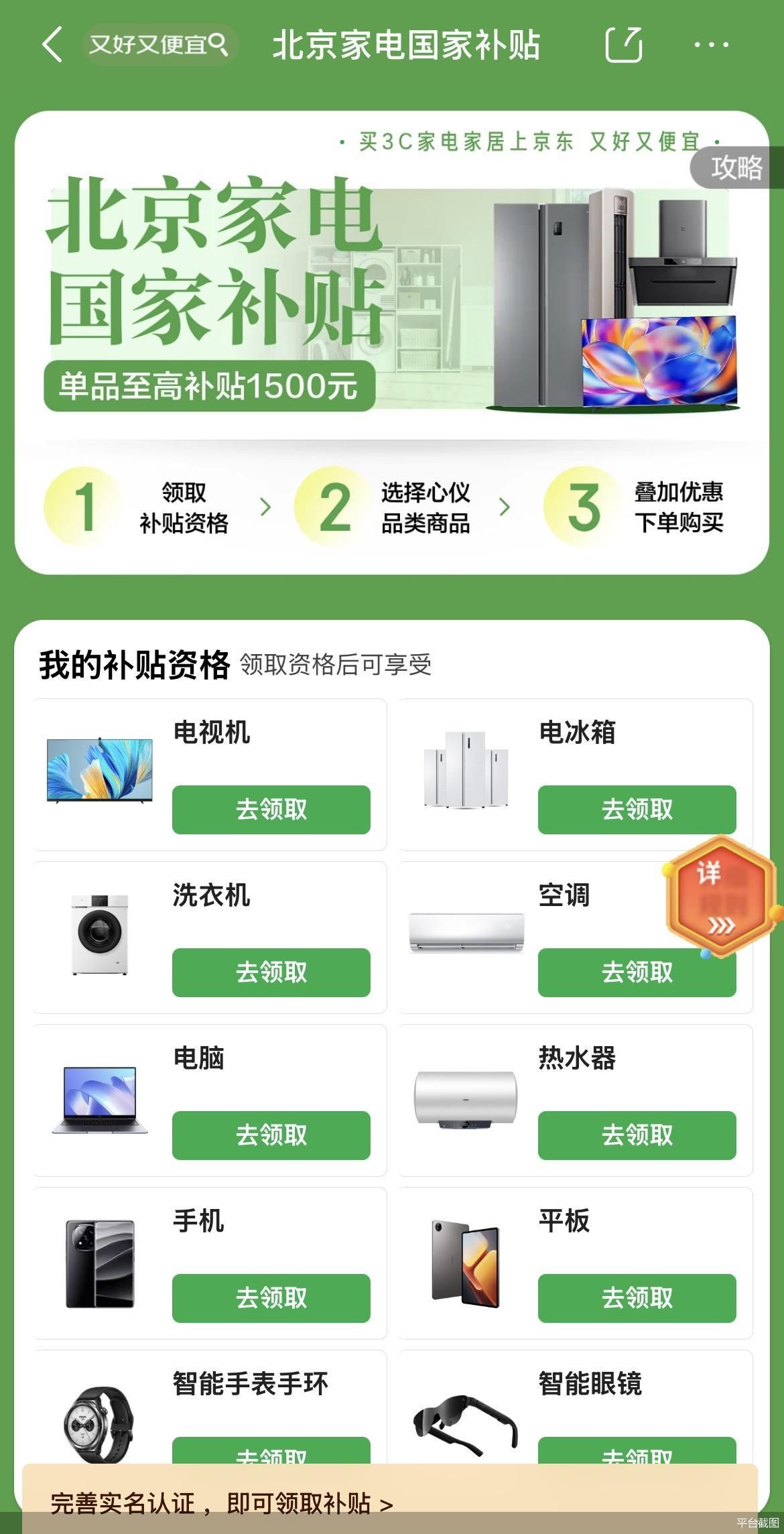
2026年"国补"上线,激发新一轮消费热。1月4日,北京商报记者从多家电商平台获悉,受元旦假期和"国补"政策红利叠加影响,平台的3C家电如手机、冰 箱、洗衣机等品类在元旦期间热销,部分电商北京线下门店客流环比增长超一倍。与此同时,为了抢占流量,即时零售平台也在跨年夜、年货节等节点发放 优惠券包刺激消费。 当前,多省市"国补"已上线京东、淘天、苏宁等电商平台。以北京为例,2026年1月1日起,北京接续实施家电、数码等领域消费品以旧换新补贴。 据了解,按照全国统一的品类和标准,北京市对在京个人消费者购买一级能效或水效标准的冰箱、洗衣机、电视、空调、热水器、电脑6类家电产品,以及 单件销售价格不超过6000元的手机、平板、智能手表(手环)、智能眼镜4类数码和智能产品给予补贴。 补贴领取步骤方面,消费者可通过京通小程序完成实名认证后,进入"家电、数码以旧换新专区"领取线上或线下补贴资格,并前往政策参与企业线上商城或 线下门店购买政策补贴范围内商品。 1月1日零点,"国补"在京东上线后,北京"国补"资格当即秒空,很多一早蹲守预约的消费者也没有抢到国补资格,只能在"国家补贴预约提醒"页面提交"心 愿清单"。有消费者留言希 ...