贸易保护主义

Search documents
墨西哥明年起对华等多个亚洲国家加征关税,大部分商品的关税税率被设定为35%,中方:密切关注
Huan Qiu Shi Bao· 2025-12-12 00:17
Core Viewpoint - Mexico's Senate has passed a new import-export tariff law, set to impose tariffs ranging from 5% to 50% on various products from several Asian countries, including China, starting January 1, 2026. This move, aimed at supporting domestic industries, has faced significant opposition from various business groups in Mexico [1]. Group 1: Legislative Details - The Senate approved the tariff law with a vote of 76 in favor, 5 against, and 35 abstentions, following its earlier passage in the House of Representatives [1]. - The law will impose tariffs on a wide range of products, including automobiles, auto parts, textiles, clothing, plastics, and steel, with most tariffs set at 35% [1]. - The final version of the law is considered milder than an earlier proposal that was shelved, with at least 750 amendments made [1]. Group 2: Industry Impact - Business leaders warn that the tariffs will disrupt key manufacturing sectors that support Mexico's production, employment, and exports, particularly in electrical and electronic components [2]. - The president of the National Chamber of Commerce highlighted that 66% of the national GDP sectors were not consulted before the proposal was submitted, leading to decisions lacking technical assessments, which have already caused contractions in some industrial and service sectors [2]. - The board member of the Mexican Business Coordinating Council stated that tariff increases will immediately reflect in final prices, disproportionately affecting low-income consumers [2]. Group 3: International Response - The Chinese Ministry of Commerce expressed opposition to unilateral tariff measures and is conducting a trade barrier investigation against Mexico to protect its industries [3].
比美国更反华国家出现?墨西哥忽然对中方刁难,原来我们早有打算
Sou Hu Cai Jing· 2025-12-11 16:58
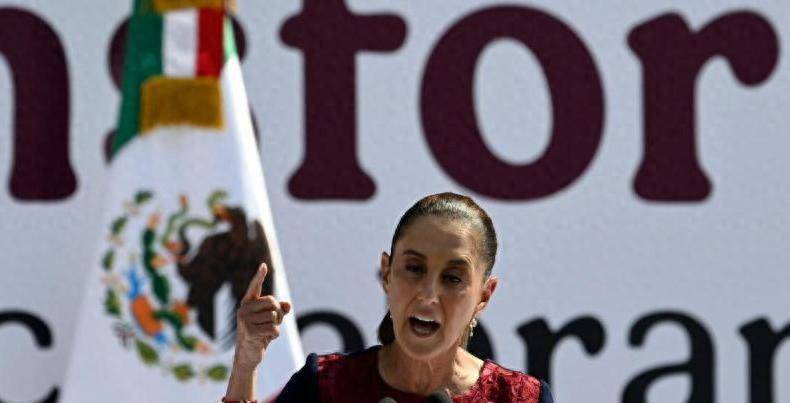
Core Points - Mexico's President Claudia Sheinbaum proposed a high tariff policy on imports from China and other countries without free trade agreements, with rates up to 50%, affecting approximately 1,371 tariff codes and an estimated $52 billion in imports [1][3][5] - The tariff proposal is part of the "Plan Mexico" industrial policy and is one of the largest tariff reforms in decades, with various rates including 10%, 20%, 25%, 30%, 35%, and 50% [3][5] - The automotive sector is significantly impacted, with tariffs on Chinese light vehicles set to rise from 20% to 50% [3][11] Tariff Proposal Details - The proposed tariffs will cover a wide range of products, including automobiles, textiles, steel, toys, footwear, plastics, furniture, and machinery [3][5] - The Mexican government anticipates that the new tariffs will generate approximately 37.6 million pesos (around $2 billion) in additional revenue annually [5] - The implementation of these tariffs is expected to be fully effective by December 31, 2026, with potential extensions [5][14] International Pressure and Reactions - The tariff proposal is seen as a response to pressure from the United States, particularly following threats from the Trump administration regarding tariffs on Mexican goods [5][6][8] - The U.S.-Mexico-Canada Agreement (USMCA) is set for review in 2026, adding to Mexico's pressures regarding trade relations [8] - The Chinese government has expressed strong opposition to the proposed tariffs, emphasizing its commitment to free trade and indicating potential retaliatory measures [10][14] Domestic Opposition - The proposal has faced significant backlash from business leaders and within the ruling party, leading to delays in congressional debates [8][10][14] - Concerns have been raised about increased production costs for Mexican manufacturers reliant on Chinese imports, with potential price hikes of up to 100% for some products [10][14] - There is a division among lawmakers regarding the timing and necessity of escalating trade tensions with China [10][14] Strategic Implications for Chinese Companies - Chinese automotive companies are advised to reconsider their export strategies, with suggestions to shift towards local production in Mexico to mitigate tariff impacts [13] - Challenges for Chinese firms include establishing a robust supply chain and after-sales service network in Mexico [13]

墨西哥宣布对中国和其他亚洲国家加征关税,商务部回应
Nan Fang Du Shi Bao· 2025-12-11 15:15
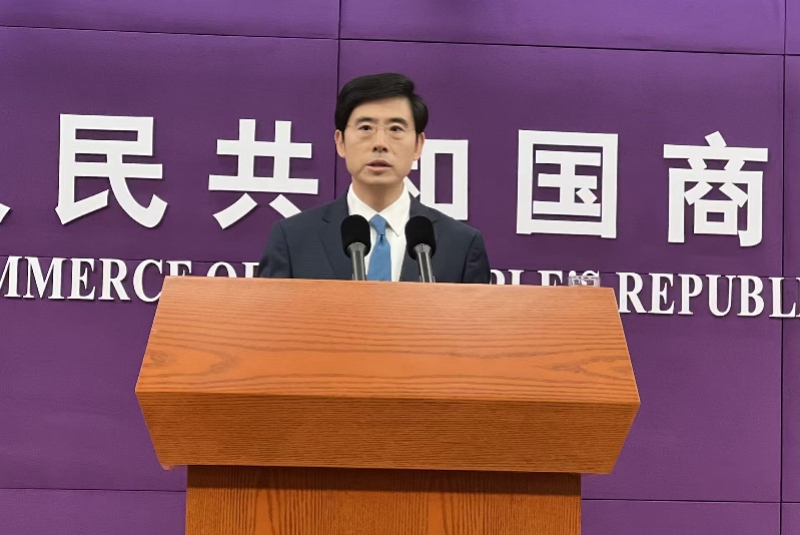
Core Viewpoint - Mexico has announced an increase in tariffs on non-free trade partners, including China, effective January 1, 2026, which is expected to harm the interests of related trade partners, including China [3]. Group 1: Tariff Changes - The Mexican Congress approved a proposal to increase tariffs on certain products from non-free trade partners, with adjustments made to some tax items and rates compared to the proposal submitted in September [3]. - Some tariff rates on automotive parts, light industrial products, and textiles have been slightly reduced, but overall measures will still significantly harm trade partners [3]. Group 2: China's Response - The Chinese Ministry of Commerce has expressed strong opposition to unilateral tariff increases and has initiated a trade and investment barrier investigation against Mexico [3]. - China emphasizes the importance of resolving trade disputes through economic agreements without harming global trade development or China's legitimate interests [3][4]. Group 3: Bilateral Trade Relations - China values its economic and trade relationship with Mexico and aims to promote healthy and stable bilateral trade and investment cooperation [4]. - In the context of rising trade protectionism, China hopes for enhanced communication and dialogue with Mexico to manage differences and deepen practical cooperation [4].
墨西哥将对中国等国加征关税,外交部回应
Zheng Quan Shi Bao· 2025-12-11 14:51
Group 1 - The Mexican Senate has approved a new import-export tariff law that will impose tariffs ranging from 5% to 50% on certain products from several Asian countries, including China, starting from January 2026 [1][2] - The Chinese Ministry of Commerce has expressed concern that these unilateral tariff measures will substantially harm the interests of relevant trading partners, including China, and has initiated a trade and investment barrier investigation against Mexico [2][3] - The Chinese side emphasizes the importance of maintaining healthy and stable bilateral trade and investment cooperation, urging Mexico to correct its protectionist measures and engage in dialogue to manage differences [3]
281票赞成通过法案,墨西哥将对华加税50%,辛鲍姆挽尊:不是因为美国
Sou Hu Cai Jing· 2025-12-11 12:36
Core Viewpoint - Mexico's recent decision to impose punitive tariffs on Chinese goods is a direct response to U.S. trade pressures, aiming to secure recognition from the U.S. for its bilateral trade relationship and pave the way for the renewal of the USMCA agreement [1][3]. Group 1: Tariff Implementation - The Mexican Congress approved a bill to impose tariffs of up to 50% on Chinese products starting January 1, 2026, affecting key categories such as automobiles, parts, and textiles [1]. - The Mexican automotive industry warns that these tariffs could increase production costs by at least 30%, leading to potential price hikes of over 40% for vehicles once existing inventories are depleted [3]. Group 2: Economic Dependence on China - Mexico's economy is heavily reliant on external manufacturing, with nearly 40% of essential components for its automotive and textile industries sourced from China [3]. - China is a crucial market for Mexican agricultural exports, with over $1 billion in annual exports of products like avocados and tequila, accounting for more than 35% of related industry exports [3]. Group 3: U.S. Strategic Interests - The U.S. aims to reshape North American supply chains to reduce dependence on China, which may lead to more stringent market access conditions and labor standards for Mexico [5]. - The trade relationship is characterized by asymmetry, with the U.S. absorbing 80% of Mexico's exports while Mexico accounts for only 15% of U.S. exports, limiting Mexico's bargaining power [5]. Group 4: International Reactions and Future Outlook - Mexico's unilateral actions have drawn little support from other Latin American countries, while nations like Brazil and Argentina are accelerating trade cooperation with China [7]. - The EU has expressed opposition to trade restrictions that disrupt global supply chains, indicating a continued commitment to deepening economic ties with China [7]. - Mexico is encouraged to pursue a more pragmatic trade policy, recognizing that its economic interests may not align with U.S. strategic goals, and to re-engage in trade discussions with China to avoid escalating trade tensions [7].

墨西哥将对中国等国加征关税,外交部回应
证券时报· 2025-12-11 11:35
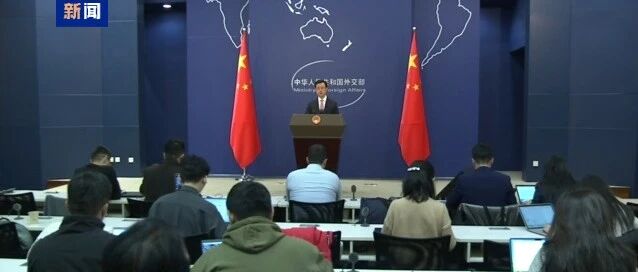
答:我们注意到有关报道,将密切关注墨方措施落地情况,并进一步评估相关影响。本次审议通过的提案在9 月基础上做了部分调整,部分汽车零部件、轻工产品和纺织服装等产品的提税税率有一定幅度下调。但总的来 看,有关措施一旦落地仍会实质性损害包括中国在内的相关贸易伙伴利益。 12月11日,外交部发言人郭嘉昆主持例行记者会。 有记者问:据报道,墨西哥参议院通过了新的进出口关税法,将从明年起对包括中国在内的多个亚洲国家的部 分产品征收百分之五到百分之五十的关税,请问中方对此有何评论? 郭嘉昆表示,中方主管部门已就此作出回应,你可以查阅。我们想强调,逆经济全球化潮流而动、搞保护主 义,损人不利己,希望墨方及早纠正有关错误做法,同中方相向而行,共同维护好双边经贸关系大局。 稍早前,商务部新闻发言人就墨西哥国会审议通过对非自贸伙伴的提税提案答记者问。 有记者问:据墨西哥当地媒体报道,当地时间12月10日,墨西哥参众两院审议通过对非自贸伙伴的提税提案, 新税率将于2026年1月1日起生效。我们也注意到,与墨政府9月向国会提交的提案相比,此次审议通过的版本 中,一些税目和税率做了调整。请问商务部对此有何评论? 中方一贯反对各种形式的单 ...
突发!南美与亚洲两国同时对中国商品加税!最高50%!2026年起实施→
Xin Lang Cai Jing· 2025-12-11 10:17
Core Viewpoint - The Mexican Congress has overwhelmingly approved a significant tariff bill that will impose tariffs on 1,463 products from Asian countries, including China, that do not have free trade agreements with Mexico, with rates ranging from 10% to 50% [1][6] Group 1: Tariff Details - The new tariffs will increase from the previous range of 0-20% to a new range of 10-50%, with most products falling between 10-30% [1][6] - The legislation is expected to be finalized by December 15, 2025, and will take effect on January 1, 2026 [1][6] - Affected countries include China, South Korea, India, Vietnam, Thailand, Indonesia, Russia, Turkey, Brazil, Nicaragua, the UAE, and South Africa, while countries with free trade agreements with Mexico, such as the EU, the US, and Canada, will not be affected [1][6] Group 2: Impact on Trade - Approximately 70% of the affected trade volume originates from China, with projected trade between China and Mexico reaching $109.426 billion in 2024, where Chinese exports are expected to be $90.232 billion, leading to a growing trade deficit that has prompted the tariff increase [3][8] - The Chinese Ministry of Commerce has expressed strong opposition to this unilateral and protectionist approach, stating that it will significantly harm Chinese interests and urging Mexico to correct its course [3][8] Group 3: Specific Industries Affected - The tariff bill will impact various industries, including: - Textiles and apparel (1,014 tariff codes, rates 10%-35%) - Steel and products (249 tariff codes, rates 15%-50%) - Automotive and parts (235 tariff codes, rates 20%-50%) - Plastics (81 tariff codes, rates 10%-35%) - Home appliances (18 tariff codes, rates 15%-30%) - Toys (37 tariff codes, rates 10%-25%) - Furniture (28 tariff codes, rates 15%-35%) - Footwear and leather (67 tariff codes, rates 10%-30%) - Paper and cardboard (47 tariff codes, rates 10%-20%) - Motorcycles (8 tariff codes, rates 20%-40%) - Aluminum products (21 tariff codes, rates 15%-35%) - Cosmetics and soaps (24 tariff codes, rates 10%-25%) [4][11]

突发特讯!墨西哥通过对非自贸伙伴的提税提案,中国商务部郑重回应,引全球高度关注
Sou Hu Cai Jing· 2025-12-11 08:51
墨西哥城传来的这则消息,如同投入平静湖面的一块巨石,在全球贸易界激起巨大波澜。当地时间12月10日,墨西哥国会审议通过对非自由贸易伙伴的提税 提案,定于2026年生效。尽管与9月版本相比税率有所下调,但这一单边保护主义措施的实质未变。中国商务部的回应,在平和理性的言辞之下,蕴含着不 容置疑的坚定立场和清晰警示,为阴云密布的多边贸易体系投下一道强光。 一、 商务部的回应:理性克制下的三重深意 墨西哥希望通过配合此战略,吸引更多投资落地,巩固其在美国供应链中的替代性地位。然而,这种"选边站队"的策略蕴含着巨大风险: 首先,定性与关切。中方明确将墨方措施定性为"单边主义、保护主义的错误做法",直指其违背世界贸易组织(WTO)非歧视性原则和多边贸易规则的核 心。同时指出,该措施"会实质性损害包括中国在内的相关贸易伙伴利益",这表明中方并非仅从自身利益出发,而是站在维护全球贸易秩序公平正义的高度 发声。 其次,行动与反制。中方绝非仅止于口头抗议。声明中明确提及,商务部已于9月底依法对墨启动了贸易投资壁垒调查。这是依据中国国内法和国际规则采 取的正当维权举措,表明中国拥有完备的法律工具和坚定的意志,对任何不公平的贸易限制 ...

墨西哥通过对多国加征关税法案,商务部:反对单边关税并将评估相关影响
Di Yi Cai Jing· 2025-12-11 08:19
Core Viewpoint - Mexico has approved a proposal to impose tariffs on products from non-free trade partners, which will take effect on January 1, 2026, potentially impacting trade relations with countries including China [1][3]. Group 1: Tariff Proposal Details - The Mexican Senate voted to impose tariffs ranging from 5% to 50% on over 1,400 products, including footwear, textiles, clothing, metals, and automotive parts [3]. - Some tariffs on specific automotive parts, light industrial products, and textiles have been slightly reduced compared to the initial proposal submitted by the Mexican government [2][3]. Group 2: China's Response - The Chinese Ministry of Commerce has initiated a trade and investment barrier investigation against Mexico in response to the tariff proposal, emphasizing the need to protect Chinese industry interests [2][4]. - China opposes unilateral tariff measures and urges Mexico to correct its protectionist approach [2]. Group 3: Broader Trade Context - The new tariffs come amid ongoing negotiations between Mexico and the United States regarding trade issues, particularly concerning water resource obligations [3][4]. - The U.S. currently imposes a 25% tariff on Mexican imports, with temporary exemptions for products compliant with the USMCA, which may be extended as negotiations continue [4]. Group 4: China-Latin America Relations - China aims to deepen trade relations with Latin American and Caribbean countries, promoting cooperation in high-value products and technology-intensive goods [5][6]. - The Chinese government encourages participation in various international trade fairs and forums to enhance bilateral trade and investment cooperation [5][6].
商务部最新发声:希望墨方及早纠正错误做法
中国基金报· 2025-12-11 07:15
Group 1 - The Mexican Congress has approved a proposal to increase tariffs on non-free trade partners, with new rates set to take effect on January 1, 2026, following adjustments from the original proposal submitted in September [1] - Certain product categories, including auto parts, light industrial products, and textiles, have seen a reduction in tariff rates compared to the initial proposal, but the overall measures are expected to harm the interests of trade partners, including China [1] - China opposes unilateral tariff increases and has initiated a trade and investment barrier investigation against Mexico to protect its industries, emphasizing the need for Mexico to correct its protectionist approach [1] Group 2 - China values its economic and trade relationship with Mexico and aims to promote stable and healthy bilateral trade and investment cooperation amid rising trade protectionism [2] - There is an expectation for Mexico to engage in dialogue and cooperation with China to manage differences and enhance practical collaboration, thereby maintaining the overall framework of bilateral economic relations [2]