
预制菜

Search documents
金陵饭店涨2.09%,成交额2764.78万元,主力资金净流入121.46万元
Xin Lang Zheng Quan· 2025-10-20 05:19
Core Viewpoint - Jinling Hotel's stock price has shown fluctuations in recent trading sessions, with a year-to-date increase of 5.33% and a recent decline over the past 20 days of 9.42% [2] Financial Performance - As of June 30, 2025, Jinling Hotel reported a revenue of 851 million yuan, a year-on-year decrease of 5.94%, while the net profit attributable to shareholders was 23.25 million yuan, reflecting a slight increase of 0.25% [3] - The company has cumulatively distributed 473 million yuan in dividends since its A-share listing, with 113 million yuan distributed over the past three years [4] Stock Market Activity - On October 20, the stock price increased by 2.09%, reaching 7.31 yuan per share, with a trading volume of 27.65 million yuan and a turnover rate of 0.98% [1] - The stock has appeared on the "Dragon and Tiger List" three times this year, with the most recent instance on June 6, where it recorded a net buy of -32.82 million yuan [2] Shareholder Information - As of June 30, 2025, the number of shareholders increased by 23.61% to 33,500, while the average circulating shares per person decreased by 19.10% to 11,634 shares [3] - Among the top ten circulating shareholders, the fifth largest is the Fortune CSI Tourism Theme ETF, holding 3.04 million shares, a decrease of 523,800 shares from the previous period [4]

北上广开餐饮店太难,连萨莉亚都很难赚钱?
3 6 Ke· 2025-10-20 03:23
Core Insights - Sally's profitability is under pressure in the Chinese market despite overall growth in sales and net profit for the fiscal year 2025 [2][3][4] Group 1: Financial Performance - For the fiscal year 2025, Sally's total sales reached 256.71 billion yen, a year-on-year increase of 14.3%, with net profit at 11.16 billion yen, up 37% [2] - The Asian segment, primarily driven by the Chinese market, generated sales of 83.80 billion yen, a 7.4% increase, but operating profit declined by 12.8% [4] - In major cities like Shanghai, Guangzhou, and Beijing, sales were 21.90 billion yen, 24.50 billion yen, and 8.81 billion yen respectively, with growth rates of 2.4%, 6.6%, and 2.3% [7] Group 2: Market Challenges - Same-store sales in the Chinese market have been consistently declining, particularly in the North, East, and South regions [8][9] - Operating profits in Shanghai, Guangzhou, and Beijing fell by 23.6%, 27.3%, and 20.3% respectively, indicating a significant drop in profitability despite increased store openings [7] Group 3: Strategic Initiatives - Sally plans to continue its expansion strategy, with 40 new stores in Japan and 121 in overseas markets, including China and Southeast Asia, for the fiscal year 2026 [12] - The company is also investing approximately 30 million USD to build a new factory in Guangzhou to reduce ingredient costs and improve operational efficiency [16] - Sally has established a wholly-owned subsidiary in Wuhan to manage its restaurant operations, signaling a push into the central China market [14]


实探预制菜生产厂 你点的拼好饭为什么越来越难吃?
Feng Huang Wang· 2025-10-20 02:03
Core Insights - The emergence of 5 yuan pre-packaged meals has significantly altered the ecosystem of takeout and small dining, driven by delivery platform algorithms that pressure cooking speed and merchant profits, alongside pre-packaged food manufacturers targeting low-income groups with precise distribution strategies [1][2] - The production environment, equipment, and cooking standards of pre-packaged meal manufacturers vary widely, with complex subcontracting relationships among factories. Some manufacturers use pasteurization or frozen sterilization, which experts believe will phase out products containing preservatives [1][2] Group 1: Industry Dynamics - Many inexperienced entrepreneurs are entering the pre-packaged meal market, becoming the first victims of exploitation under the guise of profitability [3] - There is a tacit understanding in the industry to not inform customers about the use of pre-packaged meals, with both platforms and regulators largely absent. Some manufacturers are preparing to launch low-cost pre-packaged meal sets made from near-expiry ingredients [4][5] - Experts suggest that there is no need to fear pre-packaged meals and additives, but consumer experiences regarding taste and texture are misaligned with industry trends [5][6] Group 2: Production Insights - A visit to various pre-packaged meal production facilities reveals a mix of cleanliness and operational standards, with some factories maintaining acceptable hygiene while others show signs of disorganization [6][8] - The production process often involves simple mechanical mixing of raw materials and seasonings, requiring minimal cooking skills [9][10] - The market for pre-packaged meals has penetrated deeply into the food service industry, with low prices (averaging around 5 yuan) driving demand despite quality concerns [12][14] Group 3: Business Models and Challenges - Pre-packaged meal manufacturers are adopting distribution models through various means such as ground promotion, agency, and franchising, rapidly expanding their presence [13][14] - The cost structure for entrepreneurs entering the pre-packaged meal market is critical, with many relying on low-cost ingredients to maintain profitability amidst high platform fees [16][18] - Despite the low entry costs, many new entrants find it challenging to sustain profitability due to competitive pricing and market saturation [18][19] Group 4: Consumer Perception and Transparency - Following recent controversies, there is a growing trend towards transparency in the use of pre-packaged meals, with some companies beginning to disclose their production sources and ingredient information [20][21] - There exists a consensus among producers to keep the use of pre-packaged meals hidden from consumers, as many believe that public perception is biased against them [21][22] - The shift towards direct consumer sales of pre-packaged meals is emerging, with individuals seeking clearer sourcing and transparency [22][24] Group 5: Quality and Safety Concerns - The quality and taste of pre-packaged meals vary significantly, with many products exhibiting a strong industrial flavor and lacking the freshness expected by consumers [24][25] - Some pre-packaged meals contain complex additives, raising concerns about food safety and consumer acceptance [26][27] - Experts emphasize the importance of distinguishing between different types of pre-packaged meals, advocating for clear labeling to avoid consumer confusion [27][28]
实探预制菜生产厂,你点的外卖为什么越来越难吃?
虎嗅APP· 2025-10-20 00:09
Core Insights - The article discusses the rise of low-cost pre-packaged meal kits, highlighting the impact of delivery platforms and the changing dynamics of the food industry, where inexperienced entrepreneurs are turning to pre-packaged meals as a viable business model [5][30][41] Group 1: Industry Dynamics - The pre-packaged meal industry is not merely an upgrade of traditional dining but is influenced by delivery platform algorithms that pressure merchants on speed and profit margins [5][7] - The article emphasizes the growing acceptance of low-cost pre-packaged meals among consumers, with average prices around 5 yuan per meal [30][41] - The industry is characterized by a complex network of small and large manufacturers, with many products being produced in less-than-ideal conditions, leading to varying quality and taste [25][72] Group 2: Business Models and Opportunities - Many entrepreneurs are entering the pre-packaged meal market with minimal investment, often using social media for marketing and sales, and some even operate from home [37][42] - The article outlines a distribution model where pre-packaged meals are sold directly to various establishments, including schools and restaurants, with minimal regulatory barriers for new entrants [41][42] - The potential for profit is highlighted, with claims of significant earnings from low-cost meal kits, although actual profitability may vary due to market competition and operational costs [45][51] Group 3: Consumer Perception and Quality Concerns - There is a growing consumer awareness and concern regarding the quality of pre-packaged meals, with many products containing additives and lacking freshness [67][72] - Despite the criticisms, consumers continue to purchase pre-packaged meals due to their convenience and low cost, indicating a shift in consumer behavior towards accepting these products [54][74] - The article suggests a trend towards transparency in the industry, with some companies beginning to disclose their use of pre-packaged ingredients in response to consumer demand for quality assurance [53][72]
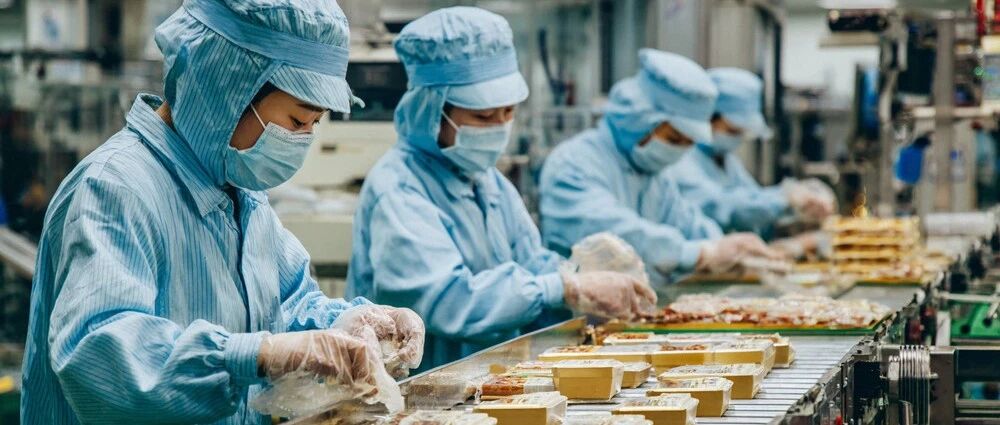
实探预制菜生产厂,你点的拼好饭为什么越来越难吃?
Hu Xiu· 2025-10-19 14:00
Core Insights - The rise of low-cost pre-packaged meal kits, priced around 5 yuan, is transforming the food delivery landscape, allowing individuals with minimal investment to start their own delivery businesses [3][36][49] - The pre-packaged meal industry is characterized by a complex network of production, distribution, and marketing strategies, often targeting low-income and unemployed individuals seeking stable income opportunities [3][38][60] - The quality and taste of these pre-packaged meals vary significantly, with many consumers expressing dissatisfaction with the flavor and texture, leading to a growing concern over food safety and ingredient transparency [73][85][86] Industry Dynamics - The pre-packaged meal market is increasingly infiltrating the food delivery sector, with a notable shift towards low-cost options that appeal to budget-conscious consumers [33][36] - Many small entrepreneurs are entering the market, often without prior culinary experience, driven by the promise of low startup costs and high potential returns [51][52][60] - The production environment for pre-packaged meals varies widely, with some facilities maintaining high standards while others operate in less sanitary conditions, raising concerns about food safety [12][31][73] Consumer Behavior - Consumers are becoming accustomed to the presence of low-cost pre-packaged meals, often prioritizing price over quality, despite ongoing discussions about the implications of such choices [4][5][36] - There is a growing trend of consumers seeking transparency regarding the ingredients and production methods of pre-packaged meals, reflecting a shift in consumer expectations towards food quality [60][86] - The marketing strategies employed by pre-packaged meal companies often leverage social media and influencer partnerships to promote their products, creating a perception of value despite potential quality issues [34][39][43] Production and Quality - The production of pre-packaged meals involves a mix of manual and automated processes, with varying levels of quality control and ingredient sourcing [18][26][31] - Many pre-packaged meals contain additives and preservatives, leading to concerns about health implications, although some experts argue that regulated use of these substances is safe [80][84][86] - The overall quality of pre-packaged meals is often perceived as inferior compared to freshly prepared dishes, with many consumers noting a distinct "industrial" taste [73][78][86] Market Trends - The pre-packaged meal industry is evolving towards a more decentralized model, with many small-scale producers and distributors emerging to meet local demand [30][64] - There is a notable increase in direct-to-consumer sales, as individuals seek to bypass traditional food delivery platforms for greater control over their food sources [62][64] - The competitive landscape is marked by aggressive pricing strategies and promotional tactics, as companies vie for market share in a rapidly growing sector [36][39][51]

实探预制菜生产厂,你点的拼好饭为什么越来越难吃?
凤凰网财经· 2025-10-19 12:48
Core Insights - The emergence of 5 yuan pre-made meal kits has significantly altered the ecosystem of takeout and small dining, driven by the pressure from delivery platform algorithms on cooking speed and merchant profits, as well as the distribution strategies of pre-made meal manufacturers targeting low-income groups [1][8] - The production environment, equipment, and cooking standards of pre-made meal manufacturers vary widely, with complex subcontracting relationships among factories. Some manufacturers use pasteurization or frozen sterilization, which experts believe will phase out products containing preservatives [1][28] Group 1 - Many inexperienced entrepreneurs have entered the pre-made meal market, becoming the first victims of this trend [2] - There is a tacit understanding in the industry to not disclose the use of pre-made meals to customers, with both platforms and regulators largely absent. Some manufacturers are preparing to launch low-cost pre-made meal packages made from recovered near-expiry ingredients [3][4] - Experts suggest that there is no need to fear pre-made meals and additives, but consumer experiences with taste and texture are misaligned with industry development trends [4][5] Group 2 - The production of a pre-made meal kit involves various processes, with some factories maintaining acceptable hygiene standards despite appearing disorganized [10][16][22] - The overall quality and taste of pre-made meals vary significantly, with many products exhibiting a strong "industrial taste" [57][64] - The market for pre-made meals has penetrated deeply into the food service industry, with many low-cost options available, averaging around 5 yuan [34][36] Group 3 - The pre-made meal industry has developed a distribution model that includes direct sales to various food service establishments, including quick-service restaurants and schools [42][44] - Many entrepreneurs are drawn to the pre-made meal business due to the low initial investment and the promise of high returns, despite the reality of market challenges [39][47] - The lack of transparency regarding the use of pre-made meals has created a mutual understanding between sellers and buyers, with many consumers unaware of the products' origins [50][51] Group 4 - The rise of pre-made meals is largely driven by cost considerations, with many operators finding it unfeasible to hire chefs for takeout [46][48] - Despite the low cost of pre-made meals, profitability is not guaranteed, as many operators struggle to maintain sales amid fierce competition and price wars [47][49] - The trend of using pre-made meals is expected to continue, with a growing number of consumers opting for direct purchases to ensure transparency [52][53] Group 5 - The pre-made meal market is evolving, with some manufacturers exploring new customer acquisition models, such as community shared kitchens [53][56] - The industry is witnessing a shift towards more sustainable practices, including the recovery and reuse of near-expiry ingredients [56] - The overall perception of pre-made meals is changing, with consumers increasingly seeking quality and transparency in their food choices [67]
奥瑞金跌2.02%,成交额2.52亿元,主力资金净流出960.41万元
Xin Lang Cai Jing· 2025-10-17 05:36
Core Viewpoint - The stock price of Aorijin has shown a significant increase this year, with a notable rise in recent trading days, despite a slight decline on October 17. The company has demonstrated strong revenue and profit growth in the first half of 2025, indicating a positive financial performance. Group 1: Stock Performance - Aorijin's stock price has increased by 13.69% year-to-date, with a 10.90% rise in the last five trading days, 7.13% in the last 20 days, and 11.68% in the last 60 days [2] - On October 17, Aorijin's stock fell by 2.02%, trading at 6.31 yuan per share, with a total market capitalization of 16.152 billion yuan [1] Group 2: Financial Performance - For the first half of 2025, Aorijin achieved a revenue of 11.727 billion yuan, representing a year-on-year growth of 62.74%, and a net profit attributable to shareholders of 903 million yuan, up 64.66% year-on-year [2] - The company has distributed a total of 3.912 billion yuan in dividends since its A-share listing, with 923 million yuan distributed in the last three years [3] Group 3: Shareholder Information - As of June 30, 2025, Aorijin had 45,100 shareholders, a decrease of 7.40% from the previous period, with an average of 56,685 circulating shares per shareholder, an increase of 7.99% [2] - The third-largest circulating shareholder is Hong Kong Central Clearing Limited, holding 74.7592 million shares, an increase of 4.8132 million shares from the previous period [3]

食品饮料行业周度市场观察-20251016
Ai Rui Zi Xun· 2025-10-16 06:25
Investment Rating - The report does not explicitly provide an investment rating for the food and beverage industry Core Insights - The food and beverage industry is witnessing a shift towards health-conscious consumption among young people, with trends like "light health" and the popularity of traditional Chinese medicine (TCM) products [1][4] - Japan's experience in the prepared food sector offers valuable lessons for China, emphasizing the importance of clear definitions, strict regulations on additives, and consumer trust [1][4] - The bottled water market is undergoing a transformation from price competition to value competition, with companies diversifying their product offerings to adapt to changing consumer preferences [1][5] - The protein beverage market in China is growing rapidly, with a market size of 158.6 billion yuan in 2023, and is expected to continue expanding towards high-end and functional products [1][8] - The instant noodle industry is facing challenges due to increased competition from substitutes and rising raw material costs, necessitating product upgrades and innovation [1][8] Industry Trends - Young consumers are increasingly adopting "light health" lifestyles, integrating health into daily routines through self-made health drinks and portable wellness products [1] - The Japanese prepared food market has established a clear definition and regulatory framework, focusing on food safety and consumer confidence, which can serve as a model for China's market [1][4] - The mooncake market is trending towards health-oriented products, with low-sugar and medicinal mooncakes gaining popularity among younger consumers [1][4] - The protein beverage sector is projected to grow significantly, driven by health trends and the demand for diverse protein sources [1][8] - The instant noodle market is experiencing a decline in sales due to competition and rising costs, prompting brands to innovate and explore new market segments [1][8] Top Brand News - Sanyuan is focusing on low-temperature fresh milk and has optimized its product structure to enhance its market position in Beijing [1][10] - TATA's collaboration with the popular IP "Butter Bear" has resulted in significant online sales growth and increased brand engagement among younger consumers [1][11] - The success of traditional sweet soup brands in Lanzhou highlights the demand for health-oriented products and transparent production processes [1][11] - Footwear brand TATA has effectively utilized IP collaborations to enhance brand visibility and connect with younger audiences [1][11] - The instant noodle brand Kang Shifu is innovating its product offerings to redefine the category and meet evolving consumer demands [1][14]
獐子岛跌2.23%,成交额1578.25万元,主力资金净流出32.01万元
Xin Lang Cai Jing· 2025-10-16 02:06
Core Points - The stock price of Zhuangzi Island has decreased by 2.23% on October 16, trading at 3.95 CNY per share with a total market capitalization of 2.809 billion CNY [1] - Year-to-date, Zhuangzi Island's stock has increased by 7.63%, but it has seen a decline of 10.02% over the past 20 days [2] - The company reported a revenue of 772 million CNY for the first half of 2025, a year-on-year decrease of 0.77%, while net profit attributable to shareholders increased by 146.39% to 10.1491 million CNY [2] Company Overview - Zhuangzi Island Group Co., Ltd. is located in Dalian, Liaoning Province, and was established on September 21, 1992, with its stock listed on September 28, 2006 [2] - The company's main business includes marine specialty products, seawater aquaculture, marine food research and development, processing, new retail, and fishery equipment [2] - The revenue composition of Zhuangzi Island is as follows: Other 68.37%, Ezo scallops 18.84%, sea cucumbers 9.75%, sea snails 1.68%, sea urchins 1.04%, and abalone 0.33% [2] Financial Performance - Zhuangzi Island has distributed a total of 1.147 billion CNY in dividends since its A-share listing, with no dividends paid in the last three years [3] - As of June 30, the number of shareholders is 30,800, a decrease of 4.96% from the previous period, with an average of 23,035 circulating shares per person, an increase of 5.22% [2]

永辉超市跌2.01%,成交额1.99亿元,主力资金净流出495.36万元
Xin Lang Cai Jing· 2025-10-16 01:59
Core Viewpoint - Yonghui Supermarket's stock price has experienced a decline of 23.19% this year, with a recent drop of 2.01% on October 16, 2023, indicating ongoing challenges in the retail sector [1][2]. Financial Performance - As of June 30, 2025, Yonghui Supermarket reported a revenue of 29.948 billion yuan, a year-on-year decrease of 20.73%, and a net profit attributable to shareholders of -241 million yuan, a significant decline of 187.38% [2]. - The company has not distributed any dividends in the past three years, with a total payout of 7.101 billion yuan since its A-share listing [3]. Stock Market Activity - The stock price was reported at 4.87 yuan per share with a market capitalization of 44.195 billion yuan as of October 16, 2023 [1]. - The stock has seen a trading volume of 199 million yuan and a turnover rate of 0.45% on the same day [1]. - In the past five trading days, the stock has increased by 5.18%, while it has decreased by 5.80% over the last 20 days [2]. Shareholder Information - As of June 30, 2025, the number of shareholders decreased by 6.24% to 359,800, while the average circulating shares per person increased by 6.66% to 25,220 shares [2]. - The top ten circulating shareholders include Hong Kong Central Clearing Limited, which increased its holdings by 11.8954 million shares to 104 million shares [3].
