风险管理

Search documents
工具创新+案例赋能:瑞达期货以金融力量筑牢实体经济稳定器
Qi Huo Ri Bao· 2025-11-27 09:33
Core Insights - The global economic landscape is undergoing significant adjustments, with commodity prices experiencing increased volatility due to supply-demand restructuring, geopolitical conflicts, and policy regulations [1] - Ruida Futures is committed to empowering the real economy through innovative financial tools and customized solutions, exemplified by successful case studies in various industries [1] Group 1: Case Studies and Innovations - Ruida Futures' subsidiary, Ruida New Control, won recognition for its "Accumulated Purchase + Accumulated Sale" model, which effectively addresses risk management for cold-rolled processing enterprises [2] - A cold-rolled processing company faced dual challenges of inventory price fluctuation and rising raw material costs, prompting Ruida to implement a cost-optimization hedging strategy [3] - The innovative "zero-cost cumulative option" mechanism allows the enterprise to hedge risks without incurring additional option costs, establishing a positive cycle of risk hedging and cost compensation [3] Group 2: Regional Economic Support - Ruida Futures' Jiangxi branch has served over 100 enterprises since its establishment, helping them achieve additional profits through customized risk management solutions [4] - The Jiangxi team developed a "basis-inclusive hedging" model for a steel company facing winter storage risks, allowing the company to secure risk protection at a low cost [5][6] - This tailored approach has proven effective, enabling the company to avoid significant losses during price downturns and maintain stable operations [6] Group 3: Broader Economic Impact - Ruida Futures extends its services beyond industrial sectors to agriculture and rural revitalization, providing personalized risk management tools to over 1,000 clients across various industries [7] - The company has initiated "insurance + futures" projects to mitigate agricultural price volatility, thereby supporting rural income stability [7] - Ruida Futures emphasizes a proactive service model, offering training and value-added services to enhance clients' risk management capabilities [7] Group 4: Future Directions - Ruida Futures aims to deepen its service offerings by innovating financial tools and expanding into strategic sectors such as renewable energy and agriculture [8] - The company plans to enhance service precision and efficiency through technological empowerment and collaboration with government and industry associations [8] - As market volatility increases, Ruida Futures remains committed to providing high-quality customized services to strengthen enterprises' risk management frameworks [8]

高风险高回报,企业如何在动荡市场立足
Di Yi Cai Jing· 2025-11-27 04:50
Core Insights - Companies are willing to take risks in challenging markets due to substantial financial incentives, with potential investment returns reaching up to 8% in less peaceful countries [1] - Early market entrants post-conflict can gain strategic advantages, such as establishing market norms and securing long-term contracts, while also contributing to local economic recovery [1] Group 1: Risk Assessment and Management - Comprehensive risk assessment is essential before entering high-risk markets, focusing on political stability, institutional integrity, and local stakeholder dynamics [2] - Due diligence and transaction structuring are critical to navigate complex regulatory environments, requiring thorough planning to identify and mitigate risks [2] - Strong contractual protections in acquisition and joint venture agreements can help manage country, transaction, and operational risks [3] Group 2: Legal and Operational Considerations - Understanding local laws and the enforceability of contracts is crucial, as local regulations may take precedence over foreign laws [3] - Operational planning must address employee safety, internal service dependencies, and intellectual property protection [3] Group 3: Bilateral Investment Treaties - Bilateral investment treaties (BITs) can provide additional safeguards for investors in high-risk jurisdictions, covering over 2,000 treaties globally [4] - BITs aim to create a stable investment environment and reduce political risks through international law, offering arbitration rights independent of local courts [5] - Chinese companies must consider investment treaty planning to optimize protection levels when investing in high-risk jurisdictions [6]
迎接保险AI新纪元 华泰人寿探索智能化转型新路径
Cai Jing Wang· 2025-11-27 03:11
Core Viewpoint - The insurance industry is actively integrating artificial intelligence (AI) into its core strategy to drive innovation and efficiency, transforming from a labor-intensive model to an intelligent-driven approach [1][2]. Group 1: Internal Efficiency and Quality Improvement - AI serves as a tool to enhance operational efficiency and service quality by replacing or assisting human labor, ultimately reducing costs and improving customer service [1][2]. - The integration of AI allows for a shift from traditional human-centric operations to a more automated and efficient model, leading to significant cost savings [2][5]. Group 2: External Innovation and Competitive Advantage - AI enables the development of new insurance products, personalized pricing, and proactive risk management, creating new business models and competitive advantages [1][2]. - The insurance industry is transitioning from traditional competition based on scale to a technology-driven competition focused on data accumulation and model capabilities [2][3]. Group 3: AI Implementation Strategy - The company has adopted a dual approach of short-term application of third-party solutions and long-term self-research to build differentiated competitive advantages [4][5]. - AI technology has been integrated across various operational areas, enhancing marketing, operations, and customer service [5][6]. Group 4: Customer Experience Enhancement - AI applications in sales, underwriting, claims, and customer service improve efficiency and customer experience by providing tailored solutions and reducing processing times [6][7]. - The company aims to extend AI applications across multiple customer touchpoints to enhance service experiences [7]. Group 5: Challenges and Data Governance - The integration of AI in the insurance sector faces challenges related to data quality, compliance, and ethical considerations [8][9]. - The company emphasizes the need for a robust data governance framework, including data standardization, quality assurance, and security measures to mitigate risks associated with data usage [9].
铂、钯期货上市首日,南华资本首单铂场外期权交易落地
Qi Huo Ri Bao· 2025-11-27 02:13
Core Insights - The launch of platinum and palladium futures on November 27 at the Guangzhou Futures Exchange marks a significant breakthrough in China's precious metals derivatives system, providing domestic enterprises with independent risk management tools and reducing reliance on foreign futures instruments [1][2] - The introduction of these futures is expected to help establish a more comprehensive and authoritative domestic pricing system for platinum and palladium [1] Group 1: Industry Impact - Platinum and palladium are critical raw materials for the automotive, refining, and new energy industries, with their price fluctuations significantly affecting production costs for companies in these sectors [2] - Prior to the domestic futures launch, companies relied on NYMEX platinum and palladium futures for cross-border revenue swap transactions, indicating a need for more localized risk management solutions [2] Group 2: Company Initiatives - Nanhua Futures and its risk management subsidiary, Nanhua Capital, have actively responded to client needs, achieving the first off-exchange options transaction on the listing day of platinum futures [1] - The collaboration with a domestic high-tech enterprise specializing in advanced coating and functional materials demonstrates the effective use of financial derivatives to enhance product price competitiveness and operational efficiency [2] - Nanhua Futures and Nanhua Capital are committed to serving the real economy by providing comprehensive risk management services across the entire platinum and palladium industry chain, aiming to foster new productive forces in China's modernization efforts [2]

浙期实业成功落地首单铂场外期权交易
Qi Huo Ri Bao Wang· 2025-11-27 01:20
Group 1 - The launch of platinum and palladium futures contracts on the Guangzhou Futures Exchange marks a significant milestone for China's futures market, providing essential risk management tools for the industry [1] - The introduction of these futures contracts addresses the gap in risk management tools for platinum and palladium in the domestic market, offering transparent price references and hedging options for enterprises [1] - The first day of trading saw Zhejiang Merchants Futures successfully execute the first OTC option transaction for platinum, enhancing the risk management toolbox for companies [1] Group 2 - Shenzhen Haiguan Cultural Development Co., Ltd. focuses on the entire supply chain of precious metals, including research, design, production, and sales, with an annual trade volume of approximately 300 to 400 million RMB [2] - The company has been facing significant profit volatility due to price fluctuations in platinum and has been anticipating the launch of corresponding futures products to mitigate this risk [2] - The company aims to become a comprehensive service provider in the precious metals and jewelry industry, with a focus on customer needs across various segments [2] Group 3 - Prior to the launch of platinum and palladium futures, Zhejiang Merchants Futures identified the need for companies to lock in platinum procurement costs to avoid risks associated with price surges [3] - The designed strategy involves purchasing call options for platinum, allowing companies to secure the right to buy at a predetermined price while minimizing potential losses [3] - This strategy provides a "price insurance" function, enabling companies to hedge against price increases while retaining the opportunity to benefit from price decreases [3] Group 4 - The listing of platinum and palladium futures is a crucial step in supporting the modernization of the industrial system in China and contributes to the global precious metals market [4] - As the futures market matures, its functionalities will deepen, and Zhejiang Merchants Futures plans to continue developing customized solutions to empower the real economy [4] - The company aims to support China's manufacturing sector in maintaining a competitive edge globally through precise services [4]
深耕期权 以风控为盾
Qi Huo Ri Bao Wang· 2025-11-27 01:11
Core Insights - The flexibility and adaptability of options strategies have been crucial for Qin Feng, the third prize winner of the "Zhengzhou Commodity Exchange Options Player Award" in this year's volatile market environment [1] - Qin Feng focuses on commodity options, valuing their unique advantages over futures, such as greater flexibility and more controllable risks [1] Trading Strategy - Qin Feng's trading strategy is based on three core factors: the future trend of the underlying asset, current volatility levels, and the rate of time decay [2] - She employs a "sell out-of-the-money call options" strategy, which allows her to profit from time decay without needing to predict price peaks or turning points accurately [1][2] Risk Management - The risk management system is a comprehensive "system engineering" approach, consisting of three main lines of defense [3] - The first line is position management, ensuring the "safety bottom line" of funds by avoiding excessive bets on a single asset or strategy [3] - The second line involves strategic risk diversification to prevent "one-way risk exposure," often using a "double sell" strategy by selling both call and put options [3] - The third line is a "combinatorial stop-loss" approach, which includes both hard stop-loss limits and options-specific "Greek letter stop-losses" to monitor risks [3] Market Perspective - Qin Feng views each market fluctuation as an essential "required course," emphasizing that options should not be seen merely as profit-making tools but as sophisticated risk management instruments [4] - A deep understanding of the rules and strict adherence to risk control are deemed necessary for long-term success in the options market [4]
贸易企业利用“现货+期权”模式降本增效
Qi Huo Ri Bao· 2025-11-26 16:09
Core Viewpoint - The article discusses how Haitong Futures, through its subsidiary Haitong Resource Management, utilizes innovative "spot + options" business models to provide effective risk management services to Zhejiang Dingchi Energy Co., helping the company stabilize operations and achieve trade growth despite market volatility [1][2]. Group 1: Business Model and Strategy - Haitong Resource tailored a risk management solution centered on "cumulative put options" for Zhejiang Dingchi Energy, allowing the company to lock in sales prices and enhance operating profits [2]. - The collaboration led to a significant increase in trade volume, with Zhejiang Dingchi's average monthly trade volume rising to approximately 6,000 tons, a year-on-year increase of about 50% [2]. Group 2: Financial Performance - The transaction involving the purchase of RB2501 linear payout cumulative put options resulted in a profit of 123,000 yuan, contributing to the overall increase in sales profits for the company [2]. - By the end of 2024, the cumulative project cooperation scale reached 95,000 tons, with an effective nominal principal of approximately 350 million yuan, completing 62 transactions in over-the-counter derivatives [2]. Group 3: Market Insights and Future Outlook - The innovative approach of converting spot holdings into a "spot + options" holding model allows companies to secure high-price pre-sales during price increases and enhance profits during price declines [3]. - Haitong Resource emphasizes the importance of understanding the personalized needs of enterprises to design targeted trading strategies, contributing to the stability and high-quality development of the real economy [3].
衍生品助黄金零售企业破解经营困局
Qi Huo Ri Bao· 2025-11-26 16:07
Core Insights - The gold jewelry market in China is experiencing a significant decline in demand, with a reported consumption of 278 tons in the first three quarters of 2025, representing a 25% year-on-year decrease [1] - Despite high international gold prices, retail companies in the gold jewelry sector are facing structural challenges, including a "store closure wave" and pressure on inventory management and profitability [1][4] - The pricing mechanism in the gold jewelry supply chain exposes retailers to risks due to price fluctuations, leading to a dual challenge of high prices reducing operational efficiency and suppressing consumer demand [2] Industry Performance - Major gold jewelry retailers, such as Chow Tai Fook and Luk Fook, have reported significant store closures, with Chow Tai Fook closing 296 stores and Chow Sang Sang reducing 333 stores in the first nine months of the year [1] - The retail sector is under pressure from high costs and low consumer demand, impacting profitability and operational strategies [1][4] Risk Management Strategies - A "laddered" risk management solution has been designed for gold jewelry retailers, incorporating put option protection strategies and zero-cost collar strategies to mitigate price fluctuation risks [2][3] - The put option strategy offers a safety net for retailers against price declines while allowing them to benefit from price increases, although it comes with high premium costs [2][3] - The zero-cost collar strategy provides downside protection while capping upside potential, allowing retailers to manage their financial exposure effectively without initial costs [3] Market Outlook - The gold market is expected to remain in a long-term bullish trend due to factors such as central bank purchases, geopolitical risks, and production cost support [2] - The industry is encouraged to explore market-based compensation mechanisms and innovative pricing models to adapt to the current economic environment [4]
蒋铭:保险业的前行之路是提供风险管理解决方案,而非简单推销产品
Bei Jing Shang Bao· 2025-11-26 14:28
Group 1 - The core viewpoint is that enterprise risk management has become a new strategic focus for companies in response to heightened awareness and anxiety about risks in the current global landscape [1] - The demand for quality risk management services is currently outpacing supply, indicating a market opportunity for companies specializing in this area [1] - The advent of AI is unlikely to replace complex risk management services, as these require a level of expertise that goes beyond simple distribution channels [1] Group 2 - There is a lack of comprehensive risk management solutions for families and businesses, as insurance agents typically promote individual products without considering the overall protection needs [2] - The insurance industry should evolve from merely providing post-event compensation to offering proactive risk reduction strategies, which includes analyzing non-insurable risks [2] - The future of the insurance industry in China lies in delivering tailored risk management solutions rather than just selling insurance products [2] Group 3 - Chinese enterprises face significant risk management challenges as they expand internationally, particularly among small and medium-sized enterprises that lack adequate service support [3] - There is a notable gap in localized service teams for Chinese companies abroad, leading to issues with service compatibility [3] - The insurance brokerage industry in China has a new opportunity to support Chinese enterprises in their international ventures by providing tailored services [3]
“期货兴疆万里行”走进新疆财经大学 共探金融赋能实体与人才培养新路径
Qi Huo Ri Bao Wang· 2025-11-26 12:53
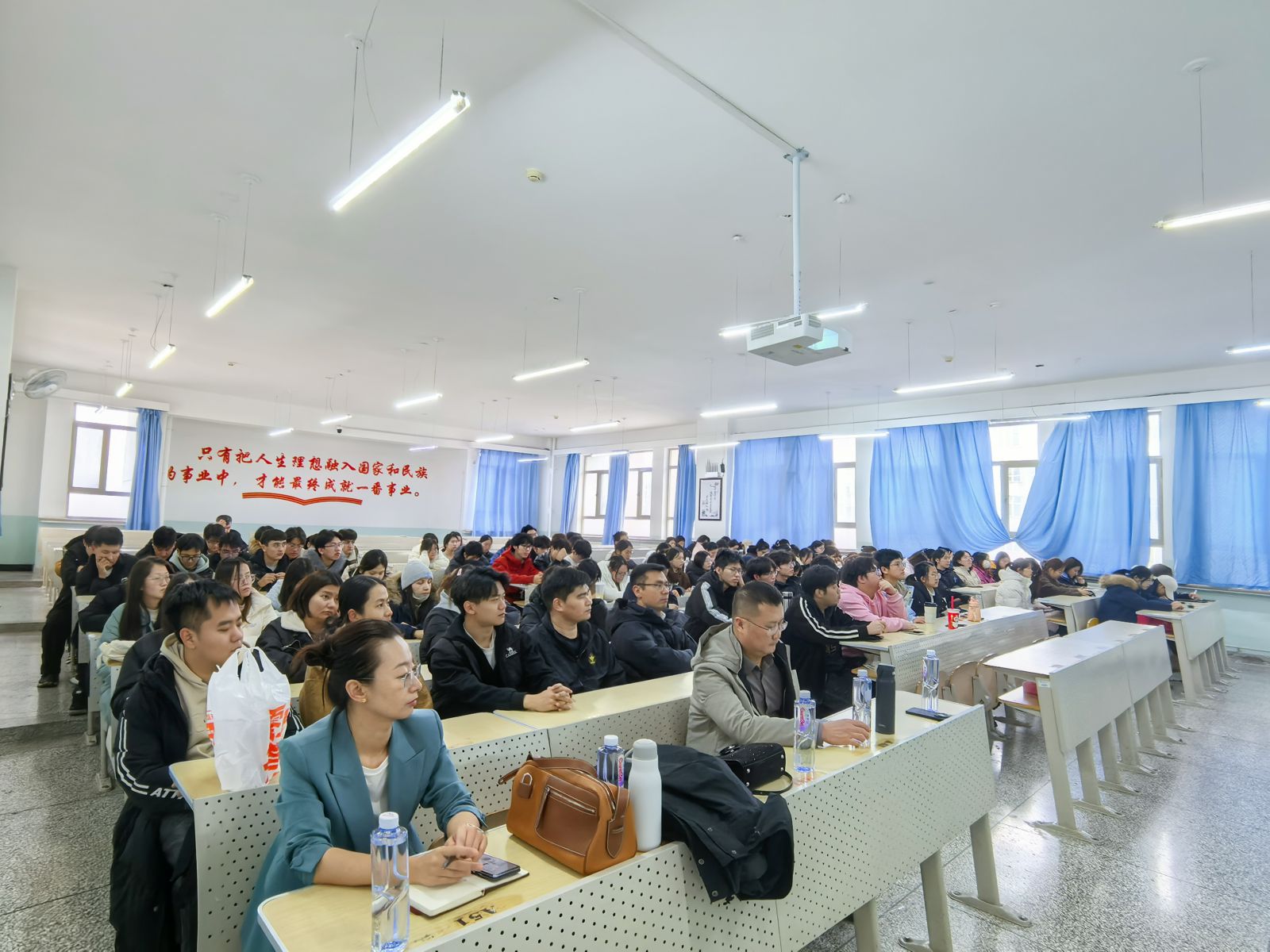
Core Insights - The event "Futures Prosper Xinjiang" was successfully held at Xinjiang University of Finance, focusing on investor education and financial talent cultivation [1][3] - The collaboration between the Xinjiang Securities and Futures Industry Association and Zhengzhou Commodity Exchange aims to integrate theoretical and practical aspects of the futures market [1][4] - The event highlighted the role of futures and derivatives in resource allocation and risk management, emphasizing their importance in supporting the development of local industries [4][5] Group 1 - The event featured industry experts discussing Xinjiang's unique futures products like red dates and cotton, illustrating the value of the futures market in serving the real economy [3] - The Xinjiang Securities and Futures Industry Association aims to deepen the "industry + university" collaborative education model, enhancing the professional dialogue and knowledge transfer [3][4] - The association is actively expanding the coverage and professionalism of investor education through a series of campus activities, building a comprehensive talent cultivation platform [4] Group 2 - The association plans to continue the "Futures Prosper Xinjiang" series, integrating financial knowledge dissemination, practical teaching, and talent incubation to contribute to the high-quality development of Xinjiang's economy [5]