
数据中心

Search documents
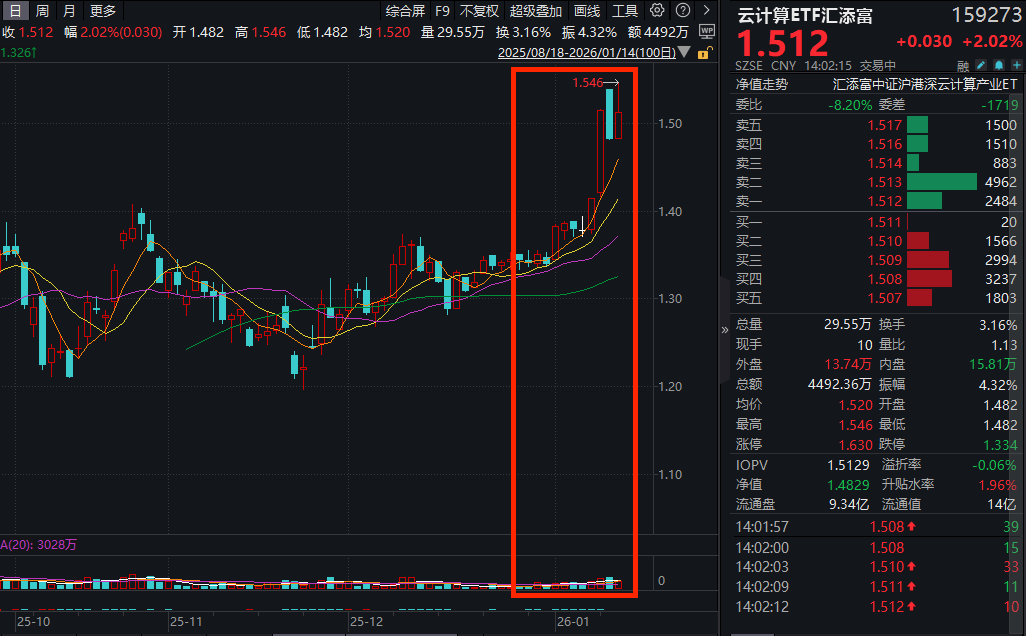
云计算ETF汇添富(159273)放量涨超2%创历史新高!从“算力竞赛”到“应用落地”,聚焦下半场AI行情!
Xin Lang Cai Jing· 2026-01-14 06:28
Core Insights - Jefferies indicates that Chinese cloud service providers, AI software companies, and data center operators are undervalued compared to their U.S. counterparts [1] - Alibaba's Qianwen has surpassed 100 million monthly active users within two months of launch, showing rapid growth among students and white-collar workers [1] - The cloud computing ETF Huatai-PineBridge (159273) has seen most of its weighted stocks perform positively, with notable gains from Runze Technology (over 7%), Hengsheng Electronics (over 5%), and Alibaba-W (over 3%) [1] Company News - Alibaba's Qianwen is set to release a significant product iteration this Thursday [1] - Alibaba-W stock has increased by 3.94%, with a market capitalization of 315.11 billion [2] Market Trends - The AI computing sector is experiencing strong performance, with the cloud computing ETF Huatai-PineBridge (159273) rising over 2% and achieving a record high trading price [3] - Jefferies notes that Chinese AI stocks have room for further growth due to increased capital expenditure, improved AI model performance, and favorable policy signals [3] - The AI industry in China is still less mature in monetization compared to the U.S., leading to greater potential for valuation re-rating [3] Industry Analysis - The AI industry is transitioning from a "computing power race" to a focus on "application landing," indicating a maturation of business models [5] - The IDC market is undergoing a supply-demand shift driven by improved chip supply and surging demand for domestic AI applications [7] - The communication industry is experiencing a rotation towards IDC and computing power infrastructure, with expectations of order recovery and performance realization as capital expenditures from major firms become clearer [8]


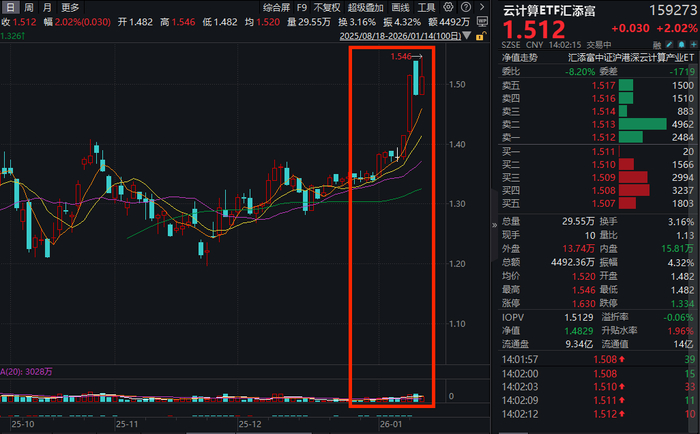
中美AI技术差距在缩小?云计算ETF汇添富(159273)放量涨超2%创历史新高!从“算力竞赛”到“应用落地”,聚焦下半场AI行情!
Sou Hu Cai Jing· 2026-01-14 06:19
Core Viewpoint - The AI computing sector is experiencing strong momentum, with the cloud computing ETF Huatai (159273) seeing a significant increase of over 2%, reaching a historical high in trading volume of nearly 500 million yuan [1][4]. Group 1: Market Performance - The cloud computing ETF Huatai (159273) has seen most of its weighted index stocks perform positively, with notable increases such as Runze Technology rising over 7% and Hengsheng Electronics increasing over 5% [4]. - Alibaba's stock (9988) has a weight of 9.37% in the ETF and has risen by 3.94%, with a market capitalization of 315.11 billion yuan [5]. Group 2: Industry Insights - Jefferies highlights that Chinese AI stocks have further upside potential due to increased capital expenditure, improved AI model performance, and favorable policy signals, with the monetization maturity of China's AI industry still lagging behind that of the U.S. [3]. - The performance gap between leading AI models in China and the U.S. has narrowed from 8% to approximately 6%, attributed to new products like Zhiyu's GLM-4.7 model [3]. - The IDC market is undergoing a supply-demand shift driven by marginal improvements in chip supply and an explosion in demand for domestic AI applications [9]. Group 3: Future Trends - The AI industry is transitioning from a "computing power competition" phase to one focused on "application landing," indicating a maturation of business models in the AI sector [6]. - The market is expected to see a resurgence in IDC orders and performance as major companies like ByteDance restart data center bidding due to improved chip supply conditions [9][10]. - The domestic AI model's continuous iteration is creating real and sustained demand for computing power, which is expected to drive the construction and bidding for IDC infrastructure [10].
英伟达报告,出现低级错误?
财联社· 2026-01-14 05:48
Core Viewpoint - The article discusses the potential copper shortage due to increasing demand from data centers, but recent findings suggest that the projected copper gap may be overestimated [2][4]. Group 1: Copper Demand Projections - McKinsey estimates that by 2030, global data center capacity demand will reach 219 GW, requiring over 100 million tons of copper, while global copper reserves were only 980 million tons as of last year [4]. - S&P predicts an annual addition of 30 GW capacity in data centers by 2030, translating to a copper demand of approximately 15 million tons, while last year's copper production was only 28.63 million tons [4]. Group 2: Reassessment of Copper Requirements - A recent investigation indicates that NVIDIA's report may have contained a significant error, leading to an exaggerated copper gap. A 1 GW rack should require 200 tons of copper, not the 50,000 tons previously stated [4]. - Thunder Said Energy suggests that the correct figure for 50,000 tons should actually be 50,000 pounds, equivalent to 226 tons, significantly reducing the estimated copper demand for data centers [4]. Group 3: Market Outlook and Supply - Goldman Sachs reported that the copper spot market is not currently facing a supply shortage and anticipates a slight surplus by 2026, with copper prices expected to average $10,710 per ounce in the first half of this year [5]. - S&P Global notes that high electricity consumption from data centers, the transition to electric vehicles, and the installation of 2 billion air conditioners will drive significant copper demand, projecting an increase from 28 million tons in 2025 to 42 million tons by 2040 [5].

LME锡价升破52,000美元 创纪录新高
Xin Lang Cai Jing· 2026-01-14 03:58
伦敦金属交易所(LME)锡价一度涨近6%至52,495美元,超越2022年创下的前高位。这种用于焊接的 金属长期以来被视为衡量计算机行业景气度的一个风向标,对人工智能和数据中心的强劲投资也使得大 量资金涌入锡市场。 在LME六种主要金属中流动性最差的锡去年上涨近40%,2026年迄今涨幅已超过25%。此轮飙升源于中 国投资者涌入金属市场以及股票基金押注今年大宗商品期货将随股市走高。交易员正关注第二大锡生产 国印尼的供应情况,此前该国军方主导打击了印尼主要锡产区的非法采矿活动。 伦敦锡价飙升至每吨52,000美元以上创新高,延续三年来的牛市行情,投资者的疯狂买盘推动金属市 场节节攀升。 伦敦锡价飙升至每吨52,000美元以上创新高,延续三年来的牛市行情,投资者的疯狂买盘推动金属市 场节节攀升。 伦敦金属交易所(LME)锡价一度涨近6%至52,495美元,超越2022年创下的前高位。这种用于焊接的 金属长期以来被视为衡量计算机行业景气度的一个风向标,对人工智能和数据中心的强劲投资也使得大 量资金涌入锡市场。 在LME六种主要金属中流动性最差的锡去年上涨近40%,2026年迄今涨幅已超过25%。此轮飙升源于中 国投 ...
特朗普称微软将做出重大调整,不希望美国人因数据中心支付更高电费
Feng Huang Wang· 2026-01-13 08:25
特朗普称,"首先是微软,我的团队一直与该公司合作,本周起,微软将推出重大调整举措,确保美国 人不会因为微软的电力消耗而通过支付更高水电费的形式'买单'。" 凤凰网科技讯1月13日,美国总统唐纳德特朗普在社交媒体发布帖子表示,微软公司将宣布一系列调整 措施,以确保其为满足人工智能需求增长而扩建更多数据中心的过程中,美国民众不会面临水电费上涨 的问题。 特朗普在帖子中提到,拜登执政期间,美国普通家庭每月水电费已经大幅上涨超过30%,自己绝不希望 美国人因为数据中心而支付更高的电费。因此,本届政府正与美国各大科技企业协作,确保它们向美国 民众作出承诺。未来几周,将会有对外公布更多消息。 另据媒体报道,美国参议员伊丽莎白沃伦等人此前致信亚马逊、谷歌、Meta、微软等七家科技巨头, 要求其解释数据中心项目如何避免推高居民电费。 参议员援引数据指出,在数据中心活动密集的地区,过去五年的电费涨幅高达267%。弗吉尼亚州作为 数据中心最集中的地区,预计到2030年平均电费将再上涨25%。 特朗普还强调,建设这些数据中心的大型科技公司必须"自己买单"。 尽管科技巨头公开承诺"不让居民承担成本",但其实际行动却大相径庭。亚马逊虽 ...


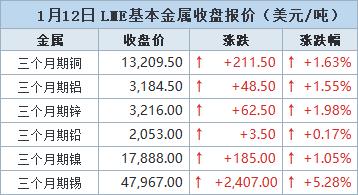
期铜逼近纪录高位,受需求乐观预期及AI数据中心带动【1月12日LME收盘】
Wen Hua Cai Jing· 2026-01-13 00:55
1月12日(周一),伦敦金属交易所(LME)期铜上涨并逼近纪录高位,市场情绪受益于对最大消费国 强劲需求的乐观预期,以及人工智能所需数据中心的拉动。 伦敦时间1月12日17:00(北京时间1月13日01:00),LME三个月期铜上涨211.5美元,或1.63%,收报每吨 13,209.5美元。 此外,伦敦金属交易所(LME)周一发布的按产地划分的金属库存月度报告显示,2025年12月,中国 产的铜在LME库存中的占比下降,原因是位于亚洲的LME注册仓库中的铜库存流出。 | | 1月12日 LIE基本金属收盘报价(美元/吨) | | | | --- | --- | --- | --- | | 金属 | 收盘价 | 张跃 | 张跌幅 | | 三个月期铜 | 13,209.50 ↑ | +211.50 ↑ +1.63% | | | 三个月期铝 | 3,184.50 ↑ | +48.50 ↑ +1.55% | | | 三个月期锌 | 3,216.00 ↑ | +62.50 ↑ +1.98% | | | 三个月期铅 | 2,053.00 1 | +3.50 ↑ +0.17% | | | 三个月期镇 | 17,888.0 ...
马斯克的“未来工厂”:被养老金“包养”的数据中心
3 6 Ke· 2026-01-13 00:26
Core Viewpoint - The construction of AI data centers, exemplified by xAI's Colossus in Memphis, raises concerns about energy consumption, local community impact, and the financial mechanisms that support these projects [1][3][18] Group 1: Data Center Impact - Colossus has an initial power load of 150 megawatts, with a future capacity exceeding 1.2 gigawatts, which is nearly 40% of Memphis's peak electricity demand [1] - The presence of data centers has led to rising electricity prices, with Tennessee residents expected to pay an average of 13.88 cents per kilowatt-hour by 2025, a 12% increase from the previous year [4] - Local communities face negative consequences such as water quality degradation and increased noise and pollution due to the operation of cooling systems and backup gas turbines [4][18] Group 2: Financial Mechanisms - Tech companies utilize Special Purpose Vehicles (SPVs) to finance data centers, allowing them to offload significant expenditures from their balance sheets while securing long-term contracts and predictable cash flows [5][8] - Over $120 billion has been raised for data center SPVs by companies like Meta, xAI, Oracle, and CoreWeave through complex financing transactions [9][12] - The financing structure often involves private credit markets, with pension funds and insurance companies seeking stable returns, thus transferring risks away from the tech companies [5][7][12] Group 3: Historical Context and Risks - The trend of off-balance-sheet financing is not new and has historical parallels, such as the Enron scandal, where risks were hidden through similar financial structures [13][16] - The current AI data center financing model mirrors the logic of the dot-com bubble, where superficial growth masked underlying risks that ultimately burdened the public [16][18] - The reliance on "invisible debt" and assumed long-term demand raises questions about who will bear the consequences of potential failures in this financial ecosystem [17][18]

电力设备行业周报:国内数据中心迎扩容与升级新周期,直流供电设备有望率先受益-20260112
Huaxin Securities· 2026-01-12 10:04
Investment Rating - The report maintains a "Recommended" investment rating for the power equipment sector [6][17]. Core Viewpoints - The domestic data center industry is entering a new cycle of expansion and upgrades, with direct current (DC) power supply equipment expected to benefit first. The market size of China's data center industry is projected to exceed 318 billion yuan in 2025, representing a year-on-year growth of approximately 14.7%. By 2030, it may reach 1.2 trillion yuan, with a compound annual growth rate (CAGR) of about 25%-28% [5][15]. - The load scale of data centers is expected to be around 7.05 GW in 2025, increasing to 9.37 GW by 2030, with a CAGR of approximately 5.85%. The demand for AI computing power is driving significant capital expenditure from leading internet companies, with ByteDance planning to invest about 160 billion yuan in AI infrastructure in 2026, and Alibaba expecting to invest over 380 billion yuan in cloud and AI hardware from 2025 to 2027 [5][15]. - The industry is experiencing an unexpected expansion, with infrastructure technology upgrades creating investment opportunities in IDC-compatible DC power supply equipment [5][15]. Summary by Sections Investment Viewpoints - The report suggests focusing on the IDC sector, recommending companies such as Kehua Data and Jinpan Technology, as well as Sifang Co. and Liangxin Co. for their potential in the HVDC/SST industry. It also highlights the importance of high-voltage circuit breakers and suggests monitoring companies like Zhongheng Electric, Magmeter, and Oulu Tong in the power supply sector [6][16]. Key Companies and Profit Forecasts - The report includes profit forecasts for several companies, with notable mentions: - Kehua Data (002335.SZ): EPS forecast of 1.86 yuan for 2026, currently unrated [18]. - Liangxin Co. (002706.SZ): Rated "Buy" with an EPS forecast of 0.44 yuan for 2026 [19]. - Magmeter (002851.SZ): Rated "Buy" with an EPS forecast of 2.07 yuan for 2026 [19]. - Sunshine Power (300274.SZ): Rated "Buy" with an EPS forecast of 7.74 yuan for 2026 [19]. - Jinpan Technology (688676.SH): Rated "Buy" with an EPS forecast of 2.20 yuan for 2026 [19]. Market Performance - The power equipment sector saw a 5.02% increase last week, ranking 12th among 28 sub-industries, outperforming the Shanghai Composite Index by 1.21 percentage points [46].


英国IQE公司:国防与人工智能需求将推动2025年收益增长
Xin Lang Cai Jing· 2026-01-12 08:21
英国半导体晶圆制造商 IQE 公司于本周一表示,在军工国防、人工智能、数据中心及手机行业需求的 推动下,公司 2025 财年的营收与调整后核心利润预计将达到此前预期区间的上限。 该公司生产的外延晶圆可用于制造半导体芯片,为航空航天与国防供应商的雷达、电子战系统以及安全 卫星通信设备提供技术支撑。 IQE 指出,美国部分军工国防项目的资金拨付速度超出预期,推动了公司下半年业绩增长。该公司补充 称,人工智能与数据中心市场的持续扩张,以及与新款手机上市相关的无线产品销量增加,也为其中国 台湾地区业务带来助力。 这家苹果供应商预计,2025 财年营收将达到 9700 万英镑(约合 1.3039 亿美元),调整后核心利润至少 可达 200 万英镑。 此外,IQE 公司目前正在推进战略评估工作,同时透露正在就针对集团整体的非约束性收购要约,以及 针对部分特定资产的单独收购报价展开谈判。 责任编辑:郭明煜 英国半导体晶圆制造商 IQE 公司于本周一表示,在军工国防、人工智能、数据中心及手机行业需求的 推动下,公司 2025 财年的营收与调整后核心利润预计将达到此前预期区间的上限。 该公司生产的外延晶圆可用于制造半导体芯片, ...
中熔电气:目前公司熔断器暂未应用于航天卫星的安全冗余设计项目
Ge Long Hui· 2026-01-12 07:18
Core Viewpoint - The company, Zhongrong Electric (301031.SZ), is currently not applying its fuses in the safety redundancy design projects for aerospace satellites, focusing instead on product development in sectors such as new energy vehicles, wind and solar storage, and data centers [1] Group 1: Current Focus and Technology - The company is primarily concentrating on product research and development in new energy vehicles, wind and solar storage, and data centers [1] - The company has established core technological foundations in high-voltage interruption and active protection [1] Group 2: Future Plans and Market Monitoring - The company will continue to monitor industry demand and technical standards in the aerospace satellite sector [1] - The company plans to evaluate relevant research and market expansion plans when the market for aerospace applications matures [1]