
智慧农业

Search documents
稻浪千重“慧”种 蔗海万顷“智”理
Guang Xi Ri Bao· 2025-11-11 02:09
Core Insights - The event "Intelligent Gathering in Ba Gui: Academics and Experts' Visit for High-Quality Development of Characteristic Agriculture in Guangxi" aims to enhance the agricultural sector in Guangxi through smart technology and expert guidance [1] - The focus is on achieving food security and improving grain production capacity through smart agriculture, with the first unmanned rice farm in Guangxi demonstrating significant yield [2] - The integration of AI in agriculture is expected to attract younger generations to the sector by addressing labor shortages and improving production efficiency [2] Group 1: Smart Agriculture Initiatives - The first unmanned rice farm in Guangxi achieved a yield of 1,051.89 kg per mu, with the "Wei Liang You 8612" variety consistently exceeding 1,000 kg per mu for two consecutive years [2] - The farm utilizes a range of smart equipment, including unmanned tractors and drones, to manage the entire rice production process digitally [2] - Experts emphasize the importance of smart technology in addressing rural labor shortages and enhancing agricultural productivity [2] Group 2: Aquaculture and Smart Technology - Smart aquaculture is being developed in Guangxi, with real-time monitoring of water quality in modern fish farming facilities [3] - The system alerts farmers when water quality exceeds safe limits, promoting a shift towards ecological farming practices [3] - Collaboration between research teams and local enterprises aims to enhance the entire fish farming process through smart technology [3] Group 3: Sugarcane Production Challenges - The hilly terrain in Guangxi poses challenges for mechanization and smart technology in sugarcane production [3] - Experts recommend improving land suitability for machinery through terrain modification and developing specialized equipment for hilly areas [3] - The promotion of a "step-by-step harvesting" model is being implemented to address harvesting difficulties in small and sloped fields [3] Group 4: Agricultural Technology Exchange - Guangxi is positioned as a potential agricultural technology export hub to ASEAN countries facing similar agricultural challenges [4] - The region can enhance economic cooperation through technology transfer, product exports, and skills training [4] - The integration of traditional breeding methods with modern technology is seen as a way to enhance the competitiveness of local crop varieties [4] Group 5: AI in Breeding and Crop Management - AI technology is being utilized to improve breeding efficiency and shorten breeding cycles for rice and vegetable varieties [5] - Experts suggest focusing on quality improvement in crop varieties, particularly for high-temperature and high-humidity conditions in Guangxi [5] - AI models can also optimize field management by predicting pest and disease outbreaks based on climate data [5] Group 6: Events and Expert Engagement - The event included various activities such as the 2025 Smart Agriculture Expo and the closing ceremony of the Smart Agriculture Innovation Competition, facilitating exchanges between experts and local agricultural representatives [6] - The insights and recommendations from experts are expected to drive the transformation and upgrading of Guangxi's agricultural sector [6]
智慧农机赋能八桂现代农业
Guang Xi Ri Bao· 2025-11-10 01:58
Core Insights - The 2025 Guangxi International Agricultural Expo's Agricultural Mechanization Special Exhibition is being held from November 6 to 9, showcasing over 1,300 advanced digital and intelligent agricultural machinery from more than 150 domestic and international companies [1][2] - The exhibition aims to create a one-stop communication and procurement platform to inject new momentum into regional agricultural modernization and rural revitalization [1] Group 1 - The exhibition features leading domestic companies such as China Yituo, Weichai Lovol, and Guangxi Liugong, alongside international giants like John Deere and Kubota, focusing on innovative agricultural machinery and technologies [1][2] - Key highlights include the display of small, lightweight machinery for hilly areas, full mechanization products for the sugarcane industry, and cutting-edge technologies like electric agricultural machinery and unmanned farm systems [1][2] Group 2 - A series of high-profile supporting activities will take place during the exhibition, including the "China-ASEAN Agricultural Mechanization Cooperation and Development Conference" and the "New Farmers Talk Agricultural Machinery Exchange Meeting" [2] - The exhibition has successfully attracted over 1,400 participating companies since its inception in 2016, with a total signed order value of 954 million yuan, and the 2024 event set a record with over 1,800 machinery exhibits and 573 million yuan in signed orders [2] Group 3 - Guangxi is actively developing its specialized agricultural machinery sector, with successful projects like the smart rice farm in Guigang and the ongoing smart sugarcane farm in Chongzuo, alongside the launch of the "Didi Agricultural Machinery" platform [2]
纳斯达克上市公司Pinnacle Food宣布新战略计划,旨在扩展其智慧农业创新平台
Xin Lang Cai Jing· 2025-11-10 00:22
Core Insights - Pinnacle Food Group Limited is launching a strategic initiative to establish a biotechnology and testing laboratory to explore applied biotechnology, enhancing its smart agriculture innovation platform for future growth [1][2]. Group 1: Company Initiatives - The company has signed a consulting agreement with Bioboost Synbio Consulting Inc. to support the laboratory's establishment, covering all aspects from planning and construction to equipment procurement and operational review [1]. - The CEO, Jiulong You, emphasized that this initiative reflects the company's proactive exploration of applied biotechnology potential based on its core smart agriculture business [2]. Group 2: Partnerships and Expertise - Bioboost Synbio Consulting Inc. is a leading consulting firm in British Columbia, Canada, specializing in laboratory construction and operational readiness, providing services that ensure compliance and operational efficiency [2].

上证早知道|国办印发重要意见;新的央企重组,来了;最新数据发布:0.2%
Shang Hai Zheng Quan Bao· 2025-11-09 23:16
Group 1 - The State Council issued an implementation opinion to accelerate the cultivation and opening of application scenarios, marking a systematic deployment for the first time [2][7] - The opinion emphasizes the need to innovate flexible production lines, smart factories, and green factories, as well as to enhance intelligent transportation management and smart logistics hubs [8][9] - The opinion aims to support new business models and application scenarios through policy coordination and government procurement [9] Group 2 - China Aviation Oil (Singapore) Co., Ltd. announced a restructuring plan with another enterprise group, pending further procedures and approvals [4][6] - In October, China's Consumer Price Index (CPI) rose by 0.2% month-on-month and year-on-year, with the core CPI (excluding food and energy) increasing by 1.2%, marking the sixth consecutive month of growth [4][6] Group 3 - The Ministry of Agriculture and Rural Affairs released a guide for building a smart agriculture standard system, aiming to establish a comprehensive standard system by 2030 [14] - The smart agriculture market in China is expected to expand rapidly due to increasing policy support and financial investment [14] Group 4 - The esports industry saw a record attendance of 62,196 at the King of Glory annual finals, highlighting the growing popularity and diversification of the sector [15][16] - Companies like Shunwang Technology and Perfect World are capitalizing on the growth of esports, with Shunwang focusing on high-quality GPU computing power and Perfect World expanding its esports business [16] Group 5 - Weixinno plans to issue 419 million shares at a price of 7.01 yuan per share to raise up to 2.937 billion yuan for working capital and debt repayment [18] - Aerospace Huanyu's subsidiary won a contract for a major offshore wind power project worth approximately 3.415 billion yuan [19]
智慧农业标准体系建设指南发布,市场规模快速扩张
Xuan Gu Bao· 2025-11-09 14:58
Industry Overview - The Ministry of Agriculture and Rural Affairs released the "Guidelines for the Construction of Smart Agriculture Standard System" on November 7, aiming to establish a comprehensive smart agriculture standard system by 2030 to support the development of smart farming practices [1] - China's smart agriculture market is still in its early growth stage compared to global counterparts, with significant market potential due to lower levels of mechanization and automation [1] - The market size of China's smart agriculture is projected to exceed 100 billion yuan for the first time in 2024, reaching 105 billion yuan, with a year-on-year growth of 11.7% [1] Market Projections - Driven by policy incentives and technological advancements, the market size is expected to grow to 120 billion yuan by 2025 [2] Company Insights - Top Cloud Agriculture is a leading provider of comprehensive smart agriculture solutions in China, focusing on agricultural information technology and related smart hardware [3] - YTO Group is accelerating its layout in smart agriculture applications and complete solutions, offering integrated smart machinery, precision operation systems, and agricultural data platforms to meet modern agricultural trends and requirements [3]
晚报 | 11月10日主题前瞻
Xuan Gu Bao· 2025-11-09 14:19
Carbon Neutrality - The State Council's white paper emphasizes the importance of energy storage in building a new power system, promoting the integration of "new energy + storage" and multi-energy complementarity [1] - By the end of 2024, new energy storage installations are expected to reach 73.76 million kilowatts (168 million kilowatt-hours), which is 20 times that of 2020, accounting for over 40% of global installations [1] Space Computing - Several U.S. space companies are advancing orbital data center plans, utilizing solar energy to address AI energy consumption [2] - SpaceX is expected to increase its share of global orbital launches from 90% to 99% with the frequent launches of Starship [2] - The competition in space computing is intensifying, with China leading in the development of space computing capabilities [3] Ultra High Definition Video - The World Ultra High Definition Video Industry Alliance held a conference in Shenzhen, releasing key technologies and marking a new stage in the industrialization of ultra HD standards in China [4] - The market for ultra HD video is projected to reach 5-6 trillion yuan by 2025, driven by the rapid development of new displays and consumer electronics [4] Proton Therapy - An international standard for medical proton accelerators has been published, highlighting the global collaboration in developing advanced cancer treatment technologies [5] Smart Agriculture - The Ministry of Agriculture and Rural Affairs released guidelines for building a smart agriculture standard system by 2030, aiming to enhance agricultural efficiency and technology [6] E-sports - The KPL annual finals set a Guinness World Record for the highest attendance at an e-sports event, with 62,196 attendees [6] - The e-sports industry is evolving into a significant cultural phenomenon, with increasing integration into the entertainment sector [6] Commercial Space - The successful launch of the Kuaizhou-1A rocket marks a milestone for China's commercial space sector, with significant advancements in reusable rocket technology [7] Macro and Industry News - The State Council issued opinions to accelerate the application of new scenarios in artificial intelligence and promote clean energy in coal and new energy integration [8]

农林牧渔行业周报:牛肉供给持续减少,看好牧业周期反转-20251109
SINOLINK SECURITIES· 2025-11-09 12:35
Investment Rating - The report suggests a neutral investment rating for the agricultural sector, indicating that the expected changes in the industry will be relatively stable compared to the broader market [68]. Core Insights - The agricultural sector index has shown a slight increase of 0.79% over the past week, but it has underperformed compared to the Shanghai Composite Index [13][14]. - The report highlights the ongoing challenges in the pig farming industry, with prices continuing to decline and the entire sector currently facing losses [3][21]. - In the poultry farming sector, while white feather chicken prices remain under pressure, yellow feather chicken prices have shown resilience due to improved downstream demand [4][30]. - The beef and dairy sectors are expected to see price increases as the consumption season approaches, despite ongoing losses in these industries [5][36]. - The planting industry is experiencing short-term supply and demand pressures, but there is potential for improvement if there are significant reductions in grain production [6][42]. - The feed and aquaculture sectors are stabilizing, with feed prices remaining steady and certain aquatic product prices showing upward trends [55][58]. Summary by Sections 1. Swine Farming - The average price of commodity pigs is currently 11.91 yuan/kg, down 4.64% week-on-week, with a significant loss in farming profits [21][22]. - The report anticipates a continued increase in pig output in the coming months, with limited seasonal accumulation space for prices to drop further [3][22]. - Long-term prospects for the swine industry remain positive, with recommendations to focus on low-cost, high-quality enterprises such as Muyuan Foods and Wens Foodstuffs [3][22]. 2. Poultry Farming - The average price for white feather chickens is stable at 7.09 yuan/kg, while yellow feather chicken prices are expected to improve due to better demand [4][30]. - The overall profitability in poultry farming is under pressure, but there is potential for recovery if consumer demand strengthens [4][30]. 3. Livestock - Live cattle prices in Shandong are at 26.87 yuan/kg, with expectations for steady increases as the consumption season approaches [5][36]. - The dairy sector is experiencing a decrease in stock trends, but prices are expected to stabilize in the coming year as supply gradually decreases [5][36]. 4. Planting Industry - Domestic corn prices are at 2152.86 yuan/ton, with fluctuations expected due to new crop listings and external uncertainties [6][42]. - The report emphasizes the importance of improving grain yields and the potential for the planting sector to recover if significant reductions in production occur [6][42]. 5. Feed and Aquaculture - Feed prices for fattening pigs are stable at 3.33 yuan/kg, while aquatic product prices are showing positive trends, particularly for shrimp and certain fish species [55][58]. - The report indicates a general stabilization in feed prices, which is beneficial for the overall profitability of the aquaculture sector [55][58].


梅州南福金柚种植基地果农和农技人员感恩奋进要把日子过得像金柚一样又甜又美
Nan Fang Ri Bao Wang Luo Ban· 2025-11-09 01:25
Core Viewpoint - The development of rural characteristic industries is fundamental to promoting comprehensive rural revitalization, emphasizing the need for technological application, integration of agriculture with culture and tourism, and extending the industrial chain to increase added value and boost farmers' income [1][7]. Group 1: Industry Overview - Meizhou is recognized as the hometown of the Chinese pomelo, with "Meixian Pomelo" receiving national geographical indication certification in 2021, and the planting history exceeding 100 years [2]. - The Nanfeng pomelo planting base plans to cultivate over 5,000 acres in 2024, yielding approximately 25 million pounds and generating a value of about 57.5 million yuan [2]. - The pomelo industry in Meixian has a planting area of nearly 280,000 acres, involving over 50,000 farmers, contributing significantly to local income [2][5]. Group 2: Economic Impact - The average annual income increase for farmers from pomelo cultivation is 28,800 yuan, accounting for over 80% of their total income [2]. - The total industrial chain output value of Meizhou pomelo has surpassed 8.9 billion yuan, benefiting over 100,000 farmers [5]. - The pomelo has become a key source of income for farmers in Meixian, with the average annual income from pomelo cultivation exceeding 10,000 yuan, representing 40% of the agricultural population's income [2][5]. Group 3: Technological Advancements - The use of a mountain track transport system for pomelo harvesting significantly increases efficiency, reducing transport time from 40 minutes to under 10 minutes [3]. - The base employs big data and IoT technologies for standardized and data-driven management of pomelo cultivation [3]. Group 4: Product Diversification - The local industry has developed a variety of pomelo-based products, including pomelo pastries, pomelo flower tea, pomelo beer, and pomelo preserves, showcasing the results of deep processing efforts [4]. - There is an ongoing exploration of comprehensive resource utilization of the pomelo, aiming to enhance the entire industrial chain [4]. Group 5: Future Development - The integration of agriculture with culture and tourism is seen as a promising avenue for the future development of the pomelo industry, with plans to attract more tourists through various initiatives [6][7]. - The local government is committed to supporting the pomelo industry, ensuring that it continues to be a vital source of income and contributes to rural revitalization [5][7].
兴科技 延链条 搭场景——“农博会”上看现代化大农业的安徽实践
Xin Hua Wang· 2025-11-08 09:18
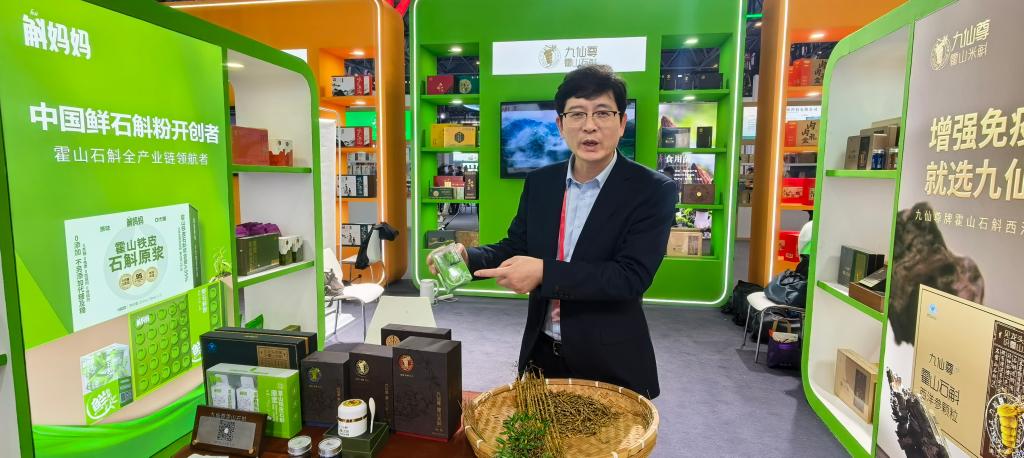
Core Insights - The article highlights the advancements in modern agriculture in Anhui province, showcasing the integration of technology, green practices, and quality improvements in the agricultural sector [1][2]. Group 1: Agricultural Innovations - The 2025 Anhui Green Food and Circular Agriculture Expo featured 16 high-end products representing the best of Anhui's green food industry, demonstrating significant progress in agricultural development [1][2]. - Jiuxianzun Houshan Dendrobium Co., a leading agricultural enterprise, has transitioned from 12 years of losses to a 57% increase in sales in the first three quarters of the year, with a single product exceeding 100 million yuan in sales [2][3]. - The company has developed various health food products from Dendrobium, including granules, extracts, tablets, and capsules, while also promoting agritourism [1][2]. Group 2: Industry Growth and Statistics - Anhui province has established nine national-level characteristic industrial clusters and boasts 5,195 green food products and 1,875 organic agricultural products [2][3]. - The total output value of the ten major green food industry chains in Anhui reached 1.12 trillion yuan, reflecting an 11% year-on-year growth [2][3]. Group 3: Sustainable Practices - Anhui Fengyuan Biotechnology Co. showcased biodegradable products made from agricultural waste, emphasizing the sustainable use of resources in agriculture [4]. - The company has developed new types of agricultural films from straw waste, which help in pest control and reduce the need for chemical fertilizers and pesticides [4]. Group 4: Digital Agriculture - The "Agricultural Data Cockpit" developed by Anhui Agricultural Reclamation Group covers over 450,000 acres of farmland, integrating various aspects of agricultural management into a digital platform [6]. - This platform allows for real-time monitoring of crop conditions and soil health, transitioning agricultural management from traditional methods to data-driven precision management [6].
种业“芯”力量蓄势惠州!570个新品种、9大硬核技术即将解锁湾区新“粮”方
Nan Fang Nong Cun Bao· 2025-11-08 09:04
Core Viewpoint - The upcoming 24th Guangdong Seed Industry Expo in Huizhou aims to showcase agricultural innovations and promote food security through advanced seed varieties and technologies [3][4][56]. Group 1: Event Overview - The event will take place on November 11, focusing on the theme "Revitalizing Seed Industry to Strengthen the Foundation, Technology Empowering Agriculture" [3][4]. - It will feature 570 new seed varieties and 9 core technologies, aiming to enhance agricultural productivity and sustainability [22][27]. Group 2: Agricultural Significance - Huizhou is a key city in the Guangdong-Hong Kong-Macao Greater Bay Area, known for its diverse agricultural products, including rice, sweet corn, and various fruits and vegetables [8][9][10]. - The Huizhou Agricultural Science Research Institute has established nearly 7,000 variety observation platforms and promoted over 100 superior new varieties to support local agricultural development [12][13]. Group 3: Technological Innovations - The expo will demonstrate practical applications of 9 efficient cultivation technologies, such as increasing rice yield by 10% and saving 40-50% water in drought-resistant rice cultivation [27][28]. - Innovative techniques will address agricultural production challenges, contributing to high-quality agricultural development [36]. Group 4: Comprehensive Agricultural Chain - A "From Seed to Table" exhibition area will cover various aspects of the agricultural supply chain, including seeds, pest control, seasonal vegetables, and agricultural insurance [38][42]. - The event will also feature local specialty products from various districts, showcasing Huizhou's high-quality agricultural offerings [40][41]. Group 5: Educational Initiatives - The expo will include educational activities for children, allowing them to engage with agricultural science and understand local crops [51][53]. - This initiative aims to foster interest in agriculture and technology among the younger generation, promoting future talent in the industry [50]. Group 6: Future Outlook - The event is positioned as a significant opportunity for modernizing agriculture in the Greater Bay Area, facilitating collaboration among research, enterprises, and farmers [56][58].
