AI芯片

Search documents
两融资金,新动向!
证券时报· 2025-12-15 11:42
Group 1 - The core viewpoint of the article highlights that the A-share margin trading remains highly active, with the margin balance reaching a historical high of 25,143 billion yuan on December 10 [1][4]. - The overall margin balance in the A-share market is maintained at around 25,000 billion yuan, indicating a sustained high level in recent years [4]. - From early December to December 12, most industry sectors experienced net financing inflows, with hardware equipment leading with over 10 billion yuan in net buy [4]. Group 2 - Technology stocks, which have been leading the A-share market this year, continue to attract financing, although there is significant differentiation in the financing trends among specific stocks [5][6]. - Nearly 200 stocks had net financing inflows exceeding 100 million yuan from December 1 to December 12, with 18 stocks surpassing 500 million yuan [6]. - Notable stocks include Xinyi Technology with nearly 3 billion yuan in net financing, followed by Shenghong Technology with 1.9 billion yuan, and Industrial Fulian and Moer Thread-U both exceeding 1 billion yuan [6]. Group 3 - Despite the overall interest in technology stocks, several stocks in the technology sector saw financing repayments significantly exceeding financing purchases, such as Cambrian-U with a repayment exceeding 1.3 billion yuan [7]. - As of December 12, 17 stocks had margin balances exceeding 10 billion yuan, with Dongfang Wealth leading at 27.4 billion yuan, followed by China Ping An at 24.9 billion yuan, and CATL at 21.8 billion yuan [7]. - Other technology leaders with significant margin balances include Xinyi Technology and Cambrian-U, indicating strong interest in these stocks [7].








盛美上海(688082):净利高增验证平台化逻辑,远期目标剑指全球龙头
NORTHEAST SECURITIES· 2025-12-15 06:40
Investment Rating - The report assigns a "Buy" rating to the company, indicating a strong potential for stock price appreciation in the next six months [4][6]. Core Insights - The company has demonstrated significant growth in profitability, with a 66.99% year-on-year increase in net profit for the first three quarters, driven by an optimized product mix and a high gross margin of 49.54% [2][4]. - The company has a robust order backlog of 9.072 billion yuan, representing a 34.1% year-on-year increase, which supports revenue guidance of 6.5 to 7.1 billion yuan for the year [2]. - The company is expanding its product offerings beyond cleaning equipment, with strong growth in other front-end equipment, particularly in response to AI chip demand [3]. - The company has raised its global revenue target for 2030 from 3 billion USD to 4 billion USD, with a specific target of 2.5 billion USD for the China region [3]. Financial Summary - For the fiscal years 2025 to 2027, the company is projected to achieve net profits of 1.602 billion yuan, 1.997 billion yuan, and 2.352 billion yuan, respectively, with corresponding price-to-earnings ratios of 53, 43, and 36 times [4][5]. - The company expects revenue growth rates of 44.48% in 2024, 23.92% in 2025, and 23.67% in 2026, indicating a strong growth trajectory [5][11]. - The gross margin is projected to remain high, around 49.9% for 2026 and 2027, reflecting the company's strong pricing power and cost management [11].

AI芯片企业Tenstorrent裁员7.5%,销售重心转向个人开发者
Sou Hu Cai Jing· 2025-12-15 06:07
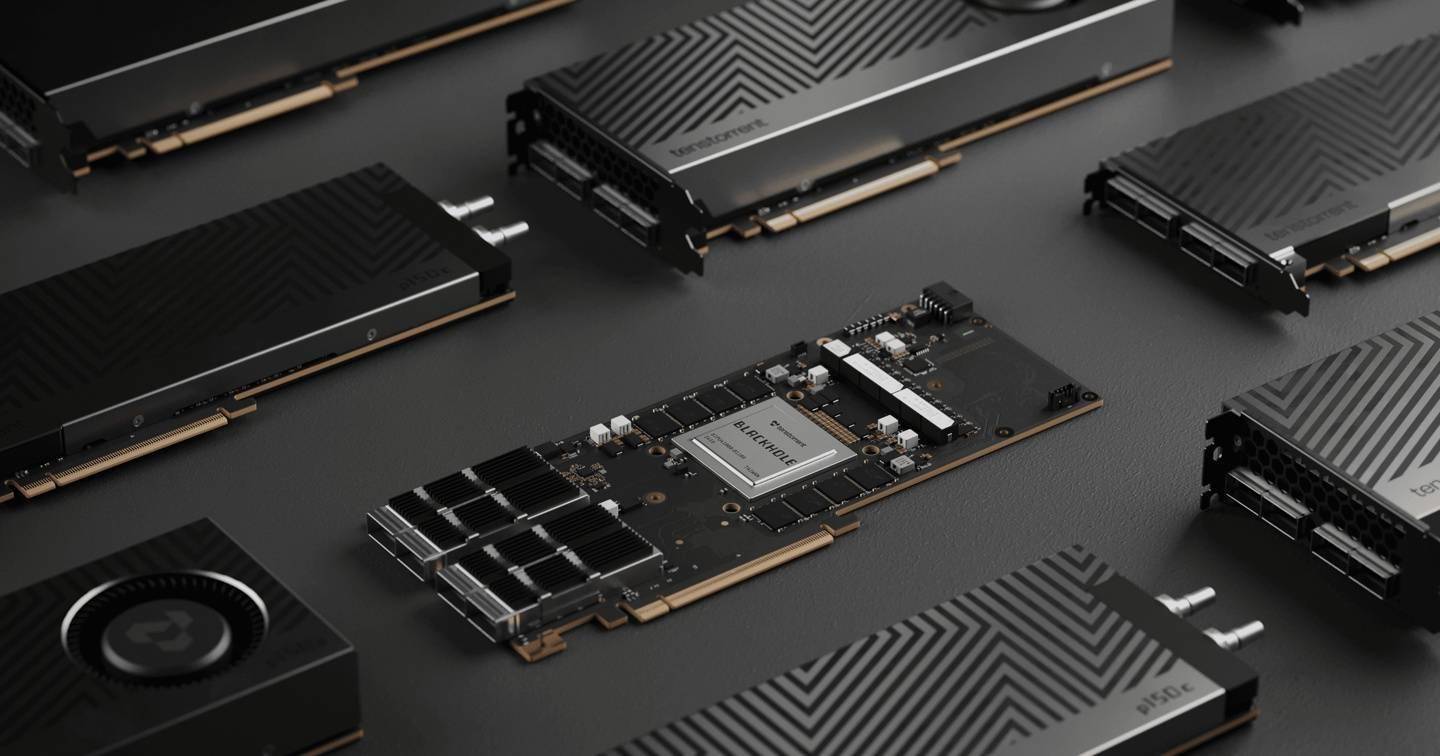
Group 1 - Tenstorrent, led by CEO Jim Keller, has recently undergone a workforce reduction of 7.5%, bringing the total number of employees to around 1,000 [1] - The layoffs were company-wide and not targeted at specific departments, with reasons cited as skills, mindset, and team compatibility rather than financial issues [1] Group 2 - The company has shifted its sales strategy from focusing on enterprises to individual developers, believing that this will help broaden its audience and build an ecosystem [3] - Tenstorrent's third-generation AI hardware, utilizing chiplet design, has seen its tape-out timeline pushed from the previously estimated Q4 of this year to Q1 of 2026 [3] - The company is collaborating with third parties to enhance the AI model inference performance on its second-generation chip, BlackHole [3]
科创芯片概念股早盘走低,相关ETF跌约2%
Sou Hu Cai Jing· 2025-12-15 03:22
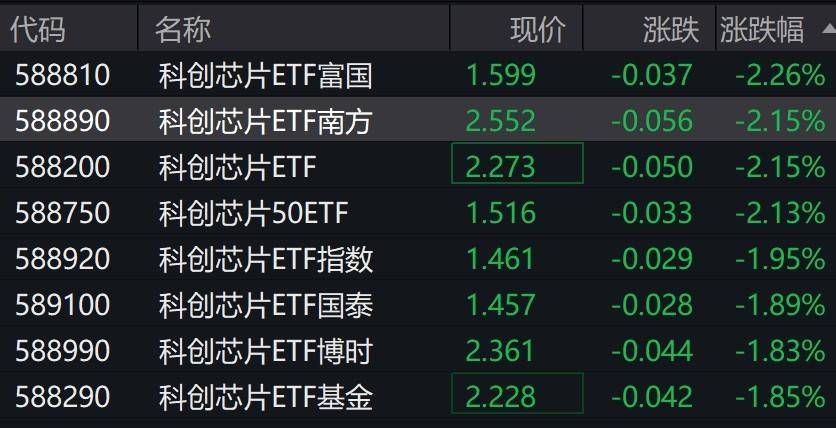
Group 1 - The core viewpoint indicates that the technology innovation chip stocks are experiencing a decline, with notable drops in companies such as Chipone Technology and Huahong Semiconductor [1] - The related ETFs for technology innovation chips have also seen a decrease, with an approximate drop of 2% [1] Group 2 - Specific ETFs related to technology innovation chips are showing negative performance, with the following price changes: - ETF 富国 down 2.26% to 1.599 - ETF 南方 down 2.15% to 2.552 - ETF down 2.15% to 2.273 - 50ETF down 2.13% to 1.516 - ETF 指数 down 1.95% to 1.461 - ETF 国泰 down 1.89% to 1.457 - ETF 博时 down 1.83% to 2.361 - ETF 基金 down 1.85% to 2.228 [2] Group 3 - Research institutions indicate that the application of AI chips is expanding from cloud computing data centers to edge computing, smart terminals, and intelligent manufacturing [2] - AI chips are driving continuous breakthroughs in computing power through architectural innovations, with TPU achieving significant performance improvements in specific scenarios compared to traditional architectures, and NPU showing notable energy efficiency optimization [2] - The global market for AI chips is highly concentrated, and the degree of domestic industrial chain autonomy in China is steadily increasing, with a clear acceleration in the process of local substitution [2]
X @外汇交易员
外汇交易员· 2025-12-15 03:08
台湾经济日报:供应链最新消息指出,随着谷歌张量处理器(TPU)需求大涨,谷歌扩大了对联发科合作定制新一代TPU v7e的订单,订单量比原规划激增数倍。消息称,联发科为谷歌操刀定制的首款TPU v7e将于下季度末进入风险性试产,并再拿下谷歌下一代TPU v8e的订单。2027年台积电提供给联发科谷歌项目的CoWoS产能更将暴增7倍以上。外汇交易员 (@myfxtrader):谷歌正大幅加紧在AI芯片竞赛中与英伟达展开竞争,而Meta正成为其潜在的数十亿美元客户。多年来,谷歌一直将其定制TPU限制在自家云数据中心内使用,并对外出租算力。但据The https://t.co/D2wxUlbHSQ ...
对华技术封锁终将成中国自主创新“磨刀石”
Jing Ji Wang· 2025-12-15 02:16
Core Viewpoint - The recent U.S. policy allowing Nvidia to sell H200 AI chips to "approved customers" in China, with a 25% revenue share to the government, raises questions about the value of this transaction for Chinese buyers, focusing on cost-effectiveness, reliability, and competition [1] Cost-Effectiveness - The policy shift indicates a move from a complete blockade to a limited opening with profit-sharing, reflecting a dual strategy of technological control and economic gain [3] - Nvidia's high-end AI chip market share in China plummeted from 95% to 0% after the ban on H20 chips, and the newly allowed H200 chips are considered "second-tier" products with a 25% revenue cut, reducing their cost-effectiveness for Chinese users [3] Reliability Concerns - The U.S. government's inconsistent policies have heightened global supply chain risks, and the temporary lifting of the H200 chip ban does not restore trust among Chinese companies [4] - Concerns about potential "backdoors" in Nvidia's chips, along with previous investigations into security risks, have further diminished market confidence [4] Emerging Competitors - Domestic AI chips in China are now included in official procurement lists, indicating a shift towards self-sufficiency in technology [5] - The development of a comprehensive domestic technology system is underway, supported by significant funding and collaborative innovation, allowing local chips to compete in various sectors [5] - While the H200 chip may serve as a temporary solution in specific scenarios, the long-term strategy emphasizes the importance of independent technological advancement and ecosystem development [5][6]

英伟达掘墓人:两大巨头,最新发声
半导体行业观察· 2025-12-13 01:08
Core Insights - The customized AI chip market is experiencing unprecedented growth, with Google's TPU leading the transformation by supporting the Gemini model and opening cloud services to other companies [2] - The market for customized XPU and related infrastructure is accelerating, with projections indicating that the scalable switch market could approach $6 billion by 2030, and the optical interconnect device market could exceed $10 billion [2][4] - Cloud service providers' capital expenditure expectations have surged from an 18% growth rate at the beginning of the year to over 30% [2] Company Performance - Broadcom reported a remarkable fiscal year 2025 with total revenue of $64 billion, a 24% year-over-year increase, and AI business revenue of $20 billion, up 65% [4][5] - Marvell achieved a record revenue of $2.075 billion in the third quarter of fiscal 2026, a 37% year-over-year increase, with data center business revenue of $1.52 billion, up 38% [4][6] XPU Development - Broadcom emphasizes that customers choose self-developed XPUs for hardware-level optimizations that significantly outperform software kernel tuning [8] - The company has secured substantial orders for XPUs, with a total order backlog exceeding $73 billion, nearly half of its total backlog [5][9] High-Speed Interconnect - The independent market for scalable switches is projected to approach $6 billion by 2030, with the optical interconnect device market potentially exceeding $10 billion [12] - Broadcom's AI switch order backlog has surpassed $10 billion, driven by the demand for its Tomahawk 6 switch, which supports a record 102 terabits per second [12][13] Photon Interconnect - Marvell's acquisition of Celestial AI highlights the importance of photon interconnect technology, which offers significant advantages in power efficiency and thermal stability [18][19] - Celestial AI's PF Chiplet can provide up to 16 terabits per second of bandwidth, significantly surpassing current mainstream capacities [19] CXL Technology - CXL technology is becoming crucial for overcoming memory bottlenecks, with Marvell making significant strides in this area [22][23] - Marvell's CXL solutions support both DDR4 and DDR5 memory, enhancing memory capacity and performance [23] Supply Chain Management - Both companies are addressing supply chain challenges, with Broadcom focusing on advanced packaging technology to ensure stability and security in supply chains [28][29] - Marvell is aggressively pursuing 2nm process technology to enhance power efficiency and operational cost savings for customers [30] Ecosystem Competition - The competition in the AI chip industry is evolving from single-point technology innovation to comprehensive ecosystem competition, requiring companies to offer complete solutions [31][32] - Both Broadcom and Marvell emphasize the importance of collaboration with ecosystem partners to drive innovation and market expansion [33] Future Outlook - The customized XPU market is expected to enter a rapid growth phase, with Broadcom projecting AI business revenue to exceed $30 billion in fiscal 2026 [35] - Photon interconnect technology is anticipated to reach a commercialization tipping point, with significant revenue contributions expected from Celestial AI starting in fiscal 2028 [35] - The industry is likely to see continued consolidation, with more acquisitions expected as companies seek to strengthen their technological capabilities [36]


张忆东:2026年最确定的还是AI!首只聚焦“港股芯片”产业链的港股信息技术ETF(159131)放量大涨2.07%
Xin Lang Cai Jing· 2025-12-12 11:54
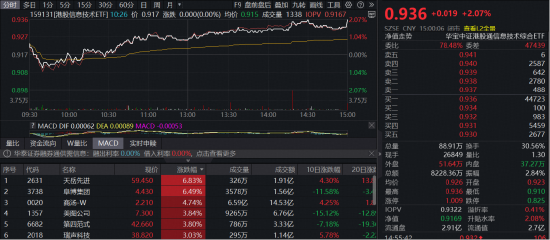
Core Viewpoint - The Hong Kong chip industry chain is experiencing a resurgence, highlighted by the strong performance of the first ETF focused on the "Hong Kong chip" sector, which saw a daily increase of 2.07% and significant trading volume [1][9]. Group 1: ETF Performance - The Hong Kong Information Technology ETF (159131) recorded a trading volume of 82.28 million CNY and successfully recovered its 5-day and 10-day moving averages [1][9]. - The ETF's index has a current price-to-earnings ratio of 34.26, which is at the 39.85 percentile over the past three years, indicating substantial room for growth compared to its peak earlier in the year [5][13]. Group 2: Market Composition - The ETF is composed of 70% hardware and 30% software, focusing on semiconductor, electronics, and computer software sectors, with significant weights in companies like SMIC (20.48%), Xiaomi (9.53%), and Hua Hong Semiconductor (5.80%) [15]. - The ETF excludes major internet companies like Alibaba, Tencent, and Meituan, allowing for a sharper focus on AI hard technology trends in the Hong Kong market [15]. Group 3: Industry Outlook - The AI sector is expected to see significant growth, with a focus on AI chips and applications, driven by increasing capital expenditures from major manufacturers and the demand for scalable AI applications [3][11]. - The introduction of new AI models, such as OpenAI's GPT-5.2, is anticipated to boost sentiment in the AI sector, indicating a positive outlook for AI-related investments [3][11].
芯片产业链题材股涨幅居前,关注半导体设备ETF易方达(159558)、芯片ETF易方达(516350)等投资价值
Sou Hu Cai Jing· 2025-12-12 10:40
Group 1 - The technology sector has shown a collective rebound this week, with significant gains in CPO, optical chips, and semiconductor equipment, as evidenced by the 5.3% increase in the CSI Semiconductor Materials Equipment Index, 2.9% in the CSI Cloud Computing and Big Data Index, and 2.5% in the CSI Chip Industry Index [1] - According to Industrial Securities, the global semiconductor market is projected to reach $208 billion by Q3 2025, marking a 15.8% quarter-on-quarter growth, the highest since Q2 2009, driven by the surge in demand for computing power due to the AI wave [1] Group 2 - The CSI Cloud Computing and Big Data Index has a rolling price-to-sales ratio of 4.8x, with a valuation percentile of 98.2% [2] - The CSI Chip Industry Index has a price-to-book ratio of 6.9x and a valuation percentile of 84.3% [2] - The CSI Semiconductor Materials Equipment Index has a price-to-book ratio of 6.4x and a valuation percentile of 62.4% [2] Group 3 - The CSI Cloud Computing and Big Data Index has shown a cumulative increase of 49.1% year-to-date, while the CSI Chip Industry Index has increased by 41.9%, and the CSI Semiconductor Materials Equipment Index has risen by 52.4% [7] - Over the past three years, the CSI Cloud Computing and Big Data Index has increased by 101.0%, the CSI Chip Industry Index by 63.8%, and the CSI Semiconductor Materials Equipment Index by 48.6% [7]

群狼围上来了,黄仁勋最大的竞争对手来了
虎嗅APP· 2025-12-12 09:32
Core Insights - The article discusses the competitive landscape for NVIDIA, particularly focusing on the recent approval by the U.S. government for NVIDIA to sell high-end H200 GPU chips to China and other approved clients, albeit with a 25% sales commission [4][5]. - Despite this approval, NVIDIA faces significant competition from major hyperscalers like Google, Amazon, and Microsoft, who are accelerating their development of self-designed AI chips [5][6]. Group 1: NVIDIA's Market Position - NVIDIA's market share in the AI GPU sector has drastically declined from 95% to nearly zero in the Chinese market due to previous export restrictions [4]. - The company's data center revenue reached $130 billion in the most recent fiscal year, but it is heavily reliant on a few major clients, with the top two clients accounting for 39% of revenue [5][6]. Group 2: Competitors' Developments - Amazon's new AI chip, Trainium 3, is designed to be a low-cost alternative to NVIDIA's GPUs, boasting training speeds four times faster than its predecessor and reducing costs by 50% [8][9]. - Google has released its seventh-generation TPU, Ironwood, which offers a tenfold performance increase over its predecessor and is optimized for high throughput and low latency [11][12]. Group 3: Market Dynamics - The article highlights a shift in the AI chip market, with major companies moving towards self-designed chips, which could potentially capture up to 25% of the market share from NVIDIA [22]. - Amazon aims to increase its self-designed chip usage to 50% and expand its AI cloud market share from 31% to 35% [20]. Group 4: Future Outlook - The competition between performance and cost is expected to intensify by 2026, as NVIDIA maintains a performance edge while competitors emphasize cost savings [17][19]. - The article suggests that while NVIDIA currently dominates the market, the increasing adoption of self-designed chips by major players could significantly alter the competitive landscape in the coming years [22].