企业级AI应用

Search documents
2025年中国企业级AI应用行业研究报告
艾瑞咨询· 2026-02-28 00:06
Core Viewpoint - The enterprise-level AI application industry is transitioning from a technology exploration phase to a large-scale application phase, driven by advancements in large language models and the need for systematic, end-to-end implementation capabilities [1][14]. Application Layer - Agents are becoming the core vehicle for enterprise-level AI applications, facilitating deep integration with business processes through task decomposition and various operational methods [1][29]. - The focus is on enhancing efficiency in processes, amplifying knowledge, and innovating value through AI applications [17][27]. Supporting Layer - A data-centric approach is essential for model selection, emphasizing the construction of a Data+AI foundation and a data security system tailored for AI [1][41]. - High-quality datasets are crucial for AI development, enabling the transformation of business data into unique competitive advantages [42][45]. Infrastructure Layer - AI computing infrastructure is evolving towards a multi-dimensional and heterogeneous model, highlighting the importance of deep collaboration between software and hardware in the context of domestic substitution [1][50][53]. - The dominance of GPU chips in AI applications is solidifying, with domestic manufacturers focusing on optimizing interconnectivity and inference capabilities to achieve differentiation [50][51]. Organizational Layer - The success of AI applications is heavily influenced by top management's commitment and strategic involvement, which is critical for driving AI investment returns [56]. - Employees must transition from being passive users to active collaborators in AI processes, necessitating a shift in organizational roles and capabilities [60]. Vendor Landscape - The enterprise-level AI application market consists of four main categories: application software, technical services and solutions, cloud services, and AI model providers, creating a dynamic competitive landscape [2][65]. - Established companies leverage their industry expertise to extend AI applications, while startups focus on specific scenarios to complement existing systems [65][66]. Development Trends - The evolution of large models is moving from single Transformer architectures to multi-architecture parallel iterations, allowing for flexible and efficient adaptation to various scenarios [2]. - AI is expected to deeply intervene and reconstruct enterprise processes, leading to a transformation in human-machine collaboration models [2][8].


用插件「杀死」软件?Anthropic刚刚证明:最不懂技术的人,能造出最专业的企业AI工具
3 6 Ke· 2026-02-25 01:17
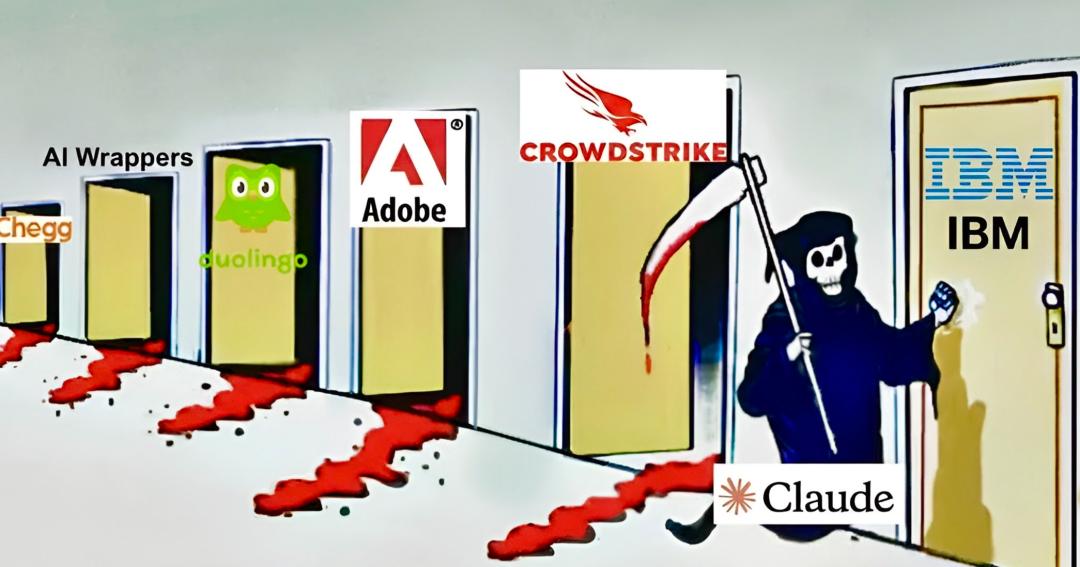
Core Insights - Anthropic has launched a new plugin system that allows users to create customized AI tools, integrating Claude's capabilities into enterprise workflows, thereby opening up the enterprise-level customization plugin market [1][2][3] - The introduction of ten official plugins across various fields such as HR, operations, and design sets a standard for enterprise-level AI applications, emphasizing the importance of ease of integration into business processes [2][5] Group 1: Plugin System Features - The plugin system enables users to build enterprise-level plugins from scratch, allowing for a tailored experience that aligns with specific business needs and customer profiles [3][7] - Users can quickly configure plugins using official templates or deeply customize them through a guided dialogue interface, significantly lowering the technical barrier for implementation [3][4] - The new unified menu for customization consolidates plugins, skills, and connectors, facilitating easier management for individual and enterprise-level administrators [3][4] Group 2: Integration and User Experience - Claude can integrate with existing enterprise tools like Slack, Salesforce, and Excel, allowing for seamless transitions between applications, enhancing user experience [4][5] - The introduction of structured smart forms for complex workflows simplifies user interactions, enabling tasks like report generation and dashboard creation to be executed with minimal input [4][5] - The addition of OpenTelemetry support allows administrators to track plugin adoption rates and activity data, making the AI investment's ROI quantifiable and optimizable [4][7] Group 3: Market Implications - The launch of private enterprise plugins represents a shift towards professional-grade agents, which will foster more autonomous AI applications within organizations [9] - Anthropic's strategy signals a warning to AI startups that merely package basic AI capabilities without deep business integration, as they may be outcompeted by larger firms offering comprehensive workflow orchestration [9][11] - The ease of creating tools and plugins may diminish the competitive edge of startups, as larger companies can rapidly develop and deploy customized solutions [11]
2025年中国企业级AI应用行业研究报告
艾瑞咨询· 2026-02-08 00:05
Core Insights - The article emphasizes the transition of enterprise-level AI applications from a technology exploration phase to a large-scale application phase, driven by advancements in large language models and the need for systematic implementation capabilities [1][14][27] - Key challenges include the integration of AI into business processes, the establishment of a robust data foundation, and the necessity for organizational changes to support AI transformation [1][23][60] Application Layer - AI Agents are identified as the core vehicle for enterprise-level AI applications, facilitating deep integration with business processes through task decomposition and various operational methods [1][29] - The focus is on creating a systematic approach to AI application delivery, emphasizing the importance of engineering capabilities alongside AI technology [10][31] Supporting Layer - A data-centric model selection process is crucial, with a focus on building a Data+AI foundation and ensuring data security for AI applications [1][41] - High-quality data sets are essential for AI development, enabling effective model training and application [41][42] Infrastructure Layer - The evolution of AI computing infrastructure is highlighted, with a shift towards heterogeneous systems and the importance of optimizing hardware and software collaboration [1][50][53] - The dominance of GPU technology in AI applications is noted, with domestic manufacturers focusing on specific optimizations to compete with international players [50][51] Organizational Layer - The article discusses the need for top-level design and role upgrades for employees to drive AI transformation within organizations [1][60] - Leadership commitment is critical for the successful implementation of AI strategies, with a focus on integrating AI into core business processes [56] Industry Landscape - The enterprise-level AI application market is characterized by a dynamic competition among vendors, including application software, technical services, cloud services, and AI model providers [2][65] - Investment trends indicate a shift towards application-level financing, particularly in sectors like healthcare, where AI applications are gaining traction [12][66] Development Trends - Future trends include the evolution of large models from single architectures to multi-architecture systems, the deep integration of AI into business processes, and the emergence of AI-native applications [2][8] - The article anticipates a significant transformation in human-machine collaboration and the expansion of AI's role in various industries [2][8] Challenges in Implementation - Key bottlenecks for scaling AI applications include weak data foundations, the lack of quantifiable business value, and a shortage of skilled talent capable of bridging technology and business insights [23][27] - The need for a structured approach to AI project ROI evaluation is emphasized, moving away from traditional financial models to more dynamic frameworks [63]

2025年中国企业级AI应用行业研究报告
艾瑞咨询· 2026-01-28 00:07
Core Insights - The enterprise-level AI application industry is transitioning from a technology exploration phase to a large-scale application phase, driven by advancements in large language models [1][14] - Key challenges in scaling AI applications include the need for systematic, end-to-end implementation capabilities rather than relying solely on technological breakthroughs [1][23] - AI Agents are becoming the core vehicle for enterprise-level AI applications, facilitating deep integration with business processes [1][29] Application Layer - AI Agents are central to the implementation of enterprise-level AI applications, breaking down tasks into smaller units and integrating with business processes through various methods [1][29] - The focus is on enhancing efficiency in processes, amplifying knowledge, and innovating value through AI applications [17][27] Supporting Layer - A data-centric approach is essential for model selection, emphasizing the construction of a robust data foundation and a data security system tailored for AI [1][41] - High-quality datasets are critical for AI development, enabling effective model training and application [41][42] Infrastructure Layer - The evolution of AI computing infrastructure is moving towards a heterogeneous model, highlighting the importance of deep collaboration between software and hardware in the context of domestic alternatives [1][50][53] - AI infrastructure is crucial for optimizing the performance and cost-effectiveness of AI applications [53] Organizational Layer - Leadership commitment and top-level design are vital for driving AI transformation within organizations, alongside the need for role upgrades among employees [1][56][60] - Employees must transition from traditional roles to AI collaborators, requiring new skills to effectively integrate AI into business processes [60] Vendor Landscape - The enterprise-level AI application market consists of four main categories: application software, technical services and solutions, cloud services, and AI model providers, creating a dynamic competitive landscape [2][65] - Established companies leverage their industry expertise to extend AI applications, while startups focus on specific scenarios to complement existing systems [65][66] Development Trends - Future trends include the evolution of large models from single architectures to multi-architecture iterations, deep integration of AI into business processes, and the emergence of AI-native applications [2][8] - AI is expected to reshape research processes and enhance competitive advantages for enterprises [2][8] Financing and Investment - Over 50% of AI financing events are concentrated in the application layer, with AI in healthcare emerging as a popular investment area [12][14] Challenges in Scaling - Key bottlenecks in scaling AI applications include weak data foundations, lack of quantifiable business value, and a shortage of talent with both technical and business insights [23][27]

Zoho登上《财富》杂志 | 白手起家到全球百强,三十年SaaS标杆的增长密码
Sou Hu Cai Jing· 2026-01-05 09:17
Core Insights - Zoho has established itself as a leading player in the global cloud computing sector, transitioning from a local to a global business model over its 30-year journey [1] - The company is focusing on AI applications, with a strategic shift towards developing enterprise-level AI models and tools to enhance productivity [2][4] AI Development and Strategy - Zoho's AI efforts are led by a dedicated team of 40, focusing on creating safe, reliable, and compliant software products that can significantly boost productivity [2] - The company has launched its proprietary large model, Zia LLM, and smaller models tailored for specific business needs, emphasizing the importance of cost control, accuracy, and data compliance in B2B scenarios [4] - Zoho has also introduced voice recognition models for English and Hindi, which integrate with Zia LLM to automate various business processes [4] Market Growth and Expansion - Zoho has maintained a growth rate of nearly 30% annually, with significant revenue increases in emerging markets such as Asia-Pacific, North Africa, and Latin America [5][6] - The company is particularly optimistic about growth in Southeast Asia, the Middle East, and North Africa, driven by increasing digital transformation efforts [6] Long-term Vision and Localization - Zoho's long-term strategy focuses on minimizing external uncertainties through localization, with offices and local employees in various countries [8] - The company believes that its commitment to local teams and compliance with local regulations is crucial for mitigating industry volatility [8] Hardware Investments and Ecosystem Development - In addition to software, Zoho is expanding into hardware by acquiring companies like Asimov Robotics and investing in medical devices and electric vehicles [9] - This hardware strategy aims to leverage real industrial data to enhance the training of its AI models, creating a closed-loop system that integrates software and hardware [9] Future Outlook - Zoho's growth narrative continues to evolve, with a focus on meeting real enterprise needs and adapting AI solutions for diverse business scenarios [10] - The integration of software and hardware is expected to provide new growth opportunities and strengthen Zoho's position in the SaaS market [10]

2025年中国企业级AI应用行业研究报告
艾瑞咨询· 2026-01-05 00:04
Core Insights - The enterprise-level AI application industry is transitioning from a technology exploration phase to a large-scale application phase, driven by advancements in large language models [1][14] - Companies face complex challenges in implementing AI applications, which require not only technological breakthroughs but also systematic, end-to-end implementation capabilities [1][27] - AI Agents are becoming the core vehicle for enterprise-level AI applications, facilitating deep integration with business processes [1][29] Application Layer - AI Agents are central to the deployment of enterprise-level AI applications, breaking down tasks into smaller units and integrating with business processes through various methods [1][29] - The focus is on enhancing efficiency in processes, amplifying knowledge, and innovating value through AI applications [17][27] Supporting Layer - A data-centric approach is essential for model selection, emphasizing the construction of a Data+AI foundation and a data security system [1][41] - High-quality datasets are crucial for AI development, enabling businesses to convert data into unique competitive advantages [41][42] Infrastructure Layer - AI infrastructure is evolving towards a multi-dimensional and heterogeneous model, highlighting the importance of deep collaboration between software and hardware in the context of domestic substitution [1][53] - The dominance of GPU chips in AI applications is solidifying, with domestic manufacturers focusing on optimizing interconnectivity and inference capabilities [50][51] Organizational Layer - Leadership commitment is critical for the success of AI applications, with high-level management playing a significant role in driving AI strategy and resource allocation [56] - Employees need to transition from being passive users to active collaborators in AI processes, requiring a shift in organizational roles and skills [60] Industry Trends - The enterprise-level AI application market is characterized by a layered collaboration and dynamic competition among vendors, including application software, technical services, cloud services, and AI model providers [2][65] - The financing landscape is shifting towards application-level investments, with AI in healthcare emerging as a popular sector for funding [12][14] Policy and Regulatory Support - The Chinese government is actively promoting AI integration across various sectors, setting specific goals for AI application coverage and deep integration by 2027 [8][9] - Policies are focused on releasing data value and constructing industry-specific model systems to enhance AI application deployment [8][9] Challenges in Implementation - Key bottlenecks in scaling AI applications include weak data foundations, lack of quantifiable business value, and a shortage of skilled talent capable of bridging technology and business insights [23][27] - The transition from model-centric approaches to agent-driven frameworks is essential for ensuring reliable AI application delivery [10][31]

年末分化行情,该往哪看?
Sou Hu Cai Jing· 2025-12-25 16:15
Group 1 - The market is experiencing a divergence where certain sectors like commercial aerospace, controllable nuclear fusion, and autonomous driving are seeing significant gains, while traditional sectors like liquor and consumer goods are declining [3][15] - The shift in market dynamics is attributed to fund reallocation by institutions, moving away from previously high-performing sectors like AI computing towards areas with strong policy support and low valuations [3][15] - Private equity firms are focusing on stocks that can genuinely benefit from industry trends, emphasizing the importance of commercial viability and cautioning against purely speculative investments [3][15] Group 2 - The misconception that all stocks rise in a bull market leads to poor investment decisions, as many sectors can still decline despite overall index gains [4][7] - Institutional behavior is a more reliable indicator of stock performance than news, as seen in the liquor sector where institutional participation waned despite positive consumption forecasts [7][13] - Data analytics can help identify stocks with active institutional involvement, which is crucial for making informed investment decisions [14][15] Group 3 - The current market divergence is viewed as an opportunity to identify stocks with sustained institutional support, particularly in emerging sectors like AI integration and engineering applications of superconductors [15][16] - Understanding who is participating in the market is essential for navigating the year-end volatility and positioning for future growth [15][16]

西部证券晨会纪要-20251215
Western Securities· 2025-12-15 01:46
Group 1: Restaurant Industry Insights - The report emphasizes the resilience of the restaurant industry, highlighting key companies such as Yum China, Xiaocaiyuan, Haidilao, and Dashishi as potential investment opportunities due to their operational capabilities and market positioning [2][10] - The restaurant sector is expected to benefit from government policies aimed at boosting service consumption, with specific measures outlined to enhance the sector's growth [7] - Restaurant revenue is projected to account for 12% of total retail sales in 2024, with growth rates of 20% and 5% for 2023 and 2024 respectively, indicating a stronger performance compared to overall retail sales [8] Group 2: Computer Industry Outlook - The computer industry is anticipated to see significant advancements in AI applications, with a focus on increasing computational power and model sophistication [3][12] - The report highlights the emergence of large AI models and their commercial applications, indicating a strong growth trajectory for AI-related technologies [12][14] - The demand for AI capabilities is expected to drive investments in domestic AI chip development, with a focus on enhancing performance and establishing a robust software ecosystem [13] Group 3: Aerospace and Defense Sector - Hangya Technology is positioned as a key player in the aerospace engine components market, leveraging its expertise in precision forging technology to meet rising international demand [4][16] - The company reported a revenue of 530 million yuan and a net profit of 78 million yuan for the first three quarters of 2025, reflecting a year-on-year growth of 1.95% in revenue but a decline of 16.04% in net profit [16][17] - The report forecasts significant revenue growth for Hangya Technology, projecting revenues of 817 million yuan, 1.09 billion yuan, and 1.51 billion yuan for 2025 to 2027, with corresponding net profits increasing substantially [17] Group 4: Macro Economic Context - The macroeconomic environment is characterized by a stable growth outlook, with a projected GDP growth target of around 5% for 2026, supported by proactive fiscal and monetary policies [30] - The report notes a focus on domestic demand as a primary driver of economic growth, with specific measures aimed at stabilizing the real estate market and enhancing employment [30][31] - Financial data indicates a slight decline in loan growth, with a notable drop in household loans, while overall social financing growth is stabilizing [18][19]

将每经科技装入上市公司,成都传媒喜提4300余万
Sou Hu Cai Jing· 2025-12-13 05:06
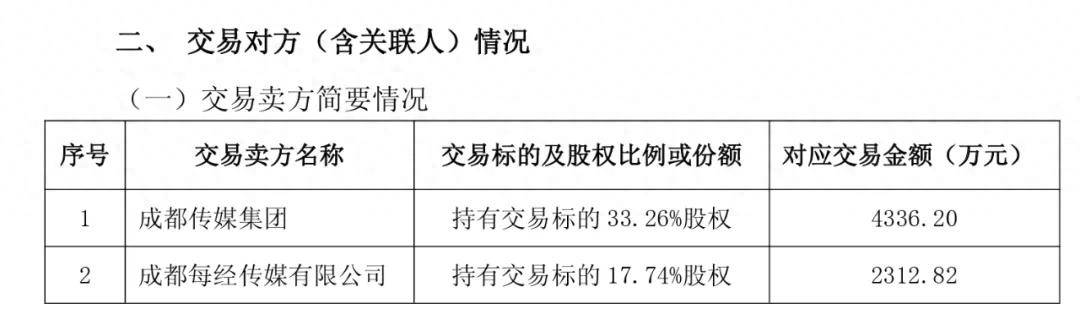
Core Viewpoint - Chengdu Media Group's subsidiary, Chengdu Borui Communication Co., Ltd. (Borui Communication), announced the acquisition of a 51% stake in Meijing Technology for 66.49 million yuan, marking a significant related party transaction [1][2]. Group 1: Transaction Details - The transaction involves Chengdu Media Group transferring its 33.26% stake and Chengdu Meijing Media Co., Ltd. transferring its 17.74% stake in Meijing Technology to Borui Communication for 43.36 million yuan and 23.13 million yuan, respectively [2]. - After the transaction, Chengdu Media Group will no longer hold direct shares in Meijing Technology, which will become an asset of Borui Communication [2]. - Industry insiders suggest that this transaction serves as a cash "blood transfusion" for Chengdu Media Group [2]. Group 2: Company Background - Meijing Technology, established in December 2018, focuses on enterprise-level AI applications and aims to assist various institutions in achieving intelligent communication through self-developed software products [2]. - The company was integrated and controlled by Chengdu Meijing Media in November 2022 and is considered a key high-tech enterprise by the Daily Economic News [2]. Group 3: Performance Commitments - Chengdu Media Group and Chengdu Meijing Media have made a performance commitment for Meijing Technology to achieve a cumulative net profit of no less than 23.1 million yuan from 2026 to 2028, with cash compensation required if this target is not met [3]. Group 4: Financial Projections - Historical data shows Meijing Technology's net profit for 2023 and 2024 at 2.6982 million yuan and -754,200 yuan, respectively, with a downward trend observed in the first half of 2025 [5]. - Forecasts for net profit from 2026 to 2028 are 5.3082 million yuan, 8.2029 million yuan, and 7.2040 million yuan, totaling 20.7151 million yuan, which is slightly below the performance commitment [6]. Group 5: Strategic Implications - The acquisition is viewed as a critical step in Borui Communication's digital transformation, aiming to combine media and technology to enhance the development of a new intelligent media group for Chengdu Media Group [6].

张忆东:2026年最确定的还是AI!首只聚焦“港股芯片”产业链的港股信息技术ETF(159131)放量大涨2.07%
Xin Lang Cai Jing· 2025-12-12 11:54
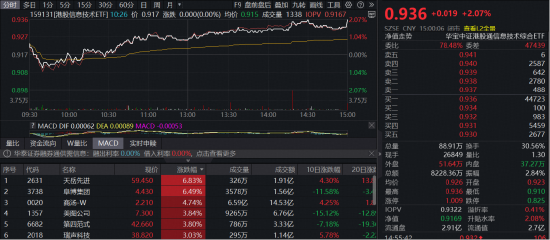
Core Viewpoint - The Hong Kong chip industry chain is experiencing a resurgence, highlighted by the strong performance of the first ETF focused on the "Hong Kong chip" sector, which saw a daily increase of 2.07% and significant trading volume [1][9]. Group 1: ETF Performance - The Hong Kong Information Technology ETF (159131) recorded a trading volume of 82.28 million CNY and successfully recovered its 5-day and 10-day moving averages [1][9]. - The ETF's index has a current price-to-earnings ratio of 34.26, which is at the 39.85 percentile over the past three years, indicating substantial room for growth compared to its peak earlier in the year [5][13]. Group 2: Market Composition - The ETF is composed of 70% hardware and 30% software, focusing on semiconductor, electronics, and computer software sectors, with significant weights in companies like SMIC (20.48%), Xiaomi (9.53%), and Hua Hong Semiconductor (5.80%) [15]. - The ETF excludes major internet companies like Alibaba, Tencent, and Meituan, allowing for a sharper focus on AI hard technology trends in the Hong Kong market [15]. Group 3: Industry Outlook - The AI sector is expected to see significant growth, with a focus on AI chips and applications, driven by increasing capital expenditures from major manufacturers and the demand for scalable AI applications [3][11]. - The introduction of new AI models, such as OpenAI's GPT-5.2, is anticipated to boost sentiment in the AI sector, indicating a positive outlook for AI-related investments [3][11].