
AI芯片

Search documents
GPT-5.2获封“最强打工人”,谷歌同日以Gemini“性价比”系列应战
Tai Mei Ti A P P· 2025-12-12 08:22
Core Insights - OpenAI's CEO Sam Altman expressed strong optimism about the company's R&D and product roadmap during the launch of GPT-5.2, despite facing unprecedented competition from rivals like Google and Anthropic [2][3] - The release of GPT-5.2 has been positioned as a significant advancement, with performance metrics surpassing competitors, particularly in professional applications [4][5] Product Performance - GPT-5.2 was launched with three different model tiers: Instant, Thinking, and Pro, achieving benchmark scores that outperformed competitors like Gemini 3 PRO and Claude Opus 4.5 [4] - In the GPQA Diamond evaluation, GPT-5.2 scored 92.4%, a notable increase from GPT-5.1's 88.1% and higher than Gemini 3 PRO's 91.9% [4] - The model achieved a perfect score in the AIME 2025 competition, showcasing its capabilities in advanced mathematics [4] Competitive Landscape - Google launched its Gemini Deep Research product shortly before GPT-5.2, emphasizing its competitive stance in the AI model market [10][12] - Gemini Deep Research reportedly offers similar performance to GPT-5 Pro at a significantly lower cost, highlighting Google's focus on cost-effectiveness and efficiency [12] - OpenAI's reliance on computational power for GPT-5.2 raises concerns about sustainability and market competitiveness, especially as rivals demonstrate more cost-effective models [7][12] User Experience and Feedback - Users have praised GPT-5.2 for its practical applications in tasks such as data analysis and project management, earning it titles like "strongest AI worker" [7] - However, some users reported slower response times in the Thinking and Pro models compared to previous versions, raising concerns about efficiency [8] - Despite its strengths, GPT-5.2 still encounters issues with common knowledge questions, indicating areas for improvement [9] Future Developments - OpenAI plans to continue enhancing its offerings, with Altman hinting at upcoming features and models, including a new model named "Garlic" [12] - The competitive landscape is expected to evolve further, with other players like Meta and DeepSeek also preparing to launch new products [12][13]



芯片概念股探底回升,科创芯片ETF(588200)年内涨幅超58%,端侧AI应用有望加速突破
Mei Ri Jing Ji Xin Wen· 2025-12-12 07:20
Core Viewpoint - The A-share market experienced a rebound today, with significant gains in technology stocks, particularly in the chip sector, indicating a strong performance and potential investment opportunities in this area [1] Group 1: Market Performance - The A-share market saw a bottoming out and subsequent recovery, with technology stocks, especially chip concept stocks, showing strong performance [1] - Notable gains included Yandong Microelectronics rising over 16%, and companies like Chip Motion Technology, Tianyue Advanced, and Zhongke Feimeicheng increasing by over 10% [1] - The ChiNext Chip ETF (588200) continued to rise in the afternoon, with a cumulative increase of over 58% this year [1] Group 2: Fund Flows - According to Wind data, the ChiNext Chip ETF (588200) has seen continuous capital inflow over the past six months, accumulating approximately 800 million yuan [1] Group 3: Industry Developments - Recent product launches, such as Alibaba's AI glasses and Doubao's AI mobile assistant, suggest a potential acceleration in edge AI applications [1] - Analysts recommend focusing on the consumer electronics supply chain related to edge AI and the domestic computing power industry chain, including chips, storage, servers, and advanced process capacity release [1] - Research indicates that the application of AI chips is expanding from cloud computing data centers to edge computing, smart terminals, and intelligent manufacturing [1] - AI chips are driving continuous breakthroughs in computing power through architectural innovation, with TPUs showing significant performance improvements in specific scenarios compared to traditional architectures, and NPUs demonstrating enhanced energy efficiency [1] - The global market is becoming highly concentrated, with a steady increase in the domestic industry's self-sufficiency and a noticeable acceleration in the localization process [1][2]
1486亿!谷歌TPU拿巨额大单,博通CEO爆料
Sou Hu Cai Jing· 2025-12-12 04:43
Core Insights - Broadcom's CEO revealed that the company received orders worth $10 billion from Anthropic for the latest Google TPU Ironwood racks, with an additional $11 billion order in the same quarter [2] - Broadcom reported a 28.2% year-over-year revenue increase for Q4 FY2025, reaching $18.02 billion, driven by a 74% growth in AI chip sales [2] - The company has $73 billion in unfulfilled orders over the next 18 months, covering custom chips, switches, and other data center components [2] Company Performance - Broadcom's Q4 FY2025 net profit surged by 96.99% year-over-year, amounting to $8.52 billion [2] - AI chip sales contributed $8.2 billion to the revenue, highlighting the growing demand for AI-related products [2] Client Relationships - Broadcom has secured a fifth custom XPU chip client, with a $1 billion order placed in Q4, indicating ongoing growth in client demand [4] - The company has previously signed a chip purchase agreement with OpenAI, further expanding its client base in the AI sector [4] Market Dynamics - Google and Anthropic announced a cloud collaboration valued at several billion dollars, allowing Anthropic access to up to 1 million Google TPUs, expected to launch over 1 GW of AI computing capacity by 2026 [5] - Anthropic is adopting a multi-cloud, multi-chip strategy, distributing AI workloads across Google TPUs, AWS Trainium chips, and NVIDIA GPUs [5] Technological Advancements - Google's latest TPU Ironwood boasts a performance efficiency six times greater than its predecessor, achieving approximately 29.3 TFLOPS/W, which is double the computational power of NVIDIA's GB200 at the same power consumption [6] - The collaboration between Google and Broadcom in developing TPUs may significantly impact the computing market share in the future [6]

1486亿,谷歌TPU拿巨额大单,博通CEO爆料
3 6 Ke· 2025-12-12 04:24
Group 1 - Broadcom's CEO revealed that the company received a $10 billion order from Anthropic for the latest Google TPU Ironwood racks, with an additional $11 billion order placed in the same quarter [1] - In Q4 of fiscal year 2025, Broadcom reported a revenue increase of 28.2% year-over-year, reaching $18.02 billion, driven by a 74% growth in AI chip sales, contributing $8.2 billion to revenue [1] - Broadcom's net profit surged by 96.99% year-over-year, amounting to $8.52 billion, with a backlog of $73 billion in unfulfilled orders for custom chips and data center components over the next 18 months [1] Group 2 - Broadcom has secured a fifth custom XPU chip client, which placed a $1 billion order in Q4, indicating potential for further growth in orders [2] - Google and Anthropic announced a comprehensive cloud partnership valued at several billion dollars, allowing Anthropic access to up to 1 million Google TPUs, expected to launch over 1 gigawatt of AI computing capacity by 2026 [2] - Anthropic is employing a multi-cloud, multi-chip strategy for its AI workloads, utilizing Google TPUs, AWS Trainium chips, and NVIDIA GPUs, adjusting its models to fit the characteristics of these chips [2] Group 3 - The demand for Google's TPUs is closely linked to the stock price increase of its parent company, Alphabet, as investors view Anthropic's significant TPU purchases positively [3] - Google has begun offering TPUs as a service to cloud customers and is considering direct sales of TPUs to select clients, with ongoing discussions with Meta for potential multi-billion dollar purchases starting in 2027 [3] Group 4 - The latest generation of Google's TPU Ironwood boasts an energy efficiency ratio six times that of its predecessor, achieving approximately 29.3 TFLOPS/W, and its computational power is about twice that of NVIDIA's GB200 at the same power consumption [4] - The collaboration between Google and Broadcom in developing TPUs could significantly impact the computing market share, especially as power constraints become a critical issue for AI data centers [4]

群狼围上来了,黄仁勋最大的竞争对手来了
3 6 Ke· 2025-12-12 02:16
Core Insights - The U.S. government has approved NVIDIA to sell high-end H200 GPU chips to China and other approved customers, requiring a 25% sales commission, marking a significant lobbying success for CEO Jensen Huang [1] - NVIDIA's stock price rose following this news, as the company had lost a substantial share of the Chinese market due to previous export restrictions [1] - NVIDIA's data center revenue from China has sharply declined, dropping from 25% to nearly zero due to these restrictions [2] Group 1: NVIDIA's Market Position - NVIDIA has dominated the AI GPU market, holding over 80% market share, but has seen its share in the Chinese market plummet due to U.S. sanctions [2][3] - The company reported $130 billion in data center revenue in the most recent fiscal year, but faces risks from high customer concentration, with the top two customers accounting for 39% of revenue [2] - Huang's optimism about NVIDIA's competitive edge is challenged by the increasing self-sufficiency of major clients like Google, Amazon, and Microsoft, who are developing their own AI chips [10][15] Group 2: Competitors' Developments - Amazon's AWS has introduced the Trainium 3 AI chip, which claims to reduce training costs by 50% compared to NVIDIA's offerings, positioning it as a direct competitor [5][6] - Google's TPU v7 Ironwood chip has shown a tenfold performance increase over its predecessor and is optimized for high throughput and low latency, further intensifying competition [9][10] - Microsoft is facing delays in its self-developed Maia chip, which is intended to reduce reliance on NVIDIA, with significant cost advantages projected [11][14] Group 3: Market Dynamics - The AI chip market is expected to see a "performance vs. cost" showdown in 2026, with NVIDIA maintaining a performance edge while competitors emphasize cost savings [15][16] - Amazon aims to increase its self-developed chip share to 50%, while Google's TPU market share has reached 8%, indicating a shift towards diversified chip usage among AI companies [17][18] - Analysts predict that self-developed chips from major tech companies could capture 20-25% of the market share in the next five years, posing a significant threat to NVIDIA's dominance [20]



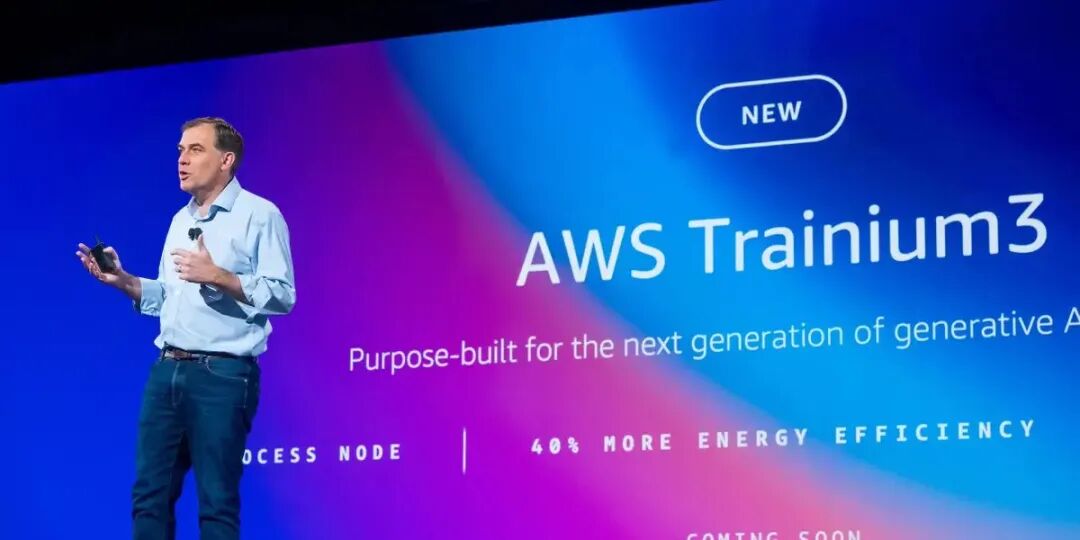
股价却一度大跌10%!Rivian放大招挑战英伟达:AI芯片+L4路线公布
美股IPO· 2025-12-12 02:04
Core Viewpoint - Rivian has announced its self-developed AI chip RAP1, a next-generation onboard computer, and a new AI model, aiming to replace Nvidia's solutions in its upcoming R2 model while introducing a subscription service called Autonomy+ [1][3][4] Group 1: Technology Development - Rivian plans to equip its upcoming R2 SUV with the Rivian Autonomy Processor 1 (RAP1) chip and a new lidar sensor, which are expected to enhance the company's autonomous driving capabilities [3] - The RAP1 chip utilizes multi-chip module technology with a memory bandwidth of 205GB per second, significantly improving performance compared to the current Nvidia system [3] - The new onboard computer, Autonomy Compute Module 3, can process 5 billion pixels per second, which is four times the performance of the existing Nvidia system used in Rivian vehicles [3] Group 2: Subscription Service - Rivian will launch the Autonomy+ subscription service in early 2026, priced at $2,500 for a one-time fee or starting at $49.99 per month, which is significantly lower than Tesla's FSD pricing [4] Group 3: Market Position and Strategy - Rivian's CEO RJ Scaringe emphasized the challenge of simultaneously reducing costs while enhancing performance, claiming that they have managed to lower vehicle costs by several hundred dollars while improving performance [6] - Despite a 25% increase in stock price this year, Rivian's stock is still down over 80% from its post-IPO peak [6] - Rivian aims to achieve Level 4 (L4) autonomous driving, allowing vehicles to operate without driver supervision, and plans to gradually roll out software updates starting in 2027 [11][12] Group 4: Competitive Landscape - Rivian's approach contrasts with Tesla's, as Rivian supports the use of lidar for environmental monitoring, while Tesla relies solely on camera-based systems [8][10] - Rivian's R2 model is set to begin production in the first half of 2026, but initial vehicles will not feature the new chip or lidar, limiting their autonomous capabilities [10] - Rivian's software system, Large Driving Model, will learn from driving behaviors to enhance the autonomous driving capabilities of older models equipped with Nvidia's Orin chip [13]

英伟达对华芯片出口限制缓和,亚马逊Trainium3正式推出 | 投研报告
Zhong Guo Neng Yuan Wang· 2025-12-12 02:03
Group 1 - Nvidia is negotiating with the White House for the potential sale of its advanced H200 chips to China, which could significantly impact its business prospects in the region [1] - Nvidia's lobbying efforts have reportedly yielded key results, with the GAIN AI Act expected to be excluded from the annual U.S. defense bill, easing restrictions on AI chip exports [1] - The H200 chip's entry into the Chinese market is more likely if the U.S. allows its export, as the domestic market has primarily relied on A-series and H-series chips [1] Group 2 - Amazon Web Services (AWS) announced the launch of its third-generation custom AI chip, Trainium3, which offers a fourfold performance increase over its predecessor and reduces AI model training and running costs by 40% [2] - Trainium3 features 144GB of HBM3E high-bandwidth memory and provides 4.9TB/s memory bandwidth, achieving over 2.5 PFLOPS of dense FP8 computing performance [2] - AWS is developing the next-generation Trainium4 chip, expected to enhance computing performance by six times and memory bandwidth by four times, while supporting Nvidia's NVLink Fusion technology for seamless integration with GPUs [2]
群狼围上来了!黄仁勋最大的竞争对手来了
Xin Lang Ke Ji· 2025-12-12 00:24
Core Insights - The U.S. government has approved NVIDIA to sell high-end H200 GPU chips to China and other approved customers, requiring a 25% sales commission, marking a significant lobbying success for CEO Jensen Huang [1][2] - NVIDIA's stock price rose following this news, as the company had lost a substantial share of the Chinese market due to previous export restrictions [1] - Despite this approval, NVIDIA's latest Blackwell and future Rubin series GPUs remain banned for export [1] Group 1: Market Dynamics - NVIDIA's market share in the AI GPU sector had dropped from 95% to nearly zero in China due to restrictions, with revenue from the Chinese market for its data center business falling from 25% to a much lower percentage [1][2] - The AI GPU market in China is estimated to be worth between $20 billion and $30 billion this year, making the re-entry significant for NVIDIA's revenue [2] - Major cloud service providers like Google, Amazon, and Microsoft are developing their own chips, posing a competitive threat to NVIDIA [2][3] Group 2: Competitive Landscape - Amazon's new AI chip, Trainium 3, is designed to be a low-cost alternative to NVIDIA's GPUs, claiming to reduce training costs by 50% compared to previous generations [6][19] - Google has released its seventh-generation TPU, Ironwood, which boasts a tenfold performance increase over its predecessor and is optimized for high throughput and low latency [10][11] - Google’s TPU is expected to capture an 8% market share in the AI chip market by 2025, with Meta planning to adopt Google's TPU, further intensifying competition for NVIDIA [12][22] Group 3: Client Concentration Risks - NVIDIA's revenue is highly concentrated, with its top two customers accounting for 39% of its revenue and the top three for 53% [2] - The shift of major clients like Google and Amazon towards self-developed chips could significantly impact NVIDIA's order volume and market position [3][12] - Microsoft is facing delays in its self-developed Maia chip, which could hinder its ability to reduce reliance on NVIDIA chips [13][16] Group 4: Future Projections - The competition between performance and cost will intensify in 2026, as major players release their latest self-developed chips [17][18] - NVIDIA's Blackwell architecture is expected to maintain a performance edge, but competitors are focusing on cost advantages [19][20] - Analysts predict that self-developed chips from major tech companies could capture 20-25% of the market share in the next five years, indicating a significant shift in the competitive landscape [26]
群狼围上来了!黄仁勋最大的竞争对手来了|硅谷观察
Xin Lang Cai Jing· 2025-12-11 23:28
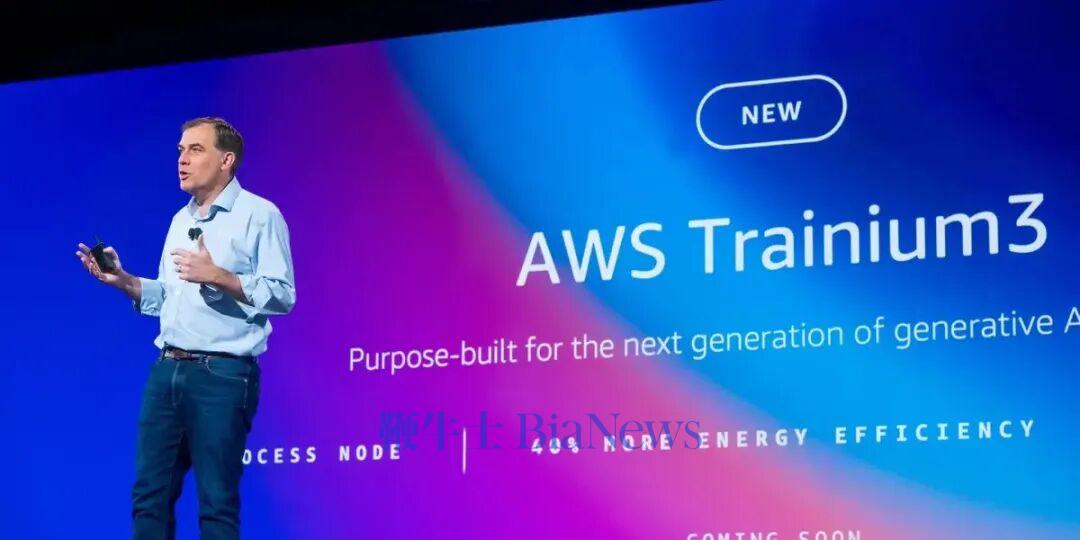
Core Insights - The U.S. government has officially approved NVIDIA to sell high-end H200 GPU chips to China and other "approved customers," requiring a 25% sales commission to the U.S. government, which also applies to other U.S. chip giants like AMD and Intel [2][24] - This approval marks a significant victory for NVIDIA CEO Jensen Huang, who has lobbied for months to lift the export ban, which had severely impacted NVIDIA's market share in China [2][24] - NVIDIA's stock price rose following this news, as the company had lost a substantial portion of its market share in the AI GPU market, dropping from 95% to nearly zero in the past two years due to U.S. export restrictions [2][24] Group 1: NVIDIA's Market Position - NVIDIA is a leading company in the generative AI era, dominating the AI chip market with over 80% market share due to its performance advantages and the CUDA platform [3][25] - The company's data center business generated $130 billion in revenue in the most recent fiscal year, but it faces risks due to high customer concentration, with the top two customers accounting for 39% of revenue [3][25] - Huang has expressed concerns about losing the Chinese market, which is estimated to be worth $20 billion to $30 billion in AI GPUs this year [3][24] Group 2: Competition from Major Tech Giants - Major cloud service providers like Google, Amazon, and Microsoft are accelerating the development of their own chips, posing a significant threat to NVIDIA's market position [3][24] - Amazon's new AI chip, Trainium 3, is designed to be a low-cost alternative to NVIDIA's GPUs, claiming to reduce training costs by 50% compared to similar GPU systems [6][27] - Google has released its seventh-generation TPU, Ironwood, which boasts a performance increase of 10 times over its predecessor and is optimized for high-throughput, low-latency inference tasks [10][31] Group 3: Future Market Dynamics - The competition is expected to intensify in 2026, with a focus on a "performance vs. cost" showdown as Google, Amazon, and Microsoft release their latest self-developed chips [38] - Amazon aims to increase its self-developed chip share to 50% and grow its AI cloud market share from 31% to 35% [40] - Google's TPU market share has reportedly climbed to 8%, with plans to sell its previously internal-use TPUs to external customers, further diversifying the chip supply landscape [41][40]

理解算力,才能理解数字社会
Ren Min Ri Bao· 2025-12-11 21:56
Core Insights - Computing power has become a buzzword, with its potential to change societal rhythms being compared to the steam engine and the electric grid [1] - The discourse around computing power includes terms like "East Data West Calculation," "supercomputing centers," and "AI chips," indicating its growing importance in corporate decision-making [1] - The computing power ecosystem is characterized by interdependence and evolution, relying on various factors such as energy support, institutional participation, commercial investment, talent cultivation, and data supply [1] Industry Perspective - The book aims to provide a problem-oriented discussion on how computing power integrates into societal operations, shapes industrial logic, and participates in public decision-making [1] - The focus is on the process of trend formation rather than specific product updates, emphasizing structural changes and relational reorganization [1] - Key considerations include the fairness, efficiency, and security of computing power access, which are crucial for the operational baseline of society [1] Audience Engagement - The book is designed for a broader audience, not just programmers or managers, offering an entry point into the "computational society" [2] - Readers are encouraged to interpret the content through their own perspectives and experiences, validating the logical structure presented [2] - Understanding the computing power-driven society is essential for individuals to better comprehend their own positions and directions within it [2]