
数实融合

Search documents
外卖、稳定币、机器人三箭齐发,刘强东再造一个“新京东”
Sou Hu Cai Jing· 2025-07-23 06:08
Group 1: Core Strategies and Developments - JD.com is actively participating in the competitive landscape of food delivery, while also investing in stablecoins and artificial intelligence projects [2][3] - The company aims to apply for stablecoin licenses in major currency countries to reduce cross-border payment costs by 90% and improve efficiency to within 10 seconds [2][8] - JD.com has made significant investments in leading companies in the embodied intelligence sector, indicating a strategic focus on enhancing its supply chain and industry chain capabilities [2][4] Group 2: New Business Models - The launch of "Seven Fresh Kitchen" represents JD.com's innovative approach to the food delivery market, positioning it as a quality restaurant production platform [3][6] - JD.com is not merely entering the traditional food delivery space but is exploring a new business model that integrates various stakeholders in the food industry [7][10] - The company is actively recruiting culinary partners to co-develop dishes, showcasing a collaborative approach to business [3][6] Group 3: Integration of Technology and Operations - JD.com emphasizes the integration of digital and physical economies, aiming to find effective ways to merge with the real economy [5][6] - The company is leveraging its supply chain advantages to apply embodied intelligence across various operational scenarios, enhancing efficiency and reducing costs [9][10] - JD.com has established a dedicated "Intelligent Robotics Business" department to promote the sale of robotic products across multiple platforms [8][9] Group 4: Future Outlook - JD.com's recent activities reflect a strategic intent to adapt to the evolving market landscape and enhance its operational capabilities [4][10] - The company's focus on new technologies and business models is seen as a pathway to finding new growth opportunities [7][10] - JD.com is positioning itself to remain competitive in the internet industry by continuously refining its strategies and operations [10]


增值税发票数据显示 1-5月山西省科技创新与制造业实现快速发展
Sou Hu Cai Jing· 2025-07-22 11:22
Group 1: Tax Policy Implementation - Shanxi tax authorities have effectively implemented structural tax reduction policies, resulting in tax cuts and refunds totaling 5.937 billion yuan from January to May this year [1] - Tax reductions for high-tech enterprises amounted to 2.044 billion yuan, while advanced manufacturing tax cuts reached 3.432 billion yuan [1] - The sales revenue of high-tech industries in Shanxi increased by 21.95% year-on-year, significantly outpacing the overall provincial growth rate [1] Group 2: Support for Key Enterprises - Shanxi Geely Auto Parts Co., a major player in the local manufacturing sector, has established a comprehensive supply chain involving 29 enterprises [2] - The tax department has introduced tailored solutions for key enterprises, enhancing support for their innovation and development [2][3] - A "tax health report" was provided to Geely, analyzing various tax-related aspects and offering targeted diagnostic suggestions [3] Group 3: Digital and Intelligent Manufacturing - Shanxi Electric Motor Manufacturing Co. has invested 330 million yuan in a digitalized production facility, showcasing significant advancements in automation and efficiency [4] - The company has benefited from tax incentives such as export tax refunds and advanced manufacturing tax deductions, which have accelerated its operational capabilities [5] - The production of high-efficiency motors has set new global energy efficiency standards, reflecting the positive impact of tax policies on innovation [5] Group 4: Support for High-tech Enterprises - Shanxi Dingxin Crystal Material Co. focuses on high-end semiconductor materials and has received substantial tax support to enhance its R&D capabilities [6] - The tax department has provided guidance on utilizing R&D expense deductions and other tax incentives, ensuring that benefits reach the enterprise effectively [6] - Specific assistance was given for the unique challenges of silicon carbide crystal research, optimizing the company's cost management and tax compliance [7]
全力推动产业回归、工业回城,市中区加快构建现代化产业体系
Qi Lu Wan Bao Wang· 2025-07-22 06:02
Core Insights - The Jinan City government is actively promoting the "Industrial Strong City Development Strategy," focusing on industrial return and modernization of the industrial system, resulting in robust growth in the industrial economy of the Shizhong District [1] Group 1: Industrial Growth and Performance - Shizhong District has 82 large-scale industrial enterprises, with total industrial output value projected to reach 155.7 billion yuan in 2023 and 177.8 billion yuan in 2024, reflecting growth rates of 19.9% and 14.1% respectively [1] - The district has accumulated 330 industrial projects over the past three years, with total investments exceeding 90 billion yuan, indicating a strong foundation for future growth [2] Group 2: Key Industry Developments - The artificial intelligence sector is developing rapidly, with 40 key enterprises and a planned computing power of 4600P, focusing on high computing power and strong applications [3] - The new energy equipment industry is expected to achieve an output value of 70.4 billion yuan in 2024, contributing to the "Shandong Energy Internet Industry Cluster" with a total output value exceeding 340 billion yuan [3] Group 3: Digital Transformation - The district has established 5,481 5G base stations and 14,500 kilometers of deterministic networks, providing strong support for new industrialization [4] - The digital services industry is expected to generate revenues of 156.1 billion yuan in 2024, with 13 digital service enterprises reaching billion-level revenues [4] Group 4: Innovation Ecosystem - In 2024, the district is expected to register over 1,400 technology contracts with transactions exceeding 10 billion yuan, indicating a thriving innovation environment [5] - The number of provincial-level "specialized, refined, characteristic, and innovative" enterprises has doubled compared to the previous year, showcasing a significant increase in innovation capacity [5]
“十四五”期间民航业高质量发展成绩亮眼:旅客运输量稳步提升 智慧化建设加速推进
Zheng Quan Ri Bao Zhi Sheng· 2025-07-21 16:45
Core Insights - The Civil Aviation Administration of China (CAAC) reported significant achievements in the aviation sector during the 14th Five-Year Plan, with a projected increase in passenger transport volume to over 7.7 billion in 2023, up from over 7 billion in the previous year [1][2] Infrastructure Development - Over 100 billion yuan is invested annually in aviation infrastructure, leading to the completion of modern airports such as Chengdu Tianfu and Qingdao Jiaodong, with the total number of civil transport airports expected to reach 270 by the end of the year [2] - The domestic route network will expand to 4,513 routes, covering 264 cities, while international routes will connect to 213 cities in 83 countries [2] Service Quality Improvement - The CAAC has enhanced operational efficiency, maintaining a high flight punctuality rate, with the bridge boarding rate at major airports increasing to 83.8% [2] - Self-service check-in for domestic passengers exceeds 70%, and over 260 airports support paperless travel [3] Market Growth and Trends - The civil aviation market is experiencing growth, with a projected 5.4% increase in passenger transport during the summer peak season in 2025 [3] - The international passenger volume is notably increasing, driven by the expansion of routes to emerging markets such as Japan and South Korea [3] Air Cargo and Logistics Development - Air cargo transport volume is expected to reach 8.982 million tons in 2024, a 32.8% increase from 2020, with international cargo volume growing by 23.4% in the first half of the year [4] - The number of cargo airlines is projected to rise to 13, with a fleet of 268 cargo aircraft by the end of 2024 [4] Digital Transformation in Logistics - The aviation logistics sector is addressing challenges such as "information silos" through the implementation of electronic waybills and unified barcodes, enhancing visibility and traceability of cargo [5] - The CAAC has set 14 development indicators for the logistics sector, focusing on scale, safety, intelligence, and efficiency, with most targets being met [5] Future Plans - The CAAC aims to accelerate the construction of international air cargo hubs and optimize resource allocation, particularly in emerging markets [6] - Continued emphasis on innovation and collaboration with industries such as manufacturing and cross-border e-commerce is planned to enhance logistics capabilities [6]
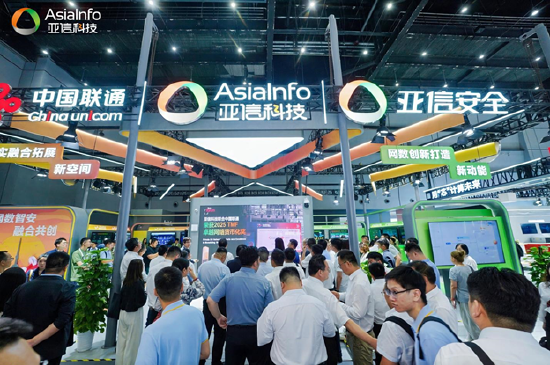
亚信科技、中国联通达成全面战略合作!网数智安助力“向新向实”!
Xin Lang Zheng Quan· 2025-07-21 07:07
Core Viewpoint - The partnership between AsiaInfo Technology and China Unicom aims to enhance digital transformation and innovation through a comprehensive strategic cooperation agreement, focusing on integrating technology and resources to support the digital economy's high-quality development [3][5][19]. Group 1: Strategic Cooperation - AsiaInfo Technology and China Unicom signed a comprehensive strategic cooperation agreement to enhance ecological cooperation, technological innovation, and digital security solutions [3][5]. - The collaboration will explore innovative paths for integrating digital technology with the real economy, providing competitive solutions for various industries' digital upgrades [3][5][19]. Group 2: Industry Engagement - AsiaInfo Technology participated in multiple forums during the event, including the Industrial Intelligence Forum and the Cloud AI Forum, to promote industrial intelligence and digital service advancements [5][7][11]. - The company aims to accelerate the application of innovative results in industrial intelligence and enhance the synergy between technology and market [5][11]. Group 3: Product and Service Offerings - AsiaInfo Technology showcased its capabilities across four dimensions: network, data, intelligence, and security, emphasizing a full business chain of digitalization [13][15][19]. - The company presented its 5G-A private network product system, which includes a comprehensive suite of hardware and software solutions for various industries [13][15]. - AsiaInfo Technology's data lifecycle service capabilities were highlighted, including the "trusted data space" product that ensures data sovereignty and security [15][17]. Group 4: Future Vision - The partnership is positioned to contribute significantly to the digital transformation of various sectors, leveraging advanced technologies such as AI, big data, and cloud computing [19][20]. - AsiaInfo Technology aims to become a trusted creator of digital value, focusing on high-quality service and innovation in the digital economy [20].

大模型“下工厂” 智联网“上高速” 我国新型工业化向“新”而行“蹄疾步稳”
Yang Shi Wang· 2025-07-21 03:42
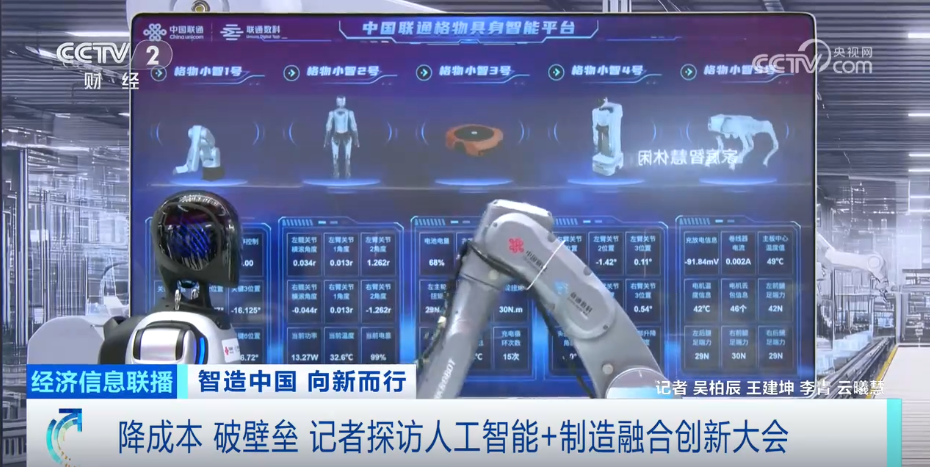
Group 1 - The conference in Shanghai focuses on "AI serving the real economy through digital technology integration," with over 1200 representatives from various sectors including communication, industry, healthcare, and consumer goods [1] - Companies are exploring how to utilize AI to optimize supply chain decisions and integrate generative AI into product design and customer service processes [1] - The challenge of "affordability" and "usability" of AI models, especially those with hundreds of billions of parameters, is hindering the realization of AI benefits [1] Group 2 - The integration of AI models into production lines is being showcased, highlighting the ability of industrial robots from different manufacturers to collaborate through a smart platform [6] - The CTO of a telecommunications company stated that switching packaging on a regular production line takes two to three days, while using robots can reduce this time to just half an hour with proper training [8] - The flexibility of production lines driven by embodied intelligence requires enhanced infrastructure capabilities, particularly with the integration of 5G-A networks and AI [10] Group 3 - The construction of a universal and rapid development platform, referred to as the MaaS platform, provides low-code and no-code tools for developing large AI models, supporting over 40 industry-specific models and 100 application scenarios [10] - This platform aims to help companies reduce costs, improve quality, and increase efficiency [10]
在链接世界中共创美好未来 第三届链博会圆满闭幕
Zheng Quan Ri Bao· 2025-07-20 16:18
Core Insights - The third China International Supply Chain Promotion Expo (Chain Expo) concluded successfully, showcasing the latest achievements in global industrial and supply chain cooperation [1] - The event attracted 210,000 online and offline visitors, a 5% increase from the previous year, and over 6,000 cooperation agreements were signed [1] - The expo served as a platform for international and domestic enterprises to interact, share resources, and promote the stability and optimization of global supply chains [1] Group 1: Event Highlights - The Chain Expo featured 152 new products, technologies, and services, marking a 67% increase from the last event [1] - Companies like Jiangsu Hengrui Carbon Fiber Technology Co., Ltd. showcased innovative products aimed at the commercial aircraft and low-altitude flight sectors, emphasizing a green circular composite material ecosystem [2] - Taiyuan Fulairda Logistics Equipment Technology Co., Ltd. presented AI-driven industrial robots and received inquiries from over 20 domestic and international companies on the first day [3] Group 2: Technological Innovations - The expo highlighted the application of AI and embodied intelligence in the industrial chain, with companies like Jiechuang Intelligent Technology Co., Ltd. showcasing AI electromagnetic network capture products [3] - The "Beijing Initiative" released at the expo called for the acceleration of digital, intelligent, and visual supply chain development using technologies like AI, IoT, and blockchain [4] - Jiangsu Qingtian Industrial Internet Co., Ltd. introduced an AI big data solution for global supply chain reconstruction, addressing the needs for digitalization and compliance [5] Group 3: Industry Collaboration - Guangdong Zhuozhi Supply Chain Technology Group launched the "Shumaitong" cross-border supply chain management platform, integrating AI technology into international trade processes [6] - The expo emphasized long-term cooperation over immediate transactions, promoting a collaborative environment among exhibitors [6] - The event aimed to enhance connections between businesses, leveraging big data and AI to optimize enterprise interactions and foster a "find friends" model [6]
中国市场新势能:“十四五”期间居民服务性消费年均增长9.6%
2 1 Shi Ji Jing Ji Bao Dao· 2025-07-18 12:23
Group 1: Economic Growth and Consumer Trends - The total retail sales of consumer goods in China are expected to exceed 50 trillion yuan this year, with an average annual growth of 5.5% over the past four years [1] - The contribution rate of consumption to economic growth is around 60%, highlighting its role as a main engine for economic development [2] - Service consumption has seen rapid growth, with an average annual increase of 9.6% from 2020 to 2024, outpacing goods consumption [2] Group 2: Trade and Foreign Investment - China's goods trade scale is projected to reach 6.16 trillion USD in 2024, a 32.4% increase from the end of the 13th Five-Year Plan in 2020 [5] - Cumulative foreign investment absorbed since the beginning of the 14th Five-Year Plan has exceeded 700 billion USD, achieving the target six months ahead of schedule [6] - The number of newly established foreign-funded enterprises during the 14th Five-Year Plan period reached 229,000, an increase of 25,000 compared to the previous period [6] Group 3: Policy and Structural Changes - The Ministry of Commerce plans to implement targeted measures to enhance the supply of quality services, including expanding pilot programs in healthcare and reducing restrictive measures [3] - The Ministry emphasizes the need for continuous innovation in business systems and mechanisms to support high-quality economic development [1][3] - Recommendations include extending consumption subsidy policies to service sectors like culture and tourism to address the shortage of quality service supply [4]
全市产业攻坚汇报交流暨推进大会召开
Nan Jing Ri Bao· 2025-07-17 01:39
Core Points - The city is focusing on building a modern industrial system as a key strategy for enhancing urban competitiveness and fostering new productive forces, which is essential for stabilizing the economy and promoting high-quality development [2][3] Group 1: Industrial Strategy - The city has established an industrial attack mechanism, creating four dedicated task forces for artificial intelligence, robotics, biomedicine, and next-generation information communication, along with upgrading six specialized teams to drive key industries [1] - The strategy emphasizes the construction of characteristic industrial clusters, deepening the integration of digital and physical sectors, and enhancing support through specialized parks [2] - The city aims to cultivate leading enterprises by leveraging technological innovation resources to strengthen technological breakthroughs and market branding [2] Group 2: Project and Ecosystem Development - The city is focused on attracting and constructing projects, aiming for simultaneous improvement in scale and quality, as well as expanding both existing and new projects [2] - There is an emphasis on optimizing the industrial ecosystem by enhancing the role of the "4+N" industrial fund cluster and promoting a collaborative approach among departments, centers, and companies [2] - The city encourages a systematic approach to create a vibrant industrial ecosystem, likened to a "tropical rainforest" [2]
激活消费“主引擎” 释放增长新动能——中国经济年中观察之一
Xin Hua Wang· 2025-07-16 10:43
Core Viewpoint - Consumption is identified as the "main engine" of economic growth in China, contributing 52% to economic growth in the first half of the year, with a year-on-year increase of 5% in total retail sales of consumer goods [1][2]. Group 1: Economic Performance - The total retail sales of consumer goods reached 24.55 trillion yuan, with a year-on-year growth of 5%, and a quarterly acceleration to 5.4% in Q2, up by 0.8 percentage points from Q1 [2]. - Service consumption is accelerating, with service retail sales growing by 5.3%, outpacing goods retail sales [3]. Group 2: Consumer Trends - There is a notable increase in demand for upgraded and green consumption, with new consumption models and formats emerging [2][4]. - The popularity of "China Tour" and "China Purchase" is rising, especially with the expansion of visa-free entry policies, leading to a 72.7% and 59.4% year-on-year increase in foreign visitors during the "May Day" and "Dragon Boat" holidays, respectively [7][8]. Group 3: Market Innovations - New consumption modes such as emotional and personalized consumption are gaining traction, with products like the LABUBU plush toy highlighting the potential for emotional consumption [5]. - Various regions are launching initiatives to stimulate consumption, such as night markets and cultural events, enhancing the consumer experience [6]. Group 4: Tourism and Shopping - The number of foreign tourists benefiting from visa-free policies has increased significantly, with Shanghai seeing an 85% year-on-year growth in duty-free sales [7]. - The development of China's transportation infrastructure, particularly the extensive high-speed rail network, is enhancing the travel experience for both domestic and international tourists [8].