
AI算力

Search documents
有研硅涨停!半导体设备ETF(561980)午后涨超4%,机构:三大逻辑支撑行业迈向万亿赛道
Sou Hu Cai Jing· 2026-02-25 07:00
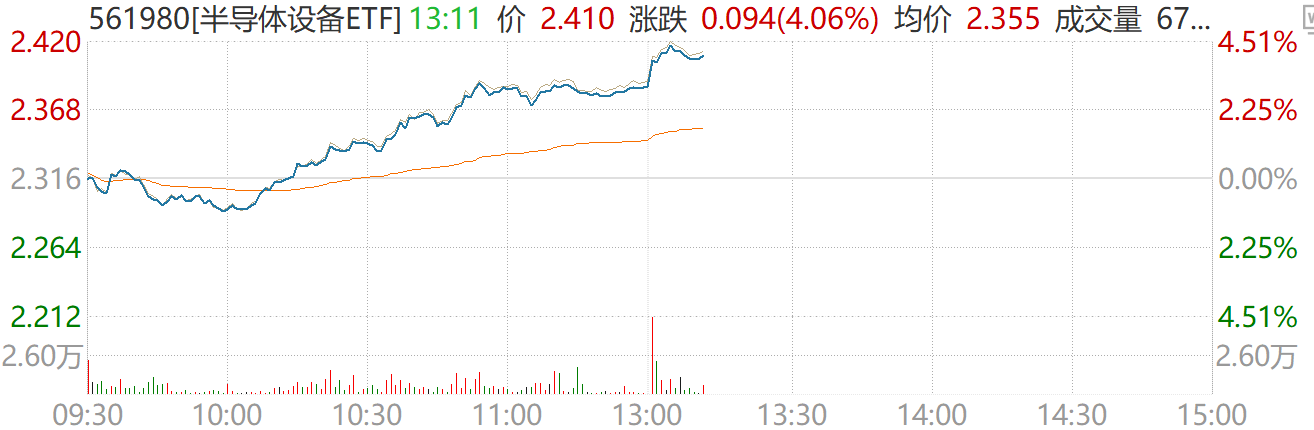
Group 1 - The semiconductor equipment sector is experiencing strong momentum, with the semiconductor equipment ETF (561980) increasing by over 4%, and several component stocks such as Yanzheng Silicon and Fuchuang Precision seeing gains of over 13% [1] - Global storage giant SK Hynix indicated that the global memory chip industry has shifted to a seller's market, with DRAM and NAND flash inventory at historical lows of about 4 weeks, and all customer demand cannot be fully met [3][4] - The semiconductor equipment ETF's index includes major companies, with four disclosing 2025 annual performance forecasts, including Zhongwei Company, which anticipates a revenue of 12.385 billion yuan for 2025, with a projected fourth-quarter revenue of approximately 4.3 billion yuan [3][5] Group 2 - Significant growth is expected in the semiconductor industry, with global sales projected to reach 791.7 billion USD in 2025, a 25.6% increase year-on-year, driven by AI computing demand [7] - The supply-demand imbalance is causing price increases across the industry, with AI server demand squeezing consumer electronics production and leading to a shortage of memory chips [8] - The domestic substitution is accelerating, with significant investments in advanced processes and equipment, resulting in a surge in orders for domestic equipment manufacturers, with some companies forecasting profit increases exceeding 900% [9] Group 3 - The semiconductor equipment and materials sectors are highlighted as core profit areas, with expectations for the semiconductor equipment market to reach a trillion USD by 2026, supported by AI computing demand and global capacity expansion [6] - TrendForce forecasts that DRAM contract prices will rise by 80%-85% and NAND Flash prices by 55%-60% by the first quarter of 2026, with the global storage industry value expected to reach 551.6 billion USD in 2026 [6][10] - The semiconductor equipment ETF has seen a significant increase of 277% since 2020 and 85% since 2025, outperforming other semiconductor indices, indicating a strong rebound and potential resilience in the new semiconductor cycle [10][11]


AI算力的“材料底座”!新材料ETF华夏(516710)上涨2.24%,江丰电子涨超11%
Mei Ri Jing Ji Xin Wen· 2026-02-25 06:34
Group 1 - The New Materials ETF Huaxia (516710) increased by 2.24%, with component stocks such as Feilihua rising over 18%, Jiangfeng Electronics over 11%, and Hu Silicon Industry over 5% [1] - The CSI New Materials Theme Index includes semiconductor materials, photoresists, target materials, and advanced packaging materials, which are core materials for AI chips, GPUs, and servers [1] - Zhongyin Securities believes that the capital investment in the computing power market will continue to drive technological iteration and demand growth, benefiting the computing materials market [1] Group 2 - The New Materials ETF Huaxia closely tracks the CSI New Materials Theme Index, which selects 50 listed companies involved in advanced steel, non-ferrous metals, chemicals, and inorganic non-metals, reflecting the overall performance of new materials theme listed companies [1] - The index has a new materials content of 79.85%, ranking first across all market dimensions [1]

半导体设备ETF(561980)午后强势涨超4%!存储卖方市场引爆上游行情,龙头业绩验证景气上行
Sou Hu Cai Jing· 2026-02-25 06:09
Core Viewpoint - The semiconductor equipment sector is experiencing significant growth, driven by strong demand in the AI and data center markets, with expectations for substantial price increases in memory chips and a projected market value exceeding $1 trillion by 2026 [3][6][7]. Group 1: Market Performance - The semiconductor equipment ETF (561980) has seen a rise of over 4%, with key stocks like Yuhua Silicon hitting the daily limit, and others such as Fuchuang Precision and Jiangfeng Electronics increasing by over 13% [1]. - The semiconductor equipment ETF has a current scale of 3.516 billion yuan, with a net inflow of 9.21 million yuan on the day [10]. Group 2: Industry Dynamics - SK Hynix has indicated that the global memory chip industry has shifted to a seller's market, with DRAM and NAND flash inventories at historical lows of about 4 weeks, and all customers' demands cannot be fully met [3]. - The global semiconductor sales are projected to reach $791.7 billion in 2025, a year-on-year increase of 25.6%, driven by the explosion of AI computing demand [7]. Group 3: Company Performance Forecasts - Key semiconductor companies have provided optimistic profit forecasts for 2025, with expected net profit increases of up to 575% for Cambrian, 205% for Changchuan Technology, and 725% for Zhongke Feimeng [4][5]. - Among the top-weighted stocks in the semiconductor equipment ETF, Zhongwei Company forecasts a total revenue of 12.385 billion yuan for 2025, with a projected fourth-quarter revenue of approximately 4.3 billion yuan [3][5]. Group 4: Price Trends and Supply Chain Issues - The demand for AI servers is squeezing consumer electronics production, leading to a shortage of memory chips, with major foundries prioritizing orders from large clients like Nvidia [8]. - A clear trend of price increases across the entire supply chain has emerged, affecting storage, CPUs, and testing sectors, driven by rising cost pressures and surging demand [8]. Group 5: Domestic Industry Growth - The third phase of the Big Fund (344 billion yuan) is focusing on advanced processes, equipment, and materials, accelerating domestic substitution in the semiconductor industry [9]. - Companies like SMIC and Kema Technology are expanding production, resulting in a surge in orders for domestic equipment manufacturers, with some companies forecasting net profit increases exceeding 900% [9].
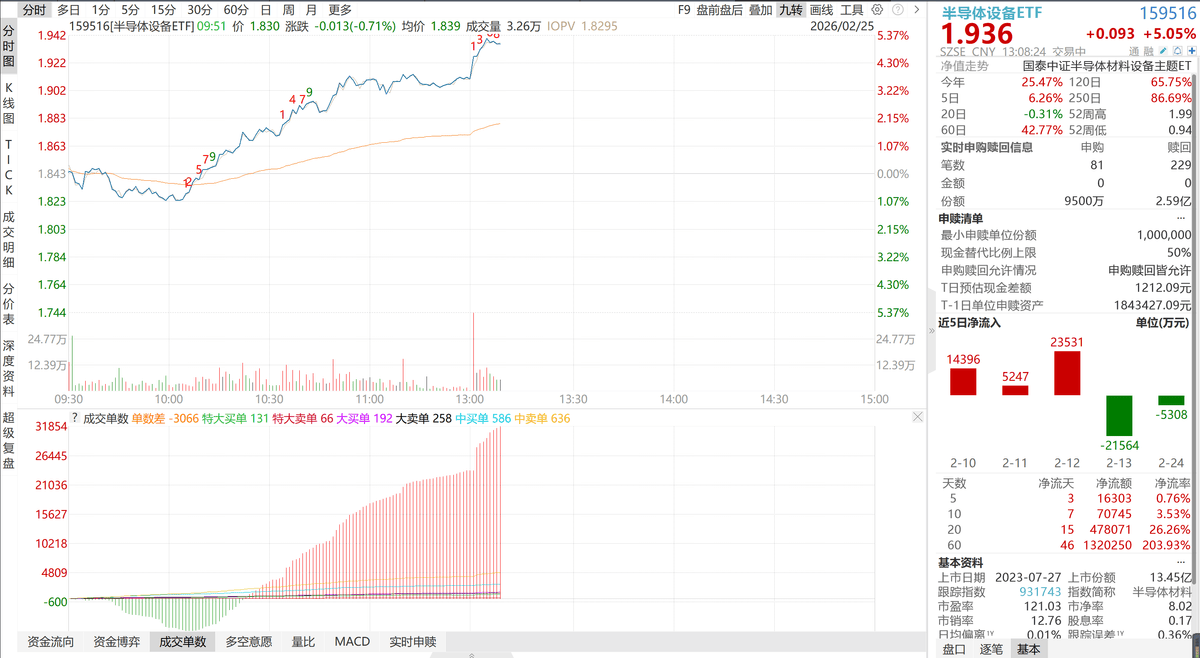
强反弹超5%!半导体设备ETF(159516)爆发
Sou Hu Cai Jing· 2026-02-25 05:41
Core Viewpoint - The A-share hard technology sector is experiencing a strong rebound, with the semiconductor equipment sector leading the gains, driven by industry cycle recovery, AI computing power explosion, accelerated domestic substitution, and policy support [1][3][6] Group 1: Market Dynamics - The global semiconductor industry is entering a new capital expenditure upcycle, with major players like TSMC, Samsung, and domestic firms increasing production capacity, driving demand for core equipment [3] - AI computing demand is surging, leading to increased requirements for advanced processes and further expanding the growth space for the equipment industry [3] - The domestic semiconductor equipment's overall localization rate is still low, presenting significant substitution opportunities, with domestic companies overcoming technical bottlenecks and achieving high growth [3][4] Group 2: Investment Value - The semiconductor equipment sector has high investment value, supported by dual drivers of industry cycle recovery and domestic substitution, making it a rare opportunity within the technology sector [4] - Continuous policy support, including rewards for first sets, R&D subsidies, and tax incentives, is bolstering the industry's development [4] - The demand from institutions for semiconductor equipment is strong, making it a key focus for long-term funds, providing robust support for the sector's long-term performance [4] Group 3: ETF Overview - The semiconductor equipment ETF (159516) closely tracks the CSI Semiconductor Materials and Equipment Theme Index, focusing on key upstream segments like etching, thin film deposition, and cleaning [5] - The ETF has a high holding purity, allowing investors to efficiently capture sector gains without needing in-depth technical research [5] - The ETF offers advantages such as risk diversification, low investment thresholds, and low management fees, making it suitable for various investors [5][6]
午后强势拉升翻红,电网设备ETF(159326)成交额破10亿元,全市场电网设备含量最高
Mei Ri Jing Ji Xin Wen· 2026-02-25 05:26
Group 1 - The A-share market indices continued to rebound, with the electric grid equipment sector experiencing a strong upward trend after an initial dip, leading to significant gains in various stocks [1] - The largest electric grid equipment ETF (159326) saw a rise of 0.94%, with a trading volume reaching 1.037 billion yuan, and several stocks, including Han Cable and Dongcai Technology, hitting the daily limit [1] - The electric grid equipment ETF has attracted over 1.247 billion yuan in the last three days, bringing its total size to 19.287 billion yuan, marking a record high since its inception [1] Group 2 - Domestic investment in electric grids is increasing, with the State Grid's fixed asset investment plan for the 14th Five-Year Plan reaching 4 trillion yuan, a 40% increase from the previous plan, creating a historic high [2] - The demand for electric grid equipment is being driven by the simultaneous global explosion in AI computing power, leading to a surge in electricity demand for data centers, with some transformer orders extending to 2027 [1][2] - The electric grid equipment ETF is the only one tracking the China Securities Electric Grid Equipment Theme Index, with over 78% of its holdings in electric grid equipment, making it the purest electric grid index in the market [2]
英伟达这周的财报会很好,但投资者更关心3月GTC大会
Hua Er Jie Jian Wen· 2026-02-25 04:16
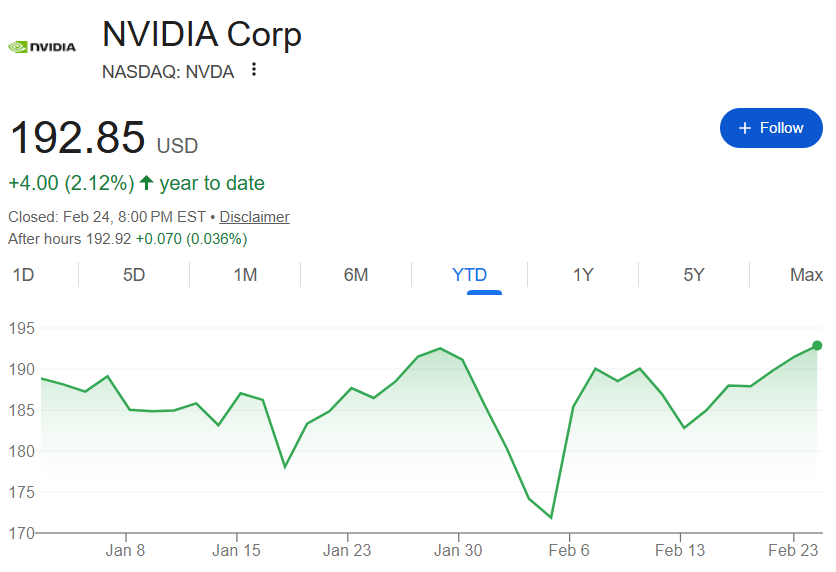
Group 1 - Nvidia is set to release its quarterly earnings report on February 25, with a generally optimistic market expectation, but analysts believe the stock price reaction may remain muted until the March GTC event [1][4] - According to FactSet, Nvidia's Q4 adjusted earnings per share are expected to be $1.54, with revenue projected at $66.1 billion, including $60.7 billion from the data center business [4] - The stock has only risen about 2% this year, significantly lagging behind the Philadelphia Semiconductor Index's 16% increase during the same period [1][4] Group 2 - Key issues for the earnings call include maintaining gross margins amid rising storage chip costs and the competitive landscape, particularly with custom chip projects like Google's TPU [5][6] - Analysts suggest that Nvidia's performance will serve as a benchmark for assessing AI spending trends and will provide insights into the operational status of emerging cloud computing partners [4][6] - Despite strong demand for Nvidia GPUs, the long-term sustainability of its market dominance is being questioned due to increasing competition [6]

AI算力的终点是电力:紧抓确定性受益标的
2026-02-25 04:13
Summary of Conference Call on North American Power Shortage Company/Industry Involved - Focus on the North American power shortage, particularly in the context of data centers and related sectors such as gas turbines, power equipment, and energy storage. Core Points and Arguments 1. **Market Overview**: The A-share market opened strongly, with all indices rising and significant trading volume, particularly in the power equipment and grid sectors, which saw an ETF increase of over 4% in a single day. This is attributed to increased infrastructure and grid investment [1][2][3]. 2. **Electricity Shortage Consensus**: The conference emphasized that the issue of electricity shortage is widely recognized, particularly in North America, driven by the increasing capital expenditures of major tech companies like Nvidia and Microsoft, which contribute to rising electricity costs [1][2]. 3. **Quantitative Analysis of Shortage**: The analysis will quantify the extent of the electricity shortage in the U.S. and identify key technologies and companies that could benefit from addressing this crisis, including gas turbines, power equipment, and energy storage [2][3]. 4. **Core Reasons for Power Shortage**: The primary cause of the current power shortage in the U.S. is the mismatch between the explosive demand from data centers and the capacity of the electricity system. The peak load in summer 2025 is projected to be approximately 829 GW, with significant increases expected in the following years [3][5][6]. 5. **Projected Load Growth**: Forecasts indicate that the peak load will increase by 166 GW from 2025 to 2030, with a substantial portion attributed to data centers, which are expected to account for over 55% of this growth [6][7]. 6. **Mismatch Issues**: There are two main mismatches: - Between expected and actual demand, with actual data center planning far exceeding institutional forecasts [7][8]. - Between actual demand and infrastructure capacity, particularly in stable power sources and grid transmission capabilities [8][9]. 7. **Electricity Generation Capacity**: The current stable power generation capacity is 945 GW, primarily from natural gas (577 GW). However, the retirement of coal plants and insufficient new installations of stable power sources pose significant challenges [8][9]. 8. **Regional Analysis**: The Northeast (PJM) and South (ERCOT) regions are identified as critical areas for data center growth and associated power shortages. These regions are experiencing load growth significantly above the national average [13][14]. 9. **PJM Capacity Market Dynamics**: PJM's capacity auction prices have surged nearly tenfold due to declining reliability and increasing demand from data centers. The reserve margin has dropped below the critical threshold, indicating a deteriorating reliability of the power system [16][18]. 10. **Investment Opportunities**: The worsening power shortage is expected to create long-term investment opportunities in gas turbines, power equipment, and energy storage. Companies like Dongfang Electric and Shanghai Electric are highlighted as potential beneficiaries [28][30]. 11. **Political and Regulatory Risks**: The primary risk identified is political, particularly regarding trade policies that could impact the supply chain and investment in power infrastructure [33]. 12. **Future Outlook**: The conference concluded that the North American power shortage is transitioning from a narrative to a structural investment opportunity, driven by increasing demand, regulatory support, and the need for reliable power sources [36][37]. Other Important but Possibly Overlooked Content - The conference highlighted the importance of energy storage as a short-term solution to address the reliability issues in the power system, particularly in regions like PJM and ERCOT [11][12]. - The potential for Chinese companies to capture market share in the North American gas turbine market due to supply constraints faced by overseas manufacturers [28][30]. - The impact of recent policy changes in India regarding the import of power equipment, which could influence market dynamics and opportunities for Chinese companies [29].

0224调研日报
2026-02-25 04:07
Summary of Conference Call Records Company and Industry Overview - **Dazhu Laser Technology Group Co., Ltd.**: Focused on the PCB industry and 3D printing business - **Zhongmi Holdings Co., Ltd.**: Leading market share in the domestic petrochemical sector, with overseas business concentrated on "Belt and Road" countries - **Nankang Mining Group Co., Ltd.**: Significant contributions from copper mining in the metal mining sector Key Points and Arguments Dazhu Laser Technology Group - **Hong Kong Listing and PCB Industry Opportunities**: The company's listing in Hong Kong is expected to help capture golden development opportunities in the PCB industry, with a successful subscription amount of approximately $310 million from notable cornerstone investors such as GIC and Hillhouse Capital [2] - **3D Printing as a Growth Driver**: The 3D printing business is focusing on titanium alloy structural components for consumer electronics, with increasing technical maturity. This segment is anticipated to become a new growth point for the company as demand in related industries rises [1] Zhongmi Holdings - **Leading Market Share in Petrochemical Sector**: The company holds over 20% market share in the domestic petrochemical sector, with potential to reach 60%-70% in large project increments. The domestic mid-to-high-end mechanical seal market is valued at approximately 6-7 billion RMB, with petrochemical applications accounting for about 25% [4] - **High Customer Stickiness**: Mechanical seals have high customer retention due to their critical role in operational safety. The company experiences minimal loss from customer bankruptcies, as clients are typically financially stable enterprises [5][6] Nankang Mining Group - **Copper Mining Contribution**: The company’s metal mining orders are primarily focused on black metals, with copper mining significantly contributing to order scale and production [8] - **Higher Profit Margins in Overseas Operations**: The company’s overseas business exhibits significantly higher profit margins compared to domestic operations, attributed to a value-based pricing strategy that emphasizes brand recognition and quality trust [9] Additional Insights - **Expansion of Overseas Market Personnel**: Zhongmi Holdings is actively expanding its overseas R&D and sales teams to capitalize on the diversification of manufacturing supply chains, particularly in Southeast Asia [3] - **Systematic Capability in Overseas Mining Operations**: Nankang Mining has developed a robust operational capability in overseas mining services, supported by experienced personnel and a comprehensive service offering [9] Important but Overlooked Content - The strategic focus on the "Belt and Road" initiative by Zhongmi Holdings highlights the potential for growth in emerging markets, which may be overlooked in broader market analyses [7] - The emphasis on maintaining a high-quality product offering in Nankang Mining's overseas operations suggests a strategic differentiation that could be critical in competitive markets [9]


多数保险机构对2026年A股市场持较乐观态度,计划小幅增配A股
Jin Rong Jie· 2026-02-25 03:58
Group 1 - The core viewpoint of the articles indicates that insurance institutions are optimistic about domestic investments in stocks and securities investment funds for 2026, with a tendency to slightly increase stock investments [1] - Most insurance institutions plan to maintain their allocation ratios for bank deposits, bonds, securities investment funds, and other financial assets similar to 2025, with some intending to moderately increase stock investments [1] - In the bond market, insurance institutions hold a neutral outlook for 2026, favoring high-grade corporate bonds, perpetual bonds, subordinated debt, and convertible bonds, primarily focusing on bonds with maturities between 10 to 30 years [1] Group 2 - Regarding the A-share market, insurance institutions are generally optimistic for 2026, favoring indices such as the Sci-Tech Innovation 50, CSI 300, and ChiNext, and industries like electronics, non-ferrous metals, and pharmaceuticals [1] - The main factors influencing the A-share market are expected to be corporate profit recovery and liquidity conditions, with most insurance institutions planning to slightly increase their allocation to A-shares [1] - In terms of fund investments, insurance asset management institutions prefer equity funds, secondary bond funds, and mixed equity funds, with nearly half planning to slightly increase their allocation to public funds [2] Group 3 - For overseas investments, Hong Kong stocks are the most favored by insurance institutions for 2026, with gold and US stocks also receiving attention [2] - About half of the insurance asset management institutions plan to slightly increase their allocation to Hong Kong stocks, while 40% of insurance companies intend to maintain their current allocation levels [2]
化工牛再刷新高!化工ETF(516020)大涨2.8%连续6日强势吸金
Mei Ri Jing Ji Xin Wen· 2026-02-25 02:43
Group 1 - The A-share market is experiencing a strong performance, with the chemical sector reaching new highs in its current rebound, as evidenced by the chemical ETF (516020) rising over 2.8% [1] - Over the past six trading days, more than 200 million yuan has flowed into the chemical ETF (516020), indicating active positioning for the post-holiday market [1] - According to Guangfa Securities, the chemical industry typically follows a five-year cycle, and the current phase is expected to benefit from reduced capital expenditure growth, anti-involution measures, overseas interest rate cuts, and domestic demand expansion [1] Group 2 - Guohai Securities suggests that anti-involution measures may lead to a revaluation of the Chinese chemical industry, with potential for significant slowdown in global chemical capacity expansion [1] - The Chinese chemical industry has abundant operating cash flow, and a slowdown in expansion could significantly enhance potential dividend yields, transforming the industry from a "cash-consuming beast" to a "money-making tree" [1] - The changes on the supply side are expected to halt the decline in industry prosperity, with chemical stocks likely to exhibit both high elasticity and high dividend advantages [1] Group 3 - The chemical ETF (516020) and its linked fund (012537) track the CSI segmented chemical industry theme index, covering popular themes such as AI computing power, anti-involution, robotics, and new energy [2] - Nearly 50% of the ETF's holdings are concentrated in large-cap leading stocks, including Wanhua Chemical and Salt Lake Industry, allowing investors to capitalize on strong investment opportunities [2] - The remaining 50% of the holdings are diversified across leading stocks in sub-sectors such as phosphate fertilizers, fluorine chemicals, and nitrogen fertilizers, providing comprehensive exposure to investment opportunities in the chemical sector [2]