
智能网联汽车

Search documents
中欧协会智能网联汽车分会联合清博指数发布2025年三季度中国汽车品牌影响力指数报告
Xin Hua Wang· 2025-10-27 02:21
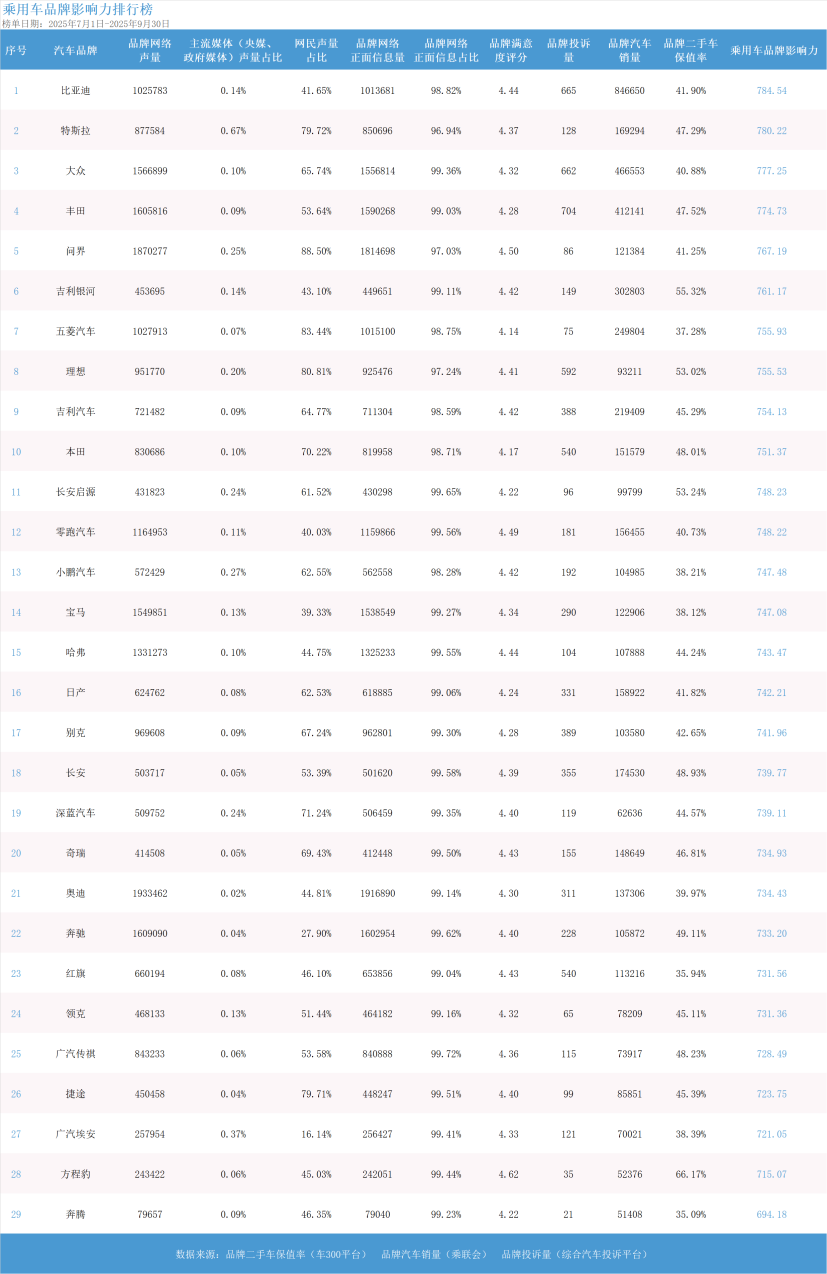
Core Insights - The report indicates a significant evolution in the automotive brand landscape in China, characterized by intense competition in the passenger car market and a stable consolidation in the commercial vehicle market [1][9]. Passenger Car Market - Domestic brands dominate the top ten influential brands, with BYD leading at 784.54 points, followed by Tesla at 780.22 points, showcasing strong sales and positive user reputation [2][3]. - The rise of new entrants is notable, with the AITO brand (问界) achieving fifth place with 767.19 points, driven by the successful launch of the new M7 model [3][9]. - The second tier includes Geely Galaxy at sixth with 761.17 points and Wuling at seventh with 755.93 points, both demonstrating strong market positioning and user engagement [3][9]. Commercial Vehicle Market - The commercial vehicle sector shows a clearer competitive structure, with China FAW leading the heavy truck market at 728.99 points, followed closely by China National Heavy Duty Truck Group and Dongfeng [4][9]. - The light truck market is led by Changan with 718.38 points, followed by JAC and Beiqi Foton, indicating a diversified competitive landscape [7][9]. Brand Influence Metrics - The assessment integrates authoritative production and sales data from the China Association of Automobile Manufacturers and the China Passenger Car Association, along with social media sentiment analysis and vehicle depreciation data [1][9]. - The report emphasizes the importance of brand influence being increasingly reliant on communication volume and user reputation, highlighting a shift from scale competition to lifecycle value competition in the automotive industry [9].



投资主线继续聚焦机器人及液冷,传统汽车板块有望预期修复:汽车行业周报(20251020-20251026)-20251026
Huachuang Securities· 2025-10-26 10:45
Investment Rating - The report maintains a recommendation for the traditional automotive sector, focusing on potential recovery in stock prices due to various catalysts [1]. Core Insights - The market has largely priced in expectations for a decline in automotive policies next year, yet stock prices in the traditional automotive sector remain under pressure, with potential catalysts including better-than-expected retail sales post-Chinese New Year, improved export performance, and favorable policies [1][5]. - The report anticipates strong financial performance in Q3 for the automotive sector, driven by good wholesale growth and the effects of reduced competition, but investment opportunities in Q4 are expected to concentrate on high-risk sub-sectors [1][5]. Data Tracking - In early October, the discount rate slightly decreased to 9.5%, down 0.1 percentage points month-on-month, but up 1.1 percentage points year-on-year [3]. - The average discount amount was 21,384 yuan, a decrease of 108 yuan month-on-month, but an increase of 2,937 yuan year-on-year [3]. Market Performance - The automotive sector saw a weekly increase of 2.95%, ranking 9th out of 29 sectors [8]. - The overall market indices also showed positive performance, with the Shanghai Composite Index rising by 2.88% and the ChiNext Index increasing by 8.05% [8][33]. Industry News - As of the end of September, China's electric vehicle charging infrastructure reached 18.063 million units, a year-on-year increase of 54.5% [31]. - The "Energy-saving and New Energy Vehicle Technology Roadmap 3.0" was released, setting ambitious targets for carbon emissions reduction in the automotive industry by 2040 [31]. - In September, the retail sales of new energy vehicles reached 632,000 units, a year-on-year increase of 5% [31].
2025汽车工业统计年报工作会议在长沙召开
中汽协会数据· 2025-10-25 03:06
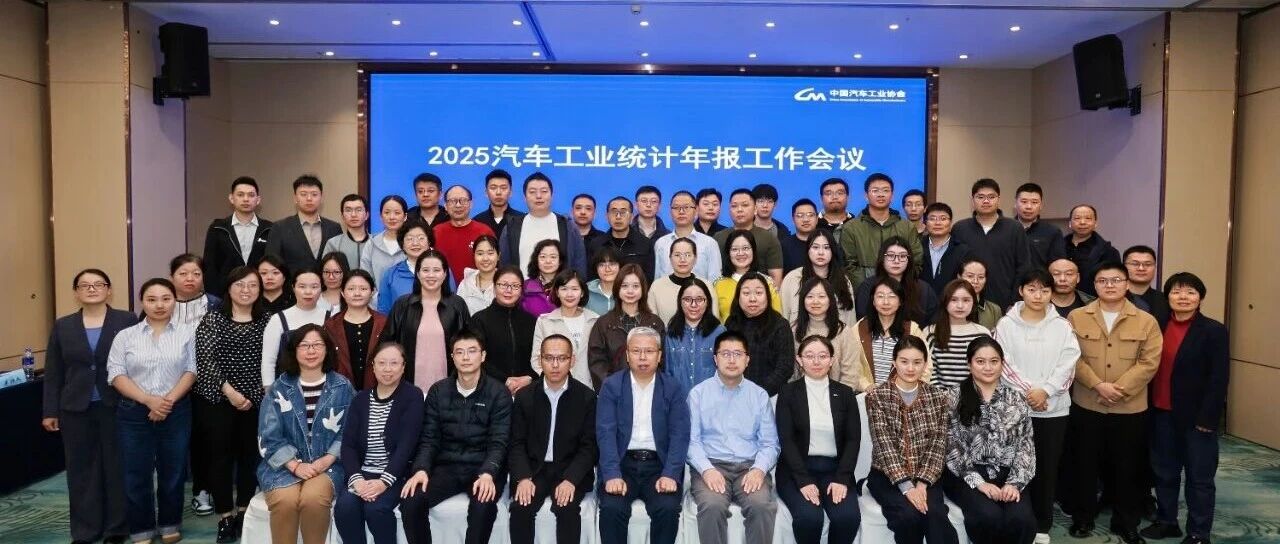
Core Viewpoint - The meeting organized by the China Association of Automobile Manufacturers (CAAM) highlighted the importance of collaboration between government statistics and industry statistics to enhance the quality and effectiveness of statistical work in the automotive sector [3]. Group 1: Industry Development Analysis - The automotive industry is experiencing continuous growth in production and sales, with effective consumption policies boosting the passenger car market [5] - The commercial vehicle market is showing relative weakness, while the performance of new energy vehicles and vehicle exports is strong [5] - The market share of Chinese brands remains high, indicating initial success in addressing internal competition [5] - Challenges include slow domestic demand growth, inventory pressure, sustained pressure on industry profitability, ongoing price wars, and geopolitical impacts on supply chain stability [5] Group 2: Statistical Work and Future Plans - CAAM's industry information department reported on the 2025 automotive industry statistical work summary and future plans, focusing on data statistics, industry operations, system upgrades, international compliance, and other tasks [7] - The association is expanding statistical reporting to include intelligent connected vehicles and export data, while also enhancing enterprise research and developing specialized data products [7] - Recommendations were made for ensuring data timeliness, consistency, and comprehensiveness in statistical reporting [7] Group 3: System Construction and Reporting - The CAAM's industry information department provided detailed explanations of the data information system's construction, including system operation and reporting processes [8] - Emphasis was placed on ensuring smooth reporting of various statistical forms for the upcoming year [8] - The meeting concluded with a commitment to building a more comprehensive statistical system to support international trade disputes and enterprise decision-making [8]
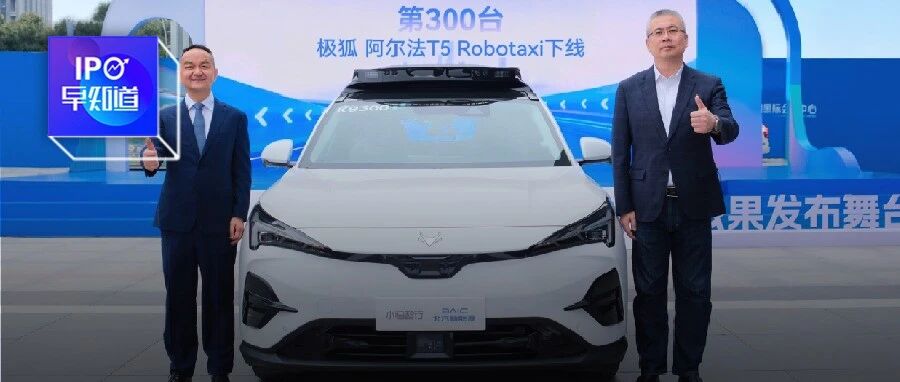
小马智行与北汽量产下线第300台L4级极狐阿尔法T5车型,打造中国Robotaxi标杆车型
IPO早知道· 2025-10-25 02:36
Core Viewpoint - The successful rollout of the 300th L4 Robotaxi, the Jihu Alpha T5, developed by Pony.ai and BAIC New Energy, marks a significant milestone in the collaboration between the two companies, establishing a benchmark for Robotaxi models in China and providing a key example for the development of the intelligent connected vehicle industry [4][5]. Group 1: Production and Technology - The Jihu Alpha T5 Robotaxi, which began mass production in July, is equipped with Pony.ai's seventh-generation autonomous driving solution, capable of operating in all weather, scenarios, and time periods [4][5]. - Each seventh-generation Robotaxi produced is designed to have full autonomous driving capabilities, creating a closed-loop system that facilitates faster service delivery to users by shortening the path between technology validation and operational deployment [5][7]. - The collaboration has achieved significant advancements in L4 autonomous vehicle development, including positive research and development, production line construction, supply chain setup, and road testing [5][7]. Group 2: Market Deployment and Expansion - The Jihu Alpha T5 Robotaxi has received road testing permits in cities like Beijing and Shenzhen, preparing for large-scale deployment this year [5][7]. - The successful production of the new model supports Pony.ai's goal of establishing a fleet of 1,000 Robotaxis [5][7]. - Plans are in place to explore deployment in Middle Eastern and European markets, aiming to provide safer and more comfortable smart mobility services globally [5][7]. Group 3: Cost and Safety Innovations - The cost of the autonomous driving kit has been reduced by 70% compared to previous generations, achieved through the large-scale use of automotive-grade components and pre-installed production lines, thus breaking the cost bottleneck for mass production of autonomous vehicles [7]. - The safety of the L4 autonomous driving operation is underpinned by BAIC New Energy's fully redundant chassis and Pony.ai's multi-layered safety architecture, supported by over 55 million kilometers of real-world testing data, ensuring safety levels surpassing human drivers by tenfold [7][8]. Group 4: Industry Trends - The successful launch of the 300th vehicle signifies a clearer strategic vision for Pony.ai's Robotaxi initiative, indicating a shift from vision to reality in the L4 production benchmark [8]. - The emergence of intelligent connected vehicles represents a new high ground in automotive intelligence, driven by both quality and cost-effectiveness [8].

汽车行业双周报(2025/10/10-2025/10/23):今年前三季度新能源汽车产销量超过1100万辆-20251024
Dongguan Securities· 2025-10-24 09:10
Investment Rating - The report maintains an "Overweight" rating for the automotive industry, expecting the industry index to outperform the market index by over 10% in the next six months [51]. Core Insights - In the first three quarters of 2025, China's new energy vehicle (NEV) production and sales exceeded 11 million units, with a year-on-year growth rate of over 30% [47][48]. - The automotive industry has shown strong growth, with September production reaching 3.276 million units, a year-on-year increase of 17.1%, and sales at 3.226 million units, up 14.9% year-on-year [47][48]. - The NEV sales penetration rate reached 46.1%, indicating robust demand and market acceptance [47][48]. Industry Data Tracking - In September, China's automotive production was 3.276 million units, with a month-on-month increase of 16.4% and a year-on-year increase of 17.1% [19][22]. - Automotive sales in September were 3.226 million units, reflecting a month-on-month increase of 12.9% and a year-on-year increase of 14.9% [19][22]. - Exports for the first nine months reached 4.95 million units, a year-on-year increase of 14.8%, with NEV exports alone growing by 89.4% to 1.758 million units [47][48]. Industry News - The Ministry of Industry and Information Technology is soliciting opinions on the mandatory national standard revision plan for vehicle factory certificates, aiming to enhance product safety and information transparency [34]. - The China Passenger Car Association reported that the cumulative production of power and other batteries reached 1,122 GWh in the first nine months, a year-on-year increase of 44% [34]. - NIO's internal meeting emphasized the necessity of achieving profitability in Q4 2025, focusing on marketing, supply chain stability, and timely delivery of high-quality software [40]. Investment Recommendations - The report suggests focusing on companies enhancing brand competitiveness through smart technology, such as BYD (002594) and Seres (601127) [47][48]. - It also highlights the potential of the smart driving industry chain, recommending companies like Fuyao Glass (600660) and Joyson Electronics (600699) [47][48]. - Additionally, it points to Yutong Bus (600066) as a beneficiary of the "old-for-new" policy in the new energy bus sector [47][48].




智能汽车ETF(159889)涨超2.3%,行业数据与政策利好共振
Mei Ri Jing Ji Xin Wen· 2025-10-24 06:53
Group 1 - The smart car ETF (159889) increased by over 2.3% on October 24 [1] - Companies like Changan and GAC are collaborating with JD.com to innovate retail models, enhancing omni-channel marketing and after-sales service, and exploring the "people-car-home" ecosystem [1] - Six departments plan to establish 28 million charging facilities by the end of 2027 to meet the demand of over 80 million electric vehicles [1] Group 2 - The Ministry of Industry and Information Technology (MIIT) will compile the "14th Five-Year" smart connected vehicle plan, accelerating the formulation of autonomous driving standards [1] - Currently, the proportion of new vehicles with combined driving assistance functions exceeds 60% [1] - The smart connected vehicle industry is seen as a significant force for new productive capacity, pushing the industry towards high-quality and sustainable development [1] Group 3 - The smart car ETF (159889) tracks the CS Smart Car Index (930721), which selects listed companies involved in terminal perception, platform applications, and other smart car-related businesses from the Shanghai and Shenzhen markets [1] - This index covers multiple industry sectors, including electronics, computers, and automobiles, aiming to reflect the overall performance of listed companies in the smart car industry chain [1] - The index is characterized by outstanding technological innovation attributes and industry growth potential [1]
中汽中心智能网联科技创新基地建设项目正式开工
Zhong Guo Qi Che Bao Wang· 2025-10-24 05:52
Core Insights - The establishment of the Intelligent Connected Vehicle Technology Innovation Base marks a significant step in China's full value chain technology innovation infrastructure for intelligent connected vehicles, which is crucial for the high-quality development of the industry [2][3][6]. Group 1: Project Overview - The Intelligent Connected Vehicle Technology Innovation Base is the first comprehensive base in China covering the entire value chain of technology innovation in intelligent connected vehicles, with a total investment of nearly 2 billion yuan and an area of over 140 acres [6][8]. - The project will be constructed in two phases, with the first phase focusing on advanced testing capabilities in four key areas: intelligent driving, intelligent cockpit, connectivity architecture, and information security [6][7]. Group 2: Strategic Importance - The base aims to address technological bottlenecks in the industry and will serve as a "source of strategy" for innovation, focusing on the actual needs of industry development [6][8]. - The project is expected to significantly contribute to the transformation and upgrading of the regional automotive industry, acting as a new engine for innovative development [3][6]. Group 3: Technological Focus Areas - The base will establish advanced testing capability clusters in four main areas: intelligent driving, intelligent cockpit, connectivity architecture, and information security, ensuring comprehensive coverage of R&D testing technologies for intelligent connected vehicles [7][8]. - Specific initiatives include creating a world-class intelligent driving evaluation system, a comprehensive technology service laboratory for intelligent cockpits, and a new automotive communication performance testing system [7][8]. Group 4: Timeline and Future Prospects - The main structure of the base is expected to be completed by the end of 2026, with the project anticipated to be operational by mid-2028 [8]. - The base will leverage collaborative advantages to break through core technological bottlenecks and integrate resources across the industry chain, supporting China's transition from a "big automotive country" to a "strong automotive country" [8].

当场“接招”回应诉求28项
Si Chuan Ri Bao· 2025-10-23 21:57
Core Insights - The meeting in Chengdu focused on addressing urgent concerns from the smart connected vehicle industry, with government officials providing immediate solutions and timelines [1][2] - Chengdu's automotive industry has shown significant growth in 2023, with revenues reaching 118.34 billion and production increasing by 26.4%, particularly in the electric vehicle sector, which saw a production increase of 259.2% [2] - A structured follow-up mechanism was established to ensure that the 28 specific requests from various automotive companies are addressed effectively [3][4] Group 1: Industry Growth - Chengdu's automotive industry achieved revenues of 118.34 billion and a production volume of 629,000 vehicles in the first nine months of 2023, marking a year-on-year revenue growth of 19.6% and production growth of 26.4% [2] - The production of new energy vehicles reached 173,000 units, reflecting a remarkable year-on-year increase of 259.2%, with revenues from this segment totaling 20.08 billion, up 80.9% [2] Group 2: Government Support and Initiatives - The Chengdu government is actively facilitating the transition of traditional fuel vehicles to new energy models, with commitments to support promotional policies for fuel vehicles to allow more time for upgrades [2] - A "1+7+365" service mechanism was introduced to ensure continuous support for the automotive industry, including regular face-to-face meetings and a dedicated service window for addressing issues [4] Group 3: Industry Collaboration - Major automotive companies, including FAW-Volkswagen and FAW-Toyota, expressed the need for deeper collaboration with ride-hailing platforms and taxi companies to enhance market penetration [2] - The Chengdu government has committed to organizing specialized matchmaking events to assist companies in expanding their market presence [2][3]
技术路线图3.0,中国汽车2040年这么干
Xin Lang Cai Jing· 2025-10-23 15:30
Core Insights - The article discusses the future of the Chinese automotive industry, projecting significant advancements in technology and market dynamics over the next 15 years, particularly focusing on the integration of electric and intelligent vehicles [2][4][5] Group 1: Market Projections - By 2040, approximately one-third of new passenger vehicles will still rely on internal combustion engines (ICE), while the penetration rate of new energy vehicles (NEVs) is expected to exceed 85%, with battery electric vehicles (BEVs) making up 80% of that [2][7] - The Chinese automotive market is projected to reach a production and sales volume of over 31 million units in 2024, with NEVs experiencing rapid growth from under 1.4 million units in 2020 to nearly 13 million units in 2024, increasing their market share from 5.4% to over 40% [11][13] Group 2: Technological Developments - The "Technology Roadmap 3.0" outlines three major breakthroughs: extending the timeline to include long-term goals for 2040, enhancing the structural framework to cover energy-saving, new energy, and intelligent connected vehicles, and aligning industry development with global changes [4][5][6] - The roadmap specifies that by 2030, the average fuel consumption of hybrid vehicles will decrease to 4.5L/100km, and further to 3.5L by 2040, indicating a strong focus on energy efficiency [9][10] Group 3: Intelligent Vehicles - By 2030, L2 level assisted driving will be widely adopted in passenger vehicles, with L3 and L4 levels expected to be implemented in urban and highway scenarios, respectively [19][21] - By 2040, nearly all new intelligent connected vehicles are anticipated to achieve L4 level autonomous driving, with L5 level vehicles beginning to enter the market, indicating a significant shift towards fully autonomous driving capabilities [21][22] Group 4: Industry Transformation - The automotive industry is transitioning towards becoming mobile intelligent entities, with a focus on four core technological areas: intelligent chassis, electronic and electrical information architecture, automotive chips, and vehicle operating systems [22][26] - The roadmap emphasizes the importance of smart manufacturing, aiming for 40% of companies to reach the highest level of intelligent manufacturing by 2040, integrating various aspects of production and supply [26]

一汽、北汽、宝马等企业发声 大咖共议“新汽车”
Zhong Guo Jing Ying Bao· 2025-10-23 14:31
Core Insights - The smart connected vehicle industry in China is transitioning from a technology exploration phase to a critical period of large-scale development, with significant advancements in autonomous driving technology and vehicle-road collaboration [1] - The integration of AI into the automotive sector is reshaping the industry landscape, moving from hardware-driven to software-defined vehicles, which is expected to enhance the overall value chain [2][3] Group 1: Industry Development - China's smart connected vehicle industry is propelled by a combination of policy support, market drive, and technological breakthroughs, allowing it to transition from a follower to a leader in the global market [2] - The industry is experiencing a transformation where AI is fundamentally reshaping the underlying logic of the industry, product value models, and user experience ecosystems [2][3] Group 2: Technological Advancements - The year 2025 is anticipated to be a turning point for the commercialization of AI in the automotive sector, marking a shift from experimental scenarios to large-scale implementation [3] - Companies are developing differentiated strategies for smart connected technologies across various vehicle models, with L2-level assisted driving becoming standard [6] Group 3: Collaboration and Ecosystem - The development of smart connected vehicles is viewed as a collaborative effort rather than a competitive sprint, emphasizing the importance of open cooperation and innovation [7][8] - Industry leaders are advocating for a national-level collaborative innovation platform to address challenges such as technology barriers and standardization issues [8][9] Group 4: Market Opportunities - The automotive industry is expected to see a shift in business models, with potential monthly subscription services for autonomous driving as L4/L5 technologies mature [4] - The integration of AI capabilities across different scenarios and devices is projected to create vast opportunities within the automotive ecosystem [3]