
电动化转型

Search documents
欧洲汽车业喊话欧盟:中国脱碳模式全球最先进,照搬他们思路又有何不可?
Guan Cha Zhe Wang· 2025-09-04 11:44
Group 1 - European automotive industry leaders are urging the EU to adopt advanced Chinese practices in emission reduction policies, particularly by including hybrid vehicles in support measures [1][2] - The President of the European Automobile Manufacturers Association (ACEA) and CEO of Mercedes-Benz, Ola Kaellenius, emphasized that China's success in decarbonization is due to its open technology approach without strict deadlines or bans [1][4] - There is a division within the European automotive sector regarding the EU's 2035 ban on new fossil fuel vehicles, with some manufacturers supporting the regulation while others, including Mercedes-Benz, call for a reassessment [2][5] Group 2 - The ACEA and the European Association of Automotive Suppliers (CLEPA) have expressed that achieving rigid zero-emission targets is no longer feasible under current conditions [2][5] - Mercedes-Benz has invested billions in electrification but requires further investment in charging infrastructure and supply chains, similar to China's strategy [4][5] - The EU has recently relaxed its 2025 emissions targets for car manufacturers, allowing for a more gradual approach to compliance [5] Group 3 - In the first half of the year, electric vehicle sales for Mercedes-Benz accounted for only 8% of total sales, significantly lower than competitors like BMW and Renault [5] - Despite the EU's push for electric vehicles, the profitability of electric cars remains lower than that of fossil fuel vehicles, increasing pressure on European automakers [5][6] - Chinese automakers are expanding their presence in Europe, with brands like BYD and NIO showcasing their latest models at the Munich International Motor Show [6][7] Group 4 - China's carbon emissions have decreased by approximately 1.6% year-on-year in the first quarter, indicating progress in its decarbonization efforts [7][8] - China has become the world's largest investor in clean energy, with significant advancements in renewable energy technology deployment [7][8] - The Chinese government has set ambitious targets for carbon peak and neutrality, aiming for a 65% reduction in carbon intensity by 2030 compared to 2005 levels [7][8]


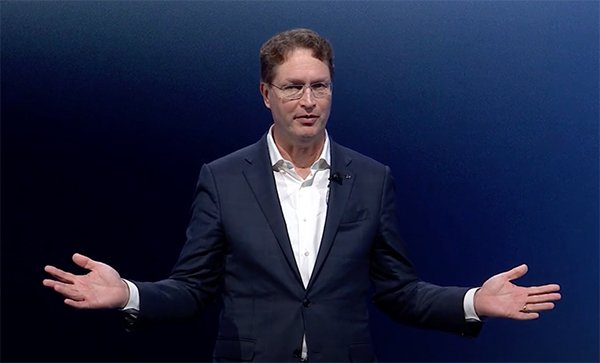
安徽合力(600761):电动化转型成果显著 智能物流业务快速扩张
Xin Lang Cai Jing· 2025-09-04 08:33
Core Insights - The company reported a revenue of 9.39 billion yuan for H1 2025, a year-on-year increase of 6.18%, while the net profit attributable to shareholders was 796 million yuan, a decrease of 4.60% [1] - In Q2 2025, the company achieved a revenue of 5.12 billion yuan, reflecting a year-on-year growth of 8.76%, with a net profit of 474 million yuan, up 14.73% year-on-year [1] - The company accelerated cash flow recovery, with operating cash flow reaching 589 million yuan, compared to 257 million yuan in the same period last year [1] - The overseas market showed significant growth, with revenue contribution reaching 43% [1] - Total sales volume for H1 2025 was 204,200 units, a year-on-year increase of 17.23%, with domestic sales at 126,200 units (up 11.28%) and overseas sales at 73,600 units (up 23.08%) [1] Intelligent Logistics Growth - The intelligent logistics business grew rapidly, with a year-on-year increase of 59.1%, becoming a new performance growth point [2] - The company is enhancing its mid-to-high-end warehousing product lineup and expanding into niche markets [2] - Strategic partnerships were established with companies like SF Express and JD.com to innovate downstream application scenarios [2] - A joint innovation lab was established with Huawei to collaborate on key areas such as data communication and autonomous driving [2] Electric and Hydrogen Energy Transition - The company is actively investing in lithium battery and hydrogen energy technologies, with electric product sales increasing by 28% in H1 2025 [2] - The sales proportion of electric products rose to 68%, an increase of 2.5 percentage points from the end of 2024 [2] - The company is a leader in the industry for launching hydrogen fuel forklift products [2] Global Manufacturing Expansion - The company is accelerating the construction of manufacturing facilities for heavy-duty forklifts and other products [3] - A global operational structure is being developed, including the establishment of the first overseas manufacturing plant in Thailand [3] - Vertical integration of key component production is being pursued to ensure performance and supply chain security [3] Profit Forecast and Valuation - The company is projected to achieve net profits of 1.465 billion yuan, 1.557 billion yuan, and 1.720 billion yuan for 2025-2027 [4] - A "recommended" rating is maintained for the company [4]

蔚来首次回应与迈凯伦合作
财联社· 2025-09-04 07:07
Core Viewpoint - NIO has confirmed its collaboration with McLaren, with technology service revenue reaching several hundred million yuan in Q2 2025, primarily driven by technology output to McLaren and other sales growth [1][2]. Group 1: Financial Performance - In Q2 2025, NIO's other sales revenue was 2.8726 billion yuan, representing a 62.6% increase year-on-year and a 37.1% increase quarter-on-quarter [1]. - NIO's total revenue for Q2 2025 was 19.01 billion yuan, showing a 9.0% year-on-year growth and a 57.9% quarter-on-quarter growth, with an overall gross margin of 10.0% [4]. - The company aims to achieve an overall gross margin of 16%-17% by Q4 2025 to reach breakeven [4]. Group 2: Strategic Collaborations - NIO's partnership with McLaren is facilitated by CYVN Holdings, which acquired McLaren and aims to support its transition to electric vehicles [2]. - NIO has signed a technology licensing agreement with Forseven, allowing the use of NIO's electric vehicle platform technology for the development and sales of Forseven-branded vehicles [2]. - NIO is also collaborating with several other automakers, including Changan, Geely, and Chery, on battery swapping technology, although this segment has not yet generated stable revenue [3]. Group 3: Future Outlook - NIO expects non-vehicle business revenue to reach approximately 10 billion yuan annually, with a potential for gross margin to turn positive in Q4 2025 [4]. - The company is set to develop power batteries based on 4680 cylindrical cells for McLaren's hybrid models, with small-scale production expected in 2026 [2].

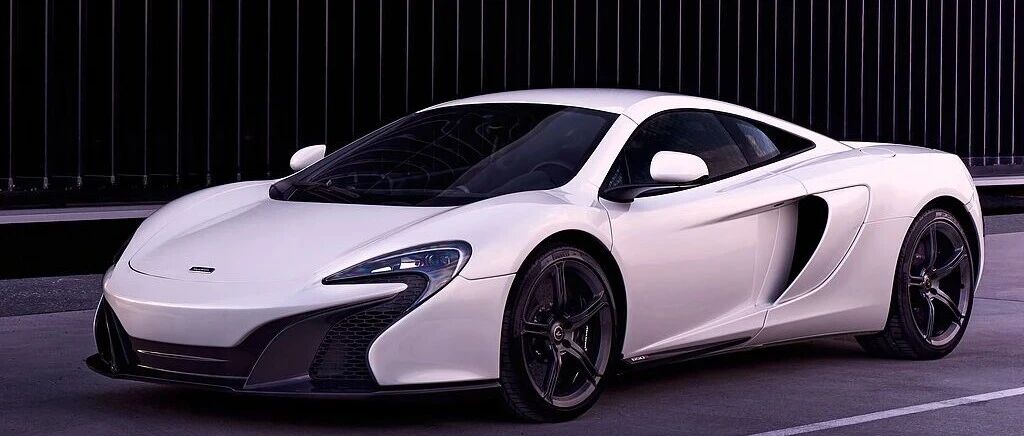
因销量下滑大众汽车调整美国工厂产能, 160 名员工进入休假
Huan Qiu Wang Zi Xun· 2025-09-04 04:39
Group 1 - Volkswagen announced a reduction in production of its ID.4 electric SUV at the Chattanooga plant in the U.S. due to underwhelming sales performance [1][3] - The sales of ID.4 in the U.S. are projected to be approximately 17,000 units in 2024, a significant decline from 38,000 units in 2023, with a further 19% year-on-year drop expected in the first half of 2025 [3] - The company will adjust the assembly quantity per production shift for the ID.4 model, but maintains its long-term commitment to the ID.4, electrification strategy, and the Chattanooga team [3] Group 2 - The production adjustment only affects the ID.4 electric vehicle, while the production levels of the Atlas and Atlas Cross Sport models will remain unchanged [3]
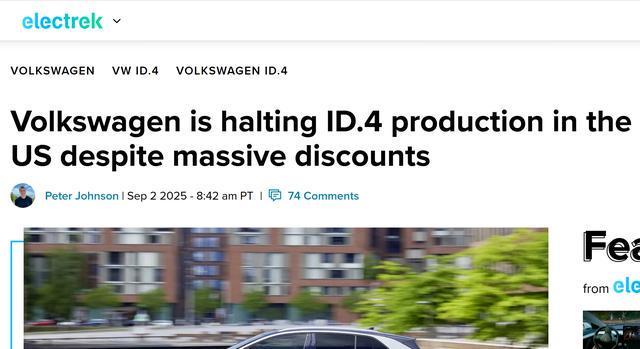
沃尔沃袁小林:应对变革要警惕“闭门造车”
Mei Ri Jing Ji Xin Wen· 2025-09-03 19:22
Core Insights - Volvo's new XC70 marks a significant step in its electrification strategy, being the first model built on the new SMA super hybrid architecture, with a starting price of 299,900 yuan and achieving over 5,000 pre-orders in just 85 minutes [1][2] - The XC70 is expected to accelerate growth in the luxury hybrid market, with predictions of substantial market share increases by the end of the year [1][2] - The hybrid vehicle market in China has seen a tenfold increase in sales from 2020 to 2023, with projections of 7.252 million units sold in 2024, capturing 40% of the new energy vehicle market [2] Product Positioning - The XC70 fills a market gap between the XC60 and XC90, enhancing Volvo's product matrix in the new energy segment and officially entering the super hybrid market [2] - The vehicle boasts a pure electric range of over 200 km and a total driving range exceeding 1,200 km, catering to consumer concerns about range anxiety and charging convenience [2] Strategic Vision - Volvo emphasizes a balanced approach in its electrification journey, advocating for coexistence of pure electric, fuel, and hybrid vehicles for the foreseeable future [2][3] - The company aims to maintain a focus on core values and practical solutions, avoiding unnecessary technological gimmicks that do not add value [3] Industry Collaboration - Volvo's leadership warns against "closed-door" strategies, advocating for collaboration with local tech partners to enhance competitiveness in the rapidly evolving smart driving and AI landscape [4] - The company recognizes the importance of integrating advanced technologies while preserving brand identity and values [4] Future Outlook - By 2025, Volvo aims to balance market share with stable pricing, supported by strong products like the XC70 [5] - The introduction of the SMA super hybrid architecture complements existing platforms, with a goal that by 2030, over 90% of Volvo's global sales will come from pure electric and plug-in hybrid vehicles [5]
广汽集团中报"失速":历史最大亏损背后业绩仍存水分高研发投入难掩重大决策失误
Xin Lang Cai Jing· 2025-09-03 12:06
Core Viewpoint - GAC Group has reported significant financial losses in the first half of 2025, with a notable decline in both revenue and net profit, primarily due to falling sales across its main brands and poor strategic decisions [1][2][4]. Financial Performance - In the first half of 2025, GAC Group achieved revenue of 42.61 billion yuan, a year-on-year decrease of 7.9%, and a net profit of -2.54 billion yuan, representing a decline of 267.4% [1]. - The second quarter revenue was 22.73 billion yuan, also down 7.9% year-on-year, with a net profit of -1.87 billion yuan, worsening from a profit of 300 million yuan in the same quarter of 2024 [1][3]. Sales Performance - GAC Group's total sales for the first half of 2025 reached 755,000 units, a year-on-year decline of 12.5%. Notably, GAC Honda, GAC Trumpchi, and GAC Aion saw sales drop by 25.6%, 22.6%, and 14.0% respectively [2]. - GAC Toyota was the only brand to show a slight increase in sales, up 2.6% [2]. Profitability Issues - The gross profit margin for GAC Group fell to -3.4% in the second quarter, a decrease of 10 percentage points year-on-year, while the half-year gross margin dropped to -1.7% [3]. Research and Development - GAC Group's R&D expense ratio has remained low, between 1% and 2%, indicating that a significant portion of R&D investments is not accounted for in current expenses [4][5]. - Despite high R&D spending historically, the company has faced multiple strategic missteps, particularly in the electric vehicle sector, leading to a delayed transition to electrification and smart technology [5]. Strategic Decisions - GAC Group's previous decision to terminate its partnership with Huawei has been criticized, especially as competitors who maintained such collaborations have seen success [6]. - The company has recently announced a renewed partnership with Huawei to establish a new automotive brand, but market skepticism remains regarding the potential success of this initiative [6]. Leadership Changes - The recent leadership change, with Feng Xingya taking over from Zeng Qinghong, raises questions about the company's ability to reverse its current downward trend [6].

郭永锋接替李凤刚 一汽奥迪销售公司中方一把手两年内再换人
经济观察报· 2025-09-03 10:48
Core Viewpoint - The leadership change at FAW-Volkswagen Audi is seen as a response to the declining market performance of FAW Audi, with the new executive expected to address these challenges and drive growth [1][4]. Group 1: Leadership Changes - FAW Audi's sales company has appointed Guo Yongfeng as the new executive vice president, replacing Li Fenggang, who served for less than two years [1]. - Guo Yongfeng has extensive experience within FAW-Volkswagen, having held various leadership roles since joining in 2004 [1]. - The early leadership change is perceived as a necessity due to FAW Audi's poor market performance [1][2]. Group 2: Sales Performance - FAW Audi's sales have been declining, with figures of 726,300, 701,300, and 635,600 vehicles sold from 2020 to 2022, respectively, marking three consecutive years of decline [2]. - In 2024, FAW Audi's cumulative sales were 611,000 vehicles, a year-on-year decrease of 12.5% [2]. - As of the first half of 2025, sales continued to decline, indicating ongoing challenges for the brand [2]. Group 3: Impact on Global Performance - The decline in FAW Audi's sales negatively affects Audi's global performance, with a 10.2% year-on-year drop in sales in China during the first half of 2025 [3]. - Audi's net profit for the first half of 2025 was €1.346 billion, down 37.5% year-on-year, leading to a downward revision of revenue expectations for the year [3]. - Compared to competitors, FAW Audi's performance lags behind Mercedes-Benz and BMW, which had higher sales figures despite their own declines [3]. Group 4: Strategic Initiatives - Audi aims to revitalize its performance through management changes and new product introductions, including the launch of the Audi Q6L e-tron model in late 2024 [4]. - FAW Audi is collaborating with Huawei to enhance the intelligence of its fuel vehicles, which may help improve market performance [4]. - The company is expected to introduce more electric vehicle models to accelerate its transition towards electrification [4].

同比增速行业第一,中创新航7月全球动力电池市占率跃升至5.4%
Cai Fu Zai Xian· 2025-09-03 03:42
上述数据表明中创新航进一步巩固了其在全球动力电池市场中的地位,并实现逆势增长。市场人士认 为,随着全球电动化转型不断深化,动力电池行业仍将维持高成长性,技术领先、产能充足且客户结构 多元的企业有望持续受益。中创新航凭借其产品性能和成本优势,正在快速扩大市场影响力,未来市场 占有率有望进一步提升。 近日,根据全球知名调研机构SNE Research最新发布的数据显示,中创新航(3931.HK)在今年7月实现动 力电池装机量4.8GWh,同比大幅增长59.8%,市占率大幅提升至5.4%,较6月的4.6GWh环比增长 4.3%,是同业前四中唯一实现环比装机量增长的企业,增速在全球主流动力电池厂商中位列第一。同 时,在国内市场,中创新航动力电池装机量市占率从5月的7.5%激增至7月的8.4%,亦远超行业增长势 头。 ...
奥迪计划将全球年销目标调至200万辆,美国市场恐不是救星
Guan Cha Zhe Wang· 2025-09-02 10:35
Core Viewpoint - Audi plans to increase its long-term annual sales target to 2 million vehicles, representing a nearly 20% increase compared to 2024, indicating a strategic shift after years of declining sales [1] Group 1: Sales and Market Expectations - Audi's optimistic long-term outlook is partly based on higher expectations for the U.S. market, which is the second-largest automotive market globally, following China [1] - Currently, Audi's annual sales in the U.S. are approximately 200,000 vehicles, with expectations to nearly double this figure [1] - Despite potential growth in the U.S. market, achieving the 2 million annual sales target will require more than just reliance on the U.S. market [1] Group 2: Recent Sales Performance - Audi's global sales fell by 11.8% year-on-year to 1.67 million vehicles last year [1] - Even if U.S. sales were to double, Audi's total annual sales would still struggle to exceed 1.9 million vehicles [1] - In the first half of this year, Audi's sales in China, which accounts for nearly 40% of its global sales, declined by 10.2%, totaling 288,000 vehicles [3][4] Group 3: Challenges in Key Markets - Audi faces significant challenges in both the U.S. and Chinese markets, including the impact of high import tariffs and competition from domestic electric vehicle manufacturers [3][4] - The company has not established a production base in the U.S., making it vulnerable to tariffs, which have cost Audi nearly 600 million euros (approximately 4.99 billion yuan) in the first half of this year [1][3] - In Europe, Audi's sales outside Germany fell by 4% in the first half of the year, with the report citing a "soft" electric vehicle market as a key reason for the decline [4] Group 4: Strategic Initiatives - To address its challenges, Audi has accelerated its electric vehicle transition, including a joint venture with SAIC to create a new "AUDI" brand [4] - However, this strategy has led to internal competition within the brand, complicating its efforts to maintain sales in China [4] - Audi's delayed model releases and software issues have widened the gap with competitors like Mercedes-Benz and BMW, which have already established multi-power development strategies [4]
郭永锋接替李凤刚 一汽奥迪销售公司中方一把手两年内再换人
Jing Ji Guan Cha Bao· 2025-09-02 10:28
Group 1 - The leadership change at FAW Audi Sales Company is aimed at addressing the declining market performance, with Guo Yongfeng replacing Li Fenggang as the executive vice president starting September 1, 2025 [1] - FAW Audi's sales have been declining for three consecutive years, with 2024 sales dropping to 611,000 units, a 12.5% year-on-year decrease [2] - Audi's overall performance in China is negatively impacted by FAW Audi's decline, with a 10.2% drop in sales to 287,600 units in the first half of 2025 [2] Group 2 - FAW Audi's slow progress in the transition to electric vehicles is concerning, with over 90% of sales still coming from fuel vehicles, while competitors like Mercedes and BMW have higher electric vehicle sales ratios [3] - The establishment of the Audi FAW New Energy production base in Changchun is expected to enhance the introduction of new energy models, starting with the Q6L e-tron [3] - FAW Audi is collaborating with Huawei to enhance the intelligence of fuel vehicles, which may help improve market performance [3]